Category Archives: Home Movies

Raise High the Roof Beam

By Ed Staskus

   When I moved into the Plaza Apartments on Prospect Ave. at the intersection of E. 32nd St., which wasn’t even a street since the other end of it dead-ended into a parking lot, it was by accident, including a car accident and bumping into Arunas Petkus a few days later.  The car accident happened when a flash of sunshine distracted me. Bumping into Arunas was simply by chance.

   I was living at Dixon Hall up the street near E. 40th St. A decade after I moved out it was designated a legacy building and historic location but when I lived there it was a rat’s nest, full of students, day laborers, and deadbeats. It was a solid four-story stone and brick building that had gone to seed. 

   Hookers and boozehounds roamed Prospect Ave. in the evening after the blue collars and shop owners went home. The junkies stayed in the shadows, hapless and harmless, mumbling and nodding off. I avoided roughnecks on the prowl, who were hoping to stumble on a sucker. Nobody from the suburbs ever came day-tripping, much less set foot on Upper Prospect at night.

   My roommate Gary was ten years older than me and was drinking himself to death, day by day, from the bottom of his heart. I first met him the day before moving in with him, when I answered a worse for wear note on a bulletin board at Cleveland State University, a ten-minute walk away. He was stocky, bearded, and sullen, but I needed a cheap room, and his second bedroom was available.

   It wasn’t any great shakes of an apartment, which was a living room, walk-in kitchen, and two small bedrooms. There were more cockroaches than crumbs in the kitchen. The sofa and upholstered chairs were a flop. Gary kept cases of beer stacked up by the back door and his whiskey under lock and key.

   I didn’t know much about spirits except that all the grown-ups I knew, who were most of them Lithuanian, drank lots of it, some more than others. I didn’t know why Gary was going breakneck down the river, but he was and wasn’t in in any kind of shape anymore to do much more than sit around and drink.

   The day he told me he was going out to pick up his car was a surprise, since he was living on some kind of inheritance and almost never went out. I didn’t even know he knew how to drive. I was even more surprised when he asked me if I wanted to go along.

   “Where is it?” I asked.

   “Down by 36th and Payne,” he said.

   We could walk there since it was a sunny day. E. 36th and Payne Ave. was only about twenty minutes away by foot.

   “All right,” I said, which was my first mistake.

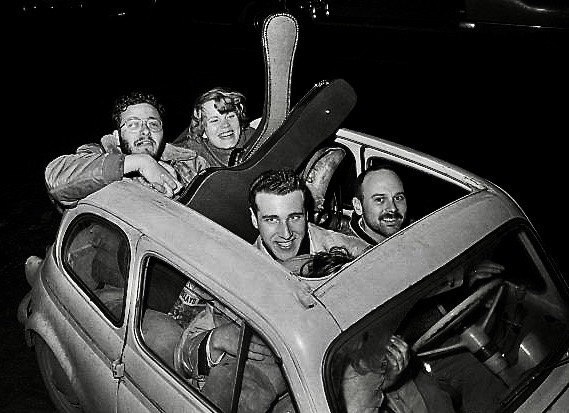
   His car was a 1963 VW Beetle with a new engine block and repainted a glossy lime. He paid cash in hundred dollar bills and we drove off, down E. 55th St. to the lake, up E. 72nd St. to St. Clair Ave., and back to Dixon Hall. When he pulled up to the curb, he asked me if I knew how to drive a standard shift.

   “Sure,” I said.

   “Do you want to try it?”

   “Sure,” I said, which was my second mistake.

   I didn’t get far, about a quarter mile. As we were approaching the intersection of E. 30th St. and Prospect Ave. a flash of sunshine glancing off the glossy yellow-green hood of the car distracted me. I turned my head to the left. That was my third and last mistake.

   I didn’t see the four-door sedan going through the red light to my right and never touched the brake. He smashed into the front fender of the VW, sending us spinning, and a car behind us smashed into our rear engine compartment. The opposed 4 engine made a last gasp and went dead.

   When we came to a stop the VW Beetle was finished and I was finished as Gary’s roommate. I was just barely able to talk him into giving me a week to scare up another roof over my head. The fall quarter at Cleveland State University was rolling along and winter wasn’t far away.

   I was playing beggar-my-neighbor with friends in the Stillwell Hall ground floor cafeteria when Arunas Petkus joined us, snagging a card game in his free time. He was Lithuanian like me. We had gone to St. Joe’s together, a Catholic high school on the east side, and he was an art major at Cleveland State University. He had a deft hand drawing and painting. He piped up when he heard about my predicament.

   “Try the Plaza,” he said. “There’s a one bedroom on the second floor that’s come open. Somebody I know moved out in the middle of the night.”

   The Plaza was just down the street from Dixon Hall. I had never paid much attention to it, but when I gave it a closer look, I liked what I saw. It was built in 1901 in an eclectic style, on a stone foundation, with some blocks of the same stone in the exterior, and facing of yellow brick in front and around the courtyard. Some of the brick was sprouting ivy. The top of the five stories was crenellated. It had a cool vibe when I walked around it, eyeballing the stamping ground.

   Dave Bloomquist and Allen Ravenstine, who was the synthesizer player for the Cleveland-based art-rock band Pere Ubu, owned and operated the building.

   “I grew up at the Plaza. It’s where I became an adult,” Allen said. “I was a kid from the suburbs. When we bought this building in 1969, we did everything from paint to carpentry. When it was first built, it had 24 apartments. When we bought it in a land contract, there were 48 apartments. We tried to restore it unit by unit.”

   I knocked on Dave Bloomquist’s door. His apartment was at the crown, in the front, facing north, looking out across Chinatown, Burke Lakefront Airport, and out to Lake Erie. When he answered the door, I don’t know what I expected, but what I got was a tall young man, maybe six and a half feet of him, a thick mop of black hair, and an old-school beard.

   “I’m here about the apartment on the second floor,” I said.

   He led me through the kitchen, down a hallway, and into an office full of books, records, a big desk, and sat me down in a beat-up leather armchair.

   I didn’t blanch when he told me what the rent was because it wasn’t much, but I didn’t have much. I could make the first month, maybe the second. I hemmed and hawed until he finally asked me if I was short.

   “More or less,” I said.

   “Would you be willing to work some of it off?”

   “Yes, you bet.”

   “Good, we can work that out. Do you play chess, by any chance? You look like you might.”

   “I know how to play,” I said, but didn’t say anything about my reading chess how-to books.

   “Great, do you want to play a game?”

   “Sure.”

   He had a nice board and played a nice game, but I finished him off in less than twenty moves.

   “Beginner’s luck,” I said.

   “After you’ve moved in stop by, we’ll talk more about some work for you, and play again,” he said.

   I went down the front steps, out the door, and sat down on what passed for a stoop. A young woman stuck her head out of a basement window behind me. I looked at her. She was a looker.

   “I haven’t seen you around here before,” she said. “Are you moving in?”

   “Yes, in the next couple of days.”

   “Do you have a car?”

   “No.”

   “That’s good,” she said. “I’ve lost two cars living here.”

   “That’s too bad.”

   “I love living here, but it drives me crazy at night,” she said. Her name was Nancy and she was studying art. She wanted to be a teacher. “The junkies sit right here on this ledge and party all night long. They never see anything happening, like my cars being stolen.” The dopeheads didn’t have the smarts to steal cars. The making off happened when bad guys came down Cedar Rd. looking for easy pickings.

   I moved in over the course of one day, since I didn’t have much other than my clothes, bedsheets, kitchen dishes, utensils, pots and pans, schoolbooks, and a dining room table and chairs my parents bought for me. I lived on pancakes, pasta, and peanut butter. The apartment wasn’t furnished, but whoever had left in a hurry left a queen bed, a dresser, and a livable sofa. 

   A man by the name of Bob Flood, who lived on the same second floor like me, but in the front, not the back like me, helped me carry the table and chairs up. He was dressed in denim, wore a denim cap, making him look like a railroad engineer, had a little shaggy beard and bright eyes, and was on the rangy side. He walked in a purposeful way, like an older man, even though he wasn’t an old man. Everybody called him Mr. Flood.

   I found out later he was divorced and had two children who visited him, but I never found out if he worked for a railroad or what he did, at least not for a fact. He was either at home for days on end or he wasn’t. I had worked at Penn Central’s Collinwood Yards the winter before as a fill-in, sometimes unloading railcar wheels, sometimes walking the yard with a pencil and waybill clipboard. I didn’t remember ever seeing him there.

   “What kind of people live here?” I asked him.

   “All kinds,” he said. “There are a lot of musicians, artists, writers, some students and even a couple of professors.”

   “It’s an energy house,” said Scott Krause, who was the drummer for Pere Ubu.

   “Not everybody’s in the arts,” Mr. Flood said. “There are beauticians, bartenders, and bookstore clerks, too.” 

   “If you want to stick your head out the window and sing an aria, someone might listen, and someone might even applaud,” said Rich Clark from his open window. Nobody had window air conditioners.

   I found out almost everybody was more younger than older, except for an Italian couple and their parrot. The parrot never sang or spoke outside the family, no matter how much the Italians coaxed and cajoled him. The bird was as stubborn as a mule.

   Once winter was done and spring was busting out, I was reading a book for fun in the courtyard when Arunas Petkus stepped up to the bench I was sprawled out on. He wanted to know if I wanted to go to California with him once classes at Cleveland State University were done for the summer.

   “All that tie dye is finished there,” I said. “Even the hippies say so.”

   “I thought we could visit Chocolate George’s grave.”

   “Who’s Chocolate George?”

   George Hendricks was a Hells Angel in the San Francisco chapter who was hit by a car while swerving around a stray cat one August afternoon in 1967 as the Summer of Love was winding down. He was thrown from his motorcycle and died later that night from his injuries. He was known as Chocolate George because he was rarely seen without a quart of his favorite beverage, which was chocolate milk.

   “He drank chocolate milk because he had an ulcer,” explained Mary Handa, a friend of his. “He spiked it with whiskey from time to time.” He scored nips of the booze all day long.

   George Hendricks was a strapping 34-year-old when he died. He was a favorite among the hippies in Haight-Ashbury because he was funny and friendly. Sometimes he sported a Russian fur hat, making him look like a Cossack. His mustache and goatee were almost as long as his long hair, he wore a pot-shaped helmet when riding his Harley, and his denim vest was sprinkled with an assortment of round tinny pin badges. One of the badges said, “Go Easy on Kesey.”

   The writer Ken Kesey had been the de facto head of the Merry Pranksters. Much of the hippie aesthetic traced back to them and their Magic Bus.

   “I bought a used car,” Arunas said.

   It was parked in the back next to the nerve-wracking back stairs. The stairs were sketchy. Going up and down them always felt like it might be the last time as they twitched and shook and seemed on the verge of yanking themselves off the brick façade. I avoided them whenever I could.

   The car was a two-door 1958 VW Karmann Ghia. “You know how the Beetle has got a machine-welded body with bolt-on fenders,” Arunas said.

   I didn’t know, but I nodded agreement keeping my distance from the car. It looked like a soul mate to the stairs. It was pock-marked with rust and seemed like it might fall apart any second.

   “Well, the Karmann Ghia’s body panels are butt-welded, hand-shaped, and smoothed with English pewter.”

   I didn’t know what any of that meant, either, but nodded again.

   “Does it drive?”

   “It got me here.”

   “From where?”

   He bought the VW at a used car lot on E. 78th and Carnegie Ave.. It was two or three miles away, on the Misery Mile of used car lots.

   “Where is Chocolate George buried, exactly?” I asked.

   “He’s not buried, not exactly,” Arunas said.

   Five days after his death more than two hundred bikers followed a hearse up and down San Francisco’s narrow streets, pausing and revving their engines at the Straight Theater, near where the accident happened. Two quarts of chocolate milk were perched next to the cold body in the back of the hearse. The funeral ceremony was performed at the Cypress Lawn Cemetery, Chocolate George was cremated, and his ashes scattered over Twin Peaks, which are in the center of the city.

   The funeral procession became a motorcycle cavalcade, roaring to Golden Gate Park where, joined by hundreds of hippies from Haight-Ashbury, a daylong wake erupted. Big Brother & the Holding Company and the Grateful Dead were the live music send-offs. There was dancing and psychedelic merrymaking.   

   “Sometimes the lights all shining on me, other times I can barely see, lately it occurs to me, what a long, strange trip it’s been,” Jerry Garcia sang in his mid-western twang. There was free beer courtesy of the Hells Angels and free food supplied by the Diggers.

   The Haight Street Diggers were said to be a “hippie philanthropic organization.” They used the streets of San Francisco for theater, gatherings, and walkabouts. The organization fed the flock that made the scene in the Panhandle with surplus vegetables from the Farmer’s Market and meat they routinely stole from local stores.

   Two months after Chocolate George’s funeral the Diggers announced “The Death of the Hippie” by tearing down the store sign of the Psychedelic Shop and secretly burying it in the middle of the night.

   “So, do you want to go?” Arunas asked, his hand on the hood of the Karmann Ghia.

   “Sure,” I said, short on memory and long on summertime.

Ed Staskus posts monthly on 147 Stanley Street http://www.147stanleystreet.com, Made in Cleveland http://www.clevelandohiodaybook.com, Atlantic Canada http://www.redroadpei.com, and Lithuanian Journal http://www.lithuanianjournal.com

“Cross Walk” by Ed Staskus

“Captures the vibe of mid-century NYC, from stickball in the streets to the Mob on the make.” Sam Winchell, Beyond Fiction

Available on Amazon: https://www.amazon.com/dp/B0CRPSFPKP

Late summer and early autumn. New York City, 1956. Jackson Pollack opens a can of worms. President Eisenhower on his way to the opening game of the World Series where a hit man waits in the wings. A Hell’s Kitchen private eye scares up the shadows.

A Crying of Lot 49 Publication
Winter Wonderland

By Ed Staskus

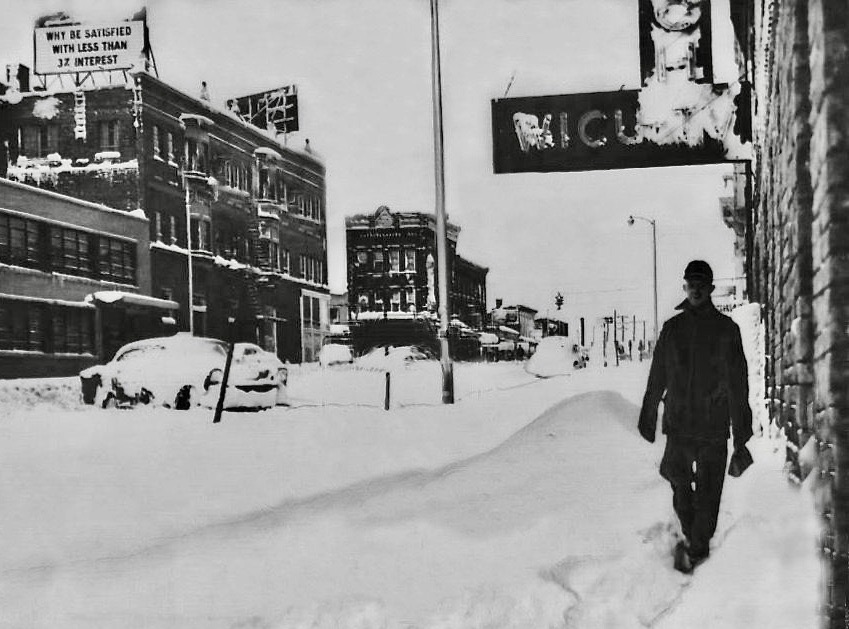
   It is 11 miles as the crow flies from E. 42nd St. in Newburgh Hts. to E. 125th St. and St. Clair Ave. in Cleveland, Ohio. A streetcar in the 1950s would have made the trip in about 40 minutes and a car in about 20 minutes. A brisk walk on a summer day would have taken about 3 hours. When Hal Scott left work at American Steel and Wire in Newburgh Hts. for home on Friday November 24, 1950, in the middle of the Great Thanksgiving Blizzard, no streetcars were running anymore, and he didn’t have a car. He started walking. He didn’t see a crow that day or the rest of the weekend.

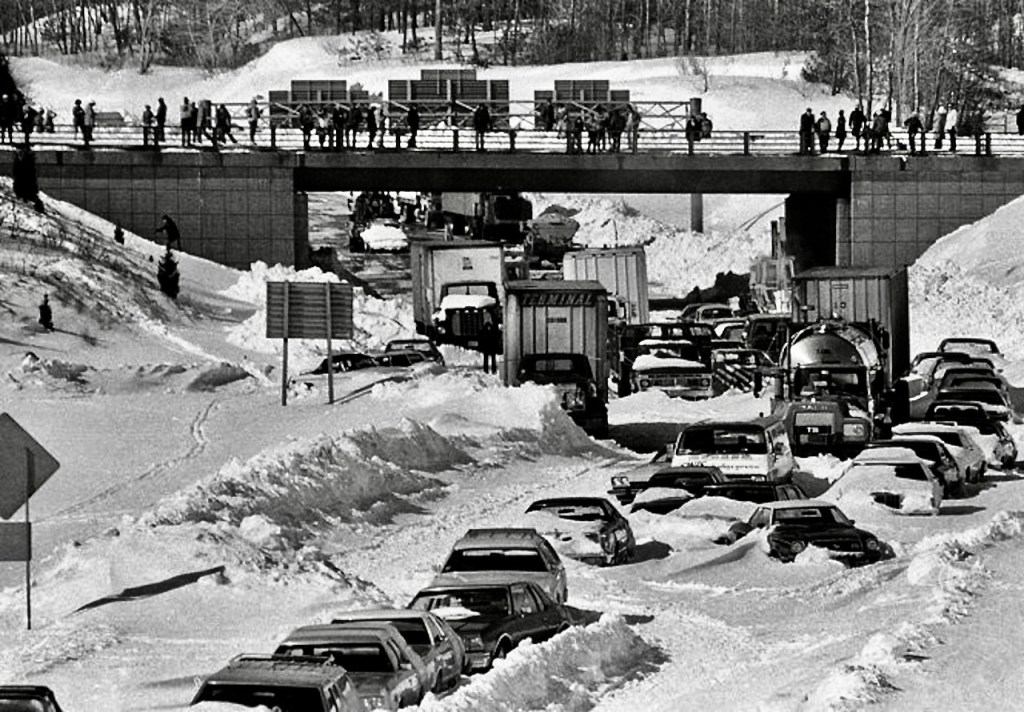
   The storm started on the long holiday weekend when an arctic air mass barreled into town and temperatures fell to below zero. The next day low pressure from Virginia moved into Ohio. When that happened a blizzard with high winds and heavy snow got up to speed. By the end of the day two feet of snow had fallen and the airport had to close. Mayor Tom Burke declared a state of emergency and called out the National Guard. Snow plowing was hampered by more than 10,000 abandoned cars. The mayor declared a state of emergency. Unnecessary travel was banned. Everything nonessential was forbidden from trying to get downtown. The car ban lasted for a week until the last Cleveland Transit System line was back on the line. By then the temperatures had hit the 50s and all the snow melted. Creeks and rivers flooded far and wide.

   Hal was born in 1903. He had a sister, Eleanor, and a brother, LeGrant. His brother made it as a pro baseball player nicknamed Babe, after Babe Ruth, although he never made it out of the minor leagues. Hal married a local girl, Jennie O’Connell, and they had six children. Jennie died of pneumonia twenty years later leaving Hal with six kids under the age of eighteen. A year-and-a half later he married his next-door neighbor and they had two more kids, Mike and Teen, or Harold Jr. Teen was killed when he was four years old. He was sitting on a curb on a sunny day waiting for his brother to get home from school when a delivery truck backing up ran him over. Not long after the funeral Hal’s hair turned white.

   When he started walking home as the Great Thanksgiving Blizzard was raging, he walked up E. 49th St. and then zigzagging to Guy Ave. to Hamm Ave. to E. 55th St. to St. Clair Ave. From there, he only had seventy blocks to go. It was a slog. The snow was deep and getting deeper. Nobody was shoveling any sidewalks. He walked in the street more than on any sidewalk. He stopped every so often to catch his breath. It was dark as a squid’s world by 8 o’clock. The sky was a mass of heavy clouds. He was wearing a heavy wool coat, gloves, a hat, and buckled rubber galoshes. He pulled his collar up. Hal was dressed for bear, but it was hard going.

   “Everything came to a standstill,” said Burt Wilfong on the east side of town. He got to his feet off his sofa, bundled up, and went outside to shovel his walk and driveway. There was a hitch, though. “The garage doors were the kind that opened out. There was about 5 feet of snow that drifted around in front of the garage, and the snow shovel was inside.” He went back to his sofa, plopped himself down, and stayed there.

   By the time Hal got to Orey Ave. and E. 55th St. he was more than ready to sit down in the hole in the wall bar on the corner and warm himself up. He could use a bite and a drink, too, or two drinks. He sat down. A barfly a stool down next to him had a bowl of black olives and a bottle of Blatz in front of him.

   “Hell of a night to be out,” the barfly said.

   “That’s the God’s truth,” Hal said.

   He ordered chicken soup in a pot with homemade noodles and hard-boiled sliced eggs. He thought about a draft beer but had a shot of rye whiskey instead. Halfway through his eggs he ordered another shot. He got a cottage cheese and pickle relish sandwich to go and stuck it in his coat pocket. He left $3.00 on the bar, buttoned up his coat, and started north up E. 55th St. again. He felt much better, although the storm was getting worse.

   He took short steps shuffling now and then when the going got icy. He walked bent slightly forward as much as he could, with his center of gravity directly over his feet. The wind made it tricky. It was worse than the snow. He stayed ready for falling on his face as gusts came and went. The wind was unpredictable, buffeting him from all sides.

   “I was born during that storm,” Fred Rothhauser on the west side of town said. “My parents told me I was a miracle baby coming into the world the day hell froze over.” Every leafless branch of every tree was in motion. Twigs littered the snow. Hal stepped over branches that had cracked off. As the wind swept over roofs their tiles shook and flapped. When they were ripped away, they went sailing and disappearing. Overhead the electric and telephone wires whistled. The infrequent passing cars all looked like they were on the verge of sliding and veering crazily off somewhere.

   Flo Ellis was two years old when she, her four brothers and sisters, and parents drove from North Collinwood to Willoughby for Thanksgiving dinner. “We stayed overnight, then the blizzard hit, and it turned into almost a week. My grandma had to cut head holes and armholes in pillowcases to make nightgowns for us kids.”

   When he got to Fleet Ave. Hal saw two bars. One was on the opposite corner and the other one on his side of the street. He took the path of least resistance.  He might have gone to Krejci’s Tavern down the street but he didn’t. Krejci’s was “Where the Fishermen Meet” and where he often met his pals for drinks. It would have been full of fishermen, anyway, telling tales about the Great Lakes Storm of 1913 that sank 30 freighters and killed more than 200 mariners. He wasn’t up for snow storm stories from the past.

   There was a three-story cupola over the front door he went through and lots of windows on the Feet Ave. side. A yellow sign said “Parking in the Rear” in red letters. There were two cars in the lot. How they got into and were planning on getting out of the lot was their business. The windows on the second and third stories were brightly lit. Whatever children and boarders the bartender and his wife, who was the bar’s cook, had up there were staying snug as bugs.

   The watering hole was full of people. The tables were all taken. He sat down at the bar alongside a group of six. When he asked the bartender, the man said, “It’s the local folks, they’ve been walking in all night, except for this group. They’re from Lakewood. I guess everybody has had their fill of turkey.”

   Gus and Eva Stanik were sitting closest to Hal. “We were going to Pennsylvania to do some deer-hunting,” Eva said. “We got up in the morning, and there was a load of snow, and we decided that maybe we’d better not go.” Her younger brother, Gomer, disagreed and talked them into making the trip.

   “Oh, yeah, we can still do that,” he said in the afternoon. “It can’t keep snowing much longer.” Gus and Eva fired up their 1946 Buick Sedanet with her brother’s friend in the back seat. Gomer rode with his uncle Ivan and their friend Mack in a second car, which was Ivan’s 1941 Ford Super Deluxe. Their bags, blankets, gear, and guns were in the car trunks. They had strong coffee in thermoses.

   “We were young,” Eva said. “There were six of us all together in two different cars. So, we helped one another. But everywhere we went, my uncle got stuck.” They passed one deserted car stuck in a snow drift after another. “My husband was the only one who had chains on.” After the two cars went slip sliding out of the parking lot behind the bar, Ivan’s car got stuck in the street. Hal helped push it out. When they drove off, they followed snowplows east. Hal waved goodbye as he set off on E. 55th St. again. 

   “When we were going through Sharon in Pennsylvania, we came to a standstill,” Eva said. “Gomer got out of the car and went across the street to a place that sold peanuts in the shell. We ate peanuts the rest of the day.” They threw the shells out the windows. Their four-hour trip turned into a twelve-hour trip. They labored on to Coalport, found their motel, shoveled out parking spaces, and fell into bed.

   “Hell, yeah, I shot my deer the next day,” Gus said, finally triumphant..

   Hal walked the rest of the night. The bars had all closed. The whole city was closed. He stopped for shelter in doorways now and then, watching plows waste their time. No sooner were they gone than snow started piling up again. The sun came up at 7:30 in the morning, what there was of it. The light looked like old milk. When dawn happened, he turned the corner on to St. Clair Ave. When he did, he saw U. S. Army Pershing tanks hauling away broken-down busses and delivery trucks.

   “Hundreds of motorists abandoned stalled autos,” the Lakewood Sun Post wrote in its morning edition. “Stuck streetcars were strung along main arteries for miles. Bus routes were littered with coaches blocked by enormous drifts. Most plants closed, and some employees who did manage to report in were marooned on their jobs. Trucks laden with food couldn’t deliver. Babies were without milk and grocery stores able to open were rationing it as well as bread.”

   Lakewood is Cleveland’s closest western neighbor, just across the Cuyahoga River. The far side of Lakewood butts up to the Rocky River. No neighbors were visiting neighbors that weekend, even though they could have skated across the frozen river. By the end of the day snow was wall-to-wall and drifts were 25 feet high. Some buildings collapsed under the weight of snowpack. More and more wires and trees were blown down. Bulldozers cleared roads so ambulances could reach those in need. The National Guard delivered food in their Jeeps to the out-of-the way. 

   Hal stopped at the first open diner he saw for breakfast. He was hungry as a horse. The diner was the kind that never closed, no matter what. He sat on a stool at the counter across from the galley kitchen. He had eggs, sausage, hash browns, pancakes, and two cups of coffee. When he was done, he folded his arms and lay his head down. A waitress woke him up when he started snoring.

   He trudged on as far as E. 69th St, where he stopped again. His legs were heavy. He was more tired than a month of overtime. He walked into the Maple Lanes Tavern and Bowling Alley. Nobody was bowling, but a handful of men were at the bar. One of them was a snowplow driver. He looked exhausted. Hal sat at the bar and had a hot toddy. When he felt warm again, he went out into the cold for the last stretch to home.

   The bone-chilling cold created a run on woolen clothing, long underwear, and flannel pajamas. A department store hosiery clerk took a telephone call asking for fleece-lined women’s hose. “I don’t know that there is any such thing,” she told the caller. Funerals and burials were delayed because cemeteries were neck-deep in snow. Hearses were unable to navigate roads to churches for services. An undertaker watched a body being unloaded from a commandeered milk truck for its much-needed embalming.

   After Hal got home late Saturday afternoon, 24 hours after leaving work, his wife bombarded him with questions, but he was too cold and too tired to talk. He spoke to his son Mike for a few minutes, telling him everything was all right, took a long hot bath, and fell into bed. His wife threw an extra quilt over him. He slept the rest of the day, all day Sunday, and called off work on Monday. The National Guard went home on Wednesday November 29th. Schools stayed closed all that week. When Hal got out of bed, he checked all his fingers and toes. He didn’t have a speck of frostbite on him.

   While he was on his long trek, the Big Ten championship game in Columbus between Ohio State and Michigan went ahead as planned. A trip to the Rose Bowl was at stake. Fifty thousand fans, just about half of the tickets sold, were in their seats for the kick-off. There was heavy snow, 40 MPH winds, and the temperature at game time was 5 degrees. Michigan won the Snow Bowl, even though they didn’t get a single first down and only gained a total of 27 yards. There were 45 punts between the two teams in the 60 minutes of playing time.

  “I was a teenager when the blizzard hit,” Irene DeBauche on the south side of town said. “It was something you never forget. We thought it was exciting and fun although our parents thought differently.” The Great Thanksgiving Blizzard impacted 22 states, killed 383 people, and caused almost $70 million in damage, equivalent to about $800 million today. Insurance companies paid out more money to their policy holders for damage than for any previous storm of any kind up to that time. 

   When Hal’s second wife died in 1964, he looked around the neighborhood again. He married another next-door neighbor in 1969. After he went blind in his later years, he spent summer days on his porch. When his children and grandchildren visited, and the neighborhood kids ran over, everybody sat on the steps and porch. Hal always had a paper bag filled with taffy and candy bars. The younger kids snacked while the older kids counted the number of times he cursed while telling tales. When they ran out of fingers to count on, they counted on their toes.

   Hal cursed up a storm whenever he recounted the Great Thanksgiving Blizzard of 1950, right up to the day he died in 1976. If he had lived a couple more years, he would have experienced the White Blizzard of 1978. When that storm was over everybody in Cleveland agreed it was the Storm of the Century. If he had made it that far, Hal would have had a golden opportunity to expand his store of descriptive words about winter wonderlands. 

Ed Staskus posts feature stories on 147 Stanley Street http://www.147stanleystreet.com and Made in Cleveland http://www.clevelandohiodaybook.com. To get the site’s monthly feature in your in-box click on “Follow.”

Vanishing Act

By Ed Staskus

   Hal Schaser was always excited by Catholic girls. His mother was Saxon Lutheran, and she raised his brother Willie and him as Lutherans, but Catholic girls were for him. That’s why he married one. But they had to be at least a nine or ten on the good-looking scales at the same time they were Catholic. If they weren’t, they didn’t count, not in his eyes. 

   All the guys rated gals, one way or another.

   He went to Florida every winter after he got back to Cleveland, before he got married. He came back from the Korean War with a Purple Heart, and after he got back on his feet, went right to work for Palmer Bearings. They put him in sales the minute they saw him. He was 22 years old, clean-cut, proportioned, and full of pep. He didn’t tell them about the bad hearing in one ear he came back with after a year as an artilleryman.

   His city pals, the young men he knew who had the dough to go south for a couple of weeks when it got dark and cold on the south coast of Lake Erie, razzed him about being picky.

   “All you do is keep looking for a number ten girl, and half the time you don’t got any girl on your arm,” one of them said one day while sucking on a bottle of Blatz. “Me, I get a number three or four, so I’ve always got a gal, and by the end of the week they all add up to more than zero.”

   Another of his pals, another wise guy on the camel train, said, “Hal, if you ever land a ten, she’ll be out of your league, anyway, so forget about it.”

   Teresa Stasas was Catholic, between a nine and a ten, and 15 years old when Hal met her. He was 25 years old. She lied about her age, not that she had to. But after he found out he made sure she was eighteen before they got married. “We missed out on the cash envelopes and presents, since her family was dead set on me staying single and Teresa marrying somebody else.” He didn’t care. He wanted Teresa. He wanted to get ahead to the high life with her fast at his side.

   They met at the Karamu Theater. Hal lived with his mother on the near east side, and Teresa took a bus from North Collinwood, where she lived with her three sisters and parents in a two-bedroom house. Hal liked auditioning for parts and acting in shows. It got him started with the girls. He looked like Paul Newman, which didn’t hurt his chances. He was always trying out for shows at the Chagrin Little Theater, too.

   “I met a boatload of lookers that way.”

   Teresa was in high school shows and danced ballet. She had taken dance classes ever since she was a little girl. She could straighten a leg, keep a foot flat on the ground, and raise the other one to the ceiling. 

   “I don’t know how the hell she did it. I always liked ballet dancers. I fell in love with one when I was in high school. Her name was Margo. She was a beautiful girl with a beautiful body, the same age as me, but an inch taller. She was one of the gym leaders and danced ballet on stage at our school. Another guy liked her, a Serb who played a lousy hillbilly guitar, and he was always angling to get into shows with her.”

   Hal started trying out, trying to get close to Margo, trying to elbow the Serbian boy aside.

   Teresa and he met auditioning for the same show at Karamu. He kept his eyes on her from the minute he set eyes on her. “She came on to me and did stuff like, ‘Can you give me a ride home?’ I had a car, she had stars in her eyes, and on starry nights it was a nice ride. She sat close to me on the bench seat.”

   She would sometimes leave something in his car, like her wallet or watch. “She would call me, and I would drive to her house, returning it, seeing her again. It was those little tricks women do.”

   Her parents were set in stone in opposition to her wedding bell plans. “It won’t work,” they both insisted. He was Lutheran, ten years older than her, born in the United States, but Romanian-bred. They were Catholic and Lithuanian, from the old country. She was still a teenager. He had a better job than either of her parents, making more money than the two of them put together, but it didn’t matter. 

   Teresa and Hal had to elope, driving across the Ohio line to Indiana, where they found a justice-of-the-peace on the side of the road, and got married. They went to Florida for their honeymoon. “We drove straight there in a new car I had just gotten. We stayed in the same motel my buddies and I used to go to. Our suite had a small kitchen and there was a big pool we went swimming in.” They sat out in the sun. Their skin got a shade darker. They discovered each other in the dark.

   When they got back to Cleveland, Teresa’s’s parents disowned her, and she didn’t see them for years. They moved in with Hal’s mother, in the meantime, in the old neighborhood, around East 65th St. and St. Clair Ave. Most of his countrymen worked in factories, ore docks, and knitting mills. His father had operated a corner store until he was murdered by two young thieves.

   “I worked hard, saving my salary and commissions, and the next year we bought a two-story house in Indian Hills, up from Euclid Avenue, near the city park.” The house fronted a sloping wooded lot. Their daughter Vanessa was born the next year and their son Mathias four years after that. Their problems started three years later. They never stopped getting worse.

   “We started out great, got the year of living with my mother out of our systems, moved into our big house, three bedrooms, newer than not new, got the kids grown up enough to walk, and my job got bigger and better the more I worked. I took clients out for golf and dinner three and four times a week. I kept my waistline under control by walking the courses. My handicap took a nosedive.”

   He was making money hand over fist. “I made a lot of money for Palmer Bearings. Those heebs loved me, so long as the pipeline stayed full and flowing.” His bosses said, “Keep up the good work.” His neighbors envied his one after the other new car. His wife complained about him never being home. “What do you do all those hours at work?”

   “I do a lot of business on golf courses,” he told her. “It’s work, don’t think it’s all just fun and games, it’s not.”

   Whenever he came home right after work, Teresa came running out the front door, grabbing him, giving him a hug and a kiss. He thought, this is embarrassing, the neighbors are watching, even though he barely knew any of their neighbors. “Cut it out,” he said. She gave him a queer look. He kissed the kids and read a book while Teresa set the table and served dinner.

   “I took her to dinner and shows, but it was never enough. I always let her do whatever she wanted. I let her teach cooking at the high school. I let her get a job at a restaurant. I let her go to Cleveland State University. It got to be a problem, because no matter what I did, it was never enough.”

   Teresa was a good-looking young woman, shapely and good on the move, friendly and running over with zip, and men eating at the restaurant were always hitting on her, but Hal’s problem was the young men she met at college. “One time I found a note in a drawer from some guy named Dave, thanking her for the great time they had. When I asked her about it, she said it was just a bunch of them from one of her theater classes going out for a drink.”

   “That’s all it was,” she said.

   “You’re not getting together with him?”    

   “No,” she said, “of course not.”

   He didn’t believe her, not for a minute. He knew what women were about. But he didn’t know everything. He didn’t know he was on his way to splitsville.

   Hal found out more, small things that looked like big things, about other men she was cheating on him with. He was sure of it. One night he answered a call from a man who sounded like he was from India, asking for her. He hung up. She was coming home later and later at night, 10 o’clock, 11 o’clock, midnight. It began to look like the babysitter would have to start living in.

   “Where the hell were you?” he asked one night when she got home close to two in the morning.

   “Oh, my keys got locked in somebody’s trunk.”

   “It was always some bullshit story like that. We got into an argument. We got into a lot of arguments.”

   “Not so loud,” she hissed. “You’ll wake up the kids.”

   “It was her idea to get separated. Later it was her idea to get divorced. I loved her. I loved my kids. I didn’t want a bust-up. We could have settled the split between ourselves, but she had to get a lawyer, which meant I had to get a lawyer. Her mouthpiece must have put something in her ear, bastard lawyers.”

   He stopped at the Cleveland Trust Bank downtown on East 9th Street one day, after lunch with clients on Short Vincent, to withdraw some money, but the teller said, “There’s no money in your account, sir.”

   “What do you mean?”

   “The account is at zero,” the teller said.

   “Teresa had taken it all. She raided our joint bank account and took all the money in it. All I had left was what I had been keeping in a personal account she didn’t know anything about, the scratch I kept separate, and our insurance policies. She charged all kinds of stuff on our credit cards before I wised up and cancelled them all.”

   He paid his lawyer five thousand dollars, in cash. He got it from a separate business he had going, apart from Palmer Bearings. The lawyer was a golfing buddy of his, but he still had to pay it all up front. “The son-of-a-bitch, right away he joined the Shaker Country Club with it, and never invited me to play golf there, not even once, not even when I got in his face about it.”

   When they went to court, Hal picked a fight there and then. Not with Teresa, but with their two lawyers, his and hers. “The Saul Goodman’s get together with their crap, take all your money, and leave you with nothing. They are like morticians, just waiting for you to come back to life.”

   Between Teresa and them, he complained loud and long to his friends, they left him with only table scraps.

   Hal knew how to handle himself. He boxed Golden Gloves before going to Korea. He got to the finals in his weight class, and even though the other fighter was dazed purple and bloody, the judges gave the first prize to him. He was a Marine and Hal was an Army draftee, so the Marine staggered away with the trophy. 

   “I could have levelled both the shysters in a minute flat. The bailiff, and a policeman, and the judge, had to restrain me. The judge gave me a hell of a talking to after everybody was back in their seats.” It was a loud knock-down drag-out commotion on the third floor of the Lakeside Courthouse, under a high ceiling of ornate plasterwork, quiet paneled walls, and leather-covered doors.

   “They’re all the same, talking through their hats.”

   Teresa moved into the new Park Centre on Superior Avenue, the same building where some of Richard Hongisto’s right-hand men lived. He was Cleveland’s new top lawman, although inside a couple of years Dennis Kucinich, the kid mayor of the city, fired him on live TV. It sparked a recall drive to remove the mayor from office, which was the least of his problems, since the city was going bankrupt fast. The bankers hated the mayor and withdrew their helping hand of ready cash. They knew how to get back at him.

   “I say a plague on all of them, except that whoever did the car caper with her got me the last laugh on Teresa, for what it was worth.”

   He bought her a new Mercedes sports car, hoping it would make her happy. It had a red leather interior. She loved the car, although it didn’t make her any happier about him any more than she wasn’t already. When they separated, she reported the car stolen. She called Hal about the insurance money. He told her he would let her know. He didn’t tell her the car was in his name. 

   “A month later I got a letter from a parking garage in New York City, saying we’ve got your car here, you owe so much for parking, come and get it. I was sure one of Teresa’s cop neighbors cooked it up with her, driving the car away, and leaving it in the garage. When I got the insurance check for the missing car, I cashed it and tore the letter up.”

   Teresa was a looker in her time, always worth a second look. Hal wasn’t sure how she looked when she got older, since after their last fight he never saw her again. He was certain her looks had gone south. “I’m sure she wasn’t the beauty she had been. I’m sure she looked like hell. That’s something I would bet money on.”

   She had beautiful handwriting but wrote Hal hate letters after their separation. 

   “Your kids don’t want to see you, you haven’t sent me enough money, all that kind of crap. I had to pay child support, even though I was used to a certain style of living for myself. I had to go on dates, looking for another woman, but it wasn’t easy. I couldn’t operate. I didn’t have much money. You’ve got to have money to do things. I was nearly broke. I had to take care of my kids. I didn’t want to be a deadbeat father.”

   Teresa met another man, a handsome Italian from Rochester, a Vietnam veteran. They moved in together, with her children. They didn’t pretend to be married, even though they lived like man and wife. They wanted to get married, but Hal wouldn’t give Teresa a divorce, no matter how many times she asked.

   “She and the guy from Rochester got it into their heads to go into the restaurant business. She asked me to take a second mortgage on the house. I said no, restaurants are the worst thing you can get into. In spite of myself I took a second mortgage on the house and gave her the money. It put me in a spot.”

   Teresa’s restaurant became two restaurants. The new family moved up to the seventeenth floor of Park Centre, to a three-bedroom end suite facing Lake Erie. They watched the Cleveland National Air Show from the balcony. They opened a bar on the new Eat Street in the apartment complex.

   “The dago was always telling me, take it easy, like he was trying to be my friend. I wanted to tell him how mad I was about not being able to get my wife back, about never seeing my kids. I never said one bad thing about her, but the divorce hurt me bad. After the mess in court, after we split up, I thought, if that’s the way it’s going to be, I don’t want anything to do with her anymore. I don’t want to talk to her, and I don’t want to see her. And I never did, except once more.”

   Teresa came to the family house in Indian Hills on a quiet autumn afternoon. She asked Hal to mortgage the house again, a third time, so she could expand her eateries some more, but he told her a second mortgage was all banks would go for. She said she needed more investment money and that he should sell the house, splitting whatever he might get for it with her.

   “If I do that, where am I going to live?”

   “That’s up to you.”

   “She was living downtown, in her fancy high-rise. What did she care where I lay my head? It could be some crummy cardboard bed under a bridge, as far as she was concerned. We got into an argument about it. My boy was with her. He stuck up for his mom. I didn’t blame him, though. I liked that about him.”

   Push came to shove, and Teresa slapped Hal hard in the face when he finally had enough, nose to nose, shouting that he wasn’t going to sell the house, that they were through once and for all, and that was that. 

   “She scratched me with her fingernails when she slapped me, cutting me, and drawing blood. I pushed her away.”

   They glared at each other.

   “Quit it. Go away,” he said.

   Teresa’s mouth went cold thin-lipped, she twisted around, reaching for her son, and stamped out. She didn’t look back. The front door slammed shut. He didn’t see her or the money he had lent her ever again.

   He was on the ropes. He knew the TKO was on its way, making its slow way to down and out. He had let his guard down and there was nothing he could do about it. He would have to take it like a man.

Ed Staskus posts stories on 147 Stanley Street http://www.147stanleystreet.com and Cleveland Daybook http://www.clevelandohiodaybook.com. To get the site’s monthly feature in your in-box click on “Follow.”

Furnace Room

By Ed Staskus

   Abner Vance got his first peek of Odessa Ballard through a second-floor window at the Majestic Hotel. She was fiddling with her skirt while standing and waiting on the corner of Central Ave. and E. 55th St. for the CTS streetcar. It was a sunny summer day. Odessa did pantry work and was on her way home. She didn’t see him. He spotted her from behind his venetian blinds.

   “I had just gotten back from Woodland Cemetery, where I sometimes did patrols on foot, which was whenever my sergeant thought there was some small thing I did he didn’t care for.” It was how Abner came to be known as Gravedigger Vance. “She was a sight for sore eyes and my tired dogs. I put my Colt Positive away in the dresser drawer and stepped outside.”

   During the winter the Majestic let Abner, who was a policeman, have a small room on the E. 55th St. side of the hotel. When the weather was bad he ducked into it for ten minutes to warm up. He helped the house man when help was needed. His room was a half-dozen steps from a secret door to an adjoining drug store in case anything criminal happened there. After a few years he kept the room in the summer, too. Everybody said the Majestic was apartments, but it was a hotel. Abner started going to the jazz club there when he was in his early 20s. It was called the Furnace Room.

   “Meeting Odie was a lot like jazz, it was improvised,” he told his son Lavert. “That was it, go ahead and see what happens.” The club had dancers and crooners and bands that came through Cleveland on tour. The restaurant serving food to the club and rooms was Mammy Louise’s Barbeque Café. Their house specialty was braised beef short ribs in gravy. The ribs were like soul music in your mouth.

   Abner was from a small town in the Florida Panhandle and never thought twice about eating chicken fried steak, candied sweet potatoes, and cheesy grits. He grew up on it. He ran it off when he was a boy. He walked it off when he was a policeman.

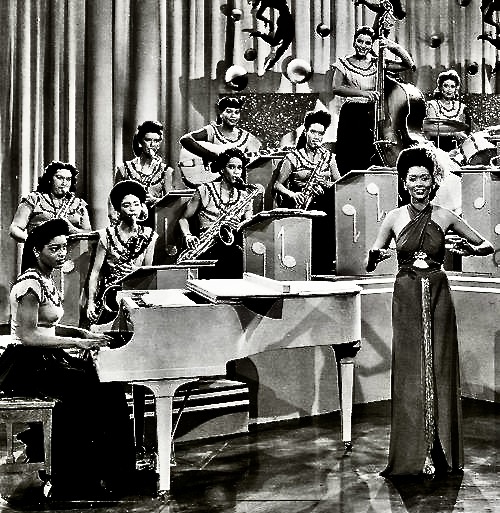
   “We went to Mammy Louise’s for dinner and then next door to the club,” he said. “The International Sweethearts of Rhythm were there the night we stepped out. They were an all-girl all-color orchestra. ‘Slick Chicks and Hot Licks’ was what it said on the billboard outside the doors. They raised the roof and we kicked up our heels, dancing up a storm.”

   The Furnace Room became Elmer Waxman’s Ubangi Club, but when Abner first took Lavert there in the 1950s, when he was twelve years-old, it was the Rose Room Cocktail Lounge. Before the Hough riots and Glenville shoot-outs in the 1960s, even though it was already mostly a colored neighborhood, the audiences were every which way. Judges and politicians from downtown brought their wives to the Rose Room. It was the black and tan saloon scene. It was its own world in the nighttime. But by then no one danced to jazz anymore. That had already changed. It wasn’t that jazz changed, even though it had. There was a new kind of music and new dancing in town.

   When Abner applied to the Cleveland Police Department after high school the merit system broke down, like it always did, because he was a Negro. They told him he had poor eyesight, even though he didn’t start wearing glasses until he was in his 70s, almost fifty years after joining the force. He had to ask for help from his ward leader to have the rejection overruled.

   He hunted bootleggers in the 1930s, before they gave him his own beat. It was dangerous work. They carried more guns than the police. He had to prove himself. “You could always tell whether the moonshine was good if you set it on fire and blue flames were what you saw. That’s when you knew it wouldn’t make you go blind.” Everybody took some home.

   There weren’t many men of color on the police force, and most of those who made the department had to get certification from outside doctors to get past the official exam of the police doctor. Jim Crow was sneakier in the North than it was in the South. The department kept separate eligibility lists, so when one Negro died, resigned, or retired, his replacement might or might not be another Negro. When a white policeman died, his replacement was always another white man.

   Duke Jenkins and his group were the house band at the Majestic. They were the first jazz band Lavert ever heard. Every Tuesday night was Cha Cha Night and on Thursdays Mambo Night was the hot ticket. But the big attraction was the before dawn Blue Monday Party.

   “People lined up to get into those jam sessions. Sometimes you couldn’t even get a seat. All the players, the girl singers, the quartets, entertainers like Erroll Garner and Arthur Prysock and Nancy Wilson, they’d be there performing. People went crazy when Nancy Wilson was there because she was so good,” Abner said.

   Lavert stayed overnight with his father at the Majestic on Sundays and went to the Blue Monday parties with him when they got going, which was at five in the morning. Afterwards Abner drove his son to school. If they stayed too late at the jam session, soaking up the sounds, he would call and ask for a squad car to race Lavert to school, its lights flashing and siren whooping.

   “Eyes lit up like flashbulbs on a camera whenever that happened,” Lavert said.

   There were only a handful of Cleveland hotels listed in the Negro Green Book. The Majestic was one of them. All the rooms had two beds and a radio on every bedstand, although Abner only had one bed. He had the other one removed so Lavert and he could have a table to eat at on Sunday nights. Lavert slept on a folding rollaway his father kept in the closet.

   When he was a baby his mother kept his playpen next to the upright piano in the front room. It was so she would know where he was. So long as she heard him picking out notes she knew he wasn’t getting into trouble. When he was in third grade he found out they had music classes at his grade school. He was eight years old.

   “I’d like to do that,” he told his mother. He lived with her and his grandparents. It was a surprise to them. “That’s just what my place was,” he said. “They didn’t think music was my place.” But he found out even the status quo can change.

   He put his name down for piano lessons at the Miles Standish School. He learned to play a Chopin waltz sitting beneath a painting of Miles Standish, after who the school was named. The portrait was of a soldier accompanying the Pilgrims when they came to the New World. In the painting he wore armor and carried a matchlock rifle. He didn’t look like he knew a piano from a peace pipe. 

   Lavert played the organ and piano because his grandmother decided she wanted him to. She was the matriarch of the family and conservative about everything under the sun. She didn’t believe in bell house music. She was strict about church music, too, so she had a man, who was the organist at the New Liberty Hill Baptist Church, come to their house and give him lessons. Years later, when he was older, Lavert played there himself.

   Paul John was the man who came to their house. He worked in the steel mills in the Flats. He was a friend of Lavert’s grandfather, who sang in the male chorus in the mill that Paul John led on a Salvation Army five rank pipe organ. The choristers went to Detroit and Pittsburgh to perform on holidays.

“   Mr. John could play Rachmaninoff, and all, but he was ahead of his time, so he had to give lessons,” Abner told his son. “That was the incentive for him when he came to your mother’s house and got you started. You put food on his table.”

   Lavert played sacred music for most of his life and jazz music the rest of the time. The sacred music came from his mother and grandmother and the jazz music came from his father, who took him to uptown clubs like the Tijuana Café Society.

   “When the Four Sounds came to audition at the Tijuana, they were just re-opening, and they didn’t even have a piano on the stage. It was in the corner. I helped them lift it up on the stage to do the audition,” Abner said. He was a strong rawboned man. “They had been the Four Sounds until they asked me to talk to the saxophone player. He had a habit of carrying a gun in his horn case. He wouldn’t listen to a lick of sense. When he said he didn’t want to leave it behind, they finally left the saxophone out and became the Three Sounds.”

   Most days anybody walking around the neighborhood could hear horns through open windows around Doan Square, where all the action was. It was usually a jazz musician reading his lines in the afternoon. Hotels weren’t open to musicians of color, so they stayed in boarding houses.

   “You couldn’t even go to the Five and Dime store and have a quiet lunch,” Lavert said.

   His grandmother went to buy a hat one Saturday and when she tried it on, she had to buy it. She had put it on her head to see if it fit and when a salesclerk saw her, she had to pay for it. His grandfather was a mulatto from Cuba. Whenever a white man came to their house, selling something, or on some errand, his grandfather was polite, but as soon as the white man left and was out of sight he would spit sideways and call the man a cracker.

   They lived on Pierpont Ave. in Glenville, what everyone called the Gold Coast, before Glenville fell apart and the Gold Coast moved to Lakewood in the 1960s. His grandmother died in 1968 and his mother sold the house, moving to Lost Nation Rd. His grandfather moved into a rented room. By then Lavert had finished studies at the Boston Conservatory and was playing the big organ at the Christian Science Mother Church. In the summer he played piano at jazz clubs in Provincetown and on Martha’s Vineyard

   When he was a boy Glenville was crowded with immigrants, Negroes, and Jews. There were orthodox Jews all over the place. He thought they were Santa Claus’s in black suits. There were churches for men of faith, like the Cory United Methodist Church, which had been the Park Synagogue, and the Abyssinia Baptist Church, which had also been a synagogue. There were clubs, movie houses, and department stores.
   There were mom and pop restaurants operated by the Jews. There were no bad sandwich shops in Glenville, but Abner always ate at Pirkle’s Deli. He said if he ever stumbled on a good-looking Jewish woman from the vantage of his window at the Majestic, he was going to track her down so he could get up Sunday mornings and stroll out to a deli with her.

   “Those folks never invented anything so fine as deli food,” he said. “The corned beef at Pirkle’s is as tender as a young lady’s leg.”

   Lavert’s father and mother were never together as a family. “There were two different families, his and ours.” Abner and Odessa had their room at the Majestic some nights, but in later years she stayed away. She felt he betrayed her. “My father said he wanted to marry my mother, and she thought he was going to divorce his wife, but he never did that.” 

   As time went on she had a hard time seeing Abner as a soul mate. He didn’t see it that way. “Your mother shot a hole in my soul.”

   Lavert lived with his mother, and after she married another man she bore two more boys who became his brothers. He became Lavert Stuart. Abner came to their house many times, often in his police car after he was promoted. He parked in the driveway for everybody to see. It wasn’t as if he was cut off from them.

   He was one of the first colored farmers in Twinsburg, where he kept fowl and pigs. Every November the family got a turkey for Thanksgiving. He had a smokehouse, too, and when the time came to slaughter some of the fattening pigs, he would do it himself. He castrated the males a month beforehand. The family had bacon and ham all winter and into the spring.

   Abner picked Lavert up in his Ford pick-up on Friday and Saturday nights to help him forage for feed. The father and son drove up and down Euclid Ave., on the south side of Glenville, from E. 110th to E. 95th St., picking up refuse from barrels and dumpsters behind the clubs and restaurants on the strip. Abner stuck his gloved hands into the slop and nosed around for metal and glass before filling up his barrels.

   “Pigs will eat anything you give them. They can be stink and filth, even though their sausages smell great. I would rather cut myself than injure my animals.” The Hebrew meaning of Abner is “father of light.” He was a good father to his pigs.

   When their barrels were full they drove to the farm. The pigs would hear the truck coming and know it was time to eat. “They started doing what pigs do, getting feisty and greedy. He dumped the food in the trough, let them loose, and they would go at it,” Lavert said. That was why Abner picked through the fruit, vegetables, scraps of meat, greasy bits and pieces, because they would have cut themselves, biting into anything.

   Lavert stopped gleaning garbage when his mother told him he had to be careful about his hands. She didn’t want him hurting them, hurting his chances. Odessa wanted him to go places, better places than scrounging for leftovers behind eateries in the middle of the night.

   He learned more sacred music and less blue notes after his mother put him in Empire High. Eleanor Bishop, his music teacher, had been there since the school opened. She had an hourglass figure and the only thing that gave her away was that she wore old lady comforters. But she was spry and walked fast. She could catch misbehaving boys anytime she wanted to.

   She was an old maid because she had become a teacher long ago and wasn’t supposed to marry, and by the time the times changed it was too late for her. One afternoon Lavert found a dedicatory book for Empire High, which was built in 1915. He leafed through it. He took it to her office.

   “I see your name in this book and your picture,” he said.

   She looked at him but didn’t say anything.

   “Is this you?”

   “Yes.”

   “But you’re old, not like this.”

   “Everything was once new,” she said, her face pinched. Lavert was sure she wanted to pinch him, hard, like she did when he hit a wrong note. But she didn’t put any concern to what he said. She made sure he practiced faithfully and later helped him get a scholarship to Ohio University, where he studied the organ. After he graduated he never lived in Glenville again.

   He lived in Chicago, New York, and Boston. He learned to live alone, like Duke Ellington, who said music was a mistress. He lived in his own world, detached and determined, so he could practice. He had friends who kept him in tune to the here and now, but on weekend nights he didn’t go anywhere. He had to be ready for Sunday services. That kept him out of wrongdoing. He tried the high life a few times but decided it’s misguided when you’re not feeling well in church after a hard Saturday night. He decided he had to do it his way.

   He didn’t see much of his mother, who moved to California to live with one of his brothers. He saw his father only when he was passing through the Midwest. They visited and had lunch at one or another deli in Cleveland Heights, where all the Jews had moved. Pirkle’s Deli had burned down.

   Abner was an industrious man his whole life. When he retired and his lawful wife passed on, he bought the commercial building next to Whitmore’s Bar-B-Q on Kinsman Rd. where it starts to snake up into Shaker Heights. There was a barbershop and beauty salon side-by-side. He lived upstairs in a one-bedroom apartment. He could have lived in a house, since he owned three of them, but didn’t want to.

   “I don’t want to get too comfortable because I may not be here long,” he said. His apartment had one bedroom and one bathroom. It had one table with two chairs, one sofa, and one half-empty closet. It looked like no one lived there. He was becoming his own gravedigger.

   “He had been industrious when I was growing up but changed into a careless custodian of his properties. He got stingy and mean. He patchworked instead of getting things done the best way, so everything slowly deteriorated. He wasn’t willing to pay the price to get things done the right way. When a man has that mindset, he ends up losing more money than he’s spent.” 

   Abner lost his eyesight when he was visiting Texas. He stepped on a splinter and after a few days his left big toe got infected. He had surgery for it, but in the end, they had to amputate the toe. Afterwards he lost feeling in his leg. While he was still in the hospital convalescing he woke up one morning and had gone blind. He stayed in Texas for a month, and when he came back he moved in with one of his daughters, who took care of him.

   He never recovered his sight, which was hard on him because he had always lived by his senses. He was troubled by visions and nightmares, which were part of the side effects from the medication he was taking. He had them at night when he went to bed. He heard things and saw craziness and wasn’t able to sleep.

   Lavert never got his father and mother together again, even when Abner was dying and Lavert was staying with him, playing old jazz records. His father listened to music all day long towards the end. He stopped sleeping and eating, drinking cold lemonade, instead. The last time his mother visited Cleveland Abner was near death. Lavert took her to places in Glenville, some that were still there and others that weren’t anymore, trying to get her to reminisce and go to the facility on Rockside Rd. where his father was. 

   She fought him all the way, though, and in the end wouldn’t go. Odessa just didn’t want )anything to do with Abner. “That’s all over, a long time ago,” she said, shaking her head.

   Abner and Odessa did what they had to do from beginning to end. “I was just a cameo in the business they had between themselves.” After his father died in 2005 there was nothing left to do anymore about the rips in the family fabric. He said goodbye to his mother, who went back to California. Abner left behind six children by his wife Amanda, eleven grandchildren, and eighteen great grandchildren with three buns still in the oven.

   When he moved back to Cleveland, Lavert played sacred organ music three seasons of the year at churches all around town. In the summer, however, he played jazz and popular tunes in clubs on Cape Cod. On those Sunday mornings, when the weather was good, on the coastline of the ocean, he brewed a pot of strong coffee and warmed up a plate of guava pastries. Sitting on his balcony in the light of the rising sun he watched gray seals sculling past on the long surf line.

A version of this story appeared in Literary Heist Magazine.

Ed Staskus posts on 147 Stanley Street http://www.147stanleystreet.com and Made in Cleveland http://www.clevelandohiodaybook.com.. To get the site’s monthly feature in your in-box click on “Follow.”

“Bomb City” by Ed Staskus

Cleveland, Ohio 1975. The John Scalish Crime Family and Danny Greene’s Irish Mob are at war. Car bombs are the weapon of choice. A  police detective is assigned to find the bomb makers. Revenge is always personal. It gets personal.

Available on Amazon: https://www.amazon.com/dp/B0F1LM1WF9/ref=sr_1_1?crid=2MYAQAOZIC2U9&dib=eyJ2IjoiMSJ9.hTm7BGbiQbSe5ZapFwYPPfcwOpTe-Vdg6VLE4aGyTyk.Z0R-VNBWWEcvKcNaO9LdCOUnNIOOXgvYkRS_FXiXuHk&dib_tag=se&keywords=bomb+city+ed+status&qid=1742136726&sprefix=bomb+city+ed+staskus%2Caps%2C84&sr=8-1

A Crying of Lot 49 Publication

Behind Bulletproof Glass

By Ed Staskus

   I should have known better when I told the young woman on the other side of the Walgreen’s bulletproof drive-thru window that I needed the kind of coronavirus test that would get my wife and me into Canada and she breezily said, “For sure, this is it.” She was a trained pharmacy technician, but made up her harebrained reply, assuring me all was well even though she didn’t know what she was talking about. We found out three days later trying to cross the border at Houlton, Maine into Woodstock, New Brunswick.

   Getting a straight answer from the young can sometimes be like trying to give fish a bath. They often have a quippy answer for everything. Their answers are in earnest no matter what they’re asked and no matter their wealth or lack of knowledge. Whenever they are fazed by anything they say, “Oh, whatever.” 

   They say whatever they want when they are behind bulletproof glass.

   My wife and I were going to Prince Edward Island, where we didn’t go the summer before because of the 19 virus. Canada closed itself up tight as a clam in March of that year and didn’t reopen for Americans until early August of this year. Once we heard the opening was going ahead, we got in touch with the folks who operate Coastline Cottages in the town of North Rustico on PEI and let them know we were coming on August 21st and staying for three weeks.

   The cottages are on a hillside, on land that has been in the Doyle family going on two hundred years. A park road cut through their farm when it was built in the 1970s, but unlike other landowners they didn’t sell their remaining acreage to the state, so it sits snug inside the National Park. There are several homes on the bluff side of the eponymous Doyle’s Cove, some old and some brand new. In one way or another every one of them houses a homegrown north shore family, except for Kelly Doyle, who has lived on the cove the longest and lives alone.

   It takes two and half days to drive from Lakewood, Ohio to Prince Edward Island. At least it did every other year we had driven to the island. This year it took us six and half days.

   When we got to the Canadian border the black uniform in the booth asked for our passports. We forked them over to the tall trim guard, forearms tattooed, a Beretta 9mm on his hip. He was young and just old enough to be on this side of Gen Z. He looked our documents over and asked where we were from and where we were going.

   “Cleveland, Ohio,” I said. Although we live in Lakewood, an inner ring suburb, we always tell red tape we live in Cleveland. No one has heard of Lakewood. Everybody has heard of Cleveland, for good or bad. At least nobody calls it “The Mistake on the Lake” anymore. 

   I almost preferred the insult. “It keeps the riff raff rich away,” I explained to my wife. “There is no need for Cleveland to become the next new thing. They will just use up all the air and water and our real estate taxes will go ballistic. On top of that, we would end up knee deep in smarmy techies with their cheery solutions to all the world’s problems.”

   We handed our ArriveCAN documents over. We handed our virus inoculation cards over. We had both gotten Moderna shots. We handed our virus tests over, proving we had both tested negative.

   “You are cutting it close,” the border guard sniffed, shuffling everything in his hands like a deck of cards. I was hoping he wouldn’t turn a Joker up.

   The negative test had to be presented at the border within 72 hours of taking it. We were there with an hour to spare, although it would have been two hours if we hadn’t had to wait in line in our car for an hour. We had driven a thousand miles. It was tiresome but waiting in an idling car wasn’t any more skin off our noses.

   It started to smell bad when a second border guard stepped into the booth and the two guards put their heads together.

   “The antigen tests you took aren’t accepted in Canada,” the Joker said. “It has to be a molecular test. You can go ahead, since you’re from Canada, but your wife has to go back.”

   I was born in Sudbury, Ontario, and have dual citizenship, although I only carry an American passport. I couldn’t tell if he was being serious, so I asked him to repeat what he said. He repeated what he said and gave us a turn-around document to return to the USA when I told him I wasn’t ready to abandon my wife.

   We went back the way we had come, just like two of the six cars ahead of us, although we had to wait in line at the American crossing for an hour. Once we returned to Maine, we found out we could get the molecular test, but it would be a week-or more before we got the results. Nobody we talked to, not even the Gods of Google, was any help. A friendly truck driver mentioned New Hampshire was faster, only taking a day or two.

   The truck driver was stout, bowlegged, wearing a Red Sox baseball cap, a two-or-three-day growth of beard on his face, with a small shaggy dog to keep him company on the road. He wasn’t a Gen Z man. It was hard to tell what generation he belonged to, other than the changeless working-class generation.

   We drove six hours the wrong way to Campton, New Hampshire and checked into the Colonel Spencer Inn. It was Saturday night. We got on-line and made test appointments for noon at a CVS in Manchester, an hour away. We streamed “Castle of Sand” on our laptop. It was a 1970s Japanese crime thriller movie and kept us up past our bedtime.

   Over breakfast the next morning our innkeeper told us to go early since the traffic leaving New Hampshire for home on Sunday mornings was heavy. We gave ourselves an hour and a half to drive the 55 miles and barely made it. Luckily, we hadn’t made appointments for an hour later. We never would have made it. The traffic on I-93 going south was a snarl of stop and go by the time we started north back to Campton.

   We got our test tubes and swabs and stuck the swabs up our noses. I spilled some of the liquid in my tube and asked the Gen Z pharmacy technician behind the bulletproof glass if I should start over with a new kit.

   “You’re fine, it doesn’t matter,” she said, lazy as a bag of baloney. She couldn’t have been more wrong, which we discovered soon enough.

   Gen Z is self-centered and self-sacrificing both at the same time. “My goals are to travel the world and become the founder of an organization to help people.” They want to stand out. “Our generation is on the rise. We aren’t just Millennials.” They say they are the new dawn of a new age. “We are an unprecedented group of innovation and entrepreneurship.”

   Welcome to the future, just don’t take the future’s word for it.

   We spent the night at the Colonel Spencer. It was built in 1764, a year after the end of the French and Indian War. During the war the British, allied with American colonists, weaponized smallpox, trading infected blankets to Indians. The virus inflicts disfiguring scars, blindness, and death.

   “Could it not be contrived to send the smallpox among those disaffected tribes of Indians? We must on this occasion, use every stratagem in our power to reduce them,” the British commander Sir Jeffrey Amherst wrote to his subordinates.

   The results were what the continent’s newest immigrants from the Old World expected.

   “They burned with the heat of the pox, and they died to feed the monster. And so, the village was deserted, and never again would the Indians live on that spot,” is how one of the natives described the deadly epidemic.

   We had dinner at Panorama Six82, not far from our inn. The hostess seated us outside on the patio which looked out over a valley and a series of cascading White Mountain hilltops. The sun went down behind one of them and we finished our dessert in the dark.

   Our server was a middle-aged man from Colombia wearing jeans, a Panorama Six82 signature shirt, and a Sonoma-style straw hat. He went back to the homeland every year to visit relatives.

    “They always want money, so I don’t bring too much of it,” Fernando said. “It’s not as dangerous as most Americans think it is. I avoid some neighborhoods, sure, and I avoid riding in cabs. The rebels are in the hills, not the cities, and besides, they don’t do much anymore. The Venezuelans are a problem, all of them leaving their god-forsaken country. But they do a lot of the dirty work for us these days.”

   We drove back to Houlton on I-95. The speed limit north of Bangor is 75 MPH. I set the cruise to 85 MPH and kept my eyes peeled for moose. The fleabags lumber onto the roadway, sometimes standing astride one lane or another. Hitting a moose is a bad idea. A full-grown bull moose stands six to seven feet tall and tips the scales at 1500 pounds. It isn’t certain that the collision will kill the beast, but it will kill your car, and maybe you. They do most of their roaming around after nightfall. We made sure we got to our motel before dusk.

   In the morning my wife was winding down a business meeting on Zoom when there was a knock on our door. It was the housekeeper. She wore a black uniform and black hair pulled back in a bun. She was young. She was part of the Z crowd.

   “We’ll be out in about a half-hour,” I said.

   “Can I replace the towels and empty the trash?”

   “Sure.”

   “Weren’t you here a few days ago?”

   “Yes,” I said, and told her about trying and failing to get across the border and our search for a fast 19 test.

   It turned out the explanation for the motel being sold-out was because of the same problem. Every other person lodging there had been turned around for one reason or another.

   “You should go to the Katahdin Valley Medical Center,” she said. “A friend of mine went there, they did the test, she got it back the next day, and went to Nova Scotia.”

   “Thanks,” I said. We packed and followed Apple Maps to the medical center. The receptionist didn’t know anything about a fast molecular test. She sent us to Jesse, the man upstairs, who was the man in charge.

   “We test on Mondays, Wednesdays, and Fridays,” he said. “It takes about a week to get the results back from the lab.” It was Tuesday. We were already three days late. I started looking over my shoulder for Chevy Chase.

   “Not the next day?”

   “No.”

   We left Houlton and drove to Presque Isle, had lunch, messed around, my wife went running on the town’s all-purpose trail, and we drove to the Caribou Inn in the next town north. While the receptionist checked her computer for our reservation, we heard a wolf whistle through the open door of the office behind the front desk. A minute later we heard it again.

   “That’s just Ducky,” the receptionist said. “She belongs to the manager.”

   “Does she do that often, whistle, I mean?” I asked.

   “Whenever she sees a pretty girl.”

   Another wolf whistle came my wife’s way.

   I must have looked cross, because the receptionist said, “Ducky is a parrot.”

   Ducky was a parrot in a tall white cage just inside the door of the office. Her plumage was green with some red and yellow mixed in. She was a saucy character.

   “She’s twenty years old,” the receptionist said.

   “How long has she been here?”

   “Twenty years.”

   Ducky was spending all her Gen Z years locked up at the Caribou Inn, where flocks came and went. The only lasting relationship she had was with Betty, the hotel’s manager, and the bird’s keeper.

   “I didn’t know parrots lived that long.”

   “They can live to be seventy, eighty years old,” Betty said.

   “Ducky wolf whistles women?”

    “And men. We thought she was a he until she started laying eggs not long ago.”

   The parrot was going to outlive most of us, the 19 or no 19. They sometimes play dead in response to threats. They can also look dead when they are asleep. But if a parrot is lying still and not breathing, looking lifeless, you can assume it is dead.

   We had a non-smoking room, although every hallway that led to our room was lined with smoking rooms. The hallways smelled sad and stale. We were settling in with a bottle of wine and a movie when we got a phone call. It was the lab in New Hampshire that was doing our 19 molecular tests. They had good news and bad news. My wife tested negative, but my test was discarded. 

   “There wasn’t enough liquid in the test vial to maintain the sample,” the lab technician said. “Did you happen to spill some of it?”

   I didn’t bother trying to explain. I got on-line and filled out another ArriveCAN form. When we got to the border my wife had no problem. The only problem I had wasn’t make or break, since they couldn’t deny me entry, test or no test. A health officer gave me a self-test kit and told me to make sure I performed it within four days. She was in her early 30s. I had no reason to be skeptical. She was just out of Gen Z range. I should have been leery since she was wrong. She wasn’t as far out of the field of friendly fire as I thought.

   Four days later, when I went on-line and followed the directions for the self-test, the Indian-looking Indian-sounding woman on the other side of screen was nonplussed when I apologized for waiting to the last minute.

   “I don’t understand.” she said. “You are four days early. You are supposed to test after eight days of self-quarantine.”

   When I started to spell out what had happened, she wasn’t in the mood, and said she would schedule Purolator to pick my test up the next day. Purolator sent me an e-mail saying they would pick up between nine and noon. The truck pulled up just before five. I was grilling dogs and corn on the front deck. The next day I got an e-mail informing me my test came back negative. I had been tested four times in ten days and was finally officially virus-free.

   No matter the generation, Prince Edward Island was the only place and people who got it right. When we arrived late Wednesday afternoon and crossed the nine-mile-long bridge to the province, we waited in one of the many lines edging towards checkpoints. It didn’t take long. A young woman took our vitals while an older man in a spacesuit swabbed our noses.

   “If we don’t call you within two hours you tested negative,” he said.

   We drove to the Coastline Cottages. “Welcome to Canada,” our hosts said. “You made it.” 

   No one from Health PEI called us. We unpacked, watching the day get dark over the Atlantic Ocean, and fell into bed. I drifted off thanking God somebody on our part of the planet knew what the 19 score was, not some mumbo jumbo they dreamed up because they neglected to check the scoreboard.

Ed Staskus posts stories on 147 Stanley Street http://www.147stanleystreet.com and Cleveland Daybook http://www.clevelandohiodaybook.com. To get the site’s monthly feature in your in-box click on “Follow.”

Head Over Heels

By Ed Staskus

   It was wetter than not wet the front end of summer and too muddy to ride the single tracks in the Rocky River valley. It rained nine days the first two weeks of July. Instead of the single tracks, I rode my Specialized on the all-purpose trail and left my Schwinn hanging in the garage. The Schwinn was outfitted for dirt, with front shocks and a low stem. The Specialized was outfitted with road tires, knobby on the outside and smooth rolling on the flat side, making for better going on asphalt.

   It made for even faster going down Hogsback Lane, which is the entryway off Riverside Dr. into the valley. It is laid down on a steep shale hill. It’s about a half mile to the bottom. When the shale slumps and slides, the two-lane surface crumbles, and it becomes vital to keep your eyes glued to the road. Hunched over the handlebars I could hit 40 MPH downhill, no problem, unless I feathered the brakes, which I usually did, lessening the chances of flying over the handlebars. That would have been a misadventure.

   I rode alone most of the time, especially that summer because my brother Rick, with whom I occasionally rode, was getting married. He said he didn’t have much time to get on his bike anymore. “I’ve got a lot going on,” he explained. He had been married once before, but it only lasted two months before his bride hit the road.

   “I don’t want him racing that crazy hill and crashing,” his fiancée Amy said. She didn’t want a train wreck walking down the aisle with her. She and Rick had met earlier in the year on a blind date. One whirlwind after another led to the one-way street they were on.

   “You be careful, too” my wife said, watching me hitching up in the backyard.

   The summer of 1995 was hot, in the high 80s when it wasn’t in the high 90s. I could have ridden the single tracks, since they had dried up going into August, but I stayed on the all-purpose trails. Towards the end of one week, after getting home from work, I rode twelve miles out, almost all the way to Berea. It was on the way back that I passed a man wearing a red helmet. Inside a few minutes the red helmet was behind me, drafting, but when I slowed down for a car at the crossroads to the entrance of Little Met, he slipped past me when the car paused to let us go by. The trail went up a long hill. I finally caught up at the top.

   He tucked in behind me and we rode to where the trail zigzagged through some curves  where he got sloppy. He tried to pass two women on roller blades, except on an inside-out curve, and when another bike came up on the other side, he had to slalom wide onto the grass. He had to loop back.

   “That was a good pace,” he said before I peeled away to go home, while he kept going his own way. Pedaling up Hogsback Lane is a long slog, which is what I did, shifting into lower gears. By the time I got close to the crest I was on the verge of stalling. When I made it to flat land I sucked air, returning to the land of the living.

   The next weekend Rick had an appointment for a haircut at Planet 10, on W. 9th St. and wanted to ride there. We rode through Ohio City to Church St. He pointed out an old church whose rectory had been converted into a recording studio. “That’s where we’re having our reception,” he said. Amy was a sometime actress and sometime singer. She had the looks and the voice. She made a living doing nails, since nailing roles in Cleveland wasn’t a paying proposition. Her showbiz earnings were her drinking money.

   Rick was Roman Catholic and of Lithuanian stock, like me, but they were getting married in an Episcopalian church instead of the ethnic church where we had grown up. Even though Amy was an atheist, her well-off grandmother wasn’t and wanted her to be married in a house of God. Amy didn’t like the old Lithuanian church in North Collinwood, so it was going to be someplace else.

   We went south on W. 25th St., crossed the bridge to Jacobs Field, and rode to the Warehouse District. The bride-to-be was still all right with Rick riding city streets, but not any farther into the near east side, which I often did, to Cleveland Hts. through the ghetto along Cedar Rd. She quashed that by stamping her foot. “I don’t want him getting killed by any porch monkey,” she said.

   Rick pushed his bike into Planet 10’s lobby and I rode away. After zigzagging around downtown, on my way home, stopping at a narrow strip of grass near the Hope Memorial Bridge, squeezing a drink from my water bottle, I saw a black woman with shopping bags easing herself down to a patch of grass at the side of an RTA sign. She looked up at me and smiled. One of her teeth was chipped. She was probably going back to the ghetto where she would make plans to ambush Rick if he ever rode his bike past her house.

   I was standing outside my garage when Rick and Amy pulled up in her baby blue Ford Tempo. His bike was sticking out of the trunk. The trunk was bungee cord shut. “Jerry screwed up Rick’s appointment,” she complained. “He’s so unprofessional.” She jabbed the air with a finger. She was angry. She reminded me of Jayne Mansfield in the movie “The Wayward Bus.”

   Planet Ten was owned and operated by a gay man named Jerry who was a junkie. He lived near Gordon Square where he could score smack in the blink of an eye. He was up-and-down on any given day. He was good with clippers and shears, though, when he was on the up-and-up.

   It was mid-week before I rode back into the valley and got on the dirt trails that branch off from the horse stables at Puritas Rd. They were dry where they were level, but they weren’t level over much. I had to ford a stream where a tree had fallen. I jumped some baby stumps and went sideways once. When I got home I got the hose and sprayed cold water on myself. It was a hot day and I had gotten hot.

   My wife and I drove to Amy’s bridal shower that weekend, which was at her best friend’s house in Avon Lake. Wendy was a big-faced woman married to a ruddy-faced man who was a barge pilot on the Mississippi River. It was a very steamy that day, even though it was just barely August. I was sitting on a leather sofa in the air-conditioned family room when I noticed a small dog on the coffee table. I couldn’t tell if it was a dog dead asleep or a dead dog who had been stuffed. When I reached for whatever the thing was, it snapped at my fingers.

   “You better watch out,” Wendy said. “He’s blind, so he bites at everything.”

   I went for a spin after we got home. Twilight was turning to dusk by the time I got back. Snapper, our Maine Coon cat, came running out of the neighbor’s backyard. Just when I was ready to close the garage door, Rick pulled into the driveway. Snapper ran the other way. He didn’t trust my brother. I had gotten to not exactly trusting him anymore, either. He was always explaining something or other.

   “Can I borrow your lawn mower?” he asked.

   “All right, but bring it back.”

   He was notorious for never returning borrowed tools. He had Kate, Amy’s three-year-old daughter, with him. I picked her up, held her upside down, and spun her by her heels in circles. When we were done we talked about a nickname for her, finally settling on Skate.

   “It rhymes with Kate,” I said. She waved goodbye through the window of the car as Rick pulled out with the lawn mower. If the child hadn’t been with him I wouldn’t have lent him the mower. That was probably why he brought her along. He was shrewd that way.

   By mid-August cumulus clouds were dotting the sky and the weather was surprisingly cooler. I rode my Schwinn down Hogsback Lane and got off the all-purpose trail at Mastick Woods, veering onto the dirt track there. I rode the track and then double-backed on the horse trail. As I did, I noticed somebody was coming up. When he went by I saw he was wearing a baseball cap instead of a helmet and was on a Trek. He was riding fast, and even though I followed him as best I could, I couldn’t catch him until he suddenly slowed down. I saw why when he pulled up. Horses were coming around a bend. We waited as the nags cantered past.

   The baseball cap turned to the right and rode into the trees toward the river and the single tracks on the bank. I followed him, bumping over ruts and logs and through underbrush, but soon lost sight of him. He pushed up the hill running along Big Met, then down, and as he came into the clear jumped onto the trail. He had gone around and was riding faster than before. We sped through a thicket, then across a baseball field where he widened the gap by jumping a wood guardrail, something I couldn’t do, even if I tried as hard as I could. It would have ended badly. I went around. It went well enough.

   I thought I might catch the baseball cap on the Detroit Rd. climb out of the valley, except he climbed so fast I lost more ground. I finally caught up to him where he was waiting at a red light. “I wasn’t planning on doing much today, but it ended up being a fun ride,” he said. “I saw the Vytis decal on your fender.” There was a red decal of the Lithuanian coat of arms on my rear X-Blade fender. 

   “Not many people know what that is.”

   “I know my Baltic heroes,” he said, waving goodbye.

   JoJo was Amy’s friend who had arranged the blind date when Amy had been on the prowl after her latest divorce. She was promised she could be the maid of honor if the date led to anything. She was a travel agent. Amy gave her a cash down payment for a Cancun honeymoon. But then the travel agency called and said they were getting anxious about the down payment, since they hadn’t received it, yet. When Rick telephoned JoJo she said she hadn’t gotten any cash, but when Amy overheard that she rushed to the phone. There was a heated argument and JoJo somehow found the money. The honeymoon was back on. JoJo as bridesmaid was off.

   The next day Rick called. “Are you going riding?” he asked.

   “I’m just going out the door,” I said.

   “I’ll be there in ten minutes. I need some fresh air.”

    I was working out the kinks in my lower back when Rick rode up the driveway.

   “Amy’s sick,” he said.

   “What’s wrong with her?”

   “Cramps,” he said. “I think it’s nerves.”

   “Let’s go,” I said.

   The sky was overcast and gusts from the southwest pushed us around as we rode on the rim of the valley. We glided down and rode single tracks. The ruts were bad but we rode fast enough. My back wheel went in wrong directions a few times. Rick held back. He didn’t want to face plant.

   “A little out of control there,” he said when we crossed over to a horse path and relaxed.

   “Maybe a little,” I said.

   “I want to make it to the altar in one piece,” he said.

   “Getting married is risky business,” I said. “Take a look at you and Amy. You were married once and it only lasted two months. Amy’s been married twice. She’s got a kid by one of the husbands and another kid by a free agent. You might want to throw caution to the wind between now and the wedding day.”

   “I don’t think so,” he said, shooting me an aggrieved look. 

   “Then keep your eyes wide open before the wedding and half-shut afterwards.”

   Leaving the valley Rick suddenly braked ahead of me. I got tangled up in his back tire and went over the handlebars. I skinned my knee, but we were going too slow for much else to happen. “Crash test dummies,” a watching crow squawked. It took me longer to put my derailleur chain, which had fallen off, back on than it did to get over my injuries. The chain was trapped against the frame. I had to loosen the rear wheel. I cleaned my greasy hands on some of last year’s fallen leaves.

   The morning of the wedding, while my wife went shopping for a gift, I sped down into the valley. I felt good, but a strong crosswind was blowing and I got tired. The bike felt sloppy, too. Going home I pushed hard because I didn’t want to be late for the ceremony. When I finally got home I found out I had been riding on a nearly flat back tire.

   The wedding went off without a hitch, but during the reception, when my wife was congratulating him, Rick made the shape of a handgun with his hand, with his index finger pressed to his temple. The next day I drove to his house with the gift we had forgotten to bring to the reception. Amy was lounging in the living room in a thick white bathrobe, poring over Cancun brochures. Skate was in her pajama’s watching SpongeBob Squarepants.

   “How’s the new life?’

   “Couldn’t be better.”

   By the beginning of October the valley was starting to glow with maple red. One Sunday morning my wife and I had breakfast down the street at the Borderline Café and went for a walk together on the horse trails behind South Mastick. That night, while we were watching a movie on TV, Rick called.

   “I won’t be able to ride anymore.”

   “Amy?” 

   “No, it’s my shoulder.”

   I had noticed how he couldn’t lift his right arm above his head without trying hard. “After any ride,” he said, “any ride at all, potholes or no potholes, my shoulder is in a lot of pain. I’ve been taking Celebrex, but my doctor told me it’s rubbing bone on bone. There’s almost no cartilage left. He said sometime in the next couple of years, depending on how fast the rest of it goes, I’ll need a replacement shoulder.”

   “Oh, man!” I exclaimed.

   The last Saturday of the month was the last day of the year I rode in the valley. It was getting too wet and cold. I was adjusting the strap on my helmet when some neighborhood boys and girls came walking up with rakes, brooms, and a wagon. They asked if they could rake our yard for $5.00. They started pushing wet leaves into piles. The biggest of the girls walked up to me.

   “Mister, can I ask you something?” she said.

   “Sure,” I said.

   “That small boy,” she said pointing to a small boy. “He’s having an emergency.”

   I rang the doorbell for my wife. She came outside, saying she would take care of the boy, who was doing a potty dance, and supervise the raking. “Go before it gets dark,” she said. It was getting dark earlier and earlier. It would soon be dark the minute I got off work at 5 PM.

   I cut across a field where Hogsback Lane intersects with the Valley Parkway and rode onto a single track. It was littered with slapdash. A flock of Canadian geese went by overhead. They honked at me. I came around a quick bend and the branches of a fallen tree on the side of the track jabbed at my face. I swerved to the left and pulled on the brakes, jumping off the bike when the tree I was going to run into became the tree I ran into. I landed on my feet. The bike was good to go when I picked it up, thank God.

   On the way home I rode on the road, instead of the trail, hugging the shoulder’s white line. A man in a Ford F-150 pick-up leaned on his horn behind me, and when he went past, tried to shrug me off the road, giving me his middle finger for good measure. Some people are sons of bitches. There’s no getting around it. At home I hosed off the Schwinn and hung it up in the garage. I checked the tires. They looked good, although I knew hanging upside down in the garage all winter long the air would slowly seep out of them.

   When you ride with somebody you’ve got to wait until they’re as ready as you are. When you ride by yourself you can go whenever your bike is ready. Nobody wants to be alone, but sometimes you just need to be left alone. I did yoga at home that winter to give my lower back a helping hand. I went to classes sometimes even though I couldn’t abide the pie in the sky talk. I had an indoor bike and pedaled on it. I would have to pump up my road bike tires the coming April before going back into the valley. When I did, I would keep my eyes on the road ahead, not looking back, feeling for the smell of springtime after a long winter.

   I never did ride with Rick again, even though he and Amy didn’t work out. They got divorced and she drank herself to death. Another blind date got him married a third time to a stiff-necked school teacher whose husband had left her. She didn’t like my looks. She didn’t want me to be a part of their happy family. I didn’t mind. One of her grown-up sons was a gun nut and the other one was white bread. Leaving them alone to grind their teeth was for the best. I slapped on a shaggy dog smile whenever I saw them and left it at that.

Ed Staskus posts on 147 Stanley Street http://www.147stanleystreet.com and Made in Cleveland  http://www.clevelandohiodaybook.com. To get the site’s monthly feature in your in-box click on “Follow.”

“Cross Walk” by Ed Staskus

“Captures the vibe of mid-century NYC, from stickball in the streets to the Mob on the make.” Sam Winchell, Beyond Fiction

Available on Amazon: https://www.amazon.com/dp/B0CRPSFPKP

Late summer and early autumn. New York City, 1956. President Eisenhower on his way to the opening game of the World Series. A hit man waits in the wings. A Hell’s Kitchen private eye scares up the Cold War shadows.

A Crying of Lot 49 Publication
Day of the Snapper

By Ed Staskus

   After we got married my wife and I bought a home in Lakewood a few houses east of the Rocky River valley and set up housekeeping. It was the early 1990s. We tore all the lime green shag carpeting out, tore all the false ceilings out, and tore all the wallpaper off the walls, painting them white. We purged the original bathroom. The house was built in 1922 and the bathroom had to go. It was only the beginning, but at least it was a start.

   After a few years we thought we would get a cat. My wife wanted a darkish long haired. I wanted an orange short haired. We got a fluffy orange Maine Coon. He was a half-breed, but well bred. The few times he misbehaved it was mostly because we hadn’t made it clear to him that some behavior, like scratching the furniture, was out of bounds. After we let him become an inside outside cat, all the scratching he did after that was outside. We never asked the local trees shrubs or fences whether they minded, or not.

   He stayed indoors during wintertime, except when it was above freezing, as well as those times he was simply close to the side door and I tossed him outside, which I did whenever there was a snow mound beside the door. If the snow was fluffy enough, he sank into it up to his eyeballs, looked helpless for a second, scrambling to get out of the snow, and giving me a dirty look rushing back inside. Maine Coons have a reputation for enjoying snow. Our cat didn’t live up to the reputation. He was good with rain, tolerated snow showers, but not blizzards or northern Ohio winter wind storms.

   We named him Snapper after a movie we had recently seen, “The Snapper,” which is about a big family in a small house in Dublin whose oldest daughter has gotten pregnant, but won’t tell anybody who the father is, because it happened after a wild night at a pub with a man who is her father’s friend and is her father’s age. She tells everybody it was a friendly Spanish sailor passing through town. The family calls the baby in the belly the Snapper.

   I called our cat Bud. My wife called him Snaps, Snapper Doodle, Kinney, Lambkins, and Goose. He didn’t answer to much unless he was hungry, wanted to go outside, or wanted to come back inside. He didn’t like to be bothered when he was catnapping, which was more often than not. He never answered to Bud, or anything else, when he was wholeheartedly asleep.

   Snapper didn’t tell us who his parents were. He didn’t say a word about his brothers and sisters, or uncles and aunts. He didn’t tell us where he was from or how he had gotten to where I found him, which was the Cleveland Arcade. He was vocal enough when it came to food and creature comforts but didn’t like talking about himself.

   It was Thanksgiving and Christmas time. I was downtown to pick something up from a store in the Cleveland Arcade. The whole placed was dolled up for the holiday. It used to be called the Crystal Palace. I parked near the Main Library and went in through the Superior Ave. doors. When I did, I noticed the Animal Protective League had taken a vacant storefront for the time being and was peddling dogs and cats. When I looked around, I spied our new kitten in a cage at eye level in the middle of the store. I extended my index finger into his jail cell, he took it into his mouth, and bit me. He was a youngster somewhere between 10 and 12 weeks old. He might have been able to puncture paper, but not me.

   “You’re for me, bud,” I told him.

   I told the man behind the sales counter I was going to my car to get money to pay for him. When I got back a young lady had him in her hands and was walking to the counter. I stepped up to her, tapped her on the shoulder, took our cat away from her, and said, “He’s spoken for.” She gave me a sour look and went looking for another one before another one of me came along.

   The Maine Coon is one of the oldest breeds in the United States. Nobody knows exactly where they came from, but many believe they are related to both Siberian and Norwegian Forest cats. They are the official state cat of Maine. Down Easters say the breed originated in their state. Others say they are the only original American cat.

   The legend I like best is that when Marie Antoinette, the ill-fated Queen of France, was trying to beat feet out of the country, she enlisted the help of Captain Samuel Clough. She loaded his ship with all her favorite stuff, including six of her favorite cats, Siberians and Turkish Angoras. Her luck was bad, though. The Gendarmerie dragged her back to Paris before the ship could sail. When the ship sailed the six cats sailed with it. After they reached the town of Wiscasset, Maine they went into town on shore leave, living it up with the local breeds. They didn’t make it back in time when the ship shoved off, developing into the modern kind of Maine Coon. 

   My mother-in-law was owning and operating a deli takeout on the ground floor of the National City Bank building on East 9th St. My trip downtown had also meant picking up dinner for myself and my wife. I needed to get food for the new guy, too. I parked on Short Vincent. I didn’t want to leave the cat in the car, so I smooshed him into the pocket of my winter coat.

   “What’s that wiggling in your coat?” my mother-in-law asked handing me a bag full of good food. The cat stuck his head out of the top of my pocket sniffing at the bag.

   After oohing and awing at the furball she gave me a wicker basket for him to sleep in. He slept in the basket that night and for years afterwards. He never suffered from insomnia. Even when we bought a bigger and better basket for him, he continued sleeping in the original until he couldn’t fit into it anymore. When he grew up, he had a white ruff on his chest and a two-layered coat, a silky undercoat under longer guard hairs. He wasn’t as big as a purebred Maine Coon, but more than hunter savvy enough. He was more than sociable with us since we were his feedbag.

   At first, we thought we would keep him indoors, but he was as much dog as cat and had to go outside, no matter what. When spring arrived, we started letting him out and teaching him to stay away from the street. I let him wander around, following with a squirt gun, and whenever he drifted down the driveway to the apron squirted him in the face. He didn’t like it and learned his lesson, at least until he got older, when all bets were off. Our backyard was fenced on three sides and raised above the alley behind our house. Three or four houses both sides of us was as far as he ranged sideways. 

   I was watching him walk up the sidewalk one day when a full-grown cat came sauntering his way. Snapper was still a tyke. They sniffed at each other. Our guy made a sudden movement and the other guy swatted him. When he went running the other cat followed him. He jumped and I gathered him up in my arms. The neighborhood bully sat at my feet watching while Snapper made faces at him, throwing caution to the wind, snarling, and showing his claws. He could be sassy. Cats fight all the time. Even when they are playing, they get scratched. That doesn’t keep kittens from happening. They are both wild and domestic at the same time.

   Over time he learned and remembered what our cars sounded like and hearing my wife or me pulling into the driveway ran out of the backyard to see us. I didn’t like him doing it and blared my horn to make him stop doing it, but he never did. He went his own way.

   We lost him one day in the night when he got trapped inside a neighbor’s garage after the man unwittingly closed the door on him, but he was such a loudmouth that his cries alerted everybody to where he was. He could have been a civil defense siren. He knew to come inside at sunset, but sometimes forgot, sitting under our bedroom window in the middle of night meowing until we let him in the house. He slept with us on our bed, taking up a third of it. He liked his space.

   Snapper was a mouser, bringing half dead mice to the door for our approval. He messed with anything that moved. Since we lived on the edge of the valley park, there were plenty of squirrels, rabbits, possums, and racoons. He never caught a rabbit, but one day a racoon caught him. We were searching for him the next day when I found him curled up in the back of a closet. There were gobs of dried blood on his face and puncture wounds on one side of his mouth.

   “It looks like a coon hooked him,” the vet said, sewing him up and shoving an antibiotic down his throat. “Give him one of these every day for a week.” Giving him the pills was easier said than done.

   He was a birder, too, although birds were usually too fast for him. One day a pair of blue jays were in our backyard bird feeder when he went after them. That was a mistake. One of the birds flew away but the other one circled back and started dive bombing him. Snapper had no answer for the loud jeers and attacks of the big bird and ducked under a hedge sulking. The rest of the summer he scanned the sky and made sure there were no blue jays in his neck of the woods before he went exploring.

   By the time his second summer rolled around he could jump to the top of any fence, climb any tree, and even make his way to the top of flat-roofed garages. He came down from trees backwards, but I usually had to get a step ladder to get him down from roofs. He often bit off more than he could chew. I kept him in shape by holding him upside down and tossing him up in the air. He twisted at the top of the arc, aligning himself head up feet down, landing on my open hands. He rarely misjudged it, nailing the landing. It stood him in good stead his long lifetime.

   Indoor cats live about 12 to 17 years. One way or another outdoor cats live about 2 to 5 years. Maine Coons live about 10 to 13 years. Snapper was half Maine Coon and half who knows what. He spent half his life indoors and half his life outdoors. The more time he spent in the great outdoors the more wary he became of the animal kingdom, especially people and their ways. He always had the same expression on his face, whether it was a June bug or an ax-murderer coming his way. He was able to snap to attention out of a deep sleep in a split second. Snapper never let anybody get near him unless we were nearby. He was smarter than he knew. He lived to be nearly 18 years old. 

   We fed him wet food in the morning and kibble the rest of the time. We started him off with top shelf wet food until he made it known that anything with gravy was his favorite. After that Iams and Science Diet were out. Cheap-ass Friskies were in. He might have lived on gravy alone if we let him. We didn’t let him, but we tried to keep him happy. “When my cats aren’t happy, I’m not happy. Not because I care about their mood but because I know they’re just sitting there thinking up ways to get even,” the writer Percy Shelly once said.

   As much time as he spent outside, he was a homeboy at heart. When we went on vacation, whether it was for a week or a month, the minute we got back he started complaining about our absence and stayed close to us for days afterwards. After that it was back to his gravy and his basket.

   He got slower towards the end of his life. When winter came, he slept near the furnace registers. His kidneys started going bad. We added a second litter box so he could pee the second he had to. 

   One summer day coming home from work I turned into our street behind another car. Snapper was across the street from our house, on our neighbor’s front porch. Hearing my car, he jumped up and started running across the street. He was still fast enough for his age, but not fast enough that day. The front tires of the car in front of me missed him but when one of the back tires struck him, he went up into the air, landed with a thud, and rolled over. I watched the car not stop. I stopped in the middle of the street. He was still alive when I ran to him, but just barely.

   He was spasming and crying. He was broken. He was choking on blood. I forced his mouth open so he could breathe. He sucked on my finger and died. He wasn’t the kind of cat who had nine lives. Snapper had one life and his life was over in the blink of an eye. I wrapped him up in that week’s issue of the Lakewood Observer and took him down Hog’s Back Lane to the park, burying him on the banks of the Rocky River. He had never been to the park but lived on the edge of it. He saw it every day of his life from our second-floor porch.

   Two years later we got another mixed Maine Coon. He was a black classic style tabby. My wife named him Gladwyn but called him Baby Wodin, after the pagan god of the Anglo-Saxons. She called him Gladdy often enough so that I started calling him Gaylord, after the crafty old Cleveland Indians pitcher Gaylord Perry. When winter came and went, he liked sitting on Snapper’s cat perch on the porch and looking out at the valley going buds and blossoms.

   Every spring I go to where I buried our cat and sit by the river in the sun watching ducks take their young out for a swim on the greenish-brown water. Snapper was like me in some ways. Whenever I chased him he went running. Whenever I ignored him he came purring.

Ed Staskus posts on 147 Stanley Street http://www.147stanleystreet.com and Made in Cleveland  http://www.clevelandohiodaybook.com. To get the site’s monthly feature in your in-box click on “Follow.”

Hole in One

By Ed Staskus

   When Hal Schaser met him at the Kenwood Village Apartments, Wade Riddell had two bum knees, although they were the least of his problems. The burly man had been a Cleveland Police Department detective for fifteen years and a uniformed officer before that. He told Hal that in all that time he only drew his service handgun a handful of times and never once fired it. He lived with the same bullets on his belt all his life.

   He had bad knees from playing handball at the downtown YMCA.

   “I probably never should have played that game, but I loved it, although it and my job cost me my legs and my marriage,” he said.

   Hal met Wade after his own marriage fell apart and he lost his house, which was a lot like what happened to his new pal. They met on the grassy courtyard of the apartment complex on East 222nd St. in Euclid, where they both lived, when Hal saw him messing around with golf clubs on a warm spring day. The ex-cop was retired and living alone.

  Hal wasn’t retired, not exactly, but he lived alone, too.

  They played golf together for the next three years. He was the best friend Hal ever had, even more than the Jew, even though he ended up doing more for Hal later. Wade was affable and did things for him that he never even asked him to do. After Hal moved to Lakewood, Wade got him a car, convincing his lady friend to give him the old Ford she was planning on trading in when she got her new car. He later mailed a check to him for five hundred dollars, to live on, knowing Hal was strapped for cash, knowing his ex-wife had taken him to the cleaners.

   It wasn’t his fault the Ford’s transmission blew out, stranding him in the middle of nowhere. His son-in-law picked him up, driving him home, but wouldn’t lend him the money to get it repaired.

   “Fixing it will cost more than the car is worth,” he said. “You’re better off sending it to the scrap yard.”

   He knew he was right but knew at the same time his son-in-law didn’t want to lend him even one dollar. He could tell he didn’t trust him, even though he had always been an honest man. All his friends said so. He wasn’t sure what his daughter thought, whether she was just backing her husband up, or not.

   He junked the Ford and got a hundred bucks for it.

   After that he had to walk to the Lakewood Library and McDonald’s, the grocery and the bus stop all that winter, the winter Wade blew his head off, and the next spring until Charlie Taylor died and left him a hundred thousand dollars. The trust sold the dead man’s house and old furniture and threw everything else out. They converted his bonds and insurance to cash. Hal was able to buy a new car, a two-door Suzuki that never ran out of gas.

   When his wife Teresa walked out on him, and took all the money out of their joint accounts, swooping up the kids and talking him into taking a second mortgage out on their house so she and her new boyfriend from Rochester could open a restaurant, and Palmer Bearings went bankrupt, putting him out of the only work he had ever done since getting shipped home from the Korean War with a Purple Heart, it was then he played more golf than he ever played in his life, and waited to be thrown out of his house.

   When he finally got the boot and moved out of Indian Hills, down the hill to the flatlands, he was in his late 50s. “I was hanging on, waiting to get to 62, so I could get my Social Security early. I needed the money bad. When I worked for Palmer Bearings, they gave me a new car every year, with an expense account no one ever questioned, and I was in line to be made a vice-president, up to the day the Shylocks closed the doors without a word of warning to me.”

   Hal had a chip on his shoulder about it. He was aggrieved and bitter. Sometimes he went for a walk to cool down. He didn’t hate Charlie Taylor, but he could do without Jews.

   “There were years when I almost always had a thousand dollars, or more, in my pockets every day. Those days were gone. I made the day for them. I made them rich. In the end they took it all away from me, just like my wife did. They broke me and my wife broke me down.”

   When he moved to Euclid he moved into a no-rent apartment, an apartment that Angelo, the maintenance man at the apartment complex, who he met through Stan, a Pole he often had breakfast with at a railroad car diner on Green Road, not far from the giant Fisher Body and TRW plants, got for him when he was hired to be his helper.

   “Stan and I talked all the time over cups of coffee. We got to be good friends, even though he was a thick-headed Polack. He was a hell of a bowler. He was good enough to bowl in tournaments, and I went to a couple of them to watch him. It was hop, skip, and glide to the line. He was always pounding out strikes. It got old, though, and I stopped going, except when the drinks and pretzels were free.”

   Angelo was from Texas and was a Korean War veteran, like Hal. He talked to the man who was the boss, who owned the apartment complex, into hiring him. Hal didn’t like the man, didn’t like his thin shrewd face, but kept his mouth shut.

   “That’s who runs the country. They run the money, which means they run everything else, too. They own most of the gold in the world. They marry inside the family, keeping it all together for themselves.”

   He shoveled snow, did some of the gardening, and vacuumed the hallways. He cleaned apartments when they went vacant and got paid extra whenever he had to clean kitchens, scrubbing the stove and emptying out the fridge, throwing away spoiled food. He made a few bucks here and there, one way or another. He stayed sharp on the uptake whenever it was there. He kept his head above water.

   The apartment complex had been built during World War Two for government workers. It was built like a tank, sturdy as a fort. The brown brick buildings were three stories with garages in the back. Fox Ave. intersected the complex and ran all the way to Babbitt Ave., where there was the Briardale Greens Golf Course. Wayne and he shuttled to it on good days, getting in eighteen holes. 

   “He wasn’t any good, and complained about the walking, but we got along. I always went looking for the balls he shanked. That way there wouldn’t be any problems about where they lay.”

   Wade worked part-time at night, in a booth selling betting slips at the Thistledown horse racing track in North Randall. He was on his own during the day, which was how he and Hal were able to go golfing together whenever Hal was free to go. They went to tournaments in Akron, to watch the professionals. Stan went with them once, but he wasn’t used to hiking around anywhere wider or longer than a bowling lane and got worn out.

   After Hal didn’t have a car anymore, Wade always drove the two of them. He had gotten a new dark blue Mercury four-door sedan. “He loved that car and talked his lady friend into getting one, too. That was how I got her old Ford.”

   When Hal moved to Lakewood, on the west side, to the no-frills Elbur Manor apartment building across the street from St. Ed’s High School, Wade visited him a few times, even though he didn’t like Hal’s small apartment. 

   “It’s a dump,” he said. It wasn’t the apartment’s fault. Hal wasn’t a tidy man. He hoarded whatever came his way

    Hal took Wade to McDonald’s for breakfast. “I could tell he was suffering. It wasn’t just his knees. He had prostate cancer and was hurting. It was just a matter of time. I called him on Christmas Eve and wished him happy holidays. He didn’t sound good, but he didn’t sound bad, either. At least, that’s what I thought. I was dead wrong.”

   Wade’s son was a pre-law student at Miami University. He had tried out for the football team as a walk-on and made the cut. That fall he saw playing time as the team’s back-up quarterback when the starter was injured. “He was a hell of an athlete,” Hal said. He drove to Euclid from Oxford to see his dad the Christmas weekend. Wade told him all about his new Mercury.

   “Take my car and give it a little ride,” he said. “I haven’t driven it for a while. It needs to be out on the road.”

   His son got the car and drove it up and down Lakeshore Boulevard. It had snowed overnight, but not much, and what snow there was had been plowed to the side. When he got back, he found his father in bed. Wade had put a pillow over his head and a gun in his mouth. When he pulled the trigger, it was the first and last time he ever shot a gun at a living human being.

   After the funeral Hal hoofed it around Lakewood until summer, when Charlie Taylor, his golfing buddy for many years, who was in his 80s, got sick. He was taken to Fairview Hospital, and when there wasn’t anything else the doctors could do, they moved him to the Welsh Home in Rocky River.

   “Charlie was a great guy and great friend of mine, my other best friend for a long time. He was on our golf team in the Cleveland Metropolitan Golf Association. We had about ninety members and most of us were friends. We played golf until it was too cold to walk the courses. After that, any of us who could afford it went south to play. I went to sunny parts of the country to play golf many times, when I was married, and in the clover, and even afterwards, until I couldn’t afford to go anymore.”

   Charlie Taylor passed away in his sleep and a month after his funeral Hal got a registered letter from a lawyer saying he had been included in the will. “He left me his house. It surprised me but didn’t surprise me. I was the only person who ever listened to what he had to say, who stuck around when he lost track of his train of thought, who waited for him to reminisce about something else he was bound to remember sooner or later, even though it was a lot of nothing. After the house was sold, I got a check for a bundle.”

   He bought his new car, paying cash for it. He paid off his credit card debt, the plastic he had been living on, and bought a new laptop computer, so he didn’t have to always go to the library to work on his get-rich schemes. He stopped sending e-mails to his son-in-law when he exploded about them one day, saying he was sick of the Ponzi schemes. He told Hal he was never going to buy in to any of them, so don’t bother.

   “I was always a good friend with different people, including Wade and Charlie, who were my two best friends. It’s good to be best friends with the good guys. Otherwise, you end up with duck eggs. My ship is coming in one day. When it does, I’ll dump the Suzuki in the blink of an eye and get an Audi convertible.  I’ll go to Florida every winter. I’ll play golf in the sunshine again.”

   He bought new shirts and shoes and ate better. After squirreling the rest of Charlie’s money away he was in good shape. He stayed in his dog-eared apartment to keep costs down. He thought about buying birthday presents for his grandson and granddaughter, even though he hardly ever saw them, and when he did see them, hardly paid any attention to them. He didn’t work at much of anything and played golf all the next summer at new nicer courses. He carried the certificates for the two holes in one he had made over the years in his wallet. He went to both Wade and Charlie’s graves and paid his respects. He only went once, but it was enough.

   He made some new best friends, joining a coffee klatch at the new McDonald’s on Detroit Rd. across the street from the Lutheran church that was closing soon. They sat around shooting the bull and drinking free re-fills. “Don’t play too much golf,” he told them. “Two rounds a day are plenty.”

Ed Staskus posts stories on 147 Stanley Street http://www.147stanleystreet.com and Cleveland Daybook http://www.clevelandohiodaybook.com. To get the site’s monthly feature in your in-box click on “Follow.”

Eat Sleep Scout Repeat

By Ed Staskus

   “Scouting is a man’s job cut down to a boy’s size.”  Robert Baden-Powell

   My father was born on a family farm outside Siauliai in 1924, six years after Lithuania’s Declaration of Independence and two years before the start of what is known as the Smetonic Era. The small city, the capital of northern Lithuania, is home to the Hill of Crosses, a spiritual statement and folk-art site of about one hundred thousand Christian crosses.

   Siauliai goes back to 1236 to the Battle of Saule against the Teutonic Knights. The merciless war between the Teutonic Order and Lithuania was one of the longest in the history of Europe. The first Cristian church was built in 1445. Until then Lithuanians were steadfast pagans. They believed Hell was a fine place to end up, if it came to that, since Lithuania was cold, and Hell was warm.

   In the 19th century Jews were encouraged to go to Lithuania for its entrée and their prosperity. The city was majority Jewish by 1910. Šiauliai was famous for its leather industry. The biggest leather factory in the Russian Empire was there. A battleground during both World Wars, it saw tens of thousands run for their lives during the wars, never to come back.

   My grandfather was a native and a former officer in the Czarist Army. My grandmother was Russian and a former schoolteacher. They met when he was stationed far southeast of Moscow. “In those days drunks went into the navy and dimwits into the infantry,” he said. He thanked God every day he had been impressed as an officer by Lithuania’s overlords.

   Vytas Staskevicius was a Boy Scout early on. Since his father was the police chief of their province, and since Antanas Smetona, the President of the country, was the Chief Scout, and since there were privileges provided to scout troops in schools by the Ministry of Education, Antanas Staskevicius, back from the Russian badlands, involved his son in scouting as soon as he grew to be school age.

   I found myself a Boy Scout in the early 1960s in Troop 311, the Cleveland, Ohio troop my father became Scoutmaster of. We wore official Boy Scouts of America neckerchiefs and carried unofficial knives in scabbards on our belts. We hiked trails through woods, although most of us were hapless with a compass, instead relying on ingenuity, stamina, and dumb luck to find our way.

   Boy Scouts got their start in 1907 when a British Army officer gathered up twenty boys and took them camping, exploring, and pioneering on an island off England’s southern coast. The next year the army officer, Robert Baden-Powell, wrote “Scouting for Boys.” That same year more than ten thousand Boy Scouts attended a rally at the Crystal Palace in London.

   The first scout patrol of ten boys and two girls in Lithuania was organized in 1918. The next year there were two patrols, one for boys and another for girls. During the inter-war years more than 60,000 boys and girls participated in scouting, making it one of the most popular activities among youth culture at that time. In 1939, just before the start of World War Two, there were 22,000 Lithuanian scouts, or almost one percent of the country’s population.

   Four out of five Lithuanians were farmers or lived in the country and camping was everyone’s favorite part of scouting. It’s what probably accounts for my father’s fondness for the outdoors and all the scout camps he was later Scoutmaster at. They weren’t all sun-kissed and starlit summer camps, either.

   Winter Blasts were camps in thin-skinned cabins in the highlands of the Chagrin Valley at which the scouts earned cold weather Merit Badges. We were reassured that exploring outdoors in December was fun. We always built a fire first thing in the morning in the cabin’s Franklin stove, kept it well stoked, and hoped we wouldn’t freeze to death in the long night.

   In the summer a grab bag of Merit Badges was up for grabs. There were more than a hundred of them, from sports to sciences. I learned the six basic Boy Scout knots, from the sheet bend to the clove hitch, and earned my Pioneering Badge, although I never learned to properly knot a tie, even later in life, when my wife always helped me with it.

   My father was forever putting up and tearing down tents, finding lost stakes and poles, and persuading my mother to repair rips in canvas. He told us sleeping outdoors was manly robust healthy, no matter how much rain leaked onto our sleeping bags. He thought fresh air was a tonic for boys.

   He led us searching for adventure in duck puddles. He had a maxim that a week of camp was worth six months of theory. To this day some of his former scouts are lousy at theory but always vacation in either the woods or at the seashore.

   It wasn’t just the Boy Scouts, either.

   For many years he was the boss at Ausra, a two-week sports-related, Lithuanian-inflected, and Franciscan-inspired summer camp at Wasaga Beach on the Georgian Bay north of Toronto. Although the campers did calisthenics every morning, went to Mass after breakfast, and spoke Lithuanian whenever they had to, what we actually did most of the time was run around in the woods like madmen, play tackle football in the bay, and sing off-key long into the night at the nightly bonfires.

   Singing around a bonfire is even better than singing in the car or the shower.

   When Vytas was nine years old he was one of the nearly two thousand homeboys at the 1933 Reception Camp in Palanga when Robert Baden-Powell, founder of the Boy Scouts, came to Lithuania. Palanga is a seaside resort on the Baltic Sea known for its beaches and sand dunes. Then a sleepy resort, today it’s a summer party spot.

   He never forgot having been at that camp, seeing scouting’s leader and guiding light, if only on that one occasion. “He was a hero to us, someone who gave his life to something bigger than himself, even though we were all smaller than him,” he said.

   The scout founder’s son, who was with him in 1933, didn’t forget, either. “I particularly remember the warm and friendly welcome we received as we came ashore on Lithuanian soil,” recalled Peter Baden-Powell in 1956.

   Five years later Vytas was at the Second National Jamboree in Panemune, the smallest city in the country, which commemorated both the 20th anniversaries of the foundation of the Lithuanian Boy Scout Association and the restoration of Lithuania’s independence.

   Things change fast, though. Two years later the Soviet Union invaded, the country’s independence was overturned, and scouting was outlawed. During the war and successive occupations, first by the Russians, then the Nazis, and then the Russians again, both of his parents were arrested and transported to concentration camps. His father died of starvation in a Siberian labor camp. His mother spent 20 years in the Gulag.

   In 1ate 1944 he fled to Germany, made his way buying and selling black market cigarettes, and after the war worked for relief organizations dealing with the masses of displaced people. He met his wife-to-be in a hospital in Nuremberg, where she was a nurse’s aide, and he was being operated on several times for a wound that almost cost him his right hand.

   He found passage to Canada in 1949, married Angele Jurgelaityte, who had emigrated there a year earlier, and by 1956 was the father of three children. In 1957 he left Sudbury, Ontario, where he had worked in nickel mines for almost seven years, first as a black powder blaster and then as an ore hauler, and moved to Cleveland, Ohio. We followed a half-year later. He worked as an elevator operator for seventy-five cents an hour, less than half of what he had been making in the mines, swept floors stocked warehouses did whatever he could for a paycheck, and took classes in accounting at Western Reserve University at night.

   While in Canada he wasn’t involved in scouting.

   “There weren’t any children, or they were all still babies,” my mother said. “All of us from Lithuania, and there was a large community of us in Sudbury in the early 1950s, were all so young. We were just starting to rebuild our lives, getting married and having children, but it was taking time for them to grow up to scouting age.”

   Robert Baden-Powell always counseled that Bot Scouts should be prepared for the unexpected and not be taken by surprise. “A scout knows exactly what to do when anything unexpected happens,” he said. By that guiding light scouting stood my father in good stead through the 1940s.

   When his parents were arrested by the NKVD and deported, he took over the family farm. He was 17 years old. When he fled their farm in 1944 with ten minutes notice about the Red Army being on the horizon, he barely crossed the border before it was closed for good. When he landed in Halifax, Nova Scotia, in 1949, everything he had was in a small suitcase and there were twenty dollars in his wallet. In the event, he still had five dollars left when he knocked on Angele’s door in Sudbury, almost six hundred miles away.

   In Cleveland, living in a Polish double he bought and shared with his sister’s family, who had also fled Lithuania, he found work full-time at the Weatherhead Corporation, went to school at night, and after earning a degree in accounting went to work for TRW. He made his way up the ladder, finally managing his division’s financial operations in South America.

   After taking early retirement in the late-1980s he helped found the Taupa Lithuanian Credit Union and as director built its assets into the tens of millions. In the 1990s he formed NIDA Enterprises and managed it through 2008, when he was in his 80s. He believed the workingman was the happy man. “Nothing works unless we do,” he said. He believed there was value in work. He believed work without effort was valueless.

  Because of World War Two and its dislocations, living rough and subsequent emigration overseas, as well as the demands of rebuilding a life and building a family, he didn’t participate in scouting for many years. But once a scout always a scout. “What you learn stays with you long after you’ve outgrown the uniform,” he said.

   When he took over from Vytautas Jokubaitis as Scoutmaster of Troop 311 they were big shoes to fill. Vyto Jokubaitis was a tireless advocate for his countrymen who became director of Cleveland’s Lithuanian American Club. He was awarded the Ohio Governor’s “Humanitarian of the Year” award in 1994.

   My father worked with Cleveland’s Lithuanian scouts for nearly twenty years, although even after giving up scouting, until his death in 2011, he never really stopped scouting. While Scoutmaster he helped affiliate Troop 311 with the American Boy Scouts, opening up camping and jamboree venues, as well as linking it to the traditions and activities of scouting worldwide. In the late 1960s he established an ancillary scouting camp at Ausra, the campsite on the Georgian Bay, where Cleveland’s scouts enjoyed two weeks of camping, and by many accounts, some of the biggest nighttime bonfires they ever experienced.

   “Dad loved bonfires,” recalled my brother Rick, who was also a scout. “It was a rule with him, that there be one every night. Some of his log cabin-style fires were as big as dining room tables and were still smoldering in the morning when we got up for our morning exercises and raising the flags.” When asked what bonfires meant to him Vytas said, “Sometimes it takes looking through campfire smoke to see the world clearly.”

   Although they never exactly warmed to it, he introduced winter camping and hiking to his troop, even encouraging them to try snowshoes. “I don’t remember ever falling down as much as when I tried walking on top of snow drifts wearing snowshoes,” recalled one of his scouts. “But he said it didn’t matter how many times we fell down, it only mattered that we get up and try again, although getting up while stuck in snowshoes is easier said than done.”

   He stressed achievement by encouraging the pursuit of Merit Badges, especially those that involved self-reliance and taking your chances. “One summer at a Canadian camp at Blue Mountain we were taken on a two-night canoe trip,” my brother said. “We were supervised, but only given a compass, a canteen, and a big bag of chocolate chip cookies. We had to make the round-trip up the bay and back to the camp ourselves without any help. They told us it was both a duty and a challenge to find our way, and we did it, and I still remember how accomplished we all felt when we did that.”

   In the 1970s he inaugurated Scautiu Kucius, a kind of Boy Scout’s Christmas Eve, a tradition that endures to this day. Every year, a weekend before Christmas, Cleveland’s Lithuanian scouts gather and feast on twelve foods representing the twelve apostles, sing carols, and kick their shoes off over their heads to see what girl they will land near, which is old-school marriage-making..

   Another annual event he was invested in was the Kazuke Muge, a scouting craft fair, fund-raiser, and parade held every March in the community hall of Our Lady of Perpetual Help, Cleveland’s Lithuanian church. He organized and promoted it for many years, making sure stalls were assembled for the craft sales, arranging indoor games and entertainment, and encouraging everyone to support the scouts.

   Although he did much for the movement, as a Scoutmaster he didn’t try to do everything for his charges. He thought it better to encourage boys to educate themselves instead of always instructing them. “When you want a thing done ‘Don’t do it yourself’ is a good motto for a Scoutmaster,” said Robert Baden-Powell. Like him my father believed that to be true.

   “There is no ideal way to do things,” he explained to Gintaras Taoras, one of his scouts. “There is no absolute wrong way to do things. Everyone has different ways to accomplish something. It will just take some faster to accomplish the task and others longer, but you both end up at the same end point. Learn through your mistakes.”

   Gintaras, who would become a Scoutmaster in his own right, when asked what person had made a difference in his scouting career, said it was Vytas Staskevicius. “Brother Vytas was never afraid to try anything new. He always gave us the chance to do things ourselves, like getting our camps organized and set up. If we got it wrong, he didn’t harp on us getting it wrong. He would ask us how we could have done things differently, what we learned, and we would then move on.”

   After World War Two the Lithuanian Boy Scouts Association began to re-organize. In 1948 a National Jamboree was held in the German Alps. More than a thousand displaced Boy Scouts and Girl Scouts were there. In 1950 there was a Lithuanian presence at the Boy Scouts of America Jamboree in Valley Forge, Pennsylvania.

   In 2014 Gintaras Taoras was in the front ranks when the 65th anniversary of scouting for Lithuanian immigrants on four continents was recognized at the Lithuanian Embassy in Washington, D. C.  “Scouting is a powerful movement providing life-changing opportunities to today’s Lithuanian youth,” said Zygimantas Pavilionis, the Lithuanian ambassador.

   “I wish to personally congratulate the Lithuanian Scouts Association,” said Robert Gates, former Secretary of Defense under Presidents Bush and Obama and National President of the Boy Scouts of America.

   The Centennial of Lithuanian scouting was celebrated in 2018. My father was one of many Scoutmasters who kept scouting alive. Although he passed away before the celebration, whatever scout camp in the sky he is at, he is sure to be smiling through the smoke of a celestial bonfire at how Lithuanian scouting has resurrected itself one hundred years later.

Ed Staskus posts feature stories on 147 Stanley Street http://www.147stanleystreet.com and Cleveland Daybook http://www.clevelandohiodaybook.com.. To get the site’s monthly feature in your in-box click on “Follow.”

Storm of the Century

By Ed Staskus

   When I was growing up in Sudbury, Ontario in the 1950s it started snowing the last day of summer, snowed through Halloween, Thanksgiving, and Christmas, and got down to business on New Year’s Eve. Barreling into the new year it snowed some more. It kept up its business until mid-April with a fire sale now and then in the month of May. All told between o  hundred and a hundred forty inches of snow fell every winter during my childhood. 

   My father built an igloo in the back yard so that when we were lobbing snowballs at each other we would have someplace to shelter if a blizzard roared down from the Northwest Territories. My brother, sister, and I sat inside on crates looking out of windowless windows as heavy clouds lowered the boom on us. When Canadian Pacific trains hauling copper and nickel rumbling past on top of the cliff face behind our house on Stanley St. wailed, we wailed right back. 

   Snow cover in Sudbury gets deep in December and stays deep through most of January to mid-March. By the end of April, the snow is usually gone. The city is free of snow every year in July and August. Extreme cold and winter storms kill more Canadians than floods, lightning, tornadoes, thunderstorms, and hurricanes put together.

   A year before I was born the Great Appalachian Storm struck. It was Thanksgiving weekend. It dumped snow on Sudbury every day that holiday. A blustery wind made sure everybody got their fair share. Ramsey Lake froze solid. My father-to-be was not able to get to the INCO mine where he worked as a blaster, but he was able to get to the lake and go ice skating. He was from northern Lithuania and had seen worse. When the snowfall was finally cleared away it was on to the official start of winter.

   After we moved to Cleveland, Ohio, I sent a postcard to my friends back on Stanley St. saying Americans were snowflakes when it came to snow. “They complain about a couple of inches. Most days there isn’t nearly enough of it to make a decent snow angel.” It wasn’t exactly true, but it was true enough. In general, snowfall in Ohio is fifty inches a year. 

   Twenty years later I had to eat my words. The Blizzard of 1978 came from Canada. The Canucks could have kept it to themselves but they didn’t. It swept across the Great Lakes into Indiana near the end of January. The Hoosiers could have kept it to themselves, but they didn’t. The day after the storm buried their state it buried Ohio. A foot-and-a-half of snow fell in one day, on top of a foot of old snow that was already on the ground. The wind huffed and puffed. Squirrels stayed in their tree top nests. Snow shovels were lost in snowdrifts. The wind chill made it feel like forty below zero. East Ohio Gas pumped record amounts of natural gas to needy furnaces.

   “My dad made me shovel a path out the back door for our dachshund so he wouldn’t do his business in the house,” Joe Bennett said. “I got about two feet out and called it a day.” 

   The storm was characterized by an unusual merger of two weather systems. Warm moist air slammed into bitter ice-cold air. “The result was a strong area of low pressure that reached its lowest pressure over Cleveland,” the National Weather Service reported. That day’s barometric pressure reading of 28.28 is the lowest pressure ever recorded in Ohio and one of the lowest readings in American history. By the end of the month, a few days later, Cleveland recorded forty three inches of snowfall for the month, which is still a record. 

   It was called “The Storm of the Century.” The wind averaged nearly 70 MPH the day it started. Gusts hit 120 MPH on Lake Erie. Ore boats coming from Lake Superior hunkered down and crewmen stayed close to oil heaters. “I was a deckhand on a lake freighter,” said August Zeizing. “We were stuck in ice about nine miles off Pelee Point when the storm hit. We had steady 111 MPH winds gusting up to 127 MPH for about six hours. Our orders were to stay below decks and keep our movements to a minimum.” 

   More than fifty people died, trapped in stuck cars and unheated homes. A woman froze to death walking her dog. There was more than $100 million in property damage, what many said was a conservative estimate. The governor called up more than five thousand National Guardsmen, who struggled to reach the cities they were assigned to. The Guardsmen used bulldozers and tanks outfitted with plows to clear streets, highways, and rescue the stranded.

   “My dad and I drove down I-71, which was closed, to get to our farm in Loudonville,” said Paula Boehm.  “We had chains on all four tires of our Buick station wagon. We made it, thank goodness.” The only other traffic was National Guard M113 personnel carriers. Car owners stuck homemade signs saying “Car Here” on top of mounds of snow. It alerted snowplow drivers to what was under there. Motorists abandoned their vehicles helter-skelter. It was a three-dog Siberian day, night, and the next day. In some places it went on and on, often in the dark, as power wires were blown loose or broke off poles from the weight of ice.

   I was in Akron the morning the storm struck. I had no idea a blizzard was on the way. The forecast the night before didn’t sound awful. “Rain tonight, possibly mixed with snow at times. Windy and cold Thursday with snow flurries.” I was visiting a friend and had stayed overnight, and was driving my sister’s 1970 Ford Maverick. I was supposed to get the car back to her that day. I set off on the one and a half hour drive.

   National Weather Service Meteorologist Bob Alto got to work at the Akron-Canton Airport at six in the morning on Thursday. He was finally able to go home late Sunday night. “Nobody could get in and nobody could get out,” he said. “The roads were all closed. There were three of us and we had to ride it out there at the airport.” Cessna and Beechcraft two-seaters were flipped over like paper airplanes. Meteorologists didn’t call the storm a “Superbomb” like many did. They called it a “Bombogenesis.” It was their term for an area of low pressure that “bombs out.” 

   I got up early and got going. When I did the temperature started falling fast. By the time I got coffee and an egg sandwich and got on I-77 to go home the temperature had fallen from the mid-thirties to the mid-teens. It was a sudden cold snap. The rain turned to ice and snow, snowing like there was no tomorrow. I soon couldn’t see any lane markers and could barely see the road. The Maverick was a rear wheel-drive with no traction to speak of. I kept it at a steady 25 MPH unless I had to slow down even more, which I did plenty of. Jack-knifed tractor trailers littered the shoulders. One truck and its trailer were upside down. There were spun-out cars everywhere. When I passed the Ohio Turnpike, I saw it was closed, the first time that had ever happened in the history of the road. I found out later that I-77 was the only highway that didn’t close. 

   Marge Barner’s husband drove a yellow bus full of children to their school as the blizzard started. He dropped them off. Not long afterwards he got a call saying the school was closing. He went back, got the children, and that afternoon started plowing parking lots. “He was out for thirteen hours in an open tractor and ran out of gas several times. He didn’t have a radio to call for help,” Marge said. He had to help himself, walking with a can to gas stations. “He lost feeling in his arms when he got home, which only came back as he warmed up. His ears were frostbitten.”

   I kept on slow poking north. I had plenty of gas, having filled up the tank the night before after noticing I was driving on fumes. The car radio was no help, broadcasting the same bad news over and over. The car heater wheezed and groaned but stayed alive. Driving in the swirling snow hour after hour straining to see and stay on the road was nerve-wracking. I kept my gloves on and my eyes glued to the road.

   “I was seven years-old and we lived in a drafty old farmhouse in Fremont,” Susan Beech said. “The power went out, so the furnace went out, but our oven ran on propane, so it still worked. My dad set up cots and sleeping bags in our kitchen and stapled blankets over the doorways. We ran the stove around the clock, leaving the oven open so the heat filled the room. It was like winter camping in the kitchen.” 

   After I passed yet another overturned truck I thought, if that happens in the middle of the road somewhere in front of me, we are goners. I am going to end up in a miles long traffic jam. Snowplows won’t be able to get around the mess. Wreckers won’t be able to get to the wreck to move it out of the way. We will all be at a standstill and run out of gas and either freeze or starve to death. I saved half my egg sandwich for later. I checked my gas gauge and was relieved to see I still had well more than half a tank.

   “I was a teenager living four miles from the nearest town during the 1978 Blizzard,” John Knueve said. “We lost power the first night and had to rely on a small generator, which could power just one appliance at a time.” They fed the generator drops of gasoline one at a time. “A two-lane state highway ran in front of our house, but even when they finally managed to clear it, an 18-wheeler would pass by and we could hear it but we couldn’t see it for the thirteen-foot drifts which encircled the entire house. We were trapped for most of a week before my brother-in-law made it down with his tractor to break through.” In some parts of the state snowdrifts as high as twenty five feet buried dog houses, sheds, garages, and ranch homes.

   I got close to Cleveland before nightfall. I-90 looked closed, so I took St. Clair Ave. to Lakeshore Blvd. to North Collinwood. I lived two blocks from Lake Erie. When I tried to pull into my driveway the Maverick got stuck on the apron. I didn’t try digging it out. My sister would have to wait to get her car back. Spring was only a few months away, anyway.

   It was even windier and colder in our neighborhood on the lakeshore than the rest of the world. The furnace was trying hard, but the house stayed cold no matter how hard it tried. I wrapped myself up in a comforter. The windows rattled and the house shook whenever a hurricane-like blast of wind hit it. 

   “Oh, that was awful,” Mary Jo Anderson said about the howling of the wind. “Nobody slept much that night. We had never heard that kind of noise. You know, how your house shakes and squeals.” 

   Her husband, Rich, had set off in his Ford Pinto for work that morning. He was wearing a heavy sweater and a heavy coat. The Pinto wasn’t the ugliest and most unsafe car ever made, but it was a close call. The seats made for sore cheeks after an hour-or-so and God forbid getting rear-ended. The gas tank had a design flaw that made it prone to exploding on impact. Two years earlier news had broken that the Ford Motor Corporation’s company policy was that it was cheaper to pay the lawsuits resulting from the car’s exploding gas tank rather than re-design the problem. After that news flash there was hell to pay.

   Rich Anderson was about a mile up the road about a mile from his house when he was brought to a standstill. He couldn’t drive any farther because the wind was so forceful. The car was a lightweight, barely breaking two thousand pounds. “Ice was on the window of his car, and he was trying to reach his arm out and scrape the ice off,” Mary said. “He opened the car door and the wind almost ripped it off. The car spun around in a circle. The door wouldn’t close. It was broken. He had to hold it shut all while he drove home with the other hand. He was very happy to make it back.”

   That night I watched the WEWS Channel 5 news show. There wasn’t a lot of footage of the storm even though a film crew had gone searching for news on downtown streets. “It was impossible to see,” Don Webster the weatherman said. “Wind howling. Bitter, bitter cold.” “They couldn’t shoot anything because of the cold and wind. “I couldn’t even talk because I got so cold. I couldn’t say anything.” When I changed the station to WJW Channel 8, their weatherman Dick Goddard called it a “white hurricane.”

   Susan Downing-Nevling drove her Chevy Chevette to work. It was a basic reliable car. Her boss had been mad because she hadn’t made it in to work on Thursday, even though she told him people couldn’t get to their cars because the wind was knocking them down as they tried to walk to their vehicles. “So, on Friday I got up, dug my Chevette out, and drove to work on W. 44th St. and Lorain in Cleveland from Middleburg Hts. I didn’t stop once but it still took me four hours to go those few miles. When I got to work, I found out work was closed. My boss was stuck at home. A couple of others like me who made it and I went to the Ohio City Tavern for lunch.” They cheered the bartender who walked over from where he lived up the street. If you want to see the sunshine you have to weather the storm.

   When the weather moved on that weekend it moved toward the Atlantic Ocean, hooked up with a nor’easter, and walloped New England, as well as New York, New Jersey, and Pennsylvania. Instead of “Superbomb” it was called “Storm Larry.” Philadelphia got sixteen inches of snow, Atlantic City got twenty inches, and Boston was buried by twenty seven inches. The ice, snow, and bitter wind killed almost one hundred people and injured more than four thousand. It caused approximately $500 million dollars in damage. 

   The next day my father called. My parents were living in Sagamore Hills in what is called the Lake Erie snow belt. My father called me about the snow on the roof of their ranch home. He was afraid the weight of the snow might make the roof collapse. I thought he was exaggerating until my brother and I climbed a ladder to see for ourselves. The roofline was long and low-pitched. We found ourselves thigh-deep in heavy wind slab-style snow. We spent the rest of the afternoon shoveling and pushing it over the side of the eaves.

   Once it was all over local stores started selling t-shirts that read, “I Survived the ’78 Blizzard!” I didn’t buy one. What would have been the point? A t-shirt wasn’t going to keep me warm and dry if the blizzard came back. I bought a puff coat instead. I was hedging my bets. The ‘78 Blizzard might have been “The Storm of the Century” but there were twenty two more years left in the century. I wasn’t expecting to see it’s like anytime soon, but you never can tell. 

Ed Staskus posts on 147 Stanley Street http://www.147stanleystreet.com and Made in Cleveland http://www.clevelandohiodaybook.com.. To get the site’s monthly feature in your in-box click on “Follow.”

“Cross Walk” by Ed Staskus

“Old school, a Cold War thriller that captures the vibe of mid-century NYC.” Sam Winchell, Beyond Books

Available on Amazonhttps://www.amazon.com/dp/B0CRPSFPKP

Late summer, New York City, 1956. The Mob on the make and the streets full of menace. President Eisenhower on his way to Brooklyn for the opening game of the World Series. A killer waits in the wings. Stan Riddman, a private eye working out of Hell’s Kitchen, scares up the shadows.

A Crying of Lot 49 Publication