Fixing the Frankenstein

By Ed Staskus

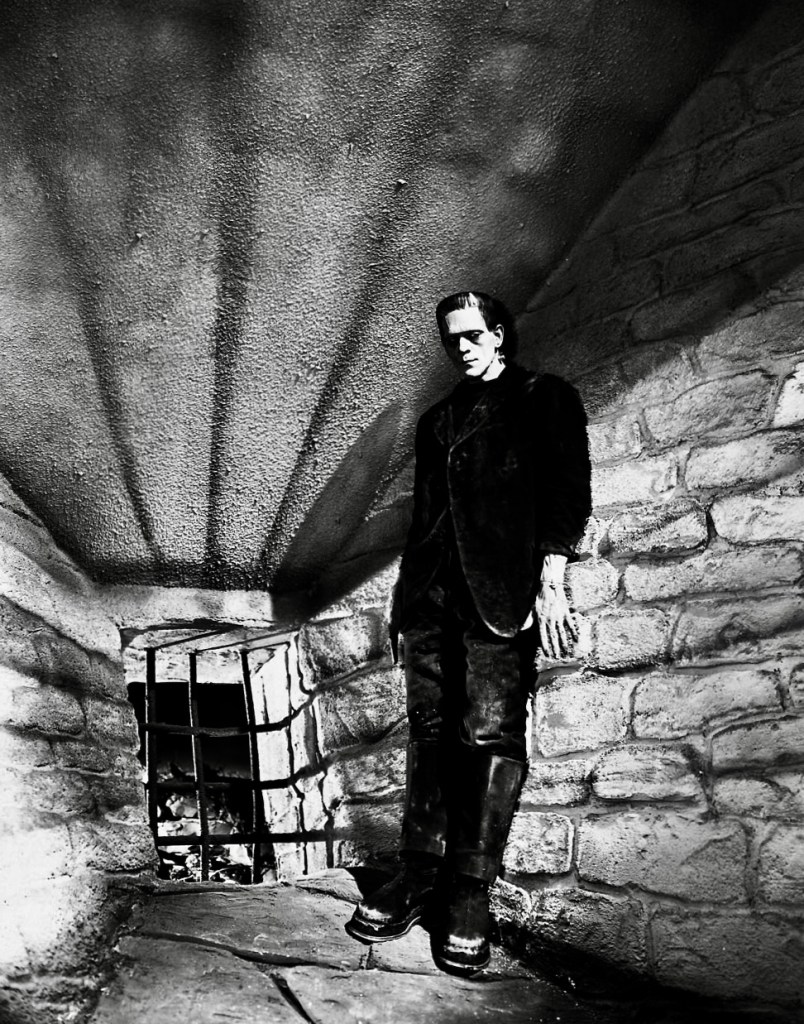
   The day Frankenstein walked into Barron Cannon’s yoga studio in Lakewood, Ohio, Barron could tell he wasn’t a happy monster. He walked as though he had never gotten over the rigor mortis of all his lives and deaths before being resurrected by Victor Frankenstein. He was dirty as all get out and wet. His boots were caked with muck and mire. He needed a haircut and a shave. He looked like he could use ten or twelve square meals all at once.

   “You look like hell,” Barron said. 

   “I feel like hell,” Frankenstein said.

   “I thought you were dead and gone, and only alive in the movies,” Barron said. “The story is you killed yourself up on the North Pole after Victor died. That would have been a couple hundred years ago.”

   After being chased and pelted with rocks, flaming stave torches shoved into his face, shot at and thrown into chains, Frankenstein had sworn revenge against all mankind. They hated him so he would hate them. He had hated himself, as well, for a long time.

   “I was going to end it all when I floated off on an ice floe, but I froze solid, and it wasn’t until twenty summers ago that I defrosted.”

   A heartwarming result of global warming, Barron thought to himself.

   “After defrosting I lost track of time,” the creature said. “It’s either all day or all night almost all the time. I built an igloo and learned to hunt seals. I caught and beat their brains out with my bare hands. I meant to go back to Geneva. But after living on the ice safe and sound, I changed my mind. There wasn’t anybody anywhere trying to kill me, which was a blessing. But then I got lonely.”

   “How did you get here?” Barron asked.

   “I walked.”

   “It’s got to be three, four thousand miles from the pole to here. How long did it take you?”

   “I meant to go back to Germany, but I took a wrong turn at the top of the world. Canada looked like Russia until I got to Toronto. By then I didn’t want to turn around. I had been at it for five months. I kept walking until I reached Perry, on Lake Erie. I met a boy and girl there. They were riding pedal go-karts on the bluffs. The girl said her brother was the Unofficial Monster Hunter of Lake County. It was hard to believe. He’s nothing more than a tadpole. When I asked him whether he thought I was a monster, he said I looked monstrous, but was sure I wasn’t a monster.”

   Frankenstein had seen his own reflection in water. He was aware of what he looked like. He didn’t like it any more than passersby did, throwing him wary nervous glances and scuttling away. 

   “Was his name Oliver?”

   “Yes.”

   “You didn’t throw him and his sister down a well, or anything like that, did you?”

   “No, and I’m glad I didn’t. They helped me. They gave me some of their homemade granola bars.”

   “Don’t underestimate the boy. He’s taken on banshees and trolls, the 19 virus, Bigfoot, Goo Goo Godzilla, and the King of the Monsters himself. I don’t know how he does it, but he’s no ordinary child to mess with.”

   “He told me to come here and talk to you, that you were a yoga teacher and could unstraighten me. I’m stiff as a board all the time.”

   “I can see that,” Barron said.

   “I want to be able to touch my toes. I want to be a better man.”

   “I can help you with that,” Barron said. “Except the better person part. That’s up to you.”

   “I was benevolent and good once,” Frankenstein said. “Misery made me a fiend. Make me happy, and I shall again be virtuous.”

   “I’ll do my best.”

   For once, Frankenstein had the feeling he had found a true friend.

   After Barron got back from the Goodwill store with XXL shorts and muscle t’s, pants and shirts, and threw away Frankenstein’s clothes, which hadn’t been washed in centuries, they got started on the yoga mat. Barron told him to get barefoot. When he did the smell was bad. Barron turned on the studio’s fans and opened both the front and back doors. He took the creature’s boots outside and tossed them in the dumpster. The dumpster burped and spit the boots back out. They landed in the parking lot with a clomp. Barron doused them with gasoline and burned them.

   “We’ll start with the twelve must-know poses for beginners,” Barron said.

   Frankenstein had no problem doing the mountain and plank poses, but that was the beginning and end of what he could do. He couldn’t do down dog or a lunge to save his life. Triangle, dancer’s pose, and half pigeon pose might as well have been rocket science. When he tried seated forward fold, he folded forward an inch or two and farted.

   “More roughage in those granola bars than you’re used to?”

   “I lived on seal blubber for a long time,” Frankenstein said.

   He could do some of the hardest poses easily, like headstand. He balanced on his flat head like nobody’s business. He chanted like a champ, his baritone voice deep and rich.. He did dead man’s pose like he was born to it. 

   When the lesson was over, however, he wasn’t able to get up out of laydown. His muscles were in knots. Barron pulled out his Theragun and went to work. It took all the percussion device’s battery power to get Frankenstein on his feet and into the storeroom, where Barron prepared a bedroll.

   “It doesn’t look like you’re in any condition to go anywhere, but make sure you stay here. I have three classes back-to-back-to-back. I don’t want you barging through the door and causing any heart attacks.”

   Frankenstein groaned and rolled over. He slept the rest of the day, that night, and part of the next day. Barron took him to the barber shop next door. Frankenstein had never gotten a haircut. His hair was halfway down his back and his beard down to his belly button. The barber gave him a taper fade crew cut and a shave. He trimmed his eyebrows and the tufts of hair growing out of his ears. He unscrewed the electrodes in the creature’s neck.

   The incisions around his neck, wrists, and ankles had long since healed. Barron found a pair of size 34 sneakers and second-hand bifocals for him. Frankenstein was out of practice, but he enjoyed reading. Barron bought two dozen thrillers, biographies, histories at the Friends of the Library sale.

   Monday morning dawned warmand bright. Barron and Frankenstein walked to Lakewood Park, where they could unroll their mats outdoors on the shore of Lake Erie. Barron had sewn two mats together for the big guy. Barron’s one goal was to make the creature more flexible. His unhappiness with the human race would have to wait. He wasn’t killing anybody anymore, at least. Frankenstein’s problem wasn’t a desk job and never exercising. He wasn’t rigid with chronic tension. He had been on an all-blubber diet for decades but enjoyed the plant-based diet Barron was converting him to. They started having breakfast at Cleveland Vegan. 

   He had never stretched in his life, which contributed to his discomfort and stiffness. His poor muscles were as short as could be. On top of everything else he was close to three hundred years old, counting his own lifetime and the lifetimes of the men he was made of. His synovial fluid was thick as mud.

   Barron and Frankenstein worked on standing forward bend hour after hour day after day. At first the creature could only bend slightly, placing his hands on his thighs. He did it a thousand times. He huffed and puffed. When he was able to touch his knees, he did it two thousand times. He broke out into a sweat. One day Barron brought blocks, setting them up on the high level. Frankenstein folded and got his fingertips to the blocks. The day came when Barron flipped them to their lower level.

   “Don’t be a Raggedy Ann doll, just flopping over,” Barron told him. “Do it right.”

   The gold star moment finally arrived when Frankenstein folded forward without blocks. His upper back wasn’t rounded, his chest was open, his legs were straight, and his spine was long. He was engaged but relaxed. He took several steady breaths as the space between his ribs and pelvis grew.

   “Great job, Frank,” Barron said with encouragement.

   Frankenstein did the pose three thousand times. He was looking lean and not so mean. His skin was losing its yellow luster. He was getting a tan in the sunshine at the park. According to B.K.S. Iyengar, Uttanasana slows down the heartbeat, tones the liver spleen kidneys, and rejuvenates the spinal nerves. He explained that after practicing it “one feels calm and cool, the eyes start to glow, and the mind feels at peace.”

   They walked to Mitchell’s Homemade Ice Cream in Rocky River. Barron had a scoop. Frankenstein had eight scoops. Children gathered around him asking a million questions, asking for his autograph, and asking for selfies with him in the picture. He was a ham with glowing eyes and never said no.

   From standing forward bend it was on to more beginner poses, then intermediate poses. By the end of the month Frankenstein wasn’t a yogi, yet, but he was more human than he had ever been. He joined Barron’s regularly scheduled classes. He was two and three feet bigger than anybody else. Barron put him in a back corner by himself where he wouldn’t accidentally clobber anybody while doing sun salutations.

   When the time came for Frankenstein to move out of Barron’s storeroom into his own apartment, Barron made him a gift of B.K.S. Iyengar’s book “Light on Yoga.”

   “This is the book that will make you a better person, Frank. I’ve read it twice.”

   “I’ll read it a hundred times,” Frankenstein said.

   “What do you plan on doing with your life?” Barron asked.

   Frankenstein thought about becoming a barber like the man who tended to him but bending over the tops of heads all day long would lead to lower back pain sooner or later. He knew full well he had arthritis. He threw that idea away. He thought about becoming a house painter. He could reach more areas compared to a shorter man. He could cut in walls and ceilings without using a ladder. That would save hours over the course of a job. The downside was having to paint low, like skirting boards. Stooping would do a number on his back. He threw that idea out the window, too.

   When he finally decided what to do, he was surprised he hadn’t thought of it earlier. It was a natural. It was how he had been granted a second life. He would be become an electrician.

   An electrician is a tradesman who repairs, inspects, and installs wires, fixtures, and equipment. Much of the job involves installing fans and lights into ceilings. Being tall would free him from the need to go up and down a ladder for every install. It turns the work from a two-man job into a one-very-tall-man job. Homeowners in Lakewood were always restoring and upgrading their houses. He would advertise himself as “Call Frank – He Knows the Power of Electricity and Will Save You Money.”

   If he ever made a mistake, he knew he could absorb the bust-up of voltage. He had already been hit with more of the hot stuff than any mortal man and lived to tell the tale. He would look for another Bride of Frankenstein, too, a nice girl with a slam-bam bolt of lightning in her hair. They would make little Frankie’s.

Ed Staskus posts monthly on 147 Stanley Street http://www.147stanleystreet.com, Made in Cleveland http://www.clevelandohiodaybook.com, Down East http://www.redroadpei.com, and Lithuanian Journal http://www.lithuanianjournal.com. To get the site’s monthly feature in your in-box click on “Follow.” More short stories can be found at Ed Staskus WordPress. His books are available on Amazon and Apple Books.

“Bomb City”

Cleveland, Ohio 1975. The John Scalish Crime Family and Danny Greene’s Irish Mob are at war. Car bombs are the weapon of choice. Two police detectives are assigned to find the bomb makers. It gets personal. Revenge is always personal.

Cooking Up Trouble

   By Ed Staskus

   “Mom, you know it’s not dinner without a napkin,” Matt said. He was on the third floor on his cell phone talking to his mother Terese who was in the first- floor kitchen. She answered on the land line. She had made a 3-course dinner for him and taken it upstairs a minute earlier. 

   She made dinner and took it upstairs to him every night, at least on those nights he was at home. When he wasn’t, she caught a break. She would then quick fry some chicken and kick back in front of the TV. She liked B & W movies, mostly comedies and melodramas. Her husband worked split shifts. She had the house to herself those nights to laugh it up at the funny parts and cry at the sad parts.

   Terese was my mother-in-law. She was a self-taught chef. She got the bug from her mother Stefanija, who had emigrated from Lithuania to the United States after World War Two. Stefanija worked in the kitchen of Stouffer’s flagship restaurant in downtown Cleveland for the rest of her working life. After she retired, she compiled her favorite Lithuanian recipes and published them in a book called “Kvieciu Prie Stalo.” It means “We Welcome You to the Table.”

   Terese taught herself well enough that she could make anything, from sloppy joes at feed-the-poor kitchens to wedding cakes for millionaires. She only ever thumbed through cookbooks when she had to. No matter that she was intrepid and skilled, having conceived and operated several restaurants, as well as working as a pastry chef and a caterer, she had to play dumb waiter once a day.

   “I’ll bring one right up to you,” she said to her son. What else could she do? After all, she had taught him his table manners.

   Matt lived on carry out dinners except they were carry up dinners. His mother did the cooking and carrying. Matt did the eating. When he was done he dutifully brought his dishes downstairs. My father-in-law Dick washed them by hand every day. They had a dishwasher, but he preferred to stand at the sink and get his hands dirty while getting the dishes clean. He had been a war-time MP in Vietnam before becoming a bartender. He was a hands-on kind of man.

   Their house was on E. 73rd St. at the corner of Chester Ave. in the Fairfax neighborhood. It was built in 1910, three stories of it, four bedrooms, two baths, two fireplaces, and a full basement. The third floor was originally servant’s quarters. The foundation was sandstone quarried in nearby Amherst by the Cleveland Stone Company. Amherst was the “Sandstone Capital of the World” back in the day.

   There were stores, churches, and schools everywhere back then. There were light industries and warehouses. Street cars ran east and west all day and night on Euclid Ave., which was one block north of Chester Ave.. The Karamu House Theater opened in 1915. Langston Hughes developed and premiered some of his plays at the theater. Sears, Roebuck & Co. built a flagship store there in 1928. 40,000 people lived in Fairfax in the 1940s. Sixty years later, when my mother-in-law showed up, only 5,000-some people still lived there. 

   By the 1950s the servants on the third floor were long gone and so were the well-off families who had raised their children in the house. They moved away to the suburbs. Urban renewal was in full swing. As 1960 rolled around the neighborhood became nearly all-black and low-income. The house was divided up and converted into boarding rooms. By the 1980s it had gone to hell, in more ways than one.

   Terese and her husband were living in Reserve Square in a 17th floor three-bedroom corner apartment overlooking Lake Erie on E. 13th St. and Chester Ave. when they bought the house with the intention of bringing it back to life. They were living well enough. They owned and operated a bar restaurant on the ground floor of the apartment complex. They didn’t realize how much trouble they were getting into making the move. It was the kind of trouble confidence men outside their ken had dreamed up.

   The neighborhood they moved to was three miles from their former home in downtown Cleveland. The Fairfax neighborhood was on the edge of University Circle, where most of the city’s major educational institutions and museums were. The eastern side of the locality was dominated by the Cleveland Clinic, which was growing by leaps and bounds. The Hough neighborhood was just to the north and the St. Clair-Superior neighborhood was north of that.  On the other side of the city limits was the lake, where yellow perch and walleye lived rent-free.

   The house was being flipped when Terese and Dick first saw it. The flipper put the house back together as a single-family home, putting in a new central staircase, a new kitchen, and a new two-car garage. He stopped there. He bought the house for pennies on the dollar. He sold it to my in-laws for dollars on the dollar. They paid $135,000.00 for the house, more than double what almost all the other houses in Fairfax were priced at. The real estate agent described it as a ”steal.” A vacant lot next door was thrown in as a bonus. There was another vacant lot across the street. There were several others within sight. The empty lots were like tumbleweeds. The neighborhood was more ghost town than not. 

   Hough was where race riots happened in 1966, when Terese was in her mid-20s, married to her first husband, with a child and another one in the making. They then lived on the border of the Euclid Creek Reservation, bounded by North Collinwood and Richmond Hts. It was a family friendly neighborhood with good schools. All the men drove to work in the morning. Most of the women kept house. Children walked to school. Their backyard was a forest. On clear days in the winter they could see Mt. Baldy in the distance.

   The Hough Riots started when the white owner of the Seventy-Niners Café on Hough Ave. and E. 79th St. said “Hell, no” after being asked by a passing black man for a glass of water on an oppressively hot day. One thing led to another, an angry crowd gathered, there was some rock throwing which led to looting and vandalism, arson and sniper fire followed, and two days later the Ohio National Guard rolled in with .50 caliber machine guns mounted on their Jeeps. They carried live ammunition.

   Terese and Dick opted for the Fairfax house because Terese was pining for a house on the near east side near where she had grown up. She grew up in a Lithuanian family, her father and mother and four sisters in a two-bedroom bungalow where she slept on the sofa. It didn’t matter to her that the house she wanted was on the wrong side of the racial divide. Dick wanted what his wife wanted. They lived for each other. He cashed in his 401K to make the down payment on the house. The next summer they took out a second mortgage for $85,000.00 to replace the roof, replace all the old windows with vinyl windows, blow liquid polyurethane insulation into the walls, and side the exterior. They painted the interior, which meant Matt and I pulled on our painter’s pants and got to work.

   The floors were hardwood from back when there were man-sized forests. They had them refinished. When the floors were done, they sparkled like the clock had been turned back a century. No matter how old anything is, everything was once new.

   They blew through their second mortgage fast. When ownership of Terese’s downtown lunch counter in the National City Bank building on E. 9th St. and Euclid Ave. slipped out from under her feet, her partner getting the better of her, they began living partly on Dick’s paycheck, partly on her freelancing, and partly on their credit cards. It wasn’t long before they were making only the minimum payment on their many credit cards. It was a downward spiral.

   Matt moved in with his parents after sampling the bachelor life in Lakewood. He was working full-time for General Electric and going part-time to graduate school to get a second high-tech degree. He played lead guitar in a local rock ‘n roll band, keeping his eyes open for girls who might become his girlfriend. He paid some rent for his third-floor space and helped out around the house. 

   My wife landscaped the front yard and Dick put in a sizable garden in the back yard. Terese liked herbs and fresh vegetables where she could get her hands on them in a jiffy. They adopted a handful of stray cats. They invited Terese’s sisters and their husbands over for holiday dinners. Dick’s family lived in New York, which was a long drive and short excuse away. The house was spacious and cozy at the same time. The house was pretty as a postcard when it was lit up and full of people on Christmas.

   They had barbeques in the summer, opening the garage door and wheeling out a grill. Dick was a driveway cook. He wasn’t a chef, but he was a master at charcoal-broiling when it came to hot dogs, hamburgers, and steaks. We played horseshoes in the vacant lot where there was plenty of room for the forty-foot spacing. Dick was a big man with a soft touch and almost impossible to beat when it came to pitching. He was King of the Ringers. Even when he didn’t hit a ringer he was always close. The game is deceptively simple, but hard to master. When I complained about losing to him over and over again, he said, “You can’t blame your teammates for losing in horseshoes.”

   We bought skyrockets, paper tubes packed with rocket fuel, for Independence Day and shot them off from the vacant lot when it got dark. One of them went haywire and flew into the garage through the open door. Dick was standing at the grill in the driveway but ducked in the nick of time. The cats went running every which way. They stayed on the run for two days, until they got hungry and came back.

   Their garage got broken into. It got broken into again. It wasn’t the safest neighborhood. They installed a security system. They lost their front porch patio furniture to thieves. Terese saw the thieves dragging the furniture down the street in broad daylight, but she was alone and there wasn’t anything she could do about it. She called the Cleveland Police Department but there wasn’t anything they were inclined to do about it. The crime rate in Fairfax was high and the cops had better things to do. Dick replaced the furniture, chaining it down to the deck of the porch. They went on litter patrol most mornings, picking up empty wine and beer bottles and sweeping up cigarette butts and plastic bag trash.

   What few neighbors they had watched out for each other. A mailman lived in a newer house catty corner to them where Spangler Ct. met E. 73rd St.  He clued them in on the workings of Fairfax, what to watch out for and what didn’t matter, and after they took the measure of the neighborhood they got as comfortable with it as they were ever going to get. Terese started ministering to some of the kids who lived in the run-down walk-up four-story apartment building behind them. She made lunch for some of them, took some of them on day trips to nearby museums, and drove some of them to school when their parents were incapacitated.

   There were cluster homes and McMansions being built in both Hough and Fairfax, but they were far and few between. Police cars and ambulances sped up and down Chester Ave. every hour on the hour sirens blaring. There was an occasional gunshot in the night. Everybody locked their doors at sunset.

   One day, sitting on the steps of their front porch, I watched three men tie a rope around a dead tree in the vacant lot across the street. They were going to try to yank it out of the ground with a pick-up. The first time they tried the rope snapped. The second time they tried they used two ropes. They put their pick-up in low gear and tugged. The rear bumper got yanked off and the truck shot forward, the driver slamming on the brakes, tearing up the turf. They came back with a bigger truck. When the tree started to lean it fell over fast, cracking, the roots ripping loose, barely missing them. I thought they were going to saw the branches off and section the trunk after it crashed to the ground, but they didn’t. The tree lay moldering in the grass all summer.

   Neither Terese nor Dick lived to see their house vanishing in front of their eyes. If they had they would have seen their one asset in life reduced in value by 90%. All the money they had was tied up in the house. They would have been left with nothing. They could see it coming and it made them miserable. Their health started to fail. The confidence men who puffed up the housing market until the bubble blew up walked away free and clear. Alan Greenspan, who ran the Federal Reserve Bank for nearly twenty years, said the meltdown was due to a “flaw in the system.” He didn’t say much more about it that mattered.

   Terese died on New Year’s Eve 2005 and Dick died on Easter Saturday 2006. She collapsed  on the landing of their central staircase. She was dead by the time 911 got her to the nearby Cleveland Clinic. Dick collapsed in the wine room of their house in the middle of the night four months later while working on a crossword puzzle. He never used a pencil. He always filled the squares in with a pen. When Matt discovered him in the morning, he had almost finished the puzzle. His pen was on the floor. It still had plenty of ink in it.

   It was at that time that house prices started to crumble and the collapse that was going to push the United States into a recession picked up speed. Matt stayed in the house for a few years, trying to make the bank payments, taking in Case Western Reserve University student boarders, but it was no good. When he walked away it was for good. My wife and I helped empty the house, giving most of everything that wasn’t a personal effect to whoever could use it. 

   When it was all over Matt moved away and never went back. Whenever he found himself driving through the Fairfax neighborhood, the night sky filled with fat glittering stars and the streets empty, he avoided the crossroad at E. 73rd St. and Chester Ave. He preferred to not look backwards. He had no taste for what he might see, or not see.

Ed Staskus posts monthly on 147 Stanley Street http://www.147stanleystreet.com, Made in Cleveland http://www.clevelandohiodaybook.com, Down East http://www.redroadpei.com, and Lithuanian Journal http://www.lithuanianjournal.com. To get the site’s monthly feature in your in-box click on “Follow.” More short stories can be found at Ed Staskus WordPress. His books are available on Amazon and Apple Books.

“Bomb City”

Cleveland, Ohio 1975. The John Scalish Crime Family and Danny Greene’s Irish Mob are at war. Car bombs are the weapon of choice. Two police detectives are assigned to find the bomb makers. It gets personal. Revenge is always personal.