Category Archives: Home Movies

Furnace Room

By Ed Staskus

   Abner Vance first got a peek of Odessa Ballard through a second-floor window at the Majestic Hotel. She was fiddling with her skirt standing waiting on the corner of Central Avenue and East 55th Street for the CTS streetcar. It was a sunny summer day. Odessa did pantry work and was on her way home. She didn’t see him. He spotted her from behind his venetian blinds.

   “I had just gotten back from Woodland Cemetery, where I sometimes did patrols on foot, which was whenever my sergeant thought there was some small thing I did he didn’t care for.” It was how Abner came to be known as Gravedigger Vance. “She was a sight for sore eyes and my worn feet. I put my Colt Positive away in the dresser drawer and stepped outside.”

   During the winter the Majestic let Abner, who was a policeman, have a small room on the E.55th St. side of the hotel. Whenever it got below zero, he ducked into it for ten minutes to warm up. He helped the house man when help was needed. His room was a half-dozen steps from a secret door beside the drug store in case anything bad happened. After a few years he kept the room in the summer, too. The Majestic was called the apartments, but it was a hotel. Abner started going there when he was in his early 20s and the jazz club off the lobby was called the Furnace Room.

   “Meeting your mother was a lot like jazz, it was improvised,” he told his son Lavert. “That was it, go ahead and see what happens.” The club had dancers and crooners and bands that came through Cleveland on tour. The restaurant serving food, to the club and rooms, was Mammy Louise’s Barbeque Café. Their house specialty was braised beef short ribs in gravy. The ribs were like soul music in your mouth.

   Abner was from a small town in the Florida Panhandle and never thought twice about eating chicken fried steak, candied sweet potatoes, and cheesy grits. He ran it off when he was a boy. He walked it off when he was a cop.

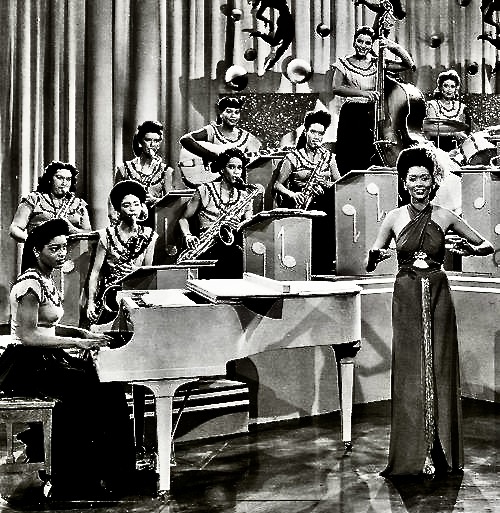
   “We went to Mammy Louise’s for dinner and then next door to the club,” he said. “The International Sweethearts of Rhythm were there the night we stepped out. They were an all-girl all-color orchestra. ‘Slick Chicks and Hot Licks’ was what it said on the billboard outside the doors. They raised the roof and we kicked up our heels, dancing up a storm.”

   The Furnace Room became Elmer Waxman’s Ubangi Club, but when Abner first took Lavert there in the 1950s, when he was twelve years-old, it was the Rose Room Cocktail Lounge. Before the Hough riots and Glenville shoot-outs in the 1960s, even though it was already mostly a colored neighborhood, the audiences were every which way. Judges and politicians from downtown brought their wives to the Rose Room. It was the black and tan saloon scene. It was its own world in the nighttime. But by then no one danced to jazz anymore. That had already changed. It wasn’t that jazz changed, even though it had. There was a new music and new dancers in town.

   When Abner applied to the Cleveland Police Department after high school the merit system broke down, like it always did, because he was a Negro. They told him he had poor eyesight, even though he didn’t start wearing glasses until he was in his 70s, almost fifty years after joining the force. He had to ask for help from his ward leader to have the rejection overruled.

   He hunted bootleggers in the 1930s, before they gave him his own beat. It was dangerous work. They carried more guns than the police. He had to prove himself. “You could always tell whether the moonshine was good if you set it on fire and blue flames were what you saw. That’s when you knew it wouldn’t make you go blind.”

   There weren’t many men of color on the police force, and most of those who made the department had to get certification from outside doctors to get past the official exam of the police doctor. Jim Crow was sneakier in the North than it was in the South. The department kept separate eligibility lists, so when one Negro died, resigned, or retired, his replacement might or might not be another Negro. When a white policeman died, his replacement was always another white man.

   Duke Jenkins and his group were the house band at the Majestic. They were the first jazz band Lavert ever heard. Every Tuesday night was Cha Cha Night and on Thursdays Mambo Night was the hot ticket. But the big attraction was the before dawn Blue Monday Party.

   “People lined up to get into those jam sessions. Sometimes you couldn’t even get a seat. All the players, the girl singers, the quartets, entertainers like Erroll Garner and Arthur Prysock and Nancy Wilson, they’d be there performing. People went crazy when Nancy Wilson was there because she was so good,” Abner said.

   Lavert stayed overnight with his father at the Majestic on Sundays and went to the Blue Monday parties with him when they got going, which was at five in the morning. Afterwards Abner drove his son to school. If they stayed too late at the jam session, soaking up the sounds, he would call and ask for a squad car to race Lavert to school, its lights flashing and siren whooping.

   “Eyes lit up like flashbulbs on a camera whenever that happened,” Lavert said.

   There were only a handful of Cleveland hotels listed in the Negro Green Book. The Majestic was one of them. All the rooms had two beds and a radio on every bedstand, although Abner only had one bed. He had the other one removed so Lavert and he could have a table to eat at on Sunday nights. Lavert slept on a folding rollaway his father kept in the closet.

   When he was a baby, his mother kept his playpen next to the upright piano in the front room. It was so she would know where he was. So long as she heard him picking out notes she knew he wasn’t getting into trouble. When he was in third grade, he found out they had music classes at his grade school. He was eight years old.

   “I’d like to do that,” he told his mother. He lived with her and his grandparents. It was a surprise to all of them. “That’s just what my place was,” he said. But he found out even the status quo can change.

   He put his name down for piano lessons at the Miles Standish School. He learned to play a Chopin waltz sitting beneath a painting of Miles Standish, after who the school was named. The portrait was of a soldier accompanying the Pilgrims when they came to the New World. In the painting he wore armor and carried a matchlock rifle. He didn’t look like he knew a piano from a peace pipe. 

   Lavert played the organ and piano because his grandmother wanted him to. She was the matriarch of the family and conservative about everything under the sun. She didn’t believe in bell house music. She was strict about church music, too, so she had a man, who was the organist at the New Liberty Hill Baptist Church, come to their house and give him lessons. Years later, when he was older, Lavert played there himself.

   Paul John was the man who came to their house. He worked in the steel mills in the Flats. He was a friend of Lavert’s’s grandfather, who sang in the male chorus in the mill that Paul John led on a Salvation Army five rank pipe organ. The chorus went to Detroit and Pittsburgh to perform on holidays.

   “Mr. John could play Rachmaninoff, and all, but he was ahead of his time, so he had to give lessons,” Abner told his son. “That was the incentive for him when he came to your mother’s house and got you started. You put food on his table.”

   Lavert played sacred music for most of his life and jazz music the rest of the time. The sacred music came from his mother and grandmother, and the jazz music came from his father, who took him to uptown clubs like the Tijuana Café Society.

   “When the Four Sounds came to audition at the Tijuana, they were just re-opening, and they didn’t even have a piano on the stage. It was in the corner. I helped them lift it up on the stage to do the audition,” Abner said. He was a tall strong man. “They had been the Four Sounds until they asked me to talk to the saxophone player one night. He had a habit of carrying a gun in his horn case. He wouldn’t listen to a lick of sense. When he said he didn’t want to leave it behind, they finally left the saxophone out and became the Three Sounds.”

   Most days anybody walking around the neighborhood could hear a horn through an open window down the street from Doan Square, where all the action was. It was a jazz musician reading his lines in the afternoon. Hotels weren’t open to musicians of color, so they stayed in rooming houses. They minded their own business.

   “You couldn’t even go to the Five and Dime store and have a quiet lunch,” Lavert said.

   His grandmother went to buy a hat one Saturday and when she tried it on, she had to buy it. She had put it on her head to see if it fit and when a salesclerk saw her, she had to pay for it. His grandfather was a mulatto from Cuba. Whenever a white man came to their house, selling something, or on some errand, his grandfather was polite, but as soon as the white man left and was out of earshot he would spit and call the man a cracker.

   They lived on Pierpont Avenue in Glenville, what everyone called the Gold Coast, before Glenville fell apart and the Gold Coast moved to Lakewood in the 1960s. His grandmother died in 1968 and his mother sold the house, moving to Lost Nation Road. His grandfather moved into a rented room. By then Lavert had finished studies at the Boston Conservatory and was playing the big organ at the Christian Science Mother Church. In the summer he played piano at jazz clubs in Provincetown and Martha’s Vineyard.

   When he was a boy Glenville was crowded with immigrants, Negroes, and Jews. There were orthodox Jews all over the place. He thought they were Santa Claus’s in black suits. There were churches for men of faith, like the Cory United Methodist Church, which had been the Park Synagogue, and the Abyssinia Baptist Church, which had also been a synagogue. There were clubs, movie houses, and department stores.

   There were mom and pop restaurants run by the Jews. There were no bad sandwich shops in Glenville, but Abner always ate at Pirkle’s Deli. He said if he ever stumbled on a good-looking Jewish woman from his window at the Majestic, he was going to track her down so he could get up Sunday mornings and stroll out to the deli with her.

   “Those folks never invented anything so fine as deli food,” he said.  “The corned beef at Pirkle’s is as tender as a young lady’s leg.”

    Lavert’s father and mother were never together as a family. “There were two different families, his and ours,” he said. Abner and Odessa had their room at the Majestic some nights, but in later years she stayed away. She felt he betrayed her. “My father said he wanted to marry my mother, and she thought he was going to divorce his wife, but he never did that.” Over time she had a hard time seeing Abner as a soul mate.

   “Your mother shot a hole in my soul,” Abner said.

   Lavert lived with his mother and after she married another man, she bore two more boys who became his brothers, the boys sharing her. He became Lavert Stuart. Abner came to their house many times, often in his police car after he was promoted. He parked in the driveway for everybody to see. It wasn’t as if they were cut off from him.

   He was one of the first colored farmers in Twinsburg, where he kept fowl and pigs. Every November the family got a turkey for Thanksgiving. He had a smokehouse, too, and when time came to slaughter some of the fattening pigs, he would do it himself. He castrated the males a month beforehand. The family had bacon and ham all winter and into the spring.

   Abner picked Lavert up in his Ford pick-up on Friday and Saturday nights to help him forage for feed. The father and teenager drove up and down Euclid Avenue, on the south side of Glenville, from E. 110th to E. 95th Street, picking up refuse from barrels and dumpsters behind the clubs and restaurants on the strip. Abner stuck his gloved hands into the slop and nosed around for metal and glass before filling up his barrels.

   “Pigs will eat anything you give them. They can be stink and filth, even though their sausages smell great. I would rather cut myself than injure my animals.” The Hebrew meaning of Abner is “father of light.” He was a good father to his pigs.

   When their barrels were full, they drove to the farm. The pigs would hear the truck coming and know it was time to eat. “They started doing what pigs do, getting feisty and greedy. He dumped the food in the trough, let them loose, and they would go at it,” Lavert said. That was why Abner picked through the fruit vegetables scraps of meat greasy bits and pieces, because they would have cut themselves, biting into anything.

   Lavert Stuart stopped gleaning garbage when his mother told him he had to be careful about his hands. She didn’t want him hurting them, hurting his chances. Odessa wanted him to go places, better places than scrounging for leftovers behind eateries in the middle of the night.

   He learned more sacred music and less blue notes after his mother put him in Empire High. Eleanor Bishop, his music teacher, had been there since the school opened. She had a trim hourglass figure and the only thing that gave her away was that she wore old lady comforters. But she was spry and walked fast. She could catch bad boys anytime she wanted to.

   She was an old maid because she had become a teacher long ago and wasn’t supposed to marry, and by the time the times changed it was too late for her. One afternoon Lavert found a dedicatory book for Empire High, which was built in 1915. He leafed through it. He took it to her office.

   “I see your name in this book, and your picture,” he said.

   She looked at him.

   “Is this you?”

   “Yes.”

   “But you’re old, not like this.”

   “Everybody was once new,” she said, her face pinched. Lavert was sure she wanted to pinch him, hard, like she did when he hit a wrong note. But she didn’t put any concern to what he said. She made sure he practiced faithfully and later helped him get a scholarship to Ohio University, where he studied the organ. After he graduated, he never lived in Glenville again.

   He lived in Chicago, New York, and Boston. He learned to live alone, like Duke Ellington, who said music was a mistress. He lived in his own world, detached and determined, so he could practice. He had friends who kept him in tune to the here and now, but on weekend nights he didn’t go anywhere. He had to be ready for Sunday services. That kept him out of wrongdoing. He tried mischief a few times but decided it’s bad when you’re not feeling well in a church after a hard Saturday night. He decided he had to do it his way.

   He didn’t see much of his mother, who moved to California to live with one of his brothers, who had become a minister, and saw his father only when he was passing through the Midwest. They visited and had lunch at one or another deli in Cleveland Heights, where all the Jews had moved. Pirkle’s Deli had burned down. 

   Abner was an industrious man his whole life. When he retired and his lawful wife passed on, he bought the last commercial building, next to Whitmore’s Bar-B-Q, on Kinsman Road where it starts to snake up into Shaker Heights. It was a barbershop and beauty salon side-by-side. He lived upstairs in a one-bedroom apartment. He could have lived in a house, since he owned five of them, but didn’t want to.

   “I don’t want to get too comfortable because I may not be here long,” he said. His apartment had one bedroom and one bathroom. It had one table with two chairs, one sofa, and one half-empty closet. It looked like no one lived there. He was becoming his own gravedigger.

   “He had been industrious but changed into a careless custodian of his properties. He got short stingy and mean. He patchworked instead of getting things done the best way, so everything slowly deteriorated. He wasn’t willing to pay the price to get things done the right way. When a man has that mindset, he ends up losing more money than he’s spent,” Lavert said.

   Abner lost his eyesight when he was visiting Texas. He stepped on a splinter and after a few days his big toe got infected. He had surgery for it, but in the end, they had to amputate the toe. Afterwards he lost feeling in his leg. While he was still in the hospital convalescing, he woke up one morning and had gone blind. He stayed in Texas for a month, and when he came back, he moved in with Lavert’s sister on the other side of the family, who took care of him.

   He never recovered his sight, which was hard on him because he had always lived by his senses. The biggest problem, though, were the visions and nightmares he suffered, which were part of the side effects from the medication he was taking. He had them at night when he went to bed. He heard things and saw craziness and wasn’t able to sleep.

   Lavert never got his father and mother together, even when Abner was dying, and Lavert was staying with him, playing old jazz records. His father listened to music all day long towards the end. He stopped sleeping and eating, drinking cold lemonade, instead. The last time his mother visited Cleveland Abner was near death. Lavert took her to places in Glenville, some that were still there and others that weren’t anymore, trying to get her to go to the facility on Rockside Road where his father was. 

   She fought him all the way, and in the end wouldn’t go. Odessa just didn’t want anything to do with Abner. “That’s all over, a long time ago,” she said, shaking her head.

   Abner and Odessa did what they had to do from beginning to end. “I was just a cameo in the business they had between themselves,” Lavert said. After his father died there was nothing left to do anymore about the torn seam in the family fabric. He said goodbye to his mother, who went back to California. Abner Vance left behind six children by his wife Amanda, 11 grandchildren, and 18 great grandchildren. The rest didn’t make the cut.

   When he moved back to Cleveland, Lavert Stuart played sacred organ music three seasons of the year. In the summer, he played jazz and popular tunes in clubs on Cape Cod. On Sunday mornings when the weather was good, sitting on the bay, he brewed a pot of strong coffee and warmed up a plate of spiced buns. On his balcony in the light of the rising sun, he looked for what was behind the blue brightness, on the blue note side of the sky.

A version of this story appeared in Literary Heist Magazine.

Ed Staskus posts on 147 Stanley Street http://www.147stanleystreet.com and Made in Cleveland http://www.clevelandohiodaybook.com.. To get the site’s monthly feature in your in-box click on “Follow.”

Behind Bulletproof Glass

By Ed Staskus

   I should have known better when I told the young woman on the other side of the Walgreen’s bulletproof drive-thru window that I needed the kind of coronavirus test that would get my wife and me into Canada and she breezily said, “For sure, this is it.” She was a trained pharmacy technician, but made up her harebrained reply, assuring me all was well even though she didn’t know what she was talking about. We found out three days later trying to cross the border at Houlton, Maine into Woodstock, New Brunswick.

   Getting a straight answer from the young can sometimes be like trying to give fish a bath. They often have a quippy answer for everything. Their answers are in earnest no matter what they’re asked and no matter their wealth or lack of knowledge. Whenever they are fazed by anything they say, “Oh, whatever.” 

   They say whatever they want when they are behind bulletproof glass.

   My wife and I were going to Prince Edward Island, where we didn’t go the summer before because of the 19 virus. Canada closed itself up tight as a clam in March of that year and didn’t reopen for Americans until early August of this year. Once we heard the opening was going ahead, we got in touch with the folks who operate Coastline Cottages in the town of North Rustico on PEI and let them know we were coming on August 21st and staying for three weeks.

   The cottages are on a hillside, on land that has been in the Doyle family going on two hundred years. A park road cut through their farm when it was built in the 1970s, but unlike other landowners they didn’t sell their remaining acreage to the state, so it sits snug inside the National Park. There are several homes on the bluff side of the eponymous Doyle’s Cove, some old and some brand new. In one way or another every one of them houses a homegrown north shore family, except for Kelly Doyle, who has lived on the cove the longest and lives alone.

   It takes two and half days to drive from Lakewood, Ohio to Prince Edward Island. At least it did every other year we had driven to the island. This year it took us six and half days.

   When we got to the Canadian border the black uniform in the booth asked for our passports. We forked them over to the tall trim guard, forearms tattooed, a Beretta 9mm on his hip. He was young and just old enough to be on this side of Gen Z. He looked our documents over and asked where we were from and where we were going.

   “Cleveland, Ohio,” I said. Although we live in Lakewood, an inner ring suburb, we always tell red tape we live in Cleveland. No one has heard of Lakewood. Everybody has heard of Cleveland, for good or bad. At least nobody calls it “The Mistake on the Lake” anymore. 

   I almost preferred the insult. “It keeps the riff raff rich away,” I explained to my wife. “There is no need for Cleveland to become the next new thing. They will just use up all the air and water and our real estate taxes will go ballistic. On top of that, we would end up knee deep in smarmy techies with their cheery solutions to all the world’s problems.”

   We handed our ArriveCAN documents over. We handed our virus inoculation cards over. We had both gotten Moderna shots. We handed our virus tests over, proving we had both tested negative.

   “You are cutting it close,” the border guard sniffed, shuffling everything in his hands like a deck of cards. I was hoping he wouldn’t turn a Joker up.

   The negative test had to be presented at the border within 72 hours of taking it. We were there with an hour to spare, although it would have been two hours if we hadn’t had to wait in line in our car for an hour. We had driven a thousand miles. It was tiresome but waiting in an idling car wasn’t any more skin off our noses.

   It started to smell bad when a second border guard stepped into the booth and the two guards put their heads together.

   “The antigen tests you took aren’t accepted in Canada,” the Joker said. “It has to be a molecular test. You can go ahead, since you’re from Canada, but your wife has to go back.”

   I was born in Sudbury, Ontario, and have dual citizenship, although I only carry an American passport. I couldn’t tell if he was being serious, so I asked him to repeat what he said. He repeated what he said and gave us a turn-around document to return to the USA when I told him I wasn’t ready to abandon my wife.

   We went back the way we had come, just like two of the six cars ahead of us, although we had to wait in line at the American crossing for an hour. Once we returned to Maine, we found out we could get the molecular test, but it would be a week-or more before we got the results. Nobody we talked to, not even the Gods of Google, was any help. A friendly truck driver mentioned New Hampshire was faster, only taking a day or two.

   The truck driver was stout, bowlegged, wearing a Red Sox baseball cap, a two-or-three-day growth of beard on his face, with a small shaggy dog to keep him company on the road. He wasn’t a Gen Z man. It was hard to tell what generation he belonged to, other than the changeless working-class generation.

   We drove six hours the wrong way to Campton, New Hampshire and checked into the Colonel Spencer Inn. It was Saturday night. We got on-line and made test appointments for noon at a CVS in Manchester, an hour away. We streamed “Castle of Sand” on our laptop. It was a 1970s Japanese crime thriller movie and kept us up past our bedtime.

   Over breakfast the next morning our innkeeper told us to go early since the traffic leaving New Hampshire for home on Sunday mornings was heavy. We gave ourselves an hour and a half to drive the 55 miles and barely made it. Luckily, we hadn’t made appointments for an hour later. We never would have made it. The traffic on I-93 going south was a snarl of stop and go by the time we started north back to Campton.

   We got our test tubes and swabs and stuck the swabs up our noses. I spilled some of the liquid in my tube and asked the Gen Z pharmacy technician behind the bulletproof glass if I should start over with a new kit.

   “You’re fine, it doesn’t matter,” she said, lazy as a bag of baloney. She couldn’t have been more wrong, which we discovered soon enough.

   Gen Z is self-centered and self-sacrificing both at the same time. “My goals are to travel the world and become the founder of an organization to help people.” They want to stand out. “Our generation is on the rise. We aren’t just Millennials.” They say they are the new dawn of a new age. “We are an unprecedented group of innovation and entrepreneurship.”

   Welcome to the future, just don’t take the future’s word for it.

   We spent the night at the Colonel Spencer. It was built in 1764, a year after the end of the French and Indian War. During the war the British, allied with American colonists, weaponized smallpox, trading infected blankets to Indians. The virus inflicts disfiguring scars, blindness, and death.

   “Could it not be contrived to send the smallpox among those disaffected tribes of Indians? We must on this occasion, use every stratagem in our power to reduce them,” the British commander Sir Jeffrey Amherst wrote to his subordinates.

   The results were what the continent’s newest immigrants from the Old World expected.

   “They burned with the heat of the pox, and they died to feed the monster. And so, the village was deserted, and never again would the Indians live on that spot,” is how one of the natives described the deadly epidemic.

   We had dinner at Panorama Six82, not far from our inn. The hostess seated us outside on the patio which looked out over a valley and a series of cascading White Mountain hilltops. The sun went down behind one of them and we finished our dessert in the dark.

   Our server was a middle-aged man from Colombia wearing jeans, a Panorama Six82 signature shirt, and a Sonoma-style straw hat. He went back to the homeland every year to visit relatives.

    “They always want money, so I don’t bring too much of it,” Fernando said. “It’s not as dangerous as most Americans think it is. I avoid some neighborhoods, sure, and I avoid riding in cabs. The rebels are in the hills, not the cities, and besides, they don’t do much anymore. The Venezuelans are a problem, all of them leaving their god-forsaken country. But they do a lot of the dirty work for us these days.”

   We drove back to Houlton on I-95. The speed limit north of Bangor is 75 MPH. I set the cruise to 85 MPH and kept my eyes peeled for moose. The fleabags lumber onto the roadway, sometimes standing astride one lane or another. Hitting a moose is a bad idea. A full-grown bull moose stands six to seven feet tall and tips the scales at 1500 pounds. It isn’t certain that the collision will kill the beast, but it will kill your car, and maybe you. They do most of their roaming around after nightfall. We made sure we got to our motel before dusk.

   In the morning my wife was winding down a business meeting on Zoom when there was a knock on our door. It was the housekeeper. She wore a black uniform and black hair pulled back in a bun. She was young. She was part of the Z crowd.

   “We’ll be out in about a half-hour,” I said.

   “Can I replace the towels and empty the trash?”

   “Sure.”

   “Weren’t you here a few days ago?”

   “Yes,” I said, and told her about trying and failing to get across the border and our search for a fast 19 test.

   It turned out the explanation for the motel being sold-out was because of the same problem. Every other person lodging there had been turned around for one reason or another.

   “You should go to the Katahdin Valley Medical Center,” she said. “A friend of mine went there, they did the test, she got it back the next day, and went to Nova Scotia.”

   “Thanks,” I said. We packed and followed Apple Maps to the medical center. The receptionist didn’t know anything about a fast molecular test. She sent us to Jesse, the man upstairs, who was the man in charge.

   “We test on Mondays, Wednesdays, and Fridays,” he said. “It takes about a week to get the results back from the lab.” It was Tuesday. We were already three days late. I started looking over my shoulder for Chevy Chase.

   “Not the next day?”

   “No.”

   We left Houlton and drove to Presque Isle, had lunch, messed around, my wife went running on the town’s all-purpose trail, and we drove to the Caribou Inn in the next town north. While the receptionist checked her computer for our reservation, we heard a wolf whistle through the open door of the office behind the front desk. A minute later we heard it again.

   “That’s just Ducky,” the receptionist said. “She belongs to the manager.”

   “Does she do that often, whistle, I mean?” I asked.

   “Whenever she sees a pretty girl.”

   Another wolf whistle came my wife’s way.

   I must have looked cross, because the receptionist said, “Ducky is a parrot.”

   Ducky was a parrot in a tall white cage just inside the door of the office. Her plumage was green with some red and yellow mixed in. She was a saucy character.

   “She’s twenty years old,” the receptionist said.

   “How long has she been here?”

   “Twenty years.”

   Ducky was spending all her Gen Z years locked up at the Caribou Inn, where flocks came and went. The only lasting relationship she had was with Betty, the hotel’s manager, and the bird’s keeper.

   “I didn’t know parrots lived that long.”

   “They can live to be seventy, eighty years old,” Betty said.

   “Ducky wolf whistles women?”

    “And men. We thought she was a he until she started laying eggs not long ago.”

   The parrot was going to outlive most of us, the 19 or no 19. They sometimes play dead in response to threats. They can also look dead when they are asleep. But if a parrot is lying still and not breathing, looking lifeless, you can assume it is dead.

   We had a non-smoking room, although every hallway that led to our room was lined with smoking rooms. The hallways smelled sad and stale. We were settling in with a bottle of wine and a movie when we got a phone call. It was the lab in New Hampshire that was doing our 19 molecular tests. They had good news and bad news. My wife tested negative, but my test was discarded. 

   “There wasn’t enough liquid in the test vial to maintain the sample,” the lab technician said. “Did you happen to spill some of it?”

   I didn’t bother trying to explain. I got on-line and filled out another ArriveCAN form. When we got to the border my wife had no problem. The only problem I had wasn’t make or break, since they couldn’t deny me entry, test or no test. A health officer gave me a self-test kit and told me to make sure I performed it within four days. She was in her early 30s. I had no reason to be skeptical. She was just out of Gen Z range. I should have been leery since she was wrong. She wasn’t as far out of the field of friendly fire as I thought.

   Four days later, when I went on-line and followed the directions for the self-test, the Indian-looking Indian-sounding woman on the other side of screen was nonplussed when I apologized for waiting to the last minute.

   “I don’t understand.” she said. “You are four days early. You are supposed to test after eight days of self-quarantine.”

   When I started to spell out what had happened, she wasn’t in the mood, and said she would schedule Purolator to pick my test up the next day. Purolator sent me an e-mail saying they would pick up between nine and noon. The truck pulled up just before five. I was grilling dogs and corn on the front deck. The next day I got an e-mail informing me my test came back negative. I had been tested four times in ten days and was finally officially virus-free.

   No matter the generation, Prince Edward Island was the only place and people who got it right. When we arrived late Wednesday afternoon and crossed the nine-mile-long bridge to the province, we waited in one of the many lines edging towards checkpoints. It didn’t take long. A young woman took our vitals while an older man in a spacesuit swabbed our noses.

   “If we don’t call you within two hours you tested negative,” he said.

   We drove to the Coastline Cottages. “Welcome to Canada,” our hosts said. “You made it.” 

   No one from Health PEI called us. We unpacked, watching the day get dark over the Atlantic Ocean, and fell into bed. I drifted off thanking God somebody on our part of the planet knew what the 19 score was, not some mumbo jumbo they dreamed up because they neglected to check the scoreboard.

Ed Staskus posts stories on 147 Stanley Street http://www.147stanleystreet.com and Cleveland Daybook http://www.clevelandohiodaybook.com. To get the site’s monthly feature in your in-box click on “Follow.”

Head Over Heels

By Ed Staskus

   It was wetter than not wet the front end of summer and too muddy to ride the single tracks in the Rocky River valley. It rained on nine days the first two weeks of July. Instead of the single tracks, I rode my Specialized on the all-purpose trail and left my Schwinn hanging in the garage. The Schwinn was outfitted for dirt, with front shocks and a low stem. The Specialized was outfitted with road tires, knobby on the outside and smooth rolling on the flat side, making for better riding on asphalt.

   It made for even faster riding down Hogsback Lane, which is the entryway off Riverside Dr. into the valley. It is laid down on a steep shale hill. It’s about a half mile to the bottom. When the shale slumps and slides, the two-lane surface crumbles, and it’s then prudent to keep your eyes fixed on the road. Hunched over the handlebars I could hit 40 MPH downhill, no problem, unless I feathered the brakes, which I usually did, lessening the chances of flying over the handlebars. That would have been a grave misadventure.

   I rode alone most of the time, especially that summer because my brother Rick, with whom I occasionally rode, was getting married. He said he didn’t have much time to get on his bike anymore. “I’ve got a lot going on,” he explained. He had been married once before, but it only lasted two months. He wanted to make his next marriage work out better.

   “I don’t want him racing that crazy hill and crashing,” his fiancée Amy said. She didn’t want a train wreck walking down the aisle with her. She and Rick had met earlier in the year on a blind date. One whirlwind after another led to the one-way street they were on.

   “You be careful, too” my wife said watching me hitching up in the backyard.”

   The summer of 1995 was hot, in the high 80s when it wasn’t in the high 90s. I could have ridden the single tracks, since they had dried up going into August, but I stayed on the all-purpose trails. Towards the end of one week, after getting home from work, I rode twelve miles out, almost all the way to Berea. It was on the way back that I passed a man wearing a red helmet. Inside a few minutes the red helmet was behind me, drafting, but when I slowed down for a car at the crossroads to the entrance of Little Met, he slipped past me when the car paused to let us go by. The trail went up a long hill. I finally caught up at the top.

   He tucked in behind me and we rode to where the trail zigzagged through some curves  where he got sloppy. He tried to pass two women on roller blades, except on an inside-out curve, and when another bike came up on the other side, he had to slalom wide onto the grass. He had to loop back. I waited for him to catch up.

   “That was a good pace,” he said before I peeled away to go home, while he kept going his own way. Pedaling up Hogsback Lane is a long slog, which is what I did, shifting into lower gears. By the time I got close to the crest I was on the verge of stalling. When I made it to flat land I sucked air.

   The next weekend Rick had an appointment for a haircut at Planet 10, on W. 9th St., and wanted to ride there. We rode through Ohio City to Church St. He pointed out an old church whose rectory had been converted into a recording studio.“That’s where we’re having our reception,” he said. Amy was a sometime actress and sometime singer. She had the looks and the voice. She made a living doing nails, since nailing roles in Cleveland wasn’t a paying proposition. Her sometime showbiz was her drinking money.

   Rick was Catholic and of Lithuanian stock, like me, but they were getting married in an Episcopalian church instead of the ethnic church where we had grown up. Even though Amy was an atheist, her well-off grandmother wasn’t and wanted her to be married in a house of God. Amy didn’t like the old Lithuanian church in North Collinwood, so it was going to be someplace else.

   We went south on W. 25th St., crossed the bridge to Jacobs Field, and rode to the Warehouse District. The bride-to-be was still all right with Rick riding city streets, but not any farther into the near east side, which I often did, to Cleveland Hts. through the ghetto along Cedar Rd. She quashed that by stamping her foot. “I don’t want him getting killed by any porch monkey,” she said.

   Rick pushed his bike into Planet 10’s lobby and I rode away. After zigzagging around downtown, on my way home, stopping at a narrow strip of grass near the Hope Memorial Bridge, squeezing a drink from my water bottle, I saw a black woman with shopping bags easing herself down to the ground in front of an RTA sign. She looked up at me and smiled. One of her teeth was chipped. The woman might be going back to the ghetto where she would draw up plans to ambush Rick if he rode his bike past her house.

   I was standing outside my garage when Rick and Amy pulled up in her baby blue Ford Tempo. His bike was sticking out of the trunk. The trunk was bungee corded shut. “Jerry screwed up Rick’s appointment,” she complained. “He’s so unprofessional.” She jabbed the air with a finger. She was angry. Planet Ten was owned and operated by a gay man named Jerry who was a junkie. He lived near Gordon Square where he could score smack in the blink of an eye. He was up-and-down on any given day. He was good with clippers and shears, though, when he was on the up-and-up.

   It was mid-week before I rode back into the valley and got on the dirt trails that branch off from the horse stables at Puritas Rd. They were dry where they were level, but they weren’t level over much. I had to ford a stream where a tree had fallen. I jumped some baby stumps, and went sideways once. When I got home I got the hose and sprayed cold water on myself. It was a hot day and I had gotten hot.

   My wife and I drove to Amy’s bridal shower that weekend, which was at her best friend’s house in Avon Lake. Wendy was a big-faced woman married to a ruddy-faced Englishman who was a barge pilot on the Mississippi River. It was very steamy even though it was just barely August. I was sitting on a leather sofa in the air-conditioned family room when I noticed a small dog on the coffee table. I couldn’t tell if it was a dog dead asleep or a dead dog who had been stuffed. When I reached for whatever the thing was, it snapped at my fingers.

   “You better watch out,” Wendy said. “He’s blind, so he bites at everything.”

   I went for a ride after we got home. Twilight was turning to dusk by the time I got back. Snapper, our Maine Coon cat, came running out of the neighbor’s backyard. Just when I was ready to close the garage door, Rick pulled into the driveway. Snapper ran the other way. He didn’t trust my brother. I had gotten to not exactly trusting Rick anymore, either. He was always explaining something or other.

   “Can I borrow your lawn mower?” he asked.

   “All right, but bring it back.”

   My brother was notorious for never returning borrowed tools. He had Kate, Amy’s three-year-old, with him. I picked her up, held her upside down, and spun her by her heels in circles. When we were done, we talked about a nickname for her, finally settling on Skate.

   “It rhymes with Kate,” I said. She waved goodbye through the window of the car as Rick pulled out with the lawn mower. If the child hadn’t been with him, I wouldn’t have lent him the mower. That was probably why he brought her along, I thought. He was crafty that way.

   By mid-August cumulus clouds were dotting the sky and the weather was surprisingly cooler than it had been. I rode my Schwinn down Hogsback Lane and got off the all-purpose trail at Mastick Woods, veering onto the dirt track there. I rode the track and then double-backed on the horse trail. As I did, I noticed somebody was coming up. When he went by, I saw he was wearing a baseball cap instead of a helmet and was on a Trek. He was riding fast, and even though I followed him as best I could, I couldn’t catch him until he suddenly slowed down. I saw why when he pulled up. Horses were coming around a bend. We waited as the horses cantered past.

   The Trek turned to the right and rode into the trees toward the river and the single tracks on the bank. I followed him, bumping over ruts and logs and through underbrush, but soon lost sight of him. He pushed up the hill running along Big Met, then down, and as he came into the clear jumped onto the trail. He had gone around and was riding faster than before. We sped through a thicket, then across a baseball field where he widened the gap by jumping a wood guardrail, something I couldn’t do, even if I tried as hard as I could. It would have ended badly. I went around. It went well enough.

   I thought I might catch the Trek on the Detroit Rd. climb out of the valley, except he climbed so fast I lost more ground. I finally caught up to him where he was waiting at a red light on Riverside Dr.

   “I wasn’t planning on doing much today, but it ended up being a fun ride,” he said. “I saw the Vytis decal on your fender.” There was a red decal of the Lithuanian coat of arms on my rear X-Blade fender. 

   “Not many people know what that is.”

   “I know my Baltic heroes,” he said, waving goodbye.

   A week before the wedding my Rick called and said JoJo was out as their maid of honor. She was Amy’s ex-friend-to-be who had arranged the blind date when Amy had been on the prowl after her latest divorce. She was promised she could be maid of honor if the date led to anything. JoJo was a travel agent. Amy gave her a cash down payment for a Cancun honeymoon. Then the travel agency called and said they were getting anxious about the down payment, since they hadn’t received it, yet.

   When Rick telephoned JoJo, she said she hadn’t gotten any cash, but when Amy overheard that she rushed to the phone. There was a long argument and JoJo somehow found the money. The honeymoon was back on. JoJo as  bridesmaid was off.

   The next day my brother called. “Are you going riding?” he asked.

   “I’m just going out the door,” I said.

   “I’ll be there in ten minutes. I need some fresh air.”

    I was working out the kinks in my lower back when Rick rode up the driveway.

   “Amy’s sick,” he said.

   “What’s wrong with her?”

   “Cramps,” he said. “I think it’s nerves.”

   “Let’s go,” I said.

   The sky was overcast and gusts from the southwest pushed us around as we rode on the rim of the valley. We glided down and rode single tracks. The dirt was dried out and the ruts were bad, but we rode fast enough. My back wheel went in wrong directions a few times. Rick held back. He didn’t want to face plant.

   “A little out of control there,” he said when we crossed over to a horse path and relaxed.

   “Maybe a little,” I said.

   “I want to make it to the altar in one piece,” he said.

   “Getting married is a risky business,” I said. “Take a look at you and Amy. You were married once and it only lasted for two months. Amy’s been married twice. She’s got a kid by one of the husbands and another kid by a free agent. You might want to throw caution to the wind between now and the wedding day.”

   “I don’t think so,” he said, throwing me an aggrieved look. 

   “Then keep your eyes wide open before the wedding and half-shut afterwards.”

   Leaving the valley Rick suddenly slowed down ahead of me. I got tangled up in his back tire and went over the handlebars. I skinned my knee, but we were going too slow for much else to happen. “Crash test dummies!” a crow watching squawked. It took me longer to put my derailleur chain, which had fallen off, back on than it did to get over my injuries. The chain was trapped against the frame. I had to loosen the rear wheel. I cleaned my greasy hands on some of last year’s fallen leaves.

   The morning of the wedding, while my wife went shopping for a gift, I rode down into the valley. I felt good, but a strong crosswind was blowing and I got tired. The bike felt sloppy, too. Going home I pushed hard because I didn’t want to be late for the ceremony. When I finally got home, I found out I had been riding on a nearly flat back tire.

   The wedding went off without a hitch, but during the reception, when my wife was congratulating him, he made the shape of a handgun with his hand, with his index finger pressed to his temple. The next day I drove to his house with the gift we had forgotten to bring to the reception. Amy was lounging in the living room in a thick white bathrobe, poring over Cancun brochures. Skate was in her pajama’s. 

   “How’s the new life?” I asked my brother.

   “Fine,” he said. 

   By the beginning of October, the valley was starting to glow with maple red. One Sunday morning my wife and I had breakfast at the Borderline Café down the street and went for a walk on the horse trails behind South Mastick. That night, while we were watching a movie on TV, Rick called.

   “I won’t be able to ride anymore,” he said.

   “Amy?” I asked.

   “No,” he said. “It’s my shoulder.”

   I had noticed how he couldn’t lift his right arm above his head without trying hard. “After any ride,” he said, “any ride at all, potholes or no potholes, my shoulder is in a lot of pain. I’ve been taking Celebrex, but my doctor told me it’s rubbing bone on bone. There’s almost no cartilage left. He said sometime in the next couple of years, depending on how fast the rest of it goes, I’ll need a replacement shoulder.”

   “Oh, man!” I exclaimed.

   The last Saturday of the month was the last day of the year I rode in the valley. It was getting too wet and cold. I was adjusting the strap on my helmet when some neighborhood boys and girls came walking up with rakes, brooms, and a wagon. They asked if they could rake our yard for $5.00. They started pushing wet leaves into piles. The biggest of the girls walked up to me.

   “Mister, can I ask you something?” she said.

   “Sure,” I said.

   “That small boy,” she said pointing to a small boy. “He’s having a potty emergency.”

   I rang the doorbell for my wife. She came outside, saying she would take care of the boy and supervise the raking. “Go before it gets dark,” she said. It was getting dark earlier and earlier. It would soon be dark the minute I got off work.

   Where Hogsback Lane intersects with the Valley Parkway, I cut across a field and rode onto a single track. The track was littered with slapdash. A flock of Canadian geese went by overhead. They honked at me. I came around a quick bend and the branches of a fallen tree on the side of the track jabbed at my face. I swerved to the left and pulled on the brakes, jumping off the bike when the tree I was going to run into became the tree I ran into. I landed on my feet. The bike was good to go when I picked it up.

   On the way home I rode on the road, instead of the trail, hugging the shoulder’s white line. A man in a Ford F-150 pick-up leaned on his horn behind me, and when he went past, tried to shrug me off the road, giving me his middle finger for good measure. Some people are sons of bitches. There’s no getting around it. At home I hosed off the Schwinn and hung it up in the garage. I checked the tires. They looked good, although I knew hanging upside down in the garage all winter long the air would slowly seep out of them.

   When you ride with somebody else you’ve got to wait until they’re as ready as you are. When you ride by yourself you can go whenever your bike is ready. Nobody wants to be alone, but sometimes you just need to be left alone. I did yoga at home that winter to give my lower back a helping hand. I went to classes sometimes even though I couldn’t abide the pie in the sky talk. I had an indoor bike and pedaled on it. I would have to pump up my road bike tires the coming April, before going back into the valley. When I did, I would keep my eyes on the road ahead, not looking back, watching for the springtime after a long winter.

Ed Staskus posts on 147 Stanley Street http://www.147stanleystreet.com and Made in Cleveland  http://www.clevelandohiodaybook.com. To get the site’s monthly feature in your in-box click on “Follow.”

“Cross Walk” by Ed Staskus

“Captures the vibe of mid-century NYC, from stickball in the streets to the Mob on the make.” Sam Winchell, Beyond Fiction

Available on Amazon: https://www.amazon.com/dp/B0CRPSFPKP

Late summer and early autumn. New York City, 1956. President Eisenhower on his way to the opening game of the World Series. A hit man waits in the wings. A Hell’s Kitchen private eye scares up the Cold War shadows.

A Crying of Lot 49 Publication

Day of the Snapper

By Ed Staskus

   After we got married my wife and I bought a home in Lakewood a few houses east of the Rocky River valley and set up housekeeping. It was the early 1990s. We tore all the lime green shag carpeting out, tore all the false ceilings out, and tore all the wallpaper off the walls, painting them white. We purged the original bathroom. The house was built in 1922 and the bathroom had to go. It was only the beginning, but at least it was a start.

   After a few years we thought we would get a cat. My wife wanted a darkish long haired. I wanted an orange short haired. We got a fluffy orange Maine Coon. He was a half-breed, but well bred. The few times he misbehaved it was mostly because we hadn’t made it clear to him that some behavior, like scratching the furniture, was out of bounds. After we let him become an inside outside cat, all the scratching he did after that was outside. We never asked the local trees shrubs or fences whether they minded, or not.

   He stayed indoors during wintertime, except when it was above freezing, as well as those times he was simply close to the side door and I tossed him outside, which I did whenever there was a snow mound beside the door. If the snow was fluffy enough, he sank into it up to his eyeballs, looked helpless for a second, scrambling to get out of the snow, and giving me a dirty look rushing back inside. Maine Coons have a reputation for enjoying snow. Our cat didn’t live up to the reputation. He was good with rain, tolerated snow showers, but not blizzards or northern Ohio winter wind storms.

   We named him Snapper after a movie we had recently seen, “The Snapper,” which is about a big family in a small house in Dublin whose oldest daughter has gotten pregnant, but won’t tell anybody who the father is, because it happened after a wild night at a pub with a man who is her father’s friend and is her father’s age. She tells everybody it was a friendly Spanish sailor passing through town. The family calls the baby in the belly the Snapper.

   I called our cat Bud. My wife called him Snaps, Snapper Doodle, Kinney, Lambkins, and Goose. He didn’t answer to much unless he was hungry, wanted to go outside, or wanted to come back inside. He didn’t like to be bothered when he was catnapping, which was more often than not. He never answered to Bud, or anything else, when he was wholeheartedly asleep.

   Snapper didn’t tell us who his parents were. He didn’t say a word about his brothers and sisters, or uncles and aunts. He didn’t tell us where he was from or how he had gotten to where I found him, which was the Cleveland Arcade. He was vocal enough when it came to food and creature comforts but didn’t like talking about himself.

   It was Thanksgiving and Christmas time. I was downtown to pick something up from a store in the Cleveland Arcade. The whole placed was dolled up for the holiday. It used to be called the Crystal Palace. I parked near the Main Library and went in through the Superior Ave. doors. When I did, I noticed the Animal Protective League had taken a vacant storefront for the time being and was peddling dogs and cats. When I looked around, I spied our new kitten in a cage at eye level in the middle of the store. I extended my index finger into his jail cell, he took it into his mouth, and bit me. He was a youngster somewhere between 10 and 12 weeks old. He might have been able to puncture paper, but not me.

   “You’re for me, bud,” I told him.

   I told the man behind the sales counter I was going to my car to get money to pay for him. When I got back a young lady had him in her hands and was walking to the counter. I stepped up to her, tapped her on the shoulder, took our cat away from her, and said, “He’s spoken for.” She gave me a sour look and went looking for another one before another one of me came along.

   The Maine Coon is one of the oldest breeds in the United States. Nobody knows exactly where they came from, but many believe they are related to both Siberian and Norwegian Forest cats. They are the official state cat of Maine. Down Easters say the breed originated in their state. Others say they are the only original American cat.

   The legend I like best is that when Marie Antoinette, the ill-fated Queen of France, was trying to beat feet out of the country, she enlisted the help of Captain Samuel Clough. She loaded his ship with all her favorite stuff, including six of her favorite cats, Siberians and Turkish Angoras. Her luck was bad, though. The Gendarmerie dragged her back to Paris before the ship could sail. When the ship sailed the six cats sailed with it. After they reached the town of Wiscasset, Maine they went into town on shore leave, living it up with the local breeds. They didn’t make it back in time when the ship shoved off, developing into the modern kind of Maine Coon. 

   My mother-in-law was owning and operating a deli takeout on the ground floor of the National City Bank building on East 9th St. My trip downtown had also meant picking up dinner for myself and my wife. I needed to get food for the new guy, too. I parked on Short Vincent. I didn’t want to leave the cat in the car, so I smooshed him into the pocket of my winter coat.

   “What’s that wiggling in your coat?” my mother-in-law asked handing me a bag full of good food. The cat stuck his head out of the top of my pocket sniffing at the bag.

   After oohing and awing at the furball she gave me a wicker basket for him to sleep in. He slept in the basket that night and for years afterwards. He never suffered from insomnia. Even when we bought a bigger and better basket for him, he continued sleeping in the original until he couldn’t fit into it anymore. When he grew up, he had a white ruff on his chest and a two-layered coat, a silky undercoat under longer guard hairs. He wasn’t as big as a purebred Maine Coon, but more than hunter savvy enough. He was more than sociable with us since we were his feedbag.

   At first, we thought we would keep him indoors, but he was as much dog as cat and had to go outside, no matter what. When spring arrived, we started letting him out and teaching him to stay away from the street. I let him wander around, following with a squirt gun, and whenever he drifted down the driveway to the apron squirted him in the face. He didn’t like it and learned his lesson, at least until he got older, when all bets were off. Our backyard was fenced on three sides and raised above the alley behind our house. Three or four houses both sides of us was as far as he ranged sideways. 

   I was watching him walk up the sidewalk one day when a full-grown cat came sauntering his way. Snapper was still a tyke. They sniffed at each other. Our guy made a sudden movement and the other guy swatted him. When he went running the other cat followed him. He jumped and I gathered him up in my arms. The neighborhood bully sat at my feet watching while Snapper made faces at him, throwing caution to the wind, snarling, and showing his claws. He could be sassy. Cats fight all the time. Even when they are playing, they get scratched. That doesn’t keep kittens from happening. They are both wild and domestic at the same time.

   Over time he learned and remembered what our cars sounded like and hearing my wife or me pulling into the driveway ran out of the backyard to see us. I didn’t like him doing it and blared my horn to make him stop doing it, but he never did. He went his own way.

   We lost him one day in the night when he got trapped inside a neighbor’s garage after the man unwittingly closed the door on him, but he was such a loudmouth that his cries alerted everybody to where he was. He could have been a civil defense siren. He knew to come inside at sunset, but sometimes forgot, sitting under our bedroom window in the middle of night meowing until we let him in the house. He slept with us on our bed, taking up a third of it. He liked his space.

   Snapper was a mouser, bringing half dead mice to the door for our approval. He messed with anything that moved. Since we lived on the edge of the valley park, there were plenty of squirrels, rabbits, possums, and racoons. He never caught a rabbit, but one day a racoon caught him. We were searching for him the next day when I found him curled up in the back of a closet. There were gobs of dried blood on his face and puncture wounds on one side of his mouth.

   “It looks like a coon hooked him,” the vet said, sewing him up and shoving an antibiotic down his throat. “Give him one of these every day for a week.” Giving him the pills was easier said than done.

   He was a birder, too, although birds were usually too fast for him. One day a pair of blue jays were in our backyard bird feeder when he went after them. That was a mistake. One of the birds flew away but the other one circled back and started dive bombing him. Snapper had no answer for the loud jeers and attacks of the big bird and ducked under a hedge sulking. The rest of the summer he scanned the sky and made sure there were no blue jays in his neck of the woods before he went exploring.

   By the time his second summer rolled around he could jump to the top of any fence, climb any tree, and even make his way to the top of flat-roofed garages. He came down from trees backwards, but I usually had to get a step ladder to get him down from roofs. He often bit off more than he could chew. I kept him in shape by holding him upside down and tossing him up in the air. He twisted at the top of the arc, aligning himself head up feet down, landing on my open hands. He rarely misjudged it, nailing the landing. It stood him in good stead his long lifetime.

   Indoor cats live about 12 to 17 years. One way or another outdoor cats live about 2 to 5 years. Maine Coons live about 10 to 13 years. Snapper was half Maine Coon and half who knows what. He spent half his life indoors and half his life outdoors. The more time he spent in the great outdoors the more wary he became of the animal kingdom, especially people and their ways. He always had the same expression on his face, whether it was a June bug or an ax-murderer coming his way. He was able to snap to attention out of a deep sleep in a split second. Snapper never let anybody get near him unless we were nearby. He was smarter than he knew. He lived to be nearly 18 years old. 

   We fed him wet food in the morning and kibble the rest of the time. We started him off with top shelf wet food until he made it known that anything with gravy was his favorite. After that Iams and Science Diet were out. Cheap-ass Friskies were in. He might have lived on gravy alone if we let him. We didn’t let him, but we tried to keep him happy. “When my cats aren’t happy, I’m not happy. Not because I care about their mood but because I know they’re just sitting there thinking up ways to get even,” the writer Percy Shelly once said.

   As much time as he spent outside, he was a homeboy at heart. When we went on vacation, whether it was for a week or a month, the minute we got back he started complaining about our absence and stayed close to us for days afterwards. After that it was back to his gravy and his basket.

   He got slower towards the end of his life. When winter came, he slept near the furnace registers. His kidneys started going bad. We added a second litter box so he could pee the second he had to. 

   One summer day coming home from work I turned into our street behind another car. Snapper was across the street from our house, on our neighbor’s front porch. Hearing my car, he jumped up and started running across the street. He was still fast enough for his age, but not fast enough that day. The front tires of the car in front of me missed him but when one of the back tires struck him, he went up into the air, landed with a thud, and rolled over. I watched the car not stop. I stopped in the middle of the street. He was still alive when I ran to him, but just barely.

   He was spasming and crying. He was broken. He was choking on blood. I forced his mouth open so he could breathe. He sucked on my finger and died. He wasn’t the kind of cat who had nine lives. Snapper had one life and his life was over in the blink of an eye. I wrapped him up in that week’s issue of the Lakewood Observer and took him down Hog’s Back Lane to the park, burying him on the banks of the Rocky River. He had never been to the park but lived on the edge of it. He saw it every day of his life from our second-floor porch.

   Two years later we got another mixed Maine Coon. He was a black classic style tabby. My wife named him Gladwyn but called him Baby Wodin, after the pagan god of the Anglo-Saxons. She called him Gladdy often enough so that I started calling him Gaylord, after the crafty old Cleveland Indians pitcher Gaylord Perry. When winter came and went, he liked sitting on Snapper’s cat perch on the porch and looking out at the valley going buds and blossoms.

   Every spring I go to where I buried our cat and sit by the river in the sun watching ducks take their young out for a swim on the greenish-brown water. Snapper was like me in some ways. Whenever I chased him he went running. Whenever I ignored him he came purring.

Ed Staskus posts on 147 Stanley Street http://www.147stanleystreet.com and Made in Cleveland  http://www.clevelandohiodaybook.com. To get the site’s monthly feature in your in-box click on “Follow.”

Hole in One

By Ed Staskus

   When Hal Schaser met him at the Kenwood Village Apartments, Wade Riddell had two bum knees, although they were the least of his problems. The burly man had been a Cleveland Police Department detective for fifteen years and a uniformed officer before that. He told Hal that in all that time he only drew his service handgun a handful of times and never once fired it. He lived with the same bullets on his belt all his life.

   He had bad knees from playing handball at the downtown YMCA.

   “I probably never should have played that game, but I loved it, although it and my job cost me my legs and my marriage,” he said.

   Hal met Wade after his own marriage fell apart and he lost his house, which was a lot like what happened to his new pal. They met on the grassy courtyard of the apartment complex on East 222nd St. in Euclid, where they both lived, when Hal saw him messing around with golf clubs on a warm spring day. The ex-cop was retired and living alone.

  Hal wasn’t retired, not exactly, but he lived alone, too.

  They played golf together for the next three years. He was the best friend Hal ever had, even more than the Jew, even though he ended up doing more for Hal later. Wade was affable and did things for him that he never even asked him to do. After Hal moved to Lakewood, Wade got him a car, convincing his lady friend to give him the old Ford she was planning on trading in when she got her new car. He later mailed a check to him for five hundred dollars, to live on, knowing Hal was strapped for cash, knowing his ex-wife had taken him to the cleaners.

   It wasn’t his fault the Ford’s transmission blew out, stranding him in the middle of nowhere. His son-in-law picked him up, driving him home, but wouldn’t lend him the money to get it repaired.

   “Fixing it will cost more than the car is worth,” he said. “You’re better off sending it to the scrap yard.”

   He knew he was right but knew at the same time his son-in-law didn’t want to lend him even one dollar. He could tell he didn’t trust him, even though he had always been an honest man. All his friends said so. He wasn’t sure what his daughter thought, whether she was just backing her husband up, or not.

   He junked the Ford and got a hundred bucks for it.

   After that he had to walk to the Lakewood Library and McDonald’s, the grocery and the bus stop all that winter, the winter Wade blew his head off, and the next spring until Charlie Taylor died and left him a hundred thousand dollars. The trust sold the dead man’s house and old furniture and threw everything else out. They converted his bonds and insurance to cash. Hal was able to buy a new car, a two-door Suzuki that never ran out of gas.

   When his wife Teresa walked out on him, and took all the money out of their joint accounts, swooping up the kids and talking him into taking a second mortgage out on their house so she and her new boyfriend from Rochester could open a restaurant, and Palmer Bearings went bankrupt, putting him out of the only work he had ever done since getting shipped home from the Korean War with a Purple Heart, it was then he played more golf than he ever played in his life, and waited to be thrown out of his house.

   When he finally got the boot and moved out of Indian Hills, down the hill to the flatlands, he was in his late 50s. “I was hanging on, waiting to get to 62, so I could get my Social Security early. I needed the money bad. When I worked for Palmer Bearings, they gave me a new car every year, with an expense account no one ever questioned, and I was in line to be made a vice-president, up to the day the Shylocks closed the doors without a word of warning to me.”

   Hal had a chip on his shoulder about it. He was aggrieved and bitter. Sometimes he went for a walk to cool down. He didn’t hate Charlie Taylor, but he could do without Jews.

   “There were years when I almost always had a thousand dollars, or more, in my pockets every day. Those days were gone. I made the day for them. I made them rich. In the end they took it all away from me, just like my wife did. They broke me and my wife broke me down.”

   When he moved to Euclid he moved into a no-rent apartment, an apartment that Angelo, the maintenance man at the apartment complex, who he met through Stan, a Pole he often had breakfast with at a railroad car diner on Green Road, not far from the giant Fisher Body and TRW plants, got for him when he was hired to be his helper.

   “Stan and I talked all the time over cups of coffee. We got to be good friends, even though he was a thick-headed Polack. He was a hell of a bowler. He was good enough to bowl in tournaments, and I went to a couple of them to watch him. It was hop, skip, and glide to the line. He was always pounding out strikes. It got old, though, and I stopped going, except when the drinks and pretzels were free.”

   Angelo was from Texas and was a Korean War veteran, like Hal. He talked to the man who was the boss, who owned the apartment complex, into hiring him. Hal didn’t like the man, didn’t like his thin shrewd face, but kept his mouth shut.

   “That’s who runs the country. They run the money, which means they run everything else, too. They own most of the gold in the world. They marry inside the family, keeping it all together for themselves.”

   He shoveled snow, did some of the gardening, and vacuumed the hallways. He cleaned apartments when they went vacant and got paid extra whenever he had to clean kitchens, scrubbing the stove and emptying out the fridge, throwing away spoiled food. He made a few bucks here and there, one way or another. He stayed sharp on the uptake whenever it was there. He kept his head above water.

   The apartment complex had been built during World War Two for government workers. It was built like a tank, sturdy as a fort. The brown brick buildings were three stories with garages in the back. Fox Ave. intersected the complex and ran all the way to Babbitt Ave., where there was the Briardale Greens Golf Course. Wayne and he shuttled to it on good days, getting in eighteen holes. 

   “He wasn’t any good, and complained about the walking, but we got along. I always went looking for the balls he shanked. That way there wouldn’t be any problems about where they lay.”

   Wade worked part-time at night, in a booth selling betting slips at the Thistledown horse racing track in North Randall. He was on his own during the day, which was how he and Hal were able to go golfing together whenever Hal was free to go. They went to tournaments in Akron, to watch the professionals. Stan went with them once, but he wasn’t used to hiking around anywhere wider or longer than a bowling lane and got worn out.

   After Hal didn’t have a car anymore, Wade always drove the two of them. He had gotten a new dark blue Mercury four-door sedan. “He loved that car and talked his lady friend into getting one, too. That was how I got her old Ford.”

   When Hal moved to Lakewood, on the west side, to the no-frills Elbur Manor apartment building across the street from St. Ed’s High School, Wade visited him a few times, even though he didn’t like Hal’s small apartment. 

   “It’s a dump,” he said. It wasn’t the apartment’s fault. Hal wasn’t a tidy man. He hoarded whatever came his way

    Hal took Wade to McDonald’s for breakfast. “I could tell he was suffering. It wasn’t just his knees. He had prostate cancer and was hurting. It was just a matter of time. I called him on Christmas Eve and wished him happy holidays. He didn’t sound good, but he didn’t sound bad, either. At least, that’s what I thought. I was dead wrong.”

   Wade’s son was a pre-law student at Miami University. He had tried out for the football team as a walk-on and made the cut. That fall he saw playing time as the team’s back-up quarterback when the starter was injured. “He was a hell of an athlete,” Hal said. He drove to Euclid from Oxford to see his dad the Christmas weekend. Wade told him all about his new Mercury.

   “Take my car and give it a little ride,” he said. “I haven’t driven it for a while. It needs to be out on the road.”

   His son got the car and drove it up and down Lakeshore Boulevard. It had snowed overnight, but not much, and what snow there was had been plowed to the side. When he got back, he found his father in bed. Wade had put a pillow over his head and a gun in his mouth. When he pulled the trigger, it was the first and last time he ever shot a gun at a living human being.

   After the funeral Hal hoofed it around Lakewood until summer, when Charlie Taylor, his golfing buddy for many years, who was in his 80s, got sick. He was taken to Fairview Hospital, and when there wasn’t anything else the doctors could do, they moved him to the Welsh Home in Rocky River.

   “Charlie was a great guy and great friend of mine, my other best friend for a long time. He was on our golf team in the Cleveland Metropolitan Golf Association. We had about ninety members and most of us were friends. We played golf until it was too cold to walk the courses. After that, any of us who could afford it went south to play. I went to sunny parts of the country to play golf many times, when I was married, and in the clover, and even afterwards, until I couldn’t afford to go anymore.”

   Charlie Taylor passed away in his sleep and a month after his funeral Hal got a registered letter from a lawyer saying he had been included in the will. “He left me his house. It surprised me but didn’t surprise me. I was the only person who ever listened to what he had to say, who stuck around when he lost track of his train of thought, who waited for him to reminisce about something else he was bound to remember sooner or later, even though it was a lot of nothing. After the house was sold, I got a check for a bundle.”

   He bought his new car, paying cash for it. He paid off his credit card debt, the plastic he had been living on, and bought a new laptop computer, so he didn’t have to always go to the library to work on his get-rich schemes. He stopped sending e-mails to his son-in-law when he exploded about them one day, saying he was sick of the Ponzi schemes. He told Hal he was never going to buy in to any of them, so don’t bother.

   “I was always a good friend with different people, including Wade and Charlie, who were my two best friends. It’s good to be best friends with the good guys. Otherwise, you end up with duck eggs. My ship is coming in one day. When it does, I’ll dump the Suzuki in the blink of an eye and get an Audi convertible.  I’ll go to Florida every winter. I’ll play golf in the sunshine again.”

   He bought new shirts and shoes and ate better. After squirreling the rest of Charlie’s money away he was in good shape. He stayed in his dog-eared apartment to keep costs down. He thought about buying birthday presents for his grandson and granddaughter, even though he hardly ever saw them, and when he did see them, hardly paid any attention to them. He didn’t work at much of anything and played golf all the next summer at new nicer courses. He carried the certificates for the two holes in one he had made over the years in his wallet. He went to both Wade and Charlie’s graves and paid his respects. He only went once, but it was enough.

   He made some new best friends, joining a coffee klatch at the new McDonald’s on Detroit Rd. across the street from the Lutheran church that was closing soon. They sat around shooting the bull and drinking free re-fills. “Don’t play too much golf,” he told them. “Two rounds a day are plenty.”

Ed Staskus posts stories on 147 Stanley Street http://www.147stanleystreet.com and Cleveland Daybook http://www.clevelandohiodaybook.com. To get the site’s monthly feature in your in-box click on “Follow.”

Eat Sleep Scout Repeat

By Ed Staskus

   “Scouting is a man’s job cut down to a boy’s size.”  Robert Baden-Powell

   My father was born on a family farm outside Siauliai in 1924, six years after Lithuania’s Declaration of Independence and two years before the start of what is known as the Smetonic Era. The small city, the capital of northern Lithuania, is home to the Hill of Crosses, a spiritual statement and folk-art site of about one hundred thousand Christian crosses.

   Siauliai goes back to 1236 to the Battle of Saule against the Teutonic Knights. The merciless war between the Teutonic Order and Lithuania was one of the longest in the history of Europe. The first Cristian church was built in 1445. Until then Lithuanians were steadfast pagans. They believed Hell was a fine place to end up, if it came to that, since Lithuania was cold, and Hell was warm.

   In the 19th century Jews were encouraged to go to Lithuania for its entrée and their prosperity. The city was majority Jewish by 1910. Šiauliai was famous for its leather industry. The biggest leather factory in the Russian Empire was there. A battleground during both World Wars, it saw tens of thousands run for their lives during the wars, never to come back.

   My grandfather was a native and a former officer in the Czarist Army. My grandmother was Russian and a former schoolteacher. They met when he was stationed far southeast of Moscow. “In those days drunks went into the navy and dimwits into the infantry,” he said. He thanked God every day he had been impressed as an officer by Lithuania’s overlords.

   Vytas Staskevicius was a Boy Scout early on. Since his father was the police chief of their province, and since Antanas Smetona, the President of the country, was the Chief Scout, and since there were privileges provided to scout troops in schools by the Ministry of Education, Antanas Staskevicius, back from the Russian badlands, involved his son in scouting as soon as he grew to be school age.

   I found myself a Boy Scout in the early 1960s in Troop 311, the Cleveland, Ohio troop my father became Scoutmaster of. We wore official Boy Scouts of America neckerchiefs and carried unofficial knives in scabbards on our belts. We hiked trails through woods, although most of us were hapless with a compass, instead relying on ingenuity, stamina, and dumb luck to find our way.

   Boy Scouts got their start in 1907 when a British Army officer gathered up twenty boys and took them camping, exploring, and pioneering on an island off England’s southern coast. The next year the army officer, Robert Baden-Powell, wrote “Scouting for Boys.” That same year more than ten thousand Boy Scouts attended a rally at the Crystal Palace in London.

   The first scout patrol of ten boys and two girls in Lithuania was organized in 1918. The next year there were two patrols, one for boys and another for girls. During the inter-war years more than 60,000 boys and girls participated in scouting, making it one of the most popular activities among youth culture at that time. In 1939, just before the start of World War Two, there were 22,000 Lithuanian scouts, or almost one percent of the country’s population.

   Four out of five Lithuanians were farmers or lived in the country and camping was everyone’s favorite part of scouting. It’s what probably accounts for my father’s fondness for the outdoors and all the scout camps he was later Scoutmaster at. They weren’t all sun-kissed and starlit summer camps, either.

   Winter Blasts were camps in thin-skinned cabins in the highlands of the Chagrin Valley at which the scouts earned cold weather Merit Badges. We were reassured that exploring outdoors in December was fun. We always built a fire first thing in the morning in the cabin’s Franklin stove, kept it well stoked, and hoped we wouldn’t freeze to death in the long night.

   In the summer a grab bag of Merit Badges was up for grabs. There were more than a hundred of them, from sports to sciences. I learned the six basic Boy Scout knots, from the sheet bend to the clove hitch, and earned my Pioneering Badge, although I never learned to properly knot a tie, even later in life, when my wife always helped me with it.

   My father was forever putting up and tearing down tents, finding lost stakes and poles, and persuading my mother to repair rips in canvas. He told us sleeping outdoors was manly robust healthy, no matter how much rain leaked onto our sleeping bags. He thought fresh air was a tonic for boys.

   He led us searching for adventure in duck puddles. He had a maxim that a week of camp was worth six months of theory. To this day some of his former scouts are lousy at theory but always vacation in either the woods or at the seashore.

   It wasn’t just the Boy Scouts, either.

   For many years he was the boss at Ausra, a two-week sports-related, Lithuanian-inflected, and Franciscan-inspired summer camp at Wasaga Beach on the Georgian Bay north of Toronto. Although the campers did calisthenics every morning, went to Mass after breakfast, and spoke Lithuanian whenever they had to, what we actually did most of the time was run around in the woods like madmen, play tackle football in the bay, and sing off-key long into the night at the nightly bonfires.

   Singing around a bonfire is even better than singing in the car or the shower.

   When Vytas was nine years old he was one of the nearly two thousand homeboys at the 1933 Reception Camp in Palanga when Robert Baden-Powell, founder of the Boy Scouts, came to Lithuania. Palanga is a seaside resort on the Baltic Sea known for its beaches and sand dunes. Then a sleepy resort, today it’s a summer party spot.

   He never forgot having been at that camp, seeing scouting’s leader and guiding light, if only on that one occasion. “He was a hero to us, someone who gave his life to something bigger than himself, even though we were all smaller than him,” he said.

   The scout founder’s son, who was with him in 1933, didn’t forget, either. “I particularly remember the warm and friendly welcome we received as we came ashore on Lithuanian soil,” recalled Peter Baden-Powell in 1956.

   Five years later Vytas was at the Second National Jamboree in Panemune, the smallest city in the country, which commemorated both the 20th anniversaries of the foundation of the Lithuanian Boy Scout Association and the restoration of Lithuania’s independence.

   Things change fast, though. Two years later the Soviet Union invaded, the country’s independence was overturned, and scouting was outlawed. During the war and successive occupations, first by the Russians, then the Nazis, and then the Russians again, both of his parents were arrested and transported to concentration camps. His father died of starvation in a Siberian labor camp. His mother spent 20 years in the Gulag.

   In 1ate 1944 he fled to Germany, made his way buying and selling black market cigarettes, and after the war worked for relief organizations dealing with the masses of displaced people. He met his wife-to-be in a hospital in Nuremberg, where she was a nurse’s aide, and he was being operated on several times for a wound that almost cost him his right hand.

   He found passage to Canada in 1949, married Angele Jurgelaityte, who had emigrated there a year earlier, and by 1956 was the father of three children. In 1957 he left Sudbury, Ontario, where he had worked in nickel mines for almost seven years, first as a black powder blaster and then as an ore hauler, and moved to Cleveland, Ohio. We followed a half-year later. He worked as an elevator operator for seventy-five cents an hour, less than half of what he had been making in the mines, swept floors stocked warehouses did whatever he could for a paycheck, and took classes in accounting at Western Reserve University at night.

   While in Canada he wasn’t involved in scouting.

   “There weren’t any children, or they were all still babies,” my mother said. “All of us from Lithuania, and there was a large community of us in Sudbury in the early 1950s, were all so young. We were just starting to rebuild our lives, getting married and having children, but it was taking time for them to grow up to scouting age.”

   Robert Baden-Powell always counseled that Bot Scouts should be prepared for the unexpected and not be taken by surprise. “A scout knows exactly what to do when anything unexpected happens,” he said. By that guiding light scouting stood my father in good stead through the 1940s.

   When his parents were arrested by the NKVD and deported, he took over the family farm. He was 17 years old. When he fled their farm in 1944 with ten minutes notice about the Red Army being on the horizon, he barely crossed the border before it was closed for good. When he landed in Halifax, Nova Scotia, in 1949, everything he had was in a small suitcase and there were twenty dollars in his wallet. In the event, he still had five dollars left when he knocked on Angele’s door in Sudbury, almost six hundred miles away.

   In Cleveland, living in a Polish double he bought and shared with his sister’s family, who had also fled Lithuania, he found work full-time at the Weatherhead Corporation, went to school at night, and after earning a degree in accounting went to work for TRW. He made his way up the ladder, finally managing his division’s financial operations in South America.

   After taking early retirement in the late-1980s he helped found the Taupa Lithuanian Credit Union and as director built its assets into the tens of millions. In the 1990s he formed NIDA Enterprises and managed it through 2008, when he was in his 80s. He believed the workingman was the happy man. “Nothing works unless we do,” he said. He believed there was value in work. He believed work without effort was valueless.

  Because of World War Two and its dislocations, living rough and subsequent emigration overseas, as well as the demands of rebuilding a life and building a family, he didn’t participate in scouting for many years. But once a scout always a scout. “What you learn stays with you long after you’ve outgrown the uniform,” he said.

   When he took over from Vytautas Jokubaitis as Scoutmaster of Troop 311 they were big shoes to fill. Vyto Jokubaitis was a tireless advocate for his countrymen who became director of Cleveland’s Lithuanian American Club. He was awarded the Ohio Governor’s “Humanitarian of the Year” award in 1994.

   My father worked with Cleveland’s Lithuanian scouts for nearly twenty years, although even after giving up scouting, until his death in 2011, he never really stopped scouting. While Scoutmaster he helped affiliate Troop 311 with the American Boy Scouts, opening up camping and jamboree venues, as well as linking it to the traditions and activities of scouting worldwide. In the late 1960s he established an ancillary scouting camp at Ausra, the campsite on the Georgian Bay, where Cleveland’s scouts enjoyed two weeks of camping, and by many accounts, some of the biggest nighttime bonfires they ever experienced.

   “Dad loved bonfires,” recalled my brother Rick, who was also a scout. “It was a rule with him, that there be one every night. Some of his log cabin-style fires were as big as dining room tables and were still smoldering in the morning when we got up for our morning exercises and raising the flags.” When asked what bonfires meant to him Vytas said, “Sometimes it takes looking through campfire smoke to see the world clearly.”

   Although they never exactly warmed to it, he introduced winter camping and hiking to his troop, even encouraging them to try snowshoes. “I don’t remember ever falling down as much as when I tried walking on top of snow drifts wearing snowshoes,” recalled one of his scouts. “But he said it didn’t matter how many times we fell down, it only mattered that we get up and try again, although getting up while stuck in snowshoes is easier said than done.”

   He stressed achievement by encouraging the pursuit of Merit Badges, especially those that involved self-reliance and taking your chances. “One summer at a Canadian camp at Blue Mountain we were taken on a two-night canoe trip,” my brother said. “We were supervised, but only given a compass, a canteen, and a big bag of chocolate chip cookies. We had to make the round-trip up the bay and back to the camp ourselves without any help. They told us it was both a duty and a challenge to find our way, and we did it, and I still remember how accomplished we all felt when we did that.”

   In the 1970s he inaugurated Scautiu Kucius, a kind of Boy Scout’s Christmas Eve, a tradition that endures to this day. Every year, a weekend before Christmas, Cleveland’s Lithuanian scouts gather and feast on twelve foods representing the twelve apostles, sing carols, and kick their shoes off over their heads to see what girl they will land near, which is old-school marriage-making..

   Another annual event he was invested in was the Kazuke Muge, a scouting craft fair, fund-raiser, and parade held every March in the community hall of Our Lady of Perpetual Help, Cleveland’s Lithuanian church. He organized and promoted it for many years, making sure stalls were assembled for the craft sales, arranging indoor games and entertainment, and encouraging everyone to support the scouts.

   Although he did much for the movement, as a Scoutmaster he didn’t try to do everything for his charges. He thought it better to encourage boys to educate themselves instead of always instructing them. “When you want a thing done ‘Don’t do it yourself’ is a good motto for a Scoutmaster,” said Robert Baden-Powell. Like him my father believed that to be true.

   “There is no ideal way to do things,” he explained to Gintaras Taoras, one of his scouts. “There is no absolute wrong way to do things. Everyone has different ways to accomplish something. It will just take some faster to accomplish the task and others longer, but you both end up at the same end point. Learn through your mistakes.”

   Gintaras, who would become a Scoutmaster in his own right, when asked what person had made a difference in his scouting career, said it was Vytas Staskevicius. “Brother Vytas was never afraid to try anything new. He always gave us the chance to do things ourselves, like getting our camps organized and set up. If we got it wrong, he didn’t harp on us getting it wrong. He would ask us how we could have done things differently, what we learned, and we would then move on.”

   After World War Two the Lithuanian Boy Scouts Association began to re-organize. In 1948 a National Jamboree was held in the German Alps. More than a thousand displaced Boy Scouts and Girl Scouts were there. In 1950 there was a Lithuanian presence at the Boy Scouts of America Jamboree in Valley Forge, Pennsylvania.

   In 2014 Gintaras Taoras was in the front ranks when the 65th anniversary of scouting for Lithuanian immigrants on four continents was recognized at the Lithuanian Embassy in Washington, D. C.  “Scouting is a powerful movement providing life-changing opportunities to today’s Lithuanian youth,” said Zygimantas Pavilionis, the Lithuanian ambassador.

   “I wish to personally congratulate the Lithuanian Scouts Association,” said Robert Gates, former Secretary of Defense under Presidents Bush and Obama and National President of the Boy Scouts of America.

   The Centennial of Lithuanian scouting was celebrated in 2018. My father was one of many Scoutmasters who kept scouting alive. Although he passed away before the celebration, whatever scout camp in the sky he is at, he is sure to be smiling through the smoke of a celestial bonfire at how Lithuanian scouting has resurrected itself one hundred years later.

Ed Staskus posts feature stories on 147 Stanley Street http://www.147stanleystreet.com and Cleveland Daybook http://www.clevelandohiodaybook.com.. To get the site’s monthly feature in your in-box click on “Follow.”
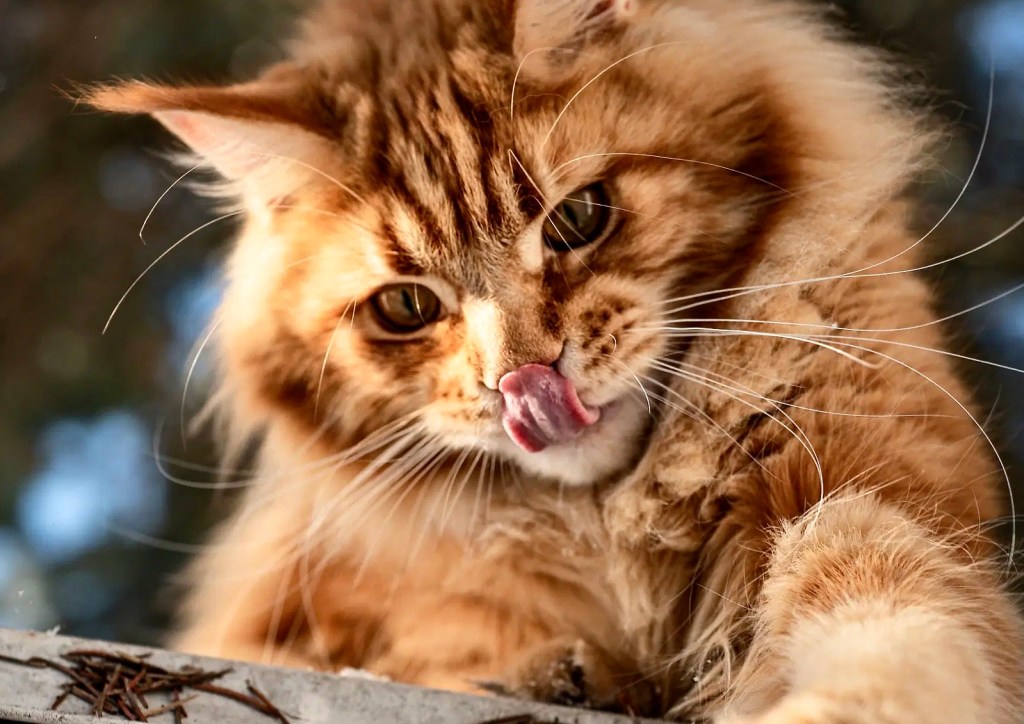
Storm of the Century

By Ed Staskus

   When I was growing up in Sudbury, Ontario in the 1950s it started snowing the last day of summer, snowed through Halloween, Thanksgiving, and Christmas, and got down to business on New Year’s Eve. Barreling into the new year it snowed some more. It kept up its business until mid-April with a fire sale now and then in the month of May. All told between o  hundred and a hundred forty inches of snow fell every winter during my childhood. 

   My father built an igloo in the back yard so that when we were lobbing snowballs at each other we would have someplace to shelter if a blizzard roared down from the Northwest Territories. My brother, sister, and I sat inside on crates looking out of windowless windows as heavy clouds lowered the boom on us. When Canadian Pacific trains hauling copper and nickel rumbling past on top of the cliff face behind our house on Stanley St. wailed, we wailed right back. 

   Snow cover in Sudbury gets deep in December and stays deep through most of January to mid-March. By the end of April, the snow is usually gone. The city is free of snow every year in July and August. Extreme cold and winter storms kill more Canadians than floods, lightning, tornadoes, thunderstorms, and hurricanes put together.

   A year before I was born the Great Appalachian Storm struck. It was Thanksgiving weekend. It dumped snow on Sudbury every day that holiday. A blustery wind made sure everybody got their fair share. Ramsey Lake froze solid. My father-to-be was not able to get to the INCO mine where he worked as a blaster, but he was able to get to the lake and go ice skating. He was from northern Lithuania and had seen worse. When the snowfall was finally cleared away it was on to the official start of winter.

   After we moved to Cleveland, Ohio, I sent a postcard to my friends back on Stanley St. saying Americans were snowflakes when it came to snow. “They complain about a couple of inches. Most days there isn’t nearly enough of it to make a decent snow angel.” It wasn’t exactly true, but it was true enough. In general, snowfall in Ohio is fifty inches a year. 

   Twenty years later I had to eat my words. The Blizzard of 1978 came from Canada. The Canucks could have kept it to themselves but they didn’t. It swept across the Great Lakes into Indiana near the end of January. The Hoosiers could have kept it to themselves, but they didn’t. The day after the storm buried their state it buried Ohio. A foot-and-a-half of snow fell in one day, on top of a foot of old snow that was already on the ground. The wind huffed and puffed. Squirrels stayed in their tree top nests. Snow shovels were lost in snowdrifts. The wind chill made it feel like forty below zero. East Ohio Gas pumped record amounts of natural gas to needy furnaces.

   “My dad made me shovel a path out the back door for our dachshund so he wouldn’t do his business in the house,” Joe Bennett said. “I got about two feet out and called it a day.” 

   The storm was characterized by an unusual merger of two weather systems. Warm moist air slammed into bitter ice-cold air. “The result was a strong area of low pressure that reached its lowest pressure over Cleveland,” the National Weather Service reported. That day’s barometric pressure reading of 28.28 is the lowest pressure ever recorded in Ohio and one of the lowest readings in American history. By the end of the month, a few days later, Cleveland recorded forty three inches of snowfall for the month, which is still a record. 

   It was called “The Storm of the Century.” The wind averaged nearly 70 MPH the day it started. Gusts hit 120 MPH on Lake Erie. Ore boats coming from Lake Superior hunkered down and crewmen stayed close to oil heaters. “I was a deckhand on a lake freighter,” said August Zeizing. “We were stuck in ice about nine miles off Pelee Point when the storm hit. We had steady 111 MPH winds gusting up to 127 MPH for about six hours. Our orders were to stay below decks and keep our movements to a minimum.” 

   More than fifty people died, trapped in stuck cars and unheated homes. A woman froze to death walking her dog. There was more than $100 million in property damage, what many said was a conservative estimate. The governor called up more than five thousand National Guardsmen, who struggled to reach the cities they were assigned to. The Guardsmen used bulldozers and tanks outfitted with plows to clear streets, highways, and rescue the stranded.

   “My dad and I drove down I-71, which was closed, to get to our farm in Loudonville,” said Paula Boehm.  “We had chains on all four tires of our Buick station wagon. We made it, thank goodness.” The only other traffic was National Guard M113 personnel carriers. Car owners stuck homemade signs saying “Car Here” on top of mounds of snow. It alerted snowplow drivers to what was under there. Motorists abandoned their vehicles helter-skelter. It was a three-dog Siberian day, night, and the next day. In some places it went on and on, often in the dark, as power wires were blown loose or broke off poles from the weight of ice.

   I was in Akron the morning the storm struck. I had no idea a blizzard was on the way. The forecast the night before didn’t sound awful. “Rain tonight, possibly mixed with snow at times. Windy and cold Thursday with snow flurries.” I was visiting a friend and had stayed overnight, and was driving my sister’s 1970 Ford Maverick. I was supposed to get the car back to her that day. I set off on the one and a half hour drive.

   National Weather Service Meteorologist Bob Alto got to work at the Akron-Canton Airport at six in the morning on Thursday. He was finally able to go home late Sunday night. “Nobody could get in and nobody could get out,” he said. “The roads were all closed. There were three of us and we had to ride it out there at the airport.” Cessna and Beechcraft two-seaters were flipped over like paper airplanes. Meteorologists didn’t call the storm a “Superbomb” like many did. They called it a “Bombogenesis.” It was their term for an area of low pressure that “bombs out.” 

   I got up early and got going. When I did the temperature started falling fast. By the time I got coffee and an egg sandwich and got on I-77 to go home the temperature had fallen from the mid-thirties to the mid-teens. It was a sudden cold snap. The rain turned to ice and snow, snowing like there was no tomorrow. I soon couldn’t see any lane markers and could barely see the road. The Maverick was a rear wheel-drive with no traction to speak of. I kept it at a steady 25 MPH unless I had to slow down even more, which I did plenty of. Jack-knifed tractor trailers littered the shoulders. One truck and its trailer were upside down. There were spun-out cars everywhere. When I passed the Ohio Turnpike, I saw it was closed, the first time that had ever happened in the history of the road. I found out later that I-77 was the only highway that didn’t close. 

   Marge Barner’s husband drove a yellow bus full of children to their school as the blizzard started. He dropped them off. Not long afterwards he got a call saying the school was closing. He went back, got the children, and that afternoon started plowing parking lots. “He was out for thirteen hours in an open tractor and ran out of gas several times. He didn’t have a radio to call for help,” Marge said. He had to help himself, walking with a can to gas stations. “He lost feeling in his arms when he got home, which only came back as he warmed up. His ears were frostbitten.”

   I kept on slow poking north. I had plenty of gas, having filled up the tank the night before after noticing I was driving on fumes. The car radio was no help, broadcasting the same bad news over and over. The car heater wheezed and groaned but stayed alive. Driving in the swirling snow hour after hour straining to see and stay on the road was nerve-wracking. I kept my gloves on and my eyes glued to the road.

   “I was seven years-old and we lived in a drafty old farmhouse in Fremont,” Susan Beech said. “The power went out, so the furnace went out, but our oven ran on propane, so it still worked. My dad set up cots and sleeping bags in our kitchen and stapled blankets over the doorways. We ran the stove around the clock, leaving the oven open so the heat filled the room. It was like winter camping in the kitchen.” 

   After I passed yet another overturned truck I thought, if that happens in the middle of the road somewhere in front of me, we are goners. I am going to end up in a miles long traffic jam. Snowplows won’t be able to get around the mess. Wreckers won’t be able to get to the wreck to move it out of the way. We will all be at a standstill and run out of gas and either freeze or starve to death. I saved half my egg sandwich for later. I checked my gas gauge and was relieved to see I still had well more than half a tank.

   “I was a teenager living four miles from the nearest town during the 1978 Blizzard,” John Knueve said. “We lost power the first night and had to rely on a small generator, which could power just one appliance at a time.” They fed the generator drops of gasoline one at a time. “A two-lane state highway ran in front of our house, but even when they finally managed to clear it, an 18-wheeler would pass by and we could hear it but we couldn’t see it for the thirteen-foot drifts which encircled the entire house. We were trapped for most of a week before my brother-in-law made it down with his tractor to break through.” In some parts of the state snowdrifts as high as twenty five feet buried dog houses, sheds, garages, and ranch homes.

   I got close to Cleveland before nightfall. I-90 looked closed, so I took St. Clair Ave. to Lakeshore Blvd. to North Collinwood. I lived two blocks from Lake Erie. When I tried to pull into my driveway the Maverick got stuck on the apron. I didn’t try digging it out. My sister would have to wait to get her car back. Spring was only a few months away, anyway.

   It was even windier and colder in our neighborhood on the lakeshore than the rest of the world. The furnace was trying hard, but the house stayed cold no matter how hard it tried. I wrapped myself up in a comforter. The windows rattled and the house shook whenever a hurricane-like blast of wind hit it. 

   “Oh, that was awful,” Mary Jo Anderson said about the howling of the wind. “Nobody slept much that night. We had never heard that kind of noise. You know, how your house shakes and squeals.” 

   Her husband, Rich, had set off in his Ford Pinto for work that morning. He was wearing a heavy sweater and a heavy coat. The Pinto wasn’t the ugliest and most unsafe car ever made, but it was a close call. The seats made for sore cheeks after an hour-or-so and God forbid getting rear-ended. The gas tank had a design flaw that made it prone to exploding on impact. Two years earlier news had broken that the Ford Motor Corporation’s company policy was that it was cheaper to pay the lawsuits resulting from the car’s exploding gas tank rather than re-design the problem. After that news flash there was hell to pay.

   Rich Anderson was about a mile up the road about a mile from his house when he was brought to a standstill. He couldn’t drive any farther because the wind was so forceful. The car was a lightweight, barely breaking two thousand pounds. “Ice was on the window of his car, and he was trying to reach his arm out and scrape the ice off,” Mary said. “He opened the car door and the wind almost ripped it off. The car spun around in a circle. The door wouldn’t close. It was broken. He had to hold it shut all while he drove home with the other hand. He was very happy to make it back.”

   That night I watched the WEWS Channel 5 news show. There wasn’t a lot of footage of the storm even though a film crew had gone searching for news on downtown streets. “It was impossible to see,” Don Webster the weatherman said. “Wind howling. Bitter, bitter cold.” “They couldn’t shoot anything because of the cold and wind. “I couldn’t even talk because I got so cold. I couldn’t say anything.” When I changed the station to WJW Channel 8, their weatherman Dick Goddard called it a “white hurricane.”

   Susan Downing-Nevling drove her Chevy Chevette to work. It was a basic reliable car. Her boss had been mad because she hadn’t made it in to work on Thursday, even though she told him people couldn’t get to their cars because the wind was knocking them down as they tried to walk to their vehicles. “So, on Friday I got up, dug my Chevette out, and drove to work on W. 44th St. and Lorain in Cleveland from Middleburg Hts. I didn’t stop once but it still took me four hours to go those few miles. When I got to work, I found out work was closed. My boss was stuck at home. A couple of others like me who made it and I went to the Ohio City Tavern for lunch.” They cheered the bartender who walked over from where he lived up the street. If you want to see the sunshine you have to weather the storm.

   When the weather moved on that weekend it moved toward the Atlantic Ocean, hooked up with a nor’easter, and walloped New England, as well as New York, New Jersey, and Pennsylvania. Instead of “Superbomb” it was called “Storm Larry.” Philadelphia got sixteen inches of snow, Atlantic City got twenty inches, and Boston was buried by twenty seven inches. The ice, snow, and bitter wind killed almost one hundred people and injured more than four thousand. It caused approximately $500 million dollars in damage. 

   The next day my father called. My parents were living in Sagamore Hills in what is called the Lake Erie snow belt. My father called me about the snow on the roof of their ranch home. He was afraid the weight of the snow might make the roof collapse. I thought he was exaggerating until my brother and I climbed a ladder to see for ourselves. The roofline was long and low-pitched. We found ourselves thigh-deep in heavy wind slab-style snow. We spent the rest of the afternoon shoveling and pushing it over the side of the eaves.

   Once it was all over local stores started selling t-shirts that read, “I Survived the ’78 Blizzard!” I didn’t buy one. What would have been the point? A t-shirt wasn’t going to keep me warm and dry if the blizzard came back. I bought a puff coat instead. I was hedging my bets. The ‘78 Blizzard might have been “The Storm of the Century” but there were twenty two more years left in the century. I wasn’t expecting to see it’s like anytime soon, but you never can tell. 

Ed Staskus posts on 147 Stanley Street http://www.147stanleystreet.com and Made in Cleveland http://www.clevelandohiodaybook.com.. To get the site’s monthly feature in your in-box click on “Follow.”
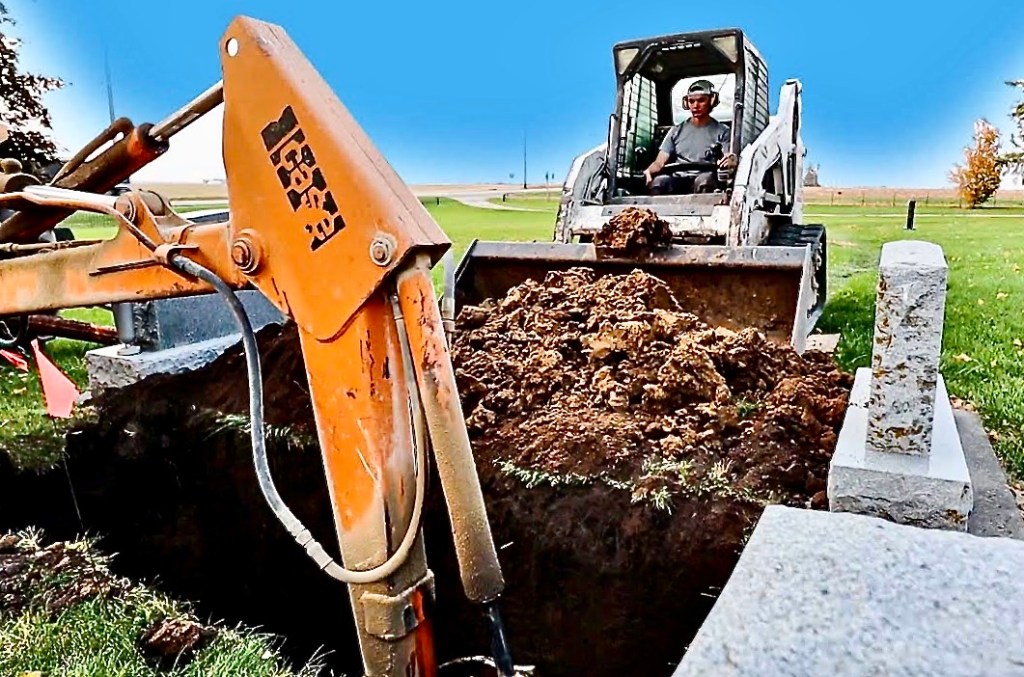
“Cross Walk” by Ed Staskus

“Old school, a Cold War thriller that captures the vibe of mid-century NYC.” Sam Winchell, Beyond Books

Available on Amazonhttps://www.amazon.com/dp/B0CRPSFPKP

Late summer, New York City, 1956. The Mob on the make and the streets full of menace. President Eisenhower on his way to Brooklyn for the opening game of the World Series. A killer waits in the wings. Stan Riddman, a private eye working out of Hell’s Kitchen, scares up the shadows.

A Crying of Lot 49 Publication

Brother from Another Planet

By Ed Staskus

   I wasn’t a sportswriter or a sports photographer at the time, but I had a media pass so I saw more Cleveland Cavalier games in the flesh during the 1980-81 season than I have ever seen in my life. I saw them from a better seat, too, even though I didn’t have a seat. I sat, stood, or knelt court side, sometimes under the baskets at the base of the stantions or beside the benches, and pretended to be doing something like taking notes. Nobody questioned my Kodak Instamatic Point & Shoot camera or schoolboy spiral notepad, even though the camera was rarely loaded with film and I often forgot to bring a pen.

   I got the media pass from my brother, who was a student at Lakeland Community College in Kirtland. He worked part-time for the school newspaper. He was their communications and media man. I had it laminated and wore it clipped on my belt. Whenever anybody bumped me jostling in or out of the arena I checked to make sure the pass was still on my belt. It was worth its weight in gold, getting me in to see the wine and gold whenever I wanted.

   The Cavaliers weren’t very good in 1980. Mike Mitchell was their best player. It was a steep drop-off from there. Bill Musselman, who was the coach, didn’t have much to work with and it showed on his game face game after game. The team finished the year twenty four games out of first place.

   My drive to the Richfield Coliseum in Richfield Township, twenty-five miles south of where I lived near downtown Cleveland, was long and longer, especially whenever they were playing a league-leading team like the Boston Celtics or Philadelphia 76ers. I soon enough learned to go early or get stuck in traffic. The Richfield Coliseum was Larry Bird’s favorite basketball arena, but he didn’t have to drive there. An interstate and a turnpike dumped cars onto a two-lane road in the middle of nowhere. It was a snail’s pace at the best of times. The traffic issues got worse the worse the weather got. In addition, the single level concourse made for massive congestion among the fans and nobody liked that, either. I had to pay for parking, which I didn’t like, although I brushed it off. Once I flashed my pass and strolled in without a hitch I was happy again.

   A lot went on at the Richfield, Coliseum, including concerts, truck pulls, rodeos, circuses, ice shows, wrestling, hockey, and indoor soccer. The arena hosted a championship boxing match between Muhammad Ali and Chuck Wepner in the mid-70s. The fight went to the bitter end, the human punching bag holding on for dear life but going down nineteen seconds before the final bell, losing in a TKO and inspiring Sylvester Stallone’s movie “Rocky.”

   The Cavaliers weren’t the first pro basketball team in Cleveland. The first three teams, starting in 1924, were the Rosenblums, the Rebels, and the Pipers. When the “Miracle of Richfield” happened during the 1975 season, the Cavaliers advancing to the Eastern Conference Finals, everybody forgot about the team’s basketball pioneers, if they had ever thought about them in the first place.

   The Richfield Coliseum opened in October 1974 with Frank Sinatra doing the honors. When he sang “My Way” the sold-out crowd roared its approval. “My friend, I’ll make it clear, I’ll state my case, of which I am certain.” Nobody roared louder than Nick Mileti. He had been a prosecutor in the inner-ring suburb of Lakewood, but then got the bug. “I want to have fun, make some dough, and leave a few footprints,” he told sportswriter Bob Oates of the Los Angeles Times.

   “Nick could sell you the Brooklyn Bridge, whether you wanted it or not,” said Bill Fitch, the Cavaliers coach from 1970 to 1979. The new arena in the middle of nowhere was the immigrant Sicilian son’s Brooklyn Bridge to glory. “My daddy was a machinist who came over as a teenager and had a dream that I was to wear a white shirt,” he said.

    He started by buying the Cleveland Arena and the city’s hockey team. He owned the Cleveland Indians baseball team for a while and then picked up the basketball team. He wasn’t using his own money, but he doctored it to look like it was his. After a while he took a good look at the 30-plus-year-old Cleveland Arena with its bad plumbing and a seating capacity of only 11,000. What he saw was money flying out the window. The players called it “The Black Hole of Calcutta.” They later called the new arena “The Palace on the Prairie.”

   “We met with the guy running the old arena,” Nick Mileti said. “On the wall, there was a calendar, and I said, ‘Why is it all white?’ They said, ‘Because we don’t have any events.’ It was an incredible situation. I bought the Barons and the arena, and after that, the first call I made was to Walter Kennedy, the commissioner of the NBA, and said I wanted a franchise. And two years later, I got one.”

   When in the early 1970s he decided on moving the basketball team halfway to Akron to do better business, every Cleveland politician and businessman was against the idea. They wanted to revitalize downtown, not vitalize someplace in the boondocks. They wanted the cash flow of twenty thousand fans driving in forty or fifty times a season. They wanted the countless concerts, circuses, and events the venue would host. They wanted the tax revenue. They didn’t get what they wanted. But that was what Nick Mileti wanted, and that was that.

   I didn’t get to know any broadcasters doing the games, but I got to know some of the writers and cameramen well enough to say hello. They were guys like Bill Nichols, Chuck Heaton, and Burt Graeff. One or the other of them was always giving me the fisheye. When I saw it happening, I pretended to be taking a picture with my Instamatic. The only newshound I was on more than hello and goodbye terms was Pete Gaughan. He was a sportswriter for the SunMedia suburban papers, writing about golf, high school, college, and pro sports, and anything else that involved hitting, kicking, throwing, or catching a ball. I met him while refereeing flag football Sunday mornings at Lakeland Community College.

   My brother had started a flag football league there with four teams. By 1980 he had two fields and fourteen teams. The teams were mainly made up of former high school players. He and I were the only two refs at first, but as more teams joined, he needed a second and third two-man crew. He paid $20.00 to each ref each game, but still had trouble recruiting and keeping crews for the Sunday morning games. When Pete Gaughan volunteered and my brother took him on, it was scraping the bottom of the barrel. Pete may have known all about local sports, but he didn’t know how to be on time and was indifferent about the rules.

   The first Sunday I met him he misjudged a parking space and brought his rust bucket to a stop on the wrong side of the curb. When the driver’s door swung open, the car still running, a half dozen empty Budweiser cans rolled out, a leg flopped here and there, and he finally staggered out of the car in a cloud of cigarette smoke. He looked like hell, like he hadn’t slept in a week. I turned his car off while my brother got him into ref’s clothes, gave him a whistle and a penalty flag, and decided he would work with me.

   “Thanks, bro,” I said while he trotted off to another field.

   Pete worked behind the offensive line while I worked downfield. He didn’t blow his whistle or throw his yellow rag once, not even when there was blood. One of the teams was made up of former Mentor High School players, and unlike most of the teams, they ran the ball more than they threw it. They were the number one team in the flag football league because they had played together in school and knew how to execute. One guy on the opposing team got tired of being battered by the relentless running attack, and when the halfback came through the line one more time the ball tucked under his arm, the other arm swatting hands away, he didn’t bother trying to reach for either of the flags on the runner’s waist. He raised his forearm head high and let the halfback’s nose run into it. He went down like a shot and blood gushed out of his nose. Pete spotted the ball at the spot and stepped to the side, lighting up a cigarette. 

   We called 911 and after an EMS truck showed up, they drove off with him, telling us his cheekbone was fractured along with his messed-up nose. We called the game. The Mentor boys were up by eight touchdowns anyway. Pete popped a Budweiser.

   By the 1980 season the “Miracle of Richfield” was five years in the dustbin and Nick Mileti had given up his title as president of the Cavaliers, sold his interest, and control of the team went to Ted Stepien, the King of Errors. There weren’t going to be any miracles under his reign. The NBA stayed busy writing rules addressing some of the crazy things he was prone to doing. He traded away five consecutive first-round picks. The wrote the Stepien Rule, which states no team can trade away consecutive first-round draft picks.

   In the meantime, I tried to see all the games involving the better teams in the league. The Cavaliers were a half-good team who could keep up with other half-bad teams. They had trouble with the cream of the crop. That year they went 1 and 4 against the Celtics, 1 and 5 against the Bulls, 0 and 5 against the Knicks, 0 and 6 against the Bucks, and 0 and 6 against the 76ers.

   The Philadelphia team was my favorite team. They were always in the hunt for the title. Maurice Cheeks and Doug Collins were the guards. Bobby “The Secretary of Defense” Jones cleaned up around the basket. Julius “Dr. J” Erving and Daryl “Dr. Dunkenstein” Dawkins led the scoring parade. When the doctors were in the house, they were good for almost fifty points. Julius Erving was menacing enough, but Daryl Dawkins was a menace unto himself.

   A year earlier in a game against the Kansas City Kings in KC, dunking the ball with enthusiasm, Daryl broke the backboard, sending both teams ducking. Three weeks later, he did it again at home against the San Antonio Spurs. The next week the NBA wrote a new rule that smashing a backboard to smithereens was wrong, so wrong that it would result in a fine and suspension.

   Daryl named his backboard-breaking dunks “The Chocolate-Thunder-Flying, Teeth-Shaking, Glass-Breaking, Rump-Roasting, Wham-Bam, Glass-Breaker-I-Am-Jams.” His other dunks earned their own names, like the Rim Wrecker, the In-Your-Face Disgrace, the Spine-Chiller Supreme, and the Greyhound Special, for when he went coast to coast. “When I dunk, I want to go straight up, and put it down on somebody.” 

   His nicknames were Sir Slam, Chocolate Thunder, and Dr. Dunkenstein. He wore a LoveTron t-shirt while warming up. He told the Cleveland sportswriters he was an alien from the planet LoveTron, where he spent the off-season practicing “interplanetary funkmanship” with his girlfriend Juicy Lucy. The reporters scribbled it down like it was sirloin.

   His coach asked him to tone it down. “All the talk and bravado, enough,” Billy Cunningham said. The next day at practice Daryl told his teammates, “I’m not talking today. Coach made me Thunder Down Under.” It didn’t last long. He went back to talking the next day.

   Daryl Dawkins was in his mid-20s, six foot eleven, and 260 pounds of beef, brawn, and swagger. The Cavalier centers were Kim Hughes and Bill Lambeer, both six eleven, but both slower and skinnier than Daryl, who wore gold chains during games. One of them featured a cross while another one proclaimed Sir Slam in gold script. Sometimes, he would shave his head and oil it, along with wearing a gold pirate’s earring. 

   The year before he had averaged almost 15 points and 9 rebounds, helping the 76ers to the NBA Finals, which they lost in six games to the Los Angeles Lakers. I watched him go coast to coast against a back-pedaling Bill Lambeer one night. If it had been the other Cavalier center, Kim Hughes, about 40 pounds lighter than Daryl, he wouldn’t have even bothered back-pedaling. Bill Lambeer was far more stubborn. All the way to the inevitable slam dunk Daryl’s gold chains swung one way and the other way slapping at Bill’s face until he finally ducked and covered. The next year the NBA forbade the wearing of any jewelry while playing ball.

   The last three games I saw at the Richfield Coliseum were the last three games of the season. The Cavaliers lost by 26 to the Bucks, by 21 to the 76ers, and by 35 to the Bullets. It had been a long year. The opening game of the next season boded another long year when the wine and gold lost to the 76ers by 24. But before that game was even played, I didn’t have a media pass anymore and wasn’t planning on going back to the Richfield Coliseum anytime soon. I didn’t have a dependable car and God forbid I break down in the cow pastures of Summit County in the middle of the night.

   I missed going out there, missed the lights and noise, groaning and cheering, being on the floor, the action and excitement, the coaches fuming and cursing, and the players putting up with venomous fans sitting behind them. Daryl Dawkins wasn’t big on putting up with anything. When he flaked on a dunk one night, hearing the catcalls, he kicked somebody’s extra-large Coke off the floor, sticky sugar water spraying on everybody in the big-ticket seats. He didn’t look back and didn’t apologize. I kept a firm grip on my jumbo soft pretzel.

   After the Cleveland Cavaliers returned to Cleveland to a new arena the Palace on the Prairie closed and the parking lot went to weeds and shadows. I walked to games downtown a couple of times, but the atmosphere was more corporate than cutthroat and I didn’t go back. Besides, they were charging corporate prices for the tickets, and I wasn’t about to bust my piggybank to cheer grown men in shorts bouncing a ball from one end of a hardwood floor to the other end. Besides, the last time I checked on Daryl Dawkins, he was playing for the Harlem Globetrotters. That was where the fun and games were.

Ed Staskus posts feature stories on 147 Stanley Street http://www.147stanleystreet.com and Cleveland Daybook http://www.clevelandohiodaybook.com.. To get the site’s monthly feature in your in-box click on “Follow.”

The 4th OM

By Ed Staskus

   The brightest OM I ever heard was the one Kristen Zarzycki began and ended her ‘Follow the Yogi’ at Inner Bliss on Sunday afternoons, joined by many if not everybody in what was the biggest and most popular class of the week. It didn’t hurt that the class only cost $5.00 when most classes started at ten bucks and up. Kristen was a young teacher with a voice like the Queen Mary steaming into port through a fog. The first time I heard her I realized what the talk about the sound of OM being a classic vibration was all about. I could feel the buzz in the room, and I wasn’t even making a sound.

   I began thinking about yoga in my fifties when arthritis had gotten so my bad hip either hurt all the time or really hurt all the time. At first, I tried it at home, checking out videotapes about one style and another, checking the tapes out from our local library. I even bought a mat. After a year I felt stalemated, as though I had no idea what I knew. I was aware of studios and thought professional instruction was a good idea. But I was reluctant to go because of my impression classes were chock-full of lissome women who could do the impossible and the certainty I would be the oaf in the corner.

   One afternoon towards the end of summer, lounging around our company’s lunchroom, waiting for our marketing director Maria Kellem to free up the stove, yoga somehow came up as we talked. I was surprised to find out she not only practiced, but taught yoga part-time, as well. For the next several months she never tired of leaning into my cubicle and encouraging me to take a class.

  I finally did, partly to appease her, partly because I didn’t see any other way to learn more, but mostly just to do it, at least once. From the end of my first class on a Saturday morning, slapping my hand to my temple in the car as I drove away, surprised it had taken me so long, I was attracted to the practice, simply because I felt surprisingly good afterwards.

   The first two years I went at it was at a once-a-week beginner’s class, to which I eventually added a second class. Although my focus was on the physical postures, I noticed our classes often began with a homily and a chant, usually OM. Preferring my own postmodern skepticism, I ignored the spiritual advice. I was drawn to the chanting, but when I opened my mouth, which wasn’t often, it was with a small voice from the back of the room.

   After another year of moderate flow under my belt, I started taking more physically challenging classes, time-distorting vinyasa practices with unnerving names like ‘Hot Power Yoga Challenge’. One evening near the end of an especially hard class, after our teacher reminded us yet again to breathe with mindfulness, I asked her if it was the same as breathing desperately.

   She gave me a dirty look but was kind enough to say it was.

   I began to buy into the spirit of yoga, reading about its principles and way of life, and listening to our teachers with a newfound openness. I took a workshop about meditation and another about the chakras – to which I reacted with both incredulity and admiration for the teacher who tried with all her might to explain the fantastic and unexplainable. I was even chanting OM more often, but still with a small voice.

   When I began to OM with more than less frankness it was at the end of the first class that Kimberly Payne taught at Inner Bliss, the yoga studio in Rocky River, Ohio, where I had started and where I still practiced. By then I was emboldened by what I knew, which later turned out to be less than I thought, into trying new kinds of classes, like Kundalini, and diverse teachers. Kim Payne’s inaugural class, a different kind of powerful flow, turned out to be more than I bargained for.

   On the way to the studio that evening, storm clouds darkened my rearview mirror as I crossed the beam bridge over the Rocky River valley. A red-orange light from the setting sun over the lake slanted between the houses across the street onto the asphalt parking lot as I walked to the two-story loft-style brick building. The studio was on the second floor. There wasn’t much to it other than lots of empty space. Inside, I unrolled my mat, facing across the wide room towards the dusk. As we started our practice, I was quickly thrown off balance by the unfamiliar sequence and difficulty of the exercises. Then the noise started.

   First one and then another double-stacked freight train rumbled past on the CSX tracks on the abutment behind the building east towards Cleveland. At both public grade crossings, one block to the west and four blocks the other way, the diesel’s compressed air horns let loose blasts of 15-second warnings.

   When the trains were come and gone two men working late at Mason’s Auto Body next door started cutting sheet metal with what sounded like a Godzilla-style Sawzall, a high-pitched gnashing pouring in through the closed windows as though they weren’t closed at all. No sooner had they finished than the hard wind rain deluge started, a gusting thunderstorm that lasted through a long series of unsettling balancing poses and to the end of class.

   Coming out of corpse pose I suddenly noticed the studio was quiet, our windows no longer lashed by rain. We sat cross-legged in the dark, and chanted three long, slow OMs, the poses all done and the noise, too, and the only thing mattering just then and there being the chant. Our voices echoed in the soupy air when we finished. It was the first time I did OM with any sincerity.

   The loudest OM I ever heard was the one Kristen Zarzycki’s class chanted for her the Sunday before she ran her first marathon, in Chicago, in what turned out to be the unlikely tropics of Lake Michigan.

   Kristen described her flow classes as “funky and challenging.” Challenging they were, so much so I nicknamed her Kirby, after Jack Kirby, the Marvel Comics artist who created Sgt. Fury, the snarling but tenderhearted NCO who led the First Attack Squad known as the “Howling Commandos” in the short-lived 1960s comic book series. Although a head shorter and smaller by far than the cigar-chomping Sgt. Fury, she morphed into him as she led her classes centering on core poses, for what she insisted was our own good, and watched over us as we tried to survive her ruthless boot camp approach.

   At the end of her classes Kristen always invited everybody to a “big and huge” OM to seal the deal. That Sunday afternoon somebody impulsively interrupted and said, “Let’s chant for Kristen running the marathon next week.” So prompted the whole class did. The OM was loud and long and heartfelt. The chant was so long I almost ran out of breath. Kristen was flushed with emotion when we were finally done.

   The next Sunday she ran in record-setting heat and smothering humidity. More than ten thousand of the thirty-five thousand participants dropped out, hundreds more were treated by medical teams, and the organizers tried to shut the event down twenty miles into it. Kristen was one of the runners who finished, and sometimes I think what kept her safe and sound was the OM we chanted for her.

   The car repair OM happened on a mid-summer evening as we sat cross-legged at Inner Bliss, palms together, thumbs at the heart center, at the tail end of Tammy Lyons’s hot flow class. The casement windows overlooking the flat roof and cords of seasoned firewood stacked against the outside wall of Mason’s Auto Body were tilted open, and I could sense a breeze. We chanted OM once, breathed in, and chanted OM a second time.

   “There they go again,” said a body shop man unseen below us, taking a break at the umbrella table between our two buildings, more than loud enough to be heard throughout the studio.

   “Whatever floats your boat,” a second man said, louder.

   Tammy Lyons paused and paused again. She had the patience of a mother of two small boys and the forbearance of a small-business owner, namely the yoga studio. When she paused, I waited for the response. I reckoned it was inevitable, human nature being what it is. We chanted OM a third time. When the class over she thanked us for coming, told us it was privilege to share her practice with us, and updated everybody on the studio’s schedule.

  Then she said in a clear firm voice more than clear firm loud enough to be heard outside, “Yes, it does float our boats.”

   Later that night, nursing a can of cold PBR in my backyard, I thought about the sarcastic guys at Mason’s. They weren’t really all that different from Tammy Lyons, although maybe they thought they were. Just like she worked on our bodies by leading us in yoga sequences, they worked on the bodies of automobiles.

   Motor city and human bodies are not only in and of themselves, but they are carry-all’s, as well. Practicing yoga exercises is like taking care of your body in the same way a skilled mechanic will take care of your car, both with the same idea in mind, so our bodies and our cars will be better able to take us where we want to go, whether it’s a yoga studio or the corner bar. But, if the body shop men were different, maybe it was because they didn’t know where they were going.

   The 4th OM unfolded on a Sunday afternoon when Max Strom, an itinerant yoga teacher, came to Inner Bliss. Neither the workshop nor he were what I expected, even though I couldn’t have said what I expected. Dressed all in black with a grayish ponytail and a gregarious manner, Max was built more like a football player than a tightrope walker. Other than a few warm-up exercises and moving around now-and-then, we sat on our mats, and he devoted most of the sold-out two-hour workshop to breathing, both explaining his ideas about it and leading us in elements of it.

   He seemed to think yoga exercises alone were inadequate as a way of making a spiritual connection, which he defined as the goal of yoga. He thought yoga work outs could and did serve a purpose, but to arrive at some meaning beyond simple exercise the next step was to connect with one’s breath.

   He said the practice seemed to be mostly physical, but that it wasn’t. Rather, it was a practice meant to harmonize the body and mind. The mind was our inner body, which he formulated as mental focus and intention, and breath, which he further defined as emotional focus and concentration on spirit.

   We did a slew of breathing exercises, breathing fast, and breathing slow, holding our inhales and then our exhales, alternate nostril breathing, bellows breath and breath of fire, and long slow breathing until I ran out of breath. Max instructed us to breathe into the heart center, to breathe in the present and breathe out the past.

  After a break, when we were all back on our mats, he unfurled a 10-minute OM. He explained we were to all start together, but as we finished our own personal OM to go on to the next one, not waiting for the others in class. He said in a minute or so we would all be intoning separately, but it would in the long run resolve itself into a single continuous chant, which is exactly what happened. It turned into a long rolling OM with no beginning and no end.

   As we chanted, I found myself subsumed by the sound, and then midway through the chanting I suddenly had a distinct feeling of emptiness, from the sacrum to the collarbone. It wasn’t that I felt any kind of hunger or was filled with yearning. I just felt empty. As we chanted it seemed like I was hollow shell lit up from within by a bright diffuse light.

   I was conscious that my heart was beating slowly steady, and I was breathing rhythmically, and that the quiet, bright emptiness was only a feeling, but for all that it was a remarkable sensation. I didn’t feel better, or worse, I just felt light and lit up. It was an experience that lasted about a minute.

   Max’s message at the end of class was to breathe with intention, and he sent us on our way with a goodbye namaste and ringing endorsement for his new DVD being sold in the lobby.

   Since then, I have never again felt the same bright emptiness I did during his workshop, but as a result added some breath training and meditation to my increasingly stay at home practice. What surprised me in the long run is the patience it takes to learn to sit quietly, not thinking of anything something nothing, and breathing mindfully.

   There is no blowing the man down with OM. It is more like the hum of a big block V6 savoring its high octane, cruising down a newly asphalted country road, a ragtop on a bright summer day with no deadline on the bench seat. It is the glow of all in your head old-school energy.

Ed Staskus posts stories on 147 Stanley Street http://www.147stanleystreet.com and Cleveland Daybook http://www.clevelandohiodaybook.com. To get the site’s monthly feature in your in-box click on “Follow.”
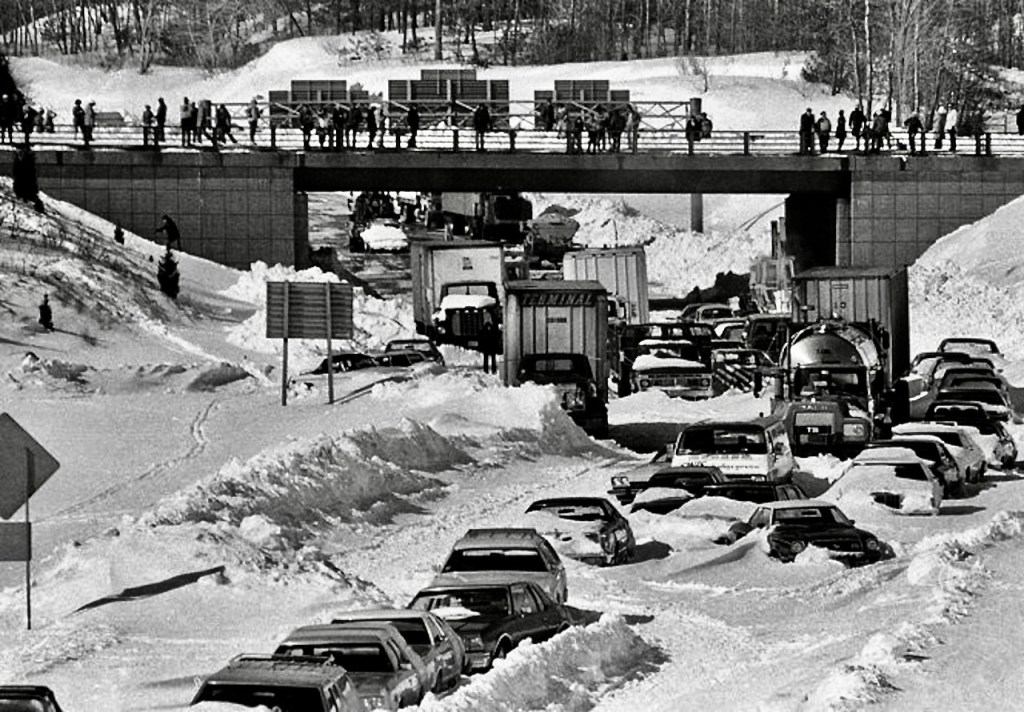
Thrills and Spills

By Ed Staskus

   Two days after we got married in the Lithuanian Roman Catholic church on Cleveland’s east side my wife and I drove over the Rainbow Bridge to the Canadian side of Niagara Falls. It used to be called the Honeymoon Bridge, but it collapsed in 1938. When the new one opened in 1941 a quote from the Book of Genesis about a “bow in the clouds” was engraved on the side of the bridge. A half century later the span was still standing, God willing.

   We must have looked happy as larks when we got to the other side of the crossing. After paying the toll, and showing the border patrol our driver’s licenses, we were told to join a line of cars off to the side. Ten minutes later German Shepherds and their handlers showed up, sniffing the cars up and down for drugs. One of the uniforms used a tactical mirror to inspect the underside of the cars. 

   When it was over and done with and they told us we were free to go, I said, “Love is the drug, man.” The lawman at my driver’s side window didn’t like it and scowled but Rin Tin Tin gave me a forty-two-tooth salute. He was glad to be going back to headquarters for grub. We were steps from the Honeymoon Capital of the World.

   After lunch we went to Goat Island, bought tickets, got outfitted in bright yellow ponchos, and were elevatored 18 stories down to the Niagara Gorge. The Cave of the Winds started life as a rock overhang that was like a cave. There used to be an overhanging ledge of Lockport Dolostone at the top of the gorge which stuck out more than 100 feet. The overhang wasn’t there anymore but the Hurricane Deck was. We followed a guide on a series of wood walkways to it, stopping standing staring at the thundering water 20 feet away. It sprayed us in the face. There was a rainbow right there. We could almost touch it.

   “Did you bring a camera?” my wife asked.

   “No,” I said.

   “That’s all right, better to remember it the way we want to,” she said.

   Since we were soggy already, we decided to go to the Journey Behind the Falls. An elevator went down 13 stories through bedrock to tunnels that led to the Cataract Portal and the Great Falls Portal. We walked to the Lower Observation Deck at the foot of the Falls and watched one-fifth of the world’s freshwater crash down at 40 MPH into the basin below. We left dripping freshwater behind us.

   There was still some daylight left in the day, and waterlogged as we were with nothing to lose, we boarded the Maid of the Mist. The first boat in 1846 was called Maid of the Mist and the name had never changed although the ships had. The first ones were steam powered. Ours was a diesel-powered vessel put into service in 1955. It was two years after Marilyn Monroe cuckolded and tried to murder her husband Joseph Cotton in the movie “Niagara.”

   The first Maid of the Mist was a barge-like steamer that was more ferry than anything else. It was a 72-foot-long side-wheeler powered by a wood-and coal-fired boiler. The ferrying only lasted two years, when a suspension bridge opened. Not knowing what to do with the boat, the owners finally decided to make it a sightseeing wheeler.

   We took the Incline Railway from street level down to the boat dock. The new Maid was looking good, having replaced the old Maid in 1983. The old boat was plying the Amazon River as a missionary ship under an assumed name. She had been a trooper in her day. In 1960 the Maid wheeled to the starboard and the crew rescued Roger Woodward, a seven-year-old who became the first person to survive going over the Horseshoe Falls wearing only a life jacket. Getting on the boat we were both handed blue ponchos and advised to wear them, or else.

   “Or else what?” I asked. 

   “You’re free to not wear it and soak in the experience,” the man said. We put our ponchos on and cinched the hoods.

   The boat chugged to the base of the American Falls. It started to rock and roll. We kept our balance hanging on to a rail. I never knew water droplets could pummel or that half a million gallons of water pouring out of the faucet at once could be so loud. The Maid went on to the basin of the Canadian Horseshoe Falls. We stood at the front of the boat on the upper level up close and personal. The captain took her closer and closer. We got as close as it gets. The waterfall was in our faces. We could barely keep our eyes open. It might as well have been raining, even though the sky was sunny and blue. When the boat turned to go back, she spun around in place, spray coming at us from every direction.

   There was a full moon that night. “When the moon hits your eye like a big pizza pie, that’s amore.” We had fun fooling around that night.

   The next day we went high and dry. We were done with getting wet and took a helicopter ride. The chopper was an Enstrom, operated by Pan-Air. They had a “Chapel in the Sky” service although since we were freshly minted, there was no need for more vows. The helicopter sat six, but my wife and I and two Japanese men were the only ones on the flight. We sat in the front with the pilot and the Japs sat in back, where they took a million pictures. The front of the chopper was plexiglass. When I looked down the sky was right under our feet. Rainbows shot up at us from the rapids and falls.

   The ride was only ten or fifteen minutes long, but we got an eyeful. The bird’s-eyeview was nothing if not breath-taking. We saw the American Falls, Bridal Veil Falls, Horseshoe Falls, Whirlpool Rapids, the Rainbow Bridge, and Queen Victoria Park.

   “Ooh-wee,” we both said when the helicopter landed. We got our land legs back and went back to the Howard Johnson’s for a nap and dinner. The Japs stayed behind taking pictures of the chopper.

   The next day we left Niagara Falls, messed around in Toronto, and drove to Ottawa in our VW Golf. The city is the capital of Canada, on the south bank of the Ottawa River, straddling the provinces of Ontario and Quebec. Brian Mulroney was the Prime Minister. He kept order by saying things like, “I am not denying anything I did not say.” The city had been there since 1826 and by 1989 was the fourth-largest one in the country. A big part of it burned down in 1900 and had to be re-built for the better. We stayed at a small motel near Pig Island. The drive to Byward Market and Lower Town was a short one up Colonel By Dr. along the Rideau Canal. We discovered a Portuguese bakery in Lower Town and pigged out.

   We visited the Notre-Dame Cathedral Basilica, Parliament Hill, which is the neo-Gothic home of the law of the land, checked out the Centennial Flame and the statue of Queen Victoria, took a stroll through Major’s Hill Park, and had dinner two nights back-to-back at two terrific restaurants near Confederation Park, walking the food and drink off afterwards, and tossing a Loonie in the fountain, the one-dollar coin introduced two years earlier.

   One afternoon we were standing on the Mackenzie King Bridge watching boats going to and from the locks when we noticed a houseboat coming our way. The canal was built starting in 1826. More than a thousand Irish, Scottish, and French laborers died of malaria digging it out. It opened in 1832. The idea behind the canal was a lifeline between Montreal and the naval base at Kingston in case Canada ever went to war with the United States. 

   The Pumper was the first steamboat to make the trip, carrying Colonel By and his family. John By was the man who made the canal happen. Canada and the United States never went to war and the canal became a thoroughfare for shipping grain, timber, and minerals from the hinterland to the east. Immigrants used it moving westward. After railroads appropriated the shipping trade, the canal was mostly used by pleasure craft.

   It was a pleasure watching the houseboat approach. A man was sitting in a folding chair at the bow. His legs were crossed, he was reading a newspaper, and smoking a cigar. A woman was standing at the stern with a long pole. She was slowly leaning into the pole and pushing the forty-foot flat bottomed houseboat forward. She kept her push pole lined up with the center line of the boat to keep it moving in a straight line. I could see they had an inboard motor but weren’t using it. Smoke from her husband’s cigar drifted back to her. She waved it away from her face.

   “Take notes,” I told my new bride. 

   “That’ll be the day,” she grumbled.

   After we got home from our honeymoon, we often went back to Canada, to Montreal and Quebec City, up the St Lawrence River, and to Nova Scotia and Prince Edward Island. We never went back to Ottawa, not for any especial reason. One morning while I was looking out our living room window at yet another winter storm blowing through town, my wife asked me if I had seen the news about the protests in Ottawa. I flipped an iPad open and read the news. Sure enough, protests were roiling the capital.

   A convoy of truckers had descended on the city three weeks earlier protesting a regulation requiring drivers moving goods across the USA Canada border to be vaccinated against the 19 virus. Other truckers were blocking bridges between Windsor and Detroit and another bridge linking Alberta to North Dakota. The federal police had already arrested more than a dozen drivers out west and seized all their guns and ammo. They had been planning on ambushing and shooting law enforcement officers.

   When the Ottawa camel train pulled into town to throw gasoline on the fire they rumbled straight to Wellington St. and Parliament Hill and surrounded it. Their $100,000 travel trailers, $150,000 recreational vehicles, and $200,000 heavy trucks brought traffic to a standstill. Businesses shut down for the duration. There wasn’t any money coming in, anyway. Flatbed trucks became stages. Organizers clapped themselves on the back and made misinformation speeches. DJ’s spun rap cranked up so everybody within miles could hear it. Bouncy castles were plopped down in the streets for kids playing hooky. Some drivers had brought their children with them. An inflatable hot tub was pumped up and set up for rest and recreation. They flew QAnon and Confederate flags, even though QAnon is a Whac-A-Mole, and Johnny Reb got his ass kicked a long time ago.

   Who flies slaveholder-or-die flags to prove how virtuous they are? Folks who want a slave of their own? Folks who live in caves? Folks who are far over the full moon? 

   Drivers put their air horns on autopilot 24/7. It didn’t take long for everybody living nearby to get sick of it. “You got vehicles laying on their horns for hours and hours at a time,” said Peter Simpson. “We don’t even live on Parliament Hill. It’s very difficult to work or relax or to do anything. All you can do is focus on calming yourself down.”

   The morning I read about the protests was the morning things were coming to a head. The police sat on their hands for weeks until the mayor got tired of it, fired the police chief, put a by the book man in charge, and a few days later the cops were showing up in force. “It’s horrific,” said Dagny Pawlak, a protestor spokeswoman. “It’s a dark moment in Canadian history. Never in my life would I have believed anyone if they told me that our own Prime Minister would refuse dialogue and choose violence against peaceful protesters instead.”

   “Look, I am a big, brassy guy who won and won big,” is what Brian Mulroney always said. “I do what I want.” But he wasn’t the Prime Minister anymore. Justin Trudeau was the man upstairs. He said the truckers were “an insult to memory and truth.” He did what he had to do.

   When I was student at Cleveland State University in the 1970s we went marching from our campus down Euclid Ave. to Public Square every spring to protest the Vietnam War. We never marched in wintertime because it was too cold and snowy. Nobody wanted to be plowed under by a snowplow. We wore buttons saying, “How Many More?” and “I’m a Viet Nam Dropout” and “Ship the GI’s Home Now!”  Many of the GI’s shooting it out with Charlie were true believers who volunteered. The rest were unlucky trailer trash. They were the ones who were always getting drafted first. We were college students with draft deferments and wanted to keep it that way.

   We carried banners and damp handkerchiefs in our pockets. Everybody wore sensible shoes. One springtime I noticed two coeds next to me wearing pumps with two-inch heels and straps that looked like they would snap at the slightest provocation.

   “You might want to change into flats,” I said. 

   “Why would we want to do that?” one of them asked.

   “In case you’ve got to run.” They giggled and skipped away. The last time I saw them they were skinning their knees trying to run and getting themselves easily arrested.

    When we got to the Sailors and Soldiers Monument, firebrands made fiery speeches, we chanted slogans, listened to more speeches about justice and freedom, half of us high on weed, and waited for the cops to show up. When they did and ordered us to disperse and we didn’t, they lobbed tear gas at us. We gave them the finger. They beat us with rubber batons. We threw cherry bombs at them. They sent in the mounted police. Nobody wanted to be trampled by a horse. We usually ran for the train station in the Terminal Tower trying to lose ourselves in the workaday crowd.

   I never went on a Civil Rights march. They had it worse. Vigilantes and police used whips, Billy clubs, guns, dogs, Cossack-style horses, fire hoses, and tear gas. When we were protesting the Vietnam War, we were white kids being corralled by white policemen. They didn’t like us but weren’t trying to kill us. 

    The Freedom Convoy in Ottawa had plenty of banners and slogans. Reading them was like trying to find meaning in a bowl of alphabet soup. Mandate Freedom 4 All. He Will Not Divide. Hold the Line. Take Back Our Freedom. We Will Not Acquiesce. Were they trying to dam up Niagara Falls with toothpicks? One of the signs said they were willing to take a bullet for their country. What about taking a shot for your neighbors?

   Matthew Wall, an electrician from Manitoba, joined the Freedom Convoy after popping psychedelics and having a vision. “I’m here for the rights of our kids, for parents’ rights, for everyone’s rights,” he said. “It is so kids can live in a future where they don’t have to have something covering their face. You don’t have the human connection, don’t see them smile anymore. It’s dehumanizing. They’re taking away the love!”

   Many of Ottawa’s residents had their own slogan: Make Ottawa Boring Again!

   “I wonder what would be going on if it was the 1340s and 1350s?” I wondered aloud to my wife, watching it snow in the meantime.

   “What do you mean?” she asked.

   “I mean, I wonder how long the lines would be to get vaccinated against the Bubonic Plague if it was the plague instead of the 19 virus,” I said.

   Five years into the pandemic at the beginning of the Middle Ages almost 50 million Europeans were dead, more than half of the population. They called it the Great Pestilence. They didn’t have vaccines. They resorted to mixing tree resin, roots of white lilies, and human excrement into a porridge and slathering it all over themselves. If you caught the Black Death, your chances of making it back alive were almost zero. Nobody died peacefully in an ICU. There were no ICU’s. They got crazy feverish, their joints on fire like a ten-alarm. They broke out in buboes, oozing pus and blood, vomiting non-stop, and got diarrhea to die for.. The suffering went on non-stop for a week-or-so. When it was over, they fell down dead in the streets, glad it was over.

   “I bet the spaghetti o’s with their portable spas in Ottawa would be the first ones pushing their way to the head of the vaccination line while crying there is a conspiracy to push them to the back. They would be going 100 MPH in their trucks and RV’s to get somewhere anywhere to snag a shot, not complaining about government overreach.”

   “Maybe you’re right,” she said. “Thank goodness we’re on the other side of the Middle Ages.”

   “Hats off to that, sugar, although now and then when there’s a full moon it’s back to the Dark Ages,” I said.

Ed Staskus posts on 147 Stanley Street http://www.147stanleystreet.com and Made in Cleveland http://www.clevelandohiodaybook.com. To get the site’s monthly feature in your in-box click on “Follow.”