
Tag Archives: Made in Cleveland

Law of the Land

By Ed Staskus

   When I moved from the near east side of downtown Cleveland to Carpenter, Ohio the post office there had been gone more than ten years. The Baptist church was still standing, but the minister didn’t live in the whistle-stop. He drove in on Sundays, performed his mission, and drove away after shaking a few hands. I went to the service one morning, but the minister looked like the talent scout for a graveyard, and it was the last time I went. The general store had closed even before the post office, which was good for Virginia Sustarsic and me, because that is what we moved into, staying the spring summer and into the early fall.

   The post office was opened in 1883 and stayed there until 1963. Nobody knew who the town was named for, although three men who had been natives of the place took credit. There was Amos Carpenter, an old geezer who talked too much, Jesse Carpenter, a farmer who hardly ever talked, and State Senator J. L. Carpenter, who only talked when it counted. He brought tracks and a railroad station to the town. Those were long gone, too.

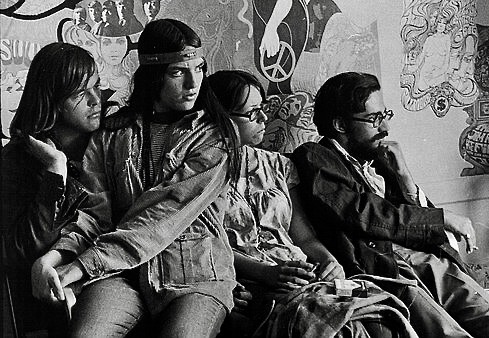
   It wasn’t my idea to go live local yokel on the banks of Leading Creek, but Virginia argued living in the country was the way to go. She was a hippie and wore its ethos of going back to the roots on her sleeve. I countered that the hippies happened in coastal cities like San Francisco and New York, flowered in college towns like Austin and Ann Arbor, and were trucking along in cities like Omaha, Atlanta, and Cleveland. We were both from Cleveland, born of immigrant stock, she Slovenian and me Lithuanian.

   My reasoning fell on deaf ears.

   A friend of ours with a van drove us and our stuff to Carpenter, dropped us off, and waved goodbye. I had never been there before. Virginia had been there twice, having a friend who lived in that neck of the woods. It took less than ten seconds to look the town over. There wasn’t much to see. We stashed everything away in the sturdy but dilapidated 19th century-era store and walked up Carpenter Hill Rd. to Five Mile Run, detouring down what passed for a driveway to a small house where Virginia’s friend and his bloodhound lived.

   He was somewhere between not young and middle-aged, lean and scraggly, literate and friendly. He was the kind of man who was a hippie long before there were hippies. He read lots of books and smoked lots of weed. There was a Colt cap and ball pistol on his coffee table, laying there as relaxed as could be. It was a Walker .44. It was big, old as dirt, spic-n-span workable. 

   “That’s an imposing handgun,” I said.

   “They call it the Peacemaker,” he said. “Even though it can get you into a load of trouble the same as not. I call it the Devil’s Right Hand.”

   He shot rabbits with it for his stew pot. The large percussion revolver could have taken deer in season. He let me shoot it at a tree later that summer. It was heavy when I lifted it. I shot it stiff-armed expecting more recoil, which turned out to be modest. What I didn’t expect was the “BOOM!” at the end of my arm. I was glad I missed the tree. Even though it was a full-grown maple the ball hitting it might have put it on the woodpile.

   We spent a week sweeping dusting cleaning arranging the ground floor front room of the general store. There were two storerooms in the back and an upstairs we didn’t mess with. Two long broad oak tables served as platforms for working and preparing food. We ate in rocking chairs we set up at one of the windows. We found a braided round rug in a closet, beat the hell out of it, and rolled it out in the middle of the floor.

   After laying in a garden, we stuck a scarecrow of Grace Slick on a stick to guard the plot. The scarecrow, however, fell down on the job. Birds shat on her and rabbits ran riot. We ended up hunting and gathering.

   A kitten walked in out of the blue one morning, worn out and hungry as a horse. He was white with a black blob on his chest and a masked face. Virginia gave it a bowl of water, but we didn’t have cat food. “We should go into town, get some, and some food for us, too,” I said.

   Virginia was a genius at living off the land, but we still needed some store-bought stuff, salt pepper coffee pasta peanut butter and pancake mix, as well as toilet paper. The outhouse was bad enough without the comfort of Charmin.

   There were two municipalities within driving distance, Athens, which was 15 miles northeast of us, and Pomeroy, which was 17 miles southeast. Ohio University was in Athens, had several grocery stores, and plenty of citizens our own age. Pomeroy was on the Ohio River, was notorious for being repeatedly destroyed, and there was nobody our age there. We never went to Pomeroy except once to look around.

   The town was consumed by fire in 1851, 1856, 1884, and 1927. The floods of 1884, 1913, and 1937 were even more disastrous. 1884 was an especially bad year, what with fire and flood both. Why the residents kept rebuilding the place was beyond us, although we speculated they must have been plain stubborn.

   We stopped at the courthouse to lay eyes on the excitement. We had read in “Ripley’s Believe or Not!” that there is a ground floor entrance to each of its three stories, the only one of its kind in the world The sight of the phenomenon wasn’t all that exciting. A plaque explaining that the courthouse served as a jail for more than 200 of Morgan’s Raiders after their capture in the Battle of Buffington Island during the Civil War caught our attention. It was exciting to learn that Ohio boys had gotten the better of Johnny Reb when they ventured north.

   The county seat of Meigs County is mentioned in Ripley’s a second time for not having any cross streets. We took a stroll and didn’t see any. It didn’t seem deserving of mention in Ripley’s, but what did we know?

   Once he had a steady supply of food, out kitten got better and bigger. He spent his days outside and after sunset inside. He learned fast there were plenty of hungry owls, racoons, and coyotes in the dark. At first, when he was a tyke, he slept on top of my head at night. As he grew, I had to move him to the side. It was like wearing a Davey Crocket racoon hat to bed. 

   Meigs County, in which Carpenter lay, is 433 square miles with a population of around 20,000, or 54 people per square mile. Where we came from, Cuyahoga County, it was more like 3,000 people per square mile. At night in the middle of Meigs County it often seemed like 2 people per square mile, Virginia and me.

   There wasn’t much crime in the county, thank goodness, because the law enforcement amounted to one sheriff, one lieutenant, one sergeant, and six deputies. We had been in town a week-or-so when the sheriff stopped by to say hello. He was a pot-bellied man with fly belly blue eyes. He made sure we had the cop and fire department phone numbers even though we didn’t have a phone. He warned us not to mess around with the marijuana market. Virginia made roach clips for sale in head shops, but only smoked so much, and said so. 

   “No, I don’t mean that girlie,” he said. “I don’t care what you do on your own time. What I mean is, don’t mess with the growers. They’ve got it tucked in all around here. Some of them have been to Vietnam and back, and they learned a thing or two from Charlie. Even the DEA is careful when they chopper around these hills spraying their crop.”

   He pronounced Vietnam like scram.

   Meigs County is on the Allegheny Plateau. It is especially hilly where we were. The soil isn’t the greatest. The top crop by far is forage, followed by soybeans and corn. Layers and cattle are the top livestock. The marijuana growers hid their fruitage in corn fields, where it was hard to spot.

   Moonshine was made from the first day Meigs County was settled, for themselves and for whenever a farmer needed hard cash in a hurry, as long as they were near water and could haul a barrel of yeast and a hundred feet of copper line to the still. The yeast is stirred with sugar and cracked corn until it ripens. When the mash is ready it’s poured into an airtight still and heated. When it vaporizes it spirals through copper pipes, is shocked by cold water, returns to its original liquid form, and drips into a collection barrel.

   After that it is ready to go and all anyone needed was a fast Dodge to get it to market.

   The marijuana growers were mostly young, a loose-knit group known as the Meigs County Varmits, which was also the name of their championship softball team. They drove Chevy and Ford pick-ups. They stopped by and said hello, just like the sheriff. One of them told us to keep our heads down the middle of October.

   “What’s that all about?” I asked.

   “That’s when we harvest our green and that’s when the state cops and Feds get busy. You’ll see their cars and spotter planes. They ask you any questions, play dumb. You hear any noise, ignore it.”

   They had a hide-out in the woods where they had private stoner parties. Hardly anybody knew where it was, although everybody called it Desolation Row. It was some bench car seats thrown down on the ground and a rude shelter.

   Meigs County Gold was high quality highly sought weed. It was the strain of choice for the Grateful Dead and Willie Nelson when they toured Ohio and West Virginia. Meigs County folk learned to not lock their cars and to keep their windows partly rolled down when they went to the Ohio State Fairgrounds in Columbus or Kings Island near Cincinnati.

   When I asked why, a man said, “Because people see the Meigs County tag and it’s almost for sure you’ll have busted windows if you don’t. They will be looking for your pot.”

   Our pots and pans were always filled with grub Virginia gleaned in the forest lands where she found nuts greens fruits and tubers. She collected walnuts chestnuts papaws raspberries blueberries and strawberries. She dressed up salads with dandelions fiddleheads and cattails. In the late summer she hunted for ginseng, selling it to a health food store in Athens.

   She kept two goats in a shed. I fed them and cleaned up after them. They were more trouble than they were worth, especially after one of them head butted the minister who walked over late one Sunday morning inquiring about my spiritual frame of mind. The goat lowered his head and got him from behind, in the butt, knocking him down. He scuffed up his hands breaking his fall and got mad as the devil. He told the sheriff about it and the sheriff had to stop by and warn us to keep our goats civil.

   “Yes, sir,” I said.

   Carpenter was the kind of place where tomorrow wasn’t any different than a week ago. But it had its moments. A week-or-so after the sheriff paid us his official visit, we watched him drive slowly past our grocery store summer home on State Route 143 dragging an upright piano on rollers behind him, chained to his rear bumper. A deputy was walking beside the piano trying to keep it from falling over. It looked like a bad idea on the way to going wrong. We waved but didn’t ask any questions.

   Our nearest neighbor was Jack, his two brothers, and their mother, on the other side of Leading Creek, a quarter mile down the state route. Velma looked like she could have been their grandmother, but Jack Jerome and Jesse called her mam. It was a one-story house with a front porch. They had running water and a bathroom, but no cooking stove or furnace. Velma did the cooking in the fireplace and they heated the house with the fireplace and a cast-iron potbelly stove. It was more than we had, which was just the potbelly thing.

   “Food cooked in a fireplace tastes better than food cooked any other way, including charcoal grills,” Velma said. It was big talk, but she backed it up. She might not have been able to whip up a cake or a souffle, but she made just about everything else. We never turned down an invitation to dinner.

   There were always half-dozen-or-more barely alive cars and trucks in their backyard, which was more like a field. There was a chicken house and a pen for pigs. They slaughtered and smoked their own pork. There was a big deep pond near enough to the house and they let us go floating and swimming in it whenever we wanted. They had an arsenal of rifles and shotguns, even though they didn’t mess around with marijuana. Moonshine might have been a different matter. 

   “How come you’ve got all those guns?” I asked Jack.

   “That’s how our daddy raised us,” he said.

   They were born and bred right there. The folks in the ranch-style houses up Carpenter Hill Rd. avoided them. Sometimes when we went swimming the sheriff’s car was there. I had the impression he wasn’t there on lawman business, but rather visiting.

   By the end of summer, we realized we couldn’t stay. The Velma family already had enough cords of dried wood beside their house to keep themselves warm if winter went Siberian in Ohio. We didn’t even have a pile of twigs. We could have ordered coal, which was plentiful, but neither of us had ever started and stoked a coal furnace. We didn’t know anything about air vents. All we knew was dial-up thermostats for gas furnaces.

   Our friend returned with his van and helped us move back to the Plaza Apartment in Cleveland. Prospect Avenue was the Wild West, but winter was coming, and it would be quiet for a while. We wouldn’t need a Peacemaker. We said goodbye to Virginia’s hippie friend and his bloodhound, and to Jack up the hill. Jerome and Jesse had gone hunting waterfowl, the first day for it. Velma gave us an apple pie for the drive home.

   The cat, who was left-handed and so went by Lefty, decided to stay. He wasn’t a city boy. He wouldn’t have been able to make sense of the Cuyahoga River catching fire. Lefty had made friends with all the cats and dogs a half-mile in every direction, knew how to sneak into the grocery store closed doors or no doors, and had grown up enough to take care of himself. We slit open the 20-pound cat food bag and opened it like a book. We left it on the floor so he and his friends could have a party.

   When we drove away, he was sitting on his haunches on the gravel in front of the store’s double front doors. I watched him in the rearview mirror and Virginia waved goodbye through the open passenger window. The last I saw of him he was sauntering into the high Meigs County grass.

Ed Staskus posts stories on 147 Stanley Street http://www.147stanleystreet.com and Cleveland Daybook http://www.clevelandohiodaybook.com. To get the site’s monthly feature in your in-box click on “Follow.”

Flower Power

By Ed Staskus

   My father was a firm believer in the harder you work the better your station. He meant better car, better house, more money in the bank, and basically better everything. He was a refugee from Lithuania, getting out of Europe in 1949 with a duffel bag and twenty-five dollars in his pocket. By the time he got to Sudbury, Ontario he was down to five dollars, but found employment at a cement factory the next day. Even though I wasn’t sure the long march to better was better, I was barely 15 years old the summer of 1966 and not about to argue with him.

   When I came home from my last two-week Lithuanian boys and girls summer camp on Wasaga Beach I was immediately put to work. My father got a job for me on the chain gang of a landscaper who was redoing the grounds at Mt. Sinai Hospital. We trimmed trees, ripped out dead shrubs, replacing them with new ones, buried bulbs, and planted flowers.

   Mount Sinai Hospital began in 1892 as the Young Ladies’ Hebrew Association “caring for the needy and sick.” It opened as a hospital in 1903 on E. 32nd St., catering to east side Jews, then moved to a bigger building on E. 105th  St. in 1916. In time it became the healthcare provider to Cleveland’s urban poor.

   My number one thankless assignment was helping unload soggy clods of rolled-up sod and laying them down to make new lawns. That meant removing the old grass and some of the worn-out soil beneath it, preparing the ground with a bow rake, breaking up large chunks, laying the sod, neatening the edges, and finally watering it. Handling the hose was the easiest best part of the job. By the end of the first day, I was damp, dirty, tired, and underpaid. 

   I got a ride to work every morning from Val, a Lithuanian American like me home from college. He drove a 1960 Plymouth Valiant with push-button transmission shifters. There was no button for park, but there was a lever for it. Moving the lever to the end put the transmission into park and popped out whatever button was in gear. It was for laughs watching him smack the buttons from first to second to drive.

   We hopped on I-90 at E. 185th St. and took the Liberty Blvd. exit, driving along the winding road through Rockefeller Park to the work site. The 200-acre park was given to the city by John D. Ruthless in 1897. Four stone bridges carried traffic and trains over the road, there was a lagoon for rowing, fishing, and ice skating at the end of it, and a couple dozen Cultural Gardens down the three-mile length of it.

   The gardens are a series of landscaped green spots honoring ethnic communities in Cleveland, set up from the south shore of Lake Erie to University Circle. The first one was the Shakespeare Garden in 1916, which later became the British Garden. The Cultural Garden League carved out the next one, the Hebrew Garden, in 1926. After that they were off to the races. In the next ten years 14 more gardens were created, including the Italian, Hungarian, and Lithuanian. The idea was to rave on the city’s immigrant groups, which at the time made up about a third of the population.

   In 1936 the city unified the gardens with bordered paths. Busts and statues were installed in many of them. The first One World Day took place in 1946. A parade of nationality floats and bands blaring old hometown tunes started downtown at Public Square, crept six miles along Euclid Ave. to the Cultural Gardens, where there were speeches and a ceremony. Afterwards there was food, souvenir stands, strolling around the gardens, hobnobbing, and dancing to more music. By the middle of the day it sounded like the Tower of Babel.

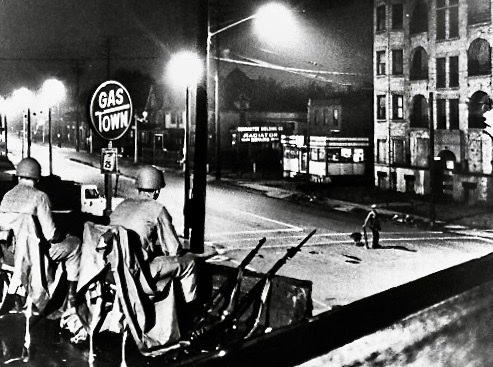
   We were listening to “Hanky Panky” by Tommy James and the Shondells on the car radio one Wednesday morning, curving down onto Liberty Blvd. on our way to work, when we were brought up short by a Jeep with a machine gun mounted on the back. It was blocking the road. There were more Jeeps scattered in the distance. “One of the Jeeps had a plastic lei hanging down from the .50 caliber gun,” said Wayne Baker, who lived in the St. Clair – Superior neighborhood. A line of cars was backing up and going the way they had come. Val pulled over to the side until a National Guardsman walked up to our car. 

   “Turn around fellas,” he said. “This road is going to be closed today, maybe the rest of the week.”

   “Why, what’s going on?” Val asked.

   “The niggers are raising hell, busting into stores, burning them down.”

   “What about the parade?” I asked. One World Day was scheduled for the weekend. My parents, brother, sister, and I always went. All my friends went. It was a big thing.

   “I don’t know about no parade, but there ain’t going to be one until things cool down.”

   The street fighting had started Monday when a black man walked into the white-owned Seventy-Niners Café at Hough Ave. and E. 79th St. He asked for a glass of cold water to cool down. It had been a hot day in a long hot summer. The bartender said no, get the hell out of here. Somebody else posted a hand-written sign. It said “No water for niggers.” 

   One thing led to another and before long the Cleveland Police Department had a riot on its hands. The more policemen who showed up the bigger the mob got. By the next day there weren’t enough policemen in the city to handle the uproar. Mayor Ralph Locher asked Ohio Governor James Rhodes to send in the National Guard. They showed up through the night and deployed in the morning.

   Helen Provenzano’s father got a call early that morning that all the windows in his restaurant on E. 97th St. and Euclid Ave. were broken and he should bring plywood pronto. The eatery was the family’s bread and butter. By the end of the day there was a run on sheets of plywood at hardware stores.

    “Why are you home so early,” my mother asked after Val dropped me off. “Did you do something wrong?”

   “No, the colored people did, there’s a riot going on and we couldn’t get to work,” I said.

   In the mid-1960s 60% of northern whites agreed that Negro students should be able to go to the same schools.70% agreed with residential integration. 80% agreed that they should be able to get the same jobs as white folks. 90% agreed that they should enjoy public transportation just like everybody else. 100% of Lithuanian Americans didn’t care what bus Negroes rode to whatever job, but the same 100% was opposed to colored kids in their schools and colored families moving into their neighborhoods. When the moving started was when the white flight started.

   My parents weren’t any different than any other Lithuanian I ever heard say anything about it. They hated Russians, disliked Jews, and looked down on Negroes. Their culture was one of religion, property, and community. They thought Negroes were bad Americans, slow-moving and shiftless, belonged to the wrong religion, and didn’t respect private property.

   Where we lived there were no Negroes, at all. I delivered the Cleveland Press afternoon newspaper door-to-door six days a week and collected money for it once a week. I knew the faces of who lived on our street of one hundred-some houses. There weren’t any black hands on my route handing me their payment of 50 cents and a tip if they wanted the rubber-banded paper to land securely on their front porch the following week.

   Our high school, St Joseph’s, was the same as my paper route. I might see a black face once in a blue moon, but not in any of my classes. They were the janitors. There were lots of big Catholic families in our neighborhood of North Collinwood, and they were a solid block of European stock.

   After Brown v. Board of Education of Topeka and the emerging Civil Rights movement, the times were slowly changing, but it was a bumpy change. Integration meant ill will and uproar. There had been a couple of incidents at Collinwood High School, a few miles southwest of us, the year before. “With the passage of each year, the western fringes of the Collinwood area are being occupied by the Negro overflow from Glenville,” according to the Cleveland Plain Dealer, which was the morning paper.

   The Five Points riot happened four years later. Four hundred white students and their parents milling around Collinwood High School in the morning started throwing rocks, smashing more than 50 windows. The 200 newly enfranchised Negro students attending the school fled to the third-floor cafeteria. When the mob stormed into the building the Negroes blocked the stairs to the third floor with tables and chairs, breaking off the legs to arm themselves. Cleveland police from the 3rd, 4th and 5th Districts poured in, forming a cordon to keep the whites from attacking the blacks who were boarding buses. 

   “Always be careful around them,” my mother said, meaning Negroes. “They might have a knife.”

   My mother and father believed Negroes went nuts at the drop of a hat. I took my parents at their word. It was always touch-and-go messing with their point-of-view. They survived three invasions while growing up in Lithuania, were in Germany during the convulsive last months of the Third Reich, emigrated to North America with just about nothing except willpower, and worked their way up to be devout Republicans in the New World. They were short-tempered about anybody questioning their beliefs.

   Once, goofing around, I said, “And in this corner, still undefeated, my mom and dad and their long-held beliefs.” That was a big mistake, especially since they were within earshot.

   Hough was a powder keg the summer of 1966. Downtown was white, University Circle to the east was white, and in the middle was Hough, which was black. The housing was substandard and overcrowded. The area stores were crappy and overcharged for their wares. The police were surly about who they were serving and protecting. When the race riot got rolling, there was rock throwing, looting, arson, and some gunfire. Four people were killed, all four of them Negroes. Two were caught in crossfires, one was killed by a white passerby while waiting at a bus stop, and one was shot by a Little Italy man who said it was self-defense. More than 30 were injured, close to 300 were arrested, and 240-some fires were set. There was an estimated $2 million in property damage. Many homes burned to the ground, most of them in Hough. 

   A friend of mine’s grandmother, born at the turn of the century in Lithuania, was upset and wanted to go home to “my own place,” which was her home on White Ave. north of Hough Ave. She was staying with the family in the meantime. The big houses all around her small house had all been made into boarding houses. They were overcrowded, but what could anybody do who was chronically short of hard cash?

   Real family income rose rapidly in the 1960s. From 1960 to 1970, median family income, adjusted for inflation, rose to $20,939 from $15,637. It did, at least, if you were white. It didn’t if you were black. It went the other way.

   “It is a stark reality that the black communities are becoming more and more economically depressed,” Bayard Rustin wrote in 1966. “There has been almost no change or change for the worse in the daily lives of most blacks,” Carmichael and Hamilton wrote in 1967. “Although it is true that the income of middle-class Negroes has risen somewhat, the income of the great mass of Negroes is declining,” Martin Duberman wrote in 1968.

   You can only do so much with less. It’s smooth sailing when there’s money in the piggybank. It’s a hard slog when the piggybank is starving. Living on bits and pieces is bitter and maddening.

   “The white man is reaping what he has sown. He is learning you can’t push people around. The trouble is here because the white man won’t treat the black man right,” the owner of a barber shop in Hough said. 

   A grand jury later concluded that the Communist Party, outside agitators, and black nationalists organized the uprising, but the finding was laughed off. No Communists had been seen in Cleveland for years and not even outside agitators nor black nationalists wanted to be caught dead in Hough, fearing for their health and safety.

   An angry crowd started a big fire at Cedar Ave. and E. 106th St. at the start of the weekend, burning down most of a block of stores, but that was the high and low point of the disturbance. Life in the ghetto returned to normal on Sunday and the next day merchants started reopening. The National Guard was released from duty. Val and I went back to work mid-week.

   From where we stood on the grounds of Mt. Sinai Hospital it looked like nothing had happened. But there were two Cleveland Police cars parked at the front, and one near the back, that whole week. There had always been police cars around the hospital, but those three stayed around the clock.

   Nobody talked much about the riot, except to say, “those spades are crazy.” My parents and their friends said, “it’s a damned shame about the parade.” Val and I shouldered on for another two-some weeks. When the project was done, we were sent out to Bratenahl, mowing lawns for the millionaires who lived in the east side village’s lakeside mansions.

   Our last day at Mt. Sinai, which was a Friday and payday, driving home on Liberty Blvd, the Cultural Gardens looking great in the summer sun, Val said, “Have you noticed there isn’t an African American garden?”

   “No,” I said.

   “They were some of the first immigrants, not that they wanted to come here, but still, you would think there would be a garden for them, especially since this is all in their neighborhood.”

   “I guess so,” I said.

    Val was five years older and much wiser than me. He was going to an east coast college, majoring in philosophy. He wore his hair long. Some Lithuanians called him a dirty hippie, even though he worked like a sharecropper.

   The idea of building a garden for Cleveland’s Negro community was brought up in 1961 by Cleveland councilman Leo Jackson. He proposed a “Negro Cultural Garden.”  The mayor supported the proposal, but it was voted down by his finance committee. In 1968 the idea came back, including a statue of Martin Luther King, Jr., who had been assassinated that year. Nothing came of the comeback until 1976, when Congressman Louis Stokes brought it to life again. Ground for the garden was broken and dedicated in 1977, but the project remained unfinished until 2016, almost forty years later, when it was finally finished.

   When we turned off Liberty Blvd., racing up the entrance ramp to I-90, Val punched the spunky Valiant’s push buttons through its gears, and we rode the current of rush hour traffic back to North Collinwood. The weekend was coming up. We were both ready as could be.

   “I’m glad to be going home,” I said.

   “You and me both, man,” Val said. “Shelter from the storm.”

Ed Staskus posts stories on 147 Stanley Street http://www.147stanleystreet.com and Cleveland Daybook http://www.clevelandohiodaybook.com. To get the site’s monthly feature in your in-box click on “Follow.”

Dead Man’s Curve

By Ed Staskus

   Maggie Campbell was almost 22 years-old the morning she drove face first into a cement truck. She was driving a yellow 1973 coupe a girlfriend of hers at the Bay Deli, where they both worked, had sold her for one hundred and eighty-five dollars in cash. It was a rust bucket, but it was a Jap car so the two hundred thousand miles on it hadn’t made a dent in it running, at least not yet.

   She had gotten up late that frosty spring morning and shoveled down a Fudgsicle, a hot dog, and a cup of joe for breakfast. “I better go,” she said to herself, throwing the Fudgsicle stick in the trash with the other Fudgsicle sticks.

   Her roommate and she were sharing a small house on Schwartz Road behind St. John’s West Shore Hospital in Westlake. She was late for class at the Fairview Beauty Academy. She bolted out to the car. When she got into it, she couldn’t wait for the front window to defrost more than the small square absolutely needed to look through. She was squinting through one square inch of windshield taking the curve at Excalibur Ave. and bopping to Jan and Dean on the radio.

   “It’s no place to play, you’d best keep away, I can hear ’em say, won’t come back from Dead Man’s Curve.”

   “I never touched the brakes,” she said after hitting the cement truck headlong.

   The truck was parked on her side of the street. The front end was facing her. That was the first surprise. She knew she was on the right side of the street as she came around the curve since she could see full well out her driver’s side window. At first, Maggie didn’t know what happened. The second surprise was that when she tried to get out of her car she couldn’t move. When she looked down to see why she couldn’t move she saw the steering wheel jammed into her legs. She was sandwiched between the wheel and the seat. Some days you are the dog and other days you are the fire hydrant.

   She finally got out of the car by swinging one and then the other leg over the steering wheel. Standing next to her coupe, looking at the man suddenly standing in front of her, she realized why no one had come to help her. He was white as a ghost. The rest of the cement men behind him looked like they were looking at a ghost, too. They thought she had died in the car, which had turned into scrap metal in an instant.

   “I tried to wave you off,” one of them said.

   “Hey, here’s a clue, bub, I didn’t see you and I didn’t see the truck,” she said. “Thanks for the heads up, but I didn’t see anything.” The next thing she knew a woman walked up to her and shoved Kleenex up her nose.

   “You better sit down,” she said.

   “That’s OK,” Maggie said. “I’m good. Besides, I’ve got to get to school.”

   “No, you better sit down. I’ve called an ambulance. They should be here in just a minute.”

   “Seriously, thanks, but no. I just bumped my nose.”

   She sat Maggie down. When she did Maggie’s white beauty school skirt rode up and she saw her mangled knees. The skirt was bleeding.

   The convertor radio underneath the dash had slammed into them. Even though she couldn’t feel anything bad, she could see shinbones and a thighbone. That looks bad, she thought. It had only been a minute since she had gotten out of the car. The front end of it was jack-knifed. She left patches of raw skin behind her on the front seat. 

   It was when the excitement was over that she went for real. She lost her eyesight. It was her next-to-last surprise. She blinked. It didn’t help. She blinked again. It still didn’t help.

   “Everything’s gone fuzzy, like an old TV on the fritz.”

   “Just close your eyes. The paramedics are here.”

   “OK, open your eyes,” one of the paramedics said.

   “Are they open?” she asked.

   “Yeah,” he said.

   “Are you sure? I can’t see anything.”

   “Is it like in a closet, or more like the basement, with the lights all out?”

   “A closet or a basement? What kind of as question is that? Oh, my God, you are such a smart ass. Who sits in a dark closet except crazy people?”

   They laid her down and out in the ambulance and, suddenly, her sight came back.

   “It was just the shock,” she told them.

   “Stop self-diagnosing,” the medic said.

   “I was a lifeguard at the Bay Pool. I know my stuff!”

   St John’s West Shore Hospital must have thought she was younger than she was. Underage is what they thought, so they called her parents. Her mom was on the way, they said. It was Maggie’s last surprise.

   “You did what? You called who? I’m 21-years-old. You didn’t need to call my parents.”

   “It’s done.”

   “You rat bastards!” Maggie was beyond mad. She hadn’t talked to either of her parents for more than a year. “Fuck off and die” had been the last thing she had said to them.

   She planned on moving out as soon she turned 21, but her dad didn’t want her to grow up or move out. Maggie wanted both, to be 21 and gone. Her parents wanted her out, too, but they didn’t want her to go, either. When she told them she would be leaving the day of her birthday, first, they slapped the crap out of her, and then they threw her out of the house. She had no money, no clothes, and nowhere to go.

   She called her dad from a phone booth about picking up her clothes.

   “If you come grovel for them, you can get them out of the trash,” he said.

   “You keep them, dad, because I’m not going to grovel.”

   At the very least they raised a true-blue Scottish kid, Maggie thought. She never knew if her dad really threw her clothes in the trash because she never called or went back, at least not for the clothes.

   Her mom burst through the emergency room door at St. John’s at the same time as her dad got her on the phone. Before that she had been joking with the doctors, saying she cut her legs shaving.

   “Oh, my God, look at her legs!” her mom started shouting.

   “Who let that woman in here?” Maggie blew up.

   “Who’s the president?” her dad asked over and over on the phone until the line went dead. The next thing she knew her whole family, sisters, brother, her dad rushing in from work, were all in the room, and then the adrenaline started to wear off fast. She had been laying there, not too panicked, and suddenly her constitutional joy juice was all gone. She hurt like hell. She went banshee.

   AAARRRGHHHHHH!!

   Her younger sister started crying and everybody got so upset about her crying that they put her in her dad’s lap. Her mom stroked her hair. Maggie was left on her back on the table in pain and agony, ignored and all alone until a nurse finally wheeled her away to surgery. No one noticed she was gone.

   At the end of the day, what happened wasn’t off the charts. She broke her nose and had two black eyes along with a concussion. One of her teeth was loose. She hurt both of her knees. One of them had to be operated on. She was released three days later. A policemen told her afterwards if she had hit the back of the cement truck instead of the front she would have been decapitated.

   If that had happened and she had been driving a rag top instead of her hard shell, then “HEADLESS GIRL IN TOPLESS CAR” would have been the headline on the front page of the next day’s West Life News. As it happened, she ended up in the middle of the back page.

Ed Staskus posts on 147 Stanley Street http://www.147stanleystreet.com and Made in Cleveland http://www.clevelandohiodaybook.com. To get the site’s monthly feature in your in-box click on “Follow.”

Waking Up on Wasaga Beach

By Ed Staskus

   There might be flies on some of you guys, but there ain’t no flies on us.” Traditional Summer Camp Song

   My brother and I both went to Ausra, as Kretinga was then known, starting in the early 1960s, later joined by our younger sister, who continued going into the 1970s, after we had grown older than the age limit allowed. When that happened there was no love lost in our goodbyes to her, watching our sister leave for camp while we ate crumbs at home.

   Everybody who was going waited all year for the first day of stovykla, or camp, and two weeks later, when it was over, saying goodbye to fellow campers felt like summer was over, even though it was still only mid-July. While there we ran around in the woods like knockabouts, there were humongous bonfires, and it was gangbusters hanging out with our friends. We would have traded any day in the real world for five minutes at summer camp.

   Austra was a summer camp in Wasaga Beach, ninety-some miles from Toronto. It is north of a provincial park and the town’s honky-tonk boardwalk. Americans, Canadians, and anybody who had a drop of Lithuanian blood in them was good to go. After the first year we never wrote letters home. The year we weren’t allowed to be campers anymore we wrote letters asking for an exemption, to no avail.

   Founded in 1957, Ausra was a sports, culture, and religious camp wrapped up in a package on the south shore of Lake Huron’s Georgian Bay. The camp was and still is on twenty-four acres of sand. The sand is everywhere and gets into everything, your ears, shoes, pockets, sleeping bag, and toothbrush, on the first day and stays there until after you get home. The trees surrounding our camp are what we disappeared into for two weeks, far from home.

   The drive from where we lived in Cleveland, Ohio to the camp was longer when we were children. The highways weren’t all highways like they are now. Some of them were just roads. My father had bought a Chevrolet Brookwood as soon as there were three of us, a blue and white station wagon that was twice as big as any sedan. The third-row seat faced backwards. We called it the way back window, playing the license plate game and how many cows on my side game.

   The rear window seat was where my brother and I sat. Our sister had to sit alone on the middle bench seat. She wasn’t allowed in the back with us, although we sometimes let her play rock paper scissors with us, since she was so bad at it. My brother and I found out from a friend of a friend that she counted her lucky stars to have the middle seat to herself. When we asked her why, she just laughed like Woody Woodpecker.

   We were always so excited about going to camp we couldn’t sit still. It took forever to get there. I don’t know how my parents endured the 12-hour trip with the three of us in the back. I do know my father had a globe-like compass on top of the dashboard next to a plastic St. Christopher figurine staring blank-faced ahead. When our father started chain-smoking was when we knew things were getting wayward.

   The year the camp opened it slept eight boys to every Canadian Army surplus tent pitched over a plank floor. By the time my sister went to camp, wood A-frames were replacing canvas. Boys stayed on one side of the camp and girls on the other side, while the smaller kids slept on bunkbeds in roughhewn barracks. There were close to two hundred of us. There was a sports field, a parade ground, and an all-purpose open-air hall, adjoined by an amphitheater of tiered logs. 

   The amphitheater was where we sang songs, acted out skits, and had a lauzas, or bonfire. Everybody ran down to the bonfire and sing-along as soon as it started getting dark. There was so much loose wood everywhere we had a fire every night, as big as a log cabin burning down. “It’s not like now, when you have to drive to the convenience store and buy it,” a latter day camper said. “They only have bonfires on weekends and they are more the size of flashlights than three-alarm blazes.”

   Our camp activities director had been in the Foreign Legion. Bruno wore a black beret, a checked kerchief around his neck, and carried a hand axe on his belt. He didn’t chop any trees down. He mostly just picked up branches from the forest floor. Our woodpile was always sky high ready for a rainy day. Even though we were often reminded to never play with matches in the woods, every night it seemed to take a full box of stick matches and a half gallon of gasoline to start the bonfire. Everybody cheered when the big whoosh happened.

   The days were mostly sunny, sometimes windy and wet, but at camp there was no such thing as bad weather, only different kinds of good weather. The nights were often massively starlit and frequently damp. The summer sky on the Georgian Bay is a wide dome. It’s clean and full of life, too, full of pine warblers and broad-winged hawks.  We didn’t shower when we were at camp. Everybody was expected to clean themselves at the communal sink in the latrine. It wasn’t just a pit. It was a cinder block building that teemed with daddy long-leg spiders.

   Some kids hardly ever washed anything besides their hands and face. It could get disgusting, although none of us cared too much about it. One time somebody’s parents wouldn’t let him get into the car when his two weeks were up and he hadn’t cleaned all over even once.

   “No, go back, go hose yourself off,” his mother said through her nose. “What is wrong with you?”

   One year we had bedbugs. We caught them with scotch tape and stored them in a glass jar. We tried to kill some of them with poison spray, because when they sucked your blood they left itchy clusters on your skin, but the bugs didn’t seem to care. When the camp commander found out about it, he hired a bedbug sniffing dog.

   The Beagle was so good at his work he sniffed out a bedbug hiding in the folded page of a paperback book. The next day everybody whose tents were plagued by the bugs piled their stuff into plastic garbage bags and threw the bags inside whatever cars were at the camp, parked in the hot sun with the windows closed. All the bedbugs died.

   Bruno told us that a Canadian had invented plastic garbage bags. He was proud of that because he had become a Canadian citizen. He always had something historic to tell us, usually something about World War Two. Sometimes we listened to what he had to say. Most of the time we didn’t.

   Every morning at seven o’clock we were rousted from our cots by martial music and rag-tagged to the sports field for calisthenics. We stretched and did jumping jacks and ran the track. Afterwards we ran back to our tents, changed into clean shirts, and after raising the Lithuanian, Canadian, and American flags, sometimes preceded by lowering underpants hoisted during the night, we raced to breakfast.

   We ate porridge and scrambled eggs and Post Top 3 cereal. We always had PB&J on Wonder Bread. Sometimes we had sandwiches all day if something went wrong and there wasn’t anything else. The sweet jelly was a hit with bees and wasps. Metallic colored dragonflies, agile and powerful fliers, had the run of the camp. If the spring had been soggy there were clouds of mosquitos.

   After breakfast we pushed the long tables to the side, lined our benches up in rows, and sat down for religious services. Father Paul, Ausra’s resident Franciscan, said mass every day on a makeshift altar. He didn’t have any children, being a priest, but he was good with children. He cemented his coolness in the early days when a camper swiped the wine meant for communion.

   “I was about 12 years old and drank it with a girlfriend,” Dalia Daugvainyte said. “The trees whirled around us along with the stars that night.”

   She had to go to confession the next morning. Father Paul let her off the hook with less than a million Hail Mary’s and a solemn vow to never do it again. “Knowing him, he probably hid a smile,” she said. Since the confessional was out in the open, he probably had to turn his head to the side.

   Late mornings we were free. We cleaned up our tents, messed around, and played volleyball, the Baltic national game, according to our sports counselor. One day we played volleybat, which was baseball but with a volleyball. We found out it could be hairier than it sounds when the pitcher, who was closer to home plate since he had to lob the volleyball, broke his wrist fending off a line drive.

   Every afternoon, barring mid-afternoon thunder and lightning, we assembled for the best part of the day, which was going to the longest freshwater beach in the world, a ten-minute hike from the camp. We lined up in our swimsuits and towels and tramped through a stand of pines and birches to the Concession Road gate and past the corner variety store to the New Wasaga Beach coastline. Whenever we could, we made a run for the variety store, breaking out of our two-by-two ranks for bottles of Bubble-Up and bags of Maltesers.

   Bruno was unlike most of the other counselors. He wasn’t a parent or a young adult. He was a wiry man in his forties with wavy hair who wore his khaki shorts hiked up to his belly button. He led our expeditions to the beach, a whistle stuck in his mouth. He had been a military man and every summer thought he knew how to assemble children for close order drill, only to see us scatter pell-mell as soon we got close to the shoreline.

   Fish-n-chip shacks on stilts and fat family cars, which were then still allowed to park on the beach, dotted the wide sand flats. The surf line was a hundred yards out and the water was often flat as a pancake. We didn’t swim so much as play in the water, running and belly flopping, tackling one another, flinging Wham-O Frisbees, and splashing every girl we saw.

   “You’re getting us wet,” the girls yelled, even though they were in the lake the same as us. One girl who I liked hated getting water in her eyes and up her nose. She wore enormous green goggles and said they were for swimming, even though she always just stood and floated around in one spot. I never splashed her.

   What none of us ever noticed was the loose cordon of watchful camp counselors on the outskirts of our horseplay, keeping their eyes peeled as we played. Walking back to camp behind Bruno we would sing “Hello, goodbye, Jell-o, no pie” because we knew we would be having Jell-o for dessert when we got back. Sometimes I walked next to the green goggle girl.

   Bruno liked to snack on koseliena, or headcheese, and thought we should, too, but our kitchen had the good sense never to serve it, fearing mass nausea. We ate four times a day, served by eight cooks, volunteer mothers and grandmothers, who made burgers and French fries, pork chops and mashed potatoes, and kugelis, or potato pudding. Potatoes were a staple, like Wonder Bread.

   Going swimming was the only time we were allowed to leave camp. It was a strict rule. Everybody feared the consequences, especially expulsion from the camp. One summer a fifteen-year-old was spotted cavorting on the Wasaga Beach boardwalk and given the choice of going home or spending the remainder of the camp in the small kid’s barracks. He chose a top bunk in the barracks, his new campmates a gaggle of eight and nine-year-old’s.

   Another summer two other boys who had messed up did penance by staging a memorial to Darius and Girenas, the 1930s adventurers who died flying from America to Lithuania. After a week building a model of their orange monoplane, they strung a clothesline over the bonfire pit, and painted rocks depicting the route, from New York to Newfoundland, Ireland, and finally Kaunas.

   That night, with the whole camp assembled at the amphitheater, they pulled the plane along the rope, telling the spellbinding story of the ill-fated flight, when near the marker depicting Kaunas they yanked too hard on the guide rope. The plane careened backwards, shook and shuddered, plunging down too soon and too fast and crashed into the bonfire, exploding into flames.

   Everybody hooted hollered groaned and wolf whistled. It was the buzz of the camp for days. The green goggle girl was quiet. Somebody said one of the pilots had been her great uncle. I bought her a bottle of Orange Crush from the variety store to cheer her up.

   Although Ausra no longer exists, except perhaps in memory, the summer camp on the shore of Georgian Bay is still there in the same place. More than half a century after tens of thousands of Lithuanians fled Europe for North America it thrives on the thin, sandy soil of Wasaga Beach.

   Toronto’s Church of the Resurrection bought the land for the camp from a parishioner for a nominal amount in the 1950s and operated it until 1983, when it was re-christened as Kretinga. Since then it has evolved into three camps. There are two weeks for English-speaking and two weeks for Lithuanian-speaking children of Lithuanian descent, and another week for families whose children are too young for the other camps.

   There is a weeklong basketball camp in August. In 2014 Mindaugas Kuziminskas, a former Kretinga camper, played for the Lithuanian National Team in the World Cup in Spain. Summer after summer many of the same children and families across generations return. “It’s my second home,” one recent camper said, while another said, “Greatest camp in the world!” Another camper wearing a double-sided Kretinga t-shirt summed it up. “I love this camp so much and I have been going since forever.”

   The son of a Lithuanian who lives west of Cleveland, like me, goes to Kretinga and eats in the same mess hall as my brother and I once did, shoots hoops on the same asphalt court, and every summer helps restore the same sand map of Lithuania behind the flagpoles. I asked him if he was going back next summer.

   “Oh, yeah,” he said. “My friends and I have been together for five years in the same cabin. Waking up and being at camp is the best time of the year. We get there the first day and there are high-fives knuckle-touches bro-hugs all around. We punch each other and laugh it up. When all the moms and dads are finally gone, we have sandwiches in the mess hall. Father says a prayer and the camp commander makes a speech. Then it’s off to the races.”

   He had already made plans for when his camper eligibility went out of date.

   “After next summer, after my last year at camp, when I’m not allowed to be a camper anymore, I’m going back as a counselor. That’s a sure thing. I can’t wait to go back.”

Ed Staskus posts feature stories on 147 Stanley Street http://www.147stanleystreet.com and Cleveland Daybook http://www.clevelandohiodaybook.com. To get the site’s monthly feature in your in-box click on “Follow.”

All Jacked Up

By Ed Staskus

   By 1984 many bands had strutted their stuff at the Richfield Coliseum. It was built for basketball and anything else that could be booked between games. Everybody called the venue the Palace on the Prairie. It was in Richfield, Ohio. The bands included Led Zeppelin in 1975, Bruce Springsteen and the E-Street Band in 1978, the Rolling Stones in 1981, and Queen in 1982. The Bee Gees drove girls to screaming, crying, and pleading in 1979.

   Frank Sinatra opened the place with a show in October 1974. “The crisscross of lights, mirroring the animation of 21,000 stylish people packed from floor to roof, transformed the gray amphitheater in the hills of Richfield Township into a huge first-night bouquet of green and blue,” is how The Cleveland Plain Dealer splashed Old Blue Eye’s show across its front page. We called him Slacksey because, no matter what, his slacks were always neatly pressed. Roger Daltrey gone solo closed the doors and shut off the lights for good in 1994. His show drew fewer than 5,000 fans. Nobody wrote a word about it or how he was dressed. Over the years there were might have been a thousand musical events at the Richfield Coliseum. 

   Vann Halen opened for Black Sabbath in 1978 and came back as headliners in 1984. When they did, they had to sit on their hands waiting for ice to melt. Walt Disney’s Magic Kingdom on Ice had just skated out of the building. When Van Halen came to town it was the one and only time I saw the band and the one and only time I went to a show at the Richfield Coliseum. 

   It wasn’t that I didn’t go to rock ‘n roll shows. It was that the few I went to were closer to home, like at the Allen Theater, the Agora, and Engineer’s Hall, where it was standing room only. There were no seats. Downtown was nearby but Richfield was a long way for my long-suffering car. Besides, I was by necessity a Scrooge. Big shows charged big bucks. First things came first, like food and shelter. 

   I saw the Doors at the Allen Theater in 1970, the Clash at the Agora in 1979, and the Dead Kennedys at Engineer’s Hall in 1983. The Dead Kennedys blew into town during a heat wave. The air conditioning at the Engineer’s Hall was non-existent and there were no windows. Everybody sweated up a storm and everybody stayed through the encore. Six years later the Brotherhood of Locomotive Engineers sold their building. It was demolished and replaced by a posh hotel. The Dead Kennedys never came back.

   The Doors opened their sold-out Friday night show in 1970 with ‘Roadhouse Blues’ followed by ‘Break on Through’ and ‘Backdoor Man’. They covered Bo Diddley’s ‘Who Do You Love?’ That was a surprise. “I walk 47 miles of barbed wire, I use a cobra snake for a necktie, I got a brand new house on the roadside, made from rattlesnake hide.” They sounded much better live than on carefully managed vinyl. They were more than worth the six dollars for my orchestra seat ticket. My girlfriend paid her own way. We had an even-steven relationship. Eli Radish, a local band, opened, and were funky and fun, but all through their set everybody was antsy waiting for Jim Morrison.

   “He worked the crowd with his staring sneers and sexy leather posing, witch doctor mumbling and slouching about,” said Jim Brite, who was in the crowd. “The lighting and sound were dramatic. The band was great, with extended solos and workmanlike professionalism, delivering the music behind the shaman. No one could take their eyes off Jim. It was one of the best concerts I ever saw and I’ll never forget it.”

   The Doors were banned in Miami for Jim Morrison’s obscene language and lewd behavior. He told the city fathers to call him the Lizard King. They had been banned from performing in Cincinnati and Dayton the year before. None of it mattered to the 3,000 of us filling every seat at the Allen Theater.

   “Jim Morrison swigged beer and smiled a lot between numbers,” Dick Wooten wrote in The Cleveland Press the nest day. “When he performs, he closes his eyes, cups his hand over his right ear, and clutches the mike. His voice is pleasant, but his style also involves shouts and screams that hammer your nervous system.”

   When it was over we whistled, roared, and clapped until the house lights came on. We were disappointed there was no encore. Everybody was getting to their feet when Jim Morrison suddenly came back on stage. “Somebody stole my leather jacket, he bellowed. “Thanks a lot Cleveland!” He flipped us the finger. Then he said, “Nobody leaves until I get it back!” Nobody knew what to do. A half-dozen rough-looking bikers jogged to the back of the hall and blocked the doors. When my girlfriend and I looked to the side for another way out, Jim Morrison had left the stage, but then a minute later came back.

   “Sorry, that was a mistake. I found my jacket.” 

   He said the band wanted to play some more songs to make up for the mistake, but that John Densmore’s hands were messed up. He was the group’s drummer. The beat couldn’t go on without a beat, except it could and did.

   “John their drummer was walking around backstage and holding up his hands which seemed bloody in the creases of his fingers,” said Skip Heil, the drummer for Eli Radish. “I felt all warmed up since we played before them, so I said I’ll do it. I wasn’t sure of the songs, but I thought they were simple shuffles.” 

   After two encores, and telling everybody how much he loved Cleveland, Jim Morrison accidentally locked himself in an old bathroom backstage. One of the band’s roadies said, “Stand back Jim.” He knocked the door down and set him free.

   The band toured non-stop after they left Cleveland. They had been touring non-stop for several years. Jim Morrison died in Paris of a heroin overdose the next year and the door shut forever on the band. It was a shame.

   The Richfield Coliseum was an arena in the middle of nowhere, halfway between Akron and Cleveland. It was built to be the home of the Cleveland Cavaliers, the local NBA team, although indoor soccer, indoor football, and hockey were played there, too. Larry Bird of the Boston Celtics said it was his favorite place to shoot hoops. He played his last pro game there. Muhammed Ali fought Chuck Wepner there in 1975. Dave Jones, Ali’s nutritionist, could never get the boxer to try soy burgers. He had to have his red meat. Chuck Wepner was his red meat that night. There were rodeos and monster trucks. There were high wire acts and hallelujah choruses. The WWF Survivor Series came and went and came back.

   I had a friend who had gotten free tickets to see Van Halen. Two other friends of ours went with us but had to fork over $10.75 apiece for the privilege. I didn’t know much about the band, except that they were no doubt about it loud as two or three jet engines, but free is free and since I had the free time I went. 

   The headbangers were from Pasadena California. They were Eddie Van Halen on guitar, Eddie’s brother Alex Van Halen on drums, Mike Anthony on bass, and David Lee Roth belting it out up front. Mike Anthony sang back-up while keeping the low pitch going.  

   “It wasn’t until the fourth or fifth Van Halen record that people would go, ‘Wow! You’re singing backgrounds on those records. We thought it was David Lee Roth doing that, too,’” the bass player said. “And I go, Hell, no! That’s not David Lee Roth.”

   The word among aficionado’s was that the band was “restoring hard rock to the forefront of the music scene,” whatever that meant. I was listening to lots of John Lee Hooker and the Balfa Brothers. The rock ‘n roll parade was largely passing me by. I didn’t have a clue who was at the front of the parade.

    Everybody I asked said Van Halen’s live shows were crazy energetic and Eddie Van Halen was a crazy virtuoso on the electric guitar. During the show he switched guitars right and left, but more-or-less stuck to a Stratocaster, except it wasn’t exactly a Stratocaster. Eddie Van Halen called it a Frankenstrat.

   “I wanted a Fender vibrato and a Stratocaster body style with a humbucker in it, and it did not exist,” he said. “People looked at me like I was crazy when I said that’s what I want. Where could I go to have someone make me one? Well, no one would, so I built one myself.” He wasn’t trying to find himself. He was creating himself.

   His homemade six-string was almost ten years old in 1984, made of odds and ends, a two-piece maple neck stuck onto a Stratocaster-style body. He used a chisel to gouge a hole in the body where he stuck a humbucking pickup taken out of a 1958 Gibson. He used black electrical tape to wrap up the loose ends and a can of red spray paint to get the look he wanted. When he met Kramer Guitar boss Dennis Berardi in 1982 Eddie showed him his Frankenstrat. It was his prize possession. 

   “We went up to his house and he got it out,” Dennis said. “It looked like something you’d throw in the garbage. That was his famous guitar.” 

   Van Halen released their first LP in 1978. By 1982 they had released four more LP’s. When they came to northeast Ohio they were one of the most successful rock acts of the day, if not the most successful. Their album “1984” sold 10 million copies and generated four hit singles. “Jump” jumped the charts to become a number one single.

   When the lights went down and the stage lights went up, the band took their spots. Eddie Van Halen wore tiger striped camo pants and a matching open jacket over no shirt. He wore a white bandana and his hair long. Mike Anthony wore a dark short-sleeved shirt and red pants. He wore his hair long, too. David Lee Roth wore a sleeveless vest, leather pants ripped and stitched every which way, and hula hoop bracelets on his wrists. He wore his hair even longer. Alex Van Halen wore a headband. The headband was all I could see of him behind his Wall of Drums. There were speakers galore stacked on top of each other on both sides of the drum set.

   When they launched into “Running with the Devil” Mike Anthony ran across the stage and slid on his knees playing the opening notes. David Lee Roth was a wild man, swinging a sword around like Zorro and doing acrobatics like the Olympian Kurt Thomas. He did Radio City Rockette kicks and jumped over the drum set while singing “Jump.” 

   Taylor Swift would have flipped out if she had been alive, but she wasn’t going to be alive for another five years. When she came into her own years later she got very good at strutting on stage, but she never jumped a drum set. The audience at the Palace on the Prairie was alive as they were ever going to be that night. David Lee Roth’s high flying got a standing ovation.

   In the middle of one song, David Lee Roth stopped singing. The band played on but slowly dropped out, one instrument at a time. “I say fuck the show, let’s all go across the street and get drunk,” he shouted into his handheld microphone. The crowd hooted, hollered, and cheered, forgetting for a moment they were in the middle of nowhere and the closest bar was miles away. 

   One of the best parts of the show was when Alex Van Halen and Mike Anthony did a long bass and drum duet. Eddie Van Halen did some good work on keyboards, doing the opener for “I’ll Wait.” He did his best work, however, on his guitars. He had a way of playing with two hands on the fretboard. He learned it from Jimmy Page of Led Zeppelin. 

   “I think I got the idea of tapping by watching him do his “Heartbreaker” solo back in 1971. He was doing a pull-off to an open string, and I thought wait a minute, open string and pull off? I can do that, but what if I use my finger as the nut and move it around? I just kind of took it and ran with it.” He filed for and got a patent for a device that attaches to the back of an electric guitar. It allows the musician to employ the tapping technique by playing the guitar like a piano with the face upward instead of forward.

   Most of us stayed in our seats during most of the show, only coming to our feet to applaud, but there was an undulating crowd squished like sardines at the front of the stage, where they stayed from beginning to end. They never left their feet. It was more than loud enough where we were up near the rafters. It had to be deafening if not mind-blowing being at the lip of the speakers.

   By the time the show ended Eddie Van Halen and David Lee Roth had long since stripped off their shirts. They came back for several encores and then the music was over. It took a half hour to shuffle out of the arena, a half hour to find our car, and another half hour to inch along the traffic jam the half mile to the highway. My sense hearing came back somewhere along I-271 on the way home.

   After the concert I went back to listening to the blues and zydeco. I didn’t rush out to buy any records by Van Halen. My cat and the neighbors, not to mention my peace and quiet roommate, would have complained about the noise. I tried explaining to my cat that one man’s noise was another man’s symphony, but he wasn’t having any of it. 

   Six years later, after the excitement of being pushed and pulled into existence had died down, when Taylor Swift was in her crib in the living room, she took a peek at a film clip on MTV of the 1984 Van Halen concert at the Richfield Coliseum. She went bananas over the sold-out crowd. She made a vow then and there that she would do the sure thing. She wasn’t going to invite 20,000 fans to hit the bottle. She was going to schmooze them into buying the bottle for her.

    The first thing she would do when she was ready to sing her way to stardom was head to Nashville. It would be a baby step, but she had her sights set. It was going to be the hillbilly highway first and then the superhighway. Her father was a stockbroker at Merrill Lynch and her mother was a marketing manager at an advertising agency. She already knew the way to the teller’s window at the bank. She was determined to be a rich girl when she was grown up. 

   She was sure as shooting not going to strum a Frankenstrat or bust out any freaky Mighty Mouse moves, with or without a sword, with or without a shirt, although her legs were fair game. They were shapely legs made for boots that were made for walking. She was going to belt out her break-up ballads and march her way to the front of the hit parade. She was going to blend Frank Sinatra’s pressed pants with some tried-and-true country, add a dash of spicy pop, mix in lots of love and heartache, and deliver it with catchy melodies. 

   Van Halen’s aim during their time at the top of the charts seemed to be to die of exhaustion rather than boredom. Their aim was true. Taylor Swift’s aim was different. She was going to the top of the charts but she wasn’t going to die of exhaustion getting there. She wasn’t going to take any chances, no matter how boring it might be.

Ed Staskus posts feature stories on 147 Stanley Street http://www.147stanleystreet.com and Cleveland Daybook http://www.clevelandohiodaybook.com. To get the site’s monthly feature in your in-box click on “Follow.”

Breaking Away

By Ed Staskus

   Over the river and through the woods, crossing the border from the north at Buffalo, New York, and going west in the 1950s meant crossing the Niagara River on the Peace Bridge and driving down Route 5 along the lakeshore to Athol Springs, and then jumping onto Route 20. They are state routes and were then heavily wooded on both sides of the two-lane roads.

   Route 20 parallels the borderlands, running along the south shore of Lake Erie. The real frontier is in the middle of the lake. Hardly anybody pays any attention to it. Walleye, carp, yellow perch, rainbow trout, and bigmouth buffalo fish crisscross the border every minute of every day.

   The Peace Bridge is the international overpass between Canada and the United States at the east end of Lake Erie at the source of the river, about 12 miles up the river from Niagara Falls. It connects Fort Erie to Buffalo.

   When my mother Angele, father Vytas, brother and sister and I crossed the bridge in early fall 1957, thirty years after it was built, we crossed the busiest entry from Canada into the United States. We were within weeks of being the fifty millionth car going that way. We were a family of immigrants on the road from Sudbury, Ontario on our way to Cleveland, Ohio, by way of Lithuania.

   “Vytas bought an old Buick in Cleveland, drove back to Sudbury, and picked us up,” said Angele. “We shipped everything else by train, our Connor washing machine, fridge and range, beds, dressers and tables and chairs.”

   Construction on the Peace Bridge started in 1925 and was finished in 1927. A major problem building the bridge was the swift river current. Edward Lupfer, the chief engineer, drove the first test car carefully across it. When it didn’t collapse, they were hurrahed and three months later it opened to everybody in both directions. The official opening ceremony had almost 100,000 in attendance. The festivities were transmitted by radio in the first ever international coast-to-coast broadcast. 

   “We stopped in Hamilton with friends for a short while, picking up our mail from Customs. We all had Canadian passports but only Vytas had a visa, for him, not his wife and kids, but in the end, nobody said anything at the crossing,” my mother said.

   When her husband went to the United States looking for work, Angele stayed behind in Sudbury all spring and most of the summer. She couldn’t call him those months because long distance calls were too expensive. Instead, they wrote each other, waiting a week-and-more for a reply.

   “The kids have been good. I forgot to call the lawyer about the house. I have to go buy food tomorrow,” she wrote.

   He wrote back that he was working but making less than half what he had been making in Sudbury’s nickel mines. “There are many Lithuanians here and I have been meeting some of them.” He went looking for a second job.

   “I had almost no money,” she said. “Vytas was gone and there were no paychecks. I sold the house while he was gone and sent him the money. I spent all the rent money from the room upstairs and was waiting to go as soon as possible. When Rita’s birthday came, we couldn’t have anybody over for a party, but she was so young, anyway. Edvardas was mad that I didn’t invite all the neighborhood kids, but Richardas didn’t care, thank goodness.”

   We drove through Buffalo in mid-morning, passing a junkman driving a beat-up truck, a milkman in a new white truck, and a sweet-smelling bread truck delivering door to door. Wash was hanging in yards and kids were on the streets walking running riding bikes and scooters, jumping rope and kicking the can and fighting with rubber band guns made out of used tire tubes.

   “Ziurek, jis yra juodas!” I exclaimed pointing out the back window of the car at a boy. “He’s all black, his skin is black!”

   Neither I, my brother, or sister had ever seen a Negro in Sudbury. Sixty years later there were about a thousand blacks in Sudbury, but sixty years earlier there weren’t even a handful. Visible minorities of all kinds even nowadays have a small share in the city, less than 4%. Back then the share was close to zero.

   Leaving Buffalo, the houses thinning out, we idled over to the curb to listen to a man playing an accordion, wearing a red shirt and black shorts with a white belt and argyle socks, sitting on a wooden folding chair in the front frame of his garage the door open, his two friends drinking from cans of Stein Beer, and body bobbing foot peddling.

   South of the city my father pulled his bucket of bolts over at Minerva’s Red Top in Athol Springs and got ice cream cones for us at the refreshment stand. He and Angele had sausage dogs and kraut. It was a short jog from there to Route 20, the road they drove the rest of the way the rest of the day to Cleveland.

   We rented a two-bedroom second floor suite on East 61st Street between Superior and St. Clair Avenues from a fellow Lithuanian and stayed for two months, living out of suitcases, sleeping on metal platform beds, and cooking on a hot plate.

   I cut my leg on the metal leg of my cot one morning and had to get stitches. My mom stopped the bleeding, since she had been a nurse before I was born. Everybody in Germany in the late 1940s needed a nurse.

   “I don’t remember a thing about that,” Rita my sister recalled.

   “There was a candy store on the corner,” said my brother Rick, who had a sweet tooth. “When you cut your foot I went there.”

   “I liked it here until summertime,” Vytas said. “My God, it got hot!” The weather was hot hazy humid. There were no fans in the house. We took care of business by eating in the backyard and drinking ice water.

   The months of July August September in Cleveland are sultry. It gets into the 80s and 90s and stays there. My father was from Siauliai, Lithuania, where it stays in the low 70s. He had lived in Sudbury for eight years after World War Two, where it stays in the mid-70s.

   “We visited Vytas’s sister Genute and her husband Andrius,” Angele said. “They had moved here earlier and had three daughters. We decided to buy a house together.”

   They bought a duplex on Bartfield Ave., a two-block stretch of street between East 129th Street and Coronado Ave. with nineteen houses on it. There were coal sheds in the basement and a set of tornado doors in the back. There were two bedrooms in both units of the duplex, one for bedding the children and the other the grown-ups. 

   “It was horrible,” Rita said. “I didn’t have my own room. I had to sleep in the corner. My brothers fought all the time.”

   A blind man’s house on a knoll anchored one end of the street, a three-pump two-bay Gulf gas station anchored Coronado and St. Clair, and a broad one-story log house building behind the gas station doubled as a home for the Veterans of Foreign Wars and the Boy Scouts. It was fronted by a weedy tree-filled lot.

   We messed around there all the time, in the old cars behind the gas station, pretending to be gangsters, and on the field in front of the log cabin, playing red light green light. We played kickball in the street, and in the winter, we built snow forts on the blind man’s knoll, since he had a big yard, and if you ruled the fort, you could throw snowballs down at everybody while they had to throw up. They had no chance.

   I went to first grade and Rick went to kindergarten at the Iowa-Maple public school that winter, walking the fifteen minutes up East 127th St. to Maple Ave. The first school there was demolished in 1951. Our school was brand spanking new.

   We didn’t know that a stone’s throw away across Eddy Road, the thoroughfare north to Bratenahl, the city’s wealthy lakeside suburb, was the footprint of the house where the last president of Lithuania, Antanas Smetona, lived and died on January 9, 1944, when the house caught fire. Five years later, when we moved out of the neighborhood, my mother took Rita to see Birute Nasvytyte, who had been a concert pianist in Europe before the war, from whom she started taking lessons. Birute was married to Julius Smetona, one of the ex-president’s sons.

   I woke up one day after the New Year 1963 and found out we were going to be moving in the spring. My parents told us we were living in a bad neighborhood and had to move. Until that day I didn’t know that where we were living was a bad place. I liked our neighborhood and my friends. 

   But by then our neck of the woods had become a borderland.

   New interstate highways, slum clearance, and urban renewal were changing Cleveland in ways I didn’t know anything about. Some large parts of downtown and tracts of the east side were being torn down. Entire neighborhoods disappeared. Blacks started moving east. Whites started moving farther east. Everybody was saying, “The niggers are coming.” They made it sound like the plague. Everybody was asking, “When are they going to get here?”

   Whenever a real estate sign went up everybody was suddenly afraid there would be a dozen signs inside of a month and that property values would fall to next to nothing. Nobody wanted to be the white face in a sea of black, not if they could help it. Nobody wanted to be the last man standing. All the ethnics, Ukrainians and Romanians, Slovenes, Slavs, and Balts, started moving out.

   “I felt threatened that my neighborhood was being invaded by these people,” said Walt Zielinski, a local Polish boy. “I made it tough for one new black kid. We had a big fight. I beat the crap out of him, and that was it. But, as time went on, we became best friends. Then as the neighborhood started to change the first black families moved away just like the white families did, and they started to be replaced by a lower class of black people, and it started to get rough. I got beat up a lot. I was the little white kid. I was really intimidated. All my friends were gone. I felt very alone.”

   Most of the African Americans who moved to Cleveland during the Great Migration lived in the Cedar-Central neighborhood, bounded by Euclid Avenue to the north, East 71st Street to the east, Woodland Avenue to the south, and East 22nd Street to the west. Those frontiers were rapidly changing. The dynamics weren’t the same.

   There were some hillbillies who lived next door to us, and one of their kids hit my brother with a rake one day. My friends and I had to rescue him. But I hardly ever saw any black people, except on the bus. We were only in the Iowa-Maple school for a year. After that we went to the St. George Catholic School on East 67thStreet and Superior Ave. We had to take two city buses there and back every day. Everybody was going to work at the same time we were going to school, white and colored all mixed together.

   There were nearly 900,000 people living in Cleveland in 1960, a quarter million of them black. Twenty years later there were only 570,000 residents. All the black people were still, for the most part, living in the city, but more than 300,000 white people had moved away.

   In the summer we rounded up what bikes we could find, balls and bats and mitts and rode up Eddy Road to Glenview Park where we played all day. We could see Lake Erie and it was windy a lot. If somebody hit a pop-up into the wind, catching it got tricky. Bobby Noga, who lived on the other side of us from the hillbillies, caught a pop-up with the top of his head one day. It popped into his hands, and he hung on to it.

   Tens of thousands of refugees from Europe settled in Cleveland after 1949. They all wanted to assimilate with the Anglo Americans. Nobody wanted to assimilate with the African Americans. In 1964 picketers at a segregated school in Little Italy were attacked by a mob of more than 400 white men wielding knives and clubs. Nearly a hundred policemen on foot and horseback tried to keep the riot in check.

   “You would have to be crazy to picket,” CPD Inspector Jerry Rademacker said.

   After the mid-50s immigrants on the east side started moving to the East 185th Street, Lakeshore Boulevard, and Euclid neighborhoods. They moved to Parma, which by 1960 was the fastest-growing city in the United States. Ukrainians filled up State Rd. and Poles filled up Ridge Rd. Jews moved up the hill, filling up Cleveland Heights. The Cleveland metropolitan area became one of the most segregated in the country. 

   After the white flight was over it was all over.

   When we lived on Bartfield Ave. my brother and I and our friends walked to the Shaw-Hayden Theater on Saturday afternoons to see double features, paper bags of popcorn our moms had popped hidden under sweaters and jackets. Scary comedy and tragedy masks lit up lurid in purple led the way. The movie house sat 1200, but we always sat as close as we could, the better to see the monsters and cowboys and spacemen. It’s where we saw the B & W 3D “Creature from the Black Lagoon” on the newly installed CinemaScope screen. The auditorium was dark, but the lobby was all white wood, a kind of knotty pine. We liked to touch the knots.

   In the wintertime we went to Forest Hill Park to skate on the frozen lagoon, lacing up in the boathouse, teettering down to the ice. We went sledding on Sledgehammer Hill, scaring ourselves silly going as fast as we could, screaming hitting the bump near the bottom of the long downhill and going airborne. After we moved, we didn’t do that anymore. 

   Rita, Rick, and I had to go to a new school, Holy Cross, where we didn’t know anybody. It took twice as long to walk there, too. Everywhere else all of a sudden was too far to go. My parents bought a single house on a street starting at East 185th St. on the border of Cleveland and ending at East 200th St. on the border of Euclid. There were more than a hundred houses from one end of the street to the other. I got a Cleveland Press paper route. The new Lithuanian Community Center and the new Lithuanian church and school were nearby. There weren’t any tornado doors leading into the basement from the back yard, but it had three bedrooms on the second floor.

   “I was so happy,” my sister said. “I finally had my own bedroom.”

Ed Staskus posts feature stories on 147 Stanley Street http://www.147stanleystreet.com and Cleveland Ohio Daybook http://www.clevelandohiodaybook.com.. To get the site’s monthly feature in your in-box click on “Follow.”

Love Shack Romeo

By Ed Staskus

   Maggie Campbell met Steve De Luca, her husband-to-be who was more-or-less living in Little Italy, when he wasn’t in jailbird trouble, a week after he got thrown out of a Columbus court and came home for his father’s funeral. Meanwhile, she was being thrown out of the family house in Bay Village after her own father died and she threatened to kill her sister.

   They met at Mad Anthony’s, and later Steve followed her to the Tick Tock Tavern on Clifton Boulevard, on a night when she was out with her friends. The stars were sparkling in a west side Cleveland sky. “I needed to get loose that night. Elaine and I had gotten into a fight at mom and dad’s house and when she tried to choke me, I told her I was going to punch her in the face and kill her if she ever put her hands around my neck again.”

   “What did you say?” Elaine shrieked.

   “I know how to break your nose and shove it up into your brain,” Maggie screamed when she pushed her older sister off. “I will do that if you try choking me one more time. I will lay you out flat.” Elaine never touched Maggie after that, but the threat of death didn’t go down well.

   Steve had been a bartender at the Tick Tock Tavern once, slinging shots and shooting the bull. He worked there forever, although since it opened in 1939 it hadn’t been forever. Whenever anybody mentioned anybody’s name to Steve at the bar he always said, “Oh, I know him.” It didn’t matter who it was, famous, infamous, or unknown.

   “Food, spirits, and characters” is what they say at the Tick Tock.

   After the fight with Elaine, Maggie went to her church, Bay Presbyterian, to talk to the pastor. She was contrite but seething. “I was born a Christian and raised a Christian. I have always gone to Bay Presbyterian, and I still go there. But goddamn my family to hell.”

   She had been going to counseling for years, but still not accepted the fact that her sisters and brother and she had been roughed up as children. She was upset that her roughing-it-up father had died, and was upset, too, about her ex-boyfriend-to-be, Craig, who was the mayor of Lorain, which was along the lake near her Bay Village hometown. 

   They had been seeing each other for twelve years, but there was no re-election on the horizon. Even if there had been, Maggie’s chances of higher office were slim to none. Craig had his eye on future choices and chances.

   “What are you doing with Craig?” her minister asked.

   “Why would you ask me such a thing?”

   “Why do you stay with him?” he asked.

   “You really want to know? I’ll let you know! I made a promise a long time ago, when I was a Young Lifer, that I would never have pre-marital sex. When I met Craig, a couple of years into our relationship, I started having sex with him. I said to myself, well, I’ve made my bed and I’m going to lie in it.”

   “No, no, no,” he said. “That’s not the life the Lord wants for you.”

   They started praying for the kind of man she wanted to meet, from eye color to personality. What she didn’t know was that Steve was hoping and praying to meet someone at the same time. He wasn’t being as specific as Maggie, though.

   After Steve got loose after driving too fast too drunk and arguing with the police, and shortly after his dad died, Fat Freddie, his brother, begged him to stay with him in Little Italy, so he did. Steve was a full-blown addict by then. When she met him, he was drinking nearly a fifth of Yukon with beer chasers and snorting coke day in and day out so he could keep drinking.

   He had started thinking his life totally sucked. He hadn’t had a girl to talk to for more than two years, because he was an obnoxious drunk, and he was down, if not down and out. One day while he was walking the dogs, dogs that his brother and he rescued at their used car lot, he started praying, which was something he had never done before.

   “God, if you can, bring me a woman. Please make that happen. I’m lonely, I’m miserable, and I hate my life. Please show me someone who can show me how to love you as much as I can love her.” He was willing to hold hands with the Lord so long as he could hold hands with a woman.

   Shortly after that Maggie’s friends and she were out having fun at Mad Anthony’s. Steve walked in and as he went by, locked eyes with her. After he walked past, she was talking to her friends when she got a creepy feeling that someone was staring at her. After another drink she kept feeling that long steep stare. She went over to where Steve was sitting alone.

   “I’m pretty sure we went to high school together,” she said.

   “Yeah, Bay High,” he said. “I was two classes ahead of you. You worked at the pool.” Oh, Lord, you done good, he wanted to say. Maggie was a fine-looking gal with ruby red lips and jet-black hair.

   Steve asked her out on a date and one more, too.

   “Really, dude, two dates before we’ve even had one date?”

   He wanted Maggie to go with him to the wedding of a sportswriter friend of his, but he thought they should go out first, to test the waters.

   “Alright, alright,” she said, finally. “We’ll see what happens.” She gave him her phone number. She could always hang up if she had to.

   “We’re going to the next bar,” her friends said.

   “It was nice meeting you,” she said to Steve. “Call me.”

   He followed them out. By the time they got to the Tick Tock Tavern he was a different man than the man she had been talking to at Mad Anthony’s, getting obnoxious and louder by the minute. By then his brain was drowning in Yukon. His life preserver was coke. But he was out of the powder. It was all downhill from there.

   “I’m leaving, so piss off,” she finally told him.

   “Jenny, why don’t you come home with me?”

   “Whoa, dude, you’re a jackass.”

   “Jenny, Jenny, why are you going?”

   “Because my name’s Maggie and that’s why I’m not going home with you.”

   As she went through the door, she shot him a look. “Great, he’s got my phone number,” she thought. But she gave him a second look. “He could be really handsome if we got rid of that huge monobrow.”

   The next morning, he called her.

   “What do you want?” she asked, ready willing able to hang up.

   “Don’t hang up, don’t hang up,” he said.

   “I have drugs and alcohol in my family,” she said. “The last thing I want to do is put up with it in a boyfriend. It’s not going to happen, pal.”

   “No, no, no, I’m good,” he said.

   They talked some more. When Steve wasn’t drinking like a drunkard, he was charming. He charmed her into a date and then another one, and even another one. They always went out with a group because she wouldn’t go out with him by herself. She was leery skittish cautious. Every time she went out with him, she left him at the bar at the end of the night after their argument.

   “You’re an idiot.” 

   When she was done running him down, she would leave, stamping her feet. He usually walked the railroad tracks home. He had lost his car to a court order and was footloose. But he started to get better, slowly surely, and as he did, they got better together, and the clock in Maggie’s head kept time to the times that might be on the way.

Ed Staskus posts stories on 147 Stanley Street http://www.147stanleystreet.com and Cleveland Daybook http://www.clevelandohiodaybook.com. To get the site’s monthly feature in your in-box click on “Follow.”

Better to Burn Out

By Ed Staskus

   I never thought a motorcycle gang would be parked on the sidewalk in front of the new Lithuanian Club on Cleveland’s east side, but there they were. It was the summer of 1973. It wasn’t a gang so much as it was six Lithuanian men bordering on the same age, which was in their 20s. Two of them looked rough around the edges, but the other four could have passed for bean counters. 

   The Gelezynis Vytis Motorcycle Club was Vic Degutis, Rich Duleba, Gytis Motiejunas, Joe Natkevicius, Al Karsokas, and John Degutis. Gytis was a cop and Nutty was an electrician. They had jean jackets emblazoned on the back with the Iron Knight, the Baltic nation’s coat of arms. The knight’s horse is white and on his sinister arm he carries a shield with a double cross on it. He hoists a ‘Don’t Mess with Me’ sword over his head. The motorcycles were Harley’s, except for John’s BMW.

   The two rough around the edge bikers were Al and John. They were the two of the group I knew best. I knew Vic, John’s brother, but he was almost 30 years old, which at the time made him suspect. I thought it best to not trust anybody over 30. Nowadays I don’t trust anybody under 30. Millennials are always saying crazy things like “Sorry, not sorry” and “We need to possess our lives.” They never do anything without a recommendation from their friends. Their friends are just like them.

   Although it was surprising to see bikers at the Lithuanian Club, given how conservative most Lithuanians are, I shouldn’t have been surprised. “First wave immigrants liked their bikes,” Janis Kundmueller explained. “Our family photo album has many photos of motorcycles from the late teens to the early 1920s.” The Roaring 20s roared for more reasons than one.

   Al graduated from Cathedral Latin High School in 1968. John and I graduated from St. Joseph’s High School the same year. “Al was always a tough kid,” said Kestutis Susinskas, a high school classmate. “John was an artist and musical. We would sit in his parent’s basement with our guitars, although I think he got bored because I wasn’t very good.” The next year John was in Vietnam keeping Communism contained, although it didn’t take him long to realize Charlie was intent on doing away with him. From then on, his number one mission was keeping the pajama-clad killers at bay.

   I dodged the draft by telling the draft board I would frag an officer the first chance I got if I was forced into poplin fatigues and sent to Vietnam. I wasn’t trying to be mutinous, but I wasn’t prepared to be crippled or killed to keep somebody else’s dominoes in place. The slant eyes could go full bore Commie for all I cared. Al evaded the draft like me, enrolling in Cleveland State University, even though he didn’t have eyes set on a diploma.

   “Al was the best man at our wedding,” Lola Brohard said. She and John were married in 1981. “John talked about the war a lot. He had memories of it that wouldn’t go away. He hated the swamps and abnormal insects crawling on him. After the war he kept an album full of pictures of dead Viet Cong and NVA.”

   The Viet Cong were the local guerillas and the NVA was the North Vietnamese army. The USA lost more than 50,000 men during the war. The Viet Cong and NVA lost more than a million men. In the United States the war was called the Vietnam War, even though war was never officially declared. The conflict escalated from advisors to half a million American troops based on the Gulf of Tonkin Resolution, which was based on supposed gunboat attacks that never happened. In Vietnam the conflict was called the War Against the Americans to Save the Nation.

   John was based in Da Lat. It is a hilltop resort city, often foggy, surrounded by pine forests, and at the time full of French-built villas. It was home to the Vietnamese National Military Academy, where South Vietnamese officers trained. The Viet Cong attacked the city in early 1968 as part of the first Tet Offensive. John missed that battle. He didn’t miss the second Tet Offensive the next year.

   The war in Vietnam had been going on since the 1940s, when nationalists first fought the Japanese and then the French. The United States financed the French, but they were as hapless against the Asians as they had been against the Nazis, and their colonial rule came to an end in 1954 at Dien Bien Phu. After the country was partitioned and elections called off, a covert American aid program was launched. By the time John got to Vietnam it had long since failed. The South Vietnamese military was unwilling to fight for itself.

   “John was quite different when he got home,” members of the Lithuanian Club agreed. “The war really screwed him up.” He came back with his head wrapped around heavy weapons and heroin. “He became an addict over there,” Lola said. More than a third of the GI’s who served in Southeast Asia tried heroin or opium and 20% of them become addicted. “He went through withdrawal when he got home. His mother stayed by his bedside the whole time.”

   “I was in Ohio during the Vietnam War era,” said Joe Walsh, the lead guitar player for the rock ‘n’ roll band the Eagles. He attended Kent State University, where the National Guard pumped protesting students full of holes in 1970. “I was 20, and my reality was that people either went to college or they were draftable. The friends that I went to high school with that didn’t go to college eventually wound up in Vietnam, and I noticed that they came home different.”

   The Vietnam years were when the American Dream started to run out of gas.

   Al and John got into the biker life after John returned from the war. Before that they were just middle-class high school kids.  Al was on the Debate Club at Cathedral Latin. “He was reserved growing up,” said Rita, his older sister. “But by the time he was a teenager and started driving, he fell in love with going fast. He became a daredevil.”

   He didn’t worry overmuch about what might happen. “Sooner or later we all pay for our choices,” he said.

   “I was a little scared of Al when he got into the biker life,” Liucija Eidimtaite said. “He was one of my first friends from when I was four years old. His family was not pleased with his choices.” The family moved from the older ethnic neighborhood around St. George Catholic Church to newer North Collinwood in 1968. Al and I were in the same grade at the church’s elementary school for five years. We were in Boy Scout Troop 311 together, Jim Bowie knives strapped to our sides at summer camp. In 1978 his choice of wheels came to a fork in the road. 

   “I was traveling on E. 185th St. when traffic stopped,” Liucija said. “There was an accident ahead. I saw a downed motorcycle and was struck by the notion that it might be Al. I pulled my car over and walked to the ambulance as they were loading him on a gurney. I followed it to Euclid General Hospital to make sure it was him. It was him. I high tailed it to the Karsokas family home on Landseer St. and broke the news to Al’s parents. Both his legs and a hip were broken When I visited him, he was trussed up in traction.”

   “Did you pick up my boot?” Al asked Liucija.

   “Your boot?” she asked.

   “I was knocked out of it by the crash. Did you pick it up? It was right there in the middle of the street.”

   “No, I saw it, but didn’t think to pick it up,” she said. Al was annoyed. They were his best pair of Frye boots. He let it pass. There wasn’t much he could do about it, anyway. He was flat on his back for the duration. He wasn’t going to need boots any time soon. He was burning it up at both ends.

   “Their inner flames burned too bright,” Mariana Stachnik said. “That’s why they both expired way too soon.”

   “I worked, rode, drank, and partied with Al and John,” Loreto Accettola said. He graduated from St. Joe’s three years before us. He went to work for Penn Central the year John went to Vietnam. In 1974, after Al and John signed up with Penn Central, one of the line’s trains collided with a lift drawbridge crossing the Cuyahoga River near downtown. The switch control operator had told the crew they were good to go. After he signed off, he remembered a boat was waiting passage and lifted the bridge. He forgot to tell the crew. The train ran headlong into the counterweight of the bridge, killing both men in the lead locomotive. Loreto knew Al and John through their years of railroading together. Al eventually worked his way up to switch control operator.

    “Al rear ended a parked car on E. 185th St after leaving the Lithuanian Club,” Loreto said. He had probably had more than enough to drink. “He broke both his legs above the knee. He was bed ridden for months.” After he recovered, he bought another Harley and got married to a woman who liked motorcycles. “Her father was a bigwig at Stouffer’s,” Rita said. “He wasn’t happy about it. He freaked out the first time he saw my brother.”

   I went to visit Al in the hospital soon after I heard he had wiped out. He was alone in a semi-private room. Both his legs were in suspension. His arms were an abstract painting of road rash. There were many scratches on his face. He asked if I had any weed with me.

   “No, I don’t,” I said. 

   “Bring some the next time you visit,” he said.

   Why he wanted weed was beyond me. I had no doubt he was being fed man-sized narcotics for the pain of two broken legs. When I asked him what happened, he told me a car had sped through an intersection and slammed into him before he knew what was happening. He warned me to always be on my guard. There was no need to warn me. I didn’t own a motorcycle. Whenever I did ride a borrowed bike, I assumed everybody on the road was out to kill me. It was my own private Vietnam.

   I visited Al a few more times, but after he asked me for reefer again and again, I stopped visiting him. One day, before my last visit, I ran into John. I hadn’t seen him much since high school. He looked different. For one thing, he had a beard. For another thing, his hair was shoulder-length. We hadn’t been best friends, but he barely gave me the time of day. He wasn’t unfriendly, just indifferent. It may have been the last time I saw him. I never saw Al again after he got out of the hospital, although I dropped off a paperback copy of Kahlil Gibran’s book “The Prophet” before he left.

   I wrote inside the flyleaf, “Watch out for the man, phonies, and bad trips. Have fun, be crazy, think now and then, and take care of yourself. See ya’ another day, another time, another age.” After he died, I heard that although he never read the book, he didn’t throw it away, either.

   Al and John lived together for a while in a rented house near Lake Erie and roasted pigs in the back yard. “I went to one of their pig roasts,” Rita said. “They had brownies, and I ate one. I was naïve about it. My head started spinning and I had to ask my boyfriend to take me home.”

   John got married and had kids. When the time came one of his children donated part of his liver to his father, but it was too little too late. Al got divorced and married a Lithuanian gal who needed a Green Card. He hung in there long enough to make it to the new century. He died of cirrhosis in his late 40s. John made in to 2002, dying of the same disease in his early 50s. 

   Al’s nickname among his biker friends was Weasel. “The Weasel told me John did acid in Vietnam,” Dainius Zalensas said. “When he got home, they ate a lot of happy mushrooms together and that’s why both of them had liver failure at the same time.”

   What Al didn’t say was that LSD is excreted in urine and has no effect on the liver. On the other hand, alcohol is toxic to the liver. Europeans drink more alcohol than anybody else in the world. Lithuanians drink more of it than all other Europeans. They are always saying to their gizzards, “Today will be a rough one, stay strong.” All bartenders have the right to cut off anybody at their bar who they feel is drinking too much. No bartender ever cut off Al or John at the Lithuanian Club. There would have been hell to pay.

   “The Weasel was some kind of person, just like John,” Dainius said. “Everybody said that he wiped out on his motorcycle, but what really happened was somebody opened their parked car door on purpose in front of him, and he ran into it. Al was a brave son-of-a-bitch. Whenever we went to the biker bar on East 222 St. and St. Clair Ave., he sat down next to the largest guy there and started to tease him. No matter how much he drank he always left dry as the water, like the proverb says.”

   He meant Al had ice water in his veins. He never ate birch porridge either, another Lithuanian proverb. He stood on the small side, but it would have been a mistake to get on the wrong side of him. He wasn’t a volte-face kind of man. Dozens of keys on his belt loop jingle-jangled when he walked. He wore multiple rings. One of them was a skull ring. He carried a cutter. 

   “My brother was good at heart,” Rita said. “He became a biker to cover up his soft side.”

    Neither he nor John were going to run dry of their get up and go. Neither of them made provisions about aging gracefully and slow-going it into the sunset. Neither of them set up a retirement fund. They believed it was better to burn out than it was to fade away. They threw themselves into their adventure.

   “They were good people, good friends,” said Dainius. “Sadly, they both left this world too soon.”

Ed Staskus posts stories on 147 Stanley Street http://www.147stanleystreet.com and Cleveland Daybook http://www.clevelandohiodaybook.com. To get the site’s monthly feature in your in-box click on “Follow.”