Tag Archives: Made in Cleveland

Swimming With the Fish

By Ed Staskus

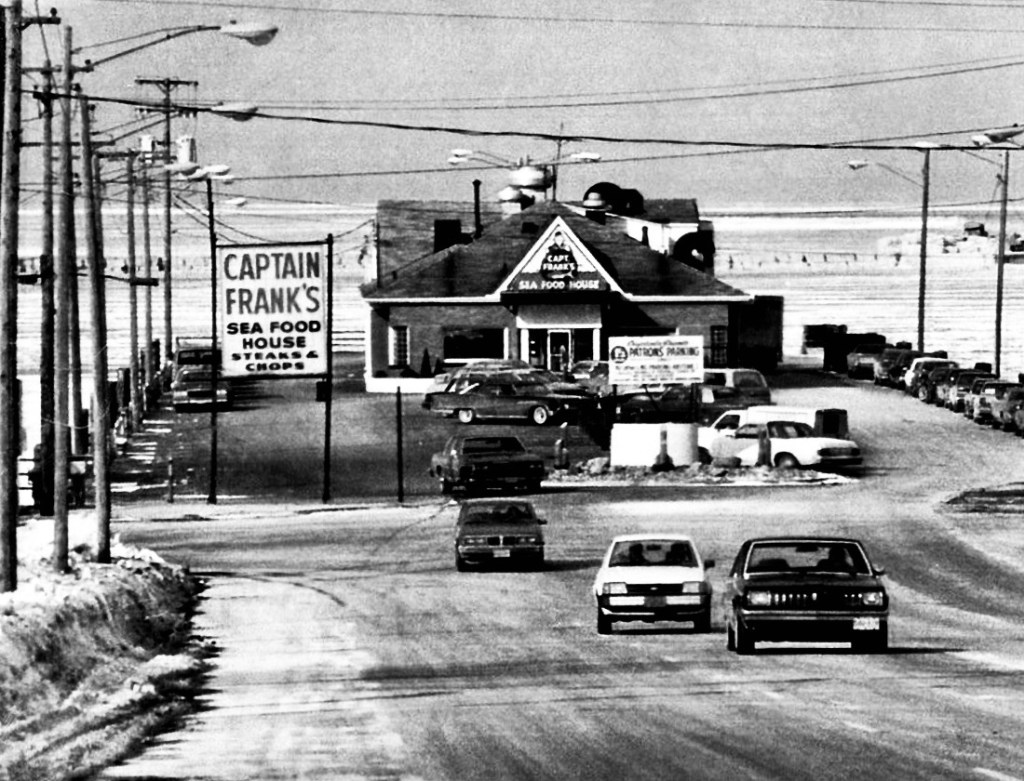
   There are thousands of restaurants in Cleveland, Ohio. Captain Frank’s isn’t one of them anymore. It used to be and when it was it was one of the best places to eat if you liked waves and wind shaking the building on the E. 9th St. pier sticking out into Lake Erie. Every so often somebody full of cheer and careless after a hearty meal, or simply drunk as a skunk, drove off the pier into the deep. 

   “It was always my last stop after a night of drinking in the Flats,” Nancy Wasen said. “Every night I was surprised no one fell off the pier and drowned.” It wasn’t for want of trying.

   Captain Frank’s was a “Lobster House” or a “Sea Food House” depending on the signage . It changed now and then. There was a panhandler who called himself Captain Frank who hung around outside the restaurant day and night, his hand stuck out. Policemen who had kept quiet about hidden rooms in gambling joints or pocketed cash in job-buying schemes were assigned to Seagull Patrol on the pier, usually in the dead of winter. They ignored the panhandler and did their best to walk the cold off. Sometimes they helped the innocent just to stay on the move.

   Francesco Visconti was the Captain Frank who ran the restaurant. He was a Sicilian from Palermo whose parents beat it out of Europe the year World War One started. At first, as soon as he could handle a horse, he sold fish from a wagon. After that he operated the Fulton Fish Market on E. 22nd St. He was forty years old in 1940 and lived with his wife, Rose, a son, and three daughters.

   He bought a beat-up passenger ferry building on the E. 9th pier in 1953 and opened Captain Frank’s. I was a small boy living the easy life in Sudbury, Ontario at the time and missed the grand opening. Kim Rifici Augustine’s grandfather was the original chef at Captain Frank’s. “The wax matches he used for flambé caused a fire back in the 1958,” she said. The fish shack burned down. Frank Visconti built it back bigger and better the next year. Kim’s grandfather was forbidden to handle matches of any kind from then on.

   By the late 1950s my family had emigrated from Canada to Cleveland, Ohio. We lived close enough, but never went to Captain Frank’s. My parents were from Lithuania and ate bowls of beetroot soup and plates of potato pancakes at their own table. They didn’t know an Italian-style diet from the man in the moon.

   In the Old Country they had feasted on pigs and crows. My mother’s father was a family farmer who kept a herd of swine, slaughtering them himself, and smoking them in a box he built in the attic of the house, the box built around their fireplace chimney. “It was the best bacon and sausage I ever had in my life,” my mother reminisced many years later.

   They hunted wild crows. “Those birds were tasty,” my mother said. The younger the birds the better. Those still in the nest and unable to get away were considered delicacies. Their crow cookouts involved breaking necks and boiling the birds in cooking oil over a bonfire. They served them with cabbage or whatever northern European vegetables they had at hand.

   Since I was part of the family, I ate with my parents, my brother, and sister. My mother prepared every meal. I ate whatever she made, even the fried liver and God-awful Lithuanian headcheese, although we never, thank God, ate carrion-loving crows. Even if I had wanted to go to the Lobster House, or anywhere else, I didn’t have a dime to my name.

   Captain Frank’s boomed in the 1960s and 1970s. There were views of the lake out every window. There was an indoor waterfall. If you had water on the brain, it was the place to be. The food was terrific. Judy Garland, Nelson Eddy, and Flip Wilson ate there whenever they were in town performing. The Shah of Iran and Mott the Hoople partied there, although not at the same time. They weren’t any which way on the same wavelength.

   There was a luncheonette behind the restaurant that doubled as a custard stand in the summer. When the Shah or Mott the Hoople stayed later than ever, they could sit in the back in the morning in the breezy sunshine with a cup of custard while iron ore boats went back-and-forth. “I never went inside Captain Frank’s, but I remember the ice cream shop in the back well,” recalled Bob Peake, a homegrown boy who was a frozen sweets savant.

   Frank Visconti was a made member of the Cleveland Crime Family. His criminal record dated back to 1931, including arrests for narcotics, bootlegging, and counterfeiting. The restaurant was frequented by high-echelon hoods and low-minded politicians alike. Many crime family meetings were held there. Many politicians filled their piggy banks there.

   Longshoremen went to Kindler’s and Dugan’s to drink before and after work, but between their double shifts went to Captain Frank’s for power shots. When they were done it was only a short walk back to the docks. When the weather was bad they were all warmed up by the time they clocked back in to work.

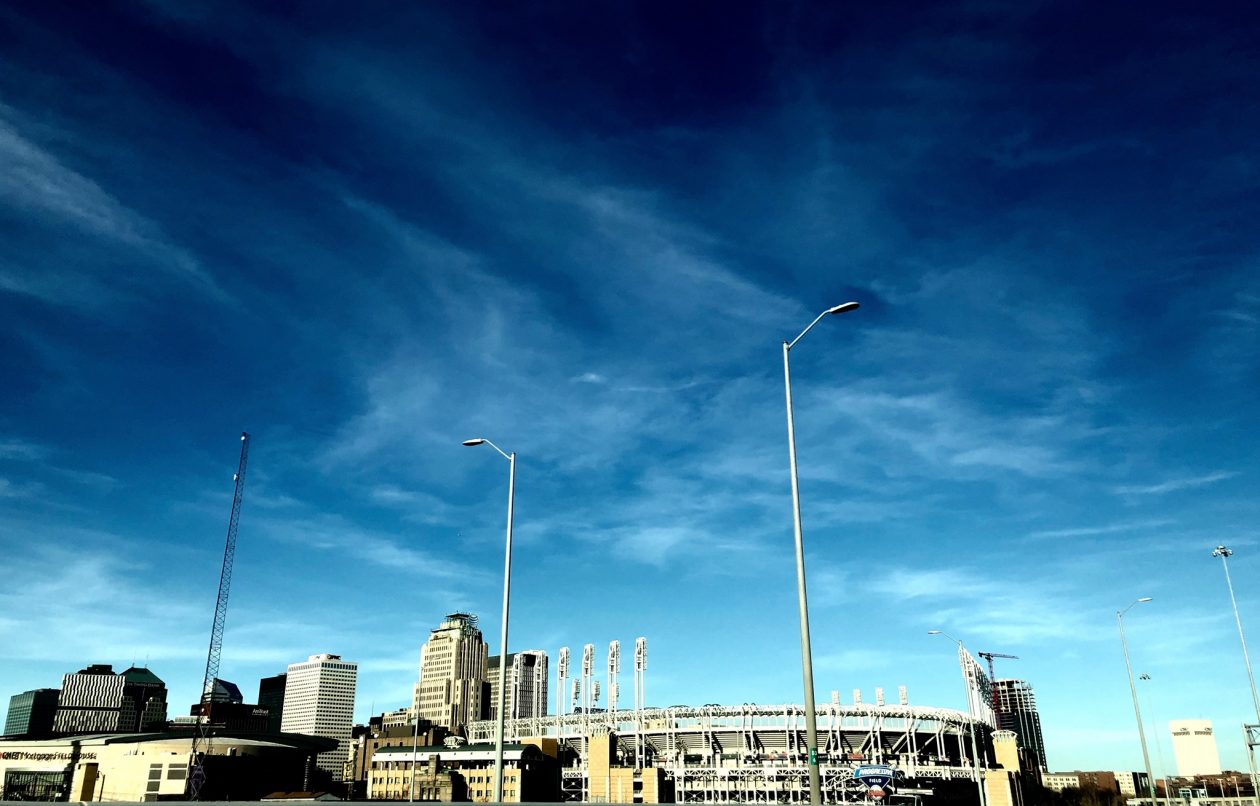
   The restaurant was a football field’s length from Lakefront Stadium, where Chief Wahoo and the NFL Browns played. The ballpark sat nearly 80,000 fans. The Indians were always limping along, their glory days long gone, but the Browns were exciting, and on game day crazy loud cheering rocked the windows of the restaurant. Cold biting winds blew into the stadium in spring, fall, and winter. In the summer, under the lights, swarms of midges and mayflies sometimes brought baseball games to a standstill.

   Mary Jane Jereb was sixteen years old in 1964. She didn’t know a single thing about Captain Frank’s. She was in a car with her cousin and a neighbor and a driver’s education trainer. “He took us downtown, to prepare for city driving. I wasn’t driving, my neighbor was. The instructor directed her to this particular parking lot.” It was Captain Frank’s parking lot. They drove straight to the edge of the slimy pier. Spray from a stormy Lake Erie obscured their windshield.

   “The instructor told my neighbor to turn around and head back to Parma. My short young life flashed before me as she pulled into a parking space and then backed out.” She did it by feel. None of them could see through the blurry washed-out windows. They carefully left the deep blue sea behind them.

   In 1966 the Beatles played the stadium and after that the Beach Boys, Pink Floyd, and the Rolling Stones showed up to rock the home of rock-n-roll. It was always a walloping paycheck for a night’s work. In the 1980s U2 brought its big show to town, raking in millions singing about love and lovesickness. Every so often they threw in something about social injustice.

   Even though I was grown-up by the 1970s I still didn’t dine out at Captain Frank’s. I was living in a rented house in a vague part of town and it was all I could do to feed myself at home. I didn’t have pocket money to eat out. Most of my friends were already racing to the top. I was starting at the bottom. When I finally joined the way of the world and could afford to go and wasn’t too tired from working all day, I ate out. 

   There was a kind of magic eating at Captain Frank’s at night. My friends and I watched the lights of freighters making their way slowly into Cleveland’s harbors while munching on scampi and warm dinner rolls swimming in garlic butter. They served steaks the cooks seared just right, but the seafood was usually just threatened with high heat. It was never overcooked and dried out. Students from St. John College on E. 9th and Superior Ave. walked there to have midnight breakfast because it was nearby and the plates were substantial.

   The Friday night in September 1984 my friend Matti Lavikka and I treated my brother to dinner at Captain Frank’s on his thirty first birthday was almost the last birthday he celebrated. We didn’t know Frank Visconti had died earlier that year, but in the car on the pier after dinner we thought my brother was dying. He was gasping for air. The dinner had been very good, but he looked very bad. We were afraid he might end up swimming with the fish.

   He was getting over a marriage to a Columbus girl that had lasted only fifty six days. He was singing the blues. It was his own fault, having used all the wedding’s wishing well money to pay off his gambling debts, but that was beside the point. We picked him up in Mentor, where he was living alone, and went downtown. It was a starry late summer evening. We ordered a bottle of Chianti, some pasta, and lots of shellfish. We didn’t know, and he didn’t know, that he was allergic to shellfish. 

   “I don’t know why, but I hardly ever eat fish,” he said. “It doesn’t always agree with me.” Nevertheless, he dug in. Our dinner at Frank’s that night included scallops, shrimp, and lobster. He might not have been allergic to all of them, but he was allergic to one of them, for sure.

   Halfway through coffee and dessert, which was sfogliatelle, layers of crispy puff pastry bundled together, he was itching, wheezing, and his head was puffing up. His lips, tongue, and throat looked like silly putty. He was breaking out into hives. He was getting dizzy and dizzier. It was like he had eaten a poisoned apple.

   Shellfish allergy is an abnormal response by the body’s immune system to proteins in all manner of marine animals. Among those are crustaceans and mollusks. Some people with the allergy react to all shellfish. Others react to only some of them. It ranges from mild symptoms, like a stuffy nose, to life-threatening.

   Matt was a fireman and paramedic in Bay Village. Looking at my brother he didn’t like what he was seeing. We hustled him to the car and made a beeline for the nearest hospital. Matti put the pedal to the metal. The Cleveland Clinic wasn’t far away and we had him at the front door of the emergency room in ten minutes. Five minutes later a doctor was injecting him with epinephrine and a half-hour later he was his old self.

   “Thanks, guys,” he said when we dropped him off at his bachelor pad in Mentor. He staggered away to bed. Matt and I agreed it had been a waste of good seafood.

   After Frank Visconti died the restaurant limped along. The service and food got worse and worse. The tables and chairs got old and the walls looked like they needed at least one new coat of paint. Fewer and fewer people were going downtown for any reason other than work. I was working downtown near the Cleveland State University campus, where Matt and I had started a small two-man business. One evening when I got off work I called my girlfriend and invited her to dinner at Captain Frank’s. I knew she wasn’t allergic to seafood. She had a hollow leg and generous portions were right up her alley. When we got there, however, the pier was dark in all directions. There were no parked cars in the lot and no lights in any of the windows.

   Rudolph Hubka, Jr., the new owner who had given it five years, had given up the ghost and declared bankruptcy in 1989. Nobody said a word. Hardly anybody noticed. The building was demolished in 1994. The only thing left was dust and litter blowing around in the lakeshore wind.

   We drove to Little Italy and snagged a table at Guarino’s. Sam Guarino had died two years earlier, but his wife Marilyn, who everybody called Mama Guarino, was carrying on with the aid of Sam’s sister Marie, who lived upstairs and helped with the cooking in the basement kitchen. “Marilyn sat in front, and she was like the captain on a ship, making sure everything was just right,” said Suzy Pacifico, who was a waitress at the eatery for fifty-two years.

   We had a farm-to-table dinner before there was farm-to-table, red wine, and coffee with tiramisu. We didn’t see any fishy characters, even though Little Italy was the home of the Cleveland Crime Family. Mama Guarino asked us how we liked the cake. We told her we liked it very much. When I drove my girlfriend home there were no piers to accidentally drive off of. We were both happy as clams all that night.

Ed Staskus posts monthly on 147 Stanley Street at http://www.147stanleystreet.com, Made in Cleveland http://www.clevelandohiodaybook.com, Down East http://www.redroadpei.com, and Lithuanian Journal http://www.lithuanianjournal.com. To get the site’s monthly feature in your in-box click on “Follow.”

“Bomb City” by Ed Staskus

Cleveland, Ohio 1975. The John Scalish Crime Family and Danny Greene’s Irish Mob are at war. Car bombs are the weapon of choice. A  police detective is assigned to find the bomb makers. Revenge is always personal. It gets personal.

Available on Amazon: https://www.amazon.com/dp/B0F1LM1WF9/ref=sr_1_1?crid=2MYAQAOZIC2U9&dib=eyJ2IjoiMSJ9.hTm7BGbiQbSe5ZapFwYPPfcwOpTe-Vdg6VLE4aGyTyk.Z0R-VNBWWEcvKcNaO9LdCOUnNIOOXgvYkRS_FXiXuHk&dib_tag=se&keywords=bomb+city+ed+status&qid=1742136726&sprefix=bomb+city+ed+staskus%2Caps%2C84&sr=8-1

A Crying of Lot 49 Publication

Shock and Awe

By Ed Staskus

   “You’re early,” Barron Cannon said.

   “I know, but I wanted to come in before class and ask if you would help me navigate my new electric yoga pants,” Zadie Wisniewski said. She flashed a pop tart smile. The pants were skin tight and cherry red.

   “I don’t think you need any help from me,” Barron said. “Your pants look high voltage enough to navigate themselves.”

   “What do you mean?”

   “The color, you can’t beat that cherry red.”

   “Oh, right, they are bright. They’re a special pair. They’re usually black.  No, what I mean is, they’re actually electric.”

   Barron Cannon was a freelance yoga teacher. He often taught classes at the border of Lakewood and the west side of Cleveland, near where he lived. Zadie was there for a Hot Yoga class. Her pants were hot looking enough to fit right in to the theme of the class.

   She was wearing spanking new Nadi X yoga pants. The X pants are high-tech high-performance yoga wear, trumping Perfect Moment, Lululemon, and Runderwear. They are up to date. They are like wearing the mind of somebody else.

   There is a battery attached to a port on the pants. Wires are woven into the fabric. Sensors sewn throughout the pants are synced to an app that collects data as the wearer practices yoga. If a pose is going wrong, the app makes that part of you that is getting it wrong vibrate with a low-voltage electrical charge. When you make an adjustment, the app pipes up with praise. If you keep getting it wrong, the app keeps buzzing you and saying, “Please try again.”

   “Are you pulling my leg?” Barron asked.

   “No, of course not,” Zadie said. “These pants cost me two hundred and fifty dollars.”

   “They’re cool,” said Folasade Adeoso, an influencer with 86,000 followers, the day she demonstrated the pants prancing on a pretend runway at her yoga studio.

   “That’s an arm and a leg,” Barron said about the bleeding-edge pants designed to make you bleed money.

   “So, I wonder if I can roll my mat out in front of you, and if you would handle my phone, keeping it next to you in case I need an adjustment?”

   “Sure,” Barron said. “I’ll do my best.”

   “Great!”

   “You said navigate. What does that mean?”

   “The app is supposed to do it all on its own, but I would feel better if you kept your eye on it.” She handed Barron her iPhone. It was an iPhone 16 Pro Max. It was the most phone Barron had ever seen.

   “It would be super if you would put it on your mat where both of us can see it.”

   “All right,” he said. “But I’m not sure I like this. You should be paying attention to what you’re doing, not relying on an app. Besides, when you come to my class, supervision is my responsibility.”

   “I know,” said Zadie, “but it’s a one-off. The pants are for home, for when I do yoga in my spare room.”

   Nadi X yoga pants are the brainchild of Billie Whitehouse, a fashion and tech designer. She has developed vibrating underwear that buzzes for its own reasons, never mind what’s going on with your private parts. She has developed a driving jacket that vibrates right side and left side to alert you to turn right or left. The latest thing she and her tech team thought up were the new vibrating yoga pants.

   “The vibrations on the body cue you about where to focus and the app lets you know how you went at the end of each pose. Get the smartest yoga experience!” is how the experience is described. Nadi X guides your yoga practice through the latest state-of-the-art technology based on your body’s alignment. Listen to the audio instructor on your phone and feel the guidance on your skin. The vibrations will guide your focus.”

    It is downstream to go modern, of course, taking mindfulness out of the equation, and go straight to machine learning, straight to the Big Brother of asana practice, the brother who has your best interests in mind and won’t mine any of the data it collects about your body.

“There’s a sucker born every minute,” the showman PT Barnum once said. He would have been delighted with the new age and gotten in fast on more of the action.

   “Wearable X is the future of wellness that brings together design and technology to create a better quality of life through experience and fashion,” declares Wearable X, the Australian cyber company behind the yoga pants device.

   “Putting electronics into garments is still so new and so difficult,” said Ben Moir, co-founder with Billie Whitehouse and chief technology officer. “Yoga pants get stretched, get sweated in. The sensors had to be invisible and the pants had to not be a tech-looking product. That’s kind of an engineer’s nightmare.”

   “We’re very proud that it is at its peak.” Billie Whitehouse said about their new attire device, proudly pointing the way to the future. She didn’t mention cow nose rings or anything else about the past.

   “I’ve got to bounce on that,” Barron said to himself. “I smell a rat.”

   “They make my butt look good,” Isabelle Chaput, half of a French performance-art duo, said a few months earlier during a demonstration of the pants in New York City. The high-waisted four-way stretch level one compression pants aren’t just for gals, either. “These leggings are extremely well made. The high waisted band is flattering, and these are honestly my go-to leggings for everyday wear,” said Justin Gong, reviewing the pants on Amazon. “Whether it’s a full 40-minute flow or a 5-minute session, my Nadi X allows me to flow whenever I want.”

   They were named Nadi X for a reason. “In Sanskrit, the nadi are the highways of communication that exist around the body when all your chakras are aligned,” Billie Whitehouse said, updating the long ago, eliding then and now. “As You Think You Vibrate” is one of the company’s mantras.

   Over the next twenty minutes the Hot Yoga class filled up, a quiet buzz and energy filling the room until there were thirty-some mats lined up in rows alongside and behind Zadie when the proceedings got started. Barron taught a one-hour flow class in a room heated to the mid-90s. His method was to start slow, pick up the pace, end slow, and encourage a five-minute corpse pose at the end.

   He didn’t like it when folks rolled their mats up after the last pose and bolted the room. “Hold your horses!” he demanded. “Lay down, close your eyes, and go inward. ”He could be imperious.

   Nadi X pants are manufactured in Sri Lanka, an island country off the southern coast of India. The nation is prosperous economically, has a strong military, and is the third most religious country in the world, with 99% of all Sri Lankans saying religion is an important part of their daily life. They are by all accounts proud to produce the vibrating pants for the spiritual practice of yoga. 

   Wearable X has designed several yoga sequences for travelers, making the pants and the app work with phones on airplane mode, assuming the flight attendants don’t mind a downward dog in the middle of an aisle at 38,000 feet.

   “Sitting is the new smoking,” Billie Whitehouse said. “It is a genuine epidemic. It’s not just because we’re at desks all day but because we’re constantly on airplanes.”

   Baron Cannon had never been on a jetliner, only a seaplane that flew 30-minute tours over Long Lake in the Adirondacks. He had been on it several times, whenever he went north to the High Peaks for a week of hiking, always flown by the same pilot, a stocky old man by the name of Bob, who if you saw him in the street you might mistake for a bum. He flew his battered Cessna with one hand, pointing out landmarks. Sometimes he flew the little plane with no hands, talking with both hands. He always safely landed it, fair or foul weather, like the lake was a baby’s bottom.

   Nadi X is a godsend for all the yogis who burn up the carbon, flying here there and everywhere, globe-trotting for profit and diversion. The pants are machine washable and powered by a rechargeable battery that lasts up to an hour-and-a half, which is as long as most yoga classes ever are. The battery connects by Bluetooth to a smartphone, letting one and all choose the level of effort they’re going to be putting into the practice.

   “Once you have set your vibration strength, you can place the phone next to your yoga mat during your session. Your pulse is monogamist to your phone. You can have different Nadi X pants, but your phone will always want to connect to your pulse.”

   Everyone knows that their smartphone never screws up and is always up to snuff. Silicon Valley would have a heart attack if it was otherwise. That would be the day a self-driving car runs down a cyberman directing traffic, sending both of them to the garbage dump.

   Inside of ten minutes it all fell into place for Zadie. She wasn’t an expert, but she wasn’t a novice either. In her mid-20s she was fit and smart, smart enough to catch the cues and act on them. By the middle of the class there were hardly any cues anymore. The class was flowing. She was deep into it and getting it just right.

   That’s when the trouble started.

   Even though she was going strong and was intuitively aware of how good it was all going, Barron not even glancing at her, she was getting zapped more and more frequently. The vibrations were rolling up and down her legs almost continuously. Was there something wrong with the device, she asked herself. Was there a ghost in the machine?  There must be! Maybe it’s all this sweat, she thought, mopping her brow. She looked up from the floor pose she was doing to ask Barron to turn her iPhone off, but he wasn’t at the front of the class.

   He was patrolling the room making hands-on adjustments, alignment-based assists for backbends and forward folds. Barron didn’t push anybody too deep into their poses, but he tried to get them into the integrity of it, within the constraints of what their flesh, tendons, ligaments, joints, and bones would bear.

   A young woman had once complained about it in one of his classes, saying that touching her was inappropriate and reminding him about the #MeToo movement, saying it was a real issue to her.

   “You’re doing it wrong,” he said. “You’re compromising your safety.”

   “I don’t care, hands-off. My husband’s a lawyer, just in case you’re a pervert.”

   “Oh, the hell with it, get out of here and don’t come back.”

   “What?” She glared at him. The class stopped and everyone watched the goings-on. Those who knew Barron better than others rolled their eyes heavenward. They knew trouble was coming. Barron didn’t believe in the customer is always right.

   “You heard me.” He fixed his hand firmly on her elbow and led her to the door.

   When they were outside, he leaned into her and said, “Tell your legal beagle the local Hells Angel chapter practices at my class Saturday mornings, so I don’t ever want to hear a word from him about anything litigious or see your face again, understand?”

   “You’re an ass,” she said.

   “Let’s leave it at that, sweet lips. Now drift.” 

   Love, peace, and understanding, he thought, were all well and good, except when it came to the empowered wallets from the better neighborhoods, especially on the nearby lakeshore, which was called the Gold Coast. He didn’t need a bloodhound to know she sprang from there.

   Barron was an anarchist at heart. He believed anarchism walked the walk and fit  best with the practice of yoga. Any other affiliation with anything else, capitalism, socialism, democracy, dictatorship, consumerism, left-wing, right-wing, high and mighty, and the lunatic fringe, was inimical to the practice. 

   Barron was an idealist, but practical enough to pay his taxes and not run red lights. He kept his anarchism to himself. He knew free speech was a given, as long as you weren’t crazy enough to try it.

   Zadie was close to the breaking point. The longer the class went on and the sweatier she got the more her pants shocked her. It was only 12 volts, she knew, but it was getting to be 12 volts every second. Maybe it was more voltage than she thought. Was it rising higher and higher? 

   “Yow, that stung! The hell with it.” She ripped her cherry red yoga pants off and  tossed them angrily into a corner. She was left wearing a pair of royal purple Under Armour stretch undies. Everyone behind Zadie gave them a good look.

   “Eyes on me, everyone, front and center,” Barron harrumphed. “Let’s get back to business.”

   “Those pants can kiss my butt,” Zadie said, getting back into the flow of the class.

   “And, no,” she said, looking straight at Barron, “I won’t need any adjustments for the rest of the class today, thank you very much.”

“Bomb City” by Ed Staskus

Cleveland, Ohio 1975. The John Scalish Crime Family and Danny Greene’s Irish Mob are at war. Car bombs are the weapon of choice. A  police detective is assigned to find the bomb makers. Revenge is always personal. It gets personal.

Available on Amazon: https://www.amazon.com/dp/B0F1LM1WF9/ref=sr_1_1?crid=2MYAQAOZIC2U9&dib=eyJ2IjoiMSJ9.hTm7BGbiQbSe5ZapFwYPPfcwOpTe-Vdg6VLE4aGyTyk.Z0R-VNBWWEcvKcNaO9LdCOUnNIOOXgvYkRS_FXiXuHk&dib_tag=se&keywords=bomb+city+ed+status&qid=1742136726&sprefix=bomb+city+ed+staskus%2Caps%2C84&sr=8-1

A Crying of Lot 49 Publication

Big Bang on Ethel Ave.

By Ed Staskus

   Tommy Monk’s alarm clock sat on the nightstand next to his bed, but except for Saturdays and Sundays he never set it. When 5:30 in the morning happened on weekdays he knew his father would be coming through the door shaking him and making him get up. There was no turning back time those mornings. His father was more commanding than his Westclox Baby Ben.

    It was Sunday, the morning of July 6, 1975, and since it was, Tommy had set his alarm the night before. His father always slept in on weekends, snoring his head off, and reading the newspaper the rest of the morning, catching up on that week’s news. His mother was up at the crack of dawn on weekends making meat pies and casseroles for the family for the rest of the week. She kept a cup of coffee and a slice of flaky pirukas near to hand while she worked.

   His mother was from Estonia. She grew up on a family farm. His father was from Finland. He grew up in a city. They met and married in Finland after she fled Estonia and the Russians. She slipped through the Iron Curtain in a stolen rowboat, making her way across the Baltic Sea. When they were awarded green cards after a new American immigration law came into effect in 1964, they emigrated to the United States, to Lakewood, Ohio. Tommy was a two-year-old toddler when he was followed by a brother and soon after that by a sister. His father changed their family name from Muukkonen to Monk when he went to work as a bookkeeper for TRW. He was still working for TRW, except he had moved up the ladder to accountant and gotten a raise. When he did, he bought a Pontiac Grand Safari station wagon. He kept it at the front of the driveway for a week so all the neighbors could see it.

   “You’re the best dad ever,” his children said a month later when they were driving to Pymatuning State Park in their new car for camping and campfires. Tommy and his brother sat in the rear-facing seat telling each other scary stories about mad dog bank robbers on the run. Their sister had the middle bench seat to herself. She liked it that way since she considered both her brothers to be nitwits. Her father was the strong silent type. Only her mother was worth talking to.

   Tommy was called Tommy by everybody except his mother and father and his friends. His mother called him Tomas. His father called him Bud. His friends called him Tommy One Shoe because one day, getting on the CTS bus that took him to grade school at the West Park Lutheran School, he discovered he was only wearing one shoe. It was too late to get off the bus and go home for the other one. He spent the rest of the day limping to class, to lunch, back to class, and back home. When he got home there was a hole in his shoeless sock. A blister was peeking through the hole. The next day at school he found out he was the One Shoe boy.

   After Tommy got the alarm clock calmed down, got dressed, and got himself to the garage, he started inserting the front page and sports page sections into the Sunday edition of the Cleveland Plain Dealer. He had already gotten the comics and classifieds and the rest of the newspaper on Friday when his route manager tossed the bundles out the back of his truck onto their driveway. He put those parts together on Saturday afternoon, after which he went collecting payments.

   He collected the week’s payments once a week. Most people left them in an envelope under their doormat or taped to the front door. Some old folks liked handing it to him personally and liked hearing him say thank you. He kept the money in a cigar box in his mother’s dining room cabinet. The route manager stopped by every Monday morning, counted the money, and left him a receipt. Tommy lost the receipts as soon as possible. He worked hard but wasn’t a bean counter like his father. He delivered the newspapers seven days a week, fifty two weeks a year, on foot, as fast as he could. The houses in his neighborhood were close together, which was helpful. He had to be done in time to catch the bus to school. 

  His paper route was all of Ethel Ave. between Clifton Blvd. and Detroit Ave. There were ninety seven houses on his route. He lived on the lake end of the street, making his life easier than it might have been. He walked a loop, first north to Clifton Blvd., then south to Detroit Ave., and finally north again. He crossed the Conrail tracks twice. When he was done with the next-to-last newspaper he was back at home, back where he had started. His dad’s newspaper was the only one he white glove delivered. The rest got delivered flying from his hand to a front porch. He never looked behind him to see whether anything unpredictable had happened, like a paper rolling off a porch in a rainstorm or being torn apart by a dog.

   Monday through Saturday he stuffed the newspapers into his shoulder bag. Every time he threw one on a porch the bag got a little lighter. He left it in the garage on Sundays. The paper was too big that day to carry. He pulled a Radio Flyer with removable side panels on Sundays. The panels kept the stacks of newspaper in place. The wheels were old rubber. They were slick as baloney skins. They gripped the sidewalk well enough three seasons out of the year. They slid every which way in snow and ice.

   The last house on the northeast corner of Ethel Ave. and Clifton Blvd. was one of the first houses on his route. It was a two-story brick home with a detached garage to the side, unlike all the others on the street whose garages were in the back. The front door of the dwelling faced Clifton Blvd. The driveway was a short slab of concrete. Lorcan Sullivan lived in the house with a good-looking woman nobody ever saw. Lorcan had been born and grew up in Lakewood after his mother married an American soldier in the 50th Field Artillery Battalion. The newlyweds left Belfast to raise a family in the United States the minute World War Two ended. Lorcan’s neighbors always wondered what he did for a living once he was grown up. He only ever said he was in business.

   Tommy knew to throw the paper at the base of the house’s back door, which he could do without even trying. That Sunday, however, he didn’t have to throw the paper. Lorcan Sullivan came out the back door as Tommy was rolling up with his Radio Flyer. The man unlocked his car and got in. He never parked in the garage. He always parked in the driveway, the nose of the car facing the street. The car was an Imperial LeBaron, the heaviest and most expensive car in the Chrysler line-up.

   “Hey kid, over here,” Lorcan called out, waving for him to bring the paper to him. Tommy knew the man’s name. He didn’t know everybody’s names on his route, but he knew who the man in the black pinstripe suit was. He gave him better tips than anybody else. There was always an extra dollar in the envelope inside the back screen door. That was for Tommy being his neighbor’s unofficial look-out on the street.

   “You ever see anybody funny hanging around, you tell me right away.”

   “What do you mean funny?” 

   “Funny like they look like they don’t live around here. It will be a man, probably one man, sitting in a car looking like he’s just doing nothing. He might be wearing an old-fashioned kind of hat. He might be pretending to be reading the paper. He’ll be oily and dark-skinned, for sure, like a Dago.”

   “All right, I’m on it, “Tommy said.

   “You’re on the mark, kid.”

   He hadn’t spotted anybody suspicious the whole year nor the year before. Ethel Ave. was a quiet street. Their mid-town neighborhood was a quiet neighborhood. Lakewood was a quiet suburb, not like the big city, where bad things happened day in and day out. He handed Lorcan Sullivan his copy of the Cleveland Plain Dealer. The front page was full of the yesterday’s bad news.

   Tommy walked to the crosswalk, crossed the street, and turned left. It was getting on 6:30, a half-hour after sunrise. It wasn’t light, yet, but it wasn’t dark, either. A man and a woman pushing a sleeping baby in a stroller went by on their way to Lakewood Park. Lake Erie was only two blocks away. He was just about to throw a newspaper at the first house on the corner, the first house starting up the west side of Ethel Ave., when a thunderclap knocked him down. He fell face first, barely able to break his fall with his hands. When he landed he cupped them over the back of his head. He did it without thinking. Something landed with a thud beside him. The noise of the explosion became an intense silence. He stayed on the ground for a minute.

   He couldn’t hear anything except for his ears ringing. He looked back across the street. The Chrysler LeBaron was a fireball. He stood up, unsteady, staying where he was. People were looking out their windows. His hearing came back. A dog was barking like a nut case. A fat man in a bathrobe ran out of a white house. “Don’t move, stay there,” he shouted, gesturing with his hands, inching toward the fireball before turning around and coming back. They both stayed on their side of the street watching the flames and smoke. It wasn’t a few minutes before they heard sirens coming from two different directions.

   Tommy looked down at what had landed beside him. It was a hand. There was a silver ring on the pinkie finger. It was Lorcan Sullivan’s hand. The hand was a charred fist clutching a part of the newspaper. The paper was smoking, tiny flames licking at the edges trying to become bigger flames. It was a section of the Cleveland Plain Dealer, a section called ‘The Spotlight.’ The headline of the full-page lead feature jumped out in king-size block letters. It said “BOMBING BUSINESS BOOMING HERE.”

   Tommy Monk’s alarm clock sat on the nightstand next to his bed, but except for Saturdays and Sundays he never set it. When 5:30 in the morning happened on weekdays he knew his father would be coming through the door shaking him and making him get up. There was no turning back time those mornings. His father was more commanding than his Westclox Baby Ben.

    It was Sunday, the morning of July 6, 1975, and since it was, Tommy had set his alarm the night before. His father always slept in on weekends, snoring his head off, and reading the newspaper the rest of the morning, catching up on that week’s news. His mother was up at the crack of dawn on weekends making meat pies and casseroles for the family for the rest of the week. She kept a cup of coffee and a slice of flaky pirukas near to hand while she worked.

   His mother was from Estonia. She grew up on a family farm. His father was from Finland. He grew up in a city. They met and married in Finland after she fled Estonia and the Russians. She slipped through the Iron Curtain in a stolen rowboat, making her way across the Baltic Sea. When they were awarded green cards after a new American immigration law came into effect in 1964, they emigrated to the United States, to Lakewood, Ohio. Tommy was a two-year-old toddler when he was followed by a brother and soon after that by a sister. His father changed their family name from Muukkonen to Monk when he went to work as a bookkeeper for TRW. He was still working for TRW, except he had moved up the ladder to accountant and gotten a raise. When he did, he bought a Pontiac Grand Safari station wagon. He kept it at the front of the driveway for a week so all the neighbors could see it.

   “You’re the best dad ever,” his children said a month later when they were driving to Pymatuning State Park in their new car for camping and campfires. Tommy and his brother sat in the rear-facing seat telling each other scary stories about mad dog bank robbers on the run. Their sister had the middle bench seat to herself. She liked it that way since she considered both her brothers to be nitwits. Her father was the strong silent type. Only her mother was worth talking to.

   Tommy was called Tommy by everybody except his mother and father and his friends. His mother called him Tomas. His father called him Bud. His friends called him Tommy One Shoe because one day, getting on the CTS bus that took him to grade school at the West Park Lutheran School, he discovered he was only wearing one shoe. It was too late to get off the bus and go home for the other one. He spent the rest of the day limping to class, to lunch, back to class, and back home. When he got home there was a hole in his shoeless sock. A blister was peeking through the hole. The next day at school he found out he was the One Shoe boy.

   After Tommy got the alarm clock calmed down, got dressed, and got himself to the garage, he started inserting the front page and sports page sections into the Sunday edition of the Cleveland Plain Dealer. He had already gotten the comics and classifieds and the rest of the newspaper on Friday when his route manager tossed the bundles out the back of his truck onto their driveway. He put those parts together on Saturday afternoon, after which he went collecting payments.

   He collected the week’s payments once a week. Most people left them in an envelope under their doormat or taped to the front door. Some old folks liked handing it to him personally and liked hearing him say thank you. He kept the money in a cigar box in his mother’s dining room cabinet. The route manager stopped by every Monday morning, counted the money, and left him a receipt. Tommy lost the receipts as soon as possible. He worked hard but wasn’t a bean counter like his father. He delivered the newspapers seven days a week, fifty two weeks a year, on foot, as fast as he could. The houses in his neighborhood were close together, which was helpful. He had to be done in time to catch the bus to school. 

  His paper route was all of Ethel Ave. between Clifton Blvd. and Detroit Ave. There were ninety seven houses on his route. He lived on the lake end of the street, making his life easier than it might have been. He walked a loop, first north to Clifton Blvd., then south to Detroit Ave., and finally north again. He crossed the Conrail tracks twice. When he was done with the next-to-last newspaper he was back at home, back where he had started. His dad’s newspaper was the only one he white glove delivered. The rest got delivered flying from his hand to a front porch. He never looked behind him to see whether anything unpredictable had happened, like a paper rolling off a porch in a rainstorm or being torn apart by a dog.

   Monday through Saturday he stuffed the newspapers into his shoulder bag. Every time he threw one on a porch the bag got a little lighter. He left it in the garage on Sundays. The paper was too big that day to carry. He pulled a Radio Flyer with removable side panels on Sundays. The panels kept the stacks of newspaper in place. The wheels were old rubber. They were slick as baloney skins. They gripped the sidewalk well enough three seasons out of the year. They slid every which way in snow and ice.

   The last house on the northeast corner of Ethel Ave. and Clifton Blvd. was one of the first houses on his route. It was a two-story brick home with a detached garage to the side, unlike all the others on the street whose garages were in the back. The front door of the dwelling faced Clifton Blvd. The driveway was a short slab of concrete. Lorcan Sullivan lived in the house with a good-looking woman nobody ever saw. Lorcan had been born and grew up in Lakewood after his mother married an American soldier in the 50th Field Artillery Battalion. The newlyweds left Belfast to raise a family in the United States the minute World War Two ended. Lorcan’s neighbors always wondered what he did for a living once he was grown up. He only ever said he was in business.

   Tommy knew to throw the paper at the base of the house’s back door, which he could do without even trying. That Sunday, however, he didn’t have to throw the paper. Lorcan Sullivan came out the back door as Tommy was rolling up with his Radio Flyer. The man unlocked his car and got in. He never parked in the garage. He always parked in the driveway, the nose of the car facing the street. The car was an Imperial LeBaron, the heaviest and most expensive car in the Chrysler line-up.

   “Hey kid, over here,” Lorcan called out, waving for him to bring the paper to him. Tommy knew the man’s name. He didn’t know everybody’s names on his route, but he knew who the man in the black pinstripe suit was. He gave him better tips than anybody else. There was always an extra dollar in the envelope inside the back screen door. That was for Tommy being his neighbor’s unofficial look-out on the street.

   “You ever see anybody funny hanging around, you tell me right away.”

   “What do you mean funny?” 

   “Funny like they look like they don’t live around here. It will be a man, probably one man, sitting in a car looking like he’s just doing nothing. He might be smoking, pretending to be reading the paper, something like that. He’ll be oily for sure, like a Dago.”

   “All right, I’m on it, “Tommy said.

   “Do right by me, kid, and there’ll be something in it for you.”

   He hadn’t spotted anybody suspicious the whole year nor the year before. Ethel Ave. was a quiet street. Their mid-town neighborhood was a quiet neighborhood. Lakewood was a quiet suburb, not like the big city, where bad things happened day in and day out. He handed Lorcan Sullivan his copy of the Cleveland Plain Dealer. The front page was full of yesterday’s bad news.

   Tommy walked to the crosswalk, crossed the street, and turned left. It was getting on 6:30, a half-hour after sunrise. It wasn’t light, yet, but it wasn’t dark, either. A man and a woman pushing a sleeping baby in a stroller went by on their way to Lakewood Park. Lake Erie was only two blocks away. He was just about to throw a newspaper at the first house on the corner, the first house starting up the west side of Ethel Ave., when a thunderclap knocked him down. He fell face first, barely able to break his fall with his hands. When he landed he cupped them over the back of his head. He did it without thinking. Something landed with a thud beside him. The noise of the explosion became an intense silence. He stayed on the ground for a minute.

   He couldn’t hear anything except for his ears ringing. He looked back across the street. The Chrysler LeBaron was a fireball. He stood up, unsteady, staying where he was. People were looking out their windows. His hearing came back. A dog was barking like a nut case. A fat man in a bathrobe ran out of a white house. “Don’t move, stay there,” he shouted, gesturing with his hands, inching toward the fireball before turning around and coming back. They both stayed on their side of the street watching the flames and smoke. It wasn’t a few minutes before they heard sirens coming from two different directions.

   Tommy looked down at what had landed beside him. It was a hand. There was a silver ring on the pinkie finger. It was Lorcan Sullivan’s hand. The hand was a charred fist clutching a part of the newspaper. The paper was smoking, tiny flames licking at the edges trying to become bigger flames. It was a section of the Cleveland Plain Dealer, a section called ‘The Spotlight.’ The headline of the full-page lead feature jumped out in king-size block letters. It said “BOMBING BUSINESS BOOMING HERE.”

Excerpted from the book Bomb City.

Ed Staskus posts monthly on 147 Stanley Street  http://www.147stanleystreet.com, Made in Cleveland http://www.clevelandohiodaybook.com, Down East http://www.redroadpei.com, and Lithuanian Journal http://www.lithuanianjournal.com. To get the site’s monthly feature in your in-box click on “Follow.”

“Bomb City” by Ed Staskus

“A police procedural when the Rust Belt was a mean street.” Sam Winchell, Beyond Books

Available on Amazon: https://www.amazon.com/dp/B0F1LM1WF9/ref=sr_1_1?crid=2MYAQAOZIC2U9&dib=eyJ2IjoiMSJ9.hTm7BGbiQbSe5ZapFwYPPfcwOpTe-Vdg6VLE4aGyTyk.Z0R-VNBWWEcvKcNaO9LdCOUnNIOOXgvYkRS_FXiXuHk&dib_tag=se&keywords=bomb+city+ed+status&qid=1742136726&sprefix=bomb+city+ed+staskus%2Caps%2C84&sr=8-1

Cleveland, Ohio 1975. The John Scalish Mafia Family and Danny Greene’s Irish Mob are at war. Car bombs are the weapon of choice. A star-crossed police detective is assigned to find the bomb makers. It gets personal. Revenge is always personal.

A Crying of Lot 49 Publication

Push Comes to Shove

By Ed Staskus

   The first thing Vera Nyberg did when picking up her sister at Hopkins International Airport was give her a big hug. They hadn’t seen each other in almost a year. 

   “It’s so good to see you.”

   “You look terrific, sis.”

   “You, too.” 

   “That’s because I’ve finally gotten some sleep the last couple of days.”

   “How is the new job?”

   “It’s different being a detective rather than being in uniform, even though it’s the same, except my hours get all scrambled. It’s not nine-to-five.”

   “I’m still in uniform so I’ll have to take your word for it.”

   Vera was a detective with the Lakewood Police Department. Her sister Alice was a patrolwoman with the Truro Police Department. Truro is a small town in Massachusetts, on Cape Cod, where about two thousand people live. In the summer the town on the Outer Cape swells to twenty thousand, drawn by the National Seashore.

   Lakewood is on the south shore of Lake Erie, just west of Cleveland. Fifty thousand people live there. More than two million people live in the greater metropolitan area.

   “I’ve got today and the next two days off, so long as nothing major like a murder comes up.”

   “I think the last murder we had in Truro, which was before my time, was about twenty years ago.”

   “I could live with that,” Vera said.

   They had a late breakfast at Cleveland Vegan on the west side of Lakewood, stopped next door at Burning River for take-out coffee, and drove to Lakewood Park. The urban park is on thirty one lakeshore acres. They found a bench along the promenade. They could see Cleveland’s downtown skyline from where they sat.

   “This is a good cup of coffee,” Alice said. “Why do they call that shop Burning River?”

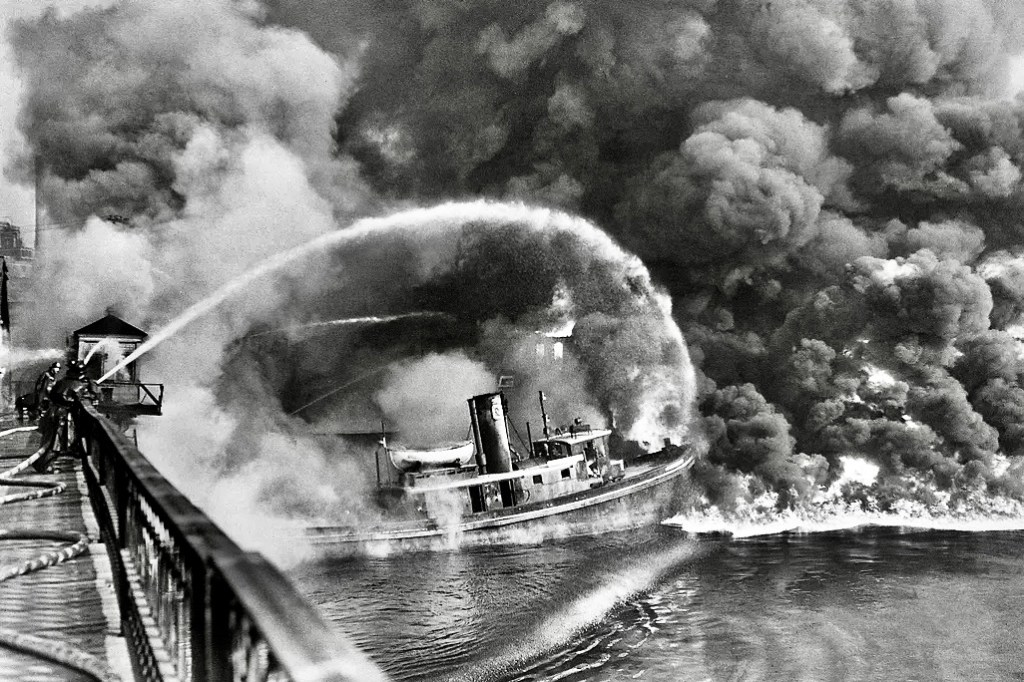
   “That’s because the Cuyahoga River, which is seven or eight  miles from here, caught fire in the 1960s.”

   “How does a river catch fire?”

   “It’s the river that goes right through Cleveland, just this side of the skyscrapers, and drains into Lake Erie. It’s in a valley that became an industrial valley more than a hundred years ago. All the factories used the river as a liquid garbage dump. There got to be more oil and sludge than water in the water.”

   “I never heard about that.”

   “The fire is what eventually got the EPA created.”

   “So some good came out of it.”

   “Yes, some good, although what’s going on in D. C. these days is a crying shame.”

   “Maybe it will change in three years.”

   “Let’s hope so. The red hats have got to go.”

   “That sounds like the redcoats during the War of Independence.”

   “There was a king then and there’s a king now. Down with the king is what they said then and what I say now.”                            

   Vera and Alice were sitting where the park’s Solstice Steps were. They are called that because the view in June centers on the solstice, when the setting sun reaches its northernmost point on the horizon. The steps are like bleachers. They curve along four hundred and eighty feet of shoreline. They are made of blocks measuring twenty one inches high and rise thirty six feet in elevation in a series of five tiers, each with four steps.

   They heard raised voices. When they looked they saw a boy, eleven or twelve years old, being pulled by the arm by a man wearing a dark blue suit and a ruby colored tie. The man was jabbing the index finger of his free hand in the boy’s face. They were on the edge of the topmost step of the Solstice Steps. The boy jerked his arm out of the man’s grasp. He took two steps back, extended both arms, and suddenly rushed the man. He ran into him, pushing him. The man lost his balance, wobbled, and fell down the steps.

   He fell down the first four steps to the next tier, bounced down the four steps of that tier, and came to a stop on the tier below that. Vera and Alice bolted off their bench and ran to the steps. Alice grabbed the boy by the back of his collar and held him fast. Vera rushed down to the man.

   Wood steps give upon impact, reducing peak force on the body. Concrete steps don’t give upon impact, at all. Vera expected some significant injuries. She found the man had some significant injuries. He had fractured a cheek, broken a wrist, and banged up both knees, both of them bleeding through torn trousers. His blue suit was a mess. Skin was rubbed raw everywhere it had scraped concrete. He was conscious, although she wouldn’t have been surprised if he had a concussion.

   “Don’t move,” she said. 

   “I’ll kill that boy for this, I swear to God,” the man groaned. His eyes were black as water at the bottom of a bottomless well.

   Vera called 911 on her cell phone. “Hang in there, help is on the way.” An EMS truck from Station 1 on Madison Ave. was there in less than five minutes. 

   “What happened?”

   “He fell down the steps.”

   They stabilized his head, applied a rigid cervical collar, and secured him to a spine board. They carried him up the steps, making sure his head stayed higher than his feet. They sped off to the nearest Cleveland Clinic, which was the Fairview Hospital at Kamm’s Corners. Lakewood Hospital had closed nearly ten years earlier.

   Alice had sat down with the boy still in her grip. Vera walked over to the bench and sat down on the other side of the boy.

   “What’s your name?’

   “Jacob.”

   “Why did you push that man?” 

   “He hurt mom.”

   “Who is he?”

   “He’s my father. I hate him.”

   “What did he do to your mom?”

   “He hit her. He hits her all the time.”

   “Did he hurt her?”

   “Her lip was bleeding.”

   “Does he hit you?” 

   “Yeah.”

   “Often?” 

   “Not every day, just most of the time.”

   “Why were you and your father in the park today?”

   “He came home for lunch. Mom burnt something and he hit her in the mouth. When I told him I hated him he grabbed me. He told me he was going to throw me into the lake for the fish to eat.”

   “Is that why you were at the top of the steps?” 

   “Yeah.”

   “Were you scared?”

   “I thought he was going to do it.”

   “All right, I don’t have any more questions. Do you want to go home now?”

   “You’re not going to put me in jail?”

   “No.”

    Alice shot Vera a quizzical look. Vera replied with a sign. Alice loosened the grip she had on the boy.

   “Let’s go and see how your mom is doing. Where do you live?”

   The boy pointed over his left shoulder.

   “Did you walk here or did your father drive?”

   “We walked here. It’s only two blocks.”

   He lived on Abbieshire Ave. between Lake Ave. and Edgewater Dr. The campus of the Lakewood Catholic Academy separated his street from the park. His home was the largest house on the street. There was a black Lincoln Navigator in the driveway. It was the largest vehicle on the street.

   “What are you going to do?” Alce asked. “You know that by all rights we should be taking him to your station.”

   “I know that but I don’t know that detention is what I want to do.”

   Juveniles who have committed a serious offense are not formally arrested. They are rather detained and referred to Juvenile Court. A probation officer interviews them,  a hearing is held, and a disposition made. The sentences usually focus  on counseling and probation and, if necessary, placement in a facility.

   “What do you want to do.”

    “I want to see his mother,” Vera said ringing the front door bell.

   The woman who answered the door was in her mid-thirties, auburn haired, wearing slacks, a light sweater, and sporting a split lip. Vera introduced herself and flashed her identification. Alice was standing behind her with a hand on the boy’s shoulder.

   “Jacob,” the woman said extending her arms. 

   When the boy made a move towards his mother Alice let him go.

   “Are you OK? He didn’t hurt you, did he?”

   “I’m OK, mom.”

   The boy slipped inside the door and stood next to his mother.

   “Where’s your father?”

   “He fell down and had to go to the hospital.”

   “Oh, that’s too bad.” She didn’t seem upset. It told Vera everything she needed to know.

   “Jacob, why don’t you let me talk to your mother alone in the living room.”

   “OK,” the boy said.

   “Alice, I can’t have you in the living room for the next few minutes.”

   “I understand,” Alice said and left for the kitchen to join Jacob.

   When Vera and the woman were seated in the living room Vera asked, “What is your name?” 

   “Naomi Campbell.”

   “And your husband’s name?”

   “Jerry Campbell.”

   “Your husband fell down the Solstice Steps at Lakewood Park. He’s hurt and has been taken to Fairview Hospital.” Vera could see the woman was unconcerned, but went on. “From what I saw nothing is life threatening. I would expect him to be out of the hospital in a few days.”

   “I won’t be here in a few days.”

   “Why is that Mrs. Campbell?”

   “He’s hit me for the last time. He always says he’s sorry but it never changes anything. Threatening my son was the last straw. I’m leaving. When I come back it will be with a lawyer and I’ll take the bastard for everything he’s got.”

   “Did he hit you this morning?” 

   “Yes.”

    “Has he hit you before?”

   “Yes.”

   “Does he hit you often?”

   “Once is too many times and it’s been too many times.”

   “Would you be willing to swear out a complaint?”

   “Yes.”

    “Is it OK if the other police officer watches Jacob while we go to the station?” Vera didn’t get into details about the other police officer.

   “That would be OK.”

   The Lakewood Police Department is less than two miles from Lakewood Park. When they got there Vera filled out a report, stating that Jerry Campbell’s fall was accidental, and Naomi Campbell filed for a Domestic Violence Civil Protection Order. Her paperwork was deposited with the Clerk of Courts. The county sheriff would serve the protection order. Vera filled out an affidavit for a judge to look at. She expected to get an arrest warrant without much trouble. She got it the next day. 

   Jerry Campbell was in Fairview Hospital for two nights. He got out when it was determined there was no bleeding on the brain and he didn’t have a concussion. He was rolled by wheelchair to the front door by a patient transporter. Vera was waiting for him. A uniformed police officer was with her. Their Ford Police Interceptor was outside the door. 

   “Did you lock that monster up?”

   “What monster?”

   “What do you mean? That monster son of mine. You saw what he did.”

   “What did he do?” 

   “He pushed me down those stairs.”

    “I didn’t see anything like that, although I did see you fall down those stairs.”

   “What? Are you crazy? Ask the other woman, she saw it.”

   “What other woman?”

   “Goddamn it, you’re talking in circles.”

   “There’s no reason to get abusive, Mr. Campbell. In any case, I’m here to detain you for assaulting your wife. She filed a complaint and I have an arrest warrant.”

   “Do you know who I am? You’ll be sorry for this.”

   Vera motioned to the police officer standing beside her. He escorted Jerry Campbell to the Ford Police Interceptor. They drove back to Lakewood.

   “How did it go?” Alice asked later that evening when Vera was driving her to Hopkins International airport for her flight back to Cape Cod.

   “He barked and swore up and down the whole way back to the station. He demanded to see the chief, but that didn’t happen. He got his lawyer on the phone and was out on bond soon enough. But he wasn’t allowed to go home. The county sheriff served protection papers on him the minute he stepped out of our door.”

   “Where is he going to go?” 

   “Who knows, who cares.”

   “Hell of a guy.”

   “Yeah, he’s the kind of guy who thinks he’ll be able to shove his way into Heaven before the devil knows he’s dead.”

Ed Staskus posts monthly on 147 Stanley Street  http://www.147stanleystreet.com, Made in Cleveland http://www.clevelandohiodaybook.com, Down East http://www.redroadpei.com, and Lithuanian Journal http://www.lithuanianjournal.com. To get the site’s monthly feature in your in-box click on “Follow.”

“Bomb City” by Ed Staskus

“A police procedural when the Rust Belt was a mean street.” Sam Winchell, Beyond Books

Available on Amazon: https://www.amazon.com/dp/B0F1LM1WF9/ref=sr_1_1?crid=2MYAQAOZIC2U9&dib=eyJ2IjoiMSJ9.hTm7BGbiQbSe5ZapFwYPPfcwOpTe-Vdg6VLE4aGyTyk.Z0R-VNBWWEcvKcNaO9LdCOUnNIOOXgvYkRS_FXiXuHk&dib_tag=se&keywords=bomb+city+ed+status&qid=1742136726&sprefix=bomb+city+ed+staskus%2Caps%2C84&sr=8-1

Cleveland, Ohio 1975. The John Scalish Mafia Family and Danny Greene’s Irish Mob are at war. Car bombs are the weapon of choice. A star-crossed police detective is assigned to find the bomb makers. It gets personal. Revenge is always personal.

A Crying of Lot 49 Publication

Stand and Deliver

By Ed Staskus

   The law office’s front door was meant to be a ten-thousand-dollar door, but I got lucky, and got in and out for only two hundred fifty dollars. I never went back. One shake down is more than enough. I found out the door was the entrance to a dog and pony show. There weren’t that many apples on my tree that I could afford to give bushels of them away for flimflam in return. 

   I was at the law office to make sure, even though I had lived in the United States for decades, that I was a citizen. My immigrant parents had naturalized in the 1960s, but it was unclear, at least to me, whether their citizenship extended to me. My father, who knew how to read contracts like the back of his hand, said I was a full-fledged citizen, but I wanted to make sure.

   When I first started going to Toronto by myself in my late teens it was by Greyhound. I rode the bus to Buffalo and walked across the Peace Bridge. When I got to the Canadian side, the border police asked me where I was from and for identification. I showed them my driver’s license. They waved me through. When I went home I did the same thing. The American border police waved me through, the same as the Canadians.

   After I got married my wife and I often went to Canada, to Wasaga Beach, to Penetanguishene, to Nova Scotia, and finally to Prince Edward Island, which we liked and made a habit of returning to. We did, at least, until Osama bin Laden’s towelheads went jihad and flew jetliners into NYC’s Twin Towers. We had just gotten back from Prince Edward  Island a few days earlier. I was standing in line in a drug store when I saw it happening on a TV above the cash register. After that, crossing borders slowly but surely became more officious. We found out soon enough we would need passports to get into Canada and back into the USA.

   My wife applied for and got her passport in five weeks. I didn’t apply at first because I wasn’t absolutely certain of my status. I had never been sure, no matter how sure I sounded at the border, asserting I was an American citizen. My parents grew up in Lithuania, fled the Red Army to Germany in 1944, emigrated to Canada after the war, and finally settled in the United States in the late 1950s. They were naturalized in the mid-1960s. I knew my brother and sister were citizens, but was uncertain because of my age when my parents became citizens.

   When we decided the red sand beaches and blue water of Prince Edward Island was the place to go in the summer, I resolved to settle my body politic issue. Push came to shove and I asked one of our Lithuanian American community’s bigwigs if she knew anybody she could recommend to help me out. She told me about a friend of hers who was a lawyer. The lawyer had been in the resettlement business for more than 30 years and was herself an immigrant, she said.

   I made an appointment and went to the lawyer’s office. The lobby was sizable and almost full, full of worried-looking people sitting and waiting their turn. Some of them were Latino’s. The rest of them looked like they were from Asia or the Indian sub-continent. The citizenship business seemed to be booming. When my number was called I was shown into the boss’s office. That was my first surprise. I had not thought I would be talking to the main man, even though she was a woman. 

   The boss was a squat woman with a round face. Her hair was jet black. Her lips were dolled up in red. She glanced at the paperwork and documentation I had brought with me and said, “I will be your helping hand.” She shot me a cherry bomb smile. “Thanks,” I said. I thought she would be working on my behalf going forward. I found out later she was trying to work me over.

   She told me I had a big problem with my citizenship and might be deported at any minute. She said she wanted to get started right away before that happened. She explained the initial consultation fee was going to be $250.00 and the balance to resolve my problem was going to be $9,750.00. 

   “This is going to cost me ten thousand dollars?” I asked, incredulous. It was my second surprise. It was an unwelcome bombshell. Back in the day highwaymen stuck a gun in your back and hissed, “Stand and deliver, your money, or else.” Nowadays they tell you to sit down and stick a fountain pen in your face.

   I was in her office for five minutes before she ushered me out. “Time is money,” her red lips said. It took me fifteen minutes to drive home, where I mulled over the problem of finding ten thousand dollars. It was winter and we weren’t planning on going back to Canada until the next summer, so there was no rush on that account. But what she had said about being deported was worrisome. I had fond memories of my hometown of Sudbury, Ontario, but being uprooted was not what I wanted to happen. We had bought a house which we were renovating, and I had both full-time and part-time jobs. We had a mortgage and friends and family in town. We had a cat who would miss chasing birds in our backyard.

   I went back to the law office the next month. I was introduced to a young associate and escorted to a small room in the back. A table and two chairs were in the room. I sat down in one of the chairs and the associate sat down in the other chair. He handed me a contract for the work they were going to be doing. I handed him the same paperwork and documentation I had shown to the woman in the corner office. He started to peruse the contract. After a few minutes he looked up, cleared his throat, and said, “I don’t exactly know why you’re here. According to what I’m looking at, you already are a citizen.” 

That was my third surprise. “Are you sure?” I asked.

   “I think so, but I better doublecheck with my boss,” he said, quickly backtracking, but the cat was out of the bag.

   “All right,” I said, and as soon as I said it I made ready to be gone.

   “I can’t stay,” I said, lying and standing up. “I’ve got to get to work. Let me know what you find out and in the meantime I will read this contract.” We shook hands, I gave him a watery smile, got into my car, and drove the other way..

   The next day I drove to the Rocky River post office where I knew they processed passport applications. When the line in front of me inched forward and I finally found myself at the counter, I said I wanted to apply for a passport. A middle-aged woman in a drab uniform walked up from the back and motioned me towards a chair and a camera. She handed me an application and told me how much applying for safe conduct was going to cost. It was ninety-seven dollars.

   “All right, but would you look at my birth certificate and this other paper work first. I was born in Canada and I’m not sure I am actually an American citizen.” She spread everything out on the counter and looked it over. It didn’t take her long. Less than five minutes into it she said, “Sure, honey, you’re a citizen, no doubt about it.”

   I filled out the application, got my picture taken, paid the fee, and thanked the post office woman for her help. ”You’re welcome,” she said. I got my passport in the mail about a month and a half later. The passport had my stone-faced picture in it and was good for ten years. I could travel anywhere in the world with it.

   A week later the associate I had talked to called. He wanted to know if I had read the contract and was ready to go ahead with it. “No, I am going to pass on that,” I didn’t say I had thrown the contract in the trash long since.

   “That could mean a lot of problems for you,” he cautioned. “The State Department is cracking down, what with all this terrorism.”

   “I don’t think so,” I said. Nevertheless, he kept up his patter. I hung up.

   Somebody else from the law office called me the following week. I hung up the minute he started into his song and dance. After that the phone calls stopped. We went to Prince Edward Island for two weeks the following June. Except for the long lines at the border, everything went off without a hitch. The Canadian border police said, “Welcome to Canada.” Two weeks later the American border police said, “Welcome to the United States.”

   My wife and I bumped into our Lithuanian American bigwig at a get together a few years later. I mentioned my immigration lawyer travail. My wife tugged on my sleeve, urging me to be polite. I told my adviser how her legal beagle had tried to pull the wool over my eyes. I told her about getting my passport in the end with no run around. I told her ten grand was hard cash and how fortunate it was I hadn’t lost more than the consultation fee, never mind the lawyer’s vexing trickery. It is often the case that the only way to beat a lawyer deadest on your money is to die with nothing.

   “I know her well, she’s a friend, and she would never do anything like that,” the bigwig said, huffing and puffing. She might as well have called me a liar. “She’s nationally known for helping immigrants. She’s helped thousands of people and is one of our city’s leading citizens. Who do you think you are? Don’t say bad things about her.”

   She wasn’t somebody who ever listened to anything I said, so I didn’t argue. What would have been the point? It would have been in one ear and out the other. It was her way of letting you know you didn’t matter all that much. After that, though, I never took anything she said at face value, the same as I never took anything any lawyer ever said at face value.

Ed Staskus posts monthly on 147 Stanley Street  http://www.147stanleystreet.com, Made in Cleveland http://www.clevelandohiodaybook.com, Down East http://www.redroadpei.com, and Lithuanian Journal http://www.lithuanianjournal.com. To get the site’s monthly feature in your in-box click on “Follow.”

“Bomb City” by Ed Staskus

“A police procedural when the Rust Belt was a mean street.” Sam Winchell, Beyond Books

Available on Amazon: https://www.amazon.com/dp/B0F1LM1WF9/ref=sr_1_1?crid=2MYAQAOZIC2U9&dib=eyJ2IjoiMSJ9.hTm7BGbiQbSe5ZapFwYPPfcwOpTe-Vdg6VLE4aGyTyk.Z0R-VNBWWEcvKcNaO9LdCOUnNIOOXgvYkRS_FXiXuHk&dib_tag=se&keywords=bomb+city+ed+status&qid=1742136726&sprefix=bomb+city+ed+staskus%2Caps%2C84&sr=8-1

Cleveland, Ohio 1975. The John Scalish Crime Family and Danny Greene’s Irish Mob are at war. Car bombs are the weapon of choice. Two police detectives are assigned to find the bomb makers. Revenge is always personal. It gets personal.

A Crying of Lot 49 Publication

Breaking the Chains

By Ed Staskus

   My wife wasn’t especially interested in music, except for Russian composers and some movie soundtracks, so when she got me tickets for my birthday to see the Jesus and Mary Chain, I was surprised. I wasn’t sure she knew what she was doing. The band wasn’t Pyotr Tchaikovsky. I thought she might be all right with it since she didn’t know much about them, only that I liked the band, and wouldn’t have an opinion one way or another. To smooth the way I suggested we go to dinner at Maria’s Roman Room beforehand. I didn’t tell her how loud the band was going to be.

   “When is the show?” I asked.

   It was a sunny afternoon in late February1990. We were having coffee and toasted pastries at John’s Diner on the far west side of Lakewood. The hash house was in a former railroad passenger car. There wasn’t much snow but it was two degrees on the other side of our window. The window was Jack Frosted.

   “In two weeks at the Phantasy Theater.”

    “I’ve never been there.”

   “That’s where my brother used to drag me to see his favorite local bands. He always insisted we had to go an hour early to get the best seats, even though all the seats looked the same to me.”

   “Did you hear anybody good there?”

   “Maybe.”

   The  Phantasy Theater was on Detroit Ave. on the far east side of Lakewood, Ohio. When it opened in 1918 it was the Homestead Theater. They screened silent movies. A big organ was the soundtrack. When sound was introduced they sold the organ and screened talkies. Not long after they changed the name to the Last Picture Show they showed their last movie.

   John De Frasia bought the place in 1965. Three years later he opened a restaurant on the premises called Piccadilly Square. He built a pirate ship inside the eatery, inspired by the movie “Mutiny on the Bounty.” He worked with several shipbuilders for two-and-a-half months to get it done.  “We got the blueprints MGM Studios used for the movie ship.” He sliced the ship in half in 1973 when he decided to transform the restaurant into a music club. One half of it became a DJ booth and the other half a sound stage. In time they showcased punk, alternative, and industrial sounds. Devo, Lucky Pierre, and the Exotic Birds were some of the bands who got rolling there.

   “You can’t downplay the significance of the Phantasy to the Cleveland music scene,” Mike Hudson, lead singer of the Cleveland punk band the Pagans, said years later. “It all began with the De Frasia family. John was a nice guy and very open-minded and willing to let bands that others considered weird have a shot.”

   “You were the best,” said Brian Dempsey, the drummer for Lucky Pierre, when John De Frasia passed away in 2011. “Like an old shoe. No ego and just the coolest, most honest and real person I’d ever met in a business full of creeps. You kindness will always live on through the people you touched.”

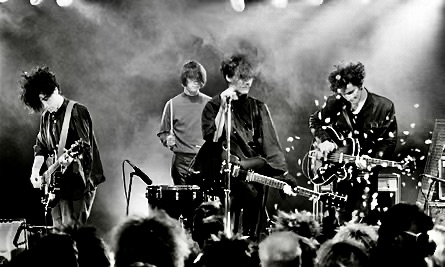
   The Jesus and Mary Chain were from Scotland. Jim and Bill Reid were the band, along with a bassist and a drummer. They were a post-punk rock band known for wistful melodies and guitar screeching feedback. They were one of the bands who pioneered noise rock. They were also known for their riot-inducing live shows. I kept that to myself, making a mental note to sit in the last row,

   “It was the crap coming out of the radio that made us want to be in a band,” Jim Reid said. “Everybody was making electronic pop music.” By 1983, when they formed the band, they had both been on unemployment for five years, writing and recording their songs at home. They called their band Death of Joey at first but changed it to the Jesus and Mary Chain. They got the name one morning from the back of a box of cereal. On the back was an offer to mail in some box tops and get a free Jesus and Mary chain necklace in return. They lost the chain necklace but kept the name.

   I had their first two LP’s, “Psychocandy” from 1985 and “Darklands” from 1987. The first LP was an ear-splitting wall of distortion. Their manager, Alan McGee, said the band’s style was “art as terrorism.” The second LP was less tempest and more mainstream. There were even some acoustic licks. Both LP’s were fine stuff.

   The Reid brothers were influenced by the Stooges, the New York Dolls, and the Velvet Underground, but with a difference. They were like the Stooges meet the Shangri-Las. In the event, they were determined to be new and original. “That’s why we started using noise and feedback,” Bill Reid said. “We wanted to make records that sounded different.” His guitar was deliberately tuned to be out of tune, while the drummer was limited to two drums, not the full kit. He played his two drums standing up like Moe Tucker had done with the Velvet Underground, although he didn’t use mallets like Moe Tucker did. He used drum sticks. The bass guitar was limited to two strings, as well. “That’s the two I use, the thick ones” said Doug Hart, the bassist. “I mean, what’s the point of spending money on another two? Two of them is enough.”

   The show at the Phantasy Theater was on Wednesday, March 15th, the day after my birthday. It was a partly cloudy day, in the high 70s. The weather in winter on the south coast of Lake Erie can be bad, but it is predictably unpredictable.

   Before my wife and I went to the show we went to Maria’s Roman Room. It was next door to the Phantasy Theatre. It was easy to find. We could smell garlic from about a block away and there was a red neon sign in the window in the shape of a fork.

   We had eaten there before with my wife’s family. Her stepfather was Sicilian and her mother was a chef. Maria’s was their favorite Italian restaurant. We ordered a bottle of the house Pinot Grigio and mozzarella fritto to start. The sticks were hand cut, made in house. The sauce and cheese were very good. The wine was more than drinkable. 

   Maria and Tony “Chick” Bastulli opened the restaurant in 1960. Over the course of time they had five children. All of them grew up working at the restaurant. Corporate squabbling is tough, but it is tame compared to working for your parents.

   “I did all the awe inspiring things that go on in the restaurant business, like cleaning toilets, washing dishes, and of course making two hundred pounds of pizza dough every day in a basement without any air conditioning,” said Maria’s son Peter. “You have not lived until you have to portion, roll, and refrigerate that much pizza dough before it raises to the level of your eyeballs when it is humid and ninety five degrees in summer.”

   My wife ordered pizza. “It’s the best thing they make. They mix grape juice in with the tomato sauce, so it’s less acidic and a little sweeter.” It was Maria’s secret recipe. The sauce was San Marzano tomatoes and the toppings were ham and black olives. I ordered a plate of Pesto alla Genovese. The green sauce tasted like pine nuts.

   “Have you ever listened to either of the Mary and Jesus Chain LP’s I have?”

   “No, but I’ve heard bits and pieces passing by. They seem nice enough, a little fuzzy, those guitars of theirs.”

   “Yeah, they’re big into feedback.”

   I kept the volume low on our record player when my wife was at home. I only turned it up when I was alone and our neighbors weren’t at home. The band’s sound was a reverb-heavy wall of sound.

   We lingered over coffee and dessert and missed Nine Inch Nails, who were the opening act. I wasn’t especially interested in them anyway, even though they were from Cleveland.  I knew they were a kind of metal band, dark and intense, but from what I had heard I thought they tried too hard.

   When we got our seats inside the Phantasy Theater we easily got seats in the last row. It wasn’t a big theater and we could see the stage well enough. When the lights went down and the band came on stage they were dressed in black. Neither the stage nor the lighting was dressed up. The stage was more dark than anything else. It was a bare bones look. I was good with that. The music was what mattered, not lasers, smoke, and mirrors.

   The Reid brothers were on guitars and Doug Hart, with his two strings, was on bass. The drummers were a Forat F16 behind the stage, playing pre-recorded drum sounds, and Steve Monti, who banged along with the pre-recorded sounds. Nobody on stage moved around much. The Reid brothers were prone to standing stock still while staring down at their shoes. Except for the singing neither of them said more than two words all show long.

   “Do you remember Calvin Coolidge?” I asked my wife between songs.

   “The president?”

   “The same. He was nicknamed Silent Cal.”

   “Because he didn’t talk much?” 

   “Not much, at all. One time at a state dinner a woman told him she had made a bet with her husband that she could get him to say more than two words.”

   “What did Calvin Coolidge say?”

    “He said, ‘You lose.’”

   Jim Reid did the singing and some of the guitar work. Bill Reid played lead guitar. Their playing was intertwined and crisp. Bill Reid played a Fender Twin Reverb  “It’s the one with the wee footswitch that gives you, what’s it called, vibrato,” he said. “I don’t remember what settings I use, but they’re different live from in the studio. The way we get our feedback is with a fuzz pedal. It’s not just a signal type feedback, it’s a feedback that bends and quavers. It’s a real cheap pedal, a Companion, I think, an old-fashioned one with one of those things that goes like this.” 

   He rocked his hand mimicking a wah-wah pedal.

   Jim Reed played a Vox Phantom. “The one with the built-in fuzz and echo and all those knobs on it.” The Vox Phantom went back to the British Invasion of the1960s. It had a Stratocaster-like sound to it.

   The band was tight as could be, even though they claimed to never rehearse.

   “We never rehearse,” Bill Reid said. “The main reason we don’t is that we’re lazy bastards.” When they went to record ‘Just Like Honey’ they only had a half-written song. ”On the Saturday night Jim and I sat up till three in the morning  trying to finish it, but we were just too tired. So we went to the session on Sunday and recorded it straight off. Doug and Bobby had never heard it before. I  was nodding my head telling Doug where to put his fingers.”

   They kicked off the show at the Phantasy Theater with ‘Rider’ from their 1988 “Barbed Wire Kisses” LP. I hadn’t heard it before. “Going on a motorbike, ride it to the beach, screaming at the sun for being out of reach.”  The guitars were fuzzy, the drums heavy, and the singing hypnotic. It was new to me but it was vintage Jesus and Mary Chain. They followed that with ‘Everything’s Alright When You’re Down’ and ‘The Hardest Walk’ and fourteen more songs. There wasn’t an intermission and no small talk between songs. They finished one song and went on to the next one.

   All of their songs had a dark aesthetic despite the Shangri La vibe of the singing. Their cover of Bo Didley’s song ‘Who Do You Love’ was terrific.” We don’t think about our music being accessible or alternative or any other category,” Bill Reid said. “If you start thinking like that, you’re lost.”

   Their last song was ‘Kill Surf City.’ It had a Beach Boys feel to it while being as unlike the Beach Boys as could possibly be.  “I’m gonna fight surf city, got to get it down, I hate honey and she hates me, but that’s the way it’s supposed to be, I’m gonna kill surf city.” When the song was over Jim Reid, the bassist, and the drummer left the stage. Bill Reid did some more work on his guitar. When he was done he put it down flat on the stage, strings up. He was done but the guitar wasn’t done. It lay on the floor of the stage keeping up a vigorous fuzzy whine for the next two or three minutes until the sound finally died away. When it did the audience, including my wife, applauded long and loud. The Jesus and Mary Chain didn’t come back for an encore, but then again, I don’t think anybody expected them to.

   “What did you think?” I asked my wife when we were walking back to our car.

   “I’m glad I saw them. They’re kind of raw but very cool on stage. I liked the contrast between their sugary melodies and the abrasive guitars. I couldn’t take a steady diet of them but I liked the show.”

   “That’s not just the Roman Room pizza talking, is it?”

   She laughed. “No, I had a good time, and I’m glad you enjoyed your birthday present.” I knew she was being sincere. Birthdays in general were special to her.

   By the weekend the weather changed again. It got cold and colder. I  had to pull my winter coat out of the closet one more time. It was no matter. Spring was only a week away.

Ed Staskus posts monthly on 147 Stanley Street  http://www.147stanleystreet.com, Made in Cleveland http://www.clevelandohiodaybook.com, Down East http://www.redroadpei.com, and Lithuanian Journal http://www.lithuanianjournal.com. To get the site’s monthly feature in your in-box click on “Follow.”

“Bomb City” by Ed Staskus

“A police procedural when the Rust Belt was a mean street.” Sam Winchell, Beyond Books

Available on Amazon: https://www.amazon.com/dp/B0F1LM1WF9/ref=sr_1_1?crid=2MYAQAOZIC2U9&dib=eyJ2IjoiMSJ9.hTm7BGbiQbSe5ZapFwYPPfcwOpTe-Vdg6VLE4aGyTyk.Z0R-VNBWWEcvKcNaO9LdCOUnNIOOXgvYkRS_FXiXuHk&dib_tag=se&keywords=bomb+city+ed+status&qid=1742136726&sprefix=bomb+city+ed+staskus%2Caps%2C84&sr=8-1

Cleveland, Ohio 1975. The John Scalish Crime Family and Danny Greene’s Irish Mob are at war. Car bombs are the weapon of choice. Two police detectives are assigned to find the bomb makers. Revenge is always personal. It gets personal.

A Crying of Lot 49 Publication
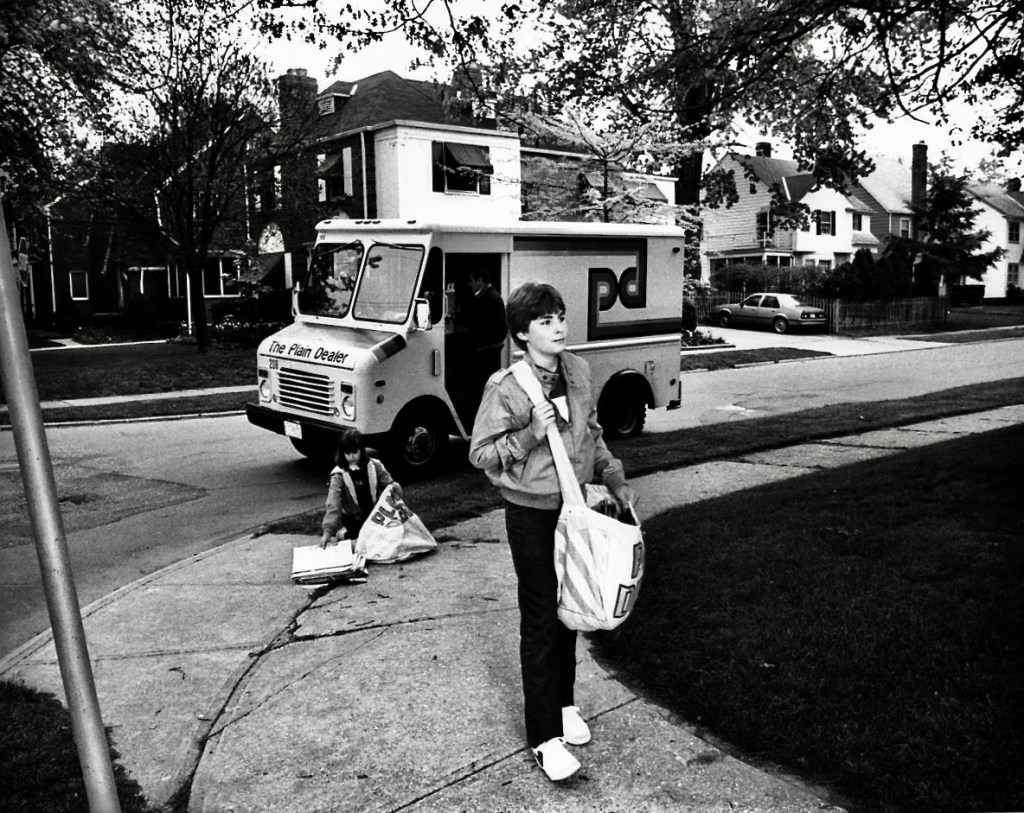
Born and Bred

By Ed Staskus

   Maggie Campbell was a Bay Brat, which means she grew up in Bay Village, Ohio, where the well-off live west of Cleveland, while the not so-well-off live back east in Cleveland. She lived there her whole life growing up. When she was a girl, she picked up every lost bird and squirrel, every lost cat and dog, and every injured anything still alive and brought it home to protect it.

   She was an animal lover from the get-go. She got it partly when she was born, in the blood, partly from her dad, Fred, but not from her mom. Alma never liked any of the animals they ever had in the house basement garage backyard.

   Her parents met at Lycoming College in Williamsport, Pennsylvania, a few hours from Philadelphia. Her grandparents on her dad’s side had moved from Ohio to Philadelphia a few years earlier and enrolled in college there after high school. Alma was working in the town library, which is how they met. He fell head over heels for her, swept her off her feet, or at least he thought so, and they got married.    

   “We’re out of here,” is what he said the minute they got married. They moved right back to Cleveland. Even though they were married for more than forty years it might have been the worst thing either of them ever did. But Fred was stubborn, and Alma could be mean as a junkyard dog.

   Maggie had a mom who didn’t love her dad, and a dad who was frustrated about it, and the way he tried to make his wife happy was to rough up their kids. So, it was a tough childhood. Either you were being totally ignored or you were being roughed up.

   There were four of them. First, there was Elaine, then two years later Maggie, and then Bonnie hard on her heels, and last, three years later, Brad. Alma always said Fred tricked her four times. He zipped it up and from then on kept his thoughts to himself.

   He was from Cleveland, from the west side, where he grew up almost rich for his time. Alma was from Jersey Shore, just a few miles from Williamsport, where she grew up poor. Jersey Shore isn’t anywhere near New Jersey, the Jersey shoreline, and the shoreline it had didn’t live up to the name. There used to be silk mills and cigar factories in Jersey Shore. Later, factories made steel rails for train tracks there.

   During the Depression Maggie’s paternal grandfather was the only teenager in his high school who had a car. He used to follow her grandmother down the street trying to get her to come in his car with him, saying he wanted to help carry her books, so along the way what happened was they got cozy and got married.

   Her grandfather in Jersey Shore had three jobs the minute he stopped being a teenager. He was a coal miner, a school bus driver, and a milkman, but his family still stayed in the dumps. They were too poor to paint but too proud to whitewash. Even though they were always short they built their own house on the Susquehanna River. Maggie didn’t know how they got it built since they were strapped for hard cash most of the time.

   The river was their front yard. Susquehanna means Oyster River and it was on the Susquehanna where the Mormons say they got their holy orders delivered to them by divine beings. It was a big comfortable house. It’s still standing, although it’s not been taken care of, so it’s falling apart fast.

   Her grandmother lived in the house into her 80s, but then sold it and moved into a trailer, in a trailer park in the mountains above Jersey Shore. She started believing people in the other trailers were trying to shoot her with laser guns. She slept wrapped up in foam rubber holding an umbrella over her head for protection. Alma never wanted to talk about her mom because she thought she was crazy, and a Jesus freak to boot.

   Maggie didn’t know her Jersey Shore grandfather. He died young. He had arthritis from tip to toe, and it finished him off. It didn’t help working underground coal mining. She knew her grandmother well enough. Whenever her sisters and she visited her, she taught them how to pull taffy and fudge. They played with her paper dolls. She didn’t have any real dolls. They sat on the front porch in the afternoon and waited for the bean truck.

   “Before dinnertime she sent my older sisters to the side of the road. When the bean truck, or sometimes the vegetable truck, went by on the unpaved road beans bounced off the back of it and they would run and gather them up. My grandmother cooked them for dinner. If no beans fell off the truck, there was no dinner, although she usually had a little something else in the house.” Most of the time it was something cold she had canned months earlier.

   Fred went to Upper Darby High School, starting when he was a sophomore. His parents moved him to Philadelphia from Cleveland, and he never stopped saying he hated it. He was a Cleveland Browns fan and wore their colors, so he got into fights every day with the other kids who were Philadelphia Eagles fans.

   “My dad liked telling us stories when we were growing up, like the one about how one day he and his friends went to the second story of their high school and jumped up and down all at once all together until the second floor fell in on the first floor.” The school’s mascot is a lion, but when Fred was there it was a court jester.

   Fred’s parents were from Akron and lived in Lakewood for a long time. They had to move when the new I-90 highway was being built. It was called the “Main Street of Northern Ohio.” When they were growing up Fred would drive them to a bridge over the highway and show them the exact spot below the bridge where their house used to be.

   It was when they had to sell the house to the state that they moved to Philadelphia. After Fred and Alma came back, they lived in Lakewood in a rented house for a few years. Maggie’s sister Elaine was born there. The rest of them made the scene in Bay Village. The family had moved to a short cul-de-sac, five blocks south of Lake Erie. Her dad designed the house, and it was built just the way he wanted it. He died when she was thirty-three years old. The next thing she did was get married to Steve de Luca.

   The crow’s nest was where Maggie grew close to Brad, who when he was small fry looked just like Bamm Bamm in the Flintstones cartoons. They even called him Bamm Bamm, although after he got his drum set, they called him Boom Boom. Brad brought home a drum set somebody had thrown out on their tree lawn and set it up in the basement. He taught himself how to play. He called himself Ginger Boom after Ginger Baker, his favorite drummer. He had thrown down the gauntlet. After he did no animal nor human would go down to the basement. It was too noisy, to begin with, and damp as his underarms, besides.

   They all had our own rooms, although Brad and Maggie shared a room because the house was a room short. Her sisters had separate bedrooms down the half-story stairway from them, and her parents were at the other end of the hallway. They lived in the crow’s nest until Elaine moved out and got married and Maggie finally got her own room.

   Maggie was Brad’s number one protector when he was growing up, like she was with all the neighborhood’s lost cats and dogs. She and Brad sold bananas, bread and butter sandwiches, and hard-boiled eggs on their front lawn whenever their mom wasn’t looking. They ran to Bracken Way with money in their hands when they heard Uncle Marty’s Ice Cream truck coming.

   But Maggie could never protect Brad from Coco, their poodle, who bit and tore his diapers off when he was little. He could never crawl away fast enough, no matter how fast he scurried on his hands and knees. The dog was quick as the devil and cut him off.

   Sometimes Maggie didn’t try to stop Coco, even if she could have. She had some of her mom’s tough love in her. Other times Brad had done something she didn’t like, and it was just his tough luck that Coco was on the rampage. She could be a brat when she had to be.

Ed Staskus posts monthly on 147 Stanley Street  http://www.147stanleystreet.com, Made in Cleveland http://www.clevelandohiodaybook.com, Down East http://www.redroadpei.com, and Lithuanian Journal http://www.lithuanianjournal.com. To get the site’s monthly feature in your in-box click on “Follow.”

“Cross Walk” by Ed Staskus

“A Cold War thriller that captures the vibe of mid-century NYC.” Sam Winchell, Beyond Books

Available on Amazonhttps://www.amazon.com/dp/B0CRPSFPKP

Late summer, New York City, 1956. The Mob on the make and the streets full of menace. President Eisenhower on his way to Brooklyn for the opening game of the World Series. A killer waits in the wings. Stan Riddman, a private eye working out of Hell’s Kitchen, scares up the shadows looking for a straight answer.

A Crying of Lot 49 Publication

Career Day

By Ed Staskus

   All through my junior and senior years at St. Joseph High School, which was within walking distance of where we lived, my father pressed me to focus on something that would lead to a career. He was big on the idea. He was himself a career man. During those two years I told him I didn’t know what I wanted to focus on. I didn’t tell him I wasn’t enthralled by guidance counselors. I was reading Charles Baudelaire, a mid-19th century French prose-poet, who had  told his parents, “I don’t feel I have a vocation for anything.”

   I wasn’t especially interested in seeing my picture on a baseball card or a wanted poster.  Photographs are full of lies and labels. I wanted to take my own picture and tuck it away somewhere private.

   I read Charles Baudelaire’s book “The Flowers of Evil” the winter of my senior year at St. Joseph’s. It wasn’t assigned reading, not by far. St. Joseph’s was a traditional college preparatory high school, focusing on core academic subjects like math and science, social studies, and English. Religious instruction was a required feature of every day. Our teachers, the Marianists, brothers of the Society of Mary, made sure it was an everyday thing. There was no arguing the divine with them. There were vocational courses, as well, but my father was determined that I go to college. He didn’t want to see me repairing cars or working a tool and die press.

   My favorite class was English. My favorite thing to do was read books. I always did my homework. I read assigned books like “The Great Gatsby” and “Of Mice and Men” and “To Kill a Mockingbird.” I wrote sincere essays and aced tests. I neglected my other classes, reading books that weren’t assigned. I read “Lord of the Flies” and “Nineteen Eighty-Four” and “The Catcher in the Rye.”

   “The Catcher in the Rye” wasn’t banned at St. Joseph’s, but reading it was strongly discouraged. The official explanation was we should stick to our program of studies. The unofficial explanation was the book was depraved, full of vulgar language, sexual references, and anti-establishment themes. The Marianists were concerned about the book’s morality, or lack of it.

   After graduation I opted to attend Cleveland State University. It was close to hand, a twenty minute bus ride away, and affordable. The school had been established as a state university in 1964, taking over the buildings, faculty, and curriculum of Fenn College, a private engineering and business school of several thousand students that had been founded in 1929.

   I spent my freshman year at Cleveland State University the same way I had spent my junior and senior years at St. Joseph’s, attending English classes without fail and neglecting my other classes. At the conclusion of the school year my father sat me down and read me the riot act. It led to a stinging argument, but in the end, since I was still living in my parent’s house and my father was paying part of my tuition, I agreed to participate in a kind of career day scheduled for the next month in the Flats, the city’s industrial valley.

   Most of my father’s friends were Lithuanians and most of them were professionals. They were doctors, lawyers, and engineers. My father was a certified public accountant. One of his friends was a mechanical engineer. He had a son my age who was majoring in engineering at Cleveland State University. One of his classes had a field trip to the Flats planned. They saved a seat for me.

   The day of the field trip I waited on our front steps for my ride. It was June 22, 1969, early on a Sunday morning. The factories in the Flats never closed, but slowed down somewhat on Sundays, which made it less demanding to accommodate college students wandering around. When my ride came down our street I saw it a mile away, it being a chrome yellow color. it was a 1965 Ford Econoline Club Wagon. It didn’t have a front end to speak of but there were plenty of windows. Half of the  family van was windows. There were two bucket seats up front and three rows of bench seating in the back. My father’s friend was driving and there were six engineering students in the van. They had saved the front passenger bucket for me. It was a lonesome seat, but I wasn’t one of the rank and file, anyway, so I didn’t mind.

   We got on I-90 and drove to the Flats. There was hardly any traffic. When we got downtown we drove into the industrial valley. It was a warm and sunny day. It was more warm and less sunny in the valley. The air smelled like sewage and rotten eggs. The A. W. Stadler Rendering Plant near the Harvard Ave. Bridge added the odor of rotting animal matter to the stench.

   The Flats were located along the Cuyahoga River where it snaked through the north side of the city and drained into Lake Erie. It is bottom land there, the floodplain for the river. The earliest settlers in Cleveland settled in the floodplain, but it was swampy and they soon moved to higher ground. The Ohio & Erie Canal spurred lake shipping in the 1830s and rail lines spurred commercial growth in the 1860s. The Flats became the cradle of heavy industry in Cleveland. Business boomed exponentially. After 1870 the Flats teemed with foundries, iron furnaces, rolling mills, oil refineries, and chemical factories. The river was where they dumped their waste. It was their liquid landfill.

   A century later the Flats was dank, begrimed, and very polluted. Nobody went there other than to work in the warehouses and steel mills. There were dive bars like the Harbor Inn and the Flat Iron that served greasy food and cheap booze to working men. The air was bad and the waterway was worse. No one had dared to swim in the Cuyahoga River for decades. A journalist described braving the water as “no person drowns in it, they decay.” All the fish in the reach from Akron to Cleveland had long ago died. Nothing except Japanese movie monsters could survive in the thick sludge that had once been water

   “The river was a scary thing,” Tim Donovan explained. He was a high school graduate that summer, saving up for college, working as a hatch tender unloading ore carriers. Dead rats floated past the dockside cranes, bloated to the size of dogs. “There was a general rule that if you fell in, God forbid, you would immediately go to the hospital.”

    We toured Republic Steel and Jones & Laughlin Steel. They were colossal enterprises. We could have saved time by just going to one of them since they were so much alike. There was an unbroken roar of loud machinery. The fires, furnaces, and molten metal made the factories hot. Dust and black soot covered everything. The gasses in the air didn’t make for garden variety air pollution. Breathing as we walked from one end to the other end of the factories was like breathing something poisonous.

   The reason the engineering students were on the field trip was to help them bridge the gap between classroom theory and real-world application. Manufacturing steel involved many engineering disciplines. Seeing it happen in real time gave them a chance to see complex machinery involved in large-scale processes. They got to see first-hand how their classes in mechanical design and material science applied to the steel industry. It was eye-opening to them, and me, too. I found out there and then that I wasn’t prepared be an engineer.

   It was mid-day when the field trip wrapped up. We piled back into the Ford Econoline Club Wagon, drove in one direction, and then another direction. The through streets in the Flats generally followed the Cuyahoga River, running parallel to its banks. The side streets connected to surrounding neighborhoods like Ohio City and Tremont. Nonetheless, we got lost. We finally found ourselves on the Campbell Rd. Bridge, 

   There was a Plymouth Barracuda at a dead stop ahead of us on the bridge. We stopped and waited. A police car, its lights flashing, pulled up behind us. We stayed sandwiched where we were between them.

   “What’s going on?” one of the engineering students asked.

   “There seems to be a small fire down there somewhere,” our driver parent said, peering over the dashboard. 

   There was a sudden whoosh. Oily clouds of heavy black smoke rose up. We got out of the family van and went to the railing to get a better look. The smoke became a sky-high wall obscuring everything beyond the opposite bank. A fire department tanker truck crept onto the bridge. A fireboat by the name of Anthony J. Celebrezze made its way under the bridge to the wall of smoke. 

   What was going on was the Cuyahoga River was on fire.  It wasn’t the first time it had caught fire. It had happened a dozen times since 1868. This was the thirteenth time it caught fire. A flare tossed from an overpassing train had ignited the  petroleum-covered water. 

   The worst of the earlier fires happened in 1952 when oil and industrial debris on the river’s surface ignited. The fire destroyed three tugboats, three buildings, and some ship repair shops. It damaged a railroad bridge. It caused over one and a half million dollars’ worth of damage. Nobody in Cleveland was shocked by the river catching fire. It didn’t flow as much as ooze. Everybody was resigned to the city being one of the most polluted cities in the United States. “It’s the cost of doing business,” city fathers and business moguls said.

   The fireboat crept close to the blaze, began drawing water directly from the river, and used its deck guns to try to smother the flames. It was like pouring gasoline on gasoline. The flames leapt higher. Three fire battalions drew water from hydrants and discharged it onto the fire from the river bank. They were far more effective. 

   We watched from the deck of the bridge, standing in a cluster behind a railing. The summer breeze was blowing our way, but from behind us, so we weren’t smothered by the smoke. It was still noxious. It was sharp and acrid, like burnt toast that had been buttered in sulfur compounds. We got back into the Ford Econoline Club Wagon and rolled up the windows. It didn’t help all that much.

   The inferno lasted thirty minutes. Once it was out a policeman waved us forward and we drove away. We drove along the river. As we went the water became orange from the pickling acid used by the steel mills. We got lost again and ended up on the Jennings Rd. Bridge, which connected Abbey Ave. to W. 25th St. Our driving parent knew W. 25th St. well because he shopped for fruits and vegetables at the West Side Market. He knew how to get home from there. Crossing the bridge I looked down. There was a slaughterhouse below us. I could see blood and animal parts streaming out of  outfalls and into the Cuyahoga River.

   “That was amazing,” one of the engineering students said.

   “Who ever heard of water catching fire?” another one said. “Somebody should do something about it.”

   “And put us out of a job?” a third one said.

   Once I got home I threw my clothes down the clothes chute and took a shower to wash away the smell. I put on a clean pair of jeans and a t-shirt. I combed my hair. My father was taking a Sunday late afternoon nap in the backyard. He woke up when I threw myself down in a lawn chair.

   “How was your career day?” he asked.

   “We toured a couple of steel mills and saw the Cuyahoga River catch fire,” I said.

   He seemed unfazed by the news. He had lived through World War Two as a teenager on his own. He had seen his share of bombs and fires. He fled Lithuania in 1944 and spent five years in and out of refugee camps, working black markets until he found steady work with a relief organization near Nuremberg. When he finally made it to North America he ended up in Canada, where he worked digging up nickel and copper in the Sudbury ore basin for eight years. We had been in the United States the past ten years.

   “Have you thought about getting into engineering?”  he asked.

   “I don’t think I have a talent for engineering, although I understand engineers make the world go round, at least our modern world,” I said. “But you’ve got to watch out for them. They start by making sewing machines and end with crazy hellfire.”

Ed Staskus posts monthly on 147 Stanley Street  http://www.147stanleystreet.com, Made in Cleveland http://www.clevelandohiodaybook.com, Down East http://www.redroadpei.com, and Lithuanian Journal http://www.lithuanianjournal.com. To get the site’s monthly feature in your in-box click on “Follow.”

“Cross Walk” by Ed Staskus

“A Cold War thriller that captures the vibe of mid-century NYC.” Sam Winchell, Beyond Books

Available on Amazonhttps://www.amazon.com/dp/B0CRPSFPKP

Late summer, New York City, 1956. The Mob on the make and the streets full of menace. President Eisenhower on his way to Brooklyn for the opening game of the World Series. A killer waits in the wings. Stan Riddman, a private eye working out of Hell’s Kitchen, scares up the shadows looking for a straight answer.

A Crying of Lot 49 Publication

Maybe Later Baby

By Ed Staskus

   “The end is always near,” Greg Smith said, sinking back into the firm as Jell-O bench seat. Flying bugs recently alive littered our windshield. One of them left a big yellow blob behind him the instant he hit the glass. It was a fine summer day. Jimi Hendrix’s song “Stone Free” was playing on the car radio.

   Greg’s driving hand was easy on the steering wheel. His other hand was wiggling in the outside air. He was driving well enough to keep us on the road, but his eyes were like pinwheels. The magic mushroom he had popped into his mouth a half hour earlier was working its magic. I couldn’t tell him to slow down because he was going slower than a horse-drawn buggy. I reached for the seatbelt, anyway. When I did I found out the top drop Chevrolet Impala SS didn’t have seatbelts. 

   I had taken a Greyhound bus from Cleveland down the hillbilly highway and hooked up with my friend Greg in Athens. It wasn’t Greece. It was southern Ohio in the northern Appalachians. I called him Jonesy for fun, even though he didn’t think it was funny. “I don’t like glibness,” he complained like an offended grade school teacher.

   SS stood for Super Sport. There was nothing super about the car anymore, which came off the assembly line in 1961, except for the engine. It was still super when it had to be. The rocker panels were rusting out, the front of the hood was gashed, and the tires were bald as baloney skins. The car was Roman Red on the outside while the interior was scuffed black leather. I reached for the grab bar attached to the padded dashboard.

   “Do you know this car was built by union labor right here in the United States?” Greg asked, apropos of the Japanese and German cars we had been seeing here and there.

   “No, I didn’t know that,” I said.

   “It’s got a V-8 engine. One of my uncles might have built it.”

   “Is that right? By the way, what do you mean the end is always near?”

   “Like they say,” he said, “the future’s uncertain and the end is always near.”

   At the moment the Chevy Impala SS was running on one of the V-8’s and none of Greg’s car-making relatives were in sight. What was in sight was the future. There was a flashing red light behind us. It was the kind of light that always looks makes you feel blue. The Meigs County policeman didn’t have any trouble getting on our tail. He had some trouble pulling us over, however, even though the road was straight and narrow as a preacher. The manual steering took several turns of the steering wheel to go from lock to lock. In the state he was in it took Greg a few minutes and a mile-or-so to master the mechanics of pulling off onto the shoulder.

   The policeman didn’t bother asking for his driver’s license. “Step out of the car, son, and let me smell your breath,” he said.

    Greg didn’t like being called son. He scowled patting himself down for his wallet. He huffed and puffed in the policeman’s direction.

   “You smell all right,” the policeman said. “It don’t seem like you been drinking or smoking stinkweed.” The Chevy had a vacuum powered ash tray that sucked ashes to a container in the trunk. “Why are you going so slow when you got that power horse under the hood?”

   “I know this road doesn’t go anywhere but I’m looking for the end of it,” Greg said. “I don’t want to miss it.” The policeman wasn’t fazed by the nonsense. “It don’t go nowhere but it always brings you back again,” he said. Greg was flummoxed for a minute. The policeman looked the Chevy Impala SS up and down. “This is the car the Beach Boys wrote a song about, son.”

   The song was a big hit in its day. “Nobody can catch her, nothing can touch my 409, giddy up, giddy up, my four speed dual quad 409,” Brian Wilson sang in his big falsetto while the rest of the boys layered the harmonies. The fired-up 409 was fitted with a 4-barrel carburetor and a solid lifter camshaft. The pistons were made from forged aluminum. The heads and engine block were made from cast-iron.

   “Those were the days, boys. Make no mistake, that Impala is a real fine car. Try to put some giddy up into your driving. And keep it on the yellow line.” He got back into his black and white Dodge Coronet patrol car and u-turned, going the way he had come. He drove away in good order.

   I was along for the ride on Greg’s ride that day. I had spent the spring, summer, and fall of the previous year in a nearby town called Carpenter living with Virginia Sustarsic in an abandoned general store. She wasn’t my girlfriend, but we got along, even though she was a dyed in the wool hippie and I wasn’t. She rolled her homegrown delicately and deliberately. We kept two goats, gleaned plenty of food, and brewed our own beer. I drank most of the beer. A stray kitten made us his crash pad. The town wasn’t a town so much as a whistle stop. The railroad had long since abandoned the place, though. There were maybe a dozen residents, including us. There were dust balls in all the corners of the crossroad. At night every star in the universe twinkled in the nighttime sky.

   Carpenter was in Meigs County. It was named after Return Meigs, Jr., who was the fourth governor of Ohio. The county is on the Appalachian Plateau in the southeast corner of the state. The Shade River and Leading Creek drain into the Ohio River. Leading Creek ran right through Carpenter. In the 1970s the county’s population was less than 20,000. As far as I could tell there were no Asians, Native Americans, or African Americans anywhere. There were trailer trash on every other hillside.

   Greg was a friend of John McGraw’s, who was Virginia’s on-again off-again boyfriend back home. They both lived on the bohemian near east side of downtown, near Cleveland State University. John was a part-time writer and drank whiskey straight from the bottle. Greg came from a more polite class and drank from a glass. He and John had planned on sight-seeing Meigs County, but at the last minute John bowed out. Greg went anyway, cruising all the way from one end of the state to the other in his big Chevy SS.

   Virginia dressed like it was still the Summer of Love while John more like the Age of Beatniks had never ended. Greg wasn’t any better off than them, living half on and half off the American Dream, but he dressed like a preppy. He read the classics. He was studying Latin so he could read Ovid and Seneca in the original. Nobody ever suspected he kept magic mushrooms in his wallet.

   Something came over him the minute the policeman was out of sight. He fired up the Chevy SS. He spun gravel getting back on the asphalt. The next minute we were doing eighty in a forty. The Doobie Brothers came on the radio belting out “Rockin’ Down the Highway.” I took a peek in the rearview. There was nobody behind us. I looked through the windshield at what was in front of us. All the danger was in front of us.

   “We should maybe slow down,” I calmly suggested as loud as I could. 

   The Chevy SS was a four on the floor. She wasn’t good on gas and burned some oil. Greg picked up speed. We were doing a hundred in no time. There were no more gears to shift up into. His eyes weren’t pinwheels anymore. They glinted like icepicks. He leaned over the steering wheel. The car wasn’t sloppy, nor was Greg’s handling of it sloppy, but we were headed for trouble. We were blasting down a back road. It was cracked and rough and more gravel than not. Meigs County didn’t have the tax base to keep its roads in any kind of Daytona 500 shape.

    “I’m not asking for a miracle, Lord, just a little bit of luck will do,” I whispered.

   “Every minute counts,” Greg shouted above the wind noise.

   “Keep your eyes on the road,” I shouted back. “You never can tell what’s around the corner.”

   He waved at the outdoors with his left arm. Southeastern Ohio on a sunny day in the summer is beautiful. When we roared around a blind curve there wasn’t anything there, to my relief, until there suddenly was. It was a roadhouse with some cars and pick-ups in the front, which was a small parking lot full of potholes. The sign said Frank’s Roadhouse. There were worn-out antlers nailed to the outside wall above the front windows. We pulled in, skidding in three or four different directions. A long-tailed weasel ran the other way. There were half a dozen bungalows in the back.

   Inside there was a bar, a kitchen, some tables, a dance floor, a riser protected by chicken wire, and a pool table. A man and a woman were having mashed potatoes with pulled pork at one of the tables. A bottle of BBQ sauce stood at the ready between their plates. There was some action going on at the pool table but none on the dance floor. Before I knew it Greg had found unexpected action at the bar, where a cute brunette was sitting, a lowball glass half full of red wine at her elbow and a paperback book in front of her.

   There was an oblong mirror on the wall behind the bar. It was too smudged to see into. There was a hand-written warning on a greasy piece of cardboard below it. It said, “Don’t eat the big white mint!” I didn’t ask what it meant. I didn’t want to know. What’s a simple man to do? I looked around for something to do. I put a dollar on the lip of the pool table marking my turn in line. There were two men playing nine ball. It was the middle of the day on a Thursday. Neither of them was on union soil. Neither of them was being especially efficient. There were seven or eight bottles of Burger Beer on a small round table behind them.

   One of the men looked me up and down. “I’m a pretty big man around these parts,” he said, flashing a Mighty Mouse grin. He had sharp yellow teeth. He was shorter than me, but I knew what he meant. “I thought you’d be bigger,” I said. He didn’t laugh. He had the sense of humor of a circus strongman. The other man laughed his head off. My man broke the rack. He was no Minnesota Fats. When my turn came I ran the rack and took my dollar back. I collected a dollar from the local yokel. He tried his luck two more times and paid me two more dollars. He didn’t know, and I didn’t tell him, that I spent more time than I wanted to admit, even to myself, shooting snooker at Joe Tuma’s Pool Hall back in Cleveland.

   I bought them both beers, they clapped me on the back, the circus strongman harder than he needed to, and I went back to the bar, joining my friend and his new friend. He wasn’t paying any attention to her book. He gave me a wink, suggesting the main drag from the eye to the heart doesn’t go through the intellect, or words to that effect.

   Her name was Annie. She was a third-year student at Ohio University in Athens, 20-some miles to the northwest of where we were. She was majoring in English. She wasn’t enrolled in classes that summer but had stayed in Athens instead of going home to Cincinnati. She spent her spare time exploring. She had found Frank’s Roadhouse by accident, liked the looks of it, and stopped in for the afternoon.

   “What do you like about this dump?” I asked.

   “It looks real,” she said.

   I was willing to grant her that. When the bartender approached I ordered a Vernors Ginger Soda. Between the earlier psychedelics and shots of roadhouse whiskey stirring up my tour guide, I knew one of us had to stay on the wagon. 

   “Who is Frank,” I asked the bartender. 

   “There ain’t no Frank, at least not no more,” he said. 

   “What happened to him?” 

   “Nobody knows,” he said.

    The middle of nowhere is as good a place to disappear as any.

   I reminded Greg we had promised our farmhouse friends where we were staying we would stop at the grocery store in Pomeroy and pick up milk, cheese, and toilet paper. Toilet paper was like gold where they lived. Greg’s eyes had gone soft and fuzzy in the meantime. He needed reminding. I had to remind him twice. He finally slid off the bar stool glowing like a full moon in a clear sky.

   Annie followed us out to the Chevy SS. “I like your car,” she said. Greg asked her if she wanted a ride back to college town. She pointed to a VW Beetle. “Fontasse postem infantem,” she said, jotting her name and phone number down on a  scrap of paper. She pressed it into his open hand. She rose up on her tiptoes and gave him a kiss on the cheek. I never saw a man go head over heels as fast as he did that day.

   Once we were in the car, humming along Route 143 on our way to Pomeroy, I asked him what Annie had said.

   “Maybe later baby,” he said. “That’s what she said.”

   The Milky Way was in his eyes. “Keep your eyes on the road and your hands on the wheel,” I reminded him for the last time. I didn’t have to remind him to keep his hands off the magic mushrooms in his wallet. He was riding high on a different kind of magic. Love may not make the world go round, although it can make the ride around the world worthwhile.

Photograph by Elaine Mayes.

Ed Staskus posts monthly on 147 Stanley Street  http://www.147stanleystreet.com, Made in Cleveland http://www.clevelandohiodaybook.com, Down East http://www.redroadpei.com, and Lithuanian Journal http://www.lithuanianjournal.com. To get the site’s monthly feature in your in-box click on “Follow.”

“Bomb City” by Ed Staskus

“A police procedural when the Rust Belt was a mean street.” Sam Winchell, Beyond Books

Available on Amazon: https://www.amazon.com/dp/B0F1LM1WF9/ref=sr_1_1?crid=2MYAQAOZIC2U9&dib=eyJ2IjoiMSJ9.hTm7BGbiQbSe5ZapFwYPPfcwOpTe-Vdg6VLE4aGyTyk.Z0R-VNBWWEcvKcNaO9LdCOUnNIOOXgvYkRS_FXiXuHk&dib_tag=se&keywords=bomb+city+ed+status&qid=1742136726&sprefix=bomb+city+ed+staskus%2Caps%2C84&sr=8-1

Cleveland, Ohio 1975. The John Scalish Crime Family and Danny Greene’s Irish Mob are at war. Car bombs are the weapon of choice. Two police detectives are assigned to find the bomb makers. Revenge is always personal. It gets personal.

A Crying of Lot 49 Publication
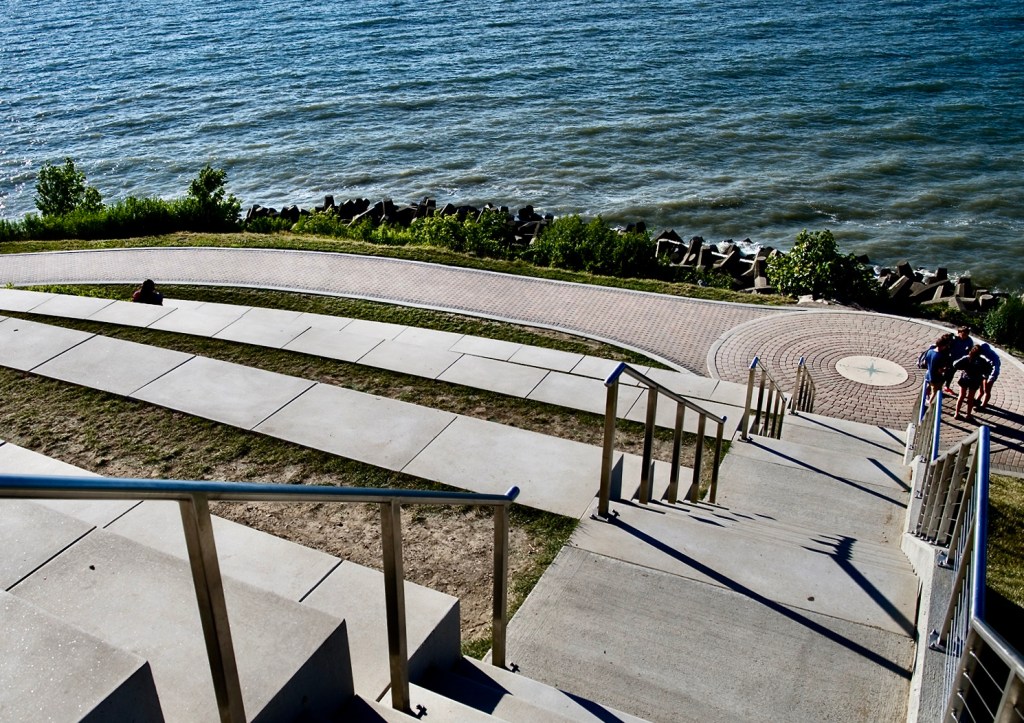
Maggie’s New Digs

By Ed Staskus

   Maggie Campbell grew up in Bay Village, ran around like a squirrel on her dead-end street and through nearby back yards, went to grade school and high school in Bay Village, got her first job at the Bay Pool, and didn’t know West Park existed until she moved away from home and got married. West Park is eight miles from Bay Village.

   At first there wasn’t anybody anywhere in West Park. The wilderness didn’t have a name. There were some Indians who came and went. At the turn of the 19th century, it was lots of land, a handful of homes, and a few wagon paths. The paths were rutted and often impassable. The land was named for John West, an early pioneer.

   John West and his wife were from Ireland. They weren’t the founders of the new community, but they had a 600-acre farm with a 25-acre front yard and an artificial lake with rowboats on it. The land around the lake was called West Park. Over the years everybody came to call the entire locality the same thing.

   The terrain is bordered to the north by Lakewood, which is on the south shore of Lake Erie. It is west of Brooklyn and east of Fairview Park. Everything else is south of it. It is twelve and a half square miles formed as Rockport Hamlet in 1892, incorporated as Rockport Village in 1902, and finally renamed the Village of West Park in 1913. In the 1920s it was its own city with its own government. It became the last independent city to be annexed by Cleveland in 1923.

   George Reitz, who was the mayor at the time, said, “I’m no longer going to be mayor of West Park. I’m going to be a resident of Cleveland.” Cleveland was the fifth largest city in the country in thew 1920s.

   After Maggie and Steve de Luca got married, they moved in with Steve’s brother Fat Freddie in Little Italy, but it got off to a bad start and went downhill. Fat Freddie had a heart of gold but a Red Skelton sense of humor that got on Maggie’s nerves. It wasn’t long before she wanted to do him in. She might have but for Fat Freddie being friends with the pastor of Holy Rosary Church and the local mobsters. Besides, he was her brother-in-law and murdering him would have looked bad at the next family picnic.

   The first road in West Park was a wooden plank toll road. Horse drawn streetcars went back and forth. All the other roads were unimproved, a mess of mud every spring and buried by snow every winter. Oswald Kamm opened a grocery store at the intersection of what is now Lorain Ave. and Rocky River Dr. Most people called West Park the “lost city.” Getting to the grocery store was an ordeal. Whenever a thunderstorm broke out everybody stabled their horses at the store and stayed the night.

   There are four West Park neighborhoods, which are Kamm’s Corners, Riverside, Bellaire-Puritas, and Jefferson. Kamm’s Corners is Irish Catholic. There are taverns right and left of the corner. Riverside was largely unsettled until Cleveland Hopkins Airport was built there in 1925, when it became airplane country. Bellaire-Puritas is manufacturing intensive, largely due to the presence of many industrial parks. It is adjacent to highways and has access to the Norfolk-Southern and CSX rail lines. Jefferson was thinly populated for a long time but following annexation residential development moved forward. Grayton Rd. is north of the airport and more-or-less follows the lay of the Rocky River. Alan Apelt grew up on Grayton Rd. when it was a dirt road and everything around it was farmland. 

   “If a car was driving down our road we knew they were lost,” Alan said. His grandfather August farmed vegetables there in the 1920s. After he passed away one of his four children took over the family farm. Rudy Apelt built a greenhouse while still farming outdoors. In the 1950s Cleveland was known as the “Greenhouse Capital of the Americas.” Through the 1960s there were more than fifty of them around town growing cucumbers, tomatoes, and leaf lettuce. It was where the Central and West Side Markets got their produce.

   After Rudy met his maker Alan and his brother Ron took the helm. They specialized in English seedless cucumbers. When his brother passed away Alan turned the greenhouses into a hydroponic operation. He gave it up in 2016 and dismantled them. In their place he planted 400 Chinese Chestnut trees.

   “Chestnut trees are the easiest things to manage on a day-to-day basis by yourself,” he said.

Three years later he had a harvest to meet the rising trend in cooking of using chestnuts. They have a sweet flavor and potato-like consistency. When they fall from their branches, they are enclosed in spiney burrs. Picking them up means wearing gloves. Picking them up barehanded means getting stabbed by a spiny burr.

   John West’s red brick house still stood on W. 138th Street when Maggie and her husband bought a house on West Ave. in the Jefferson neighborhood. John Marshall School of Engineering was at one end of the street and Cleveland Police First District headquarters was at the other end. Steve’s father had been a lawyer for the Cleveland Mob. Steve was ambivalent about law and order being close to hand.

   There weren’t any farms left. All the greenhouses were gone. Three interstates were nearby. There were three rail transit stops within hiking biking distance. Almost everybody was Irish, Latino, or Black. Maggie was Scottish, which was close enough. Steve was Italian, which wasn’t close, at all. But he had been born and bred in Little Italy, where the Dago’s were surrounded by Wasps and Jews. He knew how to mix it up with folks who were nothing like him.

   If things got sketchy, being from Little Italy, he knew how to take care of himself. If they got dangerous, he knew who to call. If Fat Freddie proved to be not enough back-up, he knew his brother knew enough dangerous men to set things right. In the event, their home was their castle. Just in case, they always had two or three dogs in the house. They weren’t Chihuahuas or Miniature Poodles, either.

   “A good dog makes good neighbors,” Maggie always said.

Ed Staskus posts monthly on 147 Stanley Street  http://www.147stanleystreet.com, Made in Cleveland http://www.clevelandohiodaybook.com, Down East http://www.redroadpei.com, and Lithuanian Journal http://www.lithuanianjournal.com. To get the site’s monthly feature in your in-box click on “Follow.”

“Bomb City” by Ed Staskus

“A police procedural when the Rust Belt was a mean street.” Sam Winchell, Beyond Books

Available on Amazon: https://www.amazon.com/dp/B0F1LM1WF9/ref=sr_1_1?crid=2MYAQAOZIC2U9&dib=eyJ2IjoiMSJ9.hTm7BGbiQbSe5ZapFwYPPfcwOpTe-Vdg6VLE4aGyTyk.Z0R-VNBWWEcvKcNaO9LdCOUnNIOOXgvYkRS_FXiXuHk&dib_tag=se&keywords=bomb+city+ed+status&qid=1742136726&sprefix=bomb+city+ed+staskus%2Caps%2C84&sr=8-1

Cleveland, Ohio 1975. The John Scalish Crime Family and Danny Greene’s Irish Mob are at war. Car bombs are the weapon of choice. Two police detectives are assigned to find the bomb makers. Revenge is always personal. It gets personal.

A Crying of Lot 49 Publication