Up the Country

By Ed Staskus

   The morning Arunas Petkus and I left for California 2500-some miles from Cleveland, Ohio, the Summer of Love was a few years over. It had been a phenomenon in 1967 when as many as 100,000 people, mostly young, mostly hippies, converged on the neighborhood of Haight-Ashbury in San Francisco, hanging around, listening to music, dropping out, chasing infinity, and getting as much free love as they could.

   We were both in high school at the time and stumbled into the 1970s having missed the hoopla. The Mamas & the Papas released “San Francisco (Be Sure to Wear Flowers in Your Hair)” and it got to number four on the Billboard Hot 100. It stayed there for a month, a golden oldie in the making, while the parade across Golden Gate Bridge went on and on. The vinyl single sold more than 7 million copies worldwide. 

   Arunas found a bucket of bolts, a 1958 VW Karmann Ghia, somehow got it running, brush painted it parakeet green, and was determined to hit the open road to see what all the excitement had been about. He also wanted to visit the spot at Twin Peaks where Chocolate George’s ashes had been scattered.

   George Hendricks was a Hells Angel who was hit by a car while swerving around a stray cat on a quiet afternoon in as the Summer of Love was winding down, dying later that night from his injuries. He was known as Chocolate George because he was rarely seen without a quart of his favorite beverage, which was chocolate milk, usually spiked with whiskey. He was a favorite among the hippies because he was funny and friendly. His goatee was almost as long as his long hair, he wore a pot-shaped helmet when riding his Harley, and his denim vest was dotted with an assortment of  tinny pin badges.

   One of the badges said, “Go Easy on Kesey.” The writer Ken Kesey had been the de facto head of the Merry Pranksters. Much of the hippie aesthetic can be traced back to them and their Magic Bus. Arunas was an art student and liked the way the bus was decked out.

   The Karmann Ghia was a two-door four-speed manual with an air-cooled 36 horsepower engine in the back. The trunk was in the front. Unlike most cars it had curved glass all the way around and frameless one-piece door glass. My friend’s rust bucket barely ran, unlike most of the sporty Karmann Ghia’s on the road, but it ran. There was still some magic left in it.

   When Arunas asked me if I wanted to join him, I signed up on the spot. The two of us had gone to the same Catholic boy’s high school and were both at Cleveland State University. We threw our gear and backpacks in the front trunk of the car, sandwiches, apples, and pears in what passed for a rear seat, a bag of weed in the glove compartment, and waved goodbye to our friends at the Plaza Apartments.

   The Plaza was on Prospect Ave., on the near east side, near Cleveland State University. It was an old but built to last four-story apartment building. Secretaries, clerks, college students, bohemians, bikers, retirees, and musicians lived there. Arunas was still living with his parents in North Collinwood, while I was a part-time undergraduate and part-time manual laborer trying to keep my head above water in a one-bedroom on the second floor.

   We got almost as far as the Indiana border before an Ohio State Highway Patrolman stopped us. “Where do you think you’re going in that thing?” he asked after Arunas showed him his driver’s license. He wrinkled his nose looking at the car’s no-primer paint job.

   “California.”

   “Do you know you’re burning oil, lots of it?”

   We knew that full well. That was why we had a case-and-a half of Valvoline with us. We had worked out the loss of motor oil at about a quart every two hundred miles and thought our stockpile would get us out west before the engine seized up.

   “All right, either get this thing off the road or go back to Cleveland,” the patrolman said, waving us away with his ticket book.

   On the way back home, we decided to go to Kelly’s Island, since we had sleeping bags and could more-or-less camp out, staying under a picnic table in case of rain. We took the Challenger ferry out of Sandusky, leaving the Kharmann Ghia behind. We landed at East Harbor State Park and stayed here until the end of the week. There were a campground, beach, and trails at the park, which were all we needed. We bought homemade granola and a couple gallons of spring water at a small store and settled down on a patch of sunshine. We met some high-class girls from Case Western Reserve University and played volleyball with them.

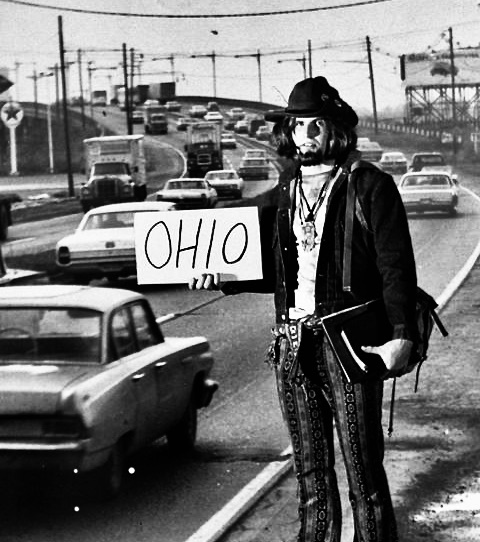
   When we got back to Cleveland everybody marveled at our quick turnaround from the west coast and attractive tans. “We didn’t actually make it to California,” we had to explain to one-and-all.  “We didn’t even make it out of Ohio.” We had to endure many snarky comments. When Virginia Sustarsic, one of my neighbors at the Plaza, said she was going to San Francisco and invited me to try again, joining her, I jumped at the chance. My feet got tangled up coming down when she said she was hitchhiking there.

   “You’re going to thumb rides across the country?”

   “Yes,” she said, in her detached but friendly way. She was a writer, photographer, and cottage craftsman. Virginia was a raconteur when she wanted to be one. She made a living dabbling in what interested her. She lived alone. Her boyfriend was an unrepentant beatnik.

   “How about getting back?”

   She explained she had arranged a ride as far as Colorado Springs. She planned on going knockabout the rest of the way, stay a week-or-so with friends on the bay, and hitchhike back. When I looked it up on a map, she was planning on hitchhiking four thousand-some miles. I didn’t know anything about bumming my way on the highway. When I asked, she confessed to having never tried it.

   Our ride to Colorado Springs was a guy from Parma and his girlfriend in a nearly new T2 Microbus. Although it was unremarkable on the outside, the inside was vintage hippie music festival camper. It was comfortable and stocked. We stopped at a lake in Illinois and had lunch and went for a walk. I veered off the path and got lost, but spotted Virginia and our ride, and cut across a field to rejoin them. I tripped while running, fell flat on my face, but was unhurt.

   We got to Colorado Springs in two days. The next day I found out what I had fallen into in Illinois was poison ivy. An itchy rash was all over my calves, forearms, and face. I tried Calamine lotion, but all I accomplished was giving myself a pink badge that said, ‘Look at me, I’m suffering.’” Virginia’s friends where we were staying let me use their motorcycle to go to a clinic. The doctor prescribed prednisone, a steroid, and by the time we got to San Francisco I was cured.

   In the meantime, leaving the clinic, since it was a warm and sunny summer day, I went for a ride on the bike, which was a 1969 Triumph Tiger. I rode to the Pikes Peak Highway, 15 miles west, and about half the way up, until the bike started to dog it. What I didn’t know was at higher altitudes there wasn’t enough air for the carburetor. By that time, anyway, I had gotten cold in my shorts and t-shirt. It felt like the temperature had dropped thirty degrees. I turned around and rode down. There was a lot of grit and gravel on the road. I rode carefully. The last thing I wanted to happen was to dump the bike. I found out later that Colorado snowplows spread sand, not salt, in the winter. 

   All the way back to town, as dusk approached, I saw jumbo elk deer and walloping antelope. Even the racoons were enormous. I stayed slow and watchful, not wanting to bang into one of the beasts. We stayed a few days and hit the open road when my rash was better. There was no sense in scaring anybody off with my pink goo face. We had a cardboard sign saying “SF” and finally hit the jackpot when a tractor trailer going to Oakland picked us up.

   The Rocky Mountains, left behind when the glaciers went back to where they came from, were zero cool to see, although I wouldn’t want to be a snowplow driver assigned to them. The weather was fair but cold with a high easterly wind the day we crossed them. Every switchback opened onto a panorama.

   Virginia’s friends in San Francisco lived in Dogpatch, which was east of the Mission District and adjacent to the bay. It was a working class partly industrial partly residential neighborhood. They lived in a late nineteenth century house they were restoring. They went to work every day while we went exploring.

   We stayed away from downtown where there was an overflow of strip clubs, peep shows, and sex shops. Skyscrapers were going up, there were restaurants, offices, and department stores, but it still looked like the smut capital of the United States. Elsewhere, rock-n-roll, jazz fusion, and bongo drums were in the air, especially the Castro District and Haight-Ashbury. Dive bars seemed to be everywhere.

   Virginia went to Golden Gate Park and took pictures of winos, later entering one of them in a show at Cleveland State University. She had a high-tech 35mm Canon. When her photograph was rejected with the comment that it was blurry, she said, “That was the point.” I went to Twin Peaks and took a picture of the spot where Chocolate George’s ashes had been strewn. When Arunas saw it later on, he said there wasn’t much to see. I showed him some pictures from the summit facing northeast towards downtown and east towards the bay. “Those are nice,” he said, being polite. My camera was a Kodak Instamatic.

   Twin Peaks is two peaks known as “Eureka” and “Noe.” They are both about a thousand feet high. They are a barrier to the summer coastal fog pushed in from the ocean. The west-facing slopes get fog and strong winds while the east-facing slopes get more sun and warmth. The ground is thin and sandy. George was somewhere around there..

   We stayed for more than a week, riding Muni city  busses for 25 cents a ride. No matter where we went there seemed to be an anti-Vietnam War protest going on. We rode carousel horses at Playland-at-the-Beach and went to Monkey Island at the zoo. We ducked into Kerry’s Lounge and Restaurant to chow down on French fries. We stayed away from all the Doggie Diners. We listened to buskers singing for tips at Pier 45 on Fisherman’s Wharf. Jewelry makers were all over the place. Virginia was on Cloud 9, being an artisan herself.

   When we saw “The Human Jukebox” we went right over. Grimes Proznikoff kept himself out of sight in a cardboard refrigerator box until somebody gave him a donation and requested a song. Then he would pop out of the front flap and play the song on a trumpet. I asked him to play “Stone Free,” but he played “Ain’t Misbehavin’” instead.

   “I don’t know nothing about Jimi Hendrix,” he said.

   Everywhere we looked almost everybody was wearing groovy clothes made of bright polyester, which looked to be the material of choice. Tie-dye was on the way to the retirement home. Virginia dressed in classic hippie style while I dressed in classic Cleveland-style, jeans, t-shirt, and sneakers. I didn’t feel out of place in San Francisco, but I didn’t feel like I belonged, either. There were no steel mills and too many causes to worry about.

   When we left, we started at the Bay Bridge and got a ride right away. By the time we got to the other end of the bridge the man at the wheel had already come on to Virginia. We asked him to drop us off. When he stopped on the shoulder and I got out of the back seat, he pushed Virginia out the passenger door, grabbed her shoulder bag, and sped away. She didn’t keep her traveling money in it, but what did he know? We saw the bag go sailing out the car window before he disappeared from sight and retrieved it. We smelled a brewery on the breath of the next driver and turned him down. After that a pock-marked face stopped and  asked us if we were born again. When I said I had been raised a Catholic, he cursed and drove off.

   We liked talking to the people who gave us rides but avoided talking about race, religion, and politics. I carried a pocket jackknife but wasn’t sure what I would do with it if the occasion ever arose. We never hitchhiked once it got dark, because that was when lowlifes and imbeciles were most likely to come out.

   We went back the way we had come, to Nevada, through Utah, Nebraska, and Iowa to Chicago, and returning in the middle of the day to the south shore of Lake Erie. We thumbed rides at entrances to highways, at toll gates, and especially at off-the-ramp gas stations whenever we could. Gas stations were good for approaching people and asking them face-to-face if they were going our way. 

   One of the best things about hitchhiking is you can take any exit that you happen to feel is the right one. One of the worst things is running into somebody who says, “I can tell you’re not from around these parts.” We avoided big cities because getting out of them was time-consuming. We avoided small towns because we didn’t want to be the new counterculture archenemies in town. We got lucky when a shabby gentleman in a big orange Dodge with a cooler full of food and drink in the back seat picked us up outside of Omaha on his way to Kalamazoo. He listened to a border blaster on the radio all the way. We ate the sandwiches he offered us.

   Our last ride was in an unmarked Wood’s County sheriff’s car. He picked us up near Perrysburg on his way to Cleveland’s Central Police Station to pick up a criminal. It was the same station where Jane “Hanoi Jane” Fonda was put behind bars a couple of years earlier. She was famous and not a real criminal and so didn’t stay long.

   “They said they were getting orders from the White House, that would be the Nixon White House,” she said about the arrest. “I think they hoped the ‘scandal’ would cause my college speeches to be canceled and ruin my respectability. I was handcuffed and put in jail.” The day  she was arrested at Cleveland Hopkins Airport, she pushed Ed Matuszak, a special agent for the U. S. Customs Bureau, and kicked Cleveland Policeman Pieper in a sensitive place.

   The city policeman later sued Jane Fonda for $100,000 for the kick that made him “weak and sore.” The federal policeman shrugged off the shove. The charges and suit were eventually dropped.

   The Wood County sheriff was a friendly middle-aged man who warned us about the dangers of hitchhiking and drove us to near our home. When we got out of the car, he gave us ten dollars. “Get yourselves a square meal,” he said. We walked the half dozen blocks to the Plaza, dropped off our stuff, and walked the block and half to Hatton’s Deli on East 36th St. and Euclid Ave. where Virginia worked part-time. There was an eight-foot by eight-foot neon sign on the side of the three-story building. It said, “Corned Beef Best in Town.” We had waffles and scrambled eggs.

   The waitress lingered at our table pouring coffee, chatting it up while we dug into apple pie. We split the big slice. The butter knife was dull, so I used my jackknife. She asked how our cross-country trip had gone. I gave her the highlights while Virginia went into details. When the waitress asked why we hadn’t gone Greyhound, Virginia smiled like a cat, but I put my cards on the table.

   “I had an itch to go and the stone free way was the way to go.”

Ed Staskus posts monthly on 147 Stanley Street at http://www.147stanleystreet.com, Made in Cleveland http://www.clevelandohiodaybook.com, Down East http://www.redroadpei.com, and Lithuanian Journal http://www.lithuanianjournal.com. To get the site’s monthly feature in your in-box click on “Follow.”

“Bomb City” by Ed Staskus

“A police procedural when the Rust Belt was a mean street.” Sam Winchell, Beyond Books

Available on Amazon: https://www.amazon.com/dp/B0F1LM1WF9/ref=sr_1_1?crid=2MYAQAOZIC2U9&dib=eyJ2IjoiMSJ9.hTm7BGbiQbSe5ZapFwYPPfcwOpTe-Vdg6VLE4aGyTyk.Z0R-VNBWWEcvKcNaO9LdCOUnNIOOXgvYkRS_FXiXuHk&dib_tag=se&keywords=bomb+city+ed+status&qid=1742136726&sprefix=bomb+city+ed+staskus%2Caps%2C84&sr=8-1

Cleveland, Ohio 1975. The John Scalish Crime Family and Danny Greene’s Irish Mob are at war. Car bombs are the weapon of choice. Two police detectives are assigned to find the bomb makers. It gets personal.

A Crying of Lot 49 Publication
Jimmy Crack Corn

By Ed Staskus

   When Layla told Jimmy she had called the police, he hustled to his pick-up truck and started scrounging, searching for his paraphernalia and drugs, especially the crack. He took a garbage bag full of narcotics into the big house and hid it. Afterwards he couldn’t remember where he had put it.

   “The devil knows where I stashed it!” he said. He was so mad about what had happened he could barely talk, which for him was spitting mad, since he talked at ninety miles an hour.

   “The pony run, he jumped, he pitched, he threw the master in the ditch, Jimmy, crack corn and I don’t care.”

   Layla and Jimmy had gotten into a knockdown fight a month earlier and he had left the big house in Florida, going to work in Pennsylvania. He was a heavy machine operator. When she called him after a month he high-tailed it back to her. But it wasn’t what he thought it was going to be.

   “Do you know this could put me back in prison?” Jimmy asked.

   “I’m sorry, I didn’t mean to, but my lawyer said I had to.” She was already regretting it.

   The police arrived and before he knew it slapped handcuffs on him. 

   “Whoa, whoa, whoa,” he said. “What are you arresting me for?”

   “You stole that pick-up truck,” one of the policemen said, pointing at the truck.

   “That is bullcrap,” Jimmy said. “I’ve been making payments every month to her for it. I was just in Pennsylvania for a month with it. She was fine with that. I can show you our text messages, where she always says, your truck, your truck, not my truck, yours.”

   “Let me see those text messages,” the policeman said.

   He went to their squad car. He scrolled through the texts. He fiddled with his vehicle’s mobile radio. When he came back he returned the cell phone to Jimmy.

   “I’d say it’s his pick-up truck,”  the policeman said to Layla. “That’s what you’ve been saying in all your text messages.”

   They took the cuffs off. They had to work out a few more details but finally drove away. Jimmy heaved a sigh of relief

   “You called the police on me,” he said to Layla, glaring at her.

   “We can work this out,” she said. She gave him a piece of paper, signed and dated, saying, this is my truck, in my name, but I have given Jimmy full power over it. 

   “There’s no working this out, night and day” he said. “You ruined everything.” 

   “No, Jimmy,” I told him later. “You ruined everything by going out and having a crack weekend. Maybe you shouldn’t have been that stupid.” He didn’t like that. “Don’t blame Layla because she called the cops. Yeah, it’s a crappy thing to do, but it gets to the point where you don’t give people too much choice. It’s always your way or the highway, and if they don’t like it, they can go, so, honestly, I can see where she’s coming from.”

   “Hey, I’m paying her every month for the pick-up,” he said.  “I’m not going to go back on my word. I’m never going back to her, either. She ruined everything.”

   He was talking on his cell phone. I could tell he was driving. I asked him where he was going. “I packed my stuff and I’m going to Colorado,” he said. His boys lived in Colorado. One of them was a Marine. The other one wanted to be a pilot, but his eyes were bad. 

   “Are you high?” I asked him. 

   “I don’t want to answer that,” he said.

   “You’re a special kind of stupid,” I said. “Getting high and drinking and driving, putting yourself and others at risk, you selfish bastard. What’s wrong with you?” 

   “They can’t nail me. I’m not drunk enough.” He had a forever taste for drink and cocaine. I was at a loss for words.

   “Your brother was an addict,” he said.

   “What’s that got to do with anything?”

   “He’s fat, too.” 

   “What? Are you two?” 

   “He replaced drugs with food.” 

   “I have no idea why you’re bringing Brian into this. And he’s not fat, not by far.” 

   “Don’t bother defending your fatso brother,” he said. He hung up and blocked me. He unblocked me a few days later. I sent him a text.

   “This friendship has reached its end. There’s nowhere for it to go.” 

   A month later I got an oversized letter in the mail. It was addressed to Jimmy. He had lived in our house for the best part of a year, getting back on his feet. Some of his mail was still being delivered to our home. He never bothered going to the post office to set up a forwarding address.

   He doesn’t want to hear how he used Shirley and me and never paid us back for everything we paid for while he was living in our house. He doesn’t want to acknowledge we took him in when no one else would, fed him, clothed him, and got him on his feet. What we got in return was nothing, not even a thank you.

   Inside the oversized letter were his new heavy machinery training certificate and new union membership card. Jimmy is notorious for ignoring people. I wasn’t like him. I texted him about the letter.

   “I got your working stuff, where do I mail them to? If I don’t hear from you, they’re in the trash tomorrow.”  He sent me his new address right away.

   We weren’t friends anymore, but we were still friends on Facebook. He posted things about me, playing the victim. “When people throw you out of your life” are the kinds of things he posted. He became a drama queen. 

   I admit when I’m wrong, and I would say to Jimmy, don’t be a dirtbag your whole life. I didn’t know what to do with him. He was constantly pretending he never did anything  wrong, no matter what side of the truth he was on.

   Jimmy and my brother Brian were once best friends, better friends than Jimmy and me, but not anymore.

   “I don’t want to see you again,” he said. “You bent over backwards for your brother but you’re always laying into me. This is the end of the road.”

   But Jimmy is a bad penny and bad pennies always turn up. He complains and explains night and day. “Inside of me are two dogs. One is mean and the other one is good. They fight each other all the time. When asked which one wins, I answer, the one I feed the most.” I expected Jimmy to resurface someday soon.

   When I couldn’t find my favorite suitcase a few days before Shirley and I were going down to Mexico for a week, I called him.

   “Do you have my suitcase?” I asked.

    “I’ve had it for three years,” he said.

   “We take it to Mexico every year. You haven’t had it for three years.”

   “Yes, I have, you’re wrong,” he said.

   “No, you’re wrong,” I said. 

   “No, I’m not.” 

   “Are you ever wrong, Jimmy?” 

   “No.”

   “You sound like you’ve had a few drinks,” I said.

   “Yeah, a few, but I work hard and I need recreation. After this I’m off to see the smoke  wizard. I’m not telling you for fun. I’m telling you because you want me to be honest. I don’t need any judgement from friends.”

   “I’m sorry, but you can’t have it both ways,” I said. “Either you have friends who care about you, or not, so I’m going to say you’re a good for nothing for smoking crack.”

   “I work hard all week. Layla knows what I’m doing,” he said. He was back in Florida in the big house.

   “Then she’s a bigger fool than I thought she was, for letting you smoke crack while you’re supposedly taking care of her.” Layla had more than one health issue. On top of that, she liked watching horror movies on TV and liked being disturbed by them.

   “What are you doing this weekend?” he asked, out of the blue.

   “It’s a blizzard outside, so I’m in the house cooking.”

   I did the cooking at home, although Shirley boiled water, peeled potatoes, and washed the dishes. I like to cook when it’s storming.

   “What are you making?”

   “I’m making spanakopita. It’s a Greek spinach pie, with onions, cheese, and herbs. It’s folded up in a flaky crispy dough.”

   “Oh, you mean spanakapita.”

   “I’m pretty sure it’s pronounced with an O,” I said. 

   “You’re a dimwit,” he said. “You never admit when you’re wrong, do you?” 

   “OK, you’re right. I’m making spanakapita. Happy now?” Why do I talk to Jimmy, I asked myself. Shirley refuses to speak to him.

   “Why do you even talk to that jackass?” she asks me.

   “Why are we even friends?” I asked Jimmy.

   “Are you going to tell me you’re not my friend anymore?”

   “Unfortunately, Jimmy, you and I have been friends since the 3rd grade. There’s just no getting rid of you.”

   “I took Layla to a French restaurant last week.”

   “So, you’re back in her good graces?”

   “Yeah.” 

   “How’s your dad? Is he still alive and kicking?”

   “Yeah.”

   I didn’t ask if his father hung out at Layla’s house anymore. For a while Jimmy’s father, an ex-Cleveland cop who retired south and lived nearby, had tried to get Layla for himself, before Jimmy finally won her over.

   “I heard Layla’s dad has showed up again down there.”

   “Yeah.”

  Layla’s father was a rich man with a twisted mind. like many rich men. Last year, when Jimmy started seeing Layla, he had a fit. In the first place, he hated Jimmy. He called him a loser. He said he was going to shoot him, although he never did. He was a coward at heart. He had an undying love for his daughter, but not the right kind of love.

   “I’m not allowed to be there when he comes over,” Jimmy  said. “I take off.”

   He knows it’s weird, but he makes himself scarce when Layla’s father comes over. She has a big spread, what with her polo ponies, so there’s a lot of landscape to lose yourself in. He didn’t lose himself on horseback. He couldn’t ride to save his life.

   “I don’t understand your life,” I said.

    “I’m being honest,” he said.

   “That doesn’t mean I have to like it. It doesn’t mean I don’t worry about you. You’re romancing a woman 20-some years older than you, who has a father who’s like a hundred, and who, we won’t even talk about that, and you are smoking crack every chance you get.”

   “Everybody has a few drinks. Why can’t I have some crack?”

   “They don’t serve crack at bars in this country, not even Florida, that’s why,” I said.

   “I can control it,” he said.

   “Right, says every crackhead and none ever did,” I said.

   “When I was young I used to wait on master and give him his plate, and pass him the bottle when he got dry, and brush away the blue tail fly, Jimmy, crack corn and I don’t care.”

   “I do my work, then I chill, hang out, be myself,” Jimmy said. He works construction all week, and had started working for Layla, too, doing small jobs, in her house and around her property.

   “Why shouldn’t I do the work, instead of the wetbacks?” he said. “Why shouldn’t I earn the money?”

   What Jimmy likes is Layla has got money and a big house. What she likes is the fun, games, and sex. They are both getting what they think they want. They don’t care about rain as long as they get their rainbows.

   “Basically, you’re doing whatever the hell you want, and she’s doing whatever the hell she wants,” I said. “You’re both femme fatales.”

   That didn’t go over well. Jimmy says he’s being honest whenever he says whatever he says, but he doesn’t want any trueness in return. He thinks you’re getting in his face. Every time we talk, he tells me why he’s the greatest and why Shirley and I are idiots. 

   “Why won’t your wife talk to me?” he asked. 

   “Because you ran out on us after we took care of you when you were down and out,” I said. 

   “That’s not true,” he said.

   “How do you see it in your world?”

   The crack he’s smoked for years hasn’t changed Jimmy all that much. He’s still as selfish and self-righteous as he always was. Shirley says that he will never grow up because he thinks he’s not wrong and will never be wrong, 

   When I told him Shirley’s new business had turned the corner and was doing well, he didn’t want to hear it. When I first told him about it, what she was planning, he told me she would fail, for sure. Nothing is what Jimmy said when I told him her business was growing. For once, he had nothing dismissive to say.

   When Jimmy broke up with Layla the second time it was because, when she got fussy about his drug use, he told her that her addiction to pain medicines and her drinking weren’t any different than his smoking crack and drinking. He told her he was going to smoke crack every day, and that was that. When Jimmy gets it into his head that something is going to be, there’s no changing his mind. Layla thought he was crazy. They got into a knockdown fight.

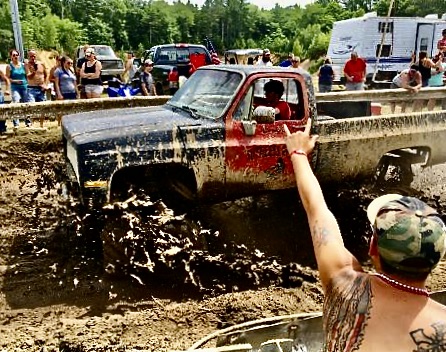
   “I’m never coming back,” he said at the end of the fight. He walked out of the big house and gave his pick-up truck back to her, but before he did he went mud bog racing with it. .When he was done, the first place trophy in his lap, the pick-up truck wasn’t good for anything anymore. He left with his suitcase, his phone, and his wallet. He walked to the bus station.

   “I dropped a truth bomb on her,” he said.

   “I’m going to drop a truth bomb on you,” I said. “You’re homeless, you’re living out of your son’s van, and you don’t have a job.”

   “I’m trying to find work,” he said.

    JJ and Alex, his sons, had a house in Colorado. They invited him to visit them, with the intention of doing an intervention on their father. He got stoned and stayed stoned the whole way, hitching rides with truckers, lost his phone, lost his wallet, and lost his way, but somehow made it there. When he found out what they were up to, he got his hands on Alex’s new van one night and beat feet. 

   “How dare they pull that bullcrap on me!” he fumed.

   Trying to get Jimmy to do something he doesn’t want to do is like trying to dam up Niagara Falls with toothpicks. He drove to Oklahoma where he drove the van into a ditch. He stole two old tires and got back on the road. He made it to Georgia. He called me. He had gotten another phone, somehow.

   “I’m coming to Cleveland.”

   “Why?”

   He showed up a week later. He didn’t have any money. He had stolen his way from Atlanta to Cleveland. He would go to a Walmart, steal bread and cold cuts, go to gas stations, and steal gasoline and snacks. When he had to, he found a backyard bird feeder and ate all the seeds.

   “I have a Home Depot gift card,” he said. “Can you buy it off me?”

   “I’ll think about it.” 

   “You know it’s stolen, don’t you?” Shirley asked me.

   “Yes.”

   Jimmy steals merchandise from big box stores, returns it later for a refund, claiming he has lost the receipt, and gets gift cards in return. He can be slick when he’s beggared.

   We met him for breakfast when he got to Cleveland.

   “I don’t have any gas,” he said, wolfing down ham and eggs and a plate of pancakes.

   “I’ll fill your tank up,” I said.

   He was hoping we would ask him to stay at our house. I could tell. I brought it up to Shirley later at home. But, buying him breakfast and filling up his gas tank was as far as it was going to go.

   “He’s not sitting on our sofa, much less staying at our house,” she said.

   Jimmy called me again about buying the Home Depot card.

   “How much is it?” I asked.

   “It’s $186.00, but you can have it for a hundred.”

   I knew it was throwing money away. We would never use it. It would just be something to help Jimmy out.

   “I have to get out of Cleveland,” he said.

   “Who did you piss off?”

   “Nobody,” he said. 

   “Did you steal some drugs?”

   “I just need to go,” he said.

   “You are such an asshole.”

   “All right, but are you going to buy this gift card, or not?” 

   “OK, I’ll come and get it. I just need to stop at an ATM.”

   “No, I’ll come and get you,” he said.

   Like a fool, when he came over, I got into his van to go to the ATM. He went flying down Detroit Rd. in Lakewood and sideswiped a parked car. He didn’t stop. He just kept going.

   “Stop the car,” I yelled. He stopped some blocks later when he ran into a fire hydrant. It began to spay water.

   The side of his son’s new van, on the passenger side, where I was sitting, was potholed from bumper to bumper. The front bumper had fallen off when he hit the hydrant. Trash and empty cans of Mountain Dew were scattered everywhere inside the van.

   “Do you know you just smashed your kid’s new van? And you drove away. You could have killed me.”

   “I know, but I promise I’ll be good.”

   “Did you steal all that food?” I asked. There were loaves of white bread, jars of Jiffy peanut butter, and half-eaten candy bars a gogo.

   “A guy’s got to eat,” he said.

   The next day JJ called.

   “Alex is in Cleveland,” he said. “He’s gone there to get the van back from our dad.”

   “JJ, why didn’t you tell me he was coming? Jimmy was here yesterday, but now he’s gone.”

   “We called him yesterday and said Alex was coming.”  

   “That was a mistake,” I said. “He’s gone to Canton.”

   “Why Canton?”

   “Because Alex isn’t in Canton, that’s why. He’s hiding from you.”

   They finally located him and Alex went to see him. They met in Canton behind a bowling alley. But Jimmy parked the van a couple of blocks away, so Alex wouldn’t see it and take it away from him. They talked, but Alex never got the van back. He went back to Colorado and Jimmy went back to living in parking lots.

   “When he’d ride in the afternoon, I’d follow after with a hickory broom, the pony being rather shy when bitten by blue tail fly, Jimmy, crack corn and I don’t care.”

   Jimmy thought I had led his sons to him. He thought I was conspiring with them to take the van away from him. He called me on the phone and called me every name in the book.

   “Even though you do what you do to your kids?”

   “That’s right,” he said.

   “You treat them worse than junk yards treat their dogs.”

   He barked like a dog, trying to get under my skin.

   “The only way you’ll ever get that van back is if you report it stolen,” I told JJ when I talked to him later.

   “No, I can’t do that,” he said. “My dad would go to jail if I turned him in.”

    “Maybe that’s what he needs,” I said. “Maybe he needs to be behind bars for a while breaking rocks and thinking things through.” JJ and I both knew he would end up behind bars sooner or later, but whether he would turn things over was anybody’s guess. Jimmy was not especially a thinking kind of man. He was a cracking the corn kind of man.

Ed Staskus posts monthly on 147 Stanley Street http://www.147stanleystreet.com, Made in Cleveland http://www.clevelandohiodaybook.com, Down East http://www.redroadpei.com, and Lithuanian Journal http://www.lithuanianjournal.com

“Cross Walk” by Ed Staskus

“Captures the vibe of mid-century NYC, from stickball in the streets to the Mob on the make.” Sam Winchell, Beyond Fiction

Available on Amazon: https://www.amazon.com/dp/B0CRPSFPKP

Late summer and early autumn. New York City, 1956. President Eisenhower on his way to the opening game of the World Series. A hit man waits in the wings. A Hell’s Kitchen private eye scares up the Cold War shadows.

A Crying of Lot 49 Publication