Outside the Law

By Ed Staskus

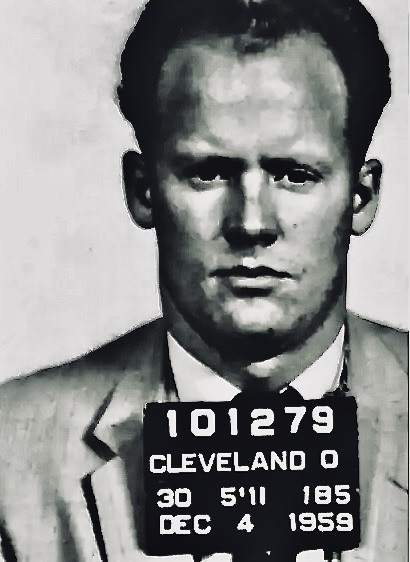
   Everybody called Danny Greene the Irishman. He was almost forty two years old the summer of 1975 and somehow still alive. He had never looked his age, but that had changed, although he still didn’t look his age. He looked older. Water under the bridge hadn’t done him any favors. He grew a mustache to take attention away from his thinning hair. On top of that, at the moment, he felt bad. He didn’t feel bad about Lorcan Sullivan being blown up in Lakewood two days earlier. He was in a rage about that. That was different. His mouth hurt bad. A bum tooth was a different kind of misery. He called his dentist, who knew well enough to get him in no later than right away.

   He lay down with his face on a pillow on the floor of the trailer home in Collinwood that had become the Celtic Club. His live-in girlfriend Denise Schmidt knelt over him and massaged his back. It had been tightening up every night the past two months. He was stiff as a board most mornings. He felt like an old man sometimes. Denise was a senior at Collinwood High School. She was on the young side of more than half his age. She made him feel younger. The bomb blast hadn’t slowed her down. 

   Two months earlier at four in the morning while they were sleeping on the second floor of their two-story storefront home on Waterloo Rd. somebody had thrown two bombs through the ground floor windows. The storefront was where Danny Greene had a phony consulting firm on the ground floor that went by the name of ‘Emerald Enterprises.’ The enterprise was mainly in the business of extortion. The Irishman’s other enterprises were gambling, embezzlement, loansharking, and leg breaking. Murder was taken for granted in his line of work.

   When the sound of glass breaking woke him up, he slipped out of bed and into the kitchen. He had a gun in his hand. When the first bomb that came through the window exploded, he was crouching between the sink and the refrigerator. A cabinet was above him. He was safe in his improvised nook when timbers and bricks started to fall, but when the floor caved in he went down with it. Denise was still in bed. She and the bed went down, too. The bed ended up halfway down from the second floor, tilted and dangling from a beam. She hung on until she couldn’t hang on anymore.

   “I felt the floor give out,” the Irishman said. “The next thing I knew I was in a heap of rubble. A busted icebox was beside me. Denise fell on top of me. I dug the two of us out. I heard dogs barking. I couldn’t hear my cats.”

   “Danny Greene made out like Houdini,” Ed Kovacic, the Central Station police lieutenant investigating organized crime, told Frank Gwozdz and Tyrone Walker. “He was luckier than his cats.” Danny Greene had two street cats who nightly slept inside the building on the first floor. They were both killed. His new 1975 Lincoln Continental was destroyed. A second bomb was connected to a two-gallon can of gasoline. That bomb didn’t go off and the gasoline didn’t ignite. The Irishman had more lives than a clowder of cats.

   The Bomb Unit got to work before dawn after the blast. Across the street a disheveled hippie sat on the curb waving a bottle of Boone’s Farm at anybody who gave him a glance. “You should a heard just what I seen,” he said to anybody who came within earshot. Nobody paid any attention to him. Even he had a hard time paying attention to himself.

   When the rubble was cleared away Danny Greene set up shop in the same place, parking a trailer home there. A TV news crew interviewed him outside his new headquarters. He announced his new address and invited any other would-be bombers to try again. “I’m in between both worlds, the square world and the street world,” he said. “I think I have trust on both sides, but I have no ax to grind. If somebody wants to come after me, we’re over here at the Celtic Club. I’m not hard to find.” He was shirtless, bare-chested, and spilling over with contempt. He pointed to the medal of St. Jude he was wearing around his neck. “This is why nobody is going to get me.” 

   Parents in the neighborhood warned their children not to go near the trailer with the Irish flag flying in front of it. They told them it was best to stay away from that whole block, St. Jude medal or no St. Jude medal.

   Danny Greene’s mother died when he was three days old. His father got drunk and stayed drunk after she was buried. He lost his job with Fuller Brush. When he did he dropped the baby boy off at the Parmadale Orphanage. Six years later, back on his feet, newly married, he took the boy back, but the first grader argued long and loud with his stepmother and ran away again and again. One night he ran away to his grandfather’s house in neighboring Collinwood and never went back.

   His grandfather put him into St. Jerome’s Catholic School where he became an altar boy and all-star basketball player. He joined the Boy Scouts. After graduating from grade school he went to St. Ignatius High School. After that things started to go south. He was thrown out of the Boy Scouts for fighting with other scouts. He was expelled from St. Ignatius for fighting with the Italian pupils and everybody else. He transferred to Collinwood High School but was expelled for “excessive tardiness.” He explained he had to fight his way into the school, fighting the bullies blocking his way, but the principal didn’t believe a word of it and told him, “Leave and don’t ever come back.”

   “He grew up hustling,” said his one-time friend Aggie who ran with Danny Greene when they were kids. “It’s hard to take the hustle and larceny out of somebody who grew up with nothing. Being an orphan and growing up with the nuns, you tend to grow up edgy, tough, and slightly mean.” Hardly anybody stayed friends with the Irishman for too long. The nuns put him in their prayers, to no great effect.

   He enlisted in the Marine Corps. They liked his fighting spirit. He became an expert marksman. Before long he was training other marksmen on Sniper Garand rifles. When he was discharged he was honorably discharged. He went home to Cleveland to be his own man. He was done with running away. He had a brand-new plan. He started working on the waterfront. He was elected president of Cleveland’s Local 1317 International Longshoreman’s Association, the dock workers union, in 1962. The trouble started right away when he began embezzling union funds. He was living large and needed the money. Trouble picked up the pace when he started leaning on his longshoremen for more money.

   “Danny was spending money hand over fist,” said Skip Ponikvar, vice president of the union. “His trips to the Theatrical Grill downtown, trips to Chicago, trips to New York. And he was picking the tabs up. There was only so much a few hundred men could support with dues. He got the idea to have some guys work the grain boats on the side and sign the checks over to the union. The guys started bitching and moaning about it. Well, if you worked on the grain boats, when it came to the hiring hall later on, those guys were given the better job, which is illegal.”

   Longshoremen started shaking down employers for payoffs. One of them threatened to kill the children of a businessman who wouldn’t cooperate. His house had to be put under police protection and his children escorted to school by an armed guard. After one too many complaints, the Cleveland Police Department sent Ed Kovacic and his partner to set Danny Greene straight. It wasn’t a far drive to the union hall. They stopped for coffee and a smoke. Refreshed, they walked into the union hall quietly, looking for the back office. They didn’t mean it to be a pow wow. They hadn’t brought a peace pipe.

   “When we walked in, I felt like I’d fallen in the Atlantic Ocean, because it was all green,” Ed Kovacic said. “Even the walls were green.” The only thing not green was the Irishman, at least from the neck up. “Everything was green except his hair and face. He handed us a pen, which had green ink in it. Everything was pleasant until he asked why we were there.” They told him why they were there. “He got up and started walking around the room. As he did, he got louder and louder. He started talking about how the Italians thought they ran Collinwood, and this was just a bunch of tough Irish and Slovenian kids who were going out there and telling them they didn’t run Collinwood anymore. I handed him our crime report and said, ‘How about this man? Your goons blinded a Chinese American man.’ Boy, that really set him off like a rocket! Finally, he said, ‘Get out. That’s enough. We’re done.’” 

   The policemen were done, too. “When we got in the car, I said, ‘That was like a scene from that waterfront movie. He was acting like Marlon Brando.’ My partner said, ‘Yeah, I was waiting for him to start hollering, ‘Stella! Stella!’” Ed Kovacic didn’t bother telling his partner he was getting his movies mixed up.

   Danny Greene didn’t want or need anybody like Stella. Blanche was more his speed, at least if she had been half her age. He knew how to get what he wanted. He liked blondes who were blonde as sunlight. The nuns at St. Jerome’s had tried to teach him the difference between angels and demons, but he never learned his lesson.

   “He was dynamic,” Skip said. “Dressed to the nines. You never saw him in jeans or street clothes. Suit and tie all the time. He negotiated a hiring hall for the union. It allowed us control. Total control. If you were my friend, I’d send you on a boat that’s going to work ten hours. And if you weren’t my friend, or just an average guy, I’d send you on a boat that’s going to work four hours. He had ‘Don’t fuck with me’ written all over him. You didn’t want to even challenge him. He was always in shape. He didn’t smoke. But when he drank, that was his weakness. He drank to excess, and when he drank to excess, bad things would happen, arguments, fights, all kinds of bad things.”

   Danny Greene was in shape but couldn’t fight everybody in the union. He was outnumbered. Everybody finally wanted him gone. “The men wanted him out,” said John Baker, one of the dock workers. “They didn’t want to work the boats for nothing. When he got into his jam, he asked me for a vote of confidence, and I said, ‘Danny, I can’t do it.’ That was it. We never talked after that.”

   The national union suspended him. He was done running Cleveland’s docks. Somebody drove past his house and pumped five bullets into the clapboard, just to make sure he got the message. When a TV reporter showed up the next morning the Irishman read from a scrap of paper, “Effective immediately, I have resigned as a member and officer of Local 1317. After nearly four years of devoting all my energies to get the dock workers in Cleveland a fair shake, I found that my only compensation is headlines in the newspaper and bullets through my window.” When push came to shove he pled guilty to falsifying union records and was fined $10,000. He never spent a day in jail and never paid a penny of the fine. By that time, he was a part-time FBI informant and the FBI didn’t care whether he paid his fine, or not. They had bigger fish to fry.

   Danny Greene stayed on the floor for ten minutes after Denise was done with his rubdown, rolling over on his back, grasping his knees, and pulling them into his chest. He rocked forward and back. When he stood up he felt like his old self. He went outside and sat down a lawn chair in the dirt front yard in front of his trailer home. Two empty cans of Stroh’s lay at the feet of a plaster leprechaun beside the chair. He used to do next week’s drinking every day of the week but had put a stop to most of it. He had started jogging, gulping vitamins, and steaming vegetables for dinner.

   His dentist’s appointment wasn’t for two more hours. The tooth yanker was in Lyndhurst, twenty some minutes away, so there was plenty of time to think things over between now and then. He had gotten a new Lincoln Continental and enjoyed driving it. What he didn’t enjoy was checking it from front to back and underneath it for anything that might blow its top. Denise wouldn’t go near the car until he was done.

   He was going to make somebody pay for blowing up his building and killing his cats, never mind the car. He was going to make somebody pay for Lorca Sullivan’s death, too. He knew more about revenge than any man alive. He was going to make somebody pay for something, if it was the last thing he did. He was nothing if not a man of his word, no matter how many twists and turns his words might take.

Excerpted from the crime novel “Bomb City.”

Ed Staskus posts monthly on 147 Stanley Street http://www.147stanleystreet.com, Made in Cleveland http://www.clevelandohiodaybook.com, Atlantic Canada http://www.redroadpei.com, and Lithuanian Journal http://www.lithuanianjournal.com

“Bomb City” by Ed Staskus

“A police procedural when the Rust Belt was a mean street.” Sam Winchell, Beyond Books

Available on Amazon: https://www.amazon.com/dp/B0F1LM1WF9/ref=sr_1_1?crid=2MYAQAOZIC2U9&dib=eyJ2IjoiMSJ9.hTm7BGbiQbSe5ZapFwYPPfcwOpTe-Vdg6VLE4aGyTyk.Z0R-VNBWWEcvKcNaO9LdCOUnNIOOXgvYkRS_FXiXuHk&dib_tag=se&keywords=bomb+city+ed+status&qid=1742136726&sprefix=bomb+city+ed+staskus%2Caps%2C84&sr=8-1

Cleveland, Ohio 1975. The John Scalish Crime Family and Danny Greene’s Irish Mob are at war. Car bombs are the weapon of choice. Two police detectives are assigned to find the bomb makers. It gets personal.

A Crying of Lot 49 Publication

Lost and Found

By Ed Staskus

   When Agnes was growing up everybody said her mother was the best-looking woman on the hill. Her mother’s hair was soft, not stiff like all the neighboring women, and she colored it champagne blond instead of the brassy yellow and bleached white that was popular. Eva was shapely with long legs, not skinny or fleshy, or too tall, but taller than her husband. When she walked, even when she was doing housework, she walked like a ballerina with hips. 

   They lived on a bluff above the factories on Euclid Avenue, in the Euclid Villas, on the western edge of the North Chagrin parkland, just a few miles from the Lithuanian neighborhood where Eva grew up. In the summer Eva, Agnes, and Sammy went picnicking in the reservation at Squires Castle and hiked through the trees at Strawberry Lane. The park bumped up to their backyard so that they were almost a part of it. Their street was a one-way street, the only one in the neighborhood. Nobody understood why it was one-way. There were deer that rubbed on the tree bark, raccoons that snuck into their attic, and possums in the woods where they played the knocking game at night.

   Eva always had to be doing something. Whether she was dancing or not she moved like she had never heard there isn’t anything that isn’t set to music. She sang all the time, too, even though she was tone deaf. At house parties all the husbands except hers wanted to be her partner. “There’s nothing faithful in it,” Eva’s husband Nick grumbled about his wife’s dancing. He had boxed Golden Gloves when he was younger. He didn’t mind dancing, but only his way. He was the son of a Romanian Saxon and liked small steps in place, rapidly changing steps, tapping and syncopated steps. He didn’t like ebb and flow dancing.

    Eva knew all the smooth moves, like the foxtrot and waltz, her favorites, and even honky-tonk twisting. She had studied ballet and danced with a Lithuanian folk group. She was tireless and never had to catch her breath, although she wouldn’t dance with just anyone, only with some of the men. “Never give a sword to a man who can’t hoof it,” she said winking and gliding away with whoever knew how to lead.

   When they went to weddings, she was on the ballroom floor all night, waltzing and trotting, but Anna, her best friend, knew she would never got in the middle of anybody who was married, like some other women, because that’s not what she wanted. She wanted to dance the room down and have a good time. Eva knew how to forget everything, even herself, but there was life bubbling up all the time inside her.

   She did all the shopping and housework. Before she had a car, she took buses and taxis to the grocery store. She made breakfast, lunch, and dinner for the three of them, and sometimes for Nick, too, if he wasn’t gone already. He worked all day, and when he wasn’t working, he was playing golf. He didn’t work around the house or even the yard. He hired kids to mow the lawn in the summer, rake leaves in the fall, and shovel snow in the winter. They were the only neighbors he knew or liked on the street, and they liked him because he always paid them on the spot with Lincolns. Whenever anything had to be repaired, he called Sears, and the next day a van would pull up in their driveway and the Sears man would ring the doorbell. Even though he had a Craftsman toolbox in the basement, the only thing anybody ever saw him do tool-wise was replace a light’s pull chain once, although he didn’t need a Craftsman to do it. 

   After Sammy got the first of his two-wheelers and they started breaking and falling apart because of his Evel Knievel smash-ups, he lugged them across the street for repairs. The man there was a big man who worked in a factory. He had wavy hair and a turnip nose. He knew how to fix everything. “What did you kids do today? And you better have done something,” he usually said, waving and rubbing his hairy hands together, pulling open the garage door, flipping the bike upside down on a workbench, and taking care of whatever was wrong with it. Nick couldn’t pump up their bike tires when they were low because he didn’t know where the inflator was in the mystery the garage was to him.

   Nick was hardly ever home for dinner, even on weekends. But he was always in his chair for the “Ed Sullivan Show” at eight o’clock every Sunday night, right after the family finished watching the “Wonderful World of Disney.” He looked forward to the comedians like Jackie Mason, Charlie Callas, and Senor Wences, but not the singers, especially not the Supremes, or any of the other Negro groups. He would go to the bathroom whenever they were announced and only come back when he heard Ed Sullivan’s voice again.  

   The most unfunny man Agnes ever saw on television was Ed Sullivan. He stood in the middle of the screen like a cigar-store Indian, arms folded across his gray suit lapels, his no personality eyes sunk into their late-night dark bags. “And now introducing on the show…” he said after the commercials were over, shifting his weight from one leg to the other, while Nick sank back into his sofa. Stoneface made “show” sound like “shoe.”

   Eva made dinner at 5:30 sharp every day, as though Nick was going to be at the head of the table like the other fathers on the street, which he hardly ever was. From the steps of their front porch Agnes could see, if she wanted to, Mr. MacAulay, Mr. Holloway, and Mr. Newman coming home from work. Her friends slapped bare feet out of their houses as their fathers came up the walk from their garages. That almost never happened at their house.  

   Whenever they knew their father was on his way home for dinner, they walked to the far end of Hillcrest Rd., and then to Grand Blvd. and to the blue collection mailbox on the corner. They lay on the sloping lawn of the Robinson house and looked for his car coming up the hill. Eva liked to say good things come to those who wait, but Agnes wanted him to come home so bad she couldn’t sit still, running back-and-forth.

   “Waiting wears out my patience,” she said when Eva called her back to the lawn, telling her to be patient. “I don’t have a lot of it and it runs out fast the more I have to wait.”

   The nights Nick was on time for dinner, instead of spaghetti and meatballs or the Dutch Oven chicken they liked best, Eva prepared beef brisket. She busted the family food budget, taking a taxi to Fazio’s, the big grocery store. Nick munched on crudités and dip before dinner and afterwards his favorite dessert was apple pie with cheddar cheese on it. Sammy and Agnes weren’t big fans, so they nibbled on hard-boiled eggs floating in mayonnaise. Eva made sure there was Neapolitan ice cream for them after dinner.

   Celery was Nick’s all-time favorite food, which caused a commotion one summer. Eva wanted dress fabric she had seen in a McCall’s sewing pattern and started skimming from the grocery money Nick gave her on paydays. He didn’t notice anything until the week she didn’t buy celery. Nick’s brother Tom was living with them that summer, painting their house for more than two months, and sleeping on a foam mattress in the laundry room. 

   Uncle Tom and Nick both made lists of what they liked to eat and gave the lists to Eva so she would know what they wanted. Before Tom came, she always made barbecue chicken for Sammy and Agnes on Friday nights, in Kraft’s Original Sauce, but she didn’t that summer after Tom told Nick that BBQ was out. Eva knew celery was Nick’s special food, but she thought he wouldn’t miss it for a week. What she didn’t know was that celery was Tom’s favorite, too, because she always threw his list away without looking at it.

   “How could you forget the celery? What were you thinking?” was all she heard from them day after day until Uncle Tom finally moved out the Labor Day weekend before school started. “I didn’t stop to think,” she told him, smiling and shuffling, “and then I forgot.” She didn’t tell him about the dress fabric she bought, especially after she sewed the dress and he never noticed how she looked in it.

   Nick ate some of a family-size ice-cold Hershey bar every day. He kept it in the freezer and always knew how much was left. If he suspected any was missing his eyes got small and fixed and he complained to Eva about it.  Sammy and Agnes hardly ever ate any of it because they knew he would be grumpy, and besides, they knew what it was like to come home looking forward to something that wasn’t there anymore. Nick loved coffee, too, but not the drinking kind. He kept gobs of coffee ice cream in the freezer, coffee yogurt in the fridge, and coffee nibs in the kitchen cupboard, and no one was allowed to touch any of those, either.

   They had breakfast together more often than their father-less dinners. But before they were allowed to eat Nick passed out piles of vitamins. They would push the pills into order and then sit looking at them while he drank apple cider vinegar from one glass and black strap molasses from another. The first one down the gullet was vitamin A, then vitamin E, while the worst ones they saved for last. Lecithin was a horse pill. Agnes hated it. The yeast, kelp, and liver she swallowed fast, the narky flavors sliding over her tongue. Zinc and garlic were bad later in the day because she couldn’t help burping them up. The desiccated liver was not the worst. The worst was the huge tablespoon of pale-yellow cod liver oil they had to swallow. Their mother secretly slipped drops of lemon into it so they wouldn’t throw up.

   Eva had to get on Nick’s vitamin bandwagon, too, but she got a Wheateena Juicer to grease the wheels. She told Nick she couldn’t get the pills down and needed smoothies. She told Sammy and Agnes the machine digested everything ahead of time and all they had to do was drink it. She squeezed oranges, and added apples, beets, and wheatgrass. Sometimes she would halve carrots on the long side and slide them down the chute into the auger, but then Agnes drank the juice holding her nose since she hated carrots.

   One of the last times she ever ate cooked carrots was when she had a mess of them in her mouth at dinner but wouldn’t swallow them. She had had enough. She felt like she was going to gag and choke. Eva got mad when she saw Agnes’s mouth at a standstill and made her stand in the corner. She still wouldn’t swallow, until Eva finally let her spit the orange paste into her hands, and then clean up at the kitchen sink.

   The only thing worse was koseliena, which their grandmother served every time the few times they went to their house. Eva’s parents had disowned her for marrying a man not Lithuanian and ten years her senior. The no-go rules had since been relaxed. Koseliena is chopped organ meat set in cold gelatin with horse radish on the side. Agnes always said, “I don’t want to try it.” She always had to stare down a slice of it, threatening to throw up.

   “You should eat your vegetables,” Eva said. “They’re good for you, for your eyes.” Agnes’s eyes were going bad. They were going out of focus, like a screwed-up telescope. She needed glasses. “Carrots aren’t vegetables, they’re roots,” she retorted. “I don’t care about seeing in the dark, why should I care, it’s still dark, there’s nothing to see, and I just really hate carrots.” Eva gave her the belt after that. Nick never hit the children. It was always Eva who did the hitting. She never said wait until your father gets home since they would have said, “Who?”

   Eva got married because her three sisters slept in the second bedroom while she slept on a daybed in a no-bedroom, because her mother was always bossing her around, and because she was a free spirit. She got married the day she was one minute older than eighteen. She immediately loved sleeping in her own bed in her own room in her own house.

   Nick was always busy selling ball bearings and hitting golf balls so that they only ever went on two family vacations. Eva once took Agnes to Dainava, a Lithuanian summer camp, but it wasn’t meant to be. Eva’s older sister was a bigwig in the community and had the blood of their parents in her veins. She was a bigwig at the camp, too.

   Eva drove her Mercedes to the summer camp, the top down, laughing and singing, Agnes’s bags tossed into the trunk. It was in Michigan, farmland all around, outside a small town, which is Manchester. The summer camp had been there since the early 1960s when the American Lithuanian Catholic Federation bought 200-some acres for it. They wouldn’t let her stay, though, because Agnes didn’t speak Lithuanian. She felt very alone walking back to the car. Eva knew for sure her older sister’s hand was behind it. She spun gravel turning around. She was so mad she got two speeding tickets going home, one in Michigan and one in Ohio. They never went back to the camp.

   Before they went to Fredericksburg on their second vacation, they went to Niagara Falls with Bob Bliss, Nick’s golf buddy who they had never seen before, and his wife and their little girl. Eva asked Nick to put them up on the Canadian side so they could walk in Queen Victoria Park and Table Rock Point on top of the waterfall. But he wanted to play golf on the American side, so they stayed in New York at a roadside motel with a pool out front.  

   Agnes had gotten a new bathing suit for the vacation, a blue cotton gingham pinafore with elasticized puffy bottoms. Friday morning after breakfast Nick and Bob went golfing and they went to the pool. Sammy played with something he was inventing. Eva sat on the lip of the pool with her legs scissoring and watching Agnes paddle back and forth.  

   The bottom of the pool was robin egg blue and the sun felt like a fuzzy electric blanket. By the time she saw the black bug floating on the water in front of her it was too late. She skimmed over it and felt it get under her bib and bite her on the stomach. It stung like crushed red peppers. Eva helped her out of the water and laid her down on the scratchy concrete and they watched a red welt rise on her stomach. 

   “I don’t like looking at sores,” the little Bliss girl said looking down at Agnes.

   Sammy and Agnes were dying to go to Ripley’s Believe It or Not across the bridge in Canada. They begged their father to take them to the odditorium. In the travel brochure it looked like a fallen over Empire State Building with King Kong on the side of it. But he went golfing again the next day and they had to go bowling. She was only seven, but Eva found pint-sized black bowling shoes for her, and a blue marbleized ball she could push at the pins. After twenty minutes Agnes felt like her arm was going to fall off. 

   “One thing about bowling that’s better than golf is you never lose a bowling ball,” Bob Bliss guffawed.  

   They had dinner that night at Michael’s Italian Restaurant. Eva and Nick had liver and onions and they ate all the American cheese and salami from the antipasto plate, and the chicken fingers, hot dogs, and French fries, too, except for the slices of them Sammy tested for floatability in his glass of Sprite. Agnes didn’t drink soda, but Eva let Sammy have it because he liked the lime flavor.

   “Taste its tingling tartness,” he said, slurping it up his straw.

   The next morning Eva put out a bread pan of congealed scrapple she had brought with her, slicing it into squares, and frying it on the hot plate in their room.  She made it from pork scraps, everything but the oink, she said, with cornmeal, and spices. Nick called Eva’s scrapple pon haus. It was a salty meat cracker. “Shoofly pie and apple pandowdy,” he sang, standing next to Eva as she mixed in scrambled eggs and ketchup. “Makes your eyes light up, your tummy say howdy, makes the sun come out, when heavens are cloudy.”

   Perched on the top deck of the Maid of the Mist later that afternoon they set sail for the Horseshoe Falls. Sammy and Agnes hung on the rail at the front of the boat, their faces wet in the swell and noise. Agnes thought about Moe singing his Niagara Falls song in the Three Stooges movies Sammy and she watched Saturday mornings.“Slowly I turn, step by step, inch by inch,” Moe purred, leaning away from Larry, looking sideways at Curly, his eyes slits of mischief and mayhem.

   Everybody on the boat was wearing a blue rain poncho just like everybody else. Even though it was a sunny day they were being rained on. When the boat ricocheted turning in the turmoil at the base of the falls, Agnes mixed up Mrs. Bliss and Eva, grabbing the wrong hand, Eva snatching at her other hand. She was pulled up on her toes between the two women.

   Eva had learned to sink or swim when her father took her out on Lake Erie in his rowboat and threw her into the water. But Agnes’s family didn’t have a boat, so she didn’t know how to swim, only paddle like a dog. Eva never taught her, since she was scared to death of open water,  and Nick was too busy to take her to the city pool.

   After the Maid of the Mist docked, Nick picked them up, they stopped at HoJo’s for a dinner of beans and sweet brown bread, and then drove straight home, the sun sinking into the twilight ahead of them. While Sammy napped with his head lolling in her lap, Agnes inspected her leather moccasin change purse. She had gotten it from Marcia. The Shoshone Indians had sewed it. It was studded with green, red, and pink glass seed beads. Marcia, who was her best friend, always brought back souvenirs from her family vacations, the change purse from Yellowstone, a gold-trimmed Ghost Town cowboy hat from Lake George, and a “Don’t Mess with Texas” t-shirt from the Alamo. 

   Five years later coming home from Fredericksburg from their second family vacation, Agnes kept her eyes down while Sammy stared at his reflection in the back-door window. Their parents were at it again, cutting and slashing each other all the way home while Sammy and she fidgeted in the back seat.

   “I give you cash, so when I say don’t use the credit card, I mean don’t use the credit card,” Nick insisted.

   “But you don’t give me enough cash,” Eva told him.

   “That’s what I give you the credit card for,” he told her.

   “But you’re telling me not to use the credit card, to wait until you give me cash, which you don’t do,” she said.

   They argued and fought about money from Hagerstown to Youngstown  until they finally ran out of steam. Later, after nightfall and a gas station stop, Nick started up again. He laid down the law and insisted she promise to never use the credit card. He said she was ruining them by spending all the family money and their nest egg, too. “I’ll just charge it,” was one of Eva’s favorite things to say as she slid her Diner’s Club card out of her purse. Sammy and Agnes didn’t exactly know what it was all about and didn’t ask.

   “Doesn’t that sound weird to you?” Eva asked, twisting over the car seat towards her children. “He wants me to put food on the table, clothes on your back, and fill up the piggybank with money he never gives us. What do you think about that?” Nick said people were putting things into her head. Eva said she didn’t want her head to be empty as a coconut.

   Agnes stared at the change purse she had filled with pebbles from the Fredericksburg battlefields. The closer they got to home the more Eva and Nick argued. He said he brought home the bacon. She said he had bacon for brains. Every twenty-or-so miles he threatened to throw her out of the car. 

   “Get out of the car or I’ll throw you out” he yelled, mashing down on the gas pedal, even though they were already going faster than all the other cars. But he didn’t throw her out. When they got home, he slept on the sofa downstairs for a week until they made up, but they were never the same again

   Eva started taking classes downtown when Agnes was eight years old. Nick didn’t want her going to Cleveland State University. He didn’t want her going downtown, either, where the school was, even though he worked close to there and ate lunch at the Theatrical on Short Vincent every day.

   “I don’t like you going downtown,” he said, putting his foot down.

   “What about you?” Eva asked, stamping her foot.

   Eva and Agnes went downtown every week, Tuesdays and Thursdays for Agnes’s ballet lessons, and Wednesdays for white gloves and party manners classes at Higbee’s. Sometimes they stopped at the Hippodrome, where there was a movie house, and said hello to Vince. He had an office next to the poolroom in the basement. Eva explained he was the man in charge. He wore a brown suit and always gave them something to drink, ice water for Agnes, and something in a fancy glass for Eva.

   Afterwards they stayed and saw a movie with the free tickets Vince gave them. They saw “Jaws” and “The Sting” and “Live and Let Die.” Agnes loved the big screen. She liked Roger Moore. She loved  Robert Redford. She was terrified of the shark.

   Nick and Eva loved each other once, but it had drained away. One night at dinner they got into a do-or-die argument. Eva bolted from the table and went upstairs. Nick followed her. Sammy and Agnes could hear them in their bedroom, screaming at each other in foreign languages. Suddenly there was a loud crash. Eva came running down and ran to Anna’s house. Nick came downstairs after she was gone and told them everything was all right. He sat by the back window the rest of the night and stared into the ravine.

   When they went upstairs, they looked into their parent’s bedroom and saw a hole in the wall. A potato masher was lying on the floor. They found out later he had thrown it at her but missed. It lay on the floor until the next day when Eva came home. She cleaned up the dinner table, did the dishes, and put the potato masher away. 

   Anna came over the next day when Nick was at work. Eva packed a suitcase and told them she would be gone for a few days. She took them into the kitchen and showed them the food she had prepared in casserole dishes and explained how to heat it up. Agnes had a hollow leg in those days and could eat as much as she wanted and never gain weight.

   “I’ll be back Monday,” Eva said.

   But she didn’t come back Monday, or the rest of the next week. She finally came back two weeks later, on a Tuesday, just after Agnes had gotten home from school.

   “Mom, we’re almost out of food,” she said.

   They found out she wasn’t coming back when she took them to Helen Hutchley’s for ice cream. They sat in a booth in the back. Agnes had strawberry swirl on a plate, Sammy had tin roof in a cone, and Eva had two scoops of butterscotch in a cup. She told them things weren’t going good at home, which they knew, and then she said she was leaving Nick for good and moving downtown. 

   “How can you do that to him?” Agnes asked, even though she didn’t like her father as much as she did her mother, who she loved more than anything. Sammy put his cone of tin roof down on a napkin and wrapped his short arms around his mother.

   “Whatever you want to do, mom, whatever you think is best,” he said. But Agnes was mad and started to cry. “Finish your ice cream, peanut,” Eva said, so she did, before it melted.

   Sammy and Agnes lived with Nick for a year after Eva left, but afterwards moved in with her. It had been hard at home. Agnes had never done anything when the family was together. Eva had done everything, so it was an undertaking for Agnes to do anything. She tried cleaning and cooking but it was a rough go. She couldn’t keep up at school. Sometimes she sat inside her closet in the middle of the day, hiding. She was bitter that her father never helped her, either. He was always gone, no matter what happened.

   After they moved away, and moved into a new downtown apartment building, which was the Park Centre on Superior Ave., she only ever had to help her mother dry the dishes. It was Sammy and Agnes and Eva, the Three Musketeers again. Nick had never exactly been one of the Musketeers. He was never going to be one. He had lost his chance.

   Agnes got a second chance. She did better in her new school. She made new friends. She didn’t sit in closets anymore, staring at nothing in the dark. She sat on their 17th floor balcony and looked at the far horizon on the other side of Lake Erie. It was where she could see stars blink on at night. She counted her lucky stars.

Ed Staskus posts monthly on 147 Stanley Street http://www.147stanleystreet.com, Made in Cleveland http://www.clevelandohiodaybook.com, Atlantic Canada http://www.redroadpei.com, and Lithuanian Journal http://www.lithuanianjournal.com

“Cross Walk” by Ed Staskus

“A once upon a crime whodunit.” Barron Cannon, Adventure Books

“Captures the vibe of 1950s NYC.” Sam Winchell, Beyond Fiction

Available from Amazon

Late summer and early autumn. New York City. A Hell’s Kitchen private eye. The 1956 World Series. President Eisenhower at the opening game. An assassin in the dugout.

A Crying of Lot 49 Publication