Tag Archives: Made in Cleveland

Eye on the Prize

By Ed Staskus

   I was planting Japanese yews in our backyard when our next-door neighbor KJ came out his side door with a fistful of Husky trash bags. It was late April and storms were predicted for the next couple of days. The weather forecast suited my purposes. Every new yew got a handful of slow-release fertilizer and a promise of plentiful rain. KJ swung the bags up and into the trash bin. I hadn’t seen him since December. He told me he had been in Los Angeles all winter, pitching a movie idea.

   “What’s the idea?” I asked.

   “One-Eyed Charley is the idea,” KJ said.

   “Who is One-Eyed Charley?” 

   “Charley was a 19th century stagecoach driver who lived as a man and only after he died did people find out he was actually assigned female at birth.”

   My ears pricked up when I heard it was about the Wild West. My wife and I had just watched a restored version of John Ford’s 1939 movie “Stagecoach” on the Criterion Channel. John Wayne was the Ringo Kid. He talked low, talked slow, and didn’t say too much. A roly-poly man called Buck handled the reins and whip on the way from the Arizona Territory to Lordsburg, New Mexico. He sounded like a pre-teen whenever he spoke. Curly Wilcox rode shotgun. He sounded like a he-man. The only people who messed with him were the local savages, who swore by cheap whiskey and unarmed men. By the time they found out Curly was armed to the teeth it was too late for a last shot of rotgut.

   When I first met KJ, it was the late 20-teens and he had just moved in. We talked for a few minutes, getting acquainted. He was easy to talk to. He was also girlish looking. When I mentioned him to my wife, I told her a young woman who was a teacher with a Ph.D. was our new neighbor. The last person who rented the second floor of the two-family house next to us on the west end of Lakewood had not been a good neighbor. The only Ph.D. he had was in headbanging with an undergraduate degree in weed. KJ looked like a big improvement.

   “She specializes in gender studies at Oberlin College,” I told my wife.

   “She drives all that way every day?”

   “I thought it was far, too, but KJ says it only takes her about a half-hour.”

   KJ Cerankowski teaches Comparative American Studies and is a writer with interests in asexuality, queer theory, and transgender issues. He has authored numerous articles, including the 2021 Symonds Prize winning essay “The ‘End’ of Orgasm: The Erotics of Durational Pleasures.” His poetry and prose have been published in Pleiades and DIAGRAM. He is the co-editor of “Asexualities: Feminist and Queer Perspectives” and the author of the recently published book “Suture: Trauma and Trans Becoming.

   “I read and tell in order to be upset, in order to live,” KJ says. “I gather the fragments that will never fit together to make a whole. I want the trauma to be poetry, but I cannot find the right timing, the right words, the right image. I ask how this constellation of events makes me desire or not desire, makes me desirable or undesirable, makes me like a man or a man.”    

    The year after I met our neighbor was when I began to realize she was a gal on her way to becoming a guy. She told me it was a long process, but she was committed to it. For people transitioning from female to male, the process includes hormonal therapy and surgery. Gender-affirming surgery includes chest surgery, such as a mastectomy, and bottom surgery, such as a hysterectomy. I knew there was loads of antagonism in the land about transgender anything, but it didn’t make any difference to me. She looked like she minded her p’s and q’s and didn’t run red lights, which was more than enough for me.

   When somebody runs a red light in front of me and I have to stomp hard on my brakes, I don’t think about what gender they are. I don’t wonder or generalize about their race or income or social status. The first thing that pops into my mind is, “What an asshole!” After that I take a deep breath and go my way.

   “You went to Hollywood to beat the drum for making a movie?” I asked KJ again, even though I knew there is no real place called Hollywood where motion pictures are made. Hollywood is a state of mind, a global business, not a place.

   “Yes, a friend of mine and I have an idea for a movie about One-Eyed Charley,” KJ said. “We had a meeting with Sony. They liked our idea and were encouraging but said it wasn’t right for them. ‘Don’t give up,’ they said. They sent us to their TV division where they thought it might work better. We are teaching ourselves how to write a screenplay.”

   The Cambridge Dictionary last year revised their definition of “man” and “woman” to include people who do not identify with the sex they were at birth. “Man” now includes the definition “an adult who lives and identifies as a male though they may have been said to have a different sex at birth.” The updated definition of “woman” is “an adult who lives and identifies as female though they may have been said to have a different sex at birth.” It made sense to me since sex and gender identity don’t always adhere to one another.

   Talking heads far and wide went ballistic. Daily Caller writer Mary Rooke said, “Fucking traitors to the truth. Cambridge Dictionary is only the latest. If we don’t stop them from erasing women our civilization is ngmi.” I knew what ‘fucking traitors’ meant. I had no idea what ‘ngmi’ meant. Mary Rooke didn’t bother defining it since she was too busy cursing up a storm.

   “Remember, if you control the language, you control the population,” Steven Crowder, a popular conservative TV pundit, posted on Twitter. Since many former employees claim he runs an “abusive” company, where he often spits and screams at the hired hands, including his own father, makes underlings wash his dirty clothes, according to the laundromat, and exposes his genitals, according to the New York Post, I ignored his tweet.

   “Transgenderism is the most dangerous extremist movement in the United States,” Tucker Carlson said on FOX News. Since he has a laundry list of most dangerous extremist movements, I ignored what he said, too. I would never get any sleep if I paid attention to the never-ending warnings of his kind. The end of the world is always near on FOX News.

   Charlotte Parkhurst was born in New Hampshire in 1812. She was orphaned early in life and delivered to an orphanage. She soon enough dressed up like a boy and ran away. She ended up near Boston cleaning stables. A livery owner took her in, raising her as his own, and trained her to handle horses and drive coaches. When the Gold Rush started happening in 1848, she went west to find her fortune. Instead, no sooner did she get there but a horse spooked by a rattlesnake kicked her in the face. She lost her sight in one eye but didn’t lose sight of the prize. She realized she could do better as a skilled stage driver than panning for gold in some God-forsaken stream bed in northern California. She put on a black eyepatch and rode both whip and shotgun for the California Stage Company. She got so good with her whip that she could slice open the end of an envelope from twenty feet away.  She could cut a cigar out of a man’s mouth without drawing blood.

   She became One-Eyed Charley. Some called her Cockeyed Charley, but only behind her back. She became a ‘Jehus,’ one of the best and fastest coach drivers in California. Jehu was a Biblical king who in the second Book of Kings is described as a man who “driveth furiously.” She carried goods and passengers up and down the state for nearly twenty years, mainly on the passages between Monterey and San Francisco, and Sacramento to Grass Valley.

   She was short and stout and a hard-living son-of-a-gun, a loner who chewed tobacco and drank like a fish. She could curse like the devil. Charley had more than her fair share of manpower and could handle all takers in a fight. She slept by herself in station relay stables, curling up with her horses. She kept her whip close beside her. It was a five-foot hickory shaft with buckskin lashes 12 feet long. She kept the lashes well-oiled so they stayed as limber as a snake in the sun.

   One-Eyed Charley dealt with would-be thieves whenever she had to. She was hauling gold bullion for Wells Fargo when she shot and killed Sugarfoot, an infamous road agent, near Stockton after he tried to hold her up. Wells Fargo rewarded her with a solid gold watch and chain. “Indians and grizzly bears were a major menace,” the New York Times wrote in 1969. “The state lines of California in the post-Gold Rush period were certainly no place for a lady, and nobody ever accused One-Eyed Charley of being a lady.” Even though the introduction of thorough braces to the underside of coaches created a swinging motion, making traveling easier and more comfortable, stagecoach work was hard work. Anything might happen trying to control a six-horse team over mountain passes.

   “How in the world can you see your way through this dust?” a passenger asked her one bone-dry summer day.

   “I’ve traveled over these mountains so often I can tell where the road is by the sound of the wheels,” she explained. “When they rattle, I’m on hard ground. When they don’t rattle, I gen’r’lly look over the side to see where I’m agoing.”

   Talking to KJ over the backyard fence I noticed he was sounding more like a man than I had noticed before. He was looking more like a man, too. His hair was cut short. He wore a form-fitting t-shirt that only betrayed a flat stomach. He looked more handsome than womanly.

   “Only a rare breed of man could be depended upon to ignore the gold fever of the 1850s and hold down a steady job of grueling travel over narrow one-way dirt roads that swerved around mountain curves, plummeting into deep canyons and often forded swollen, icy streams,” wrote historian Ed Sams in his 2014 book “The Real Mountain Charley.” On one trip over Carson Pass her horses suddenly veered off the road and the rare breed of woman was jolted off the box. She landed between the wheelers, the two horses at the rear of the team. She hung onto the reins as she was dragged on her stomach in the dirt and gravel. She somehow managed to regain control and got the team back on the road, saving the stagecoach and its passengers. She spent the night soaking and disinfecting her wounds in a tub of carbolic acid.

   Brother Whips were the road warriors of their day. “I think I should be compelled to nominate the stage-drivers, as being on the whole the most lofty, arrogant, reserved and superior class of being on the coast, that class that has inspired me with the most terror and reverence.” Henry Bellows, president of the United States Sanitary Commission, said during a trip to California.

   One-Eyed Charley wore gauntlet gloves to hide her womanish hands and a wide-awake hat to keep the sun off her face. She wore a loose linen duster to conceal her figure and fend off rain. She carried a bugle to announce stage arrivals. She could be testy, for good reason. She blew a  horn but didn’t blow her own horn. Gay, lesbian, bisexual, and transgender were all of them illegal at the time. “It was a crime,” Mark Jarrett, a textbook publisher, spelled out in plain English. “People didn’t go around professing what their real identities were. They hid them.”

   After transcontinental tracks got to the west coast, railroads branched out and muscled out stagecoach businesses. One-Eyed Charley put her driving days behind her, opening a saloon, among other ventures. She retired to a ranch near Soquel in the early 1870s, raising chickens. She voted in 1868 even though women didn’t win the right to vote until 1920. When her one good eye perused the ballot and she decided on Ulysses S. Grant, she became the first woman to vote in a federal election in the United States. She would have used her whip on any man who tried to keep her from the polls. Stepping over his prone body she doubtless would have unleashed a stream of tobacco juice on the unfortunate creature.

   “Why this woman should live a life of disguise, always afraid her sex would be discovered, doing the work of a man, may never be known,” the Santa Cruz Sentinel wrote in their 1880 obituary. “The only people who have occasion to be disturbed by the career of Charley Parkhurst are the gentlemen who have so much to say about ‘woman’s sphere’ and ‘the weaker vessel,’” the Providence Journal wrote soon after her death. “It is beyond question that one of the soberest, pleasantest, most expert drivers in this state, and one of the most celebrated of the world-famed California drivers was a woman. And is it not true that a woman had done what woman can do?” The Journal didn’t want to speak ill of the dead but no matter how expert One-Eyed Charley was in the saddle, she was not a sober nor a pleasant person.

   “How does a nice Polish girl from Parma know how to pitch a movie in Hollywood?” I asked KJ. “That’s not to say you’re a girl anymore, but you’re still from Parma.” Alan Ruck, an actor who portrayed Ferris Bueller’s best friend almost forty years ago, is the best-known movie personality from there. The Miz, a famous wrestler, is the most famous person from Parma nowadays.

   Parma is a southern suburb of Cleveland. It is the biggest suburb in the state of Ohio. It where scores of Ukrainians as well as Poles live. There is a district called Ukrainian Village and another district called Polish Village. Eastern Orthodox Christians like Ukrainians are conservative about sex. Roman Catholic Christians like Poles are even more conservative about sex. There is no Transgender Village. There are no plans to found one anytime soon.

   “I’ve been taking Polish language lessons,” KJ said. “I was taking weekly in-person classes until the pandemic shut everything down. After that I kept up on Zoom, but now that I’m working on our movie, I’ve had to put that to the side.”

   “Now that you’re back in town, what are your plans for the summer?” I asked.

   “I’m going to Chicago this June for a year on sabbatical,” he said. “In fact, I’ve got somebody from Oberlin coming to look at my place any minute now.”

   “I don’t figure you’re going to be pulling out a horsewhip for my asking, but you’re not going to be sub-leasing to any One-Eyed Charley legends, are you?” 

   “No, but he or she might be a Two-Eyed Charley,” KJ said.

Ed Staskus posts monthly on 147 Stanley Street http://www.147stanleystreet.com, Made in Cleveland http://www.clevelandohiodaybook.com, Atlantic Canada http://www.redroadpei.com, and Lithuanian Journal http://www.lithuanianjournal.com

A New Thriller by Ed Staskus

Cross Walk

“A once upon a crime whodunit.” Barron Cannon, Adventure Books

“Captures the vibe of mid-century NYC.” Sam Winchell, Beyond Fiction

Available on Amazon: https://www.amazon.com/dp/B0CRPSFPKP

Late summer and early autumn. New York City. A Hell’s Kitchen private eye. The 1956 World Series. President Eisenhower at the opening game. A killer in the dugout.

Ten Cent Beer Night

By Ed Staskus

   When my friends and I heard there was going to be a Ten Cent Beer Night at Municipal Stadium, we started gathering our loose change. It was Monday morning June 3, 1974. Beer Night was going to be the next day. We didn’t have much time, but we had plenty of motivation. When the big night arrived our pockets were full of nickels, dimes, and quarters. We met at East 30th St. and St. Clair Ave. and took a bus to East 9th St. From there we walked to the ballpark.

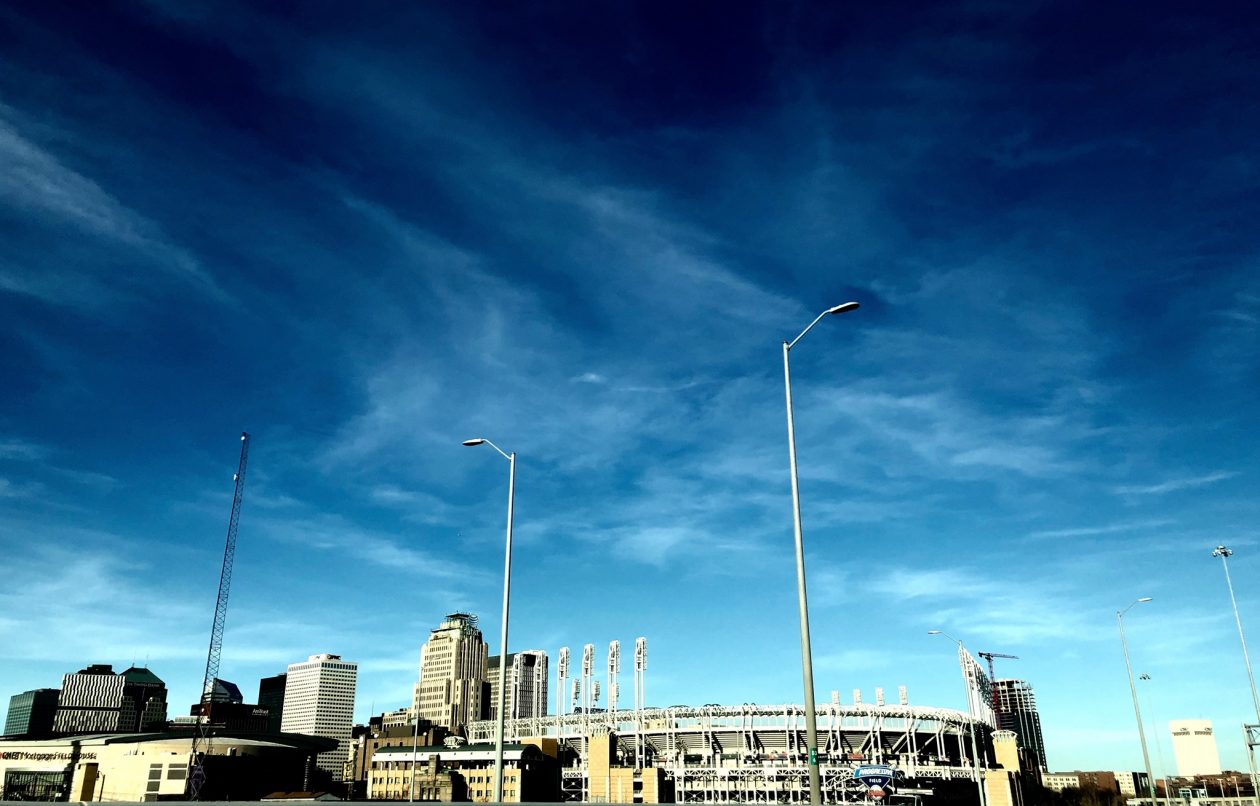
   Municipal Stadium opened in 1931 and was the home of both the Cleveland Indians and Cleveland Browns. Two days after it was formally dedicated Max Schmeling fought Young Stribling for the World Heavyweight Championship. The two sluggers brawled for the full fifteen rounds. In the end Young Stribling was covered in more bumps, bruises, and blood than Max Schmeling, so the German won the match on a TKO.  A month later the Tribe played their first game there, losing to Lefty Grove and the Philadelphia Athletics one to nothing. The crowd of  more than eighty thousand set a major league record.

   When it was built, and for many years afterwards, Municipal Stadium was the biggest baseball stadium in the country, although by the 1970s it was drawing the smallest crowds in the country. A month earlier only four thousand fans showed up to watch the Indians beat the Boston Red Sox. There were two reasons everybody stayed home and watched something else on TV. The stadium was built all wrong, for one thing. It was cavernous. God forbid your seat was at the far end of the cavern. Relief pitchers had to be driven to the mound from the bullpen. Even when new outfield fences were installed shrinking the size of the playing field, it was still nearly five hundred feet from home plate to the bleachers in straightaway center field. High and deep fly balls went there to die. We always sat in the cut-rate seats. No wannabe home run ever reached us. The upper deck was even farther from the field. Sitting in the stratosphere meant high-powered binoculars in order to see the action.

   By the late 1960s the place was falling apart. It looked like Miss Havisham’s mansion. It stood on Lake Erie, a wheezy open-air mausoleum squatting on the south shore. It was a dismal hulk, especially in the spring and fall when cold winds blew in off the lake. During the summer, during night games, the lights attracted swarms of midges and mayflies. The bathrooms were unbearable for many reasons. Only the desperate ever visited them, however briefly.

   On top of everything else, the Tribe couldn’t punch its way out of a paper bag. In the 1950s they were routinely winning ninety and hundred games every season. They won championships. By the 1960s they were lucky to win eighty games a season. In 1971 they lost more than a hundred games, finishing so far out of first place fans lit memorial candles. The locker room got sad and gloomy. The Tribe lost more games during the decade of the 1970s than during any other decade of the team’s long life.

   When we got inside the stadium we were surprised by how many fans were there, about twenty five thousand of them, although we shouldn’t have been. Besides the cheap beer, payback time was in play. A week earlier in Texas, the Indians and the Rangers had gotten into it. In the bottom of the  eighth inning a Tribe pitcher threw behind a Ranger batter’s head. A few pitches later the batter laid down a bunt. The pitcher fielded the ball and tagged the runner out. The runner didn’t stop running, clubbing the pitcher in the face with a forearm as he ran past. When he got to first base he head butted the Tribe’s first baseman in the groin. The first baseman started swinging. Both benches emptied. After the fracas, as Indians players and coaches returned to their dugout, they were greeted with giant pretzels and warm beer hurled by Texas fans. Dave Duncan, the short-tempered Cleveland catcher, had to be restrained from storming the stands.

   After the game a reporter asked Rangers manager Billy Martin, “Are you going to take your armor to Cleveland?” Billy Martin said, “Naw, they won’t have enough fans there to worry about.” The following week sports radio talk show hosts whipped up the ire of Cleveland’s baseball fans. The game was billed as “Revenge Rematch Time.” The Cleveland Plain Dealer printed a cartoon of Chief Wahoo wearing boxing gloves. The caption read, “Be Ready for Anything!” 

   Ten Cent Beer Night was the dream child of the Tribe’s sales and marketing department. “We were on a mission to save baseball in Cleveland,” said Carl Fazio, one of the men overseeing promotions. “We did everything possible to make baseball successful in our town. If we were going to fail, it wasn’t going to be because we didn’t try things.”   

   Tuesday was a hot sticky night. The sky was clear and the moon was full. Twice as many fans showed up as the sales and marketing showmen expected. “It was a stinkin’ humid night, and you kind of had a feeling things weren’t going to be good,” said Paul Tepley, a Cleveland Press photographer. “Billy Martin stood in front of the Rangers dugout before the  game heckling the fans, and the fans were heckling him. It had the makings of a bad night.”

   No sooner did anybody step into the stadium than they made a beeline to the special tables manned by teenagers selling the low-cost beer. The legal drinking age in 1974 was eighteen. Banners behind the tables said, “From One Beer Lover to Another.” The regular price was sixty five cents. The promotional price of ten cents was a big discount. There was a limit of six cups a  purchase but no limit on how many purchases anybody could make during the game. The first Beer Night had been staged three years earlier. There were some incidents then but they mostly involved horseplay, vomit, and getting dead drunk.

   Some fans brought pockets full of firecrackers and smoke bombs to Ten Cent Beer Night. They blew them off in the stands and threw some on the field before the game started. When the first pitch was thrown for a strike everybody settled back with their suds and tuned into the matchup. In the second inning a woman sporting a bouffant ran to the on-deck circle, lifted her shirt, and flashed the crowd. She was stacked and beaming smiles. She tried to kiss home plate umpire Nestor Chylack. He was not in a smooching mood., however. Everybody cheered the sight of boobs but gave the umpire a Bronx cheer for ducking the kiss.

   The Rangers took a three to nothing lead when Tom Grieve slammed a home run with men on base. As he went around second base a nearly naked man slid into the bag behind him. He was wearing two black socks. We thought he might be an insurance agent. When the streaker got up he saluted the crowd before dashing away. His butt was road rash red. He ran through center field towards the bleachers. One of his socks got loose. By the time he got to the fence in front of us, he was down to one sock. He vaulted over the fence and disappeared under our seats. The next inning a father and son ran out onto the field and simultaneously mooned the crowd. The son’s butt was light bulb white. The father’s butt was cream cheese white.

   When the special tables selling cheap beer started to run dry the Stroh’s Brewing Co. sent a tanker full of brew to the back of the ballpark. Fans gathered at the industrial spigots fastened to the rear of the truck. Before the truck arrived every Rangers player who stepped up to the plate had been roundly booed. Twenty minutes after the truck got there the crowd started throwing things at them.

    “I bet I had five or ten pounds of hot dogs thrown at me,” said Mike Hargrove, a Rangers rookie playing the infield. “A gallon jug of Thunderbird landed about ten feet behind me.” When he realized what he had done, the man who threw the half-full jug of fortified wine demanded it back. Fans threw rocks, batteries, and golf balls. One man threw a tennis ball and was almost laughed out of the ballpark. The bullpens had to be evacuated after cherry bombs were lobbed into them. 

   Everything went to hell in the home half of the ninth inning. Everybody with kids and a wife had already fled. The Tribe put together four straight hits and a sacrifice fly. They tied the game at five runs apiece. The winning run was standing on second base. Unfortunately for the Indians, that was as far as he ever got.

   Before he could make a move two young men ran out on the field towards Rangers outfielder Jeff Burroughs. They were greased for trouble. One of them tried to steal the ballplayer’s cap. Jeff Burroughs kicked at the man but slipped and fell down. The rest of the Rangers, far away in their dugout, thought the men had knocked their teammate down. Billy Martin led his Rangers players onto the field. “Let’s go get ‘em, boys.” They sprinted to the rescue. They were brandishing every bat they had on the rack. When hundreds of fans poured out of the stands after them, with slats they had torn off from their seats, the riot was on.

   The law and order detail at Municipal Stadium on Ten Cent Beer Night was fifty older part-time men and two off-duty Cleveland policemen. They were swept aside by the flow of drunks. Some of the troublemakers were waving chains. Others had knives. Twenty police cars responded to the call for help. When they got to the ballpark they called for the Riot Squad. When the Riot Squad got there they called for more men. “We would have needed twenty thousand cops to handle that crowd,” said Frank Ferrone, the Chief of Stadium Security.

   Tribe manager Ken Aspromonte ordered his players onto the field to help the Rangers. They armed themselves with bats and formed a phalanx. “They saved our lives,” Billy Martin said. “That’s the closest you’re ever going to see someone get killed in this game of baseball.” He didn’t know it got closer in 1920, when Yankee’s pitcher Carl May hit Indian’s batter Ray Chapman in the head with an errant fastball and killed him.

   A Cleveland player was hurt during the riot when a flying metal chair hit him in the head. He had to be helped off the field. Nestor Chylack’s hand was badly cut and he was hit by a flying chair as well, before finally declaring the game a forfeit. The mob was incensed. More chairs went airborne. “They were animals,” the injured home plate umpire said. ”I’ve never seen anything like it, except in a zoo.”

   The organist played “Take Me Out to the Ballgame” over and over again. Some fans ripped the padding off the third base line fence. They stole all the bases. “This is an absolute tragedy,” declared Joe Tait, one of the broadcasters. “I’ve been in this business for twenty years and I have never seen anything as disgusting as this. I just don’t know what to say.”

   When beat reporter Dan Coughlin tried to interview a rioter, he was punched in the face. When he tried to interview a second rioter he was punched in the face again. After that he put his notebook away and went looking for a drink, something stronger than beer. There was no charm in trying a third time.

   Mike Hargrove had a chunky teenager on the ground and was walloping him. “That kid came up and hit him from behind is what happened,” said Herb Score, the other broadcaster. When the ballplayers fought their way back to their clubhouses, they bolted the doors behind them and left Municipal Stadium under escort of armed guards. The Riot Squad flooded the field with tear gas.

   “It’s not just baseball,” Ken Aspromonte said. “It’s the society we live in. Nobody seems to care about anything. We complained about their people in Texas last week when they threw beer on us and taunted us to fight. But look at our people. They were worse. I don’t know what it was and I don’t know who’s to blame.”

    When the fireworks were all over we walked to Superior Ave., across the bridge over the Cuyahoga River, and crossed West 25th St. We passed the insurance agent streaker. He was wearing what looked like ratty clothes from a thrift shop. He was barefoot, having lost his other black sock. We walked to the Big Egg, where we got late-night grub, hash browns and fried eggs. They hadn’t run out of that day’s gravy. Their sauce was boss. The Big Egg wasn’t the cleanest diner in town, but it stayed open all night and the food was dirt cheap. Their slogan, on the wall behind the long counter, was “Where the Egg is King and the Queen is, too!”

   “I don’t look at it as a black eye at all,” Carl Fazio said afterwards about what took place that night. “It was just one of those crazy things that happened because of a set of circumstances that all came together that night.”

   The next day the Tribe slugged five home runs, pummeling the Rangers in front of eight thousand spectators. The stolen bases were never recovered. New ones had been put in place. My friends and I stayed home. I read about the second game of the series a day later in the Cleveland Plain Dealer. The fans were well-behaved, cheering their heads off but not throwing anything onto the field. They sipped their beer before tossing their plastic cups under the seats. It was a breezy evening with bright stars high in the sky. Everybody kept their cool and kept their clothes on, too.

Ed Staskus posts monthly on 147 Stanley Street  http://www.147stanleystreet.com, Made in Cleveland http://www.clevelandohiodaybook.com, Down East http://www.redroadpei.com, and Lithuanian Journal http://www.lithuanianjournal.com. To get the site’s monthly feature in your in-box click on “Follow.”

Bomb City” by Ed Staskus

“A police procedural when the Rust Belt was a mean street.” Sam Winchell, Beyond Books

Available on Amazon: https://www.amazon.com/dp/B0F1LM1WF9/ref=sr_1_1?crid=2MYAQAOZIC2U9&dib=eyJ2IjoiMSJ9.hTm7BGbiQbSe5ZapFwYPPfcwOpTe-Vdg6VLE4aGyTyk.Z0R-VNBWWEcvKcNaO9LdCOUnNIOOXgvYkRS_FXiXuHk&dib_tag=se&keywords=bomb+city+ed+status&qid=1742136726&sprefix=bomb+city+ed+staskus%2Caps%2C84&sr=8-1

Cleveland, Ohio 1975. The John Scalish Crime Family and Danny Greene’s Irish Mob are at war. Car bombs are the weapon of choice. Two police detectives are assigned to find the bomb makers. Revenge is always personal. It gets personal.

A Crying of Lot 49 Publication

Rules of the Game

By Ed Staskus

   You never want to fall asleep in Mr. Hittbone’s second period math class, no matter what, because he will leave you asleep until you eventually wake up, whenever that is. It’s one of the rules written on his personal rules board at the front of the class. “No Waking Sleepers!” Classes will come and go, and no one is allowed to wake up anybody sleeping.

   If you fall asleep he just lets you snooze and snore, no shaking you awake, and you miss the next class, and even the class after that. You wake up and it’s, my God! You get major detentions for missing classes at St. Ed’s. It doesn’t matter if it wasn’t your fault. Mr. Hittbone doesn’t care that maybe you had homework for six classes and maybe you had work to do around the house, too, and walking the dog on top of that. Nobody cares when you’re explaining. They care even less when you’re complaining.

   A guy once went dead duck and slept for three straight periods. When he woke up Mr. Hittbone was at his podium lecturing, just like always, but after the guy blinked shook his head looked around, he saw there weren’t any familiar faces. There were all different guys in the class. He bolted out of the room. He hadn’t technically skipped any classes, but he got a butt load of detentions for disrespect.

   It’s not a school rule. It’s the Boneman’s rule. There’s no breaking and getting away with it. I woke up halfway through his class one day after a restless night at home. “Did you sleep good?” he asked. He smirked down at me. “No, I made a few mistakes,” I said. He didn’t like that. I got a detention.

   “You boys grow up without rules, without boundaries,” he told us the first class the first day of school. It was September 2014. The good old summertime was over. “You need discipline. You can be yourself, whatever you think that is, once you’ve learned the rules.”

   Lots of rules and no mercy, that’s the Boneman, like he just stepped out of the Old Testament. Mr. Rote and the rest of the religion teachers teach the New Testament, but that update has never reached Mr. Hittbone. It’s not sinners in the hands of an angry God anymore, Mr. Bonehead! But he doesn’t care about that, either.

   Everybody says he’s been at St. Ed’s since it opened, or maybe even before that. He was probably rubbing his hands for the big day to happen. He’s only ever taken two days off in all those years. He told us about them on the second day of school. “It wasn’t because I was sick,” he said. The Chalk of Fate says he’s never been sick. Someone else might have been sick on those two days. Maybe he only ever feels like crap in private.

   Mr. Hittbone’s a short man, mostly bald and bearded. He has lips like wieners. He wears suspenders like it’s another century. He doesn’t wear a sports jacket. He only ever wears a dress shirt. He has grayish hair and eyes the color of a telephone pole. He’s a grumpy dude. Everybody hates him, the upper classmen, and us, just everybody, really. Everybody hates his chalk board full of numbers and equations we can barely understand.

   Some of the upper classmen add an “S” to the front of his name, but never out loud to his face. That would be a disaster. The Boneman is old but lightning fast on the draw with detention slips. It’s not even funny. He’s married but told us he can’t stand his wife because she never turns off the lights and watches TV all the time. “She even shops in bed, thanks to television,” he said. We all thought, “So what?”

   He has a son and daughter, but never talks about his son. When he told us about his daughter he said he was annoyed about how in the first year of whatever job she got she was making more money than him. He always says money is a “masterpiece in the eye of a masterpiece,” whatever that means.

   “God wants us to prosper and have plenty of money,” he said. “Money is how you keep score. That’s why you don’t want to stop at simple math, because then you’ll only make simple money.” Nobody knows what he’s talking about.

   He smokes between classes, in front of our gold dome Hall of Fame chapel. He rips the filters off his cigarettes. I’ve never seen another teacher smoke on campus, only him. He throws the butts on the ground, mashes them with his foot, and lights up another one. Whenever anybody tells him cigarettes are bad for you, he scowls. “When it looks like I’ll live longer than my next smoke I’ll scrape it off the bottom of my shoe,” he says.

   Whenever anybody tells him cigarettes are practically illegal, he gets mad about that, too. “The government tells you smoking is bad for your health, but when you Ben Franklin it, the government has killed more people than cigarettes ever did, or ever will.”

   One morning he told us he was in a gas station buying cigarettes down on Detroit Rd. just down from the school, when somebody tried to rip off the attendant with some kind of money trick. “I wanted to beat him with a baseball bat,”  Mr. Hittbone said, making fists, his hands shaking. He wanted to bash the hell out of him. Every day the forecast for the Boneman is clouds, rain, and anger. We all laughed, though. He couldn’t punch himself out of a paper bag with Babe Ruth’s bat.

   He teaches from a podium at the front of class. He’s the only teacher in the school who has one. How does he rate? It’s because he’s a dinosaur and gets his way. He puts his papers and things on the podium and hardly moves all period, unless he wants to tear up something that’s on your desk. That’s another one of his rules. “Math Only!”

   Even if you’re not doing anything with whatever is on your desk, like a science assignment, if he sees it he’ll just swoop down on you and take it. “I don’t think you’ll be needing this,” he says, and rips it up. He’s always looking for things to rip up, even if it’s something from one of your other classes, not even his class, something you were just glancing at. He’s always showing up all of a sudden and tearing your stuff to shreds.

   He has a ton of rules on his board, more than fifty of them, a boat load of them. “No Chewing Gum!” If you chew gum anywhere on campus, not just in his class, watch out for him seeing you doing it. He scribbles your name in his black spiral notebook and reports you. He gives you a full detention, which is forty-five minutes. He never gives out minor detentions. Mr. Hittbone told us chewing gum should be forbidden at the school.

   “You want to be a bum? Go ahead, chew gum, but not here.”

   No one is allowed to touch anything in his classroom, either. “No Touching!” If you walk by one of his special teacher books and you sort of graze it with your leg, you get a major detention. If you pick up a marker at the board without first asking his permission, you get a major detention. If you punch somebody’s arm, even though it’s none of his business, you get a major detention.

   It’s nothing like my third period class, which is our science class. The teacher is Mr. Strappas, who’s one of the varsity football coaches. He’s young, has blond hair, and is super fit. He played football in college and he’s a cool dude. He encourages us to touch things, do things, get into the projects, and the only rule he has is no talking when he’s talking.

   I don’t know why some guys can’t get it right. It’s always the same guys who get it wrong, who do all the talking in class, breaking the rules. We sit pairs to a table and the two chatty guys are somewhere in the middle of the room. They talk about video games, sports, and all their other dumb stuff. Mr. Strappas will say, no talking, and they will say, sorry, but they don’t stop. They don’t get good grades on their quizzes and tests. They don’t turn their homework in on time and get bad marks for effort. They’re just retards.

   Mr. Strappas doesn’t stand at his lectern. He roams back-and-forth, to the sinks, the whiteboard, and all around the room. He’s always on the move. It’s my favorite class of the day. I actually like learning in it. It’s fun finding out about atoms and lasers and everything he’s interested in.

   He expects us to be in our seats when his class starts but doesn’t sweat it if it doesn’t happen. But if you’re not in your seat when the bell rings the instant Mr. Hittbone’s class starts, you get a full detention. Everybody should be in their seats when class starts, we all know that, but if you’re standing there for a second, just fixing your belt, he gives you a detention. It’s totally stupid, but that’s another one of his rules.

   Because it’s  the Boneman, you absolutely want to make sure you’re all good. “Look Proper!” We wear ties, dress shirts, dress pants, a belt, undershirt, and black shoes. We have to make sure we’re all buttoned up. If any button is even half unbuttoned it means a full detention. He totally hates it if the second button on your shirt is undone.

   Even though Mr. Hittbone is a hundred years older than Mr. Rote, our first period religion teacher, who is young and thinks he’s all there, but is a doofus, it’s one for the button in first period and the same button in second period. They both hate casual dress days. “It’s like a casual walk through the insane asylum,” the Boneman says, looking at us like we are crazy.

   If there is any piece of paper on the floor around or near your desk at any time of the class he’ll give you a detention, even if it’s not yours, and even if you didn’t see it in the first place. “No Litter!” If the paper has your name on it, it’s even worse, because he rips it up before giving you the detention. Mr. Hittbone is his own chicken hawk laying down the law.

   “Don’t Look Through the Windows!” We’re supposed to face front when we’re in class, but there are some guys who sit right by the windows and sometimes they can’t help shifting their faces to the glass. That means a full detention. If Mr. Hittbone and I looked out the same window, I don’t think we would see the same thing, no matter how you do the math. Sometimes I think that since I didn’t have a part in making his rules, the rules have nothing to do with me. If you say Cloud 9 is amazing, he’ll say, what’s wrong with Cloud 8? No matter what, you can’t fight the Boneman. He’s like Godzilla. He swats you down with his horny tail.

  At the end of class, we can’t jump up and leave like in any of our other classes. His rule about the bell for ending class is that it isn’t the school bell, but his make-believe bell that matters. When the real bell goes off, we have to stay in our seats until he says we can go. At the end of class I’ll say, “See you tomorrow Mr. Hittbone.” And he’ll say, “Thanks for the warning, Mr. Who It.” My name is Wyatt, so he calls me Who It, as in Why It, and then he laughs.

   Sometimes it seems like he wants you to lay down at his feet like a beat-down dog and say, “Yes, sir, I’ll go dig up those apples, sir, whatever you say.” He thinks he’s the GOAT, but he’s just an old goat. He’s got us for fifty minutes, and that’s that. I’m counting the days until my sophomore year and I’m none of the Boneman’s business anymore.

Ed Staskus posts monthly on 147 Stanley Street http://www.147stanleystreet.com, Made in Cleveland http://www.clevelandohiodaybook.com, Atlantic Canada http://www.redroadpei.com, and Lithuanian Journal http://www.lithuanianjournal.com

A New Thriller by Ed Staskus

Cross Walk

“A once upon a crime whodunit.” Barron Cannon, Adventure Books

“Captures the vibe of mid-century NYC.” Sam Winchell, Beyond Fiction

Available on Amazon: https://www.amazon.com/dp/B0CRPSFPKP

Late summer and early autumn. New York City. A Hell’s Kitchen private eye. The 1956 World Series. President Eisenhower at the opening game. A killer in the dugout.

Katya in Asia Town

By Ed Staskus

   The Chinese started settling in the United States in the 18th century. Wherever whenever there were enough of them, they lived close to hand, building their own neighborhoods, appropriately called Chinatowns. There are more than 50 of them across the United States, including at least 16 in California alone.

   There are several of the towns within cities in New York City, the most famous one being in Manhattan. It’s the largest Chinatown in the country, spread out over 40 blocks and home to more than 150,000 Chinese-speaking residents.

   Cleveland, Ohio used to have a Chinatown, a colony at Rockwell Ave. near downtown. Immigrants settled in the area starting in the 1920s. After the Communist takeover of the mainland and into the 1960s more than 2,000 lived in the neighborhood. There was a row of Chinese restaurants, among them the Three Sisters, Golden Coin, and Shanghai, as well as two grocery stores between East 21st and East 24th. Storehouses in the district supplied native eateries one end of the city to the other. There was a temple and a meeting hall.

   Chinatown went into sharp decline in the early 1970s and a few years later, when I moved into what was becoming Asia Town, there wasn’t much left. Most of the residents moved to the suburbs and by the 1980s there were only two half-empty restaurants holding on, catering mostly to business folk and occasional tourists looking for the city’s historic Chinese quarter.

   Asia Town is roughly from East 18th St. to East 40th St. and from St. Clair Ave. to Perkins Ave. It has the highest percentage of Chinese, Koreans, and Vietnamese in Ohio. When I lived on East 34th St. between Payne Avenue and Superior Ave. in the mid to late 70s, there weren’t as many yellow faces yet but they were everywhere. There were dirt poor whites, dirt poor blacks, and a recent influx of college students. It wasn’t as present-day as it would become after the 1990s when Asia Plaza was built at East 30th St. and Payne Ave., when it became a business as well as a residential community.

   My roommate Carl Poston was tall, walked with a lanky slouch, and wore a mop of twisty black hair. Everybody called him Erby. He never said why, and I never asked. He liked to read, tearing through the Plain Dealer newspaper every morning, and liked to play chess, like me, but was better than me. He had a bad-ass motorcycle and several bad-ass friends with motorcycles. He worked downtown for the city helping crunch numbers and delivering bad news as Cleveland went under.

   In 1978 the city became the first one in the United States to go bust since the Great Depression. After the bankruptcy it became known as the Mistake on the Lake, a nickname nobody in the hometown liked. When Mayor George Voinovich showed up at a Cleveland Indians game against the New York Yankees in the 1980s wearing a t-shirt under his sports coat, the t-shirt said, “New York’s the Big Apple, but Cleveland’s a Plum.” Only the Asians liked the plum thing, since plums represent purity and perseverance to them. Nicknames come and go but when Cleveland later became ‘The Land,’ nobody shook their heads in despair. It was far better than the mistake and the plum.

   Our house on East 34th St. was behind another house. There was no backyard or garage. Almost all the houses on the west side of the street were that way. The houses across the street had backyards and most of the houses in the neighborhood had backyards. But there were some houses so tucked away one had to be looking right at them to see them. Our rent was more than reasonable, and my half was even better. The landlord lived in Strongsville. His grandmother lived in Asia Town, like me. In return for checking up on her at the beginning of the week and taking her to Dave’s Grocery at the end of the week, I lived almost rent-free.

   Her name was Katya, and she was hundreds of years old. She was five foot four something short and hunchbacked on top of that. She was always in her kitchen when I knocked on the side door, she always croaked “Come in, honey,” and when I went in, she always asked me what I wanted.

   She had three cats who I never saw. She kept a pan of water next to the door for them but no food bowls or litter. They were freeloaders, running down grub in the wild. She had a stack of old newspapers in a corner and the linoleum kitchen floor was usually covered with them. It was sketchy walking inside. The unfolded papers piled haphazardly on top of each other slid every which way. I had to walk like a duck to stay upright.

   “I keep my kitchen floor clean that way.” she said, peeling back the corner of a newspaper and showing me.

   She bought her clothes from third hand stores but bought her shoes new. She was crazy frugal, but she wasn’t crazy. She was built to last, and her feet had to lead the way.

   Katya was from Slovenia, from sometime back in the 19th century. Her parents were peasants from a village nobody ever heard of southeast of Ljublijana. They came to Cleveland to work in the steel mills in the 1890s. At first, they lived in Newburgh, but when a community started forming along East 30th St., from Lake Erie south to Superior Ave., they moved, finally landing on East 38th St. She still lived in the small house her parents bequeathed her.

   By 1910 there were so many Slovenes in Cleveland that it would have been the third-largest Slovenian city in the world if it was in Slovenia. The immigrants opened enough taverns to drown their New World blues and enough churches to repent their drinking. St Vitus was established in 1893, St. Lawrence in 1901, and St. Mary in 1906. Each had its own school. They published their own newspapers in their mother tongue and formed debating drama and singing clubs.

   The singing clubs were stamping grounds, as well. The Lira Singing Society, located in the St. Clair neighborhood, and adamantly Catholic, was opposed by the Zaria Singing Society, sponsored by atheists and socialists. Everybody knew what the arguments were about.

   Katya was married long enough to have two sons before her husband was shot by mistake by a policeman outside a Collinwood bank during a botched robbery. He bled to death before an ambulance could reach him. She buried him in Woodlawn Cemetery, never married again, raising her sons by herself. She took in sewing days and worked nights during World War Two. Her oldest son moved to Seattle and she never saw him again. Her younger son moved to the west side and had a family, but they didn’t want to visit her.

   “We aren’t going to your crazy grandmother’s house in that terrible neighborhood, and that’s final,” his wife said. What the woman didn’t know was that Katya kept a loaded Colt Pocket Hammerless in her kitchen table drawer. It was a single action blowback .32 caliber handgun.

   “Nobody going to shoot me by accident,” she said.

   Her eldest grandson loved her and made sure she had what she needed to stay afloat. She had a small pension and some social security, too. She told me she had silver dollars buried in the backyard, but quickly shot me a wily look.

   “Forget I say that.”

   When Katya’s husband Janez was buried in Woodlawn, it was the oldest cemetery in Cleveland, the first man being inhumed there in 1853. It was the worst cemetery in Cleveland, too. The Depression wrecked its finances. There were sunken graves, toppled headstones, grass never mowed, piles of rotting leaves, and broken tree branches all over the place. That was before the city found out Louise Dewald, who worked in the finance office, had stolen almost half a million in today’s dollars from the coffers as the Depression picked up steam.

   After that it got worse.

   The cemetery chapel roof and the rest of it collapsed in 1951 and was hauled away. The next year City Council thought about digging up and moving all the bodies somewhere else, but the public outcry was too great. Katya never stopped visiting Janez, no matter what, no matter what it took to get there. 

   One Friday walking her home from Dave’s Grocery she asked me if I could take her to the Slovenian National Home the next afternoon for a luncheon. 

   “I don’t have a car anymore, Katya, sorry.” My 1962 Rambler Custom Six, that I had gotten for free, was no more. When I got it, the car was already on its last legs. It was now rusting peacefully away in a junk lot somewhere up on Carnegie Ave.

   “Oh,” she said. “Maybe you walk with me there?”

   “It’s pretty far,” I said. I didn’t mention taking a bus. She distrusted the metropolitan buses getting to where they were going, ever since the city’s rail tracks had been torn up and the electric cars replaced with diesel transport. She believed half the drivers were addled from the fumes.

   The Home was almost thirty blocks away on East 64th St. and St. Clair Ave. At the rate she walked we would have to start as we spoke. After the luncheon we would have to walk the whole night to get back.

   “Oh, that too bad. Janez and I dance there all the time before he die.”

   “Let me see what I can do.”

   I asked my roommate Carl, in return for my washing the dishes, cleaning the house, and mowing our grave-sized plot of grass, if he would take her there and back.

   “It’s a deal,” he said.

   The next day he schlepped her to the Slovenian Home on his Harley, waiting outside smoking cigarettes and shooting the bull with passersby. She was a big hit with her cronies when they spilled outside after the gabbing and feedbag and saw her climb on the back of the hog, wrap her stumpy arms around Carl’s waist, and glide away.

   The Slovenian Home was where my Baltic kinsmen booked their big wedding receptions and celebrations. The Lithuanian Hall on Superior Ave. was too small in the 1960s and the new Community Center in North Collinwood wasn’t built yet. The Home opened in 1924, with two auditoriums, a stage, bar restaurant kitchen, meeting rooms, a gym, and a Slovenian National Library.

   The main auditorium was plenty big enough for any get together and the stage was plenty big enough for any band. The bar was big enough for even Lithuanians. Europeans drink more alcohol than anybody else in the world and Lithuanians are number one in Europe. Whenever I accompanied my parents to the Slovenian Home for a reception or gala, it was always a long night. There was a big dinner at big round tables, speeches, chatting it up, dancing, drinking, and as the drinking went on, singing. My father and his friends would booze it up well into one and two in the morning, singing “In the Sea of Palanga” and “The Old Roofs of Vilnius” and “Oh, Don’t Cry, Beloved Mother.”

   By then I was snoozing sprawled out in the balcony.

   Unlike our no backyard house Katya had a backyard where she grew Brussels sprouts cauliflower broccoli onions potatoes and anything else she could squeeze in. She liked prosciutto and bread for lunch. Sundays she made loads of yota with turnips beans cabbage and potatoes and a slab of meat loaf with hardboiled eggs in the middle. She kept it in the fridge all week, dinner at her beck and call.

   That fall I had to tell Katya that once the school quarter at Cleveland State University was over, I was going to have to take the next quarter off. I had found a job with an electrostatic painting outfit that was going to send me on the road, expenses like food and motels paid, for a couple of months. We were going to start in Chicago, swing out to the west coast, end up in Texas, and be back in time for the spring quarter at CSU. It was chance for me to earn good money and save almost all of it.

   “I going to miss you,” she said.

   We traveled in three-man crews and worked nights, from about 5:30 to about 1 in the morning. We worked in offices, painting office furniture like metal filing cabinets, desks, bookcases, and storage cabinets. The paint was loaded with a low voltage positive charge and the metal items magnetized negative. The finish was like new, no runs, no brush or roller marks, and there was almost no overspray.

   When I got back from my two-and-a-half months on the road, I picked up my cat Mr. Moto from my parents, did my laundry, and registered for classes for the spring quarter at CSU. I went to visit Katya that evening, but she wasn’t there anymore. The house was vacant. A “For Sale” sign was posted. I asked one of the neighbors, but he said he didn’t know much, just that a moving truck pulled up one morning and by the end of the day she was gone.

   I peeked through the windows. The ground floor rooms were all empty. The only thing left was a stack of old newspapers in a corner of the kitchen.

Ed Staskus posts monthly on 147 Stanley Street http://www.147stanleystreet.com, Made in Cleveland http://www.clevelandohiodaybook.com, Atlantic Canada http://www.redroadpei.com, and Lithuanian Journal http://www.lithuanianjournal.com

A New Thriller by Ed Staskus

Cross Walk

“A once upon a crime whodunit.” Barron Cannon, Adventure Books

“Captures the vibe of mid-century NYC.” Sam Winchell, Beyond Fiction

Available on Amazon: https://www.amazon.com/dp/B0CRPSFPKP

Late summer and early autumn. New York City. A Hell’s Kitchen private eye. The 1956 World Series. President Eisenhower at the opening game. A killer in the dugout.

Raising Cain

By Ed Staskus

   Many cities have a nickname. Detroit is “Motor City.” Las Vegas is “Sin City.” Atlantic City is known as “Always Turned On” although it has been turning itself off for years. Even suckers lose their taste for losing sooner or later. Cleveland was once known as “Forest City.” In the 1960s it was the “Mistake on the Lake” and in the 1970s it became the “Rock and Roll Capital of the World.” Nowadays it is known as “The Land.”

   Cleveland has never been known as a hotbed of anarchy, although at the beginning of the 20th century that is what it was. It was where the notorious anarchist Emma Goldman struck a match. After the match sparked and flared to life the run-up to the fate of the life of the 25th President of the United States took shape.

   When Emma Goldman gave a speech at Cleveland’s Franklin Club in December 1900 she knew she was throwing gasoline on fire. She didn’t know the White House was where the fire was going to spread. Leon Czolgosz was in the audience. He was the glowing ember. He was born in Detroit but lived in Cleveland after his immigrant family moved there. As soon as the speech was over he started putting spare change aside to buy a handgun. He hadn’t held down a job for three years. Money was hard to come by but he made sure to come by it, penny by penny, by hook or by crook. 

   In the meantime, he tried joining Cleveland’s Liberty Club, a local anarchist group, but they said no. They said he was mad as a hatter and couldn’t join their club. All Leon could do was roll his eyes. “I no need to belong to no damn club, not me,” he grumbled. He probably would have refused to join any club that would have him. The lone wolf hoped his aim would be true when the time came.

   Anarchism is a philosophy that believes the state is both unnecessary and undesirable. It advocates the end of hierarchical government. “Anarchism is founded on the observation that since few men are wise enough to rule themselves, even fewer are wise enough to rule others,” Edward Abbey said. What is desirable is a stateless society. Anarchists believe in organizing society on a voluntary basis without recourse to compulsion. They refuse to rely on authority. They have always believed in defunding and dismantling the police. It is the farthest left of anything on the political spectrum. Anarchism is not for or against anything but stands for liberty. “I say, liberate yourself as far as you can,” is what Max Stirner said. 

   Capitalists and communists hate anarchists as much as they hate each other. The police everywhere in the world lock them up. Most people don’t understand them and don’t want to understand them. Others think the worst thing in the world, next to government, is anarchy. Even true believers of the movement have mixed feelings, some believing that when anarchy is declared the first thing to be done is to kill all the anarchists.

   Not long before Emma Goldman, who was billed as the “High Priestess of Anarchy,” lit up Cleveland, New York’s Supreme Court ruled that the act of saying you were an anarchist in public was a breach of the peace and liable to prosecution. The state soon passed the Criminal Anarchy Law, which said nothing prevents the government from punishing political speech that advocates its violent overthrow. Teddy Roosevelt, after taking over from William McKinley, proclaimed that anarchists were criminals and malefactors. “Their perverted instincts lead them to prefer confusion and chaos to the most beneficent form of social order.” His adversaries said that whenever there is a slavish addiction to laws, the only remedy is anarchism.

   Before he became the 26th President of the United Staes, Teddy Roosevelt was the police chief of New York City. He knew who his enemies were. In 1903 Congress passed a law that said no immigrants who were anarchists with “foreign sounding” names were welcome. Go back to Germany. Go back to Russia. Go back to where you came from and don’t come back.

   Emma Goldman wasn’t a windshield wiper kind of anarchist, mincing her words to suit her listeners. She said the same thing to bomb throwers and the judges who put bomb throwers away. What she said in Cleveland was, “Anarchism stands for liberation from the dominion of property and liberation from the shackles of government. The political arena today leaves one no alternative. One must either be a dunce or a rogue. Politicians promise you heaven before election and give you hell after. There’s never been a good government. A man has as much liberty as he is willing to take.” 

   She brought the house down at the Franklin Club. “My head nearly split with the pain,” Leon Czolgolsz said after the speech. “She set me on fire.” He made up his mind to take down the top dog at the top of bad government. He circled the Pan-American Exposition in Buffalo in September on his calendar.

   In the beginning the Franklin Club was the Union Labor Club. It was organized to promote the “brotherhood of humanity.” By 1896 the club was meeting at Forester’s Hall near downtown Cleveland and had changed its name to the Franklin Club. They had two motto’s. The first one was, “Error is harmless if truth is free to combat it.” The second one was, “Labor produces all wealth.” When they met their lectures and discussions revolved around ethics, economics, religion, and free love. After Leon Czolgolsz got done doing what he was planning on doing, and the consequences got rolling, the club’s records were seized by the Cleveland Police and the group disbanded.

   Anarchists had been busy in the years leading up to the new millennium. They believed that since the state was an instrument of violence it was necessary to employ violence against the state. In Chicago in 1886 an anarchist threw a bomb at a group of policemen, killing seven of them. Four anarchists were hanged. In 1893 an anarchist tossed two bombs into a theater in Barcelona, Spain, killing 20 people. That same year an anarchist detonated a nail bomb in the French Parliament. He went to his death by guillotine shouting, “Death to bourgeois society! Long live anarchy!” Over the years they assassinated their fair share of European monarchs, including the Kings of Italy, Portugal, and Greece, the Tsar of Russia, and the Empress of Austria.

   Not all anarchists advocated violence, but nobody paid much attention to those who didn’t. There will be blood is what the pulpit is all about. When Luigi Galleani, who was the leader of a group dedicated to terrorism, published a manual for bomb-making, which included a do-it-yourself guide to nitroglycerin, everybody paid attention. He wasn’t hiding his hopes and dreams. His rants about class warfare and tips about bomb-making were published in his magazine “Chronicle of Subversion.” After one of his followers blew up a Milwaukee police station, he was deported back to Italy, even though the Italians didn’t want him back. Who wants to be re-gifted a bomb-thrower? In retaliation his followers mailed letter bombs to thirty six mayors, governors, congressmen, and the U. S. Attorney General. The Attorney General was A. Mitchell Palmer. Before he was done retaliating, ten thousand foreign-born radicals had been arrested and more than five hundred deported.

   When Leon Czolgosz took a train from Cleveland to Buffalo in late August 1901 he had just enough money to rent a room for a few days, buy bullets for his handgun, and wait for his chance. He got the chance on September 6th when President William McKinley was at the Temple of Music at the Pan-American Exposition. He disguised his handgun by wrapping a handkerchief around it. The president was shaking hands with well-wishers. When the anarchist stepped up to shake the president’s hand, he instead fired two shots. The first bullet hit a brass button over the president’s sternum and bounced away. The second bullet hit William McKinley in the abdomen. He went down gut shot and died eight days later. His last words were, “It is God’s will. Goodbye to all.” 

   The gunman was arrested on the spot. He told the Secret Service men dragging him away his name was “Fredrich Nieman.” It meant “Fred Nobody” in German. “You’re somebody now, you son-of-a-bitch,” one of the Secret Service men said. It didn’t take long for the State of New York to deal with the assassin. He was tried by the Supreme Court in Albany and found guilty in two short days. He was electrocuted on October 29th. His last words were, “I killed President McKinley because I done my duty. He was the enemy of the good people, the good working people. I am not sorry for my crime.” His body was dumped into a lead casket and disintegrated when sulfuric acid was poured into the coffin. He was buried in an unmarked grave. All his personal possessions were burned. Everybody in Cleveland said, “Good riddance.” They did their best to forget all about him.

   Emma Goldman was arrested on suspicion of being involved in the shooting, but later released. There was insufficient evidence she had helped plan or execute the murder. She couldn’t help herself, though, and published “The Tragedy at Buffalo.” She compared Leon Czolgosz to Marcus Brutus, the assassin of Julius Caesar. She said tyrants had to go, one way or the other. She called William McKinley the “president of the money kings and trust magnates.” She was later deported for shooting off her mouth.

   Anarchism didn’t go away after William McKinley’s death and all the crackdowns that followed. The Los Angeles Times Building was bombed in 1910 during a bitter labor dispute. A series of bombings targeted anti-immigration politicians and businessmen in 1919. Judges who had sentenced anarchists to prison were singled out. An anarchist parked a horse-drawn cart in front of the J. P. Morgan building in the heart of Wall Street on a mid-September day in 1920. He walked away. A minute later at 12:01 PM 100 pounds of dynamite in the cart exploded, spraying 500 pounds of metal ball bearings in all directions. The horse pulling the cart was annihilated instantly. More than 30 people died and more than 300 were injured.

   After the Wall Street bombing the anti-anarchist lockups and interdictions of the 1920s were the effective end of them. It wasn’t the end of terrorism, though. In the 1930s terrorism became the favorite form of arm twisting for Adolf Hitler and Josef Stalin. Both were tyrants in their own way. They hated almost everything except themselves and their cronies. After World War Two terrorism became the preferred tool of nationalist anti-colonial forces. In the 1960s the Red Brigade and the Weather Underground employed old methods in new ways. They kidnaped and killed people who they blamed for economic exploitation and political repression. Towelheads took up the sword in the 1980s. After 9/11 they discovered they hadn’t thought through the repercussions.

   Terrorism means getting more bang for your buck, although its persuasiveness is repeatedly obviated by revenge. Northern Ireland suffered more than its fair share of terrorist bombings for decades during “The Troubles.” Even Canadians got in on the action. Quebec separatists robbed armories and set off bombs throughout the 1960s. In 1970 they murdered a Quebec cabinet minister. It didn’t get them anywhere.

  In Cleveland anarchism has largely faded away but hasn’t entirely gone away. In 2012 five local anarchists were arrested by the FBI for trying to blow up a four-lane bridge. They knew they wanted to blow something up but at first weren’t sure what. They talked about blowing up a Ku Klux Klan picnic ground in the suburbs. They talked about blowing up the Federal Reserve Bank building downtown. “We wanted to send a message to big business and the government,” 20-year-old Brandon Baxter said. They finally settled on the bridge.

   They planted C-4 explosive charges at the base of a high-level bridge crossing the Cuyahoga Valley National Park just south of Cleveland. They planned to set the explosives off the next day when anti-government protests were planned to happen downtown. They changed their minds and drove to a nearby Applebee’s, where they sat down to cheap beers and tried to set off the bombs by cellphone. The restaurant was on a bluff overlooking the valley and the bridge. Nothing happened. When they looked at one another, wondering what had gone wrong, FBI agents rushed them, handcuffed them, and frog marched them to the Justice Center. They had been infiltrated by an informant. The C-4 explosive charges were fake. The plot was a bust.

   The FBI had been on to the anarchists for almost a year. Their informant had met the five suspects at a Wall Street Occupy Cleveland rally. He told lawmen about their plans. The lawmen paid him $5,000 to get the goods on them. After the arrests supporters of the “Cleveland Five” gathered outside the Justice Center carrying signs calling for the arrest of the man who was the informant. The FBI ignored them. The informant laughed all the way to the bank.

   Four of the anarchists pled guilty and were sentenced to prison terms and lifetime probation. The fifth man pled ignorance and innocence. He testified he was only along for the ride and that he thought his friends simply wanted to tag the bridge with paint.

   “All I  wanted to do was help my friends,” 24-year-old Joshua Stafford said.

   Lying turned out to be a mistake. He was found guilty as charged after a brief trial. “The defendant’s callous disregard for our community, all in the name of making his ideological views known, reinforces the need to work diligently to stop terrorists from committing violent acts,” said Stephen Anthony, the FBI Special Agent in Charge. Joshua Stafford squirmed in his seat and bit his tongue. He was facing life in prison, never mind lifetime probation.

   The root of the word anarchy is archos, which means no leaders. In its classic sense it is not about chaos and confusion. It is about taking personal responsibility for yourself. When it comes to leaders, it’s buyer beware. The world’s poohbahs have beyond any doubt proven that and continue to prove it. Even though he was not an anarchist, back in the day Bob Dylan warned, “Don’t follow leaders, watch the parking meters.”

Ed Staskus posts monthly on 147 Stanley Street http://www.147stanleystreet.com, Made in Cleveland http://www.clevelandohiodaybook.com, Down East http://www.redroadpei.com, and Lithuanian Journal http://www.lithuanianjournal.com

“Cross Walk” by Ed Staskus

“Captures the vibe of mid-century NYC, from stickball in the streets to the Mob on the make.” Sam Winchell, Beyond Fiction

Available on Amazon: https://www.amazon.com/dp/B0CRPSFPKP

Late summer and early autumn. New York City, 1956. President Eisenhower on his way to the opening game of the World Series. A hit man waits in the wings. A Hell’s Kitchen private eye scares up the shadows.

A Crying of Lot 49 Publication

Rough and Tumble

By Ed Staskus

   I’m on the shorter side, not too short, on the lean and mean side, but not too mean. I can be short-tempered when I have to be, but I am more friendly than not. I didn’t get it from my stepmom, for sure. I don’t get much from her. I go through doorways easier than most. I could probably go down a rabbit hole if I drank what Alice drank. That would be some kind of out of body out of my hometown on my street in my backyard in my mind adventure! I like running around with my bro’s. On the sports side of life, I run cross-country.

   I have freckles, like my dad, blue eyes, and brown hair that I keep trimmed. I keep it aerodynamic. I keep it regulation for school. I don’t change it all year. But next summer when my baptism of fire is over and done, I’ll get a full cut, grow it out, and let it flow chop until school starts again in the fall. Flow chopping is when your hair is in a circle. It’s all about letting your life flow. It’s all about being on the go with the boys.

   I’m stronger than most guys my size, but not super muscular. I’m more like lean meat. Keep your body slender and your mind sharp. My dad used to be that way when I was a baby, but he’s bulked up since then, gone big-chested. He’s not as sharp as he used to be, either. He repeats himself. He’s gone the way of pay me in full and I’m full satisfied. He’s gone grown-up.

   My middle name is Sebastian. St. Sebastian was a bodyguard for the Roman emperor. He was a tough dude, fee fi fo, walking to Detroit. St. Sebastian was bigger than me in his bodyguard days, before he got cut down to size. I’ve been doing push-ups lately. I hit the weight room after track practice and get on the bench. I do all the machines and I’m up to 85 pounds. I’m on the dumbbells, too, but I only do fifteens. My forearms aren’t that strong, yet, but they will be.

   St. Sebastian was the man, until he got on the wrong side of the boss man and got hacked to pieces. He was shot to death with arrows after he became a Christian. But they couldn’t kill him, so the emperor’s flunkies clubbed him to death, chopped him up, and threw his parts into a sewer. He was buried in France, after they found the parts of him, but later Protestants looted the church and tossed his bones into a ditch. He couldn’t catch a break. After they found most of him, they sent him to a church with locked doors so it wouldn’t happen again. 

   He’s the patron saint of sports. I wear a sacramental medal of him. I kiss the medal right before races. I was good at football when I was young, but I was never big enough. When I got big the other guys got bigger. I was a crash test dummy. No matter how many times I kissed my sacramental medal it didn’t help. Now I love running. I’m not an all-star athlete, but I’m more physically fit than most guys. I’m more than fit enough to be on the cross-country team, so I’m absolutely in the better half.

   Many guys at St. Ed’s are physically fit because they’re in sports. They’re all jacked to begin with, or they’re good at something, like soccer or football. There are others who don’t play any sports, not at all. At St. Ed’s you’re either fit or you’re unfit. The ones who are unfit are usually the ones who don’t play sports. They either don’t want to be told what to do or they are slackers who don’t want to exert any effort towards anything.

   Whenever I’m running, I feel totally free. It just flushes everything out of me. That’s when I do my best thinking, bright and bushy. But race day is different. It’s like running across a frozen lake with the ice breaking behind you, the ice-cold water reaching for your legs. It’s time for getting it on fast. I don’t think much during races.

   My teeth are close to perfect. I’ve only ever had two cavities, but I did have one tooth pulled. I was in 5th grade. One day I woke up and it hurt bad. It wasn’t even loose. There was something wrong with the nerve and I had to get it pulled that same day. It was so horrible it was horrible. The dentist gave me a shot of Novocain, but it wasn’t enough. When he pulled on it the first time it hurt bad, and he had to stop. He gave me two more shots and after that it was all right.

   I hate pain, even though I can take a lot of it, which isn’t necessarily a good thing. Mr. Rote, our religion teacher, says we measure our pain by God, whatever that means. A lot of my prayers are thanking God I’m mostly healthy. We talk about evil in class, but I think the worst thing is pain. When my grandfather got old, before he died, he was in pain all the time. He was always hunched over, but he never complained. He could hardly walk. Dad said he just had to accept it. It sucks to be old. When you’re a grown-up it’s right around the corner. You might as well brace yourself for it.

   I’m allergic to dust mites and pollen. I get itchy eyes from them, sneeze a lot, and feel like crap. I had to get special microfiber covers for my mattress and pillows. If I eat nuts, I feel sick and then get sick. My throat hurts, it’s hard to swallow, and my stomach gets upset. It’s deadly, so deadly I need EpiPens, two of them, just in case. They pierce your skin. A needle shoots out and epinephrine makes it all go the way of the saints, so I don’t have to go to the hospital.

   Thank God my dad has a family insurance plan. The pens cost an arm and a leg, but they don’t cost us anything. If I was on my own, I would have to rob a bank. I would have to bushwhack a doctor. I would have to improvise, for sure.

   My left thumb is different than my right thumb. It happened three years ago when I was eleven. My dad and I were buying a massage for my stepmom. We parked in the Beachcliff Mall shopping lot in Rocky River and when I got out of our Toyota van, I slammed the door shut, except I slammed it on my own thumb. My hand was still in the door. I slammed it on my own thumb, where it got stuck!

   It was terrible. I couldn’t make sense of it. “Open the door, open the door!” I screamed. When my dad finally jerked the door open my nail came off. We had to get x-rays at Lakewood Hospital. My thumb was broken and when the nail grew back it grew back different.

   I have a scar on the left side of my neck. It happened last summer when I was playing Nazis and Jews at summer camp and got whiplashed. It was my own fault, but it was the fault of the jerk who was chasing me. I told him he wasn’t a real Nazi, and I wasn’t a real Jew, and did he have to barrel after me like it was life and death? The doctor says I’ll probably have a tattoo of it on my neck for the rest of my life.

   I have a good personality. It’s better than most, for sure. I am definitely smooth to the touch. I’m just being who I was made to be. I think it’s better to be yourself. Don’t try to be anybody else, even though they might be smarter or more successful. Even though my personality is my personal property, it seems everybody, especially my parents and my teachers, and all the grown-ups are always trying to change it.

   I like to think I’m brave. I’d like to be a hero. Everybody knows I don’t have a quiet personality. I never look behind me or to the side. That’s not me. I don’t want to know who I used to be. That’s over and done. I’m only interested in who I am now. The past is where I grew up, and I liked living there, but everybody knows you can’t go back to yesterday.

   I’m nice to everybody, unless they’re a jerk. Then I’m not going to be nice to them. I don’t mind what some guys think of me because I know there are other guys who don’t think that, not at all. There are many nice people like me, who are kind and considerate. You can’t judge a book by its cover. That’s what a lot of people do. I don’t do that. I’m open-minded, but I don’t like it that grown-ups always try to stick things I don’t want into my open mind. I don’t like it, at all.

   I’m not too emotional. I’m more of a happy person, not a crazy high and low guy. I know everybody gets sad and depressed. I try to give them a smile. I like doing that. It’s right under your nose and it’s better than being mean. Everybody looks better when they smile. Some of my teachers smile as though they just want to get it over with. It’s like they’re visiting a disaster site. I get ticked off if people never smile, or if they smile only with their lips, not their whole face.

   It’s sad when people die, but I feel they wouldn’t want you to be unhappy. You obviously can’t be happy, but don’t be depressed. That’s how I feel. It’s not worth the effort to be so sad. I might be down about something for a few hours, or even a whole day, but then I’ll just forget about it. When you smile, you forget. When you remember, you get sad. Never look back is what I say. I take it smart.

   Some of the guys at St. Ed’s are so emotional it’s like a weepie movie. And it’s all a gang of guys, not even any girls. They don’t know that no one wants to hear their sob stories. They talk about how someone stole their girlfriend, how their parents are control freaks, and how their teachers don’t understand them. They want emotional support, like an IV pumping it. I’m not like that. I only tell my close friends what I honestly think. I’m not going to blab it out like a sob train to the whole school. 

   Those guys put it all on Facebook. They tell everybody what happened, when it happened, and why it happened. It’s not worth it. Who cares? Nobody cares. They think they have a lot of friends on Facebook. They couldn’t be more wrong. That is the biggest joke of all time. The Facebook gang is laughing all the way to the bank. Don’t be waiting for a friend request from any of them! Twitter has wiped out Facebook, anyway. I’m done with it, although I’m still on Facebook all the time.

   There are a butt load of jerks and more at St. Ed’s. There are tools, cocky guys, and whores. A tool will say they are your best friend. You are friends with them, you talk to them, but they go right behind your back and tell other people. So, they are tools. A cocky guy is someone who thinks they are the best at everything, even though they aren’t. Even if they are good at something, they are so cocky about it they are annoying. The whores are just sad kids, all lonely. They’re never who they really are, letting themselves be who they are, so they can’t be a real friend. A friend to everybody is nobody’s friend.

   Who upsets me more than anything else are the attention seekers. They want attention over the dumbest things. It makes me pissed off. One guy who is in one of my classes is always raising his hand to say something dumb, or if we have to do something, he asks the teacher to come check this or that. He says he just wants to make sure he’s on the right track. He goes on and on. He wants all eyes on him, since being the poster model is what he does. He needs to shut up!

   I just don’t like to hear their voices. It’s totally annoying. The guys who make me upset are the queer bags. They’re the guys who will try to get with anyone. They’re just thirsty for a partner, anyone who will pay attention to them. They would probably even steal from bullies to attract a little attention.

   Bullies rattle me more than most. I was bullied a lot in middle school. It was horrible. My dad would call the school, and tell them about it, and even go to the school. They would say, “We know, this kid, he’s a bully,” but nothing would ever happen. Nothing ever got done, no whipping, no hanging, no change.  At St. Ed’s it’s different. They don’t tolerate it, at all. But guys still get bullied. It rubs me the wrong way. I know how it feels. It sucks, so it ticks me off a lot.

   I’m popular at school because I know how to make friends with my classmates, and sophomores, too. I don’t try to win any popularity contests. That’s just how it is. I’m not modest, but I’m not conceited, either. I don’t try to be popular. I try to be nice and that translates into popularity. Not with everybody, for sure, because there are plenty of scrubs and haters in the hallways.

   The only dogs who bite me are people. Dogs never bite me, although Scar almost bit me once. I barged into my bedroom, and he was sleeping on the other side of the door. My hand was in his mouth before I knew it and even before he knew it. When he looked up it was a toss-up who was more surprised. Was it him or was it me? His tail was wagging, and he was snarling at the same time. He left teeth marks on me, but no bloodshed.

   Scar is jumpy about water. A neighbor sprayed him in the face when he was a puppy to keep him from barking when we were all in Michigan for a long weekend. She did it a bunch of times. When my older sister Sadie and I found out we waited until she flew to Las Vegas with her friends to lose money and we broke all the windows in her new Audi with baseball bats.

   He has personality, like me. Sometimes I think I might have been a dog in a past life because dogs will sometimes do a double take when they see me. I think they can see the inside of you. Scar always knows when I’m coming home, even though I might only be turning the corner up the street. He runs to meet me. No one else even ever knows I’m home until I come through the door and ask what’s for dinner.

   It is fun running up and down the street and in the park with Scar. Dogs are fit and fast. Dogs are my favorite people sometimes, definitely at my house. Scar is short and sweet, like me. Nobody thinks cats and dogs go to Heaven, but I think animals were there a long time ago, before any of us, no matter what the holy roller Mr. Rote says, who doesn’t even have a dog. What does he think he knows that he doesn’t know?

Ed Staskus posts monthly on 147 Stanley Street http://www.147stanleystreet.com, Made in Cleveland http://www.clevelandohiodaybook.com, Atlantic Canada http://www.redroadpei.com, and Lithuanian Journal http://www.lithuanianjournal.com

A New Thriller by Ed Staskus

Cross Walk

“A once upon a crime whodunit.” Barron Cannon, Adventure Books

“Captures the vibe of mid-century NYC.” Sam Winchell, Beyond Fiction

Available on Amazon: https://www.amazon.com/dp/B0CRPSFPKP

Late summer and early autumn. New York City. A Hell’s Kitchen private eye. The 1956 World Series. President Eisenhower at the opening game. A killer in the dugout.

Staying Alive

By Ed Staskus

   One of the concerns of Cleveland’s early settlers was that Canada might invade at any time. They were just on the other side of Lake Erie and they had plenty of boats. They might land their Canuck army somewhere in the middle of the night and lay siege to the city. Nobody knew what they would do if they captured Cleveland, they being foreigners who lived on bacon and poutine and littered their mother tongue with ”eh?” Everybody was convinced it was going to happen soon. What could they do?

   When the city fathers finally acted they formed the Cleveland Grays, a volunteer military company, to protect themselves from Canucks on the loose. They weren’t called the Grays at first. At first they were called the Cleveland City Guards but since their uniforms were gray from tip to toe they changed the name the next year. They wore Queen’s Guard bearskin hats that made them look a foot taller than they really were. They adopted “Semper Paratus” as their motto. Nobody knew what it meant because it was in Latin until the man upstairs finally explained it meant “Always Prepared.” Everybody liked that. There were 65 of them. They stayed prepared after that.

   The Cleveland Grays stayed busy even though the Canadians eventually decided to stay on their side of the border. In 1852 they put down a two-day riot at Cleveland’s Medical College. A mob bearing clubs and cleavers attacked the school, protesting the work of Resurrection Men. They were men who robbed graves of the recently deceased for dissection lectures. The rioters broke into the college. The doctors, teachers, and students fled while the bully boys destroyed all the furnishings and equipment. They ransacked the lower level looking for the body of a local woman who they believed had been body snatched. The Grays restored order, but the next day the roughnecks were on their way to burn down the house of one of the anatomy teachers when the Grays had to save the day again. The rioters saw their bearskin hats a mile away and snuck away.

   In 1861 they were the first militia in the country to form a company and respond to the call for Union soldiers. They fought at the First Battle of Manassas. They hauled the first ever captured Johnny Reb cannon of the war from the Cheat River battlefield back to Camp Cleveland in Tremont. The troops called it ‘Cannon Sesech’ after the secessionists. They fired it after every Union victory. They whooped it up loud and clear every hour for 24 hours on the day the war ended. Nobody complained about the noise. Over the years, after a Gray had been a member for twenty-five or more years, he was entitled to be called a “Pioneer” and to wear a leather apron with his uniform. He was also entitled to carry an axe when on parade. Nobody messed with them when they were on parade. They fought in the Spanish-American War and World War One. 

   After that the Militia Act proscribed them and their like from fighting in wars anymore on their own initiative. Uncle Sam still wanted them but only if they wore his regulation uniform. The Cleveland Grays lasted as a “Businessmen’s Camp” into the 1990s.

   They first set up shop on the fourth floor of a building called the Mechanics Block. Thirty years later they needed more space. They moved into a former fire station. Ten years later they moved into the newly built City Armory, sharing it with the Ohio National Guard. Soon after that a fire destroyed the building. They decided to build their own place that would stand the test of time. 

   A three-ton block of sandstone was set in place in 1893 where Bolivar Rd. meets Prospect Ave. for the foundation of the Grays Armory. It grew to be three stories high with a five-story tower on the northeast corner. It was built as an urban fortress. There is a black iron drop-gate and iron barriers in front of the solid oak front doors. Iron rods were bolted to the brick walls as window protectors. 

   The armory was built to store weapons and ammo. The drill room, which doubled as a ballroom, was where the Grays marched up and down in tight formations. But it wasn’t long before it became a kind of Blossom Music Center. The Cleveland Orchestra’s first concert in 1918 was staged there. The first time the Metropolitan Opera came to town they sang songs of doomed love and hellfire there. When John Philip Souza first marched into town his band played there. 

   Even though in the early 1970s I was living on Prospect Ave. near Cleveland State University, and later in nearby Asia Town, I didn’t know the first thing about Grays Armory. The few times I saw it I dismissed it as an old ramshackle castle with a cool-looking tower. I did, at least, until Joe Dwyer invited me to his new digs there.

   Joe and I went to St. Joseph’s High School the same four years in the 1960s and for a few years in the 1970s lived a street apart in Asia Town. Many of the suburban kids who went beatnik and hippie in those days moved downtown like us. Many of us lived in reduced circumstances, trying to keep our heads above water, living catch as catch can in our counterculture world. Joe was living rent-free in the caretaker’s quarters on the top floor of the tower. He was keeping a part-time caretaking eye on the armory.

   He showed me around the building. He told me it had just been added to the National Register of Historic Places. It looked like a forest had been chopped down for the floors, doors, stairs, and wainscoting. It was a sunny day and sunlight poured in through the windows. Everything was old but gleaming like new. We played a game of pool in the Billiard Room. We peeked into the basement where there was a 140-foot-long shooting range. We played some haphazard notes on the Wurlitzer pipe organ that had been installed a couple of years earlier. It came from a silent movie theater in Erie, Pennsylvania. It sounded creepy in the empty ballroom. Three or four concerts a year were being sponsored by the Western Reserve Theater Organ Society.

   Twenty years later my wife and I were living in Lakewood when we received a friend’s wedding invitation in the mail. The reception was being held in the main ballroom of Grays Armory. We checked the box saying we would be attending the festivities. My wife bought a new dress and I polished my dress shoes,

   We parked on Erie Ct. alongside the Erie Street Cemetery on the day of the big day. It was where Lorenzo Carter, the first permanent settler of Cleveland, was buried. It was where Chief Joc-O-Sot, who fought the first settlers, was buried. It was where almost a hundred Civil War veterans were buried, including General James Barnett, who was a commander of the Cleveland Grays. After the war he served on the commission that got the Soldiers’ and Sailors’ Monument built on Public Square. We walked to the end of the block to the armory. The lobby was carpeted in red. There was some kind of ancient ticket booth off to the side. There was a grand staircase. The posts and railings were carved from a single slab of wood. The posts were engraved with ‘CG’ for Cleveland Grays.

   After toasts, dinner, a slice of wedding cake, and some dancing, we were standing around when somebody in our group said the armory was haunted. “Lots of people have seen ghosts here,” the man in the know said.

   “Like who?” I asked. 

   “Plenty of people,” he replied.

   “I saw a handsome young man with light brown hair, parted on one side, with a crown imperial goatee,” said Chris Woodyard, who has written a series of books about haunted places. “The spirit was wearing a Cleveland Grays woolen jacket, decorated with a glockenspiel pattern down the front, formed by braids and buttons.” Staff members said a woman wearing white often appeared at the armory’s piano. She didn’t play it but no matter where it was moved to, she was always there. She wanted to dance but didn’t have a partner. Day and night doors locked and unlocked themselves and disembodied sinister voices whispered in the shadows. Ghostly footsteps were forever setting off security alarms.

   One day the spirit of a soldier walked through a wall to get into the ballroom. A cleaning man was mopping up after a party. He watched the spirit watching him. A woman spirit wearing a party dress appeared and walked up to the man spirit. When the cleaning man coughed the spirits melted away. Another day a maintenance man was working at the back of the ballroom when a glowing green hand closed the door. He ran to the door, and opened it, but there was nobody there. The door knob oozed wormwood.

   After another drink my wife and I went looking for spooks. “Don’t bother looking for Lou,” we heard a voice behind us say. “He’ll find you.” My wife didn’t like the sound of that, but she was game and went with me. “Who is Lou?” she asked.

   Lou was a caretaker who once lived at the top of the tower in the same quarters Joe had lived in. He died of a heart attack making his rounds. He still made his rounds. Most ghosts are about unfinished business. He often walked behind people in the ballroom. When they heard his footsteps they turned to see who it was, but there was never anybody there, although they could smell the aroma from his cherry-vanilla pipe. Whenever there was a meeting in the first-floor tower room, where there was an oversized potted plant, he liked to shake it violently until it fell over.

   “Do you believe in ghosts?” I asked my wife.

   “Not during the day,” she said.  

   “How about at night?”

   “I’m a little more open-minded at night.”

   It had gotten to be night when we went on our self-guided tour of Grays Armory. We went upstairs. We stepped into the Club Room where the Grays used to sit around and puff on stogies. There were comfy leather sofas. The mahogany was dark and the atmosphere cozy. We stepped into the Billiard Room where Joe and I had shot pool years earlier. There were antlers of long dead deer on the walls. We peeked into the rooms on the upper floors. One of them was a smaller ballroom for meetings. Back in the day folks wanted to be high up so they wouldn’t have to smell the horse shit in the street. There were unlit fireplaces everywhere. We found cupboards in the Mess Room where members used to hide their booze during Prohibition. There wasn’t a drop of spirits left.

   With every step we took we had the feeling somebody or something was behind us, but every time we looked around we were alone. After a while being alone got scary. It’s better to be alone than to be in bad company, I reassured myself.

   “Maybe we should go back,” my wife suggested.

   “We’re not after fish but let’s do a little more fishing,” I said.

   We went up and down the tower. We stepped into the ground floor room. The lights went on by themselves. We heard footsteps and bumps in the night. A big dusty potted plant that looked like it was a hundred years old started to shake. It fell over.

   “That’s enough fishing for the day,” my wife said, backing up.

   In the end we didn’t see any ghosts, except for maybe Lou, which wasn’t to say we were ready to say there weren’t any. The Ghost Hunters, a paranormal team on the TV show SyFy, rooted around Grays Armory one day and found evidence of hauntings. Every time they left a room something closed the door behind them. When they investigated the basement they heard an unseen somebody say “Hello.” When they left the voice said “Goodbye.” They concluded there were spirits, but they seemed to want to have a good time more than cause a ruckus. Ghosts just want to have fun sometimes.

   “Have you ever noticed that ghosts are always wearing clothes?” my wife asked.

   “I’ve noticed without really noticing it,” I said.

   “How do their clothes get into the other dimension with them?” she asked.

   “That’s a good question,” I said. “If you ever get the chance, ask one of them.”

   “There’s a fat chance of that ever happening,” she said.

   We hadn’t seen anything substantial but we had seen enough. We had felt the presence of spirits in the shadows. We went back to the wedding reception in the ballroom. The bride and groom were the life of the party on the dance floor. True love can be like a ghost. Everybody talks about it but not many have ever seen it. They were doing the hustle to a Bee Gee’s tune being spun by the DJ. Disco is a surefire remedy for ghost sightings. The Lady in White, the lonely dancing spirit who had long haunted the armory, was nowhere in sight. She was dancing to her own tune.

   “Feel the city breakin’ and everybody shakin’, and we’re stayin’ alive, stayin’ alive,”  the Bee Gees sang in their eerie falsetto voices.

Ed Staskus posts monthly on 147 Stanley Street http://www.147stanleystreet.com, Made in Cleveland http://www.clevelandohiodaybook.com, Atlantic Canada http://www.redroadpei.com, and Lithuanian Journal http://www.lithuanianjournal.com

A New Thriller by Ed Staskus

Cross Walk

“A once upon a crime whodunit.” Barron Cannon, Adventure Books

“Captures the vibe of mid-century NYC.” Sam Winchell, Beyond Fiction

Available on Amazon: https://www.amazon.com/dp/B0CRPSFPKP

Late summer and early autumn. New York City. A Hell’s Kitchen private eye. The 1956 World Series. President Eisenhower at the opening game. A killer in the dugout.

Jack in the Box

By Ed Staskus

   My name is Jack, but I go by my middle name, which is Wyatt. My father was a big fan of Wyatt Earp movies back in the day. He wanted me to grow up and become a lawman, but we have agreed that is never going to happen. He’s disappointed, but I reminded him that when you have expectations, you are setting yourself up for disappointment.

   I wake up on school days before everybody else, while they are snoring their heads off, stare at the ceiling in the dark, wonder whether the sun blew up in the night, and mess around with Blackie. He’s my cat that sleeps at my feet. Sometimes he curls up under my arm with his face pressed into my armpit. I wonder how he even breathes. I shouldn’t wonder, though, since he’s the Chuck Norris of everything that goes on in the neighborhood. I never trim his claws. Nothing messes with him twice.

   When it’s time to rise and shine I throw on a sweatshirt. I like going outside first thing, so I always do that right after I get out of bed. Otherwise, somebody would tell me to do something else. Most mornings I walk Scar, our Beagle, although he won’t go out in the rain. We stay on the back porch and chill when it rains. We got him from the Animal Protective League. He’s like a hound with short legs and long ears. He has a bad habit of biting strangers. I never interfere with that. He’s got a chase reflex, too, especially if they’re chipmunks, squirrels, cats, or any dog smaller than him. 

   We jog down Riverside Dr. to Hogsback Ln. and into the Rocky River Metropark, but I have to be watchful, because if he sees a badger in the park it’s all over. He doesn’t believe it’s a revenge obsession, but he’s mistaken. He got torn up when he was still a puppy. There was a badger with cubs in our backyard, behind the garage, and Scar got too close to them. There was an explosion of yelps, screeches, and barking when it happened. His face was ripped open and we had to rush him to the Animal Clinic.

   I used to eat breakfast with my parents. It was always a butt load of something. “Take your elbows off the table and pass the ketchup. Did you do your homework? Is that a clean shirt?” There would be a quiz about what I did yesterday and what I was going to be doing today. They hardly eat together anymore, anyway. Both of them are always in a hurry to get to work, even though my dad hates his job because of the toads whose business it is. My stepmom teaches at the new middle school down the street. She loves it because she can boss everybody around and make big money doing it. She talks about her paycheck and pension all the time. She made sure all of our neighbors voted her way when a school tax levy was on the ballot last year. 

   The first thing I do after I’ve showered and gotten dressed for school is call the Red Door Deli and order two Bagel Bacon Bagel Specials. There’s a yellow man who works there. He has a thick accent. My father hates immigrants, but the yellow man makes a mean bacon bagel, so he’s in my good book.

   “Hallo!”

   I’m, like, “Hi.”

   “Yes?”

   “I want to order two Bagel Bacon Bagel Specials.”

   When he repeats my order, I can barely understand him. “That’s right,” I always say no matter what he says. Everybody there knows me, but he pretends it’s the first time he’s ever talked to me, even though he answers the phone every morning. He’s the one who hands me my bagel specials at the counter, too.

   The Red Door is across the street from St. Ed’s High School in Lakewood, in a pint-sized strip shopping center, squeezed between Bubbles, a pit stop for dirty laundry, and Sassy Beauty, a hair salon. I go to the Red Door every morning and since they know me my main man just hands me my paper bag without a word and I fork over four dollars.

   What time I get there for my bagels depends, although it’s never later than eight o’clock. It depends on Noah’s father, who drives both of us to school. Noah lives next door. His father works at a garden center in Avon, even though their yard isn’t any better than ours, which is surprising. Noah calls my cell phone when they’re ready to go and I run right over.

   “Pick it up, pick it up,” his father grumbles, shrugging his way into their gigantic SUV. He always sounds peeved about something. He drops us off at the Red Door. I get my breakfast sandwiches. Noah and I walk across the street to school.

   The cafeteria is at the back of the building, which is the new part of the school. We cross the street, squeeze between the chapel and main classroom, and go in through a side door. Our chapel is boss, topped with a gold dome, just like Notre Dame. It glows in the sun. You can see it from blocks away.

   Every morning there are a butt load of guys in the cafeteria. The TV’s are all on and everybody is watching whatever, which is mostly the news. The flat screens are on every wall except the far wall with the windows. There’s destruction and disaster every morning on the FOX Morning Show, major scariness everywhere, but it doesn’t mess with anybody’s breakfast.

   I don’t watch too closely. It’s all just a lot of crap, a sour lollipop without the handle. But sometimes I pay attention, especially if the news is about an airplane crash, since I’m always in the middle of major crashes when I play video games.

   My father and stepmom watch FOX News every night. They agree among themselves that every word the talking heads say is true. It’s doing to them what they say video games are doing to me. It’s making them slow and stupid. What they don’t know is video games make me fast and smart, although my stepmom doesn’t want to hear it. I’ll leave her in the dust soon enough.

   I wouldn’t want to be body slammed while inside an airplane hitting a hillside. It’s an instant emergency room, all broken bones and gore. It only takes a second, but forever can happen in a split second. Everybody’s so burned up and busted to pieces that dentists have to be brought in to find out who is who.

   One day there was major terrorist news that caught my eye, except it wasn’t on the news. It was on the internet. It was too gruesome for the news. Towelheads captured some scruffy looking people and wouldn’t let them go. It was holy war time. They tied them to posts and blindfolded them. They shot them one at a time, although they didn’t shoot to kill. They shot them in the legs. Then they went back and shot them in the arms. It was weird. The internet loves weird.

   They filmed it while they were doing it, too. They are sick butt turds. Our military is totally rad and could take them out, but nobody is going to win that war. It’s an epic fail over there. It’s been going on forever. I hope they try to come here. We would rumble on their butts. It’s cammo, ammo, and Rambo. Our family has plenty of guns in the attic, and we have ammunition, too. I’m not sure about everything we have, though. Billy Boy is the only one who knows for sure.

   “I have two 12-gauge’s, a semi-automatic pistol, a .22 Sig Sauer, a big bore 14-gauge, and an AK-47 semi-automatic,” Billy says, looking smug. “I have more, but the rest of it isn’t any of your business.”

   Billy is like that. He’s my older half-brother. He lives on the third floor and doesn’t let anybody in his room. It’s all under lock-and-key, starting with his bedroom door. My stepmom is good with it. It wouldn’t be good for me if I tried it. He wears tight-fitting clothes and goes to Cleveland State University. He wants to be a policeman or an army man. He’ll be gone in two or three years. I can’t wait for that.

   His arsenal is technically my father’s, because he bought most of it, but they’re totally my half-brother’s. Billy Boy buys guns for himself now that he’s turned eighteen and become an adult. Before that he wasn’t allowed. He was still a child. 

   We go shooting at Scooterz-N-Shooterz in Uniontown and on my grandfather’s farm in Michigan. The family goes to the farm every summer. My grandfather says that whenever anybody says you don’t need a gun, you’d better make sure you have one that works. “They always want to take guns away from the people who didn’t do it,” he says, cackling like something is stuck in his craw. Last summer I shot so many rounds off at the farm, at targets, at trees, even at nothing, that I got a blister on my hand. It was big and nasty.

   I have my own gun, although it’s not exactly a real one. It’s a G & G Carbine air soft gun. It’s not real, but it looks feels acts like the real deal. It shoots BB’s instead of bullets. Ted Nugent said the BB gun is the most important gun in the history of American weaponry. He should know. He has his own name brand BB’s. Air soft ammo is plastic, not metal. They leave a welt when they smack skin.

   My father bought it for me. He didn’t tell my stepmom. He worries about smackdown on a daily basis. It’s not from Target or anyplace like that. It cost almost four hundred dollars. My friends, Nick and Jake, and I use Grudge Tactical pellets when we’re out and shooting each other. The pellets are coated with powder, so they leave a mark on your clothes. It’s not just some toy. It’s fully automatic and awesome.

   Nobody talks about guns at St. Ed’s, not us, and not our teachers. Even though everybody runs guns down, when they say anything at all, Mr. Rote, our religion teacher, told us the church says self-defense is cool, and told us about St. Aquinas and taking care of business. Mr. Rote said it’s best to shoot first and ask questions later. He said the Dalai Lama says the same thing. Nobody asked him who that was, not that anybody cared about any Lama.

   “It’s your responsibility to defend your faith, your family, and your country,” he said. “It’s a duty to defend church and country from evil men.” He didn’t say much more than that. He plays the guitar. He’s probably never had a gun in his hands his whole life. What does he know? We don’t have metal detectors at St. Ed’s like they do at public schools, but if anyone ever brought a gun to our school that would be the end. They would be expelled and never be allowed back.

   You can wear pajamas to public school, but at St. Ed’s we have to wear a dress shirt and tie, pressed pants, and black shoes. You can’t even have too much style in your hair. When you’re in a Catholic school there’s more expected of you. If you’re a St. Ed’s man, or if you go to St. Ignatius, or any Catholic school, everybody expects you to be a good person. What you do in public school is up to you, which isn’t always a good thing. Not everybody is a good kid, no sir. There are plenty of rotten apples.

   When I was in middle school big kids would make fun of small kids with learning disabilities. They picked on the younger specimens. They would walk right up to them, start being mean, and push them around. They would go after the ones with ADHD or Tourette’s, edge on them, and make fun of them.

   From sixth grade on it was all about bullying kids who were shy or different, especially in gym class. There was a posse of bullies, led by Tristan and Justin. They were complete dirtbags. I would try to help, as long as the monsters weren’t there, the ones who say they don’t punch you in the back, they punch you in the face.

   “You shouldn’t act up like that,” I said them whenever I could.

   “Shut up.”

   “Leave them alone, make fun of somebody else.”

   “Yeah, sure, beat it.”

   They wouldn’t stop. It wasn’t like they were in class, so they could keep doing it and doing it. They thought they were so superior. That’s how they got the stupid kids to like them. That’s the thing about Catholic schools and public schools. Guys don’t do that at Catholic schools. I’m sure some do, but not like that. So many public school kids are dipsticks. They learn English by watching cartoons. 

   If a teacher at a Catholic school got wind of bullying like that there would be no problem seeing the trouble you were in. All hell would break loose. When you’re in a Catholic school there’s a lot more expected of you. You’re expected to be a better person. You have to take charge of yourself and carry the cat by the tail. It’s a big change when you leave public school for good. It was a big change for me. I didn’t go to a parochial grade school. I went to a public school. I didn’t have eight years of dress rehearsal.

   The food is better at St. Ed’s than it is at public schools, where it’s mostly grown in boxes and cans. Their cooks carry X-Acto knives instead of spatulas. At St. Ed’s we have real cooks and we’re served real food, whole grains, fruits, and vegetables. No sugar drinks are allowed. The milk is low fat. It doesn’t pay to be fat at St. Ed’s. It’s the Breakfast of Champions, but I still bring my Bagel Bacon Bagel Specials most mornings, because we don’t get enough food.

   There are rules about everything, even about how many calories we’re allowed. I don’t get enough for cross-country and the football players always bellyache about their portions. Football is the most important thing at St. Ed’s. Everybody knows where the goalposts are. We won states last year, so this year we are the defending state champions.

   When school started in the fall we were 5th in the USA Today poll and 6th in the ESPN poll. That’s in the whole country, not just Ohio. That’s how good we are. At St. Ed’s it’s either football season or it’s waiting for football season. We say it’s faith, family, and touchdowns. Sometimes it almost seems like it means more than Heaven and Hell. It puts pep in everybody’s step when we win. I tried football in grade school, but it didn’t work out. I was under-sized and then I broke my collarbone. Now I love running.

   The football players boycotted lunch one day. It was a big stir. My friend Rick, who is a 6-foot-3-inch 220-pound linebacker, said he burns more than 3,000 calories during three hours of weight training and practice after school. “We are getting hungry even before the practice starts,” he complained to one of the vice-principals. “Our metabolisms are all sped up.”

   “I could not be more passionate about this,” the food supervisor said, making a speech the next day before lunch. Grown-ups are always making speeches, masterminds on their soapboxes. “I want to solve this problem,” she said, looking smug and serious. She had everybody fill out cards about what we did and didn’t like about our meals. We all laughed about it. Everybody knew nothing was going to change. They’re always trying to put it over us with their plans and schemes. Grown-ups do what’s good for them, not for anybody else.

   Our cafeteria is the nicest one I’ve ever seen. There are skylights over the atrium, polished wood floors, oblong tables, and ergonomic chairs. Everything is super modern. Somebody’s father died and he gave the school a ton of money, millions of it, the minute he was six feet under. The whole school is up-to-date, even though it was built in 1949, on land that used to be a feeding stop for cattle trains. Back then if you got a detention you had to help dig out the new basement with a shovel. Punishment was being made to be blue collar for the day, made to work with your hands.

   When I check my cell phone and it’s 8:25 I wolf down what’s left of my Bagel Bacon Bagel Specials and pop up fast because my first class is at 8:30. Being late for Mr. Rote’s Roman Catholic religion class would be the worst thing I could do to start my day. If I did there would be persecution. When we hit the hallway it’s every freshman for himself and God against all.

Ed Staskus posts monthly on 147 Stanley Street http://www.147stanleystreet.com, Made in Cleveland http://www.clevelandohiodaybook.com, Down East http://www.redroadpei.com, and Lithuanian Journal http://www.lithuanianjournal.com

“Cross Walk” by Ed Staskus

“Captures the vibe of mid-century NYC, from stickball in the streets to the Mob on the make.” Sam Winchell, Beyond Fiction

Available on Amazon: https://www.amazon.com/dp/B0CRPSFPKP

Late summer and early autumn. New York City, 1956. President Eisenhower on his way to the opening game of the World Series. A hit man waits in the wings. A Hell’s Kitchen private eye scares up the shadows.

A Crying of Lot 49 Publication

Salty Dog Days

By Ed Staskus

   A football team can have the best running backs, linemen, and defensive backs but if they have a goat taking the snap instead of a GOAT, they are unlikely to make it to the Super Bowl. If they have competent role players and a ‘Greatest of All Time’ spiraling TD passes here there and everywhere, they are not only likely to get to the promised land there’s a good chance they will be hoisting the Vince Lombardi Trophy and going to the White House to be hosted and boasted by POTUS. Tom Brady has proven that to everybody’s satisfaction and Bill Belichick’s discomfiture. Nobody needs the best coach of all time. They simply need the best QB of all time.

   Almost everybody develops osteoarthritis sooner or later, even the GOAT’s and POTUS’s of this world. Live to be a hundred and the odds are hard against you. Live to be two hundred, like the ageless Tom Brady will probably do, and you can absolutely bet the family farm on it.

   I knew my hip replacement surgery scheduled for the third day of spring had been coming for ten years. What I didn’t know was that Light Bulb Supply, a commercial lighting distributor in Brook Park I worked twenty-five years for, was going to go out of business as fast as they did. When they did my blue-chip health insurance disappeared in the blink of an eye. Without it I couldn’t afford the surgery. I pushed the idea to the back of my mind. It stayed there for a long time.

   I started walking more, flipping upside down on a Teeter, taking supplements, taking yoga classes, and ignoring get-healthy-quick claims, but not before trying some of them. I might as well have set my paper money on fire. I waited to get on Medicare. Two years ago, I fell down walking on a beach when my hip gave out. It was a warning shot. I kept limping along, even though my mind was made up. When the 19 virus made its appearance, the flat tires in the Oval Office ignoring it, the ineptitude screwed everything up, but eventually I got to see Dr. Robert Molloy, who had been recommended to me.

   I had never been operated on. I wasn’t looking forward to it. But there was no going back because there was no future with the bone-on-bone bad news I had unless I was up for crawling.

   “How are you walking?” the surgeon asked after looking at my x-rays.

   “On one leg, more-or-less,” I said.

   If Dr. Molloy didn’t have a stubble beard, he would have looked like Doogie Howser, maybe younger.

   “Let’s get you going on two legs.”

   Five minutes later he was done with me. One of his outfit walked in and made an appointment for the procedure. Five minutes after that I was in my car driving home. After that it was a matter of waiting. The week before surgery was a long week. I wasn’t allowed to take Celebrex, which is an anti-inflammatory. Until then I hadn’t realized what a nitty-gritty role the drug played in keeping me on my feet. I barely made it to the Cleveland Clinic’s Lutheran Hospital under my own power

   An operating team is like a football team. It is made up of many moving parts. The surgeon is the top dog but unlike teams that throw catch kick balls, he is less the star of the show and more the lead man of the ensemble. He doesn’t spit snort chaw or scratch his balls while at work. The surgeon, the team, and  the operating room have to be as sterile as possible. The surgeon doesn’t pretend what he does matters, like pro athletes do, because it does matter. He doesn’t throw interceptions because what he does is a matter of life and death.

   Dr. Robert Molloy doesn’t earn the kind of the paycheck Tom Brady does, although if it was a left-brain world he would, and more. But it isn’t, so sports heroes have the key to Fort Knox. He doesn’t do hip replacement surgeries in front of 70,000 crazy cheering fans, which is probably a good thing. What if they were cheering for the other side? When Tom Terrific makes a mistake, he gets a do over the next time the offense takes the field. That isn’t necessarily the case with surgeries.

   “While I’ve done over 10,000 operations and invented devices that are used every day in surgery, the joy I receive from watching even one person take back their health just can’t be surpassed, and certainly can’t be measured monetarily,” Steve Gundry, a heart surgeon, said. In the meantime, Tom Brady has $4 million dollars of sheet metal parked in his garage, including a Rolls Royce Ghost, two Aston Martins, a Bugatti Veyron Super Sport, and a Ferrari. “Moderation in everything,” he says is his go-to mantra. Hip, hip, hooray for moderation.

   Hip replacements got going in Germany in 1891. Themistocles Gluck used elephant ivory to replace the ball on the femur attaching it with screws. The cement he used was made from plaster of Paris, powdered pumice, and glue. He might have added some spit to the mix. I’m glad I wasn’t the patient. He couldn’t have lasted long. Molded-glass implants were introduced in the 1920s but were mechanically fragile. Metallic prostheses started to appear in the 1930s.

   The first metallic total hip replacement was performed in 1940 at Columbia Hospital in South Carolina. It ushered in a new age. Modern technological advances spare surrounding muscles and tendons during total hip replacement surgery. The surgery protects the major muscles around the joint and the surgeon can see that the components fit just right. It allows the patient under the knife to take advantage of better motion and muscle strengthening after surgery. About 400,000 of the procedures are performed annually in the United States, making it the most common of joint replacements.

   Once I was checked in, checked out, and fitted with a one-size-fits-all gown, I was wheeled to the staging area, which is the pre-op room. It looked like the deck of the Starship Enterprise. There were computers and flat screens everywhere. LED lights blinked and there was a buzz in the air. The body shop nurses and doctors came and went, some of them dressed like spacemen.

   Two nurses were attending to somebody next to me. I could hear them on the other side of the curtain. “I don’t know how Amazon does it,” one of them said. “You order what you want and it’s at your house the same day, the next day at the latest.”

   “I know,” the other one said. “It’s like a miracle.”

   When I looked around, I thought, Amazon puts things in boxes, puts the boxes in trucks, and then puts the boxes on your front porch. It doesn’t seem like a miracle by any stretch of the imagination. The miracle is this pre-op room.

   An anesthesiologist with a Brazilian nametag asked me some questions. “We’ll have you up and dancing at Carnival sooner than later,” he said. He asked me to sit up and hug a pillow, hunching over it. I felt a cold solution being rubbed on my lower back. The next thing I knew somebody was waking me up. I was in the recovery room. There was a group of men and women standing around and looking down at me.

   One of them reminded me of Doogie Howser. “It went very well,” Doogie said. Whoever he was and whatever he was talking about went over my head and I fell instantly back asleep. The next time I woke up I was in a different room, cold and shivering. My left side felt like I had fallen from a ten-story building and landed on that side. When I gingerly felt for the soreness, my hand landed on an ice pack. That explained the shivering. I drew my blanket tighter around me and fell asleep again.

   The night nurse came and went, taking my vitals. I tried to explain to her how vital it was that I sleep, but she woke me up with her thermometer and blood pressure gizmo every couple of hours. I was hooked up to an IV. She told me it was for my own good, full of anti-inflammatories and pain killers.

   “It still hurts like hell,” I said.

   She brought me a small white pill that she said was Oxycodone. It did the trick. I fell asleep and stayed asleep, at least until she came back to get more vitals. It was two in the morning when she woke me up. She had brought a walker.

   “It’s time for you to take a walk,” she said.

   She must be new, I thought. I patiently explained that I had come out of major surgery just a few hours earlier and that there was a foreign object made of ceramics and plastic, titanium alloys, and stainless steel inside of me. Nurse Ratched shrugged it off and before I knew it, I was out of bed and plodding down the long hallway. She made sure I stayed on my feet and got me back into bed safely. She gave me another small white pill and I went back to dreamland, which was nothing if not wide-screen technicolor.

   When breakfast arrived the next morning, I wolfed it down like I hadn’t eaten anything for nearly two days, which I hadn’t. Its tastiness belied its reputation for blandness. When the lady who delivered the breakfast came back for the tray, she asked me how it had been.  

   “Better than hospital food is supposed to be,” I said. 

   “That’s good, honey, that’s good, got to keep your strength up,” she said.

   After breakfast the day nurse strolled in and stuck a memory stick into the flat screen on the wall at the foot of my bed. It was a 45-minute Cleveland Clinic video about what recovery was going to encompass. Halfway through the video a troop of nurses walked in to check on the Palestinian in the room with me, and me, too. I paused the video. The Arab had been there when I arrived and was still there when I left. He had a Frankenstein-like incision on one side of his Adam’s apple. “They did surgery on my neck, on some herniated disks,” he said. All that morning a nurse had been trying to get his medicine to go down, but even when they crushed and mixed it with apple sauce, he couldn’t swallow it. His throat was so swollen he couldn’t swallow anything. After a doctor showed up with something new, he was right as rain an hour later. When his wife came for a visit, they called their children to let them know how it was going. They toggled their phone to speaker. While they talked to their kids in all-Arabic, their kids responded in all-English.

   When the troop of nurses was done with my roommate, they turned their attention to me. One of them asked what I thought of the video. “It’s good,” I said. “The lady doing the talking got off to a slow start, sort of fumbling around, but got her footing and some spice soon enough. I liked the part about doing recovery the Cleveland Clinic Way and not the Burger King Way.” The narrator meant don’t do it your way, do it our way. “She’s a Salty Dog, that one,” I said.

  “Meet the Salty Dog,” one of them said, motioning to a woman at the back of the pack. It was Karen Sanchez. She was the leader of the pack. She was the Salty Dog. She shot me a tepid look. I wished I was still out cold.

   One day after entering the hospital I was on my way home. I said goodbye to the Palestinian. “Remember, follow the rules or follow the fools,” he said. The day nurse wished me luck and called for transit. “Ron will be up in ten minutes,” she said. The last person I saw before leaving my room was Karen Sanchez. She came alone and gave me a stern talking to about what to do and what not do the next few weeks. By the time she was halfway through I was convinced. She wasn’t convinced and continued her lecture. When she was done, I gave her a thumb’s up. She gave me a reassuring smile from behind her mask.

   I was put in a wheelchair and wheeled to an elevator. My last look back was of the stern watchdog admonishing somebody trying to get out of bed on his own. “What are you doing?” she barked. “Get right back in bed and ring for your nurse.” She was as much mother hen as anything else

   The pre-op and post-op teams, the check-in and check-out teams, had done their jobs. The transit team was Ron. He sported a jet-black Elvis pompadour and asked if I liked rockabilly. “I don’t like anything just now,” I said. I couldn’t have gotten into my car without him. My wife watched while he showed me the tricks of the trade. If I had tried to do it myself, I probably would have dislocated my new hipbone and he would have had to wheel me right back inside. Everybody described that kind of thing happening as “excruciating.”

    Surgical teams need a top dog, but unlike fun and games in colorful jerseys, they need a team as good as the surgeon to get the patient to the operating table and afterwards get the patient back on his feet. The goal isn’t to kick a field goal and win the Super Bowl, while the other guy slouches away dejected. The goal is for one and all to win the Super Bowl. The day after the operation I went home. When I got there, it took me five minutes to get up to the second floor, on the same steps my grade school niece and nephew could barrel up in less than five seconds. Our cats always ran the other way. They looked me up and down quizzically.

   It was a cold and overcast day. It was raining. I got into bed and slept for thirteen hours. The next day was cold again but sunny. My aftermarket hip needed breaking in. I broke open the recovery book the Salty Dog had given me, flipping to page one, and got down to business. 

Ed Staskus posts monthly on 147 Stanley Street http://www.147stanleystreet.com, Made in Cleveland http://www.clevelandohiodaybook.com, Atlantic Canada http://www.redroadpei.com, and Lithuanian Journal http://www.lithuanianjournal.com

“Cross Walk” by Ed Staskus

“Captures the vibe of mid-century NYC, from stickball in the streets to the Mob on the make.” Sam Winchell, Beyond Fiction

Available on Amazon: https://www.amazon.com/dp/B0CRPSFPKP

Late summer and early autumn. New York City, 1956. Jackson Pollack opens a can of worms. President Eisenhower on his way to the opening game of the World Series where a hit man waits in the wings. A Hell’s Kitchen private eye scares up the shadows.

A Crying of Lot 49 Publication

Blowing Up Balloons

Bt Ed Staskus

   Unless somebody knows Steve de Luca, it won’t make sense. Unless they know him, inside and out, where he came from, it won’t make sense to them. What made sense to Maggie Campbell was that he was a good guy, and always had been, except for a few detours.

   It all started when Steve was living in Florida with his sisters and mother. He had just gotten out of jail, where he was locked up for contempt of court. He wouldn’t give away what he knew about somebody to the judge. He was covering for somebody and wouldn’t tell anybody anything. Then his father died in 1999. He came back to Cleveland for the funeral. After the funeral his brother Fat Freddie begged him to stay.

   “Stay here stay with me,” Freddie pleaded. “You can stay at the house and we can work together. It will be great.”

   “Blah, blah, blah.” That’s the way Freddie had always been.

   So, Steve moved back to Ohio, to Cleveland, to Little Italy. There used to be a Big Italy, near downtown, near the Central Market, but in the 1960s new freeways and urban renewal wiped it all out. Little Italy is on the east side, up from Euclid Ave. up Mayfield Rd. and all the way up to Cleveland Heights.

   Little Italy was a hundred years old by then. It was Italian stonemasons from the Abruzzi who settled it. They built the Holy Rosary Roman Catholic Church and sculpted the giant headstones and monuments at Lake View Cemetery at the top of Mayfield Rd.

   Maggie and Steve met in 2001 when he was living with Freddie. He had become a full-blown addict in the meantime. When she met him, he was drinking up to a fifth of Yukon a day with beer chasers and snorting coke so he could keep drinking. Maggie was living in Lorain. She was a gal from Bay Village, on the west side, as far away from Little Italy as could be in more ways than one. They met at a party at a bar. It didn’t seem like they had much in common except that his father had just died, and her father had just died, too.

  Maggie’s childhood was staid while Steve’s was more exciting than most. There was alcohol and drugs, there was money, there was the Mafia. They were all in on it. The Little Italy house they lived in they got from Danny Greene as a gift. Steve’s father was a mob lawyer. He wasn’t a crook, although he sprang crooks free.

   Danny Greene was a mobster during Cleveland’s gang wars in the 1970s. The Irish and Italians were always trying to blow each other up. One time a rival gangster tried to blow up Danny Greene’s car, but Danny found the bomb and disarmed it. He showed it to the Cleveland Police Department’s Bomb Squad. “Do you want to press charges?” they asked. “Do you want police protection?”

   The Irishman just laughed. “I’ll take care of it myself,” he said. He later blew up the rival gangster. Everybody thought he used the same bomb. Everybody was right.

   Danny wore a medal of St. Jude around his neck and took care of other people, including eight hit men who tried to get him. But, one day when he was leaving his dentist’s office, getting into his car, the Trojan Horse car next to him exploded and he was blown to bits. Even though Danny Greene and Steve’s father were tight, he defended the hit man who killed the Irishman.

   Steve’s uncles used to hide drugs and stuff in the kid’s rooms, in his room, so if the police searched, they believed the cops wouldn’t search those rooms. They hid everything under the carpets. After Steve and Maggie got married, they finally stopped having a traditional Easter breakfast with the uncles because she thought it was sacrilegious.

   Steve’s uncle Angelo was one of the heads of the Youngstown Mafia. They would go to their house for Easter. They would be sitting at the table, the godfathers, cooing over their babies, pinching the butts of babes, shoveling food into their mouths, and talking on their phones.

   “I started wondering, what are they going to be doing later in the afternoon? I finally decided I couldn’t have Easter breakfast, on the day Jesus died, with hit men. I just couldn’t do it.”

   Steve and Maggie saw each other for ten months before they decided to get married. At first, they lived in Maggie’s brother’s mother-in-law’s old Polish double house on Berea Rd. They were planning their marriage and honeymoon. Then Brad’s mother-in-law accused Maggie of running up the water bill.

   “You’re doing hair at home,” she said.

  Maggie double-checked the water bill. She blew up. “Do you think my doing hair at home is costing this much water? I do half a dozen heads at home a month. I don’t fill up the bathtub for each head, for God’s sake!”

   The mother-in-law had a Section 8 family with special needs kids living upstairs in the double house. Steve and Maggie lived downstairs. One night at two in the morning she felt water dripping from their bedroom ceiling. She went upstairs.

   Bang, bang, bang, she knocked.

   When the kids came to the door they were in their underpants, swinging pots and pans full of water, and firing water guns. What is happening here, she wondered. 

   “Stop that!” she commanded.

   Not only did the family upstairs do all their laundry every night, but the folks who were supposed to watch the kids during the day did their own laundry in the basement, too. The washing machine was always going, night and day.

   “You’re accusing Steve and me of using all this water, really?” They got into a fight on the spot. “Steve and I have been nothing but fair and kind to you. We’ve taken care of the yard and we’ve taken care of the house. Fuck this, we’re leaving.”

  They packed up and left, even though they didn’t have anywhere to go. They got married and moved back to Fat Freddie’s house in Little Italy. They weren’t there long before Maggie started looking for her own home. She couldn’t stand living with Freddie and his hi-jinks.

   “He loved it because I did all the grocery shopping, all the cooking, and all the cleaning, too,” she said. “But Freddie and I didn’t get along. He had a not-so-funny sense of humor. A good man is hard to find, and he was a good man when helping Steve rescue stray dogs, but I needed to wash that man out of my hair.”

Ed Staskus posts on 147 Stanley Street http://www.147stanleystreet.com and Made in Cleveland http://www.clevelandohiodaybook.com. To get the site’s monthly feature in your in-box click on “Follow.”

Ed Staskus posts monthly on 147 Stanley Street http://www.147stanleystreet.com, Made in Cleveland http://www.clevelandohiodaybook.com, Atlantic Canada http://www.redroadpei.com, and Lithuanian Journal http://www.lithuanianjournal.com

“Cross Walk” by Ed Staskus

“Captures the vibe of mid-century NYC, from stickball in the streets to the Mob on the make.” Sam Winchell, Beyond Fiction

Available on Amazon: https://www.amazon.com/dp/B0CRPSFPKP

Late summer and early autumn. New York City, 1956. Jackson Pollack opens a can of worms. President Eisenhower on his way to the opening game of the World Series where a hit man waits in the wings. A Hell’s Kitchen private eye scares up the shadows.

A Crying of Lot 49 Publication