Tag Archives: Made in Cleveland

Juke Joint

By Ed Staskus

   When Matt Lavikka and I slowly but surely stopped playing chess and started playing Go we didn’t know we were sitting down to the oldest board game played continuously to the present day. The game was invented in China 3,000-some years ago. It is a contest for two players in which the goal is to capture more stones and surround more territory than your opponent. The way of the game is inexorable. The way anybody plays is one’s own choice.

   The playing pieces are called stones. One player uses the white stones and the other one the black stones, taking turns placing them on the vacant intersections of the board. The stones can’t be moved once placed, but are removed from the board if it, or a group of stones, is surrounded on all adjacent points, in which case it is captured. At the end the winner is determined by counting each player’s surrounded territory along with captured stones. 

   Games can and do end when one player is very tired or has gone brain dead. Our games usually went for two to three hours. The longest game ever played was played in Japan in 1938 between two Go masters. It lasted 54 hours. Shusai Meijin, the older of the two masters, died immediately after the marathon due to the aftereffects of the ordeal. He played the game with life and death determination. 

   The chess board starts with everything on it. The last man standing wins. The Go board starts with nothing on it. Whoever is the more ruthless and determined ends up on top. It’s the way of the world. Even though the rules of Go are simple, the play is complex, especially the longer the action goes on. It has a larger board than chess with more scope for play and more alternatives to consider. The number of board positions in Go has been calculated to be greater than the number of atoms in the observable universe. The Japanese believe no two matches have ever been or ever will be the same. They deem the game to be a microcosm of everything everywhere all at once.

   If we had known that we probably would never have started playing. By the time we found out it was too late. We had been sucked into the black hole of Go. Getting out of the hole meant going down to the Harbor Inn for a pick-me-up. It was another hole, on the west bank of the Cuyahoga River in the Flats. It either was or wasn’t the oldest bar in town. Either way, the place wore its reputation on its sleeve.

   “The place was always shoulder to shoulder with bikers and their molls,” said Dan Coughlin, a sportswriter for the Cleveland Plain Dealer. “Wally had a virtual armory behind the bar. He had pistols and shotguns. One night in the middle of the summer we stacked up cases of beer bottles and fired at them from the hip, with shotguns blasting away. I put a hole in the stop sign in front of his bar.”

   Wally was Vlado Pisorn, an immigrant from Slovenia who had taken over the Harbor Inn sometime in the indeterminate past. We called him Vlad the Impaler. He had the kind of beer we liked, the kind from Germany and Czechoslovakia. The wine came from a hose and died on the tongue. After a couple of near deaths, we never drank it again.

   Matt had served a tour of duty in the armed forces, was on a prolonged stretch of R & R, and in the meantime was boning up for the entrance exams for mailman, fireman, and policeman. He was hedging his bets. He finally found employment with the Bay Village Fire Department, which was like working at a posh nursery school. There were hardly ever any fires anywhere near the lakefront suburb. There were, however, lots of old folks having heart attacks and strokes and the EMS trucks kept up an endless shuttle to St. John West Shore Hospital.

   One night Matt and his duty partner Chuck were called to a house where the man of the house was having chest pains. He was on his back in bed, his eyes closed. When they stepped up to him in the bedroom his wife whispered that she thought he was dead. “The poor dear man,” she said. Chuck was in the lead. As he walked up to the bed, he slipped on a throw rug and went head over heels on top of the man, body slamming him, the bedsprings recoiling.

   “If he’s not dead yet, he’s dead now,” Matt thought. 

   “Is he OK?” the woman asked, alarmed. 

   “Your husband will be OK,” Matt said. 

   “No, not him,” the woman said. “I meant the other fireman.” 

   “What the hell is going on!” the dead man suddenly spat out, jolting awake. “Get your fat ass off me.” He rolled Chuck off the bed, who fell to the floor. From then on, Chuck was known as Lazarus back at headquarters. It took years for the sobriquet to fade away.

   Virginia Sustarsic introduced me to Matt. How they knew each other was beyond me. She was Slovenian and a hippie through and through. He wasn’t, not by a long shot. He was a cool customer and Finnish on top of everything else. He played chess, like me, and we got to know one another playing now and then. I had moved out of the Plaza Apartments, where Virginia still lived, and was living on a forgotten street in North Collinwood, a couple of blocks south of Lake Erie. I lived upstairs in a two-bedroom Polish double. Ray Sabaliauskas, a fellow Lithuanian, owned the house and lived downstairs with his Southeast Asian wife and a prize German Shepherd. He had come home safe and sound from the bright shining lie that was the Vietnam War.

   I found my Go game at a garage sale in the neighborhood. It was practically brand new, the instruction sheet still in the box. I paid a dollar for it in pocket change. Reading the rules took less than five minutes. Explaining the rules to Matt took less than one minute. Our first game took five hours. We played on the front porch. The contest was suspended due to darkness when the sun set.

   “The best strategy is to spread the pieces far apart and stretch them out, to encircle and attack the opponent, and thus win by having the most points vacant,” Go master Huan Tan said nearly two thousand years ago. We were both bug-eyed after our first game. We didn’t know the game’s strategy from a seesaw. It was like wrestling a gorilla. You don’t quit when you’re tired, you quit when the gorilla is tired. Go is considered the most difficult board game in the world. Sleeping became my new go-to after a long match.

   I started jogging on Lakeshore Blvd. west out of North Collinwood, where everybody was a working man in one way or another, through the village of Bratenahl, where everybody was tall, trim, and filthy rich. They oozed pride in their state of being. When I was running in their neighborhood I hesitated to even spit on the tree lawns. I had put exercise on the back burner in my early 20s. I never thought I would be working out again to be able to sit quietly hour after hour staring at a square board of intersecting lines.

   When I was a teenager I ran track and field as part and parcel of Zaibas. It was a Cleveland Lithuanian sports club formed in 1950. In 1951, at the 1st North American Lithuanian Games, members participated in basketball, volleyball, and table tennis. The next year the club hosted the games in our hometown and fielded a full team in track and field. 

   In the 1960s I ran around in circles encouraged by Algirdas Bielskus. He was a small man with a round face and a championship head of hair. He was the director of a men’s vocal ensemble, co-founder of a choir, and concertmaster of the Ciurlonis Ensemble. He was also the Zaibas track and field coach for sixty years. He had the voice to make himself heard loud and clear from the far end of any quarter-mile track. Every weekend fair or foul all I heard was “Go! Go! Go!”

   He always carried a briefcase, briefcases he was always losing, stuffed with notes about how we were progressing. Rita Kliorys, one of his top-notch runners, made him a Christmas gift of a new one in 1966. “It was the accordion kind,” she said. “I remember it cost $100.00, and I collected one dollar from many people. He actually did not lose it, either.”

   He coached thousands of youngsters who ran hundreds of thousands of miles. “I thought of him afterwards whenever I saw a turquoise and orange Howard Johnsons and would remember how he took us there for ice cream sometimes,” Regina Thomas said. “Although I was a klutz at sports, he never made me feel like one. I never thought much about it as a kid, but what a commitment to youth and sports.” The small man with the big voice was seemingly tireless, championing fitness among Cleveland’s Baltic off-spring.

   “He worked for my dad’s company, Transmission Research, in the basement of our house,” Dalia Nasvytis said. “Sometimes we would hear strange noises downstairs late at night and realize he was still down there running off schedules for the next athletic meet he was organizing.” He was unrelenting about the fettle of immigrant kids.

   Once we started playing Go, Matt and I made a commitment to it. We played all that spring, summer, and through the winter, two and three games a week. It wasn’t an obsession, although it was. We played on the front porch until it got too cold to play outside. After that we played in the living room at a coffee table, sitting opposite one another, all four of our eyes glued to the board.   

   The game demands concentration, which is born out of silence. Some of our best moves and long-term maneuvers were made quiet stealthiness. I found out the more time I spent noiseless, the more illumination lit me up. We hardly talked, going for a half-hour without saying a word. Every so often Matt smoked a Marlboro. Before long he would tap another one out of the red and white flip-top box. Whenever I joined him, the living room filled with smoke, a gray-white cloud stewing over the entanglements of Go.

   When we first started playing our plan of attack was capturing stones. We both saw that surrounding other stones and taking them prisoner yielded points. It was like taking a piece in chess. After a while we discovered the object of Go is not to surround and capture the opponent’s stones. The object is to surround empty territory on the board. The way to do it is by building walls around empty intersections. If your territory includes some opposing stones, all the better. Then it’s grab and go. From then on it became a contest to capture territory rather than simply capture stones.

   In the Eastern world Sun Tzu’s “The Art of War” reads as an introduction and exposition to the game. Real life warlords back in the day of every stripe were always big on blockading their enemies and capturing territory. The times they were not a-changing, not anytime soon. The Vietnam War was over, but there was always another war on the horizon.

   There’s an old saying, “Chess is a battle. Go is a war.” The more we played the more we discovered it was a war of attrition. It was like breaking stones in the hot sun. Both of us knew how to make the other guy sweat. There was no fighting the commandments of Go.

   Oskar Korschelt, a German chemist, brought the game from Japan to Europe in the 1880s. Even though it was slow to catch on, by the 1950s championship-level tournaments were being organized. By the early-70s it was filtering into the United States. I never met another Lithuanian who played the game. My kinsmen are instinctively suspicious, somewhat superstitious, sometimes curious, usually sensible, always pragmatic, hard-working, conformist, and punctual. They are often reserved except when they get together. Once they establish their bona fides it’s time to pick up a drink and run off at the mouth, getting communal. They play volleyball and basketball like nobody’s business. They probably couldn’t stand the prolonged silence of Go.

   One night after a long back-and-forth on the board we drove to the Harbor Inn. We were looking for some downtime. The two-story building was a home-away-from-home for dockworkers and salt-miners. A lonely man who didn’t mind a lumpy mattress could even grab some shut-eye upstairs. It might have been a dive way back when, but it was no ifs ands or buts about it still a dive, slinging suds to third shifters in the morning and anybody else who had a buck the rest of the day and night. There was a coin operated bowling arcade game downstairs and battered dart boards upstairs. We ordered bottles of Pride of Cleveland instead of imported European brew, being short on ready cash, and picked up a handful of house darts.

  Nobody knew how long the Harbor Inn had been there, but we thought it had to be from the day after Moses Cleaveland settled the land centuries before. It reeked of smoke from long-gone cigars and cigarettes. The shadows smelled even worse, like ammonia had been set on fire. Looking around there was no doubt some of the men at the bar only bathed once a month.

   The beer was cold and refreshing and playing darts was fun. We played 501 Up. Both players start with a score of 501 and take turns throwing three darts. Bullseye scores 50, the outer ring scores 25, and a dart in the double or treble ring counts double or triple. The tally is calculated and deducted from the player’s total. The goal is to be the first player to reduce the score to exactly zero, the only hitch being that the last missile thrown must land in a double or the bullseye. 

   Darts are front weighted for flight and are several inches long with a sharp point. A big part of playing darts is the throwing part. The rest of it is mental toughness, staying on the button, stinging the cork like a bee. It was like Go except we could let ourselves go. We wrote our names in chalk on the brick wall, adding them to the hundreds of other names reaching to the ceiling. After a couple more Pride of Cleveland’s we got sloppy, but it was no matter in the juke joint that was the Harbor Inn.

   When I took a good look at the dart board, there weren’t a hundred-or-more darts crowding it, like all the stones on a Go board. Every throw was always at an empty target, every throw a new chance to get it right, unencumbered by the past. Go was all about the past, the past of all the carefully placed stones on the board. Playing darts was right now. It was a relief to see the target and hit the target, except when we completely missed and the dart bounced off the brick wall. When that happened we yukked it up, not like the game of Go, which was never a laughing matter.

Ed Staskus posts monthly on 147 Stanley Street http://www.147stanleystreet.com, Made in Cleveland http://www.clevelandohiodaybook.com, Atlantic Canada http://www.redroadpei.com, and Lithuanian Journal http://www.lithuanianjournal.com

A New Thriller by Ed Staskus

Cross Walk

“A once upon a crime whodunit.” Barron Cannon, Adventure Books

“Captures the vibe of mid-century NYC.” Sam Winchell, Beyond Fiction

Available on Amazon: https://www.amazon.com/dp/B0CRPSFPKP

Late summer and early autumn. New York City. A Hell’s Kitchen private eye. The 1956 World Series. President Eisenhower at the opening game. A killer in the dugout.

Elbow Grease

By Ed Staskus

   When Mike White was elected the 55th mayor of Cleveland in the fall of 1989 he became the city’s second youngest mayor. Everybody thanked their lucky stars he wasn’t Dennis Kucinich, who had been the youngest, and who had bankrupted the city in 1978. He also became the city’s second African American mayor. Blacks weren’t exactly Blacks then, although they were getting there. They were African Americans. When Frank Jackson finally retired in 2022, after serving four terms as the 57th mayor of Cleveland, Mike White became the second-longest-serving mayor. He had served three terms.

   The day he was sworn in he inherited a boatload of crime, poverty, and unemployment. The tax-paying population of the city was shrinking fast. Downtown was more a hotbed of boll weevils than hotties. There was no Rock and Roll Hall of Fame and no Gund Arena, which is now Rocket Mortgage Field House. The Indians and Browns were both still playing their ballgames in the decrepit Municipal Stadium on the south shore of Lake Erie, although the Browns were thinking of packing up and moving to Baltimore.

   My wife and I were living in Lakewood, which wasn’t Cleveland, although it was close enough. It was the big city’s next door neighbor, what in the day was called a streetcar suburb. Nearly half of Cleveland’s residents were African American. Less than 1% of Lakewood’s residents were African American. We lived on the west end of town where there were zero African Americans. There wasn’t a Berlin Wall keeping them out of town but there was a Berlin Wall.

   We lived off Riverside Ave. on the east side of the Rocky River valley, which had been transformed into the Rocky River Metropark. The river and the valley were just steps from our front porch. Cleveland’s racial divisions seemed like a distant problem. In the event, one day a man was apprehended throwing more than a dozen black bowling balls into the Rocky River at Eddys Boat Dock. He explained to the police officers, “I thought they were nigger eggs.”

   Being the mayor of a village is hard enough. Being the mayor of a city can be thankless. It can be worse than thankless when the top dog shows up. “I would not vote for the mayor of that town,” Fidel Castro once said while touring his island nation. “It’s not just because he didn’t invite me to dinner, but because on my way into town from the airport there were such enormous potholes.”

   There was only one reason Mike White wanted the job. He was a born and bred Cleveland man. He was a true believer and a do-gooder. He was bound and determined to make the city a better place to live. “I remember looking out at the crowd of Cleveland residents, black and white, and reflecting on how many children were there,” he said about his inauguration day in 1990. “I remember how they looked at me as a symbol of what could be. It speaks to the powerful responsibility of being the kind of leader people want to follow.” 

   Getting the job done was going to be a problem, if not Mike White’s man-sized burden. He presented himself on the stump as pro-business, pro-police, and an effective manager. He argued that “jobs are the cure for the addiction to the mailbox,” by which he meant once-a-month welfare checks. He didn’t win over any live and die by the mailbox voters. In the end he won 80% of the vote in the white wards, 30% of the vote in the African American wards, and 100% of the brass ring.

   “Caesar is dead! Caesar is dead!” the crowd in Cleveland Centre cheered when the result was announced. It was near midnight. “Long live the king! Long live Mike!” When the mayor-elect appeared, people stood on chairs and cheered some more. “I extend my hand to all of Cleveland whether they were with me or not” he said. It had been a bitter uphill campaign. “The healing begins in the morning!” There were more cheers. “We … shall … be… ONE … CITY!” He spent twelve years trying to make it happen.

   “Winning an election is a good-news, bad-news kind of thing,” Clint Eastwood, the movie star who was once the mayor of Carmel-by-the-Sea, has said. “Okay, the good news is, now you’re the mayor. The bad news is, now you’re the mayor.” He ran on a promise to roll back Carmel’s back-handed ban on ice cream cones. The law stated that take-out ice cream cones had to be in secure and foolproof packaging with a cover. “Eating on the street is strongly discouraged,” the suck all the fun out of it city fathers said. The actor beat the incumbent in a tight race. One of his first official acts was getting au naturel ice cream cones back on the streets. After his two-year term was over he never stood for elected office again. Politics was too dirty for even Dirty Harry.

   By the time Mike White took office I couldn’t have cared less about Cleveland. For one thing, I no longer lived there anymore. For another thing, I wasn’t working in Cleveland anymore. I was working for the Light Bulb Supply Company. They were in the Lake Erie Screw Building in Lakewood. I wasn’t attending Cleveland State University anymore, either. As much as I used to go to the asphalt jungle was as much as I didn’t go there anymore.

   The city in 1990 was a mess, literally. Nobody thought anything about throwing litter and trash into the street. The police had never been busier. The fire department had never been busier. The schools had deteriorated so much that everything educational looked like up to the teachers. The graduation rate was less than 40%. “It couldn’t have gotten much worse,” recalled James Lumsden, a school board member. Mike White likened the schools to the Vietnam War, where well-meaning people went to help, but ended up stuck in a nightmare.

   Manufacturing jobs were disappearing, the workforce hemorrhaging paychecks, labor costs being outsourced like nobody’s business. Only street cleaners felt secure in their employment. The No. 1 bank in the city, Cleveland Trust, which had become AmeriTrust, was being dragged down by bad loans and a collapsing real estate market. The iconic May Company was drawing up plans to close its downtown store, which had been on Public Square for nearly 90 years. 

   In 1950 the city was the 6th largest in the country. Forty years later it was the 23rd largest in the country. Everybody who could move away was moving to the suburbs. When the inner ring suburbs filled up, new outer ring suburbs popped up. When they filled up, exurbia became the next place to go. Nobody from nowhere was moving to Cleveland. It was hard to believe anybody wanted to be mayor.

   Mike White grew up in Glenville on Cleveland’s east side. It was a rough and tumble neighborhood, notorious for a 1968 shootout. Gunfire was exchanged one night for nearly four hours between the Cleveland Police Department and the Black Nationalists of New Libya. They were a Black Power group. Three policemen, three Black Power men, and a bystander were killed. Fifteen others were wounded. Lots of others were shoved into paddy wagons and locked up.

   The new mayor’s father was a machinist at Chase Brass and Copper. He was a union man and ran a union shop at home, too. “If not for the discipline at home, we would have been lost,” Mike’s sister Marsha said. The first summer Mike White came home from college in 1970 his father took one look at him and told him to cut his hair. He had grown it long and was fluffing it into an afro. While he was a student at Ohio State University in Columbus he protested against racial discrimination practiced by the capital city’s public bus system. He was arrested. He got involved with Afro-Am and led a civil rights protest march. He was arrested again. The charges were disorderly conduct and resisting arrest. He didn’t deny the charges. “I hated the sheets back then,” he said.

   He was sick and tired of being arrested. He put his thinking cap on and ran for Student Union President. When he won he became Ohio State University’s first African American student body leader.  He earned a Bachelor of Arts degree in 1973 and a Master of Public Administration degree in 1974. He began his professional political career as an administrative assistant for Cleveland’s city council in 1976 and was elected councilman from the Glenville neighborhood in 1978. From 1984 until he ran for mayor he represented Ohio’s 21st District in the State Senate, serving as assistant minority whip for the Democrats. 

   Mike White’s opponent in the race for mayor was the long-time politician George Forbes, who was also African American. The color of his skin turned out not to matter. Mike White had gone color blind. He described George Forbes as a “foul-mouthed, uncouth, unregenerated politician of the most despicable sort.” The Forbes campaign countered by accusing their opponent of abusing his wife and abusing the tenants of his inner-city properties by ignoring housing codes. The difference between a hero and a villain can be as slight as a good press agent.

   I didn’t pay too much attention to the character assassinations. My wife and I were working on our new house. It had been built in 1922, and although the previous owners had done what they could, it was our turn to do what we could. What we were doing first was ripping out all the shag carpeting and taking all the wallpaper down. When we were done with those two projects we painted all the walls and restored the hardwood floors. Our game plan was by necessity long-term. We started on the basement next, started saving for a new roof, and started making plans for everything else.

   Mike White didn’t give a damn about ice cream cones, but he gave a damn about the kids who ate ice cream cones. “We can spend our money on bridges and sewer systems as we must,” he said, “but we can never afford to forget that children remain the true infrastructure of our city’s future. We need to create a work program and show every able-bodied person that we have the time and patience to train them. And we should start people young. We want to guarantee every kid graduating from high school a job or a chance to go to college.”

   He put the city’s power brokers on notice. “We do not accept that ours must be a two-tier community with a sparkling downtown surrounded by vacant stores and whitewashed windows.  You can’t have a great town with only a great downtown. I’ve said to corporate Cleveland that I’m going to work on the agenda of downtown, but I also expect them to work on the agenda of neighborhood rebuilding.” He wasn’t above making deals, although he wasn’t selling any alibis. Safety became a mantra for him. “Safety is the right of every American,” he said. “A 13-year-old drug pusher on the corner where I live is a far greater danger to me and this city than Saddam Hussein will ever be.”

   He would prove to be true to his commitments. In the meantime, he put his nose to the grindstone. He worked Herculean hours. His staff worked Herculean hours. Anybody who complained they weren’t Hercules was advised to find work elsewhere. When he found out the Gulf War was costing the United States $500 million a day, he was outraged. “I’m the mayor of one of the largest cities in the country while we have an administration in Washington that is oblivious to the problems of human beings in this country,” he said. “I sit here like everyone else, watching CNN, watching a half-billion dollar a day investment in Iraq and Kuwait, and I can’t get a half-million dollar increase in investment in Cleveland.”

   Mike White was never going to be president of the United States. He probably didn’t want to be president. He had his hands full as it was, making it happen in his hometown. He wanted a Cleveland with dirtier fingernails and cleaner streets. The city was in a hole. His goal was to get it to stop digging. It wasn’t going to be easy. He didn’t always speak softly, but words being what they are, he made sure that as mayor he carried a big stick, the biggest stick in sight.

   He was going to need it, if only because President Lyndon Baines Johnson had said so. “When the burdens of the presidency seem unusually big, I always remind myself it could be worse,” LBJ said during his troubled administration. When asked how that could be, he said, “I could be a mayor.”

Ed Staskus posts monthly on 147 Stanley Street http://www.147stanleystreet.com, Made in Cleveland http://www.clevelandohiodaybook.com, Atlantic Canada http://www.redroadpei.com, and Lithuanian Journal http://www.lithuanianjournal.com

A New Thriller by Ed Staskus

Cross Walk

“A once upon a crime whodunit.” Barron Cannon, Adventure Books

“Captures the vibe of mid-century NYC.” Sam Winchell, Beyond Fiction

Available on Amazon: https://www.amazon.com/dp/B0CRPSFPKP

Late summer and early autumn. New York City. A Hell’s Kitchen private eye. The 1956 World Series. President Eisenhower at the opening game. A killer in the dugout.

Heart to Heart

By Ed Staskus

   When Francie Chmielewski’s husband Steve doubled over while putting his shoes on, she didn’t bother asking him if he was all right. “I have to sit down,” Steve had said in the backyard. It was a Sunday evening in late May. He was feeling a great deal of pressure on the left side of his chest. “I don’t think it’s my heart, but maybe we should go to Fairview Hospital.” One look at him fumbling and dropping his shoes on the steps of their kitchen told her everything she needed to know. He was not all right. He was having a heart attack.

   “Steve is a very fit man,” Francie said. He wasn’t a man so out of shape he might have a heart attack watching that day’s bad news on TV. “He doesn’t smoke, eats right, and rides his bike to work every day, even in the winter.” His bike ride to work takes an hour one way, from Rocky River to the near east side of Cleveland, and then another hour back home. Two days earlier, on a Friday, he complained to a co-worker about being out of breath during his ride. His co-worker urged him to call his doctor. Steve’s doctor said, “OK, come in on Tuesday.” 

   “What happened on Sunday was the widow maker,” Francie said. ”His main artery shut down.”

   Heart problems were one of the most uncommon causes of death in the United States until 1900. Heart disease had always been uncommon. Fifty years later it was the most common cause of death in the country. It became the go-to way to die. Everybody was smoking their heads off. Doctors routinely appeared in print and on the tube promoting their favorite fag. Everybody was eating as many animals as they could get their hands on. The protein was good. The saturated fat was sketchy. The off-the-chart serum cholesterol levels were terrible.

   It is still the most common cause of death in the United States, despite almost everybody having given up smoking and many former junk fooders eating a more balanced diet. “After I had a heart attack, it was a very simple choice,” said one-time football player and coach Mike Ditka. “What the doctor told me I did and I did it religiously. I ate nothing but lean turkey breast or chicken breast or a piece of fish that was very lean. I mean, I stayed away from everything.” The misguided popularity of maintaining an unhealthy weight has kept it in the top spot, as has the notion that exercising at least 30 minutes a day five days a week is fake advice.

   There is never a good time to have a heart attack. The worst time to have one might be during a game of charades. Steve wasn’t playing games. What was happening to him was sudden and massive. He was down and the clock was ticking. Around half of all heart attack deaths occur within one hour, especially if the victim isn’t able to get immediate help and get to a hospital fast. It is called the Golden Hour. The longer a person goes without treatment, the faster the clock ticks.

   “One day my father went hunting,” the French movie director Alain Resnais recalled. “He had a good day. He killed a lot of game. He was with his best friends. He said, ‘Ah, I’m still a good hunter.’ Then he said, ‘I don’t feel well.’ In 30 seconds, it was all over.”

   Steve started to shake and his eyes rolled up and back. One of the issues with heart problems is that the first symptoms can be fatal. “This isn’t looking good,” Francie thought. She got serious as a heart attack and sprang into action. She had been ready for the moment for a long time. She stretched Steve out and began performing CPR on him, at the same time hurriedly calling 911 on her cell phone. She wasn’t the kind of wife who mailed in her request for help, checking the spelling before sealing the envelope. 

   “He had cardiac arrest,” she said. “His heart stopped. When I saw he wasn’t breathing my adrenaline kicked in. I just reacted.” When the Rocky River EMS team got there they checked his heart’s rhythm, gave him oxygen, and administered a blood thinner. They sped him to the hospital where he spent the next two weeks in the Intensive Care Unit flat on his back hooked up to a ventilator. “I never saw anybody like him,” an ICU nurse told Francie. “Most people in his circumstances die.” 

   “Steve isn’t most people,” Francie told the nurse.

  “The quicker we can get a person having a heart attack into the cardiac catheterization lab the better,” explained Erica Spatz, a cardiologist at Yale Medicine. “Time matters in treating heart attacks.” The heart pumps oxygen-rich blood to the rest of the body through a network of arteries. However, the arteries around the heart can get clogged up, usually by a blood clot. When that happens, blood flow is slowed or blocked. The obstruction is seriously dangerous.

   Nearly a million people in the United States suffer a heart attack every year. It happens about every forty seconds. The cost of care for coronary heart disease is more than $100 billion dollars annually. One of the least expensive and front of the line interventions is CPR. Francie was ready to bust it. “I teach CPR at the Rocky River Recreation Center,” she said. “But I never had to actually do it on a real person. I never thought the first time would be on my own husband.”

   CPR, officially known as Cardiopulmonary Resuscitation, is an emergency lifesaving procedure performed when the heart stops beating. It can double or triple the odds of survival after cardiac arrest. It is a critical step in what is called the Chain of Survival. Keeping blood flow active multiplies the chances of a successful resuscitation once medical staff arrives. Professional CPR is about chest compressions and mouth-to-mouth breathing at a ratio of 30 compressions to 2 breaths. The basic recommendation to bystanders who happen upon a heart attack victim is hands-only CPR until help arrives.

   After two weeks in ICU Steve was transferred  to a Step Down Unit at the Cleveland Clinic in Avon, where he stayed for a week-and-a-half. His last five days in the hospital were spent in rehab. One of his daughters was visiting him when a doctor walked in reviewing a chart. “This guy us really sick,” the doctor said to himself. Steve and his daughter dropped what they were doing and stared at him.

   “Oh, sorry, not you, somebody else,” the doctor said, stopping dead in his tracks, quickly flipping to Steve’s chart. “You are actually doing very well.”

   “The doctor told me he was doing well because he had never smoked, was more than fit enough for his age, and had gotten to the hospital soon enough to make a difference,” Francie said. “Only 12% of people with his kind of heart attack survive. If he had been a smoker he would have had a zero chance.”

   When Steve got home he wasn’t allowed some of the small pleasures of life, like ice cream and beer. He had to take a handful of prescription drugs every day. He was wired to a heart monitor. He wasn’t allowed to go back to work. He had to take several months off. “His doctor said he could go back in September.” He was allowed to work from home. “They said he could start working two hours a day starting in August. They told him not to overdo it.”

   He was hazy about what happened during his near-fatal weekend. “He can’t remember anything about it, from Friday through Sunday,” Francie said. Many of the memories surrounding heart attacks are lost to cardiac arrest survivors. They don’t always come back because the brain didn’t have enough time to store them. It’s like thinking about a fire hydrant factory. The brain can’t park anywhere near the place. It doesn’t always want to remember near death experiences, no matter that the ordeal tends to put things into perspective.

   In some ways life itself is a near death experience. Like the song says, the end is always near. Francie wasn’t patting herself on the back for saving her husband’s life. “I wasn’t sure if he had life insurance or not, so I had to do it,” she explained. Buddha long ago said in plain English that the act of saving a life was a greater good than spending the whole of one’s life making religious offerings to the gods.

   Steve spent the rest of the summer resting, walking up and down stairs, and making further strides with short walks outdoors. He progressed to varied aerobic activities designed to improve circulation, lower blood pressure, and strengthen his heart. Francie watched him like a mother hen. “He is the kind of man who pushes it,” she said. “I told him not to push it.”

   World Heart Day is celebrated every year on September 29th. This year Francie and Steve hope to enjoy the holiday together. Keep a healthy heart so we won’t be apart has become their new married couple motto.

Ed Staskus posts monthly on 147 Stanley Street http://www.147stanleystreet.com, Made in Cleveland http://www.clevelandohiodaybook.com, Atlantic Canada http://www.redroadpei.com, and Lithuanian Journal http://www.lithuanianjournal.com

A New Thriller by Ed Staskus

Cross Walk

“A once upon a crime whodunit.” Barron Cannon, Adventure Books

“Captures the vibe of mid-century NYC.” Sam Winchell, Beyond Fiction

Available on Amazon: https://www.amazon.com/dp/B0CRPSFPKP

Late summer and early autumn. New York City. A Hell’s Kitchen private eye. The 1956 World Series. President Eisenhower at the opening game. A killer in the dugout.

Bat Out of Hell

By Ed Staskus

   What I didn’t expect the hot summer night my wife, brother-in-law, and I went to the Lorain County Speedway was how loud the cars were going to be when the drivers stepped on the fast pedal, how bad the oil, gasoline, and rubber smelled in the humidity, how many crashes there were, and the fight that broke out on the track immediately after one of the crashes.

   The minute my brother-in law Matt sat down he pulled a pair of earplugs out of his pocket and pushed them firmly into his ears. We tried asking him where ours were, but he couldn’t hear a word we were saying. My wife and I finally decided to soak in the full experience, not like some people who couldn’t bear to enjoy the primal roar of engines going all out.

   The Lorain County Speedway is more-or-less in South Amherst, 30-some miles west of Cleveland, Ohio. It opened in 1949 as a third of a mile dirt oval. It was paved over in 1960. The night we were there the track had long since been upgraded to a 3/8-mile oval with 12-degree banking in the turns and a slight bank on the straightaways. It wasn’t NASCAR by any means, although NASCAR was the reason we were there.

   The racing at the Speedway that night was billed as street stock. I had never been closer to race cars than a TV screen, and the only reason I had ever gotten that close was because Matt came over our house every Saturday afternoon during the racing season, plopped himself down on our sofa, and for the next three, four, five hours watched brightly decaled handmade cars built from sheet metal with engines assembled from a bare block and frames constructed from steel tubing take tight left turns over and over and over at 200 MPH. The NASCAR four-wheelers resembled street stock about as much as cheetahs resemble wart hogs, even though both kinds of cars were essentially doing the same thing.

   The big story that summer was Jeff Gordon going up against Dale Earnhardt until it became the only story. Dale Earnhardt had won his seventh Winston Cup Championship in 1994 tying Richard Petty’s record for Cup Championships. Everybody was looking for him to win his eighth in 1995 and make history. It wasn’t to be, not with Jeff Gordon burning up the tracks.

   Jeff Gordon was young, only 24, but he had won the Coca-Cola 600 and the Brickyard 400 the year before. He wasn’t exactly wet behind the ears. He was off to the races. He landed in victory lane in three of the first six races of 1995. As the season wore on, he racked up 14 straight top ten finishes. Earnhardt was game, but the game was up. Gordon finished at the top of the board, the youngest champion since 1971. He toasted “The Intimidator” with a glass of milk instead of champagne, a nod to being barely legal.

   When he wasn’t watching NASCAR on TV, Matt and a school friend of his spent weekends driving to and camping out at nearby NASCAR events. They went to the Miller Genuine Draft 400 at the Michigan International Speedway, the Bud at the Glen at Watkins Glen, and the Mountain Dew Southern 500 at the Darlington Raceway. One weekend Matt asked if we wanted to go see some slam bang racing. We said alright, we’re not doing anything tonight, so long as it’s not out of state. He said it was close-by.

   The grandstand at the Lorain County Speedway was right on top of the racing. The bleacher seats were half full, like a high school football game where the fans are family and friends. There was a protective screen between the front row and the track. When I looked it up and down, I thought it might keep a flock of seagulls from assaulting us, but not a crate engine or the whole 3000-pound car. 

   “If one of those cars rolls and flips and comes up into the stands, that screen is going to stand the same chance as toilet paper,” I told my wife.

   “What?” she asked trying in vain to hear me over the noise.

   Five years earlier a man was killed and five people hurt when a race car went out of control and crashed into the pit area of the Lorain County Speedway. The man who was killed was another driver from another race. The driver of the wayward car said the accelerator on his car stuck, causing him to lose control on a turn. Eight years earlier at Talladega, Bobby Allison’s car going at the speed of light ran over debris and a tire burst. His car went airborne and smashed into the safety catch wall. Shrapnel sprayed the fans. From then on restrictor plates, which cap engine speeds from climbing too high and keep all race cars at around the same speeds, were made mandatory.

   The thought of shrapnel gave me the heebie-jeebies. My brother-in-law must have thought it through because he had led us to the second-to-last row. Even though the stands were only some twenty rows deep, it was better than nothing. The group of guys in front of us had their own cooler of hop juice. They offered us some. My brother-in-law didn’t drink, and my wife didn’t drink beer.

   “What the hey,” I said, accepting a Budweiser, my least favorite beer. Beggars can’t be choosers. In the heat of the night, to my surprise, the cold tasteless suds were delicious.

   My brother-in-law was a chemical engineer working in a General Electric lab in Willowick, but was transitioning to mechanical engineering, which meant going back to school part-time. He didn’t have a girlfriend, which meant he had time outside of work and school to take up a hobby. He bought a hulk of scrap metal that was once a 1970 Monte Carlo. His plan was to tear it apart piece by piece and rebuild it. Unfortunately, he didn’t have the space to get it done. Unfortunately, we did. The next thing I knew our two-car garage was a no-car garage. The hulk of scrap metal took up all the space. What space was left was devoted to a worktable, a tool locker, and an air compressor.

   He took the engine out. He took the seats out. He took the dash out. He took everything out and off the car. He built a rotisserie on wheels and fitted the frame to it, so he could wheel it in and out of the garage, working on it in our driveway. He sanded all the rust away and primed it. When the time came, he had the car hauled away and professionally painted. The color was Tuxedo Black.                                               

   When the weather turned foul, he turned a room in our basement into a work room, working on the engine and God knows what all else. He fabricated a new dash from scratch. He slowly but surely bought original parts and started to put the Monte Carlo back together. It took years and tens of thousands of dollars. Some nights, drifting off to sleep, we could hear him through our back window still working in the driveway in the glow of a bank of lights he had fixed up for the purpose.

   NASCAR race cars have almost nothing in common with street cars. By the 1990s they were being built to optimize aerodynamics. The focus was on speed. They stopped looking like stock cars. Stock car racing uses production models somewhat customized for racing purposes. It got started in the 1930s when moonshiners transporting white lightning souped up their Fords to evade revenue agents. One thing led to another, and they started racing each other on weekends on tracks carved out of corn fields.

   Street stock is racing a car that can be bought off a dealer’s lot. It is sometimes called hobby stock or showroom stock. Most of the tracks are short ovals, less than a mile. The speeds at the Lorain County Speedway that night hit 80 to 90 MPH on the straightaways, but slower in the turns. There were crashes galore in the turns. One of them happened in the turn coming around to the grandstand, when two cars bumped, tangled, and tore into each other. The driver on the outside track ran out of talent halfway through the turn. They both slid skidded to a stop in front of us. The drivers got out of their cars unhurt. When they did one of the drivers got hurt. 

   What happened was, when the two drivers got out of their banged-up cars, they started arguing. “What the hell, bumping me like that,” one of them yelled, his face red and splotchy.

   “I didn’t bump you,” the older of the two drivers said, calm as a fighting fish swimming back and forth in a tank. “I rubbed you. Rubbin’, son, is racin’.”

   They started pushing each other The younger driver got pushed too far out on the track and a car going slowly by under the caution flag ran over his foot. He fell to the ground and banged his head. Blood flowed down his chin. When he fell a woman bolted out of the stands, down the stairs, over the catch wall, and onto the track. She made a beeline for the older driver still standing.

   “This here is going to be trouble,” one of the men in front of us said cracking open another King of Beers.

   My brother-in-law’s 1970 two-door Chevrolet Monte Carlo was on a 116-inch wheelbase A-body platform with the longest hood Chevy had ever made. It stretched from the windshield to tomorrow. The styling was influenced by the Cadillac Eldorado, which came out in 1967. The Monte Carlo borrowed its firewall, dashboard, windshield, decklid, and rear window from the Chevelle. Matt’s model was an upgrade with a console-shift four-speed manual and a four-barrel-topped Turbo-Fire V-8 350 rated at 300 horsepower. It weighed in at 4,000 pounds curbside. It wasn’t built for baby showers. Shotgun weddings were more its speed. When I first heard the engine fire up so did all my neighbors within two or three blocks. Some of them came outside, standing on their lawns and in the street, looking up our driveway.

   “Mommy, what is that?” a boy driving a Little Tikes Cozy Coupe asked his mother.

   When the angry woman running onto the track got to the spot of the crash, she leapt onto the back of the driver who had pushed the other driver, screamed like a banshee, wrapped her legs around his midsection, and started to pummel the top and back of his head with her fists. It took half a dozen drivers and security staff to pull her off and keep her off. A policeman finally handcuffed her to a fence post.

   An ambulance showed up, the driver with the pancaked foot was put on a stretcher and put in the ambulance, wreckers drove onto the track, removed the damaged cars, and before we knew it the race was back on like nothing had ever happened. A policeman came back mid-way through the rest of race to retrieve the fists of fury, still handcuffed, who everybody had forgotten about. They put her in a squad car, legs kicking and lips flapping, and drove away, lights flashing. Everybody gave her a King of Beers salute.

   Thirteen years after Matt started work on the Monte Carlo it was ready to go. It was 2003. The day he put license plates on it was the day he asked me if I wanted to go for a ride. 

   “Sure,” I said.

   It looked like a new car inside and out. It smelled like a new car. He turned the key in the ignition and flipped a rocker switch. It was like cracking a bullwhip. The car rumbled to life. It sounded like something going after prey. He backed it out of the driveway and set off for Lake Rd. We went west through Rocky River, Bay Village, nearly to Avon Lake, and then to the Huntington Reservation, where we turned around. When we got to the Clifton Blvd. bridge that crosses the Rocky River, he pulled over to the shoulder.

   “Do you want to drive it?” he asked.

   “You bet,” I said.

   As I got out of the car to walk around to the driver’s side, I noticed a red fire extinguisher bolted down in the back. It was a Kidde dry chemical vehicle extinguisher. “Are you expecting something?” I asked.  “Great balls of fire?”

   “You never know,” he said. “If it happens, pull, aim, squeeze, and sweep.”

   I buckled up, buckling the five-point harness belt. The car was a bat out of hell of muscle and acceleration, but no matter how fast it went I wasn’t going anywhere. The five-point belt was the kind used to restrain madmen. I waited until there was no traffic. I put the car in first, got started, burned rubber, put it in second, third, then fourth, and flew across the bridge. The engine was just as loud driving the car as it was standing next to the car. I got it up to sixty in about ten seconds before starting to down shift. The bridge was far behind us by then.

   “That was fun,” I said. 

   It was like being Buckaroo Banzai for a couple of minutes. I checked for flashing red lights in the rearview mirror. We drove halfway through Lakewood before turning around. Heads turned when we approached, and heads followed our progress. At a red light a graybeard next to us said through his open window, “That is some meat and potatoes.” 

   “So long as you don’t mind getting nine miles to the gallon,” I said. He was driving a brand-new Toyota Prius. The Monte Carlo was AC/DC to its folk singing purr. 

   We got the car back in our garage without a scratch. That would have been a nightmare. My brother-in-law was fussy as a newborn with his old car made new. Even though he kept it bedded down indoors, he secured a waterproof car cover over it, just in case.  As the garage door was closing itself, I noticed the vanity license plate mounted on the chrome rear bumper.

   “NGHTMRE,” is what it said.

Ed Staskus posts monthly on 147 Stanley Street http://www.147stanleystreet.com, Made in Cleveland http://www.clevelandohiodaybook.com, Atlantic Canada http://www.redroadpei.com, and Lithuanian Journal http://www.lithuanianjournal.com

A New Thriller by Ed Staskus

Cross Walk

“A once upon a crime whodunit.” Barron Cannon, Adventure Books

“Captures the vibe of mid-century NYC.” Sam Winchell, Beyond Fiction

Available on Amazon: https://www.amazon.com/dp/B0CRPSFPKP

Late summer and early autumn. New York City. A Hell’s Kitchen private eye. The 1956 World Series. President Eisenhower at the opening game. A killer in the dugout.

Thunder Road

By Ed Staskus

   The best thing about living in North Collinwood the summer before I shuffled off to my freshman year at St. Joseph’s High School was the Race Place that had opened at the beginning of the year on East 185th St. It was a five-minute walk away. It was in what had once been a corner candy store. On one plate glass window was plastered “Speed Action Fun Excitement!” The other window said, “Come in! This is where it’s all happening!” Inside the front door was a counter, some stools along the near side wall, pinball machines on the other wall, and an eight-lane racecourse. The track was laid out on top of sheets of plywood that were set on saw horses.

  None of my friends nor I were ever given permission to knock together a boy cave at home. The home of slot car racing was the next best thing. We made Race Place our home away from home.

   The track was bare bones, There were no pretend bushes or trees. There were no miniature buildings. There were no trains tooting their friendly way to the next station. Racing slot cars was girding your loins and going fast as hell, leaving the other guy eating your dust. It was thrills and spills sans real blood. No bones got broken, although feelings got bruised black and blue every day.

   A man wearing a pork pie hat, and smoking a cigar more often than not, sat on a stool behind the counter. His name was Ralph. Sometimes he wore a t-shirt that said, “I Like Beer and Maybe Three People.” He never said hello or goodbye. Nobody knew where he lived or how old he was. Nobody knew what he looked like, exactly, behind the cloud of stogie smoke obscuring his face. He took our spare change in return for time on the track, which was by the quarter hour, rented shabby slot cars to the poverty-stricken, and sold 10-ounce bottles of Coke from a cooler behind him.

   There was a poster on the wall next to the cooler. It said, “Drink Coca-Cola.” The picture was of a cutie pie smiling from ear to ear and dressed like a princess in a low-cut white dress, wearing forearm gloves, and a jewel-encrusted crown. There was a bottle of Coca-Cola in her hand. “Refresh…Add Zest” was written at the bottom of the poster.

   Slot cars are miniature electric powered race cars guided by a slot in the track on which they run. The cars are 1:32 scale. A blade extends from the bottom of the car into the slot. We used hand-held squeeze controllers to speed up and slow down the low-voltage motors inside the cars. The front wheels ran with the post in its guide-slot, but the rear wheels were free to drift and slide. When they started to slide was when you wanted to put metal to the petal. When you got it right was when the car ended up pointing straight down the straightaway coming out of a curve. The challenge was taking curves as fast as possible without losing your grip of the slot and spinning out. When that happened you de-slotted, flying off the track, everybody ducking out of the way and laughing their heads off. 

   I went to the slot car track with my friends, who were Ignas, Gediminas, Justinas, and the two Tommy’s. Everybody called Ignas Iggy. We called Gediminas Eddie while Justinas was just himself. He tried on several nicknames, but we told him nicknaming yourself was not cool. Tommy One Shoe and Tommy Two Shoes were twins. For some reason nobody ever found out, their mother named both of them Tommy. She was a no-explaining woman. They were Irish, not Lithuanian like the rest of us. The twins were hard to tell apart at the best of times, until the morning one of them forgot one of his shoes. By the time he boarded the CTS bus to school it was too late. He shuffled around all that day wearing one shoe and wearing a hole in his shoeless sock. The nuns didn’t bother hitting him with their rulers. They shook their heads, instead. “Poor little retard kid,” one of them whispered to another. He was so embarrassed a red dot like a freckle popped up on the tip of his nose. The next day it was still there. It never went away. After that there was no trouble telling the twins apart.

   Our slot cars were fast as lightning, close to 15 MPH flat out. The scale miles were more like 500 MPH. The cars were always shooting off the track. Everybody had nitro on the brain and wanted to go faster and faster. “If you’re in control you’re not going fast enough,” is what Tommy Two Shoes said. “Straight roads are for fast cars,” Tommy One Shoe said in return. “Turns are for fast drivers, like me.” Whenever Two Shoes took on One Shoe head-to-head, One Shoe always won. 

   “What’s behind you doesn’t matter,” he told his brother every time he won. He was the fastest thing on four tiny wheels. He started wearing a phony racing car helmet. He took a lot of teasing about it, but didn’t seem to care.

   “Run your car, not your mouth,” Tommy Two Shoes retorted. He rubbed castor oil on the warmed-up engine of his Lotus-Ford  to make it smell more authentic. He added racing emblems from a decal sheet. There was an itsy-bitsy driver in the open cockpit. Itsy-bitsy was modeled after Graham Hill. Tommy painted a devil-may-care whisker-thin moustache on it. He was turning himself into the Smokey Yunick of the slots, improvising and modifying. No matter what he did, though, he couldn’t beat his brother’s yellow Mustang with ‘The Boss’ emblazoned on the sides of it. The pony car was nearly unbeatable with Tommy One Shoe in the driver’s seat.

   He was training for the National Ford-Aurora Model Motoring competition. First prize was a full-size Thunderbird Sports Roadster. “If I win I might let my dad drive it sometimes,” he said. “I know I can do it. I’m going to be numb to the competition.” He was 12 years old. If he won he was going to be the only grade schooler in the world with his own real-life muscle car.

   The first toy racing cars made by the Lionel Train Company rolled off the assembly line in 1912. They were powered by raised electric rails. Then World War One happened. The assembly line stopped dead. In 1938 Bachman Brothers made the “Motorcycle Cop & Car Speedway.” it was a single track with vehicles made from tin. Two keys were included, and the cars were powered by winding them up with the keys.

   After World War Two British hobbyists began to toy with them again, except this time they fitted them with handmade stop-gap motors. The motors were the size of a dime. A fragment of iron was the magnet. In 1954 Great Britain’s Southport Model Engineering Society built an electric slotted course nearly 60 feet long. “Slot car” was coined to set the new racers apart from the earlier “rail cars.”  

   The summer that I burned up the neighborhood race track and destroyed two slot cars by virtue of aggressive cornering and excessive speed, there were close to 4,000 tracks in the country. Revell, Scalextrix, and Aurora were selling hundreds of millions of dollars’ worth of cars and equipment annually. Boys’ Life magazine had slot cars written about and advertised in every edition.

   Ed Shorer, the only Jewish kid in our neighborhood, with a head of thick curls and quick hands on the controller, couldn’t get enough of his new hobby. “I was ditching Hebrew school one day when I was 12 years old and I wandered into a hobby shop,” he said. By the time he left he was hooked. “As a result, I never got my bar mitzvah.”

   Scalextric came out with models fashioned after the Maserati 250F and the Ferrari 375. Their Grand Prix-themed cars were unbeatable, at least until they went up against Aurora’s Model Motoring line-up. By 1963 the Aurora Thunderjet-500 was the slot car to beat. When push came to shove, however, success on the track came down to who had the hot hand on the controller.

   Whenever the competition got over-heated among us we heard Ralph at the counter somewhere behind his cloud of stogie smoke break in, “All right, boys, the No. 1 rule is have fun.” He was oblivious to who had the hot hand.

   “I have more fun when I win,” Tommy One Shoe declared, not paying attention to the ruckus, and never taking his eyes off the track.

   I had a Cleveland Press paper route that paid the piper. I was blowing through my savings, but I couldn’t help myself. I delivered my papers in the afternoon as fast as I could, never breaking stride, hurling rubber-banded newspapers out of my shoulder-slung bag onto porches. I never looked back to see if any of them rolled into the bushes. As soon as I was done I hustled to the slot car track, where I raced until dinnertime, when I hurried back home. My parents were by-the-rules Eastern Europeans and my sister, brother, and I were expected to be in our seats for cold beetroot soup and cepelinai, otherwise known as potato dumplings with a meat center, exactly on time. We ate our zeppelins larded with sour cream and pork cracklings.

   By the middle of summer I was delivering my newspapers faster than ever. Lines had been forming at the slot car raceway. Everybody and their brother wanted in on the action. Polk’s Model Craft Hobbies, the biggest hobby store in New York City, estimated it was becoming as popular as model railroading. There was a new 475-foot track in nearby Long Island. Elvis Presley raced there, not that it mattered. We didn’t listen to his songs anymore since he had become a movie star. We were listening to Jan and Dean.

   “We both popped the clutch when the light turned green, you should have heard the whine from my screamin’ machine, Dead Man’s Curve, I could hear ‘em say, won’t come back from Dead Man’s Curve,” Jan and Dean warned.

   Labor Day weekend that summer was the weekend of our slot car blow-out. Most of us were going to start high school the following Tuesday. We didn’t know if or when we would be racing again. The Cleveland National Air Show came back to town that weekend, after a fifteen-year hiatus, but no matter how many Blue Angels did however many aerobatic tricks we were going to be doing our own kind of high-flying. We got started on Saturday morning and wrapped it up on Sunday afternoon. Inside the Race Place we didn’t hear a even one sonic boom all weekend.

   We made up our own order of the day, which was a round-robin tournament. There were eight of us. Ralph smoothed the way by letting us have two slot lanes for the weekend. By the end of Saturday Tommy One Shoe and I were on top of the leader board. By Sunday afternoon everybody else was out and there was one last do-or-die race left. Tommy One Shoe lowered his pony car into the inside slot. I lowered my Scalextric Shelby Cobra into the slot next to the Ford Mustang. The race was set for ten laps.

   “One, two, three, go!” Iggy called out from a stool behind us. He was acting as referee, even though he didn’t know refereeing from a hole in the wall. He had brought a small, checkered flag with him that he waved around like a matador.

   I was a year older than Tommy One Shoe and no greenhorn on the track, but I never stood a chance. I didn’t know he practiced day and night on his own homemade track. I didn’t know he rehearsed going into turns and coming out of them. I didn’t know he used fine grit sandpaper to rough up his wheels to improve their handling. By his standards I was a babe in the woods, which is where I ended up.

   I also didn’t know he had upgraded the magnets on his car. He wasn’t going to be flying off the merry-go-round anytime soon. No sooner did I fall behind a half-lap after three laps than I was forced to speed up. It didn’t do me any good. After seven laps I was behind by almost a full lap. I sped up some more. My Shelby was screaming down the track, but every time I checked on Tommy’s Mustang, he was inching farther ahead.

   I knew my goose was cooked. I inevitably de-slotted, flipping high up into outer space. My car went crashing into the far wall, where the body of it broke away from the chassis, and the engine fell behind a pinball machine. Tommy One Shoe slowed down on the last lap, took a victory lap, jumped up on his stool, and raised his arms above his head making V’s with his fingers. The stool wobbled and toppled over. Tommy went head over heels, but Ralph was walking past and snagged him out of the air by the back of his collar before his phony helmet hit the floor.

   “Watch your step, champ,” he said, setting him straight.

   When high school started I still raced weekends and over the Thanksgiving and Christmas holidays, but after the New Year I put my slot gear away. I had gotten straight A’s all through grade school without even trying. Halfway through my freshman year I was getting straight C’s without even trying. My parents made sure to let me know they were unhappy. Slot car racing was in my blood but I could see the handwriting on the wall. 

   Tommy One Shoe entered and won slot car races all over northeastern Ohio for a few years but never won the Ford Thunderbird he wanted. I thought he might be disappointed after all the work he had put into his hobby, but I was wrong. “Winning isn’t the point, even though somebody has got to get to the finish line first,” he said. He had become a philosopher as well as a slot car champion. 

   “Wanting to win is the point,” he said.

Ed Staskus posts monthly on 147 Stanley Street http://www.147stanleystreet.com, Made in Cleveland http://www.clevelandohiodaybook.com, Atlantic Canada http://www.redroadpei.com, and Lithuanian Journal http://www.lithuanianjournal.com

“Cross Walk” by Ed Staskus

“Captures the vibe of mid-century NYC, from stickball in the streets to the Mob on the make.” Sam Winchell, Beyond Fiction

Available on Amazon: https://www.amazon.com/dp/B0CRPSFPKP

Late summer and early autumn. New York City, 1956. President Eisenhower on his way to the opening game of the World Series. A hit man waits in the wings. A Hell’s Kitchen private eye scares up the shadows.

A Crying of Lot 49 Publication

Chilling at Irv’s

By Ed Staskus

   Every Friday and Saturday in the 1970s deli’s like Solomon’s in South Euclid, Budin’s in Shaker Hts., and Irv’s in Cleveland Hts. were packed to the gills. The minute the front doors opened the smells of pastrami and corned beef wafted out like minstrels. We followed our noses. The minute anybody sat down was the minute a cup of coffee and a menu appeared. After that it was about waiting for a waitress to bring the sandwiches, French fries, and pickles.

   Even though we hardly ever went to Solomon’s, and only stopped in at Budin’s when we were going to the nearby Shaker Movie Theatre, I was at Budin’s one day having a bagel and coffee when Sandy Herskovitz’s friend won a bet. “I was sitting with a friend,” Sandy said. “A few tables down there were some women. One of them had on a straw hat. A countermen walked by with a jug of coleslaw and my friend says to me, ‘How much do you want to bet that guy is going to dump the coleslaw on the straw hat?’ OK, I’ll take that bet. Sure enough, he tripped and dumped his coleslaw all over the straw hat.”

   We went to Irv’s Deli in Coventry Village like going to grandma’s house. It was closest to where we lived and it was where the fun beatniks and hippies, cops and lawyers, college students, cutie pies, no-good bookies and gangster wannabees, and Hebrew folks went for breakfast, lunch, and dinner. There was the occasional misfit everybody ignored. We went there for the cheap breakfasts. We went there late at night, after everything else closed. Irv’s never closed. There were Outlaws and Hells Angels who lurked here and there, at least when the weather was warm and dry, but we avoided them. They spent most of their time drinking heavy down the street at the C-Saw Café, anyway.

   How Irv made any money with us spending the night ordering free refills of coffee is beyond me. Matzo ball soup was a buck a bowl and corned beef sandwiches were a buck-and-a-half. Somebody said Irv printed money in a room behind the kitchen. “You know how those Jews are,” a Case Western Reserve University student said. “They’ve always got secrets.” He was wearing bell bottoms and a turtleneck sweater and sported a Prince Valiant. One time when a waitress was complaining about the bikers and hippies who hung around without ever leaving a tip, Irv, who was always there, said, “You know how those losers are.” He knew how to give as good as he got.

   Although we went there all the time we didn’t usually eat there because we were chronically short on cash. We always had 15 cents for a cup of coffee, but not much more for food, unless it was a free deli roll and butter. Besides, the kitchen was sketchy. None of us ever got sick eating at Irv’s, but all of us closely inspected our food as soon as it was delivered. Nothing that appeared on a plate in front of us ever bore any resemblance to the way it was described on the menu. Beggars can’t be choosers. One night a hippie girl at our table said the sinks and stoves in the kitchen were filthy. We all rolled our eyes and laughed. 

   “No, I mean it,” the girl said. We laughed because the kitchen couldn’t have been any dirtier than her. She needed a bath right away and an appointment at a hair salon right after that. When my friend Jimmy the Jet said he was willing to send an SOS to Mr. Clean, she got into a huff. “Hey, babe, it’s all right, your beauty shines through,” he said. He was a smooth-talking devil.

   Jimmy was called the Jet not because he was fast on his feet but because he talked a mile a minute. Everything he said was a springboard for the next thing he was going to say. He always had an ace up his sleeve, and then another one, and another one. We knew he kept little white pills on his person at all times. He was the only one of us still bright-eyed as the night wore on, rapping with his dope fiend friends. He was always the last to leave, talking to himself as he walked back to his apartment on Mayfield Rd.

   Irv’s was a Jewish deli that served Chinese food, among everything else food-wise, and a bar that specialized in strong shots and weak beer. It was on the corner of Hampshire Rd. and Coventry Rd. in what was called Coventry Village in Cleveland Hts. Irving Gulko opened the delicatessen in 1959. His father and grandfather had both once operated eateries in Cleveland. It was in his blood, even though his food was generally bloodless. There were rumors that he wasn’t really in the deli business, but was in the drugs, prostitution, and bookmaking businesses. We never saw any drug-addled hookers lounging around and laying down bets, but that was neither here nor there.

   The prostitution supposedly went on in the basement, spilling over into the apartment building next door. Jimmy told us there was a secret door leading from Irv’s basement to the apartment building’s basement. “Everybody knows that,” he said. None of us knew it, but we didn’t have the means to rent a hooker, anyway, even if we wanted to. Besides, at the time, we believed in free love.

   At the turn of the century Coventry Village was a retail and restaurant venue for Cleveland’s Jewish community. The Mayfield and Euclid Heights streetcar lines met at the Coventry Rd. and Mayfield Rd. intersection. The streetcars made coming and going more convenient. By the 1920s a profusion of walk-up apartments had been built. There were bakeries and tailor shops. There was a kosher poultry slaughterhouse. By the time we showed up, however, many Jews were packing up and moving to Beachwood and the neighborhood was filling up with head shops and record stores.

   We hung around Coventry Books and flipped through books we weren’t going to buy. Reading was what libraries were for. “Bookstores are a place for youth to come and see people that you wouldn’t see at home,” the owner Ellie Strong said. We followed her advice and did more people watching than reading.

   We didn’t buy books unless we bought them from Kay’s Used Books downtown, where “War and Peace” could be had for 50 cents, but we did buy new records. We bought them at Record Revolution, which had opened a few years earlier. It was up the street from Irv’s. They sold tie-dyed t-shirts and pot paraphernalia, as well, calling the stuff “smoking accessories.” The walls were covered with autographs by Lou Reed, Led Zeppelin, and The Who, among others. Rock critics called it the “coolest place to buy records in Ohio.” It was a dingy place but it had the best LP’s. The rock station WWMS-FM routinely inquired about what was selling and added the albums to its playlist. 

   Many of us didn’t have cars, but some of us had bikes. We kibitzed at Pee Wee’s Bike Shop where they knew everything. If it wasn’t too involved of a repair, Marvin Rosenberg, who was Pee Wee during working hours, fixed things for free. When he was done he always said, “And don’t come back unless you have cash next time.”

   We idled through the High Tide Rock Bottom gift shop. Marcia Polevoi, the owner, never had any advice for us, although she kept an eagle eye on our doings. Shoplifting was endemic. The only customers who always paid were the Outlaws and the Hells Angels. They were criminals but didn’t do any petty thieving.

   The Coventry Street Fair happened for the first time in 1974, drawing close to 50,000 people in a neighborhood where 5,000 was too many. It was dreamt up to draw a new crowd to the scene. There were magicians and fire eaters. We checked out the scene but ran out of breathing room. The crowd was mostly suburbanites curious about the counter culture. “It got so big that the neighbors said they liked it, but whenever it was on, they left town,” said Bruce Hennes, president of the Coventry Neighbors Association. We didn’t leave town although we did what amounted to the same thing. We stayed away. We wouldn’t have been able to elbow our way into Irv’s, anyway.

   We went to the Dobama Theatre. It was a small playhouse in a renovated bowling alley that mostly featured serious style shows. I never saw a musical there. I saw Gore Vidal’s 1972 play “An Evening with Richard Nixon.” The playbill said, “ It is the playwright’s contention that American citizens don’t really remember anything. And a politician is thus able to re-invent himself on a day-to-day basis. Unless it is otherwise noted in the dialogue, what the Nixon character says and does this evening is what Mr. Nixon has really said and done.” I put my toy G.O.P. elephant away in a quiet corner so it could repent its sins. 

   The Saloon was where we went to hear bands. It was more-or-less a rowdy local bar, which worked well when the music was bad, but not so well when the music was good. Stairway and Rocket from the Tombs played there. Our favorite was the Electric Eels. The lead singer liked to dress up in tin foil and rat traps. “Wake up you miracle dumbbells!” he sang. “It’s time to fall out the window!” Their songs were more anti-social noise attack than music. They liked to bring a lawnmower on stage with them. Whenever fans got out of hand the Eels threw glasses of water on them. When that happened, we left, not saying goodbye.

   When we wanted a milkshake we stopped at Tommy Fello’s new dinette, which he called Tommy’s. It was small place with a small menu. He had bought the seven-seat Fine Arts Confectionary two years earlier. He knew how to make three dishes, which were all three of them Lebanese. We stuck to the milkshakes. They were fit for a king and only cost 35 cents each.

   We went to the Heights Art Theatre all the time. It was a 1,2000-seat movie house that opened in 1919. They showed movies nobody else was showing in northeastern Ohio. I saw “The Discrete Charm of the Bourgeoisie” there. The surrealist Spanish movie bowled me over. I was at the midnight showing of it and didn’t make it to Irv’s that night.

   “The Lovers” was screened at the Heights Art Theatre in 1959. It had won a Special Jury Prize at the Venice Film Festival the year before. The local cops weren’t handing out any awards. They cleared the theater and confiscated the film. The Cleveland Plain Dealer called the movie “shockingly nasty.” The manager got arrested and convicted of “public depiction of obscene material.” He cried foul and appealed the verdict. The case worked its way up the chain of command. Five years later the Supreme Court overturned the ruling. They said the criminal conviction was improper and the film was not obscene. “I know it when I see it,” is what Justice Potter Stewart said about obscenity. When I saw the movie years later I thought, “What was all the fuss about?” It was a French movie. Everybody talked a lot and smoked a lot cigarettes more than they did anything else.

   Irv’s Deli was where we hung out and where we went when we were down to spare change. It was also where we ran seeking sanctuary whenever things went wrong out on the street. Even though we went to the C-Saw Café sometimes, we generally avoided it. The baseball fans who rioted at Municipal Stadium during Ten Cent Beer Night the summer of 1974 in the middle of a game between the Texas Rangers and Cleveland Indians, and who ended up at the C-Saw Cafe later that night, didn’t know what they were getting into when they started arguing with the bikers at the bar. It is one thing to drunkenly storm a playing field and attack baseball players. It is another thing to drunkenly attack Hells Angels. The bikers drink more than anybody but never get drunk. When they fight they are all business. They don’t hit singles. When they hit you it is a home run.

   Jimmy the Jet and I were walking past the bar when a man came stumbling all arms and legs out the door and landed on his back. All the breath went out of him. He started gasping. He was followed out the door by a Hells Angel who began kicking him. Before long there was blood coming out of the man’s mouth. His friends poured out onto the sidewalk, but stood back like innocent bystanders. The Hells Angel continued to kick the man. Before I knew it Jimmy was stepping in. “Hey, stop that!” he yelled and pushed the biker. That was a big mistake.

   “What the hell?” the biker bellowed and swung his arm at Jimmy. He was unsteady on his feet, however, and the momentum toppled him over. When he did other Hells Angels came out of the bar. When they did they saw Jimmy and me standing over their fallen motorbike brother. When they glared at us and growled, showing their teeth, we knew the jig was up.

   Jimmy and I ran into Irv’s, the Hells Angels on our heels. We barreled past Irv who was sitting where he always sat. I followed Jimmy when he ran to the back of the deli and through a door. It was the door to the basement. He fastened the dead bolt on the other side as soon as we were through the door. As soon as he did hobnail boots started kicking the other side of it. The boots sounded angry. We ran down the stairs and into the basement of the apartment building next door. I looked around for the helping hand of a hooker, but there weren’t any, not even one. We ran up the apartment building’s stairs to the first floor and back out onto Coventry Rd. There was a crowd of bikers milling around Irv’s front door.

   “What’s going on?” I asked, still breathless.

   “Some punk jumped one of our guys,” a biker said. “When we find him we’re going to feed him to the rats. Then it will be down the sewer for whatever is left of him.”

   We wished him and his friends the best of luck and hurried away. We walked to Jimmy’s apartment. When we got there he set the deadbolt and secured the chain lock behind us. We sat in the gloom. Jimmy kept the lights off like it was a scary movie. He hadn’t said a word since we left Irv’s, setting a new world’s record. He lit a Lucky Strike and started to chill out. He put an LP on the turntable and lowered the needle. It was Jim Croce singing “Bad, Bad Leroy Brown.”

   “It’s too bad more men aren’t angels,” he said, leaning back and idly blowing smoke rings. “If they were we wouldn’t need to be sitting here like this.” There was a full moon that night. A police car siren went past wailing. I left in the middle of the night, but didn’t go home. I went back to Irv’s and splurged on a pastrami sandwich.

Ed Staskus posts monthly on 147 Stanley Street http://www.147stanleystreet.com, Made in Cleveland http://www.clevelandohiodaybook.com, Atlantic Canada http://www.redroadpei.com, and Lithuanian Journal http://www.lithuanianjournal.com

A New Thriller by Ed Staskus

Cross Walk

“A once upon a crime whodunit.” Barron Cannon, Adventure Books

“Captures the vibe of mid-century NYC.” Sam Winchell, Beyond Fiction

Available on Amazon: https://www.amazon.com/dp/B0CRPSFPKP

Late summer and early autumn. New York City. A Hell’s Kitchen private eye. The 1956 World Series. President Eisenhower at the opening game. A killer in the dugout.
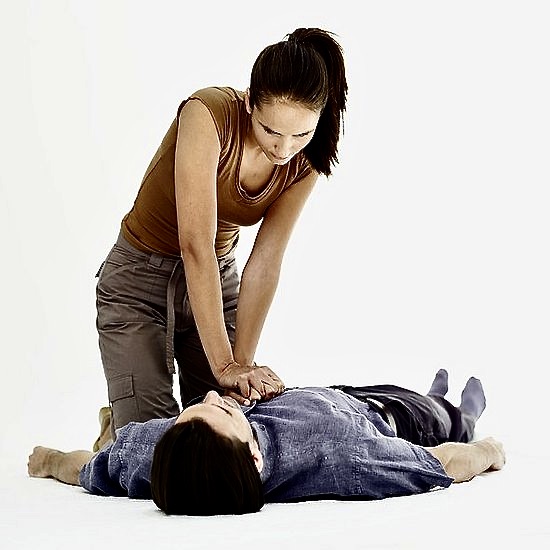
Sonic Youth

By Ed Staskus

   I was in my mid-teens when I started nodding off at Sunday mass. Before long I was snoozing at the drop of a hat, no matter what time I had gotten to bed the night before. My mother was a go-along Catholic but my father was a true believer, so the whole family went to church weekly. Part of my problem was familiarity. I had been an altar boy and knew the ceremony inside and out. I even knew the Latin, what was left of it, not that I knew what any of it meant. The other part of my problem was my growing belief in deism. I didn’t disbelieve the Roman Catholic theology but I didn’t believe it, either. I thought the Golden Rule and the Ten Commandments were good ideas, but that was as far as my commitment went.

   The Sunday in 2005 I first saw Jane Scott she was in a back pew at the First Church of Christ in Rocky River, Ohio, one suburb west of where my wife and I lived in Lakewood. I wasn’t a member of the congregation but my wife was. I went to services with her sometimes. Jane was wearing red glasses and a wide-brimmed church crown. She was out cold. I recognized a kindred spirit when I saw one. 

   When the service was over my wife made her rounds, saying hello and goodbye, chatting with the churchgoers she knew best. I stayed to the side. By the time we were ready to go Jane Scott had shaken off the sandman. My wife talked to her for a minute before we left for home.

   “That lady you were talking to, the one with the red glasses, she looked familiar, even though I don’t think I’ve ever met her before,” I said.

   “That’s Jane Scott,” she said. “She used to write for the newspaper. She was their rock ‘n  roll reporter until she retired a couple of years ago.”  She was in her early 80s the day she retired. She had long been known as “The World’s Oldest Rock Critic.”

   She went to work for the Cleveland Plain Dealer in 1952, three days after Alan Freed hosted the Moondog Coronation Ball, the world’s first rock ‘n roll concert. She covered the local social whirl through most of the 1950s. Starting in 1958 she wrote the “Boy and Girl” column. It targeted seven-and eight year-olds. She wrote “Senior Class” about issues relevant to senior citizens. “I covered everything from pimples to pensions,” she said. 

   She reviewed the Beatles concert when they first appeared in Cleveland in 1964 and two years later interviewed them before their sold-out rock fest at the 80,000 seat Municipal Stadium. “I never before saw thousands of 14-year-old girls, all screaming and yelling. I realized this was a phenomenon. The whole world changed.” She was going on nearly fifty years of age when her interview with the Fab Four appeared in the newspaper.

   When she became the rock critic for the Plain Dealer the newspaper became the first major newspaper to have a full-time music critic on staff. “Once I found rock I was never interested in anything else.” Not everybody considered rock ‘n roll to be music. Many considered it to be noise for the neck down. “This rock and roll stuff will never last,” said Mitch Miller, a maestro of the singalong. Others thought it was the “Devil’s Music.” They didn’t like hips gyrating and lyrics on the other side of pious. 

   Jane Scott was a Christian Scientist as well as a boogie on down correspondent. I don’t think she gave a damn about Satan. She knew full well he wasn’t interested in music of any kind unless it was the funeral march kind. He marched to the beat of doom and death. She was a live wire.

   “My husband Harry was Jane’s first boss when she started at the Cleveland Plain Dealer,” said Doris Linge. “Since she and Harry worked together, I would often get invited to her wonderful annual holiday party. She was a character, quirky and real.”

   Jane Scott was born in Cleveland less than a year after the end of World War One. She graduated from Lakewood High School and later from the University of Michigan. She tried out for the college newspaper but didn’t make the grade. During World War Two she enlisted in the Navy, rose to lieutenant, and worked as a code breaker. After the war, back home, she got a job as Women’s Editor for the suburban Chagrin Valley Herald, a community rag. 

   She went to Sunday services. She taught Sunday School. “Jane was a member of the Fifth Church, which was on the border of Lakewood and Cleveland,” said Doris Carlson, a member of First Church in Rocky River since 1957. “When it closed she came to our church. I remember seeing her on the TV news once in 1962, when she performed at an honorary birthday party here in town for President Kennedy. She was a hoot. She sang ‘Happy Birthday’ the same way Marylin Monroe did, even though she was practically a middle-aged woman. She could be sexy when she wanted to be.”

   The 1960s came and went and she missed her chance to go to the Woodstock Festival. Twenty five years later she went to the 25th anniversary show at the age of seventy five, tramping through the same kind of mud on the same kind of wet weekend. “I am going to try to make the 50th anniversary in 2019,” she said. If she made it she would be one hundred years old, she was reminded.

   “I don’t like the word retirement,” she said “Rock ‘n roll is excitement. It’s that unity of feeling you get when the audience is loving and sharing the music together. It’s the unexpectedness and the swift changes. You go from pop to hip-hop. It all melds into rock somehow. It keeps you on your toes.”

   Covering shows night after night, being on the short side, she always tried to get up front so she wouldn’t have to stand on her toes to see over fans. She always carried the same hefty bag slung over her shoulder. “I call it my security kit,” she said. “It includes ear plugs, Kleenex, because when you are at a show with 80,000 people they are sure to run out of toilet paper, safety pins to pin my car keys and backstage pass on, at least four pens because people borrow them and don’t return them, and two notebooks, one for interviews and one for observations.” She always had a peanut butter sandwich in the bag. “Peanut butter doesn’t spoil and sometimes you don’t have time to stand in line for food.” 

   When it came to rock ‘n roll, she always had ants in her pants for the next show and the will power to see her chronicles of the new music through. “She was allowed to take the rock beat because the newspaper thought it was trivial at the time, and a woman could have it,” said Anastasia Pantsios, a Plain Dealer writer and photographer. She had good energy, keeping at it for nearly forty years. “She literally did it ‘my way,’ independent, not afraid to go places by herself, with so much tenacity and work ethic,” her friend Mary Cipriani said.

   Jane made it a point to interview music makers with opinions, contentious musicians like Lou Reed and Frank Zappa. Lou Reed and she were close friends from the late 1960s until their deaths two years apart. “She was one of the only ones to treat me with respect in the early years,” Lou said. “Always fair, always interested.” The man who became the Grandfather of Punk called her Sweet Jane after his song of the same name.    

   The first time Jane saw the Velvet Underground hardly anybody in town noticed they were in town. There might have been as many people in the audience as there were in the band. The band was Lou Reed, a bad-tempered young man from Long Island, Sterling Morrison on guitar, the violist John Cale who doubled on bass, drummer Moe Tucker, who did her drumming standing up, and the partially deaf actress Nico, who sang in deadpan English with a German accent. 

   “I don’t know just what it’s all about but put your red pajamas on and find out,” Lou Reed said.

   Jane Scott was smitten the minute she heard the sound the band made. The man she had been waiting for sounded somewhere between Bob Dylan and Sonic Youth with some Andy Warhol thrown in. The band was about Beat poetry, Pop Art, and the French New Wave. Jane was good with the offbeat but kept the beat steady in her head.

   The Velvet Underground lasted until the early 1970s. When Sterling Morrison left the band he put his guitar down for a foghorn. He found work as captain of a tugboat and later earned a PhD in Medieval Literature. Moe Tucker formed her own one-gal band playing proto punk. The old Lou Reed became the new Lou Reed.

   Before the Velvet Underground there was L. A. and the Eldorados, back when Lou Reed was a student at Syracuse University. His friend Allan Hyman, who had been his friend since third grade, was tasked with getting him to frat party gigs on time. “He’d be asleep under three hundred pounds of pistachio nut shells, because Lou loved pistachios, so I’d have to shake him awake, throw him in the shower, and physically get him dressed,” Allan said. “He would be surly, but he’d play.”

   “Lou Reed was a prick,” said Rich Mishkin, the bassist for L. A. and the Eldorados. “He was not the kind of guy who would be nice to people in most circumstances. We got a lot of beer thrown at us over the years.” Rich drove the band around in his tail-finned white Chrysler with red guitars emblazoned on the sides.

   “It’s no secret that he has lived as well as walked on the wild side, the demi-world of drugs and violence and despair,” Jane said about Lou Reed. “’Heroin’ and ‘White Light, White Heat’ were two of the most popular songs of his first major group, the Velvet Underground in 1967, the same year of ‘I’m a Believer’ by the Monkees and ‘To Sir With Love’ by Lulu. He is wild, changeable, streetwise, poetic, cynical, and offbeat sensitive, maybe.”

   Jane wasn’t wild, although she was plenty streetwise, in a matronly kind of way. “We’re talking about some of the most depraved people in the world,” said Michael Stanley, who played heartland rock ‘n roll for donkey’s years in the Rock Capital of the World. “But with Jane, it was like they were talking to their mom or their grandma. It was, ‘Yes, ma’am’ and ‘No, ma’am.'”  

   Behind her trademark red-rimmed trifocals and dyed-blonde hair, she was unflappable. She was a fan as well as an advocate of the sound. “Since I was a little girl, I remember my dad, whose name was Pepe, enjoyed Jane’s reviews and would read them to my brothers and me after dinner,” said Callie Paris Rini. “We were music lovers. When the Beatles first came to Cleveland, Jane gave my dad a newsprint plate of them, and I still have it. I still have Jane’s review when Jimi Hendrix came to Cleveland, too. I read her articles whenever I went to concerts in the 60s and 70s.”

   The Beatles broke up in 1970. Jimi Hendrix, Jim Morrison, and Janet Joplin all died, all three of them at the age of 27. Rock concerts moved from clubs and small theaters to sports arenas. Disco and glitter rock came and went. Jane Scott went to all the shows, even the new wave ones, where guitars were unplugged and synthesizers were plugged in. “I sat next to her for nearly three years of concerts back in the late 70s,” said Rick Weiner. “She would always ask me if I was enjoying myself. Jane stood out like a sore thumb, but once you conversed with her you knew there was a reason she was there.” 

   Her favorite musician of all time was Bruce Springsteen and her favorite album of all time was ‘Born to Run.’ When she reviewed his show at downtown Cleveland’s Allen Theatre in 1975 she wrote, “His name is Bruce Springsteen. He will be the next superstar.” Before the year was out the Boss was on the covers of Time and Newsweek. At a later Cleveland concert, he dedicated “Dancing in the Dark” to Jane Scott, who was in the audience. “If you can meet Bruce Springsteen, who wants to sit around and play bridge?” she asked tongue in cheek.

   When it came to her job, it was the more the merrier. “Jane was the first to welcome me to the news room when I came to Cleveland in 1979 as a Plain Dealer feature writer,” said Janet Gardner. “After I returned to New York, she would call me between sets from the Peppermint Lounge, breathless with enthusiasm. She was a truly ‘The World’s Oldest Teenager.’”

   In the 1980s superstars continued to sell out, selling out stadium concerts. Alternative rock emerged. Synth-pop got more and more popular. Dance-pop got hot. Hip-hop popped up. Olivia Newton-John recorded one number hit after another. Jane Scott covered them all. The older she got the younger she got. “I met Jane in 1984 when she was covering a Husker Du show at Pirate’s Cove,” said Rev Recluse. “She was the sweetest, kindest person to everyone and melted this too-cool-to-exist teen hipster’s heart by the encore.” The Pirate’s Cove was in the Flats when it was still a rough-and-tumble place featuring a shot and a beer. There were real shots sometimes down dark back alleys. Olivia Newton-John never set foot there. She kept it in the sugar bowl.

   “Jane didn’t critique music,” said Pere Ubu’s frontman Dave Thomas. Pere Ubu was a Cleveland-area avant-garage band. “She reported facts. And, subversively, she demystified the art. She peeked behind the curtain and rooted out the parochial. Every musician sees the media as gullible rubes. Well, Jane just didn’t cooperate. She laid the haughty low with enthusiasm.”

   The 1990s saw rap and reggae get popular. Urban-style music blended jazz, soul, and funk. Fusion genres came and went. Jane Scott stayed on top of it, reviewing everything that came her way. If it was going to be a long night she packed two peanut butter sandwiches in her hefty bag.

   “I had the privilege of attending several concerts with Jane in the 80s and 90s,” said Emile Knud-Hansen. “It was amazing to watch her interview some covered-in-black with safety pins in the eyebrows teenage rocker. She never judged anyone but gave performers ample time to explain their music. I was surprised to learn that she had never gone to a rock concert as a guest. So, my friends and I took her to see Huey Lewis and the News at the Blossom Music Center. We were in front of the amplifiers, right up front. She was happy in spirit and ruffled in appearance.”

   After Jane Scott retired from the Cleveland Plain Dealer and her long-time companion Jim Smith died, her legs started to go bad. She bought a walker and moved into Ennis Court, a small assisted-living facility in her hometown of Lakewood. When she did, Danielle Rose began visiting her, keeping her company.

   “I met her at First Church where we were both members,” Danielle said. “I lived up Detroit Ave. and could walk to where she was living. We started car-pooling to Wednesday Testimony Meetings. One summer night going home we were pulled over by a Lakewood cop car.” The policeman was a woman. She asked Jane if she knew why she had pulled her over.

   Jane thought for a moment. She fiddled with her hefty bag. She finally said, “No.”

   “Your lights aren’t on.”

   “Oh.”

   “Don’t forget to turn them on and drive safely,” the policewoman said.

   Jane had been pulled over in front of one of her favorite ice cream shops. When she noticed the lights were still on in the shop she left the running car where it was and stepped onto the sidewalk. 

   “Do you want to join us?” Sweet Jane asked the policewoman. 

   “She loved ice cream. She was just a big kid. Her car knew where every cone on the west side of town could be gotten,” Danielle said.

   “Thanks, but I’m on duty,” the policewoman said.

   “Maybe next time,” Jane said. 

   “She had a young spirit but she really shouldn’t have been driving anymore,” Danielle said.

   True to her spirit Jane Scott died on Independence Day in 2011. The next month a memorial service was held for her at the Rock and Roll Hall of Fame, which was attended by nearly a thousand people. A year later the museum unveiled a life-size bronze memorial statue of her sitting on a bench and taking notes, created by Dave Deming, past president of the Cleveland Institute of Art. It was permanently installed in the Reading Room of the Rock Hall’s Library and Archives. 

   All it took to get Jane Scott to sit still in one spot while the beat went on was for the clock to run down. “Walk it on home” is what Lou Seed sang in her ear. There was a hell of a band waiting for her in heaven.

Photograph by Janet Macoska.

Ed Staskus posts monthly on 147 Stanley Street http://www.147stanleystreet.com, Made in Cleveland http://www.clevelandohiodaybook.com, Atlantic Canada http://www.redroadpei.com, and Lithuanian Journal http://www.lithuanianjournal.com

A New Thriller by Ed Staskus

Cross Walk

“A once upon a crime whodunit.” Barron Cannon, Adventure Books

“Captures the vibe of mid-century NYC.” Sam Winchell, Beyond Fiction

Available on Amazon: https://www.amazon.com/dp/B0CRPSFPKP

Late summer and early autumn. New York City. A Hell’s Kitchen private eye. The 1956 World Series. President Eisenhower at the opening game. A killer in the dugout.

Dancing in Circles

By Ed Staskus

   When the Juventus Folk Dance Festival showed up towards the end of June, I didn’t brush off my dancing shoes or brush up on my steps. I never had many steps to begin with, even though I had once been in the game. I had done some stepping with a minor league folk dancing group who practiced at the Lithuanian Catholic church in North Collinwood, near where my family lived. I grew up in a household with one bathroom which everybody wanted to use at the same time in the morning. I picked up most of my ad lib two-steps waiting for my turn. In the end, which wasn’t long coming, I was kicked out of the minor league group. Being clumsy isn’t especially a problem bunny hopping by yourself, but it can be in a group of twenty-or-more in close quarters going in circles and branching out in all directions.

   Something on the order of three hundred dancers from five countries cut the rug at the show in the Berkman Hall Auditorium on the campus of Cleveland State University. “They represent every region of Lithuania,” said Ingrida Bublys, the Honorary Consul of Lithuania for Ohio, Indiana, and Kentucky. The event was sold-out and sponsored by the dance group known as Svyturys, which means Beacon. The Beacon has been lighting the way in Cleveland for twenty years.

   Although Lithuania has been around for ages, Lithuanian folk dancing has only been around for an age. It got started in the late nineteenth century during the National Awakening, when the country was under the thumb of Moscow. The native language and native writing were proscribed, but the Czar turned a blind eye to busting moves, so long as the busting didn’t have anything to do with treason and dynamite. The first Lithuanian folk dance, known as Suktinis, was performed in St. Petersburg in 1903. Suktinis means winding or twisting. The first down home dance festival was held in Kaunas, then the capital of the country, in 1937. There were 448 dancers hoofing it, most of them going around and around.

   Lithuanian folk dances are usually one of two kinds. There are sokiai, which are ordinary dances, and there are rateliai, which are ring dances. Sokiai are often accompanied by instrumental music and sometimes by songs. One of the most popular dances is called Malunelis, which means windmill. Ring dances are more-or-less walked, sometimes slowly, sometimes faster, sometimes in a slow trot. The secret is in the center of the ring for anybody who knows where to look. The movements are simple and usually repeated over and over. They take the form of circles and double circles, as well as rows, bridges, and chains. The circles transform into lines and snakes as the dancing progresses. The dancers sometimes break up into pairs. The high stepping that follows is usually of foreign origin, like the Polish polka.

   Raganaites, which means the Dance of the Little Witches, is performed by young girls wielding straw brooms. They pretend to ride them. They twirl them, do some mock jousting with them, and try not to poke anybody’s eye out. A witch taking time off from her cauldron must be at least a hundred years old and have memorized the 7,892 spells in the Great Book of Magic before being allowed to do the dance. But the rules are always waived for Lithuanian kids.

   If an honest-to-goodness witch ever threatened me by saying she planned on dancing on my grave, I would tell her, “Be my guest. Even though I’m the grandson of landed farmers, I plan on being buried at sea.” 

   Before there was Svyturys there was Grandinele, which means Little Chain, and before there was Grandinele there were six refugees who in 1948 performed at the Slovak Cultural Gardens. It was One World Day. Nearly 40,000 Lithuanians landed in the United States after World War Two. Four thousand of them landed in Cleveland, joining the 10,000-some who already lived in the northern Ohio city. Even though the Lithuanian Cultural Garden was officially dedicated in 1936, the garden was only big enough on its lower level to hold the bust of Jonas Basanavicius, a freedom fighter who never gave up fighting tyranny. Over time a middle and upper level were created. The upper level is where the Fountain of Birute is. She was a priestess in the Temple of the God of Thunder. In her day the Russians stayed away from the Baltics. Even the Golden Horde was known to warn freebooters, “Beware the Lithuanians.” The Grand Dukes weren’t anybody the Russians wanted to mess with. They kept to their dachas, which were dry except for cupboards full of vodka. There were lightning rods on the roofs.

   My sister Rita was a dancer in Grandinele, the by-then acclaimed folk dancing group, in the mid-1970s. My brother Rick was not in any dancing group. He was smooth with the spoken word, but had two left feet like me, except I could tell my two feet apart, while he couldn’t. He was banned for fear of kicking up his heels in too many directions. Rita danced in Grandinele for almost five years. During that time, she toured Argentina, France, and Germany with the group. “We danced in front of large audiences,” she said. “Before I went I had no idea there were so many Lithuanians in South America.” The group wasn’t allowed to perform in Lithuania, which was behind the Iron Curtain at the time. The Kremlin didn’t let anybody beat feet in Eastern Europe.

   Grandinele was formed by Luidas and Alexandra Sagys in 1953. The dancers were mostly high school and college students. They rehearsed twice a week at a YMCA in Cleveland Heights. A second group composed of tadpoles was formed in 1973, to teach them the basics and get them ready for the limelight. They didn’t perform in front of the public, but they performed in front of Luidas and Alexandra, which could be even more unnerving.

   “He was strict but creative,” Rita said. “Not everybody in the community liked him making up his own folk dances, which were almost like ballets with a story. She was strict and could be mean.” Alexandra was the group’s business manager. She took care of the costumes. Nobody wanted to get on the wrong side of her, unless they wanted to risk being dressed up like Raggedy Ann.

   Luidas Sagys had been a professional dancer with the National Folk Dance Ensemble in Lithuania before World War Two. He fled the country after the Red Army came back in 1944. They seemed to always be coming back, even though the Baltics were sick of them. The apparatchik’s thought Lithuania was theirs to do with as they pleased. Their revolutionary ideals were long gone and not coming back. They had turned into rats. Their reasoning was that since the Nemunas River rises in central Belarus and flows through Lithuania, it was Russian water and wherever it went the land was part of Mother Russia. They have applied the same reasoning to the flow of the Dnieper River, which rises near Smolensk before flowing through Ukraine to the Black Sea. Ukraine is still living with the consequences of Moscow’s crazy reasoning.

   When Luidas Sagys formed Grandinele he could shake a leg with the best of them. In 1963 he directed the Second American and Canadian Folk Dance Festival. He looked authentic as could be whenever he donned indigenous garb and got into the act. Even though his culture and imagination were the genesis of his art, the art of him was his body in motion for all to see. He ran the Folk Dance Festival in Cleveland for many years. He liked to wear bow ties and sported a puckish grin when he wasn’t working on new choreography. When he was done, he liked to have a drink or two.

   My wife and I were by chance in Toronto when the XI North American Lithuanian Folk Dance Festival was staged there in 2000. The quadrennial festival, known as the Sokiu Svente, which means Dancing Celebration, was first staged in Chicago in 1957. We found tickets at the last minute and hurriedly got our bottoms in place. We sat in the cheap seats of the big auditorium. We didn’t mind since the view was better, anyway. Zilvitis, a musical ensemble from Lithuania, accompanied the performance of 1,600 dancers.

   The show was a swirl of color and action. A couple of thousand dancers dressed in the red, green, and yellow colors of Lithuania is a lot to look at in the space of a few hours, not to mention the mass maneuvering and the music. The performers and jam-packed audience were more Lithuanians than I had ever seen in one place. On top of that most of them were speaking the natal tongue. I grew up with the lingo and was able to keep up.

  One of the dance groups at the show was Malunas, which means to mill. Back in the day, before they did much dancing, most Lithuanians were either peasants or farmers. There were grindstones far and wide. Baltimore was the dance group’s homestead. They had been performing up and down the East Coast for nearly thirty years. They have appeared on PBS-TV and at presidential inauguration festivities. Toronto was their fifth Sokiu Sevente.

   A tradition at every Sokiu Svente during the rehearsal before the big show is for every group to wear a distinguishing practice outfit. When silk-screened t-shirts became popular in the 1970s, groups began to design and wear custom t-shirts. They came up with their own silk-screened identities. After the last practice groups trade identities, which become mementoes. In Toronto, Malunas came up with a new idea. They were inspired by the Grateful Dead shirts of the 1992 and 1996 Lithuanian Olympic Basketball teams. One of their own, Michelle Dulys, dreamed up a design of skeletons as dancers rather than basketball players. The t-shirts were a knockout. The ones not exchanged were sold fast, faster than we could buy one. We watched the last skeleton sauntering off from the concession stand.

   The Lithuanian Folk Dance Festival Institute was formed soon after the Sokiu Svente became a going concern to liaison with dance groups worldwide. The institute hosts a week-long training course at Camp Dainava, in southeastern Michigan. Although it is an educational, recreational, and cultural summer camp for children and young adults, the name of the camp derives either from the past tense of the word sing, from a village in the middle of nowhere back in the homeland, or from a Lithuanian liqueur of the same name, made with grain spirits and fruit juices. The booze has a vibrant red color and a complex, sour-like flavor. Even though Lithuanians are ranked among the top ten barflies in the world, it is forbidden on all 226 acres of the campground.

   The two-and-a-half-hour divertissement that was the Juventas Festival started with a parade and a song. There was some speech-making. There was a violin, a couple of wind instruments, and a drummer, while an accordion led the way. There were costumes galore and faux torches. There was circle dancing. There was pairs dancing. The pairs dancing got fast and lively. There was more singing. Before every part of the show a young man and a young woman in civilian clothes explained, in both English and Lithuanian, what was coming up. A group of kids did their own version of a circle dance. Not one of them got dizzy and fell over. There was a courtship dance, the young men and women taking their wooden shoes off and going at the romance barefoot. Whenever the top guns came back, everybody sat up. They were good as gold. They had it going.

   In the end all the dancers somehow squeezed themselves onto all the parts of the stage. There was waving and rhythmic clapping. There were loads of smiles. A half dozen men lifted a half dozen women up on their shoulders and did an impromptu circle dance. It was a wrap.

   Most of June in Cleveland had been dry, so much so that lawns were going yellow. But it had rained a few days earlier. The smoke from the Canadian forest fires that had made the sky hazy gray for more than a week had gone somewhere else. Driving home everything smelled fresh and clean. The dancing had been traditional but not hidebound. It had been fresh and alive.

   Life can often be more like wrestling than dancing. Many people believe living has meaning only in the struggle. That’s just the way things are. But nobody can wrestle all day and all night. “The one thing that can solve most of our problems is dancing,” said James Brown, the boogaloo man known as Soul Brother No. 1. What he didn’t say was that, in a way, it’s like going to church. Nobody bends a knee in the sanctuary to find trouble. They go there and the dance hall to lose it.

Ed Staskus posts monthly on 147 Stanley Street http://www.147stanleystreet.com, Made in Cleveland http://www.clevelandohiodaybook.com, Atlantic Canada http://www.redroadpei.com, and Lithuanian Journal http://www.lithuanianjournal.com

A New Thriller by Ed Staskus

Cross Walk

“A once upon a crime whodunit.” Barron Cannon, Adventure Books

“Captures the vibe of mid-century NYC.” Sam Winchell, Beyond Fiction

Available on Amazon: https://www.amazon.com/dp/B0CRPSFPKP

Late summer and early autumn. New York City. A Hell’s Kitchen private eye. The 1956 World Series. President Eisenhower at the opening game. A killer in the dugout.

Hammer the Sickle Blues

By Ed Staskus

   “Man, I had a dreadful flight, I’m back in the USSR, you don’t know how lucky you are, boy, back in the USSR.”  The Beatles

   When Angele Staskus went to Lithuania in 1977 with her daughter, she had not been on native ground for thirty-three years. Her daughter, Rita, 17 years old, had never been there. They flew from Cleveland, Ohio, to New York City to Moscow to Vilnius. It took two days to travel the five thousand miles.

   It was in 1944 that Angele Jurgelaiyte, then a 16-year-old farmer’s daughter, fled Alvitas near Marijampole in the south of the country, the German Army retreating pell-mell and the Red Army storming the front. She shared a wagon drawn by two horses with her aunt and her aunt’s four children. A milk cow was tied to the back of the wagon. She fled to East Prussia to Germany to Canada. Nobody else in her immediate family got away before the clampdown. They got to stay in the USSR for the next five decades.

   Angele got married to Vic Staskevicius, another Lithuanian refugee, in Sudbury, Ontario. They had three children and the family emigrated to the USA in the late 1950s. After they got there they became Mr. and Mrs. Staskus. They started at the bottom. Everything looked like up to them.

   The first time Rita saw her first Russian  airport, she wasn’t impressed. “The Moscow airport was crappy, gray on gray, and there were birds and bats flying around inside the terminal. Everybody looked sick, like stomach flu was going around.”

   “The color of truth is gray,” said the French writer Andre Gide. He was wrong. The Commies were wrong, too, and their favorite color was wrong. Social material political truth at any cost is more trouble than it’s worth, sparing no one, not during the countless bloodthirsty 20th century grabs for glory and power, for sure. It’s not black and white either, no matter what the insincere masterminds say. The color of truth is more like Sgt. Pepper’s Crayola 64 Colors. 

   The Sheremetyevo airport served most of the international flights arriving and departing the capital city. The airport was originally built as a military airfield in the late 1950s with one runway. In the early 1970s a second runway was added. A single terminal still served both runways. Half the people waiting for their flights looked like they might commit suicide any second.

   “We had to go through customs. The higher-ups, police, and soldiers all looked grim. Everybody going to Lithuania was smuggling something. My mom kept telling me to flash a smile at the soldiers, most of whom were young, like me. We had gum and cigarettes in my suitcase, but they never went through it.”

   A woman behind them wearing an oversized fur coat wasn’t so lucky. “She had all kinds of stuff sewn into the lining of her coat. They ripped the lining apart and took all of it.” The police put her stuff in their pockets.

   There were several eateries in the terminal, but neither mother nor daughter ate while waiting for their connection. “The food looked horrible, and what was the point of bad food and bad service without a smile?” asked Rita.

   They flew Aeroflot to Vilnius. “They brought us food, butter and buns, but they were hard as rocks,” Rita said. “You couldn’t even bite into them.” She tossed them under her seat. “The stewardesses were all so surly, down at the mouth, that I started laughing about it.” The flight attendants did a slow burn.

   When they landed in Vilnius, the stale buns rolling to the front of the airplane, passenger loading stairs were rolled to the door. The terminal was built in 1954. “It was a gray rectangular building, like a warehouse, like in Moscow.” There were sculptures of soldiers and workers outside and wreaths, bay leaves and stars, and the Soviet hammer and sickle inside.

   “It was even crappier than the Moscow airport.”

   Inside the terminal was a tight-knit group of more than forty of their relatives. “They came running up to us. One of them asked, do you speak Lithuanian? When I said yes, everybody started talking at once.” Some of the people looked a little like her, while others looked a lot like her mother. They were her uncles, Justinas, Juozukas, Sigitas, and her aunt Irena. There were nieces and nephews. When the excitement died down, they drove to the Gintaras Hotel, near the railroad station.

   The Gintaras was where foreigners stayed, all foreigners from anywhere, who visited Lithuania. It was a hard and fast rule. Signs warned against making a commotion. “The kids were running up and down the hallway, while the adults were all in our room. It was crowded since it wasn’t a big room, at all.”

   They had brought pens, gum, and cigarettes. “My uncle Justinas lost the pen I gave him, and when I offered him another one, he said, no, he wanted the same pen I had given him. Nobody could find it, so I pretended to find it, and gave him a new one.”

   Everybody wanted the American cigarettes they had smuggled in. “Russian cigarettes were nasty. They smelled bad.” The Belomorkani cigarettes didn’t come with a filter, but with a hollow cardboard tube attached to a thin paper tube filled with tobacco. The tube was like a disposable cigarette holder. They were popular in the Baltics because of their cheap price. They were notorious for being the strongest cigarette in the world.

   “Everybody was smoking in minutes, the men, the women, and the older kids. It was non-stop.” 

   The Prima brand was imported from Bulgaria. It was a better quality of tobacco. But since the Belomorkani was the only available fag in most of the hinterland, that is what everybody smoked. A low-lying ashy cloud soon hung down from the ceiling. Even though cigarette advertising wasn’t allowed in the USSR, almost everybody smoked. 

   “After twenty minutes you couldn’t see across the room.” Rita noticed one of her cousins was chain-smoking. “I didn’t know you smoked.”

   “I don’t,” he said.

   “We brought Bubble Yum because that’s what they wrote us they wanted. All they had was crappy hard gum that would break your teeth when you started to chew it.” Introduced just two years earlier by Life Savers, Bubble Yum was the first soft bubble gum ever created. “They would chew the Bubble Yum for a half hour and then put it back in its wrapper, putting it away in their pockets or purses.”

   One afternoon Rita was sitting in a nearby park talking with her uncle Sigitas. He took his wallet out of his back pocket. He filled his hand with a wad of cash.

   “We have money, but there’s nothing to buy,” he said.

   “We went to a butcher shop. There were only two kinds of meat and both of them were loads of white fat. My aunts were always cutting fat off. It was gross. Even the herring was bad. I mostly hated the food. It turned my stomach.”

    There was a store near the hotel. It was called the Dovana Krautuve, or Gift Store. It was for Western tourists only. Lithuanians weren’t allowed to shop there, or even go inside it. They went there one day on a tour bus. “They had amber, wooden dolls, artsy stuff there. They just wanted our American dollars. When we were leaving, they gave each of us a bottle of Coca-Cola.”

   Back on the bus, Rita asked the driver if he liked Coke.

   “Yes, I had some in 1955,” he said. “It was good.”

   “That was twenty-two years ago,” she said. 

   “Yes, I understand,” said the bus driver.

   She gave him her bottle of the sweet soda.

   “The Young Communists were always following us around, telling us their world was just as good as ours, that they had everything we had, and more. When I had to take my contacts out on the bus, one of them said, we have those, too. That was wacky because none of my relatives had contacts and none of them knew where to get any unless it was the black market.” She finally told the Young Communists to cut it out. “Your BS isn’t doing anything for me,” she said.

   While inside the hotel, nobody talked about anything that might compromise them. “All the rooms were bugged. Everything was bugged.” Everybody was constantly watched, one way or another. Telephones were tapped. Mail was opened. Black government sedans followed people around.

   Angele and Rita stayed at the Ginraras Hotel for a week. Everybody knew somebody was always listening in. Nobody said anything. Their room wasn’t small, but it wasn’t large, and the bathroom was even smaller. The room was a bathroom and a shower all at once. There weren’t any sliding doors or shower curtains. “There was a drain in the middle of the floor, and whenever we showered the spray would get all over the tiled walls and sink and toilet. Everything got wet. The whole room became a shower.”

   After they towel dried the room and themselves off, they visited with their relatives. It was what they did more than anything else. There weren’t many sights to see in Vilnius, even if you could go there.

   “You never asked anybody, even your own flesh and blood, what they did. They would always say, ‘I have responsibilities.’ If you lived in Vilnius, you probably had a normal job, but not in Marijampole.” Most of her kinfolk lived in the country and farmlands southwest of the rural town. They finagled and horse traded, going to Poland, smuggling whatever they could, doing things that weren’t altogether legal, or so the Russians said, so it wasn’t prudent to ask them too much

   The goal was to be a ‘pasikaustes,’ somebody who has the smarts prowess right stuff to make it happen. It literally means putting a horseshoe on yourself. Everybody needed good luck in the clampdown. That’s why they were always wheeling and dealing.

   They were waiting for the Russians to get the hell out of their country. They had once waited more than a hundred years. They could wait another hundred if they had to, although who wanted to do that? They were already bitter and alienated. ‘Laikiu nesulaukiu’ means not being able to wait for something to happen. “I wait but I can’t wait.” It’s like being in jail for a crime you didn’t know you had committed.

   They made plans to go to Silute to see Rita’s paternal grandmother, who was in her 80s. Angele had never met her. Rita couldn’t imagine her.

   Silute is to the northwest of Marijampole, two-some hours away. The Nemunas River floods there almost every year, soaking the lowland pastures. Migrating birds call it home away from home because of the delta and all the water. A fifth of the area is forested. It is home to more than three hundred villages.

   Antonina was Angele’s husband’s mother. She was a Russian woman, had been a young schoolteacher in the middle of nowhere, and married Rita’s grandfather when he was an officer in the Imperial Army, stationed in the middle of nowhere. “She was taken a few years after my grandfather was deported in 1941 and dragged away to Siberia for more than ten years.”

   Rita’s mother’s family, who lived in the south of the country, made plans to take them to Silute. They kept their plans close to the vest. The scheme was for there to be three brothers, three wives, three cars, Angele and Rita, and some of their cousins. “My mother would be in one of the cars, I would be in another, and the third car would be a decoy, if it came to that.”

   The secrecy was necessary because they weren’t allowed to go anywhere except within the city limits. When they asked about Silute, Siauliai, and Zarasai, the other points of the compass to Vilnius, they were told they were all out of bounds. Everywhere outside of Vilnius was off limits. The Intourist official, the Soviet tourism monopoly, at the front desk of the hotel leaned forward and told Angele and Rita it was because of missile installations.

   “Are there missiles in every town in the whole country?” asked Angele.

   “I know sarcasm from naïve American when I listen to it,” the official scowled.

   Their convoy didn’t get far the day of the familial excursion. They were stopped by a roadblock on the outskirts of Vilnius. The police were waiting for them. “They knew,” Rita said. “Somebody had overheard something. Somebody talked. They waved us off the road.”

   The police glanced at Justinas’s papers and told him to go back.

   They went to the second car. Everybody had to show their papers. Angele was the best dressed of everyone in all three cars. She was all decked out. They asked her where she lived.

   “The Gintaras Hotel.”

   “Turn around, fancy lady, go back to the Gintaras.”

   They went to the third car.

   Sigitas and his wife Terese showed their papers. Rita was sitting in the back with three of her cousins. They all showed their papers. When it was Rita’s turn, she said, “You’ve seen their papers. I live in the same place.”

   “What’s your name?”

   “Jurgelaitis, just like them.”

   He asked her something in Russian. She didn’t understand a word and glared at him. The stare-down between cop and girl took a long minute.

   “The next time I see this one she is going to have to answer,” the policeman warned Rita’s uncle.

   “Turn back,” he said, shooting everybody a dirty look. They turned around and the convoy went back to Vilnius.

   Undaunted, a few days later, a day before leaving the USSR, Rita was picked up by Sigitas before dawn before breakfast at the back of the hotel for an end run to Silute. She skittered into the car, and they sped off. The streets were empty in the gloom.

   “He was a crazy driver, always yelling, ‘Somebody’s following us!’ He stayed off the highway, and the main roads, instead going up and down different streets. I thought the drive was going to take two hours, but it took much longer.” It took five hours on empty stomachs. It was worse than the Aeroflot flight.

   They were stopped several times, but every time her uncle was allowed to stay the course. The roadblock police didn’t explain why. They just waved him on. When they got to Silute they asked around and found the house where Antonina Staskevicius was living. 

   After Josef Stalin’s death many political prisoners in Siberia were set free. She was one of them. Her chain gang days were over. Her husband was long dead, dead of starvation in 1942, in a forest labor camp. She was sent back to Lithuania, but not back to Siauliai where the family farm didn’t exist anymore. She still wanted to go there but was told to go live in Silute. The Russians shrugged her off when she asked why.

   “She lived in a two-room apartment, in a rectangular four-unit building, almost like a log cabin, that looked like it was built a thousand years ago,” said Rita. There was no running water or indoor plumbing. The floors were dirt. The windows needed caulking. The roof was several generations overdue.

   “She was in her 80s. She had gone through tough times, but still had a lot of life in her.” She had seven grandchildren in the United States. Rita was the first one she ever saw. She gave her granddaughter a big smile and a big hug, even though she was a small woman and had to reach up.

   She wasn’t made of steel, like the Muscovite ringleader who squashed her and the Baltics under his thumb, but he was gone, a tinhorn memory, and she still had plenty of what it takes. How you start isn’t always how you finish.

   They had lunch, cold beet soup, potato dumplings, and mushroom cookies with strong hot tea. Rita didn’t throw anything under the table. It was an old-school buffet on an old round wood table.

   “How did you like it?” her uncle asked on their way back to Vilnius.

   “It was the best food I’ve had since I left home,” Rita said.

Ed Staskus posts monthly on 147 Stanley Street http://www.147stanleystreet.com, Made in Cleveland http://www.clevelandohiodaybook.com, Atlantic Canada http://www.redroadpei.com, and Lithuanian Journal http://www.lithuanianjournal.com

A New Thriller by Ed Staskus

Cross Walk

“A once upon a crime whodunit.” Barron Cannon, Adventure Books

“Captures the vibe of mid-century NYC.” Sam Winchell, Beyond Fiction

Available on Amazon: https://www.amazon.com/dp/B0CRPSFPKP

Late summer and early autumn. New York City. A Hell’s Kitchen private eye. The 1956 World Series. President Eisenhower at the opening game. A killer in the dugout.

Kingpin of the T

By Ed Staskus

   The one and only time I met Daffy Dan was at a party in a fourth floor warehouse studio on Superior Ave. between downtown Cleveland and the Innerbelt. It was the ArtCraft Building. There was a car-sized freight elevator in the back, but the front stairs were what all the partygoers used. Nobody knew how to operate the old-fashioned elevator controls. They were ready for a drink by the time they got upstairs. The studio belonged to Joe Dwyer, somebody I had gone to high school with. He was an artist and was making artworks in the studio. He also threw parties there, especially on Halloween, which it was the night I met Daffy Dan. No sooner did I meet him than the lady friend I had come with wandered off.

   When I was introduced to Daffy Dan I realized who he was right away, if only because I had just seen the custom-made fifteen-foot tall caricature of him on the front of the warehouse building across the street. The sign next to the cut-out said, “The Creative Studio of Daffy Dan’s.”

   He was on the short side and wore his hair long, over his shoulders, and parted in the middle. He was 28 years old, slightly older than me. He had a handlebar mustache. It was the kind of mustache lawmen and outlaws wore in the 19thcentury. He wasn’t wearing a costume for the Halloween party. He had on faded blue jeans and a sports jacket over a  t-shirt. The t-shirt featured WWMS-FM, the city’s favorite rock ‘n’ roll radio station. Their buzzard logo, a top hat in one hand and a walking stick in the other hand, was in the middle of the t-shirt. “Ohio Tuxedo” was in bold red letters above the smiling blonde-haired buzzard.

   A campaign-style button was pinned to the lapel of his jacket. It said, “If your t-shirt doesn’t have a DD on the sleeve, it’s just underwear!!” The two exclamation points meant he meant business. Daffy had a can of beer he wasn’t drinking in his hand. Every few minutes somebody stopped and said hello to him.

   “How did you get into the t-shirt business?” I asked. I was interested because I wasn’t in any business of any kind. I floated from one job to another and was consequently relatively poor. Even though Daffy didn’t have a degree of higher learning, after a few minutes of talking to him it became clear he wasn’t a sandwich short of a picnic.

   “I dropped out of high school my senior year and went to work in the record store business,” he said. “I started to carry some rock group t-shirts. I got a catalog of shirts from who knows where. Other record stores started coming to me and asking me where I got them from, and rather than telling them, I looked up a dealer and started to wholesale them.”

   Even though he looked as counter cultural as the best of them, he was bright as a button when it came to commerce and capitalism. He was the city’s top dog of t-shirts. He knew how to circle his way around a dollar. Before long I started to realize, wait a minute, those dealers aren’t doing it right. I can do it better. The rock group t-shirts just took off like a rocket. We located our storefront over on Clifton and West 104th St., and that’s where we really started. From the beginning we marketed ourselves as Daffy Dan’s from Cleveland, Ohio. We opened a single store in 1973.” There were now five of them, with four more planned. “It isn’t tourists, either. It is Clevelander’s buying Cleveland-themed t-shirts and merchandise. It’s a phenomenon.”

   The slogan of Daffy Dan’s first store was, “If You’ll Wear It, We’ll Print It.” By the time I met the man behind the phenomenon he was moving more than forty thousand t-shirts annually. One of his most popular offerings displayed the legend “Cleveland: You Gotta Be Tough.” On another best seller Andy Gibb’s face was the hot potato plastered on bosoms far and wide. It was followed in popularity by Darth Vader and Farrah Fawcett-Majors. 

   “It’s not a fad,” Daffy said. “Blue jeans and t-shirts have become the American way of life.”

   Back in the day t-shirts were called tunics. Well into the 19th century they were simply called undergarments. The first t-shirt was created when a union suit was cut in half with the top long enough to tuck into a waistband. The U. S. Navy put them into circulation as crew-necked, short-sleeved undershirts during World War One. Naval work parties in steaming hot engine rooms took to wearing them all the time. Farmers adopted them during the Great Depression. They were cheap and lightweight. The first printed t-shirt was an Air Corps Gunnery School t-shirt issued in 1942. In the 1960s they got popular as souvenirs, advertisements, and self-expression billboards. A friend of mine had one, featuring an angry Micky Mouse, that said, “My parents went to Disneyland and all I got was this lousy t-shirt.”

   Plain t-shirts were going out of fashion, even though they are versatile, like a blank canvas. Everybody has got something to say. If you don’t get what’s on your chest out on your chest you end up looking like nobody. That’s why you get a t-shirt with an iron-on monkey and the caption, “Here Comes Trouble.” There is no sense messing around. One of Daffy Dan’s t-shirts went in the out door. It said, “I Am a Virgin. This Shirt Is Very Old.” Another one of them was an entreaty for hugs and kisses. “Turkeys Need Love Too.” One got right down to its own bad-tempered point. It said, “Go to Hell.”

   “I love you, Daffy Dan,” Marsha Greene said years later. “You were with me through my teenage hood. I loved wearing your t-shirts. They made me feel proud and you were considered one of the cool kids when you wore a DD t-shirt back then. They helped my self-esteem.” Like they say, is a hippopotamus a hippopotamus, or just a really cool opotamus?

   The Halloween party had gone into overdrive. There were no quiet corners. Smoke from marijuana and tobacco lowered the ceiling. Joe threw an LP by Bobby “Boris” Pickett & the Crypt-Kickers onto the turntable. They started in on their smash hit ‘Monster Mash.’ The singer had a British accent with a sniff of Transylvania. “They did the monster mash, it was a graveyard smash, it caught on in a flash, they did the monster mash.” The speakers weren’t the greatest, but they didn’t have to be. They just had to hold out until the end of the night.

   “You silk screen a lot of rock ‘n’ roll t-shirts,” I said, pointing out the obvious. 

   “Yeah,” he said. “When I was starting, the Agora was packing them in every night. I saw rock ‘n’ roll t-shirts as an absolute natural.”

   “Do you listen to much music? Do you go to shows?” Cleveland was often touted as the Home of Rock ‘n’ Roll.

   “I go to music clubs or concerts every night of the week,” he said. “The offerings are spectacular. The Agora, of course, is at the top of my list, but there are a hundred clubs and concert venues, the Hullabaloo Club, It’s Boss, the Viking Saloon, the Roundtable, Utopia, Atomic Alps, and the Plato. I go to them all. The music scene in Cleveland is like being a kid in a candy store.”

   Joe  slid another record on the turntable. It went round and round. It was the Rolling Stones belting out ‘Sympathy for the Devil.’ Mick Jagger was in fine form. “Just as every cop is a criminal, and all the sinners saints, as heads is tails, just call me Lucifer.” It was a kind of Halloween theme song for the times.

   “Did you really drop out of high school?” I asked. “I thought that’s something you’re not supposed to do anymore, unless the Devil makes you do it.”

   “I was walking down the hall between classes at Shaker Heights High School when the baseball coach grabbed me,” Daffy Dan said. “He grabbed me by the peace sign hanging around my neck on a leather strap and led me to the principal’s office proclaiming that I would not be allowed to graduate with my class in June without a haircut. Mind you, this is 1968, and my hair barely touched my collar and was just a tad over my ears, but according to the coach, not up to the school dress code. The gauntlet had been thrown down and I promptly withdrew from school. That was a proud moment in our household. Not! I was plumb nuts back then.”

   After the Summer of Love in the late 1960s became a fact, entrepreneurs in California started producing t-shirts featuring motifs and emblems, especially anything associated with hippies, the Grateful Dead, and Che Guevara. They silk screened their t-shirts, just like Daffy Dan was doing. When screen printing, a design is separated into individual colors. Water based inks are applied to the shirt through mesh screens, limiting the areas where ink is deposited. The most important factors are making sure the t-shirt is on a flat surface and that the stencil is positioned exactly where the artwork is supposed to appear.

   T-shirts with glow-in-the-dark charts of the periodic elements were silk screened by special order. “My customers are individualists and eccentrics who want something a little different from what you can buy off the rack,” Daffy said. “They want a work of art.”

   The lady friend I had come with was still sight seeing, God knows where. Story of my life. The smell of marijuana was everywhere, even though it was decidedly illegal. Richard Nixon had declared a ‘War on Drugs’ a few years earlier. He said drugs were Public Enemy Number One. He didn’t say what was Public Enemy Number Two, although I might have suggested Tricky Dick himself. Daffy and I had to raise our voices to be understood, especially when Jimi Hendrix got going. “Purple haze all in my brain.” We lowered our voices between songs.

   “How did you get your nickname?” I asked. He told me he had been at a friend’s house pitching his idea of imprinting t-shirts. He was trying to raise capital. His friend’s wife didn’t think much of his business plan. “You’re daffy, Dan,” she said. It made him, Daniel Roger Gray, sit up straight. 

   “I stopped, speechless for a moment. That was it, Daffy Dan’s!”

   It was going on midnight when Joe slipped some Screamin’ Jay Hawkins under the needle. “I put a spell on you because you’re mine, stop the things you do, watch out, I ain’t lyin’, I can’t stand no runnin’ around, I can’t stand no puttin’ me down, I put a spell on you because you’re mine.”

   I said good night to Daffy Dan and looked around for my lady friend. I didn’t find her. I didn’t care all that much. She was slumming, anyway. She was a rich girl with conservative suburban parents. I wouldn’t have minded being rich, but not on her father’s terms. His terms were my way or the highway. She was going to become him sooner or later. I had dinner with her family one time and it was plain as day. 

   Out on the sidewalk it was starting to rain. I looked across the street at Daffy Dan’s Superior Ave. nerve center. His cut-out caricature was lit up by a floodlight. He had been lit up at the party, although not by marijuana or beer. He was glowing with going his own way. He had probably taken some wrong turns along the way but he seemed to have his eye on the prize. His path to flying colors looked somewhat different than most but that didn’t mean he was going in circles. He was no Daffy Duck, that was for sure.

Photograph by Heather Hileman.

Ed Staskus posts monthly on 147 Stanley Street http://www.147stanleystreet.com, Made in Cleveland http://www.clevelandohiodaybook.com, Atlantic Canada http://www.redroadpei.com, and Lithuanian Journal http://www.lithuanianjournal.com

A New Thriller by Ed Staskus

Cross Walk

“A once upon a crime whodunit.” Barron Cannon, Adventure Books

“Captures the vibe of mid-century NYC.” Sam Winchell, Beyond Fiction

Available on Amazon: https://www.amazon.com/dp/B0CRPSFPKP

Late summer and early autumn. New York City. A Hell’s Kitchen private eye. The 1956 World Series. President Eisenhower at the opening game. A killer in the dugout.