Tag Archives: Lakewood Ohio

Not Dead Enough

By Ed Staskus

   Vera Nyberg was in the middle of a zigzagging dream when her cell phone rang. She kept it on the nightstand when sleeping. She let it ring, gathering her senses. Laying on her back she finally pawed for it and held it up over her head so she wouldn’t have to move her head. She saw it was 5:45 in the morning. It was the department. She took the call.

   “It’s my day off,” she said. “This better be good.”

   “Look out your front window,” the man on the other end of the line said. It was Dave Campbell. He was the boss of the Criminal Investigations Unit. He was her boss.

   Her back bedroom window faced onto Crest Ln., which was more-or-less an alley. Her front bedroom, which was empty since she hadn’t done anything to it since moving in except paint it, faced onto Riverside Dr. The street overlooked the Rocky River valley.

   Vera got up and trudged to the front bedroom. One of her cats had been sleeping with her. The other one was sleeping in the front bedroom on one of the windowsills. She went to the open window and looked down. The cat yawned, stretched, and jumped away. What she saw was the street blocked in both directions by Ford Explorer Police Interceptors. Red and blue lights were flashing. There were an ambulance, a rescue truck, and a utility truck, as well. The utility truck had probably come from Station No. 1 on Madison Ave, but the other two vehicles, she thought, must have come from Station No. 2, which was around the corner on Detroit Rd. She had slept through whatever was going on.

   There are more than 12,000 houses and buildings in Lakewood’s five-square mile footprint on the south shore of Lake Erie. The Fire Department has three stations. The lay of the land means their response times are very good. Vera hadn’t heard any sirens. She had gone out with a friend to the Alley Cat Oyster Bar in the Flats and been the worse for wear when she finally fell into bed. She swam downstream all the night.

   She couldn’t tell what the excitement was about. There were no civilian cars in the street. It couldn’t have been an accident. If it had been an accident she wasn’t likely to be involved, anyway. There wasn’t anybody sprawled out and oozing blood on the asphalt. Two police officers were leaning  over the safety railing on top of the Jersey barrier that bordered the valley side of the street from where Riverway Ave. dead ended to the corner of West Clifton Blvd. Maybe somebody had fallen into the valley. It was a long way down the cliffside, more than a hundred and fifty feet down.

   “Did somebody fall into the valley?”

   “Go take a look at what we’ve got and get back to me.”

   “All right,” she said, perplexed, She pulled on sweatpants and a light sweater. It was unseasonably cool for the first week of July. She slipped her identification card into her pocket, just in case. She stepped out her front door.

   When she walked into the street sunrise was in full swing. A police officer taking field notes looked her up and down.

   “Rough night Vera?” he asked.

   “It was a very good night,” she said. “It’s a rough morning.”

   “What there is to see is right over there,” the police officer said, leading her to the safety railing.

   She saw a rope tied to the safety railing. When she looked over the railing she saw a man hanging by the neck at the other end of the rope. He was wearing tan cargo shorts and a Cowboy Carter t-shirt. He wasn’t wearing shoes. There wasn’t much else to see. There wasn’t a sign of life to him.

   “The medical examiner should be here in about half an hour,” the police officer said.

   “Who called this in?”

   “Your neighbor one house over.”

   Tim Doyle lived in a cottage-style house with his wife. They shared their house with two shaggy dogs. He was a professional photographer. He wore his graying hair long and tied back in a ponytail. His wife Colleen was a fine gardener and his business manager. Tim was an early riser.

   “I went across the street to get some shots of the fog on the river,” he said. “I like the half-light early in the morning. I didn’t notice the hanging man at first. I was standing there at the barrier when a turkey buzzard flew over me.” The birds nested in the cliffside. “They’re ugly birds but beautiful in flight. I got a good shot of him. He dove and was coming back up when I saw the man hanging there. I couldn’t see his face too well, but I think I recognize the t-shirt.”

   “We’re going to get him up and wait for the medical examiner,” Vera said. “Are you willing to take a look at him then?”

   “I’ll be on my front porch. I need a cup of coffee.”

   The hanged man was less than three feet down from the edge, although the rope looked longer. Vera saw it wasn’t taut and wondered why. Two firemen began pulling him up by his armpits but stopped. “He’s stuck on something,” one of them said. Vera saw the back of the man’s belt was caught on a small stump jutting out from the cliffside. One of the firemen carefully stretched down and freed the belt from the stump  They pulled him up and laid him down in the street. Vera borrowed a pair of nitrile gloves and began looking the man over. The heels of his bare feet were scuffed and bloody. He was fit but thick around the middle. There was still some color in his face. She thought whatever happened must have happened just before sunrise. There wasn’t anything in his pockets. 

   The Cuyahoga County Medical Examiner arrived in twenty minutes. He  was in his late 30s, like her, but lanky and tall. He was six and a half feet tall. Vera was five and a half feet tall. She was always looking up at the underside of his bony chin. His name was Isaac but every time she saw him she thought of Ichabod Crane. She called him Ichabod, but only out of the man’s earshot.

   He began by crouching over the hanged man and examining his neck. After a minute he frowned. He looked up at Vera.

   “He didn’t die by hanging,” he said. “Ligature marks from hanging typically appear as a groove or furrow encircling the neck, obliquely positioned above the thyroid cartilage and discontinuous at the point of suspension. There are almost no ligature marks and there is no groove.”

   Vera got the gist, ignoring the jargon.

   “So what did he die of?”

   “I’ll show you what I think killed him.”

   He reached into his evidence bag and pulled out a pair of tweezers. He pushed the tweezers up one of the man’s nostrils and extracted a crumb of green fabric.

   “I think he was smothered, probably by a green shaggy pillow,” he said, probing the other nostril. He was still probing it when the man sneezed. Vera jumped back like she had stepped on a snake and the medical examiner almost fell over.

   “What’s going on?” the man groaned.

   “He’s not dead,” Vera said.

   “Apparently not,” the medical examiner said, recovering his poise and checking the man’s vital signs. He checked his pulse. He checked his respiratory rate. He checked his doll’s eye reflex, moving his head gently back and forth and observing his eye movements.

   “He’s definitely alive and seems to be all right, but let’s get him to Fairview as soon as possible,” he said. The Cleveland Clinic Hospital in Fairview Park was five minutes away.

   “Wait,” Vera said.

   She waved across the street at Tim Doyle, who put his coffee cup down and joined them. He looked at the man.   

   “That’s Bill,” he said. “He lives in that house there.” He pointed to a large house next to another large house on the opposite corner. Both houses faced the valley. “He lives with a partner. His name is Walter, although I call him Wally. He doesn’t like it, but that’s what I call him. He and Bill haven’t been getting along lately.”

   “How do you know that?”

   “I’ve heard the fights in their backyard the past two months. All the neighbors have. Wally’s been in a foul mood lately.”

   “Keep him right here,” Vera said to the medical examiner, pointing at Bill. “When you see me coming back put something over his face.”

   “He needs to go to Fairview the sooner the better.”

   “I’ll be back in five minutes.”

   Vera crossed Franklin Ave., walked to the second house down, and went up the front steps. The house had an old-fashioned slate roof. It had recently been spruced up with shiplap siding. An oak tree kept the house shaded. There were two large, glazed pots of scarlet geraniums flanking the front door. One of them was knocked over. Loose flower petals on the ground looked like spots of dried blood. The blinds in every window were drawn. She rang the doorbell. A man dressed like Jimmy Buffett answered the door. There were two suitcases and a carry-on next to him. What she could see of the indoors looked dim and gloomy. 

   “Let’s go,” he said. “I’ll be glad to get out of here.”

   “Where to?” Vera asked.

   “The airport.”

   “I’m not your Uber,” Vera said, showing him her identification card.  “Are you Wally?”

   “I’m Walter,” the man said.

   “Before you leave for the airport, I wonder if you would come with me for a minute.”  It wasn’t a request. A police officer had come with her. He was standing behind her.

   “I’m already running late for my flight.”

   “This will only take a minute.”

   They went down the steps when Vera suddenly said, “I forgot something, be right back.” She made a sign the police officer understood and beelined up the steps and into the living room. In the living room she saw two green shaggy pillows on a sofa. Back outside they walked to where Bill was. The medical examiner had covered him with an evidence sheet. He quickly peeked under the sheet and put a forefinger to his lips, signaling Bill to be quiet.

   When they got to the evidence sheet Vera said to Walter, “We discovered a man hanging from the safety rail this morning and we’ve been made aware he lived in the house you also occupy. Would you mind taking a look at the man and see if you can identify him.”

   “Is he dead?” Walter asked.

   Vera didn’t answer. The medical examiner uncovered the face of the man. Walter looked at him and said, “My God, it’s Bill, what happened to him?”

   Bill opened his eyes and said, “You’re what happened to me.”

   Walter was dumbstruck. His face went white. His eyes got big as a tree frog’s. “You can’t be alive. I killed you twice.”

   “I’m not dead enough for you?” Bill asked. “Why did you do it?”

   Walter’s face changed. It got dark. “I loved you for twenty years but you were dumping me for a younger man,” he said. “Where was I going to live? How was I going to live? I took all your money I could get my hands on and I was going somewhere warm and sunny where nobody would ever find me. I hate you. I wish I could kill you again.”

   Vera stepped in front of Walter, told him he was being arrested for attempted murder, and began reading him his rights. Halfway through her recital Walter bolted, dodged two police officers, and ran down Riverside Dr. towards West Clifton Blvd.

   “Oh, for God’s sake, he’s got the brains of a paper cup,” Vera said. “Go get him before he hurts himself.”

   While she waited for Walter to be caught and brought back, the ambulance took Bill to the Cleveland Clinic, the rescue and utility trucks drove off, and all but one of the Police Interceptors left. The medical examiner came over and stood next to Vera, looked down at the top of her head, and said, “Next time make sure they’re dead for real before calling me first thing in the morning.”

   “That’s on me,” Vera said.

   “And stop calling me Ichabod,” he said. “I use bone saws on headless horsemen, not the other way around.”

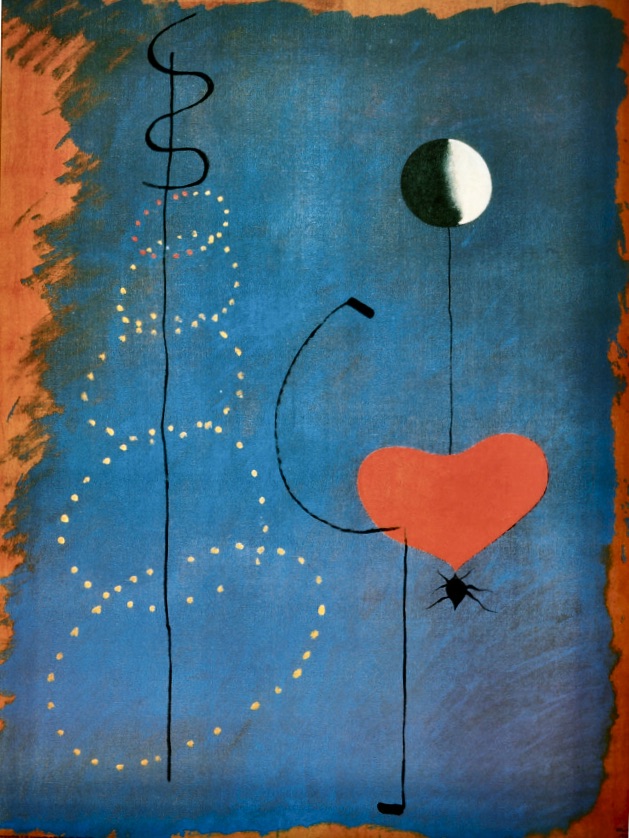
Image by Joan Miro.

Ed Staskus posts monthly on 147 Stanley Street at http://www.147stanleystreet.com, Made in Cleveland http://www.clevelandohiodaybook.com, Down East http://www.redroadpei.com, and Lithuanian Journal http://www.lithuanianjournal.com. To get the site’s monthly feature in your in-box click on “Follow.”

“Bomb City” by Ed Staskus

“A police procedural when the Rust Belt was a mean street.” Sam Winchell, Beyond Books

Available on Amazon: https://www.amazon.com/dp/B0F1LM1WF9/ref=sr_1_1?crid=2MYAQAOZIC2U9&dib=eyJ2IjoiMSJ9.hTm7BGbiQbSe5ZapFwYPPfcwOpTe-Vdg6VLE4aGyTyk.Z0R-VNBWWEcvKcNaO9LdCOUnNIOOXgvYkRS_FXiXuHk&dib_tag=se&keywords=bomb+city+ed+status&qid=1742136726&sprefix=bomb+city+ed+staskus%2Caps%2C84&sr=8-1

Cleveland, Ohio 1975. The John Scalish Crime Family and Danny Greene’s Irish Mob are at war. Car bombs are the weapon of choice. Two police detectives are assigned to find the bomb makers. It soon gets personal.

A Crying of Lot 49 Publication
Clown Car

By Ed Staskus

   Ronald the Borgia wanted to be the mayor of some place. Wherever the place was didn’t matter. He wanted it bad. He was the richest man in Oklahoma. He knew that just like he knew he was smarter than everybody else in the state. They were rubes and easily led by the nose. They didn’t eat so much as swallow what you fed them. Even though he was already an old man, he had plenty of energy and so he ran for mayor of Oklahoma City. He told anybody who would listen, “I’m the only candidate who can save us. If I win, wonderful things will happen. If I lose, awful things will happen.” 

   He put everything he had into the campaign, crisscrossing the state, whipping up his audiences, doing jigs to Kid Rock songs, and showcasing pro wrestlers who endorsed him as better than blubber. He was sure he was going to be the next bossman of the little people. When he lost, garnering less than 20% of the vote, he was very angry.  He declared the election had been rigged and stolen from him.

   His hot as a hooker wife tried to console him. Natasha was from the Balkans but spoke passable English.

   “I am sorry for your loss, honeykins,” she said. “Maybe you find comfort in the hard work you make.”

   “Hard work doesn’t count,” Ronald the Borgia said. “Winning is the only thing that counts. Another word out of you and I’ll go looking for wife number four.”

   “I zip my lip.”

   Ronald the Borgia tossed her a handful of one hundred dollar bills.

   “Go doll yourself up,” he said.

   The man who would be mayor came from old Oklahoma stock. His great-great-great-great grandfather Frederick the Borgia had been one of the original Sooners. The original Sooners were men who knew full well that the only thing that counts is winning. Every Borgia descendant after 1889 got up every morning enthusiastically chanting the mantra of victory.

   “One, two, three, four, why are we here for? Five, six, seven, eight, what do we appreciate? Go Borgia World!”

   Before 1889 they were no-account cattle rustlers and occasional bank robbers. What transformed them was the Oklahoma Land Rush. The Federal Congress in Washington had decided to renege on an 1830 treaty with tribes living there and take back the two million acres the natives had been granted. The land was called Indian Territory until it suddenly became the Unassigned Lands. President Benjamin Harrison proclaimed all two million acres of the Unassigned Lands open for settlement. Anybody could claim 160 acres of public land if they could stake it out.

   The Borgia’s had other plans. They weren’t interested in 160 acres. They gathered together all their relations and as many footloose cowboys as they could. They planned to get a head start and stake out as much land as they could. After that they planned on getting into the real estate business with money they didn’t have. They knew they would get the money by hook or by crook.

   The Land Rush began at noon on April 22, 1889. 50,000 men, and a few hardy women, on horses and buggies were let loose by a blue-clad army officer firing his pistol into the air. The Borgia’s didn’t hear the pistol shot. They were far away. They had staked their many claims the day before. They weren’t Boomers at the starting line. They were Sooners.

   For the next ten years Sooner was a fighting word. It meant somebody who had cheated and so deprived land from the Boomers. After the dust settled, however, the University of Oklahoma football team quixotically adopted the nickname Sooner and in the 1920s the state was officially nicknamed the Sooner State. That was neither here nor there to the Borgias.

   They were able to stake out more than three thousand acres adjoining what would become Oklahoma City. The day after the Land Rush there were already 5,000 people living in tents on land that would become the place. By the early 20th century it was a full-fledged modern city of 64,000 people. The Borgias bided their time. When their time came and the city came to them, they made a fortune. They continued to make money hand over fist for the next one hundred years.

   But that was then and Ronald the Borgia was now. After losing his bid to become mayor of Oklahoma City he took a long vacation at a friend’s mansion in southern Florida and sulked. When he was done sulking he moved to Ohio. He abandoned the Sooners for the Buckeyes. He ran for mayor of Mentor, northeast of Cleveland, and lost big again. He ran for mayor of Parma, southwest of Cleveland, and lost big there, too.

   Ronald the Borgia cried foul again, crying the voting was rigged, but bit the bullet and hired a political consultant. Steve Brandman was grizzled and blunt spoken. He washed his voluminous hair every day. He never washed out his mouth. He got right to the point.

   “You’ve got to get God on your side and you’ve got to get yourself a Devil on the other side,” Steve Brandman said.

   “I don’t believe in God.” 

   “That doesn’t matter, just say you do. Lip sync a prayer or two, even if you don’t know the words. Wave a Bible in the air. Tell everybody you’re a big fan of the Ten Commandments.”

   “What are the Ten Commandments?”

   “We’ll get into that later.”

   “What about this Devil thing?”

   “That’s so there’s something really bad you can oppose with your great godliness.”

   “Like what?”

   “Migrants would be a good choice, especially the wetback kind. They’ve been whipping boys on and off for a long time. Whip up some fear and loathing. Whip up some frenzy. Whip up some hatred.”

   “I can do that with my eyes closed.”

   “There you go, be a Christian soldier, go strong and put your foot on the neck of the weak.”

   “I’ve been doing that my whole life. I’m a pro at it. Migrants won’t stand a chance when I get going. Where should I run next?”

   “Lakewood, right here next to Cleveland.”

   “Lakewood? That dumb-ass suburb is about as liberal as it gets.”

   “You’re right about that.”

   “If I’m right about that then you’re wrong about me running there next.”

   “You’re a three time loser but you think you know better than me? See you later.”

   “No, no, I’ll do whatever you say, but why Lakewood?”

   “One big reason. So far you’ve campaigned against three incumbents, all men, and lost three times. The mayor of Lakewood is an incumbent, too, but it’s a woman. Catch my drift?”

   “I’m with you,” Ronald the Borgia said. “There’s no way I’m losing to some broad. Is she ugly?”

   “What does that matter?”

   “It matters to me.”

   “Whatever,” Steve Brandman said. “Lakewood is just the start. If you can win there you’ll be able to win anywhere, and I mean anywhere.”

   “All right, all right.”

   “One last thing.”

   “What’s that?”

   “My fee is payable in advance, and on top of that, I don’t start working until the check has cleared.”

   “You know I’m good for it.”

   “I don’t know anything of the kind.”

   Steve Brandman knew his man. He got his check. After it cleared the Borgia for Mayor campaign office opened in Lakewood. The election for the mayor’s seat was in two months.

   “That’s not enough time,” Ronald the Borgia complained.

   “You let me worry about that, big guy,” Steve Brandman said. “You do the complaining and explaining. Leave the rest to me.” The big guy waved his hands in the air.

   When Steve Brandman looked at Ronald the Borgia’s hands they seemed unusually small for a man his size. He wondered what else was small on the man. It couldn’t be that, could it? He had it on reliable gossip that his man was a many happy returns customer at many Houses of the Rising Sun. He put his idle thoughts aside and got to work.

   It was a rough and tough campaign. The incumbent mayor campaigned on ethics and efficiency. She campaigned on principle and safe streets. She campaigned on all the new schools being built in town and all the upgrades to the water and sewage systems. She promised to continue the good work of her administration.

   Ronald the Borgia ignored all the issues except two, what he called the “waste of space” in the mayor’s office and the threat of migrants. 

   “She’s slow, she’s got a low IQ, and she’s lazy,” he said. “She’s dumb as a rock. She’s a horrible person. Does she drink? Does she take drugs? I wouldn’t be surprised. She has no respect for the American people and takes voters for granted. She’s on the radical side of the radical left. She’s a retard, mentally disabled, we all know that. She lies all the time. I believe she was born that way. She needs a doctor. Thousands of migrants from the most dangerous countries are destroying the character of Lakewood and leaving the community a nervous wreck. She doesn’t care that migrants are eating people’s dogs and cats, skinning them and barbequing them. I’m very angry about that. Vote for godliness, vote for me, and tell her, you’re fired, get the hell out of here.”

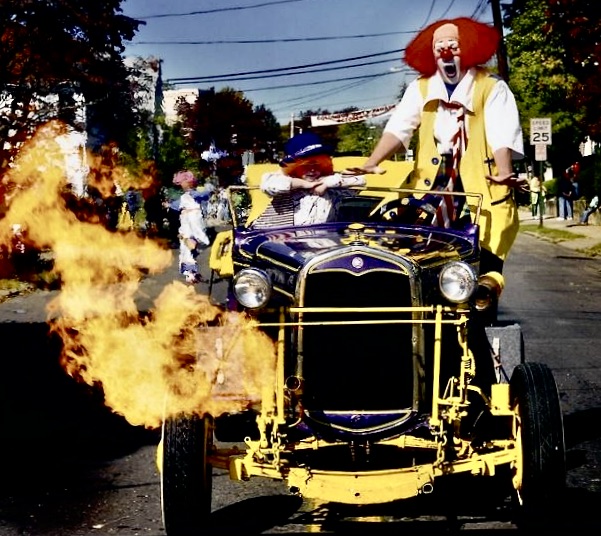
   He began appearing on the campaign trail as a Knight Templar, wearing a white cloak emblazoned with a red cross. He wore chainmail and a great helm with a narrow visor on his head. He carried a one-handed sword and a white Templar shield. His assistants dressed like monks in brown robes. They had to run to McDonalds in their sandals whenever their boss wanted a Big Mac. 

   “I love God, sure, but I really love my Big Mac’s,” he said before returning to a rant about migrants. “We have thousands of migrants overflowing into Lakewood from you know where. Many of those people have terrible diseases and they’re coming here. And we don’t do anything about it, we let everybody come here. It’s like a death wish for our town. They’re rough people, in many cases from prisons, from mental institutions, insane asylums. You know, insane asylums, that’s ‘Silence of the Lambs’ stuff. Hannibal Lecter, everybody knows Hannibal Lecter, right? Do you want him living next door to you? My opponent says, ‘Please don’t call them animals. They’re humans.’ I say, ‘No, they’re not humans. They’re animals.’ God doesn’t want us to live like animals. He wants us to live like gods. I’m already a god, so make sure you vote for me.”

   A week before the election the race was neck-to-neck. Ronald the Borgia seemed calm enough, but was sweating bullets. He called Steve Brandman into his office.

   “You said I was a sure thing,” he said wearing out the carpet.

   “Don’t bother putting words into my mouth,” Steve Brandman said. “I’m not the other side.”

   “I don’t care what you said, but do something, for God’s sake.”

   “It’s in the bag. The polls open on Tuesday. Wait for Monday. You’ll see.”

   Monday morning a fleet of Tesla Cybertrucks wound its way into Lakewood, They drove slowly so the body panels of the Cybertrucks wouldn’t fall off. Emil of Croesus was at the head of the fleet. The fleet stopped in front of City Hall. When Emil of Croesus got out of his stretch limo version of a Cybertruck an aide set up a golden card table and a golden folding chair for him in the middle of the street. Another aide put a cushion on the seat of the chair. Emil of Croesus sat down. A third aide massaged his neck. Traffic ground to a halt. Passersby gathered and gawked.

   “Get Your One Thousand Dollars By Voting the Right Way” a portable marquee sign declared blinking on and off. Emil the Croesus had a stack of one thousand dollar bills in front of him. It wasn’t long before the line stretched from the middle of Lakewood to all the corners of town.

   The next day the neck-to-neck-race became a rout. Ronald the Borgia won in a landslide. Lakewood’s many bars and eateries were full of people celebrating, eating and drinking their fill, at least until they tried paying with Emil the Croesus’s one thousand dollar bills, which nobody would accept. President Grover Cleveland’s face used to be the face on the denomination, at least until 1969 when the U. S. Treasury discontinued it. Emil the Croesus’s bill had the face of Bernie Madoff on it. The money was fake as fake could be.

   It was no matter to Doanld the Borgia, He had gotten what he wanted. He was the new mayor of Lakewood and everybody was going to have to do whatever he said. From now on the God’s truth was going to be coming out of his mouth. “If I don’t like somebody or something and need to get it straightened out, I’ll send in my clowns, I mean my law enforcement, and it’ll get done,” he said. He meant forget the saints above and the fiends below. 

   “Winning is the most important thing in life,” Ronald the Borgia said when Steve Brandman asked how he liked the result. “Losing is for suckers. Suckers are losers. I am the way. I am a winner. Winning first, no matter how, no matter what, everything else way back behind.” He smoothed his red tie. He made his little hands into fists. He pasted a left-handed smile on his face and smirked for all the world to see.

Ed Staskus posts monthly on 147 Stanley Street at http://www.147stanleystreet.com, Made in Cleveland http://www.clevelandohiodaybook.com, Down East http://www.redroadpei.com, and Lithuanian Journal http://www.lithuanianjournal.com. To get the site’s monthly feature in your in-box click on “Follow.”

“Made in Cleveland” by Ed Staskus

Coming of age in the Rust Belt in the 1960s and 1970s.

“A collection of first-person street level stories blended with the historical, set in Cleveland, Ohio. The storytelling is plugged in.” Sam Winchell, Beyond Books

Available on Amazon:

A Crying of Lot 49 Production