Tag Archives: Ed Staskus

Don’t Mess With Lysol

By Ed Staskus

   Maggie Campbell sprays Lysol on everything. “It’s the Windex of germ killers,” she said. She buys it by the case. “It’s good for everything. It kills everything, every kind of flu, strep, anything.” She sprays it on her doorknobs, handles, couches, pillows, blankets, and her bed, as well as everything else in the house. It soaks in, dries, and afterwards it all smells good. She likes the freshwater scent best.

   She even sprayed Lysol into her water glass by accident and drank it. It just happened, not that she meant to, but when it did, she thought, all right, it will kill all the germs inside me from the inside out.

   When Jesse was staying at their house and caught the flu, she sprayed him on purpose.

   Maggie and her husband Steve de Luca were in Mexico, Kristen was watching their dogs, but she got sick, and got the vommies. Her old friend Jimmy Crack Corn happened to need somewhere to stay, so he took over from Kristen. Maggie told him to spray the house down.

   “Jewel, catching the flu is for weak people,” he said. 

   “Only the weak catch colds? He’s so big and strong? Of course, he got the flu right away, the bog oaf.” Which is why she had no problem spraying him the minute she got home. When they stepped into the living room, she told him she was going to have to spray him and the couch he was lounging on. He didn’t like it, but gave in.

  “Close your mouth and eyes,” she told him. The spray kills 99 per cent of germs. The ones that survive go back and tell their germ friends, don’t mess with Lysol!

   “I swear your dog tried to hop me,” Jimmy said afterwards.

   “Don’t talk about my dog like that,” Maggie said. “Which one?”

   “Veruka, she hopped me, held me down, I swear she was trying.”

   He told Maggie about it while he was lying on the sofa with Fat Pebbles. They are girlfriend and boyfriend. The de Luca house is crazy. They have six dogs ever since they got Hermy. You have to be a little crazy to hang out at their house. Jimmy was more than a little crazy.

   “I was upstairs sleeping when Veruka jumped me,” he said. “I was herding her down to the kitchen, to the basement where their couch is, when out comes your husband into the hallway. He was butt naked.”

   “I warned you, if you are going to stay here, Steve hardly ever wears clothes.”

   “I have nothing to hide,” said Steve.

   “Goddamn, I thought I was going to go blind,” Jimmy said. 

   Jimmy and Maggie have been friends since 5th grade. They dated a little in the 7th and 8th grades but were both too controlling to be a couple. He’s controlling, Maggie’s controlling, but they stayed friends. He’s been Maggie’s best and worst friend ever since. They text each other every day, all day, forty times a day. If Steve and she are out to dinner, and Steve says something funny or interesting, she will call or text Jimmy right away.

   “Guess what Steve-o just said!” That’s the kind of friendship they have. ”He was talking about you!”

   They ran into Jimmy a couple of years after getting married. They were surprised. He was surprised. They had been on the outs.

   “What are you two doing together?” he asked.

   Steve and Maggie are not your typical couple. She was a good girl in high school, Steve was a drug supplier, and Jimmy was one of his drug users.

   “I married her,” Steve said.

   “You stole my girl,” Jimmy burst out..

    “Oh, my God,” Maggie groaned.

   Maggie ended up laughing about it and since then they’ve been back to being friends. She calls Jimmy her husband #2.

   Jimmy’s dad was once a cop in Cleveland. He used to sit outside Steve’s dad’s house in Little Italy in an unmarked car. The house was bugged. His dad’s job was to listen in. Sometimes he would hear Steve and his son hanging out together. They were both on a bad path.

   “Jimmy is in and out of our lives,” Maggie said. “He has a bad temper. He gets mad at you, cuts you out for a couple of years, but then comes back. He came back into our lives after a two-year stint of being gone. Something happened and he disappeared. After Kristen got sick and Jimmy took over, if he hadn’t been able to stay at our house, he wouldn’t have had a place to stay. He’s in recovery, like Steve, but unlike Steve he’s always slipping up and falling off the wagon. He got back on his feet with our help.”

   Jimmy works with heavy machinery and he’s going to start taking crane classes as soon as he’s done being down and out with the flu, which he caught even though he’s not a weak person. He is so strong, or so he says.

   Maggie made the mistake of getting Steve a hand bell when he got sick, Lysol or no Lysol. “That will never happen again. He completely abused the bell.” Most guys are like that. After the bell got lost and they couldn’t find it, Steve started called her Sharon. Sharon is rock ‘n’ roll Ozzie Osborne’s wife. She can never find anything in their house. 

   Maggie’s new nickname became Sharon soon enough.

   When Jimmy was feeling better, he and Steve went to Malley’s Chocolates and bought her a box of Bordeaux Chocolate. Malley’s is an ice cream and candy and chocolate store. There are 22 of the stores. They went to the original one in Lakewood, which opened in 1935. The Malley family lived in the back of the building back in the day.

   When they got back to their house Jimmy left the box of chocolate on the kitchen counter for Maggie. He didn’t know that dogs can and will eat anything if you let them. They have had dogs that would eat green peppers. Veruka, their spoiled rotten Leonberger, will eat fruits and vegetables. She will eat crumbs. She will eat anything.

   When Steve and Jimmy went upstairs Veruka strolled up from the basement. She busted through the baby gate in the kitchen doorway. Her plan was to sneak into the upstairs bedrooms and accost them. The box of chocolate stopped her in her tracks.

   She knew the chocolate wasn’t for her. But Veruka is the kind of dog who doesn’t care, just doesn’t care. She ate the whole box of on her way upstairs. Her dog mouth dog lips dog tongue got all chocolaty. She was licking it off her face when they saw her. There was no need for Lysol. Veruka gave them a look that said, “Don’t bother saying anything and forget the disinfectant.”

Ed Staskus posts on 147 Stanley Street http://www.147stanleystreet.com and Made in Cleveland http://www.clevelandohiodaybook.com. To get the site’s monthly feature in your in-box click on “Follow.”
Pulling Up Stakes

By Ed Staskus

   Hal Schaser was born in July 1931, in Cleveland, Ohio. His mother Agnes and his father Mathias were Saxons from Transylvania, where they married in 1929. His father was a minister’s son and his mother was a local beauty. The Great Depression was making a hard life after the Great War harder. They emigrated to the United States. Hal got free passage traveling unseen in his mother’s belly. 

   In time three more children rounded out the family, his younger brother Willie and younger stepsisters Suzanne and Joanne. The family dog was the youngest and went by Buddy. He was everybody’s friend, unless you were trying to burgle the house.

   “My grandparents got married in the town of Hamlish in Romania, which Transylvania was a part of then,” said Vanessa, Hal’s daughter. “One of my great grandfathers was a minister who kept horses and grew grapes for wine.” The church was built for worship and battle both, especially for protection against marauding foreign armies. “My other great grandfather was the local banker.” Their children were second cousins. The banker bought cases of wine from the minister for his table.

   Hal attended Cleveland public schools, graduating from East Technical in 1949. He acted in historical pageants while in high school and through the 1950s was often seen on stage at the Karamu House Theater and Chagrin Little Theater. “It was how I met gals,” he said. He met Terese Stasas at Karamu. “The first thing I noticed was that he looked like Paul Newman,” his wife-to-be said. “I liked that right away.”

   Mathias Schaser opened a corner grocery store on the near west side of Cleveland. Two years later, two days after the birth of his second son, he was robbed and shot by two teenaged stick-up men. He was pulling overtime after visiting his wife and newborn in the hospital. “You mustn’t stay here any longer,” Agnes had told him. “You go back to the store. We will need to have more money now.” He was pronounced dead the next day two floors below where his wife was still nursing their son. Twenty-three years later the two by now middle-aged stick-up men were paroled from the Ohio State Penitentiary.

   “I taught my sons to be forgiving, not bitter,” Agnes said in 1955. “We got along all right. They started delivering newspapers when they were ten. They finished high school, although they always worked at a bakery and other places around the neighborhood. I have a happy life with my children. I hope those two men can find jobs and become good citizens.”

   She eventually remarried after her first husband’s murder, but her second husband died of a heart attack within a few years. She never married again, raising four children on her own, on a Mother’s Pension, which was $90.00 a month, and pins and needles work.

   “My father’s stepfather passed on when he was 7 years old,” Vanessa said. “His mother was a devout Lutheran and she instilled in them Christian values, which our father carried with him all his life. He may not have been religious all his life, but he knew his Bible. He drove his mother to church every Sunday until the day she died.”

   “He grew up a true city kid through and through,” said Matt, Hal’s son. “He built and raced in the soap box derby, walked with friends to baseball games at League Park, and trained and sparred at his local gym.”

   “He was no dead-end kid, though,” Vanessa said. “When violin lessons were ordered by his mother, he endured them with grace.” Grown up he put the violin down and took up the guitar, playing the backbeat tunes Cleveland’s DJ the Moon Dog was making popular.

   Hal survived the East Ohio Gas explosion in October 1944, when a tank containing liquid natural gas equivalent to 90 million cubic feet blew up in their neighborhood, setting off the most disastrous fire in Cleveland’s history. Hundreds of homes, churches, and businesses were engulfed by a tidal wave of fire. His mother saved their house, less than a mile away from the blast, by spraying it with a garden hose until the water pressure gave out.

   “I was walking home from school and the blast almost knocked me off my feet,” he said. “It was like all at once the sky blew up with thunder balls.” His dog Buddy ran inside and stayed in the basement for a week.

   Hal boxed as a teenager, training at gyms on the near east side, reaching the finals in his class at the Golden Gloves in 1949 staged at the Cleveland Arena. He served in the United States Army during the Korean War as an artilleryman in a front-line battalion and later as a spotter. “Spotting was a suicide mission,” one of his friends who fought in the Vietnam War said. “If the other guys didn’t get you, your own guys would. How he made it home alive, I don’t know.”

   During one mortar firefight his radioman was wounded. He carried him to safety. He had a grudging respect for the courage of Chinese soldiers. “No matter what we hit them with, they always kept coming in their quilted coats,” he said. “We couldn’t kill them fast enough.”

   He gave up fighting after coming home, going to work for Palmer Bearings, selling ball bearings to the city’s steel and automobile industries. He often lunched with clients at the Theatrical on Short Vincent, mixing with city leaders, businessmen, and hoodlums. The Theatrical was a high-class dive.

   “He became Vice President of Sales where his smile and enthusiasm for life and helping others was his formula for becoming a success,” Vanessa said. “Honesty and integrity led his work, something that isn’t always easy for a salesman, but it was natural to him.”

   Hal married Terese Stasas in 1959. The couple had two children, Vanessa and Matt, raising them in the Indian Hills neighborhood near South Euclid. Their backyard was the woods of the Euclid Creek Reservation. “Our mom was a ballerina, an artist, and a chef, and our pop was a boxer, a fine ice skater, and a salesman,” Vanessa said. “I think it must have been their sense of hope and freedom that attracted them to one another.”

   “He loved to read,” Matt said. “He had his favorite chair in the living room and read classics and plays after dinner. He read the newspaper front to back in the morning.”

   His other great love, besides his family, was golf. He always traveled with clubs in his car trunk. He played with clients after work and friends on teams in city leagues. He played courses all over Ohio. Whenever he had the chance, he took short vacations to play famous links nationwide. “Good golf depends on strength of mind and a clean character,” he said. He didn’t shortchange the front nine or back nine. He didn’t shortchange himself.

   Hal wasn’t entirely a religious man, although he was. He had his reasons, among them the twists and turns of the game that was nearly a religion to him. “My prayers were never answered on golf courses,” he explained. One lesson about the divine, however, stood him in good stead. Whenever he was on a fairway and got caught in a lightning storm, he always held his 1-iron up in the air. 

   “Not even God can hit a 1-iron,” he said.

   He never stopped walking golf courses, never riding a cart, even when he played two rounds and was well into his 80s. “My father golfed ever since I knew him,” Vanessa said. “Oh, did he golf. He played with a red ball when it snowed. He loved being with people and playing with his friends. Sometimes mom said he loved golf more than he loved us.”

   He lived alone after his wife divorced him, taking their kids with her, although he never left his children or grandchildren behind. It wasn’t any back street girl that came between husband and wife. It was Hal’s career and the golf monkey on his back. He never paid enough attention to his wife or what she wanted. After becoming a single man again, he ate like a buck private and stayed fit into his later years. He lived in Lakewood for 25 years, across the street from St. Ed’s High School.

   In the run-up to the 2016 presidential election Hal fell in love with Donald Trump. He started wearing a veteran’s cap, saying bad things about immigrants, denigrating blacks and Jews, and talking down anybody young who demonstrated against anything. He decried the federal government as a conspiratorial deep state and stuck his fork in the scrambled eggs of QAnon. 

   He believed the new boss man was battling a cabal of Democratic Party pedophiles and only he could get the job done. Only the President himself was dirty enough to do the dirty work, no matter that POTUS didn’t know one end of a pop gun from another, since he thought khaki was for suckers whenever target practice was mentioned.

   He watched Tucker Carlson on FOX. He reckoned the newsman’s idea of unvaccinated people getting fake vaccine cards to avoid mandates was good reporting. “Buying a fake vaccination card is an act of desperation by decent, law-abiding Americans who have been forced into a corner by tyrants,” the FOX man said. Hal refused to be vaccinated the first time, the second time, and didn’t even bother thinking about the booster shot. He didn’t know where to get a fake card. He called Tucker Carlson, but the line was busy. He left a message, although he never heard back from America’s Voice of Grievance.

   Hal put his golf clubs away and kept them away, while POTUS went golfing in Scotland. Saving America from itself became his passion. It was a fire that burned bright in his retiree’s small apartment.

   When Rush Limbaugh died from lung cancer, after smoking stogies for decades and sounding off that cancer was just a notion, and Dan Bongino took over, he stopped listening to Rush and started listening to Dan. When Rush had said wearing a mask to protect society from COVID was a conspiracy against the freedom-loving and God-fearing, Hal paid attention and never wore a mask, unless the grocery he was trying to get into denied him entry without one. An empty stomach almost always trumps ideology. When Dan took up the mantra that the mask was Democratic BS, he gave Dan a thumbs up, but didn’t stop going masked man grocery shopping. He wasn’t that foolish.

   “My brother and I asked him to wear a mask every time we saw him,” Vanessa said. They asked him to get vaccinated, but he wouldn’t do it. He said there was something untrustworthy about the vaccines. He had heard Bill Gates was putting nefarious things into the shots.

   “I told him he had to wear a mask when visiting the kids, or he couldn’t visit them,” Matt said.

   Whether they knew it or not the right-wing radio poohbahs Hal listened to were playing with fire. Ranting and raving about unwed mothers and welfare cheats and the half-dozen voters who cheated is one thing. Ranting and raving about pandemics is another thing. It can be hazardous to life and limb conflating the two. Unwed mothers are not nearly as dangerous as man-eating viruses.

   “I’m Mr. Anti-Vax,” Marc Bernier told the listeners of his talk radio program. After the first vaccines were approved, he declared the federal government and the CDC were “acting like Nazis” in urging people to get vaccinated. The Nazis rolled over in their graves and died laughing. Six months later the whacky broadcaster died of COVID. So did Jimmy DeYoung, a nationally syndicated Christian radio preacher, and Dick Farrel, a talking head for Newsmax TV. They lived by crying wolf, screaming their lungs out, and died when they couldn’t breathe anymore.

   Hal played with fire for almost two years. It was miserable listening to an old man listening to half-witted carnival barkers. He got burnt towards the end of 2021 and by the morning after New Year’s Day could barely walk. Vanessa and Matt tried for a week after Christmas to get him to go to Fairview Hospital, but he refused. He said he felt fine, even though he looked terrible. He had a kitchen cabinet full of supplements that peddlers on the internet had been selling him to combat COVID, but the mystery pills had suddenly lost their magic.

   Matt called 911 the day after New Year’s and paramedics took Hal to Fairview Hospital. Only one person at a time once a day could visit him. When Vanessa or Matt visited him, they had to wear bio-hazard bunny suits and masks. One day Hal felt good but the next day felt bad. He complained about being brainwashed. He tried to walk out. He refused to take his medication. The nurses gave it to him, anyway, making sure he took it. One day after three weeks in the hospital he said he was feeling terrific. The next day he suffered a stroke and died three days later.

   Two weeks later a memorial service was held for him in the Rocky River Memorial Hall. His grandson played a French children’s song on the baby grand piano and his granddaughter played “Amazing Grace.” A bugler played “Taps.” Sunlight poured in through the floor to ceiling windows.

   Vanessa said a few words. “He valued his friends and loved his children and grandchildren, watching them laugh and enjoying their creativity and joy,” she said. “I’ll never forget an early childhood memory of him holding me with my feet on top of his while we waltzed to records in the living room.”

   Bob, one of Hal’s oldest coffee klatch friends, said a few words, too. “He was part of our group at McDonald’s every morning. He was the only Republican among us, so there were plenty of disagreements, but he was a great guy, the kind of guy who would give you the shirt off his back. They don’t make them like Hal anymore.”

   The next day his golfing buddies gathered for a minute at a local course. It was a cold January day. They saluted him with their 1-irons held high to Heaven. Nobody got struck by lightning. Even if God wasn’t paying attention, Hal was watching over them.

Ed Staskus posts monthly on 147 Stanley Street http://www.147stanleystreet.com, Made in Cleveland http://www.clevelandohiodaybook.com, Atlantic Canada http://www.redroadpei.com, and Lithuanian Journal http://www.lithuanianjournal.com

“Cross Walk” by Ed Staskus

“Captures the vibe of mid-century NYC, from stickball in the streets to the Mob on the make.” Sam Winchell, Beyond Fiction

Available on Amazon: https://www.amazon.com/dp/B0CRPSFPKP

Late summer and early autumn. New York City, 1956. Jackson Pollack opens a can of worms. President Eisenhower on his way to the opening game of the World Series where a hit man waits in the wings. A Hell’s Kitchen private eye scares up the shadows.

A Crying of Lot 49 Publication

From Here to Someday

By Ed Staskus

   Sly and the Family Stone drifted into the kitchen where I was making pancakes, stood up on his hind legs, and slapped his tongue against the side of my face. I didn’t mind too much. His mouth was cleaner than that of most of my friends. His kiss was less risky than kissing another person, like my girlfriend. Whatever germs were in his mouth were mostly incompatible to human beings. I never caught the flu from him since his nose never ran. Sometimes it seemed like he had more of a soft spot for me than any living being I knew.

   My brother left his Great Dane behind when he moved out. The dog cost me an arm and a leg to feed. I had to walk him twice a day. I had to shove him out of my bed whenever he tried to sleep next to me. His germs might have been harmless, but his bad breath was sewer gas. He was good-natured, though, and we got along. I called him Sly for short. He called me the man, by which he meant the grocery deliveryman. He didn’t know how to talk, but I always knew what he meant when he barked.

   Sly was in his formative years and fascinated by cars. He was reckless chasing them. I put a stop to it by sitting him down on the tree lawn and driving slowly past with a squirt gun in my lap. The gun was loaded with vinegar. Whenever he lunged at the car, I squirted him in the face through the open window. It only took five minutes to teach him cars were dangerous and guns were even more dangerous. After that I rarely had to put him on a lead when we walked to the pocket park on Lake Erie for runaround time. He walked beside me and the only time I reached for his collar was when I spied another dog coming our way.

   I was living upstairs in a Polish double on the west end of North Collinwood, on a forgotten street, a couple of blocks from the lake. Ray Sabaliauskas lived downstairs with his prize German Shepherd and the woman he brought back from the Vietnam War. He was Lithuanian like my brother and me. I was going to Cleveland State University and paying for it by taking a quarter off every now and then to work for an electro-static painting outfit. We did most of our work on-site out of town. Ray fed and walked my dog whenever I was on the road.

   The day Sly became my dog was the week after my brother’s fiancée Brenda Watson, a girl from Vermont who my brother met while in the U. S. Army at Fort Riley, was killed on Rt. 20 coming home from her part-time job at a restaurant in Mentor. She had been enrolled full-time at Cuyahoga Community College the rest of the time. She didn’t spend much time fooling around.

   The night Brenda didn’t come home was the night I woke up at two in the morning from a bad dream with a bad feeling. I got up and sat looking out window. It had rained earlier and the worms were out. The backyard grass glistened. The lettuce in the garden was glistening. A stray cat sat under the eaves of the garage, keeping an eye out for late-night snacks.

   When I noticed Brenda’s Subaru station wagon wasn’t in the driveway, I somehow felt certain something bad had happened to her. I couldn’t shake the feeling. I stayed up, sitting by the window, until I finally went back to bed, thinking it was the dream that had upset me. Even so, I couldn’t fall back asleep, and when I did, I slept fitfully.

   The next morning a Cleveland Police squad car pulled up outside the house and broke the news to my brother. At first, I thought he hadn’t heard what the policeman said. He stood stock still. But then he asked where Brenda was and reached for his car keys. I didn’t see him the rest of the day or the next day. Brenda’s parents arrived later in the week and took her back to Vermont for burial in the family’s hometown cemetery. When my brother got back from the funeral he moved out.

   Brenda fell asleep at the wheel coming home the night she died, but that wasn’t what killed her. She wasn’t even hurt when the car drifted off the highway and halfway down the embankment. She was able to hit the brakes and stop the car from overturning. She even coaxed it back up to the shoulder, where she discovered she had a flat tire. She turned on the flashers and was getting the jack and spare tire out of the back of the car when a drunk driver going her way drifted out of his lane and rear-ended her. She was propelled into and over the Subaru. She died on the spot, blind-sided, never knowing what hit her.

   When I finished my pancakes, I took Sly for a short walk. Brenda and my brother were gone and the dog was my only roommate now. He didn’t say much, which suited me, but he needed tending. I was running late for school. Back home I left him on the front porch to sleep the day away and made my way to Lakeshore Blvd, where I caught the 39B bus downtown for a class. It was cheaper than driving my bucket of bolts and paying for parking. It was Friday and I was babysitting a friend’s motorcycle for the weekend.

   Saturday morning I scarfed down a cream cheese bagel and a glass of Joe Wieder’s. The motorcycle was in the driveway behind the house where nobody could see it. Our streets were sketchy. Brothers from the hood and home-grown hoodlums prowled for loot at night. The bike was a 1950s Vincent Black Shadow, only a couple of years younger than me. My friend had dropped it that spring when the front wheel locked up. One of the handlebars was bent and made tight right turns tricky. Even though it was beat up, it handled well, and had great acceleration.

   Thirty years earlier Rollie Free, wearing a helmet, swimming trunks, and tennis shoes, broke the motorcycle land speed record riding a Black Shadow at the Bonneville Salt Flats. He did it lying outstretched flat on his stomach and hanging on to the handlebars for dear life. Two years later he did it again, breaking his own record.

   I tied my backpack down across the handlebars, turned the key, and kicked it into life. The air-cooled V-twin engine made a happy sound. I dropped it into gear. At the sidewalk I nodded at a blonde walking by. She turned her nose up at me but looked the bike up and down. I rode west on Lakeshore Blvd, halfway through Bratenahl, and turned south on East 105th St. I meant to connect with Euclid Ave. I wanted to sneak a peek at the urban decay in Glenville I had been hearing about. It was still there. I took in the ruins. The mess was a place, I thought, but not the best place to live.

   I met my former roommate Carl Poston at Mary Jane McGinty’s rented clapboard house on East 33rd St. off Payne Ave. Carl was with Mary Jane, taking it easy in her deep-set backyard. It was a tangle of overgrown hedges, monstrous bean plants, sunflowers, roses run riot, and dwarf trees, all trying to make sense of it all.

   Twin blue-eyed albino cats ran past us, across the lawn, and over a low fence. One of them was cross-eyed. They were from next door. The hippie artist next door let them do their own thing. They were rolling stones who only ate and slept at home. Carl’s motorcycle was in the driveway. It was a 1965 Harley Davidson. We decided to ride west along the lake, nowhere special, just drifting in the direction the sun was going.

   We gassed up on the other side of the Cuyahoga River and stopped at an Ohio City diner for coffee. Carl was a bean counter but had taken some philosophy classes at Cleveland State University that year and was in a frame of mind all summer, trying to realize something that might or might not matter as a way of exercising his mind. 

   We rode on Lake Rd. through Lakewood, Rocky River, and Bay Village. We were riding into a strong headwind, but it was no match for our motorcycles. The sun reached its zenith and kept going. We kept going, too, until we reached Vermilion. There were crowds milling in the streets. We slowed down to almost nothing. Children gamboled here and there. We inched our way to the harbor. A stout lady with a perky freckle face told us it was the annual Fish Festival. 

   We caught a break coming into town that day. There were vintage cars on parade, men wearing fezzes and sashes, marching high school bands in starched uniforms, a covey of Boy Scouts, floats carrying gals looking like movie stars, garish looking clowns, and oafish looking town officials. Brenda had been an outdoorsman. She would have jumped at the chance to cruise the Fish Festival. She had just turned legal that year. Now she was gone with no future. I couldn’t get her out of my mind. She was like the opening pages of a good book whose remaining pages had been torn out and thrown away.

   We had heaping plates of buttered perch with potatoes and sage. Carl wanted to talk about the future, but I didn’t. I was in a state. I thought of the past as nothing but debris and the present as grist for the mill. I left the future in God’s hands. Carl was becoming a thinking man, so he told me I was being irresponsible. 

   “Mind your own business,” I said. He sounded like my father who sometimes knew everything about everything.

   “That kind of attitude is even more irresponsible,” he said.

   “You’ll be an old man soon enough. Wait until then to talk that way.”

   “I’ll have to look you up when that happens,” he said.

   A shapely young woman wearing a bikini with ruffles came our way. She was topped off with a peaked hat two feet high, four feet wide, made of wire mesh, and adorned with red, white, and blue rosettes. We admired her glide. When we left Vermilion, we followed a road along the lakeshore winding past small frame houses and cottage resorts. There were big trees everywhere and the air smelled sweet.

   After we reached Marblehead we took the ferry to Kelly’s Island. We saw sailboats bobbing up and down, leaning to one side of the wind. The ferry rode rough on the choppy water. Carl’s Harley didn’t have a center stand and he had to lean on it to keep it from falling over. A tow-headed boy getting soaked at the bow laughed like Soupy Sales every time a wave crashed onto the deck. When he saw Perry’s Monument he jumped and pointed that way. 

   Don’t Give Up the Ship” was on Commander Oliver Perry’s battle flag during the Battle of Lake Erie in 1813. It recapitulated the dying words of a fellow commander who fell in an earlier naval engagement against the British. Oliver Perry didn’t give up and the British squadron was sent packing.

   We rode around the island aimlessly with our helmets off and the wind in our hair. The blacktop dipped and curved. There were boats stashed in harbors tied to docks all over the place. We took a break at a public beach, ogling skin sizzling in baby oil from behind our sunglasses. Back on our bikes we rode across a field to an abandoned baseball field. The chain link of the backstop was rusted and the painted stands were weathered, cracking, and peeling. The pitcher’s mound was overgrown with weeds.

   We shared some reefer sitting on the outfield grass. Carl started expounding on the problem of good and evil. I suspected I was in for it and took a short drag on the reefer. “The Nazi’s thought what they did to the Jews was righteous, but at the same time many other people didn’t,” he said.

   “Especially the Jews,” I said.

   “Who was right?”  

   I said we both knew Adolf Hitler and his henchmen were insane monsters.

   “Sure, but that’s not the point,” he said. 

   “What is the point?”

   “Just trying to touch on something metaphysical here.”

   “All right, but metaphysics is more fantasy than not. Arguments about good and evil are useless. Just about everything except food, water, and breathing is relative. Most of it is all made up.”

   “What about your brother’s girlfriend who got killed? Was that relative? Did the drunk driver have the right to decide her life and death?”

   “I hope they hang that guy like they hung the Nazi’s.”

   We took a quarry road back to the ferry dock. We were early for our return ride and walked to a nearby tavern. It had a Louisiana ceiling and wide plank floor. Fishing paraphernalia filled the walls. Teenagers were playing pinball and yakking it up. They looked too young to drink but had bottles of Blatz at hand. Over the cash register somebody had scrawled in magic marker that an Irishman was not drunk so long as he could hold on to a blade of grass and not fall off the edge of the planet.

   Carl and I each had a Blatz while we waited for the ferry. Back on the mainland, we took secondary roads as far as Avon, where Carl waved goodbye and roared off for home. I laced up my skates and got on the highway. I crossed the Flats going 75 MPH. Passing the Municipal Stadium I fell in with three other motorcyclists who were making good time. I hit 105 MPH keeping up, then taking the lead, leaning low over my handlebars. Every part of me was focused on the road flowing backwards in front of me. I had never gone that fast on a car or motorcycle or anything else other than a jet plane. Nothing mattered except keeping my tail on the seat and not wiping out. 

   Hunter Thompson once said, “If you ride the Vincent Black Shadow at top speed for any length of time, you will almost certainly die. That is why there are not many life members of the Black Shadow Society.” It took less than three minutes to pass the Cleveland Aquarium and veer away from the pack down the ramp of my exit onto Waterloo Rd. I caught my breath at the stop sign before an impatient horn behind me made me jump and I tapped the gear shift.

   Back home I chained and tucked the Vincent out of sight in the backyard. I watered and fed Sly before throwing myself down on the sofa. My legs felt like worn out rubber bands. My left palm was sore from handling the clutch all day. I wasn’t used to it. I wasn’t used to anybody my age dying, either, but Brenda had died and there wasn’t anything anybody could do about it. 

   A good idea is to die as young as late in life as possible. It hadn’t worked out for Brenda. Her life was still in the memory of the living. Nobody had forgotten her, at least not yet. When that happens, it happens slowly, counting down to zero, until nobody remembers. It was a shame, I thought, before I stopped thinking about time and fate and fell into a simple as ABC sleep while Sly and the Family Stone snored on the floor at the foot of the bed.

Ed Staskus posts monthly on 147 Stanley Street http://www.147stanleystreet.com, Made in Cleveland http://www.clevelandohiodaybook.com, Atlantic Canada http://www.redroadpei.com, and Lithuanian Journal http://www.lithuanianjournal.com

“Cross Walk” by Ed Staskus

“Captures the vibe of mid-century NYC, from stickball in the streets to the Mob on the make.” Sam Winchell, Beyond Fiction

Available on Amazon: https://www.amazon.com/dp/B0CRPSFPKP

Late summer and early autumn. New York City, 1956. Jackson Pollack opens a can of worms. President Eisenhower on his way to the opening game of the World Series where a hit man waits in the wings. A Hell’s Kitchen private eye scares up the shadows.

A Crying of Lot 49 Publication

Beauty School Bust-Up

By Ed Staskus

   “Don’t you need to get ready and go register for school?” Alma Campbell asked Maggie, hands on her hips, elbows splayed out, scowling at her daughter.

   “Yeah, but I’m not going,” Maggie said.

   “What do you mean, you’re not going?”

   “I’m not going back to school. I’m not cut out for it. I don’t like it. I don’t want to do it.”

   “What are you going to do?”

   “Hair, I’m going to do hair.”

   Alma got excited. She loved it that her daughter was going to be a hairdresser. If a woman doesn’t have a hairdresser, then she has no choice but to let her hair go to hell. There’s no future in that. Alma started looking up cosmetology schools.

   Maggie was 19 years old. She had been going to Tri-C Community College for a year studying to become a special needs teacher. When she was a lifeguard at Bay Pool, she used to teach them how to swim. She loved those kids.

   But, at Tri-C they showed movies about teachers teaching special needs kids and the movies bummed her out. The whole thing came down to seeing the women’s faces, the teachers, and how their faces were hard, and she could see they were frustrated. She thought to herself, I don’t want to be like that around special needs kids.

   “I don’t want to become angry and jaded,” she told her mom. “The thought of getting frustrated with any of the special needers kills me. I don’t want to ever get angry with one of those little faces. When I told you I was going to become a hairdresser it came out of the blue. I didn’t know I had been thinking about it. You can only do what you want to do when you know you want to do it.”

   Maggie cut hair when she worked at Bay Pool, even though she wasn’t supposed to. Nobody liked loose hair floating in the water. Other teenagers would ask, “Do you know how to cut hair?”

   “I don’t know, maybe. I cut my own.”

   “OK, can you cut mine?”

   “Yeah, sure, I’ll cut it.”

   She used to pierce ears, too.  “Do you remember the time the electricity at school went out and we were all bored and you pierced my ear with your own earring?” a friend of hers asked at one of their school reunions. “No, but it sounds great,” she said. The way she looked at it, even if I don’t remember it, back then he wanted his ear pieced, so I pierced it, dark or no dark.

   By the time Alma was done, the next thing Maggie knew, she was enrolled at a beauty school in Fairview Park. It didn’t always go as planned. She had to spend many hours writing “I will not swear in front of clients” on the lunchroom chalkboard.

   One day a lady was in the bowl, soap in her hair, and she decided to sit up.

   “What the fuck do you think you’re doing?” Maggie blurted out. “Lay back down!”

   Her teachers were flabbergasted. “Did you just swear at her?”

   “No, I didn’t swear at her.”

   “Are you lying?”

   “No.”

   They made her write “I will not swear in front of clients” 500 more times. It was ridiculous. Her fingers got dry and dusty with chalk dust.

   “I’m paying you to go to this school,” she said. “I’m in charge.”

   “Keep writing,” they said.

   She was always in trouble. She didn’t even know she was saying anything vulgar when she was saying it. The words were just part of her vocabulary. “It’s been that way my whole life,” she said. “My mom would come home from work at the hospital, we’d sit down at the dinner table, and she was off to the races, fuck that stupid doctor, fuck that idiot nurse, and that fucking patient who gave me so much trouble. That was our dinner talk.”

   Have you ever talked to a nurse? Nurses swear like truck drivers, on and on. Alma painted the town with curses. She wasn’t just trying to get her point across by using harsh language, although it helped. It became part of the word world at the Campbell house.

   “I grew up in a house full of swearers,” Maggie said. “I swear a lot in front of everyone, all the time. My mom and I went to Put-In-Bay one weekend. It’s a small island in Lake Erie, the best walleye, and the third tallest monument in the country. We were waiting in line to get into the roundhouse. We were talking and I was swearing up a storm.”

   “Nice mouth,” a man behind them said to her. “Do you kiss your mother with that mouth?” 

   Maggie whirled on him. “You know what, asshole, my mother invented the word fuck. You want to see me kiss her? I’ll kiss her right now.” She kissed her mom on the mouth.

   “Mags, what are you doing?” Alma asked. She hadn’t been paying attention to the eavesdropping man behind them.

   Halfway through beauty school Maggie got into a car accident when she hit a cement truck. She was out of commission for months. When she came back, she had four months left. Those months became her dark days. She thought she was a hot shot and that she knew best. She was always goofing off. She never paid attention. She was her own man.

   “I thought I knew how to do everything, do it all. Once you get out of theory, they put you on the floor. I don’t want to do haircuts is what everyone else said. I was the daring person. It wasn’t about playing with scissors.”

   She was the first one to go on the floor. She didn’t mind standing all day. She could do it all week all month all the time with no problem. Maggie had cut hair before, so she was on fire, raring to go. She couldn’t and wouldn’t quit. She had to finish beauty school because she couldn’t and wouldn’t go back to Tri-C.

   Maggie didn’t enjoy cosmetology training, but she got through it, and got her first job at Cadillac Cutters in Rocky River. It didn’t go well, not because of her cursing, but because, in the end, she didn’t curse enough. If she had she might have washed them out of her hair sooner than later.

Ed Staskus posts on 147 Stanley Street http://www.147stanleystreet.com and Made in Cleveland http://www.clevelandohiodaybook.com. To get the site’s monthly feature in your in-box click on “Follow.”

Motor City Breakdown

By Ed Staskus

   Antanas Kairis was two years older than me, sure of himself, and quick on the uptake. He was even quicker when things took a twist. I met him at a party at a small mansion on Magnolia Dr. in University Circle, around the corner from the Music Settlement. Dalia and Algis Nasvytis, who were near my age and who I knew through the community, lived there with their younger sister, Julia, and their parents. It was two weeks before Christmas.

   They threw their house open occasionally, clearing the big room in the back for kids, teenagers, and young adults to dance to records. The grown-ups mingled, smoking and drinking and chatting. The house was brick, two stories with a front facing slate roof and gables and windows galore. Mid-December was cold and it had snowed for days. All lit up the house sparkled in the frosty night.

   Antanas was from Boston and had come to Cleveland, Ohio, to see his girlfriend, who was from Dearborn, Michigan. When I called him Antanas he said, “Call me Andy.” His girlfriend Aida was blonde and beautiful and visiting friends. She didn’t know our hosts, but her friends did, and she knew Andy.

   I didn’t know I was standing next to him until Aida sauntered off to dance with another boy. “What do you know, I drive all day, and she slips off with somebody else,” he grumbled, grinning devilishly. It took me a second to realize he was talking to me. I was wall flowering more than dancing. At least he had a girl to complain about. The field I was playing was empty. I didn’t often strike up conversations with strangers. Andy was more silver-tongued than me, by far.

   He wanted a cigarette. We went out on the back terrace and he lit up. He offered me one but I didn’t smoke. He did most of the talking. By the time we went back inside it seemed like we were fast friends. I didn’t see much of him the rest of the night. He had eyes only for Aida. He clapped me on the back when I was leaving with my ride, saying he hoped we would meet again. I said sure, even though I didn’t expect to ever see him again.

   I don’t know how Andy got my phone number but two months later I found myself on the phone with him. He was driving to Dearborn to see Aida the next weekend and wanted to know if I wanted to go along. I cleared it with my parents, even though they didn’t know him or his family. It was enough for them that he was Lithuanian. He picked me up the next Friday morning. When he arrived he looked like he had driven all night.

   He was driving an almost new hardtop GTO 428. GTO stands for Grand Turismo Omologato. It was red, what Pontiac called Montero Red. It was a cool car inside a hot color. It had street cred, and more. I waved goodbye and jumped in. When we got to the corner of our street, he asked me if I minded driving. I said I didn’t mind and drove all the way to Dearborn while he slept. Dearborn was one hundred and seventy miles away. We made it in record time in the smooth as silk muscle car. The engine had a throaty sound and handled like doing simple arithmetic.

   Henry Ford was born on a farm in Dearborn and later built an estate there. He pioneered the mass production of automobiles and his world headquarters was based there. He forged the River Rouge Complex there, the largest factory of his industrial empire. He had a reconstructed historic village and museum built nearby, immortalizing his youth. The back lot was planted with sunflowers and his favorite crop, which were soybeans. The crops were never harvested.

   There were lots of Poles, Germans, and Lithuanians in Dearborn. If there were any African Americans, I didn’t see them. “Negroes can’t get in here. Every time we hear of a Negro moving in, we respond quicker than reporters do to a fire,” said Orville Hubbard, the mayor of Dearborn for thirty two years. “As far as I am concerned, it is against the law for a Negro to live in my town.” 

   The Michigan Civil Rights Commission found him guilty of posting racist newspaper clippings on City Hall bulletin boards. However, he never saw jail time. He was an equal opportunity bigot. He complained that “the Jews own this country” and that the Irish “are even more corrupt than the Dagos.” When Middle Easterners started moving into Dearborn after the Six-Day War he said “the Syrians are even worse than the niggers.” In 1970 his son John Jay Hubbard ran for mayor against him but got beaten to a pulp. The unofficial slogan of the town was “The Sun Never Sets on a Negro in Dearborn.”

   We got to Aida’s house without too much trouble, except for stopping at several gas stations to ask for directions. Her parents had reservations about Andy but brushed me off as a harmless sidekick. They agreed to let us sleep in their furnished basement that night and Saturday night and made supper. It was cold beet soup with black rye bread and kugelis. I wasn’t surprised it wasn’t burgers and fries. They were true blue Baltic folks.

   We went out on the town, visiting the Automotive Hall of Fame. We went to the Henry Ford Museum and rode in a Model-T. We went to the Fairlane and sat in an old bus. We went to the movies and saw “In the Heat of the Night.” We stopped at a tavern with a neon sign in the window saying “EATS.” Andy explained I was with him and they let me in. We had burgers and fries. Andy had a beer. Aida and I had cans of Sprite.

   On the way back Andy and Aida rolled around in the back seat making out. We were at a stop light minding our own business, waiting for the green light, when a car pulling up next to us got too close and broke off the GTO’s sideview mirror. There wasn’t one to begin with on the passenger side which meant now we didn’t have any. The young woman driving the white Chevy Corvair looked at me, looking chagrined. She put the car in park and got out. I noticed her compact car didn’t had side mirrors from the get-go. The Corvair is on most lists of “The Ten Most Questionable Cars of All Time.” 

   I was standing beside the driver’s door looking at the broken mirror lying in the road when I noticed Andy bolting out of the back seat and making a beeline to who-knows-where. He hit the pavement running and disappeared down a side street. When the police appeared, I pointed to the broken mirror and explained what happened. Aida and I stood next to the GTO while they went about their business. They wrote a ticket and gave it to the guilty girl. She drove away in her Corvair waving goodbye.

   “We’ve called your parents and they’ll be here to pick you up soon,” one of the policemen told Aida. She looked stricken. 

   “Are your parents strict?” I asked. She nodded yes.

   “What about me?” I asked one of the policemen.

   “You’re coming with us,” the policeman said.

   “Where are we going?”

   “You’re going to jail,” he said.

   “Why? I didn’t do anything.”

   “This is a stolen car,” he said.

   The city hall, the police station, and the district court were all in a row on Michigan Ave. I was taken to the police station, photographed and fingerprinted. They put me in a holding tank. It smelled bad, like a toilet with a dead rat in it. A man in a suit showed up and took my statement. 

   “I didn’t steal that car,” I said. “Find Andy. He’ll tell you.”

   “We already found him.”

   “And?”

   “He said you stole the car.”

   “What! That’s not true. Why did he run away if he didn’t steal it? I didn’t steal anything. He did all the stealing, the rat.”

   “Have you ever been to Massachusetts.”

   “No, except once a couple of years ago when there was a Boy Scout Jamboree there.”

   “All right, sit tight,” he said.

   I sat tight that night and the next night and the night after that until my court appearance on Monday. I was stuffed into a cell with three other men, two of them there for drunk and disorderly and one of them, an African American, for being in Dearborn after the sun went down. He called us honkies every so often. After a while we ignored him.

   “I don’t trust anyone that hasn’t been to jail at least once in their life,” the movie director John Waters once declared. “You should have been, or something’s the matter with you.” I was in jail for the first time in my life, working on my trustability.

   I was suspicious of the two drunks and slept with one eye open. My fears were put to rest the next day when they sobered up. They built Ford Mustangs at River Rouge. The complex included ninety three buildings with nearly sixteen million square feet of factory floor space. It had its own docks on the dredged-our Rouge River, one hundred miles of interior railroad track, a private electricity plant, and an integrated steel mill. It was able to turn raw materials into complete cars all within its own space. 

   “You leave your brain at the door,” one of the men said. “Just bring your body, because they don’t need any other part. It’s a good thing, otherwise I would lose my mind. They tell you what to do and how to do it. No thinking allowed.”

   “Hey, there ain’t a lot of variety in the paint shop either,” the other one complained. “You clip on the color hose, bleed out the old color, and squirt. Clip, bleed, squirt, clip, bleed, squirt, stop and scratch your nose. Only now the bosses have taken away the time to scratch my nose.” 

   “Yeah, the line speed used to be forty-some cars an hour twenty years ago but now it’s working its way up to a hundred cars. A lot of the time I have to get into the car and do my job sitting on base metal. I was always going home with black and blue marks on the back of my legs. I made a padded apron to wear backwards so I would be more comfortable.”

   “I was a two-bolt man for a while,” the painter said. “There were two bolts and I put in one and secured it. Then I put in the other one and secured it. They came pretty fast, so it was time after time all of the time. I always had a sore shoulder. It just wears you down in your bones.”

   A rolling rack of paperback books came by and I grabbed a couple of Perry Mason mysteries. We were fed morning, noon, and night. I took naps whenever I wanted to. Being behind bars was better than it was cracked up to be. By Monday morning I had gained a pound or two, was working on my jailbird tan, and was well rested.

   On the way to the courtroom I saw Andy in another group and jumped him, only to be separated from him by force of arms. I spit out curses, calling him a dirty liar. He gave me the finger and that ended our so-called friendship on the spot. In the courtroom I saw my father, who had taken the day off and driven to Dearborn. He was poker-faced. When my turn came a police detective and an assistant district attorney talked to the judge. When they were done the judge crooked his finger at me to approach the bench.

   “Your friend has admitted stealing the car in Boston to go joyriding and so we are dropping all charges against you,” he said.

   “He’s not my friend,” I said.

   “In any case, you’re free to go.”

   Automobile theft was rampant all over the country, with almost a million of them going missing every year. Michigan was one of the states that led the way. My case was open and shut, thank God. Stealing cars was a trap door to prison. I left with my father, who wasn’t at all happy, but was happy I had been sprung loose.

   “I still can’t believe another Lithuanian would do that to me, especially lying about stealing the car,” I said on our way back to Cleveland.

   My father brushed my naivete aside. “In Lithuania, whenever anyone is driving, they are cautious of people on the side of the road trying to flag them down, trying to get them to pull over,” he said. “Those are usually up to no good.” The only time anybody had to stop, he said, no questions asked, was when a Russian in a uniform told them to stop.

   The Russians had their clamps on Lithuania in those years. They didn’t care whose car you stole, as long as it wasn’t one of their cars. When that happened they got their commie private eye kits out and went looking for the thieves. When they got their man it was payback time.

   “More often than not it’s a trick to get you out of your car so that a second man can either steal what’s in it or drive off with it,” my father continued. “Everybody knows that if you absolutely must leave your car, let’s say you are involved in an accident, be sure to turn off the ignition, take the keys, and lock the car. Lithuanians are not all saints, believe me.”

   He was from the homeland. He knew the score better than me. He tapped out a Pall Mall, lit it, and drove in silence while he smoked.

   “What do you think the moral of your lost weekend might be?” he asked ten minutes later while stubbing out his cigarette.

   I looked at the pivoting globe compass and the small painted statue of St. Christopher on top of the dashboard, wiggling slightly on their magnetic bases. Even though the compass told him what direction he was going, my father was terrible with directions, often getting lost. He didn’t like asking for them, in any case, and relied on St. Christopher, the patron saint of travelers. Unfortunately, St. Christopher never said a word about anything.

   I couldn’t think what the moral of my weekend in Motor City might or might not be. I was sure there was going to be some kind of sermon. He surprised me, though, tempering sternness with advice.

   “Trust everybody, but always cut the cards.” He was a very good bridge player. He knew when to bid and when to pass. “Be careful when somebody calls himself your friend, no matter whether he’s Lithuanian, or not. You never lose when you lose a false friend.”

Ed Staskus posts monthly on 147 Stanley Street http://www.147stanleystreet.com, Made in Cleveland http://www.clevelandohiodaybook.com, Atlantic Canada http://www.redroadpei.com, and Lithuanian Journal http://www.lithuanianjournal.com

“Cross Walk” by Ed Staskus

“Captures the vibe of mid-century NYC, from stickball in the streets to the Mob on the make.” Sam Winchell, Beyond Fiction

Available on Amazon: https://www.amazon.com/dp/B0CRPSFPKP

Late summer and early autumn. New York City, 1956. Jackson Pollack opens a can of worms. President Eisenhower on his way to the opening game of the World Series where a hit man waits in the wings. A Hell’s Kitchen private eye scares up the shadows.

A Crying of Lot 49 Publication

Raise High the Roof Beam

By Ed Staskus

   When I moved into the Plaza Apartments on Prospect Ave. at the intersection of E. 32nd St., which wasn’t even a street since the other end of it dead-ended into a parking lot, it was by accident, including a car accident and bumping into Arunas Petkus a few days later.  The car accident happened when a flash of sunshine distracted me. Bumping into Arunas was simply by chance.

   I was living at Dixon Hall up the street near E. 40th St. A decade after I moved out it was designated a legacy building and historic location but when I lived there it was a rat’s nest, full of students, day laborers, and deadbeats. It was a solid four-story stone and brick building that had gone to seed. 

   Hookers and boozehounds roamed Prospect Ave. in the evening after the blue collars and shop owners went home. The junkies stayed in the shadows, hapless and harmless, mumbling and nodding off. I avoided roughnecks on the prowl, who were hoping to stumble on a sucker. Nobody from the suburbs ever came day-tripping, much less set foot on Upper Prospect at night.

   My roommate Gary was ten years older than me and was drinking himself to death, day by day, from the bottom of his heart. I first met him the day before moving in with him, when I answered a worse for wear note on a bulletin board at Cleveland State University, a ten-minute walk away. He was stocky, bearded, and sullen, but I needed a cheap room, and his second bedroom was available.

   It wasn’t any great shakes of an apartment, which was a living room, walk-in kitchen, and two small bedrooms. There were more cockroaches than crumbs in the kitchen. The sofa and upholstered chairs were a flop. Gary kept cases of beer stacked up by the back door and his whiskey under lock and key.

   I didn’t know much about spirits except that all the grown-ups I knew, who were most of them Lithuanian, drank lots of it, some more than others. I didn’t know why Gary was going breakneck down the river, but he was and wasn’t in in any kind of shape anymore to do much more than sit around and drink.

   The day he told me he was going out to pick up his car was a surprise, since he was living on some kind of inheritance and almost never went out. I didn’t even know he knew how to drive. I was even more surprised when he asked me if I wanted to go along.

   “Where is it?” I asked.

   “Down by 36th and Payne,” he said.

   We could walk there since it was a sunny day. E. 36th and Payne Ave. was only about twenty minutes away by foot.

   “All right,” I said, which was my first mistake.

   His car was a 1963 VW Beetle with a new engine block and repainted a glossy lime. He paid cash in hundred dollar bills and we drove off, down E. 55th St. to the lake, up E. 72nd St. to St. Clair Ave., and back to Dixon Hall. When he pulled up to the curb, he asked me if I knew how to drive a standard shift.

   “Sure,” I said.

   “Do you want to try it?”

   “Sure,” I said, which was my second mistake.

   I didn’t get far, about a quarter mile. As we were approaching the intersection of E. 30th St. and Prospect Ave. a flash of sunshine glancing off the glossy yellow-green hood of the car distracted me. I turned my head to the left. That was my third and last mistake.

   I didn’t see the four-door sedan going through the red light to my right and never touched the brake. He smashed into the front fender of the VW, sending us spinning, and a car behind us smashed into our rear engine compartment. The opposed 4 engine made a last gasp and went dead.

   When we came to a stop the VW Beetle was finished and I was finished as Gary’s roommate. I was just barely able to talk him into giving me a week to scare up another roof over my head. The fall quarter at Cleveland State University was rolling along and winter wasn’t far away.

   I was playing beggar-my-neighbor with friends in the Stillwell Hall ground floor cafeteria when Arunas Petkus joined us, snagging a card game in his free time. He was Lithuanian like me. We had gone to St. Joe’s together, a Catholic high school on the east side, and he was an art major at Cleveland State University. He had a deft hand drawing and painting. He piped up when he heard about my predicament.

   “Try the Plaza,” he said. “There’s a one bedroom on the second floor that’s come open. Somebody I know moved out in the middle of the night.”

   The Plaza was just down the street from Dixon Hall. I had never paid much attention to it, but when I gave it a closer look, I liked what I saw. It was built in 1901 in an eclectic style, on a stone foundation, with some blocks of the same stone in the exterior, and facing of yellow brick in front and around the courtyard. Some of the brick was sprouting ivy. The top of the five stories was crenellated. It had a cool vibe when I walked around it, eyeballing the stamping ground.

   Dave Bloomquist and Allen Ravenstine, who was the synthesizer player for the Cleveland-based art-rock band Pere Ubu, owned and operated the building.

   “I grew up at the Plaza. It’s where I became an adult,” Allen said. “I was a kid from the suburbs. When we bought this building in 1969, we did everything from paint to carpentry. When it was first built, it had 24 apartments. When we bought it in a land contract, there were 48 apartments. We tried to restore it unit by unit.”

   I knocked on Dave Bloomquist’s door. His apartment was at the crown, in the front, facing north, looking out across Chinatown, Burke Lakefront Airport, and out to Lake Erie. When he answered the door, I don’t know what I expected, but what I got was a tall young man, maybe six and a half feet of him, a thick mop of black hair, and an old-school beard.

   “I’m here about the apartment on the second floor,” I said.

   He led me through the kitchen, down a hallway, and into an office full of books, records, a big desk, and sat me down in a beat-up leather armchair.

   I didn’t blanch when he told me what the rent was because it wasn’t much, but I didn’t have much. I could make the first month, maybe the second. I hemmed and hawed until he finally asked me if I was short.

   “More or less,” I said.

   “Would you be willing to work some of it off?”

   “Yes, you bet.”

   “Good, we can work that out. Do you play chess, by any chance? You look like you might.”

   “I know how to play,” I said, but didn’t say anything about my reading chess how-to books.

   “Great, do you want to play a game?”

   “Sure.”

   He had a nice board and played a nice game, but I finished him off in less than twenty moves.

   “Beginner’s luck,” I said.

   “After you’ve moved in stop by, we’ll talk more about some work for you, and play again,” he said.

   I went down the front steps, out the door, and sat down on what passed for a stoop. A young woman stuck her head out of a basement window behind me. I looked at her. She was a looker.

   “I haven’t seen you around here before,” she said. “Are you moving in?”

   “Yes, in the next couple of days.”

   “Do you have a car?”

   “No.”

   “That’s good,” she said. “I’ve lost two cars living here.”

   “That’s too bad.”

   “I love living here, but it drives me crazy at night,” she said. Her name was Nancy and she was studying art. She wanted to be a teacher. “The junkies sit right here on this ledge and party all night long. They never see anything happening, like my cars being stolen.” The dopeheads didn’t have the smarts to steal cars. The making off happened when bad guys came down Cedar Rd. looking for easy pickings.

   I moved in over the course of one day, since I didn’t have much other than my clothes, bedsheets, kitchen dishes, utensils, pots and pans, schoolbooks, and a dining room table and chairs my parents bought for me. I lived on pancakes, pasta, and peanut butter. The apartment wasn’t furnished, but whoever had left in a hurry left a queen bed, a dresser, and a livable sofa. 

   A man by the name of Bob Flood, who lived on the same second floor like me, but in the front, not the back like me, helped me carry the table and chairs up. He was dressed in denim, wore a denim cap, making him look like a railroad engineer, had a little shaggy beard and bright eyes, and was on the rangy side. He walked in a purposeful way, like an older man, even though he wasn’t an old man. Everybody called him Mr. Flood.

   I found out later he was divorced and had two children who visited him, but I never found out if he worked for a railroad or what he did, at least not for a fact. He was either at home for days on end or he wasn’t. I had worked at Penn Central’s Collinwood Yards the winter before as a fill-in, sometimes unloading railcar wheels, sometimes walking the yard with a pencil and waybill clipboard. I didn’t remember ever seeing him there.

   “What kind of people live here?” I asked him.

   “All kinds,” he said. “There are a lot of musicians, artists, writers, some students and even a couple of professors.”

   “It’s an energy house,” said Scott Krause, who was the drummer for Pere Ubu.

   “Not everybody’s in the arts,” Mr. Flood said. “There are beauticians, bartenders, and bookstore clerks, too.” 

   “If you want to stick your head out the window and sing an aria, someone might listen, and someone might even applaud,” said Rich Clark from his open window. Nobody had window air conditioners.

   I found out almost everybody was more younger than older, except for an Italian couple and their parrot. The parrot never sang or spoke outside the family, no matter how much the Italians coaxed and cajoled him. The bird was as stubborn as a mule.

   Once winter was done and spring was busting out, I was reading a book for fun in the courtyard when Arunas Petkus stepped up to the bench I was sprawled out on. He wanted to know if I wanted to go to California with him once classes at Cleveland State University were done for the summer.

   “All that tie dye is finished there,” I said. “Even the hippies say so.”

   “I thought we could visit Chocolate George’s grave.”

   “Who’s Chocolate George?”

   George Hendricks was a Hells Angel in the San Francisco chapter who was hit by a car while swerving around a stray cat one August afternoon in 1967 as the Summer of Love was winding down. He was thrown from his motorcycle and died later that night from his injuries. He was known as Chocolate George because he was rarely seen without a quart of his favorite beverage, which was chocolate milk.

   “He drank chocolate milk because he had an ulcer,” explained Mary Handa, a friend of his. “He spiked it with whiskey from time to time.” He scored nips of the booze all day long.

   George Hendricks was a strapping 34-year-old when he died. He was a favorite among the hippies in Haight-Ashbury because he was funny and friendly. Sometimes he sported a Russian fur hat, making him look like a Cossack. His mustache and goatee were almost as long as his long hair, he wore a pot-shaped helmet when riding his Harley, and his denim vest was sprinkled with an assortment of round tinny pin badges. One of the badges said, “Go Easy on Kesey.”

   The writer Ken Kesey had been the de facto head of the Merry Pranksters. Much of the hippie aesthetic traced back to them and their Magic Bus.

   “I bought a used car,” Arunas said.

   It was parked in the back next to the nerve-wracking back stairs. The stairs were sketchy. Going up and down them always felt like it might be the last time as they twitched and shook and seemed on the verge of yanking themselves off the brick façade. I avoided them whenever I could.

   The car was a two-door 1958 VW Karmann Ghia. “You know how the Beetle has got a machine-welded body with bolt-on fenders,” Arunas said.

   I didn’t know, but I nodded agreement keeping my distance from the car. It looked like a soul mate to the stairs. It was pock-marked with rust and seemed like it might fall apart any second.

   “Well, the Karmann Ghia’s body panels are butt-welded, hand-shaped, and smoothed with English pewter.”

   I didn’t know what any of that meant, either, but nodded again.

   “Does it drive?”

   “It got me here.”

   “From where?”

   He bought the VW at a used car lot on E. 78th and Carnegie Ave.. It was two or three miles away, on the Misery Mile of used car lots.

   “Where is Chocolate George buried, exactly?” I asked.

   “He’s not buried, not exactly,” Arunas said.

   Five days after his death more than two hundred bikers followed a hearse up and down San Francisco’s narrow streets, pausing and revving their engines at the Straight Theater, near where the accident happened. Two quarts of chocolate milk were perched next to the cold body in the back of the hearse. The funeral ceremony was performed at the Cypress Lawn Cemetery, Chocolate George was cremated, and his ashes scattered over Twin Peaks, which are in the center of the city.

   The funeral procession became a motorcycle cavalcade, roaring to Golden Gate Park where, joined by hundreds of hippies from Haight-Ashbury, a daylong wake erupted. Big Brother & the Holding Company and the Grateful Dead were the live music send-offs. There was dancing and psychedelic merrymaking.   

   “Sometimes the lights all shining on me, other times I can barely see, lately it occurs to me, what a long, strange trip it’s been,” Jerry Garcia sang in his mid-western twang. There was free beer courtesy of the Hells Angels and free food supplied by the Diggers.

   The Haight Street Diggers were said to be a “hippie philanthropic organization.” They used the streets of San Francisco for theater, gatherings, and walkabouts. The organization fed the flock that made the scene in the Panhandle with surplus vegetables from the Farmer’s Market and meat they routinely stole from local stores.

   Two months after Chocolate George’s funeral the Diggers announced “The Death of the Hippie” by tearing down the store sign of the Psychedelic Shop and secretly burying it in the middle of the night.

   “So, do you want to go?” Arunas asked, his hand on the hood of the Karmann Ghia.

   “Sure,” I said, short on memory and long on summertime.

Ed Staskus posts monthly on 147 Stanley Street http://www.147stanleystreet.com, Made in Cleveland http://www.clevelandohiodaybook.com, Atlantic Canada http://www.redroadpei.com, and Lithuanian Journal http://www.lithuanianjournal.com

“Cross Walk” by Ed Staskus

“Captures the vibe of mid-century NYC, from stickball in the streets to the Mob on the make.” Sam Winchell, Beyond Fiction

Available on Amazon: https://www.amazon.com/dp/B0CRPSFPKP

Late summer and early autumn. New York City, 1956. Jackson Pollack opens a can of worms. President Eisenhower on his way to the opening game of the World Series where a hit man waits in the wings. A Hell’s Kitchen private eye scares up the shadows.

A Crying of Lot 49 Publication

Winter Wonderland

By Ed Staskus

   It is 11 miles as the crow flies from E. 42nd St. in Newburgh Hts. to E. 125th St. and St. Clair Ave. in Cleveland, Ohio. A streetcar in the 1950s would have made the trip in about 40 minutes and a car in about 20 minutes. A brisk walk on a summer day would have taken about 3 hours. When Hal Scott left work at American Steel and Wire in Newburgh Hts. for home on Friday November 24, 1950, in the middle of the Great Thanksgiving Blizzard, no streetcars were running anymore, and he didn’t have a car. He started walking. He didn’t see a crow that day or the rest of the weekend.

   The storm started on the long holiday weekend when an arctic air mass barreled into town and temperatures fell to below zero. The next day low pressure from Virginia moved into Ohio. When that happened a blizzard with high winds and heavy snow got up to speed. By the end of the day two feet of snow had fallen and the airport had to close. Mayor Tom Burke declared a state of emergency and called out the National Guard. Snow plowing was hampered by more than 10,000 abandoned cars. The mayor declared a state of emergency. Unnecessary travel was banned. Everything nonessential was forbidden from trying to get downtown. The car ban lasted for a week until the last Cleveland Transit System line was back on the line. By then the temperatures had hit the 50s and all the snow melted. Creeks and rivers flooded far and wide.

   Hal was born in 1903. He had a sister, Eleanor, and a brother, LeGrant. His brother made it as a pro baseball player nicknamed Babe, after Babe Ruth, although he never made it out of the minor leagues. Hal married a local girl, Jennie O’Connell, and they had six children. Jennie died of pneumonia twenty years later leaving Hal with six kids under the age of eighteen. A year-and-a half later he married his next-door neighbor and they had two more kids, Mike and Teen, or Harold Jr. Teen was killed when he was four years old. He was sitting on a curb on a sunny day waiting for his brother to get home from school when a delivery truck backing up ran him over. Not long after the funeral Hal’s hair turned white.

   When he started walking home as the Great Thanksgiving Blizzard was raging, he walked up E. 49th St. and then zigzagging to Guy Ave. to Hamm Ave. to E. 55th St. to St. Clair Ave. From there, he only had seventy blocks to go. It was a slog. The snow was deep and getting deeper. Nobody was shoveling any sidewalks. He walked in the street more than on any sidewalk. He stopped every so often to catch his breath. It was dark as a squid’s world by 8 o’clock. The sky was a mass of heavy clouds. He was wearing a heavy wool coat, gloves, a hat, and buckled rubber galoshes. He pulled his collar up. Hal was dressed for bear, but it was hard going.

   “Everything came to a standstill,” said Burt Wilfong on the east side of town. He got to his feet off his sofa, bundled up, and went outside to shovel his walk and driveway. There was a hitch, though. “The garage doors were the kind that opened out. There was about 5 feet of snow that drifted around in front of the garage, and the snow shovel was inside.” He went back to his sofa, plopped himself down, and stayed there.

   By the time Hal got to Orey Ave. and E. 55th St. he was more than ready to sit down in the hole in the wall bar on the corner and warm himself up. He could use a bite and a drink, too, or two drinks. He sat down. A barfly a stool down next to him had a bowl of black olives and a bottle of Blatz in front of him.

   “Hell of a night to be out,” the barfly said.

   “That’s the God’s truth,” Hal said.

   He ordered chicken soup in a pot with homemade noodles and hard-boiled sliced eggs. He thought about a draft beer but had a shot of rye whiskey instead. Halfway through his eggs he ordered another shot. He got a cottage cheese and pickle relish sandwich to go and stuck it in his coat pocket. He left $3.00 on the bar, buttoned up his coat, and started north up E. 55th St. again. He felt much better, although the storm was getting worse.

   He took short steps shuffling now and then when the going got icy. He walked bent slightly forward as much as he could, with his center of gravity directly over his feet. The wind made it tricky. It was worse than the snow. He stayed ready for falling on his face as gusts came and went. The wind was unpredictable, buffeting him from all sides.

   “I was born during that storm,” Fred Rothhauser on the west side of town said. “My parents told me I was a miracle baby coming into the world the day hell froze over.” Every leafless branch of every tree was in motion. Twigs littered the snow. Hal stepped over branches that had cracked off. As the wind swept over roofs their tiles shook and flapped. When they were ripped away, they went sailing and disappearing. Overhead the electric and telephone wires whistled. The infrequent passing cars all looked like they were on the verge of sliding and veering crazily off somewhere.

   Flo Ellis was two years old when she, her four brothers and sisters, and parents drove from North Collinwood to Willoughby for Thanksgiving dinner. “We stayed overnight, then the blizzard hit, and it turned into almost a week. My grandma had to cut head holes and armholes in pillowcases to make nightgowns for us kids.”

   When he got to Fleet Ave. Hal saw two bars. One was on the opposite corner and the other one on his side of the street. He took the path of least resistance.  He might have gone to Krejci’s Tavern down the street but he didn’t. Krejci’s was “Where the Fishermen Meet” and where he often met his pals for drinks. It would have been full of fishermen, anyway, telling tales about the Great Lakes Storm of 1913 that sank 30 freighters and killed more than 200 mariners. He wasn’t up for snow storm stories from the past.

   There was a three-story cupola over the front door he went through and lots of windows on the Feet Ave. side. A yellow sign said “Parking in the Rear” in red letters. There were two cars in the lot. How they got into and were planning on getting out of the lot was their business. The windows on the second and third stories were brightly lit. Whatever children and boarders the bartender and his wife, who was the bar’s cook, had up there were staying snug as bugs.

   The watering hole was full of people. The tables were all taken. He sat down at the bar alongside a group of six. When he asked the bartender, the man said, “It’s the local folks, they’ve been walking in all night, except for this group. They’re from Lakewood. I guess everybody has had their fill of turkey.”

   Gus and Eva Stanik were sitting closest to Hal. “We were going to Pennsylvania to do some deer-hunting,” Eva said. “We got up in the morning, and there was a load of snow, and we decided that maybe we’d better not go.” Her younger brother, Gomer, disagreed and talked them into making the trip.

   “Oh, yeah, we can still do that,” he said in the afternoon. “It can’t keep snowing much longer.” Gus and Eva fired up their 1946 Buick Sedanet with her brother’s friend in the back seat. Gomer rode with his uncle Ivan and their friend Mack in a second car, which was Ivan’s 1941 Ford Super Deluxe. Their bags, blankets, gear, and guns were in the car trunks. They had strong coffee in thermoses.

   “We were young,” Eva said. “There were six of us all together in two different cars. So, we helped one another. But everywhere we went, my uncle got stuck.” They passed one deserted car stuck in a snow drift after another. “My husband was the only one who had chains on.” After the two cars went slip sliding out of the parking lot behind the bar, Ivan’s car got stuck in the street. Hal helped push it out. When they drove off, they followed snowplows east. Hal waved goodbye as he set off on E. 55th St. again. 

   “When we were going through Sharon in Pennsylvania, we came to a standstill,” Eva said. “Gomer got out of the car and went across the street to a place that sold peanuts in the shell. We ate peanuts the rest of the day.” They threw the shells out the windows. Their four-hour trip turned into a twelve-hour trip. They labored on to Coalport, found their motel, shoveled out parking spaces, and fell into bed.

   “Hell, yeah, I shot my deer the next day,” Gus said, finally triumphant..

   Hal walked the rest of the night. The bars had all closed. The whole city was closed. He stopped for shelter in doorways now and then, watching plows waste their time. No sooner were they gone than snow started piling up again. The sun came up at 7:30 in the morning, what there was of it. The light looked like old milk. When dawn happened, he turned the corner on to St. Clair Ave. When he did, he saw U. S. Army Pershing tanks hauling away broken-down busses and delivery trucks.

   “Hundreds of motorists abandoned stalled autos,” the Lakewood Sun Post wrote in its morning edition. “Stuck streetcars were strung along main arteries for miles. Bus routes were littered with coaches blocked by enormous drifts. Most plants closed, and some employees who did manage to report in were marooned on their jobs. Trucks laden with food couldn’t deliver. Babies were without milk and grocery stores able to open were rationing it as well as bread.”

   Lakewood is Cleveland’s closest western neighbor, just across the Cuyahoga River. The far side of Lakewood butts up to the Rocky River. No neighbors were visiting neighbors that weekend, even though they could have skated across the frozen river. By the end of the day snow was wall-to-wall and drifts were 25 feet high. Some buildings collapsed under the weight of snowpack. More and more wires and trees were blown down. Bulldozers cleared roads so ambulances could reach those in need. The National Guard delivered food in their Jeeps to the out-of-the way. 

   Hal stopped at the first open diner he saw for breakfast. He was hungry as a horse. The diner was the kind that never closed, no matter what. He sat on a stool at the counter across from the galley kitchen. He had eggs, sausage, hash browns, pancakes, and two cups of coffee. When he was done, he folded his arms and lay his head down. A waitress woke him up when he started snoring.

   He trudged on as far as E. 69th St, where he stopped again. His legs were heavy. He was more tired than a month of overtime. He walked into the Maple Lanes Tavern and Bowling Alley. Nobody was bowling, but a handful of men were at the bar. One of them was a snowplow driver. He looked exhausted. Hal sat at the bar and had a hot toddy. When he felt warm again, he went out into the cold for the last stretch to home.

   The bone-chilling cold created a run on woolen clothing, long underwear, and flannel pajamas. A department store hosiery clerk took a telephone call asking for fleece-lined women’s hose. “I don’t know that there is any such thing,” she told the caller. Funerals and burials were delayed because cemeteries were neck-deep in snow. Hearses were unable to navigate roads to churches for services. An undertaker watched a body being unloaded from a commandeered milk truck for its much-needed embalming.

   After Hal got home late Saturday afternoon, 24 hours after leaving work, his wife bombarded him with questions, but he was too cold and too tired to talk. He spoke to his son Mike for a few minutes, telling him everything was all right, took a long hot bath, and fell into bed. His wife threw an extra quilt over him. He slept the rest of the day, all day Sunday, and called off work on Monday. The National Guard went home on Wednesday November 29th. Schools stayed closed all that week. When Hal got out of bed, he checked all his fingers and toes. He didn’t have a speck of frostbite on him.

   While he was on his long trek, the Big Ten championship game in Columbus between Ohio State and Michigan went ahead as planned. A trip to the Rose Bowl was at stake. Fifty thousand fans, just about half of the tickets sold, were in their seats for the kick-off. There was heavy snow, 40 MPH winds, and the temperature at game time was 5 degrees. Michigan won the Snow Bowl, even though they didn’t get a single first down and only gained a total of 27 yards. There were 45 punts between the two teams in the 60 minutes of playing time.

  “I was a teenager when the blizzard hit,” Irene DeBauche on the south side of town said. “It was something you never forget. We thought it was exciting and fun although our parents thought differently.” The Great Thanksgiving Blizzard impacted 22 states, killed 383 people, and caused almost $70 million in damage, equivalent to about $800 million today. Insurance companies paid out more money to their policy holders for damage than for any previous storm of any kind up to that time. 

   When Hal’s second wife died in 1964, he looked around the neighborhood again. He married another next-door neighbor in 1969. After he went blind in his later years, he spent summer days on his porch. When his children and grandchildren visited, and the neighborhood kids ran over, everybody sat on the steps and porch. Hal always had a paper bag filled with taffy and candy bars. The younger kids snacked while the older kids counted the number of times he cursed while telling tales. When they ran out of fingers to count on, they counted on their toes.

   Hal cursed up a storm whenever he recounted the Great Thanksgiving Blizzard of 1950, right up to the day he died in 1976. If he had lived a couple more years, he would have experienced the White Blizzard of 1978. When that storm was over everybody in Cleveland agreed it was the Storm of the Century. If he had made it that far, Hal would have had a golden opportunity to expand his store of descriptive words about winter wonderlands. 

Ed Staskus posts feature stories on 147 Stanley Street http://www.147stanleystreet.com and Made in Cleveland http://www.clevelandohiodaybook.com. To get the site’s monthly feature in your in-box click on “Follow.”
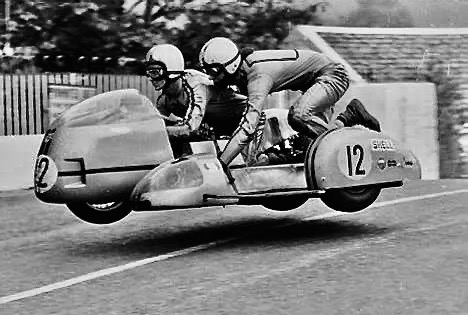
Vanishing Act

By Ed Staskus

   Hal Schaser was always excited by Catholic girls. His mother was Saxon Lutheran, and she raised his brother Willie and him as Lutherans, but Catholic girls were for him. That’s why he married one. But they had to be at least a nine or ten on the good-looking scales at the same time they were Catholic. If they weren’t, they didn’t count, not in his eyes. 

   All the guys rated gals, one way or another.

   He went to Florida every winter after he got back to Cleveland, before he got married. He came back from the Korean War with a Purple Heart, and after he got back on his feet, went right to work for Palmer Bearings. They put him in sales the minute they saw him. He was 22 years old, clean-cut, proportioned, and full of pep. He didn’t tell them about the bad hearing in one ear he came back with after a year as an artilleryman.

   His city pals, the young men he knew who had the dough to go south for a couple of weeks when it got dark and cold on the south coast of Lake Erie, razzed him about being picky.

   “All you do is keep looking for a number ten girl, and half the time you don’t got any girl on your arm,” one of them said one day while sucking on a bottle of Blatz. “Me, I get a number three or four, so I’ve always got a gal, and by the end of the week they all add up to more than zero.”

   Another of his pals, another wise guy on the camel train, said, “Hal, if you ever land a ten, she’ll be out of your league, anyway, so forget about it.”

   Teresa Stasas was Catholic, between a nine and a ten, and 15 years old when Hal met her. He was 25 years old. She lied about her age, not that she had to. But after he found out he made sure she was eighteen before they got married. “We missed out on the cash envelopes and presents, since her family was dead set on me staying single and Teresa marrying somebody else.” He didn’t care. He wanted Teresa. He wanted to get ahead to the high life with her fast at his side.

   They met at the Karamu Theater. Hal lived with his mother on the near east side, and Teresa took a bus from North Collinwood, where she lived with her three sisters and parents in a two-bedroom house. Hal liked auditioning for parts and acting in shows. It got him started with the girls. He looked like Paul Newman, which didn’t hurt his chances. He was always trying out for shows at the Chagrin Little Theater, too.

   “I met a boatload of lookers that way.”

   Teresa was in high school shows and danced ballet. She had taken dance classes ever since she was a little girl. She could straighten a leg, keep a foot flat on the ground, and raise the other one to the ceiling. 

   “I don’t know how the hell she did it. I always liked ballet dancers. I fell in love with one when I was in high school. Her name was Margo. She was a beautiful girl with a beautiful body, the same age as me, but an inch taller. She was one of the gym leaders and danced ballet on stage at our school. Another guy liked her, a Serb who played a lousy hillbilly guitar, and he was always angling to get into shows with her.”

   Hal started trying out, trying to get close to Margo, trying to elbow the Serbian boy aside.

   Teresa and he met auditioning for the same show at Karamu. He kept his eyes on her from the minute he set eyes on her. “She came on to me and did stuff like, ‘Can you give me a ride home?’ I had a car, she had stars in her eyes, and on starry nights it was a nice ride. She sat close to me on the bench seat.”

   She would sometimes leave something in his car, like her wallet or watch. “She would call me, and I would drive to her house, returning it, seeing her again. It was those little tricks women do.”

   Her parents were set in stone in opposition to her wedding bell plans. “It won’t work,” they both insisted. He was Lutheran, ten years older than her, born in the United States, but Romanian-bred. They were Catholic and Lithuanian, from the old country. She was still a teenager. He had a better job than either of her parents, making more money than the two of them put together, but it didn’t matter. 

   Teresa and Hal had to elope, driving across the Ohio line to Indiana, where they found a justice-of-the-peace on the side of the road, and got married. They went to Florida for their honeymoon. “We drove straight there in a new car I had just gotten. We stayed in the same motel my buddies and I used to go to. Our suite had a small kitchen and there was a big pool we went swimming in.” They sat out in the sun. Their skin got a shade darker. They discovered each other in the dark.

   When they got back to Cleveland, Teresa’s’s parents disowned her, and she didn’t see them for years. They moved in with Hal’s mother, in the meantime, in the old neighborhood, around East 65th St. and St. Clair Ave. Most of his countrymen worked in factories, ore docks, and knitting mills. His father had operated a corner store until he was murdered by two young thieves.

   “I worked hard, saving my salary and commissions, and the next year we bought a two-story house in Indian Hills, up from Euclid Avenue, near the city park.” The house fronted a sloping wooded lot. Their daughter Vanessa was born the next year and their son Mathias four years after that. Their problems started three years later. They never stopped getting worse.

   “We started out great, got the year of living with my mother out of our systems, moved into our big house, three bedrooms, newer than not new, got the kids grown up enough to walk, and my job got bigger and better the more I worked. I took clients out for golf and dinner three and four times a week. I kept my waistline under control by walking the courses. My handicap took a nosedive.”

   He was making money hand over fist. “I made a lot of money for Palmer Bearings. Those heebs loved me, so long as the pipeline stayed full and flowing.” His bosses said, “Keep up the good work.” His neighbors envied his one after the other new car. His wife complained about him never being home. “What do you do all those hours at work?”

   “I do a lot of business on golf courses,” he told her. “It’s work, don’t think it’s all just fun and games, it’s not.”

   Whenever he came home right after work, Teresa came running out the front door, grabbing him, giving him a hug and a kiss. He thought, this is embarrassing, the neighbors are watching, even though he barely knew any of their neighbors. “Cut it out,” he said. She gave him a queer look. He kissed the kids and read a book while Teresa set the table and served dinner.

   “I took her to dinner and shows, but it was never enough. I always let her do whatever she wanted. I let her teach cooking at the high school. I let her get a job at a restaurant. I let her go to Cleveland State University. It got to be a problem, because no matter what I did, it was never enough.”

   Teresa was a good-looking young woman, shapely and good on the move, friendly and running over with zip, and men eating at the restaurant were always hitting on her, but Hal’s problem was the young men she met at college. “One time I found a note in a drawer from some guy named Dave, thanking her for the great time they had. When I asked her about it, she said it was just a bunch of them from one of her theater classes going out for a drink.”

   “That’s all it was,” she said.

   “You’re not getting together with him?”    

   “No,” she said, “of course not.”

   He didn’t believe her, not for a minute. He knew what women were about. But he didn’t know everything. He didn’t know he was on his way to splitsville.

   Hal found out more, small things that looked like big things, about other men she was cheating on him with. He was sure of it. One night he answered a call from a man who sounded like he was from India, asking for her. He hung up. She was coming home later and later at night, 10 o’clock, 11 o’clock, midnight. It began to look like the babysitter would have to start living in.

   “Where the hell were you?” he asked one night when she got home close to two in the morning.

   “Oh, my keys got locked in somebody’s trunk.”

   “It was always some bullshit story like that. We got into an argument. We got into a lot of arguments.”

   “Not so loud,” she hissed. “You’ll wake up the kids.”

   “It was her idea to get separated. Later it was her idea to get divorced. I loved her. I loved my kids. I didn’t want a bust-up. We could have settled the split between ourselves, but she had to get a lawyer, which meant I had to get a lawyer. Her mouthpiece must have put something in her ear, bastard lawyers.”

   He stopped at the Cleveland Trust Bank downtown on East 9th Street one day, after lunch with clients on Short Vincent, to withdraw some money, but the teller said, “There’s no money in your account, sir.”

   “What do you mean?”

   “The account is at zero,” the teller said.

   “Teresa had taken it all. She raided our joint bank account and took all the money in it. All I had left was what I had been keeping in a personal account she didn’t know anything about, the scratch I kept separate, and our insurance policies. She charged all kinds of stuff on our credit cards before I wised up and cancelled them all.”

   He paid his lawyer five thousand dollars, in cash. He got it from a separate business he had going, apart from Palmer Bearings. The lawyer was a golfing buddy of his, but he still had to pay it all up front. “The son-of-a-bitch, right away he joined the Shaker Country Club with it, and never invited me to play golf there, not even once, not even when I got in his face about it.”

   When they went to court, Hal picked a fight there and then. Not with Teresa, but with their two lawyers, his and hers. “The Saul Goodman’s get together with their crap, take all your money, and leave you with nothing. They are like morticians, just waiting for you to come back to life.”

   Between Teresa and them, he complained loud and long to his friends, they left him with only table scraps.

   Hal knew how to handle himself. He boxed Golden Gloves before going to Korea. He got to the finals in his weight class, and even though the other fighter was dazed purple and bloody, the judges gave the first prize to him. He was a Marine and Hal was an Army draftee, so the Marine staggered away with the trophy. 

   “I could have levelled both the shysters in a minute flat. The bailiff, and a policeman, and the judge, had to restrain me. The judge gave me a hell of a talking to after everybody was back in their seats.” It was a loud knock-down drag-out commotion on the third floor of the Lakeside Courthouse, under a high ceiling of ornate plasterwork, quiet paneled walls, and leather-covered doors.

   “They’re all the same, talking through their hats.”

   Teresa moved into the new Park Centre on Superior Avenue, the same building where some of Richard Hongisto’s right-hand men lived. He was Cleveland’s new top lawman, although inside a couple of years Dennis Kucinich, the kid mayor of the city, fired him on live TV. It sparked a recall drive to remove the mayor from office, which was the least of his problems, since the city was going bankrupt fast. The bankers hated the mayor and withdrew their helping hand of ready cash. They knew how to get back at him.

   “I say a plague on all of them, except that whoever did the car caper with her got me the last laugh on Teresa, for what it was worth.”

   He bought her a new Mercedes sports car, hoping it would make her happy. It had a red leather interior. She loved the car, although it didn’t make her any happier about him any more than she wasn’t already. When they separated, she reported the car stolen. She called Hal about the insurance money. He told her he would let her know. He didn’t tell her the car was in his name. 

   “A month later I got a letter from a parking garage in New York City, saying we’ve got your car here, you owe so much for parking, come and get it. I was sure one of Teresa’s cop neighbors cooked it up with her, driving the car away, and leaving it in the garage. When I got the insurance check for the missing car, I cashed it and tore the letter up.”

   Teresa was a looker in her time, always worth a second look. Hal wasn’t sure how she looked when she got older, since after their last fight he never saw her again. He was certain her looks had gone south. “I’m sure she wasn’t the beauty she had been. I’m sure she looked like hell. That’s something I would bet money on.”

   She had beautiful handwriting but wrote Hal hate letters after their separation. 

   “Your kids don’t want to see you, you haven’t sent me enough money, all that kind of crap. I had to pay child support, even though I was used to a certain style of living for myself. I had to go on dates, looking for another woman, but it wasn’t easy. I couldn’t operate. I didn’t have much money. You’ve got to have money to do things. I was nearly broke. I had to take care of my kids. I didn’t want to be a deadbeat father.”

   Teresa met another man, a handsome Italian from Rochester, a Vietnam veteran. They moved in together, with her children. They didn’t pretend to be married, even though they lived like man and wife. They wanted to get married, but Hal wouldn’t give Teresa a divorce, no matter how many times she asked.

   “She and the guy from Rochester got it into their heads to go into the restaurant business. She asked me to take a second mortgage on the house. I said no, restaurants are the worst thing you can get into. In spite of myself I took a second mortgage on the house and gave her the money. It put me in a spot.”

   Teresa’s restaurant became two restaurants. The new family moved up to the seventeenth floor of Park Centre, to a three-bedroom end suite facing Lake Erie. They watched the Cleveland National Air Show from the balcony. They opened a bar on the new Eat Street in the apartment complex.

   “The dago was always telling me, take it easy, like he was trying to be my friend. I wanted to tell him how mad I was about not being able to get my wife back, about never seeing my kids. I never said one bad thing about her, but the divorce hurt me bad. After the mess in court, after we split up, I thought, if that’s the way it’s going to be, I don’t want anything to do with her anymore. I don’t want to talk to her, and I don’t want to see her. And I never did, except once more.”

   Teresa came to the family house in Indian Hills on a quiet autumn afternoon. She asked Hal to mortgage the house again, a third time, so she could expand her eateries some more, but he told her a second mortgage was all banks would go for. She said she needed more investment money and that he should sell the house, splitting whatever he might get for it with her.

   “If I do that, where am I going to live?”

   “That’s up to you.”

   “She was living downtown, in her fancy high-rise. What did she care where I lay my head? It could be some crummy cardboard bed under a bridge, as far as she was concerned. We got into an argument about it. My boy was with her. He stuck up for his mom. I didn’t blame him, though. I liked that about him.”

   Push came to shove, and Teresa slapped Hal hard in the face when he finally had enough, nose to nose, shouting that he wasn’t going to sell the house, that they were through once and for all, and that was that. 

   “She scratched me with her fingernails when she slapped me, cutting me, and drawing blood. I pushed her away.”

   They glared at each other.

   “Quit it. Go away,” he said.

   Teresa’s mouth went cold thin-lipped, she twisted around, reaching for her son, and stamped out. She didn’t look back. The front door slammed shut. He didn’t see her or the money he had lent her ever again.

   He was on the ropes. He knew the TKO was on its way, making its slow way to down and out. He had let his guard down and there was nothing he could do about it. He would have to take it like a man.

Ed Staskus posts stories on 147 Stanley Street http://www.147stanleystreet.com and Cleveland Daybook http://www.clevelandohiodaybook.com. To get the site’s monthly feature in your in-box click on “Follow.”

Furnace Room

By Ed Staskus

   Abner Vance first got a peek of Odessa Ballard through a second-floor window at the Majestic Hotel. She was fiddling with her skirt standing waiting on the corner of Central Avenue and East 55th Street for the CTS streetcar. It was a sunny summer day. Odessa did pantry work and was on her way home. She didn’t see him. He spotted her from behind his venetian blinds.

   “I had just gotten back from Woodland Cemetery, where I sometimes did patrols on foot, which was whenever my sergeant thought there was some small thing I did he didn’t care for.” It was how Abner came to be known as Gravedigger Vance. “She was a sight for sore eyes and my worn feet. I put my Colt Positive away in the dresser drawer and stepped outside.”

   During the winter the Majestic let Abner, who was a policeman, have a small room on the E.55th St. side of the hotel. Whenever it got below zero, he ducked into it for ten minutes to warm up. He helped the house man when help was needed. His room was a half-dozen steps from a secret door beside the drug store in case anything bad happened. After a few years he kept the room in the summer, too. The Majestic was called the apartments, but it was a hotel. Abner started going there when he was in his early 20s and the jazz club off the lobby was called the Furnace Room.

   “Meeting your mother was a lot like jazz, it was improvised,” he told his son Lavert. “That was it, go ahead and see what happens.” The club had dancers and crooners and bands that came through Cleveland on tour. The restaurant serving food, to the club and rooms, was Mammy Louise’s Barbeque Café. Their house specialty was braised beef short ribs in gravy. The ribs were like soul music in your mouth.

   Abner was from a small town in the Florida Panhandle and never thought twice about eating chicken fried steak, candied sweet potatoes, and cheesy grits. He ran it off when he was a boy. He walked it off when he was a cop.

   “We went to Mammy Louise’s for dinner and then next door to the club,” he said. “The International Sweethearts of Rhythm were there the night we stepped out. They were an all-girl all-color orchestra. ‘Slick Chicks and Hot Licks’ was what it said on the billboard outside the doors. They raised the roof and we kicked up our heels, dancing up a storm.”

   The Furnace Room became Elmer Waxman’s Ubangi Club, but when Abner first took Lavert there in the 1950s, when he was twelve years-old, it was the Rose Room Cocktail Lounge. Before the Hough riots and Glenville shoot-outs in the 1960s, even though it was already mostly a colored neighborhood, the audiences were every which way. Judges and politicians from downtown brought their wives to the Rose Room. It was the black and tan saloon scene. It was its own world in the nighttime. But by then no one danced to jazz anymore. That had already changed. It wasn’t that jazz changed, even though it had. There was a new music and new dancers in town.

   When Abner applied to the Cleveland Police Department after high school the merit system broke down, like it always did, because he was a Negro. They told him he had poor eyesight, even though he didn’t start wearing glasses until he was in his 70s, almost fifty years after joining the force. He had to ask for help from his ward leader to have the rejection overruled.

   He hunted bootleggers in the 1930s, before they gave him his own beat. It was dangerous work. They carried more guns than the police. He had to prove himself. “You could always tell whether the moonshine was good if you set it on fire and blue flames were what you saw. That’s when you knew it wouldn’t make you go blind.”

   There weren’t many men of color on the police force, and most of those who made the department had to get certification from outside doctors to get past the official exam of the police doctor. Jim Crow was sneakier in the North than it was in the South. The department kept separate eligibility lists, so when one Negro died, resigned, or retired, his replacement might or might not be another Negro. When a white policeman died, his replacement was always another white man.

   Duke Jenkins and his group were the house band at the Majestic. They were the first jazz band Lavert ever heard. Every Tuesday night was Cha Cha Night and on Thursdays Mambo Night was the hot ticket. But the big attraction was the before dawn Blue Monday Party.

   “People lined up to get into those jam sessions. Sometimes you couldn’t even get a seat. All the players, the girl singers, the quartets, entertainers like Erroll Garner and Arthur Prysock and Nancy Wilson, they’d be there performing. People went crazy when Nancy Wilson was there because she was so good,” Abner said.

   Lavert stayed overnight with his father at the Majestic on Sundays and went to the Blue Monday parties with him when they got going, which was at five in the morning. Afterwards Abner drove his son to school. If they stayed too late at the jam session, soaking up the sounds, he would call and ask for a squad car to race Lavert to school, its lights flashing and siren whooping.

   “Eyes lit up like flashbulbs on a camera whenever that happened,” Lavert said.

   There were only a handful of Cleveland hotels listed in the Negro Green Book. The Majestic was one of them. All the rooms had two beds and a radio on every bedstand, although Abner only had one bed. He had the other one removed so Lavert and he could have a table to eat at on Sunday nights. Lavert slept on a folding rollaway his father kept in the closet.

   When he was a baby, his mother kept his playpen next to the upright piano in the front room. It was so she would know where he was. So long as she heard him picking out notes she knew he wasn’t getting into trouble. When he was in third grade, he found out they had music classes at his grade school. He was eight years old.

   “I’d like to do that,” he told his mother. He lived with her and his grandparents. It was a surprise to all of them. “That’s just what my place was,” he said. But he found out even the status quo can change.

   He put his name down for piano lessons at the Miles Standish School. He learned to play a Chopin waltz sitting beneath a painting of Miles Standish, after who the school was named. The portrait was of a soldier accompanying the Pilgrims when they came to the New World. In the painting he wore armor and carried a matchlock rifle. He didn’t look like he knew a piano from a peace pipe. 

   Lavert played the organ and piano because his grandmother wanted him to. She was the matriarch of the family and conservative about everything under the sun. She didn’t believe in bell house music. She was strict about church music, too, so she had a man, who was the organist at the New Liberty Hill Baptist Church, come to their house and give him lessons. Years later, when he was older, Lavert played there himself.

   Paul John was the man who came to their house. He worked in the steel mills in the Flats. He was a friend of Lavert’s’s grandfather, who sang in the male chorus in the mill that Paul John led on a Salvation Army five rank pipe organ. The chorus went to Detroit and Pittsburgh to perform on holidays.

   “Mr. John could play Rachmaninoff, and all, but he was ahead of his time, so he had to give lessons,” Abner told his son. “That was the incentive for him when he came to your mother’s house and got you started. You put food on his table.”

   Lavert played sacred music for most of his life and jazz music the rest of the time. The sacred music came from his mother and grandmother, and the jazz music came from his father, who took him to uptown clubs like the Tijuana Café Society.

   “When the Four Sounds came to audition at the Tijuana, they were just re-opening, and they didn’t even have a piano on the stage. It was in the corner. I helped them lift it up on the stage to do the audition,” Abner said. He was a tall strong man. “They had been the Four Sounds until they asked me to talk to the saxophone player one night. He had a habit of carrying a gun in his horn case. He wouldn’t listen to a lick of sense. When he said he didn’t want to leave it behind, they finally left the saxophone out and became the Three Sounds.”

   Most days anybody walking around the neighborhood could hear a horn through an open window down the street from Doan Square, where all the action was. It was a jazz musician reading his lines in the afternoon. Hotels weren’t open to musicians of color, so they stayed in rooming houses. They minded their own business.

   “You couldn’t even go to the Five and Dime store and have a quiet lunch,” Lavert said.

   His grandmother went to buy a hat one Saturday and when she tried it on, she had to buy it. She had put it on her head to see if it fit and when a salesclerk saw her, she had to pay for it. His grandfather was a mulatto from Cuba. Whenever a white man came to their house, selling something, or on some errand, his grandfather was polite, but as soon as the white man left and was out of earshot he would spit and call the man a cracker.

   They lived on Pierpont Avenue in Glenville, what everyone called the Gold Coast, before Glenville fell apart and the Gold Coast moved to Lakewood in the 1960s. His grandmother died in 1968 and his mother sold the house, moving to Lost Nation Road. His grandfather moved into a rented room. By then Lavert had finished studies at the Boston Conservatory and was playing the big organ at the Christian Science Mother Church. In the summer he played piano at jazz clubs in Provincetown and Martha’s Vineyard.

   When he was a boy Glenville was crowded with immigrants, Negroes, and Jews. There were orthodox Jews all over the place. He thought they were Santa Claus’s in black suits. There were churches for men of faith, like the Cory United Methodist Church, which had been the Park Synagogue, and the Abyssinia Baptist Church, which had also been a synagogue. There were clubs, movie houses, and department stores.

   There were mom and pop restaurants run by the Jews. There were no bad sandwich shops in Glenville, but Abner always ate at Pirkle’s Deli. He said if he ever stumbled on a good-looking Jewish woman from his window at the Majestic, he was going to track her down so he could get up Sunday mornings and stroll out to the deli with her.

   “Those folks never invented anything so fine as deli food,” he said.  “The corned beef at Pirkle’s is as tender as a young lady’s leg.”

    Lavert’s father and mother were never together as a family. “There were two different families, his and ours,” he said. Abner and Odessa had their room at the Majestic some nights, but in later years she stayed away. She felt he betrayed her. “My father said he wanted to marry my mother, and she thought he was going to divorce his wife, but he never did that.” Over time she had a hard time seeing Abner as a soul mate.

   “Your mother shot a hole in my soul,” Abner said.

   Lavert lived with his mother and after she married another man, she bore two more boys who became his brothers, the boys sharing her. He became Lavert Stuart. Abner came to their house many times, often in his police car after he was promoted. He parked in the driveway for everybody to see. It wasn’t as if they were cut off from him.

   He was one of the first colored farmers in Twinsburg, where he kept fowl and pigs. Every November the family got a turkey for Thanksgiving. He had a smokehouse, too, and when time came to slaughter some of the fattening pigs, he would do it himself. He castrated the males a month beforehand. The family had bacon and ham all winter and into the spring.

   Abner picked Lavert up in his Ford pick-up on Friday and Saturday nights to help him forage for feed. The father and teenager drove up and down Euclid Avenue, on the south side of Glenville, from E. 110th to E. 95th Street, picking up refuse from barrels and dumpsters behind the clubs and restaurants on the strip. Abner stuck his gloved hands into the slop and nosed around for metal and glass before filling up his barrels.

   “Pigs will eat anything you give them. They can be stink and filth, even though their sausages smell great. I would rather cut myself than injure my animals.” The Hebrew meaning of Abner is “father of light.” He was a good father to his pigs.

   When their barrels were full, they drove to the farm. The pigs would hear the truck coming and know it was time to eat. “They started doing what pigs do, getting feisty and greedy. He dumped the food in the trough, let them loose, and they would go at it,” Lavert said. That was why Abner picked through the fruit vegetables scraps of meat greasy bits and pieces, because they would have cut themselves, biting into anything.

   Lavert Stuart stopped gleaning garbage when his mother told him he had to be careful about his hands. She didn’t want him hurting them, hurting his chances. Odessa wanted him to go places, better places than scrounging for leftovers behind eateries in the middle of the night.

   He learned more sacred music and less blue notes after his mother put him in Empire High. Eleanor Bishop, his music teacher, had been there since the school opened. She had a trim hourglass figure and the only thing that gave her away was that she wore old lady comforters. But she was spry and walked fast. She could catch bad boys anytime she wanted to.

   She was an old maid because she had become a teacher long ago and wasn’t supposed to marry, and by the time the times changed it was too late for her. One afternoon Lavert found a dedicatory book for Empire High, which was built in 1915. He leafed through it. He took it to her office.

   “I see your name in this book, and your picture,” he said.

   She looked at him.

   “Is this you?”

   “Yes.”

   “But you’re old, not like this.”

   “Everybody was once new,” she said, her face pinched. Lavert was sure she wanted to pinch him, hard, like she did when he hit a wrong note. But she didn’t put any concern to what he said. She made sure he practiced faithfully and later helped him get a scholarship to Ohio University, where he studied the organ. After he graduated, he never lived in Glenville again.

   He lived in Chicago, New York, and Boston. He learned to live alone, like Duke Ellington, who said music was a mistress. He lived in his own world, detached and determined, so he could practice. He had friends who kept him in tune to the here and now, but on weekend nights he didn’t go anywhere. He had to be ready for Sunday services. That kept him out of wrongdoing. He tried mischief a few times but decided it’s bad when you’re not feeling well in a church after a hard Saturday night. He decided he had to do it his way.

   He didn’t see much of his mother, who moved to California to live with one of his brothers, who had become a minister, and saw his father only when he was passing through the Midwest. They visited and had lunch at one or another deli in Cleveland Heights, where all the Jews had moved. Pirkle’s Deli had burned down. 

   Abner was an industrious man his whole life. When he retired and his lawful wife passed on, he bought the last commercial building, next to Whitmore’s Bar-B-Q, on Kinsman Road where it starts to snake up into Shaker Heights. It was a barbershop and beauty salon side-by-side. He lived upstairs in a one-bedroom apartment. He could have lived in a house, since he owned five of them, but didn’t want to.

   “I don’t want to get too comfortable because I may not be here long,” he said. His apartment had one bedroom and one bathroom. It had one table with two chairs, one sofa, and one half-empty closet. It looked like no one lived there. He was becoming his own gravedigger.

   “He had been industrious but changed into a careless custodian of his properties. He got short stingy and mean. He patchworked instead of getting things done the best way, so everything slowly deteriorated. He wasn’t willing to pay the price to get things done the right way. When a man has that mindset, he ends up losing more money than he’s spent,” Lavert said.

   Abner lost his eyesight when he was visiting Texas. He stepped on a splinter and after a few days his big toe got infected. He had surgery for it, but in the end, they had to amputate the toe. Afterwards he lost feeling in his leg. While he was still in the hospital convalescing, he woke up one morning and had gone blind. He stayed in Texas for a month, and when he came back, he moved in with Lavert’s sister on the other side of the family, who took care of him.

   He never recovered his sight, which was hard on him because he had always lived by his senses. The biggest problem, though, were the visions and nightmares he suffered, which were part of the side effects from the medication he was taking. He had them at night when he went to bed. He heard things and saw craziness and wasn’t able to sleep.

   Lavert never got his father and mother together, even when Abner was dying, and Lavert was staying with him, playing old jazz records. His father listened to music all day long towards the end. He stopped sleeping and eating, drinking cold lemonade, instead. The last time his mother visited Cleveland Abner was near death. Lavert took her to places in Glenville, some that were still there and others that weren’t anymore, trying to get her to go to the facility on Rockside Road where his father was. 

   She fought him all the way, and in the end wouldn’t go. Odessa just didn’t want anything to do with Abner. “That’s all over, a long time ago,” she said, shaking her head.

   Abner and Odessa did what they had to do from beginning to end. “I was just a cameo in the business they had between themselves,” Lavert said. After his father died there was nothing left to do anymore about the torn seam in the family fabric. He said goodbye to his mother, who went back to California. Abner Vance left behind six children by his wife Amanda, 11 grandchildren, and 18 great grandchildren. The rest didn’t make the cut.

   When he moved back to Cleveland, Lavert Stuart played sacred organ music three seasons of the year. In the summer, he played jazz and popular tunes in clubs on Cape Cod. On Sunday mornings when the weather was good, sitting on the bay, he brewed a pot of strong coffee and warmed up a plate of spiced buns. On his balcony in the light of the rising sun, he looked for what was behind the blue brightness, on the blue note side of the sky.

A version of this story appeared in Literary Heist Magazine.

Ed Staskus posts on 147 Stanley Street http://www.147stanleystreet.com and Made in Cleveland http://www.clevelandohiodaybook.com.. To get the site’s monthly feature in your in-box click on “Follow.”

Behind Bulletproof Glass

By Ed Staskus

   I should have known better when I told the young woman on the other side of the Walgreen’s bulletproof drive-thru window that I needed the kind of coronavirus test that would get my wife and me into Canada and she breezily said, “For sure, this is it.” She was a trained pharmacy technician, but made up her harebrained reply, assuring me all was well even though she didn’t know what she was talking about. We found out three days later trying to cross the border at Houlton, Maine into Woodstock, New Brunswick.

   Getting a straight answer from the young can sometimes be like trying to give fish a bath. They often have a quippy answer for everything. Their answers are in earnest no matter what they’re asked and no matter their wealth or lack of knowledge. Whenever they are fazed by anything they say, “Oh, whatever.” 

   They say whatever they want when they are behind bulletproof glass.

   My wife and I were going to Prince Edward Island, where we didn’t go the summer before because of the 19 virus. Canada closed itself up tight as a clam in March of that year and didn’t reopen for Americans until early August of this year. Once we heard the opening was going ahead, we got in touch with the folks who operate Coastline Cottages in the town of North Rustico on PEI and let them know we were coming on August 21st and staying for three weeks.

   The cottages are on a hillside, on land that has been in the Doyle family going on two hundred years. A park road cut through their farm when it was built in the 1970s, but unlike other landowners they didn’t sell their remaining acreage to the state, so it sits snug inside the National Park. There are several homes on the bluff side of the eponymous Doyle’s Cove, some old and some brand new. In one way or another every one of them houses a homegrown north shore family, except for Kelly Doyle, who has lived on the cove the longest and lives alone.

   It takes two and half days to drive from Lakewood, Ohio to Prince Edward Island. At least it did every other year we had driven to the island. This year it took us six and half days.

   When we got to the Canadian border the black uniform in the booth asked for our passports. We forked them over to the tall trim guard, forearms tattooed, a Beretta 9mm on his hip. He was young and just old enough to be on this side of Gen Z. He looked our documents over and asked where we were from and where we were going.

   “Cleveland, Ohio,” I said. Although we live in Lakewood, an inner ring suburb, we always tell red tape we live in Cleveland. No one has heard of Lakewood. Everybody has heard of Cleveland, for good or bad. At least nobody calls it “The Mistake on the Lake” anymore. 

   I almost preferred the insult. “It keeps the riff raff rich away,” I explained to my wife. “There is no need for Cleveland to become the next new thing. They will just use up all the air and water and our real estate taxes will go ballistic. On top of that, we would end up knee deep in smarmy techies with their cheery solutions to all the world’s problems.”

   We handed our ArriveCAN documents over. We handed our virus inoculation cards over. We had both gotten Moderna shots. We handed our virus tests over, proving we had both tested negative.

   “You are cutting it close,” the border guard sniffed, shuffling everything in his hands like a deck of cards. I was hoping he wouldn’t turn a Joker up.

   The negative test had to be presented at the border within 72 hours of taking it. We were there with an hour to spare, although it would have been two hours if we hadn’t had to wait in line in our car for an hour. We had driven a thousand miles. It was tiresome but waiting in an idling car wasn’t any more skin off our noses.

   It started to smell bad when a second border guard stepped into the booth and the two guards put their heads together.

   “The antigen tests you took aren’t accepted in Canada,” the Joker said. “It has to be a molecular test. You can go ahead, since you’re from Canada, but your wife has to go back.”

   I was born in Sudbury, Ontario, and have dual citizenship, although I only carry an American passport. I couldn’t tell if he was being serious, so I asked him to repeat what he said. He repeated what he said and gave us a turn-around document to return to the USA when I told him I wasn’t ready to abandon my wife.

   We went back the way we had come, just like two of the six cars ahead of us, although we had to wait in line at the American crossing for an hour. Once we returned to Maine, we found out we could get the molecular test, but it would be a week-or more before we got the results. Nobody we talked to, not even the Gods of Google, was any help. A friendly truck driver mentioned New Hampshire was faster, only taking a day or two.

   The truck driver was stout, bowlegged, wearing a Red Sox baseball cap, a two-or-three-day growth of beard on his face, with a small shaggy dog to keep him company on the road. He wasn’t a Gen Z man. It was hard to tell what generation he belonged to, other than the changeless working-class generation.

   We drove six hours the wrong way to Campton, New Hampshire and checked into the Colonel Spencer Inn. It was Saturday night. We got on-line and made test appointments for noon at a CVS in Manchester, an hour away. We streamed “Castle of Sand” on our laptop. It was a 1970s Japanese crime thriller movie and kept us up past our bedtime.

   Over breakfast the next morning our innkeeper told us to go early since the traffic leaving New Hampshire for home on Sunday mornings was heavy. We gave ourselves an hour and a half to drive the 55 miles and barely made it. Luckily, we hadn’t made appointments for an hour later. We never would have made it. The traffic on I-93 going south was a snarl of stop and go by the time we started north back to Campton.

   We got our test tubes and swabs and stuck the swabs up our noses. I spilled some of the liquid in my tube and asked the Gen Z pharmacy technician behind the bulletproof glass if I should start over with a new kit.

   “You’re fine, it doesn’t matter,” she said, lazy as a bag of baloney. She couldn’t have been more wrong, which we discovered soon enough.

   Gen Z is self-centered and self-sacrificing both at the same time. “My goals are to travel the world and become the founder of an organization to help people.” They want to stand out. “Our generation is on the rise. We aren’t just Millennials.” They say they are the new dawn of a new age. “We are an unprecedented group of innovation and entrepreneurship.”

   Welcome to the future, just don’t take the future’s word for it.

   We spent the night at the Colonel Spencer. It was built in 1764, a year after the end of the French and Indian War. During the war the British, allied with American colonists, weaponized smallpox, trading infected blankets to Indians. The virus inflicts disfiguring scars, blindness, and death.

   “Could it not be contrived to send the smallpox among those disaffected tribes of Indians? We must on this occasion, use every stratagem in our power to reduce them,” the British commander Sir Jeffrey Amherst wrote to his subordinates.

   The results were what the continent’s newest immigrants from the Old World expected.

   “They burned with the heat of the pox, and they died to feed the monster. And so, the village was deserted, and never again would the Indians live on that spot,” is how one of the natives described the deadly epidemic.

   We had dinner at Panorama Six82, not far from our inn. The hostess seated us outside on the patio which looked out over a valley and a series of cascading White Mountain hilltops. The sun went down behind one of them and we finished our dessert in the dark.

   Our server was a middle-aged man from Colombia wearing jeans, a Panorama Six82 signature shirt, and a Sonoma-style straw hat. He went back to the homeland every year to visit relatives.

    “They always want money, so I don’t bring too much of it,” Fernando said. “It’s not as dangerous as most Americans think it is. I avoid some neighborhoods, sure, and I avoid riding in cabs. The rebels are in the hills, not the cities, and besides, they don’t do much anymore. The Venezuelans are a problem, all of them leaving their god-forsaken country. But they do a lot of the dirty work for us these days.”

   We drove back to Houlton on I-95. The speed limit north of Bangor is 75 MPH. I set the cruise to 85 MPH and kept my eyes peeled for moose. The fleabags lumber onto the roadway, sometimes standing astride one lane or another. Hitting a moose is a bad idea. A full-grown bull moose stands six to seven feet tall and tips the scales at 1500 pounds. It isn’t certain that the collision will kill the beast, but it will kill your car, and maybe you. They do most of their roaming around after nightfall. We made sure we got to our motel before dusk.

   In the morning my wife was winding down a business meeting on Zoom when there was a knock on our door. It was the housekeeper. She wore a black uniform and black hair pulled back in a bun. She was young. She was part of the Z crowd.

   “We’ll be out in about a half-hour,” I said.

   “Can I replace the towels and empty the trash?”

   “Sure.”

   “Weren’t you here a few days ago?”

   “Yes,” I said, and told her about trying and failing to get across the border and our search for a fast 19 test.

   It turned out the explanation for the motel being sold-out was because of the same problem. Every other person lodging there had been turned around for one reason or another.

   “You should go to the Katahdin Valley Medical Center,” she said. “A friend of mine went there, they did the test, she got it back the next day, and went to Nova Scotia.”

   “Thanks,” I said. We packed and followed Apple Maps to the medical center. The receptionist didn’t know anything about a fast molecular test. She sent us to Jesse, the man upstairs, who was the man in charge.

   “We test on Mondays, Wednesdays, and Fridays,” he said. “It takes about a week to get the results back from the lab.” It was Tuesday. We were already three days late. I started looking over my shoulder for Chevy Chase.

   “Not the next day?”

   “No.”

   We left Houlton and drove to Presque Isle, had lunch, messed around, my wife went running on the town’s all-purpose trail, and we drove to the Caribou Inn in the next town north. While the receptionist checked her computer for our reservation, we heard a wolf whistle through the open door of the office behind the front desk. A minute later we heard it again.

   “That’s just Ducky,” the receptionist said. “She belongs to the manager.”

   “Does she do that often, whistle, I mean?” I asked.

   “Whenever she sees a pretty girl.”

   Another wolf whistle came my wife’s way.

   I must have looked cross, because the receptionist said, “Ducky is a parrot.”

   Ducky was a parrot in a tall white cage just inside the door of the office. Her plumage was green with some red and yellow mixed in. She was a saucy character.

   “She’s twenty years old,” the receptionist said.

   “How long has she been here?”

   “Twenty years.”

   Ducky was spending all her Gen Z years locked up at the Caribou Inn, where flocks came and went. The only lasting relationship she had was with Betty, the hotel’s manager, and the bird’s keeper.

   “I didn’t know parrots lived that long.”

   “They can live to be seventy, eighty years old,” Betty said.

   “Ducky wolf whistles women?”

    “And men. We thought she was a he until she started laying eggs not long ago.”

   The parrot was going to outlive most of us, the 19 or no 19. They sometimes play dead in response to threats. They can also look dead when they are asleep. But if a parrot is lying still and not breathing, looking lifeless, you can assume it is dead.

   We had a non-smoking room, although every hallway that led to our room was lined with smoking rooms. The hallways smelled sad and stale. We were settling in with a bottle of wine and a movie when we got a phone call. It was the lab in New Hampshire that was doing our 19 molecular tests. They had good news and bad news. My wife tested negative, but my test was discarded. 

   “There wasn’t enough liquid in the test vial to maintain the sample,” the lab technician said. “Did you happen to spill some of it?”

   I didn’t bother trying to explain. I got on-line and filled out another ArriveCAN form. When we got to the border my wife had no problem. The only problem I had wasn’t make or break, since they couldn’t deny me entry, test or no test. A health officer gave me a self-test kit and told me to make sure I performed it within four days. She was in her early 30s. I had no reason to be skeptical. She was just out of Gen Z range. I should have been leery since she was wrong. She wasn’t as far out of the field of friendly fire as I thought.

   Four days later, when I went on-line and followed the directions for the self-test, the Indian-looking Indian-sounding woman on the other side of screen was nonplussed when I apologized for waiting to the last minute.

   “I don’t understand.” she said. “You are four days early. You are supposed to test after eight days of self-quarantine.”

   When I started to spell out what had happened, she wasn’t in the mood, and said she would schedule Purolator to pick my test up the next day. Purolator sent me an e-mail saying they would pick up between nine and noon. The truck pulled up just before five. I was grilling dogs and corn on the front deck. The next day I got an e-mail informing me my test came back negative. I had been tested four times in ten days and was finally officially virus-free.

   No matter the generation, Prince Edward Island was the only place and people who got it right. When we arrived late Wednesday afternoon and crossed the nine-mile-long bridge to the province, we waited in one of the many lines edging towards checkpoints. It didn’t take long. A young woman took our vitals while an older man in a spacesuit swabbed our noses.

   “If we don’t call you within two hours you tested negative,” he said.

   We drove to the Coastline Cottages. “Welcome to Canada,” our hosts said. “You made it.” 

   No one from Health PEI called us. We unpacked, watching the day get dark over the Atlantic Ocean, and fell into bed. I drifted off thanking God somebody on our part of the planet knew what the 19 score was, not some mumbo jumbo they dreamed up because they neglected to check the scoreboard.

Ed Staskus posts stories on 147 Stanley Street http://www.147stanleystreet.com and Cleveland Daybook http://www.clevelandohiodaybook.com. To get the site’s monthly feature in your in-box click on “Follow.”