Maggie Campbell cut her teeth lifeguarding, then slicing bologna at a deli, and finally scissoring curls at a hair salon. She never lost a swimmer and never cut off a finger. But she never saw the headaches at the hair salon coming. What’s a simple girl to do?
She worked as a lifeguard at the Bay Village Pool, but after her parents threw her out, she moved to Westlake. She lived with a friend from high school. When she got a part-time job at the Bay Deli she hitchhiked to work, because in the middle 1980s there wasn’t anything nearby, no Crocker Park, no nothing, not even buses. When she finally got a car it was a bucket of bolts.
Her first hair job was at Cadillac Cutters, which she got after she graduated from the Fairview Beauty Academy. Her sister had worked there and got her the job. The Cadillac Cutters was a hair salon owned by two friends. They shared a white Gucci-branded Cadillac Seville. They were flamboyantly gay. Terry was tall, had short blond hair, while Tom was short and had long flowing black hair. They were always impeccably dressed. Terry came from money. He seemed to think he was better than everyone else. He was a prima donna. He always had something on that was ultra cool, which were usually custom suits, while Tom always had something on that was silky. He was the lady of the house. They were good at what they did, but they didn’t seem to care much about anybody except themselves.
From beginning to end Maggie was only allowed to be an apprentice. An apprentice is someone who hands the stylist their combs and brushes. She was supposed to pay attention, too, watching how the backcombing and highlights went. She never got the chance to get past the apprentice stage, get on the floor on her own, because the gay guys screwed up bad, committing insurance fraud, among other things.
They told everybody they were paying their employer’s share of health insurance for them. They took every employee’s share of the payments but never paid the premiums. A stylist took her child to the hospital and found out she didn’t have insurance. It was an unexpected surprise.
The gay guys did nose candy all the time, some of it with the insurance money. Health care went up their noses and down the drain. They were a pair of conniving stinkards.
Maggie wasn’t allowed to talk to clients, which she thought was strange. One day she started talking to a client. One of the gay guys spotted her. He took her in the back and gave her a piece of his mind.
“Shut the hell up when you’re on the floor,” he ordered.
“OK,” she said.
“No one wants to hear what you have to say,” he said. “You’re just a nobody assistant.”
She was hurt by what he said because she had always worked hard. She worked late without pay when she had to. It was embarrassing. She felt stupid. She got so upset she called her father, no matter that he had thrown her out of the family house.
“No one talks to my daughter like that,” her father Fred exploded. “I swear to God, if you don’t walk out of that place right now, I will yank you out!”
She didn’t walk out, but then her paychecks started bouncing.
“Oh, Maggie, sorry, but we got you these earrings instead,” Terry said
“Yeah,” she said, “but I can’t pay my rent with those.”
“They’re really expensive earrings.”
“I’m sure they are,” she said. “But again, I don’t think my landlord is going to care, and besides, I don’t know if he wears earrings.” She didn’t tell them her landlord was her roommate’s mother.
She called her father again because they got mean and dirty with her about the money they owed her.
“Walk out!” he bellowed from his stock broker’s office in downtown Cleveland. He was a vice-president.
“Where am I going to go?”
“Walk out. Call me when you’ve walked out.”
She didn’t walk out, but when another of her paychecks bounced, things came to a head. The day she told her father the news he got beyond mad.
“You walk out of there right now and I will make sure they pay you. You are my kid, for God’s sake!” Maggie hightailed it out of Cadillac Cutters faster than pronto.
Her father went cold-blooded on them. He did some digging, found out what they were up to, and talked to somebody at the Anthony Celebrezze Federal Building about it. Somebody got the taxman on their tails. The next thing Terry and Tom knew, the IRS was looking into their dirty laundry, and their business was being closed down. They lost their big bad Caddy to the repo man.
Fred was never the kind of father who could take it easy and sit to the side. You didn’t screw with one of his kids. He was the kind of father who believed that if you don’t stand up for your children, you don’t stand for much. He was always ready to attack anyone who was mean to Maggie. She was always his happy girl who smiled all the time. He closed down the Cadillac Cutters never to be heard of again, at least not under that name.
When Maggie had to go back to the hair salon and get her stuff it was awkward. She didn’t know if they knew she was the reason for their business closing. After a while Terry and Tom opened up under another name. It didn’t last long. Cheating is easy. They didn’t know to stay away from easy. Their new staff got tired of them and their hugger-mugger. They walked out before long.
Terry and Tom were a couple and lived in Rocky River. Maggie saw Terry at the Heinen’s Supermarket on Detroit Rd. now and then. He eventually dumped Tom and got married, but married to a woman instead of a man. Marrying a man was illegal, anyway. It was weird, but he came from a lot of money, and Maggie thought his family demanded he marry a genuine woman.
Maggie called her father near the end of the year, even though he had kicked her out of the house, to wish the whole family happy holidays.
“Are you coming over to go to church with us?” he asked.
“No,” she said.
Fred could hear her crying over the phone. She was so happy she was crying.
“What happened? Was it him who made you cry?” He thought her boyfriend had done something bad.
“No,” she said.
“I swear to God, Maggie, if I need to come over there!”
“Dad, I’m not sad crying.”
“Then why are you crying?”
“Because my boyfriend got me a puppy.”
“Oh, that’s cool, bring the puppy over,” he said.
Her father could be bossy and rough with them, her brother and sisters and her, but he loved them, and their dogs, too. He was the man who taught them everybody has to stand up for their rights. He wasn’t right about everything, but he was right about that.
“Captures the vibe of mid-century NYC, from stickball in the streets to the Mob in the shadows.”” Sam Winchell, Beyond Fiction
Available on Amazon:
Late summer and early autumn. New York City. A Hell’s Kitchen private eye. The 1956 World Series. President Eisenhower at the opening game. A kiler in the dugout.
Uncle Ernie worked for Danny Greene and nobody else. He didn’t have to work at all, if he didn’t want to, but he liked staying busy. He was busy sniffing around looking for who had blown up Lorcan Sullivan. He put on the wig and fake glasses he always wore when sniffing around. He tried to catch the drift in both Lakewood and Cleveland. It didn’t do him any good. Nobody he knew, who would talk to him, knew anything, while nobody in the know would talk to him. They told him to get lost. None of the working stiffs from the Cleveland Press and Cleveland Plain Dealer who he drank with occasionally could fill him in on anything solid.
He always told anybody who asked that he was a pipefitter. He wasn’t a full-time fitter but did belong to the Pipefitters Union. He occasionally worked for Blanton Pipe Valves and Fittings. It was more for show than not. It was so he could show income to the IRS. His real earnings were always in cash. He was a private contractor. He was a bomb maker.
He was sure the Italians had done it, but the boss wanted to know exactly which one of them had done it. When he found out, the Irishman would expect him to take care of business. Uncle Ernie was an expert at what he did. When he took care of business it stayed taken care of. He never made a mistake, especially never the mistake of blowing himself up, like Art Sneperger had done four years ago.
Art Sneperger had been standing outside the back door of Swan’s Auto Service on the corner of Mayfield Rd. and Coventry Rd. four years ago. He was holding a bomb he had assembled when it suddenly went off in his hands. There was the flash of a falling star and a sonic boom. Swan’s Auto Service collapsed in a heap. All the cars in the lot waiting to be repaired were laid to waste. Every window in every house adjacent to the building was broken by the blast. The Bomb Unit found what little was left of Art under a pile of bricks the next day. His ex-wife withdrew what there was of his savings account and moved out of town.
Mike Frato, with whom Danny Greene was having a dispute, was part-owner of Swan’s Auto Service. He and the Irishman were going to have it out sooner or later. Everybody on the wrong side of the tracks knew one of the two was going to go belly up. When Danny Greene was questioned about the bombing at Swan’s he said he didn’t know anything about any dispute or any explosion. Both of the police detectives interviewing him knew they were being lied to, but there wasn’t anything they could do about it.
“You weren’t sending a message?” they asked.
“What message would that be?” he asked, grinning like a leprechaun.
What the police detectives and Uncle Ernie didn’t know was that Danny Greene had been around the corner and detonated the bomb by remote control. Art and Danny had grown up together and worked together as longshoremen, but Art had ratted Danny out. He was in the hole to loan sharks and bookmakers. He couldn’t pick a nag to save his life. He was rewarded by officialdom when he turned canary. He knew he was fixing to die, but what could he do? The squeeze was on.
“I’m coming out of work one day,” said Skip Ponikvar, a longshoreman’s union vice president. “A car pulls right up. It’s Danny Greene. He jumps out of the car. The other guy, a Hells Angel, jumps out of the car. Danny says, ‘He’s going in there to pay his water bill. How you doing?’ I say, ‘I’m good.’ He says, ‘I heard that Snep is making statements about me!’ I say, ‘Oh, Danny, I don’t know nothing about that.’ Then he starts talking about something else for five or ten minutes. All of a sudden he says, ‘You know that Snep said I killed so and so’ I say, ‘Aw, he never said that.’ He says, ‘I got ya! You told me you didn’t know about that statement!’”
Uncle Ernie drove up to Lorcan Sullivan’s house on Ethel Ave. and parked across the street. Everything was a mess and other than the mess there wasn’t much to see. All the broken windows on the back side of the house had been boarded up with sheets of plywood. What was left of the garage was being torn down. A small tree in the back yard lay on its side and shrubs that had stood in a line at the rear of the driveway didn’t exist anymore.
Tommy Monk rode slowly past on his bicycle as Uncle Ernie flicked his cigarette butt out of his open car window. Tommy looked as the butt, what his dad called coffin nails, fly out the open window. Sparks scattered when it hit the asphalt. He looked at the man behind the wheel. What he saw was a big beak and a funny looking hat. The man’s face looked like it was made of putty. He took a good look at the license plate and turned it into a Plain Dealer banner headline. It was what he did whenever he absolutely had to remember something. He rode home. He would tell his father about the man in the car after dinner.
Whoever it was he must have made a dent in the armory to cinch the job, Uncle Ernie thought, and knew in a flash who it was who set the bomb. Only Joey Bag of Donuts doubled down on his targets. He started the car, turned around, got on Clifton Blvd., took Rt. 2 through downtown, and merged onto I-90 to Collinwood. Neither Danny Greene nor his girl Denise were at the Celtic Club. He had been wanting to have some fun with Denise, but she didn’t seem to want to give him the skin off a plum. He parked and waited. When school let out and students filled the street, he noticed all of them walked on the side of the street across the street from the trailer home.
After the sidewalks had cleared of school kids and a half hour passed, Uncle Ernie got out of his car and went for a walk, stretching his legs. He walked around the block and another block. When he got back there still wasn’t any sign of life at the Celtic Club. He didn’t want to sit in the car. It was a hot humid afternoon. He took a few steps backwards into a dim space between two storefronts, leaning on a shadow and smoking a cigarette. He was quiet and unnoticeable, except for the glow of the tip of his Pall Mall every time he sucked on it.
Uncle Ernie was bald and wore a black bucket hat all the time. Most people never saw his pate. He didn’t sleep well, tossing and turning, and had bags under his eyes. He wheezed going up and down stairs. He knew the Pall Malls were killing him but couldn’t stop. His fingertips were yellow from nicotine. Whenever he tried to stop smoking he lit up another one to mull over whether to stop.
When the Irishman pulled up, parked, and went inside the trailer home, Uncle Ernie waited for five minutes. When nothing happened he crossed the street, walked up to the only door, and knocked. He always tried to never surprise Danny Greene, who didn’t like surprises. The Irishman let him in. Denise was nowhere in sight. They sat down in what passed for a living room. Even though Danny Greene dressed well, and was always neat as a pin, the trailer home was disordered.
“What have you got for me?” he asked.
“I think I know who did the job,” Uncle Ernie said.
“Do you think or do you know?”
“I’d be surprised if I was wrong.”
“All right, spill it.”
“It may not be the God’s truth, but I don’t think it could have been anybody else other than Joey Bag of Donuts.”
“All right, now that you know, take care of that fucking Dago.”
“You want it done right away?”
“What the hell do you think?”
“Got it,” Uncle Ernie said.
It didn’t take him long to get home. He lived in Collinwood just like Danny Greene did. He lived on Midland Ave. south of I-90 and the Collinwood Railroad Yard. There were one hundred and twenty miles of track in the yard and two locomotive repair roundhouses. The sound of trains was always in the background. His house was a two-story single home with a garage and a deep backyard. His bomb-making workshop was in the basement.
Uncle Ernie had been married three times and three times his wives left him. Even though he was responsible enough, always paying his taxes and never running a red light, he had several bad habits that no woman could put up with for long. His non-stop smoking was one of them. His hardly ever talking was another one of them. When it came to women he only talked to the buttons on their blouses. His watching cops and robbers reruns on TV every night was another one. All three marriages were over within two years. One of them ended less than a year in. After the last one left he gave up. That had been twenty years ago. He knew no woman would have him anymore and had stopped trying to find one.
His house had been shipshape twenty years ago when the last of his Zsa Zsa’s left. He was convinced all three of them had read the real Zsa Zsa Gabor’s book “How to Get Rid of a Man.” Twenty years later his house was a pigsty. He never opened the fridge for fear of what he might find. He had started cleaning his bathroom a couple of years ago but then gave up. He hadn’t made his bed for more than a decade, although he changed the sheets every couple of months. Every ashtray in every room was overflowing with butts. Old newspapers were stacked in corners. He meant to tie them up and put them on the tree lawn someday.
He put his bucket hat away and made coffee. He lit a cigarette. He took his coffee black and took the mug down to the basement with him. He had a workroom there. It was as unlike the rest of the house as it could be. The cement floor was smooth as a baby’s bottom. He had painted it an industrial gray which had sealed it. The paint kept the dust down, too. The floor supported two heavy workbenches and a fixed saw. One pegboard was on the wall at the back of his main workbench while another bigger peg board covered most of another wall. He had two sets of freestanding shelves. Everything was close to hand, including ash trays and fire extinguishers.
Dampness was a problem he had solved partly with a dehumidifier. He solved the rest of the problem by installing an exhaust fan high up on a wall. It was next to the egress window he had put in, if ever he had to get out fast. He had more than enough tools to build anything, even a dining room set, although all he ever built were bombs. He had spares in a cabinet of all the tools he used the most. He was like an old maid when it came to his job of work.
He put his mug where he could reach it easily and stubbed his cigarette out. The bomb he was going to make was a simple one of a few sticks of dynamite and a detonator. That would take care of Joey Bag of Donuts. He bought his explosives in New Hampshire. Everything else he bought in Valley View on the south side of town. He would have to set the bomb off by remote control rather than a timer or tilt fuse.
Nobody knew where Joey Bag of Donuts lived, although everybody knew he didn’t own a car. He went to where his targets were by city bus. He carried schedules in his pocket. He never worked outside the city. Uncle Ernie had heard he frequented the cemetery next to Little Italy. He had heard the greasy turnip liked to take naps at the base of Haserot’s Angel. He would hide the bomb in the weeds there and wait nearby. When the greasy turnip showed up and was napping he would set the bomb off and send the little man to the big sleep he deserved.
Uncle Ernie was a professional. He hated amateurs like the Weather Underground and their wacky friends. They had gone from throwing Molotov cocktails now and then in the late 1960s to a steady campaign of protest bombings that stretched from New York City to San Francisco. The FBI had gotten to calling San Francisco the “Belfast of North America.” From 1971 through 1972 there were more than two thousand terrorist bombings on American soil. Most of them happened at night, targeting buildings, and most of them didn’t cause any serious injuries. What Uncle Ernie hated about the radicals was their sincerity. They had a boatload of fervor, too, which he hated almost as much. He had no use for true believers throwing bombs for the sake of a better world. He believed in the kind of bomb throwing that put cold cash into his wallet.
Making bombs was his cash cow. “I’m not a goddamned anarchist,” he said to himself. No one heard him say it. He didn’t have any friends. Both of his next door neighbors and the immediate neighbors across the street avoided him. “I’m a businessman, no bullshit,” he reminded himself.
When he was done he put the bomb in a lunch pail. The pail was a Black Dome. It had been his father’s when his father had been a coal miner in West Virginia. “The devil put the coal in the ground,” his father always said. He kept a lump of it on the mantle in their living room. “That is gonna be a diamond someday, son, even though I ain’t gonna see that day.” He carried his lunch underground with him every day until the day black lung stopped him in his tracks. He coughed himself to death the rest of the year. When he died he didn’t have a diamond to buy his way into paradise, where they don’t take lumps of coal.
Uncle Ernie put the lunch pail on the floor under his workbench. He did it carefully. He went upstairs and put his hat back on. Blowing up Joey Bag of Donuts was going to take some time, most of it waiting for the weasel to show up. In the meantime, he would do some dining and drinking at the Flat Iron Café. The place was an Irish watering hole. They had meat loaf and mashed potatoes, corned beef and cabbage, and Pride of Cleveland on tap. It. They had Lake Erie Yellow Perch every Friday. It was Friday, so he was going to have fish with his beer. He would go fishing for donuts on the weekend.
Cleveland, Ohio 1975. The John Scalish Crime Family and Danny Greene’s Irish Mob are at war. Car bombs are the weapon of choice. Two police detectives are assigned to find the bomb makers. It gets personal..
Everybody called Danny Greene the Irishman. He was almost forty two years old the summer of 1975 and somehow still alive. He had never looked his age, but that had changed, although he still didn’t look his age. He looked older. Water under the bridge hadn’t done him any favors. He grew a mustache to take attention away from his thinning hair. On top of that, at the moment, he felt bad. He didn’t feel bad about Lorcan Sullivan being blown up in Lakewood two days earlier. He was in a rage about that. That was different. His mouth hurt bad. A bum tooth was a different kind of misery. He called his dentist, who knew well enough to get him in no later than right away.
He lay down with his face on a pillow on the floor of the trailer home in Collinwood that had become the Celtic Club. His live-in girlfriend Denise Schmidt knelt over him and massaged his back. It had been tightening up every night the past two months. He was stiff as a board most mornings. He felt like an old man sometimes. Denise was a senior at Collinwood High School. She was on the young side of more than half his age. She made him feel younger. The bomb blast hadn’t slowed her down.
Two months earlier at four in the morning while they were sleeping on the second floor of their two-story storefront home on Waterloo Rd. somebody had thrown two bombs through the ground floor windows. The storefront was where Danny Greene had a phony consulting firm on the ground floor that went by the name of ‘Emerald Enterprises.’ The enterprise was mainly in the business of extortion. The Irishman’s other enterprises were gambling, embezzlement, loansharking, and leg breaking. Murder was taken for granted in his line of work.
When the sound of glass breaking woke him up, he slipped out of bed and into the kitchen. He had a gun in his hand. When the first bomb that came through the window exploded, he was crouching between the sink and the refrigerator. A cabinet was above him. He was safe in his improvised nook when timbers and bricks started to fall, but when the floor caved in he went down with it. Denise was still in bed. She and the bed went down, too. The bed ended up halfway down from the second floor, tilted and dangling from a beam. She hung on until she couldn’t hang on anymore.
“I felt the floor give out,” the Irishman said. “The next thing I knew I was in a heap of rubble. A busted icebox was beside me. Denise fell on top of me. I dug the two of us out. I heard dogs barking. I couldn’t hear my cats.”
“Danny Greene made out like Houdini,” Ed Kovacic, the Central Station police lieutenant investigating organized crime, told Frank Gwozdz and Tyrone Walker. “He was luckier than his cats.” Danny Greene had two street cats who nightly slept inside the building on the first floor. They were both killed. His new 1975 Lincoln Continental was destroyed. A second bomb was connected to a two-gallon can of gasoline. That bomb didn’t go off and the gasoline didn’t ignite. The Irishman had more lives than a clowder of cats.
The Bomb Unit got to work before dawn after the blast. Across the street a disheveled hippie sat on the curb waving a bottle of Boone’s Farm at anybody who gave him a glance. “You should a heard just what I seen,” he said to anybody who came within earshot. Nobody paid any attention to him. Even he had a hard time paying attention to himself.
When the rubble was cleared away Danny Greene set up shop in the same place, parking a trailer home there. A TV news crew interviewed him outside his new headquarters. He announced his new address and invited any other would-be bombers to try again. “I’m in between both worlds, the square world and the street world,” he said. “I think I have trust on both sides, but I have no ax to grind. If somebody wants to come after me, we’re over here at the Celtic Club. I’m not hard to find.” He was shirtless, bare-chested, and spilling over with contempt. He pointed to the medal of St. Jude he was wearing around his neck. “This is why nobody is going to get me.”
Parents in the neighborhood warned their children not to go near the trailer with the Irish flag flying in front of it. They told them it was best to stay away from that whole block, St. Jude medal or no St. Jude medal.
Danny Greene’s mother died when he was three days old. His father got drunk and stayed drunk after she was buried. He lost his job with Fuller Brush. When he did he dropped the baby boy off at the Parmadale Orphanage. Six years later, back on his feet, newly married, he took the boy back, but the first grader argued long and loud with his stepmother and ran away again and again. One night he ran away to his grandfather’s house in neighboring Collinwood and never went back.
His grandfather put him into St. Jerome’s Catholic School where he became an altar boy and all-star basketball player. He joined the Boy Scouts. After graduating from grade school he went to St. Ignatius High School. After that things started to go south. He was thrown out of the Boy Scouts for fighting with other scouts. He was expelled from St. Ignatius for fighting with the Italian pupils and everybody else. He transferred to Collinwood High School but was expelled for “excessive tardiness.” He explained he had to fight his way into the school, fighting the bullies blocking his way, but the principal didn’t believe a word of it and told him, “Leave and don’t ever come back.”
“He grew up hustling,” said his one-time friend Aggie who ran with Danny Greene when they were kids. “It’s hard to take the hustle and larceny out of somebody who grew up with nothing. Being an orphan and growing up with the nuns, you tend to grow up edgy, tough, and slightly mean.” Hardly anybody stayed friends with the Irishman for too long. The nuns put him in their prayers, to no great effect.
He enlisted in the Marine Corps. They liked his fighting spirit. He became an expert marksman. Before long he was training other marksmen on Sniper Garand rifles. When he was discharged he was honorably discharged. He went home to Cleveland to be his own man. He was done with running away. He had a brand-new plan. He started working on the waterfront. He was elected president of Cleveland’s Local 1317 International Longshoreman’s Association, the dock workers union, in 1962. The trouble started right away when he began embezzling union funds. He was living large and needed the money. Trouble picked up the pace when he started leaning on his longshoremen for more money.
“Danny was spending money hand over fist,” said Skip Ponikvar, vice president of the union. “His trips to the Theatrical Grill downtown, trips to Chicago, trips to New York. And he was picking the tabs up. There was only so much a few hundred men could support with dues. He got the idea to have some guys work the grain boats on the side and sign the checks over to the union. The guys started bitching and moaning about it. Well, if you worked on the grain boats, when it came to the hiring hall later on, those guys were given the better job, which is illegal.”
Longshoremen started shaking down employers for payoffs. One of them threatened to kill the children of a businessman who wouldn’t cooperate. His house had to be put under police protection and his children escorted to school by an armed guard. After one too many complaints, the Cleveland Police Department sent Ed Kovacic and his partner to set Danny Greene straight. It wasn’t a far drive to the union hall. They stopped for coffee and a smoke. Refreshed, they walked into the union hall quietly, looking for the back office. They didn’t mean it to be a pow wow. They hadn’t brought a peace pipe.
“When we walked in, I felt like I’d fallen in the Atlantic Ocean, because it was all green,” Ed Kovacic said. “Even the walls were green.” The only thing not green was the Irishman, at least from the neck up. “Everything was green except his hair and face. He handed us a pen, which had green ink in it. Everything was pleasant until he asked why we were there.” They told him why they were there. “He got up and started walking around the room. As he did, he got louder and louder. He started talking about how the Italians thought they ran Collinwood, and this was just a bunch of tough Irish and Slovenian kids who were going out there and telling them they didn’t run Collinwood anymore. I handed him our crime report and said, ‘How about this man? Your goons blinded a Chinese American man.’ Boy, that really set him off like a rocket! Finally, he said, ‘Get out. That’s enough. We’re done.’”
The policemen were done, too. “When we got in the car, I said, ‘That was like a scene from that waterfront movie. He was acting like Marlon Brando.’ My partner said, ‘Yeah, I was waiting for him to start hollering, ‘Stella! Stella!’” Ed Kovacic didn’t bother telling his partner he was getting his movies mixed up.
Danny Greene didn’t want or need anybody like Stella. Blanche was more his speed, at least if she had been half her age. He knew how to get what he wanted. He liked blondes who were blonde as sunlight. The nuns at St. Jerome’s had tried to teach him the difference between angels and demons, but he never learned his lesson.
“He was dynamic,” Skip said. “Dressed to the nines. You never saw him in jeans or street clothes. Suit and tie all the time. He negotiated a hiring hall for the union. It allowed us control. Total control. If you were my friend, I’d send you on a boat that’s going to work ten hours. And if you weren’t my friend, or just an average guy, I’d send you on a boat that’s going to work four hours. He had ‘Don’t fuck with me’ written all over him. You didn’t want to even challenge him. He was always in shape. He didn’t smoke. But when he drank, that was his weakness. He drank to excess, and when he drank to excess, bad things would happen, arguments, fights, all kinds of bad things.”
Danny Greene was in shape but couldn’t fight everybody in the union. He was outnumbered. Everybody finally wanted him gone. “The men wanted him out,” said John Baker, one of the dock workers. “They didn’t want to work the boats for nothing. When he got into his jam, he asked me for a vote of confidence, and I said, ‘Danny, I can’t do it.’ That was it. We never talked after that.”
The national union suspended him. He was done running Cleveland’s docks. Somebody drove past his house and pumped five bullets into the clapboard, just to make sure he got the message. When a TV reporter showed up the next morning the Irishman read from a scrap of paper, “Effective immediately, I have resigned as a member and officer of Local 1317. After nearly four years of devoting all my energies to get the dock workers in Cleveland a fair shake, I found that my only compensation is headlines in the newspaper and bullets through my window.” When push came to shove he pled guilty to falsifying union records and was fined $10,000. He never spent a day in jail and never paid a penny of the fine. By that time, he was a part-time FBI informant and the FBI didn’t care whether he paid his fine, or not. They had bigger fish to fry.
Danny Greene stayed on the floor for ten minutes after Denise was done with his rubdown, rolling over on his back, grasping his knees, and pulling them into his chest. He rocked forward and back. When he stood up he felt like his old self. He went outside and sat down a lawn chair in the dirt front yard in front of his trailer home. Two empty cans of Stroh’s lay at the feet of a plaster leprechaun beside the chair. He used to do next week’s drinking every day of the week but had put a stop to most of it. He had started jogging, gulping vitamins, and steaming vegetables for dinner.
His dentist’s appointment wasn’t for two more hours. The tooth yanker was in Lyndhurst, twenty some minutes away, so there was plenty of time to think things over between now and then. He had gotten a new Lincoln Continental and enjoyed driving it. What he didn’t enjoy was checking it from front to back and underneath it for anything that might blow its top. Denise wouldn’t go near the car until he was done.
He was going to make somebody pay for blowing up his building and killing his cats, never mind the car. He was going to make somebody pay for Lorca Sullivan’s death, too. He knew more about revenge than any man alive. He was going to make somebody pay for something, if it was the last thing he did. He was nothing if not a man of his word, no matter how many twists and turns his words might take.
Cleveland, Ohio 1975. The John Scalish Crime Family and Danny Greene’s Irish Mob are at war. Car bombs are the weapon of choice. Two police detectives are assigned to find the bomb makers. It gets personal.
When Agnes was growing up everybody said her mother was the best-looking woman on the hill. Her mother’s hair was soft, not stiff like all the neighboring women, and she colored it champagne blond instead of the brassy yellow and bleached white that was popular. Eva was shapely with long legs, not skinny or fleshy, or too tall, but taller than her husband. When she walked, even when she was doing housework, she walked like a ballerina with hips.
They lived on a bluff above the factories on Euclid Avenue, in the Euclid Villas, on the western edge of the North Chagrin parkland, just a few miles from the Lithuanian neighborhood where Eva grew up. In the summer Eva, Agnes, and Sammy went picnicking in the reservation at Squires Castle and hiked through the trees at Strawberry Lane. The park bumped up to their backyard so that they were almost a part of it. Their street was a one-way street, the only one in the neighborhood. Nobody understood why it was one-way. There were deer that rubbed on the tree bark, raccoons that snuck into their attic, and possums in the woods where they played the knocking game at night.
Eva always had to be doing something. Whether she was dancing or not she moved like she had never heard there isn’t anything that isn’t set to music. She sang all the time, too, even though she was tone deaf. At house parties all the husbands except hers wanted to be her partner. “There’s nothing faithful in it,” Eva’s husband Nick grumbled about his wife’s dancing. He had boxed Golden Gloves when he was younger. He didn’t mind dancing, but only his way. He was the son of a Romanian Saxon and liked small steps in place, rapidly changing steps, tapping and syncopated steps. He didn’t like ebb and flow dancing.
Eva knew all the smooth moves, like the foxtrot and waltz, her favorites, and even honky-tonk twisting. She had studied ballet and danced with a Lithuanian folk group. She was tireless and never had to catch her breath, although she wouldn’t dance with just anyone, only with some of the men. “Never give a sword to a man who can’t hoof it,” she said winking and gliding away with whoever knew how to lead.
When they went to weddings, she was on the ballroom floor all night, waltzing and trotting, but Anna, her best friend, knew she would never got in the middle of anybody who was married, like some other women, because that’s not what she wanted. She wanted to dance the room down and have a good time. Eva knew how to forget everything, even herself, but there was life bubbling up all the time inside her.
She did all the shopping and housework. Before she had a car, she took buses and taxis to the grocery store. She made breakfast, lunch, and dinner for the three of them, and sometimes for Nick, too, if he wasn’t gone already. He worked all day, and when he wasn’t working, he was playing golf. He didn’t work around the house or even the yard. He hired kids to mow the lawn in the summer, rake leaves in the fall, and shovel snow in the winter. They were the only neighbors he knew or liked on the street, and they liked him because he always paid them on the spot with Lincolns. Whenever anything had to be repaired, he called Sears, and the next day a van would pull up in their driveway and the Sears man would ring the doorbell. Even though he had a Craftsman toolbox in the basement, the only thing anybody ever saw him do tool-wise was replace a light’s pull chain once, although he didn’t need a Craftsman to do it.
After Sammy got the first of his two-wheelers and they started breaking and falling apart because of his Evel Knievel smash-ups, he lugged them across the street for repairs. The man there was a big man who worked in a factory. He had wavy hair and a turnip nose. He knew how to fix everything. “What did you kids do today? And you better have done something,” he usually said, waving and rubbing his hairy hands together, pulling open the garage door, flipping the bike upside down on a workbench, and taking care of whatever was wrong with it. Nick couldn’t pump up their bike tires when they were low because he didn’t know where the inflator was in the mystery the garage was to him.
Nick was hardly ever home for dinner, even on weekends. But he was always in his chair for the “Ed Sullivan Show” at eight o’clock every Sunday night, right after the family finished watching the “Wonderful World of Disney.” He looked forward to the comedians like Jackie Mason, Charlie Callas, and Senor Wences, but not the singers, especially not the Supremes, or any of the other Negro groups. He would go to the bathroom whenever they were announced and only come back when he heard Ed Sullivan’s voice again.
The most unfunny man Agnes ever saw on television was Ed Sullivan. He stood in the middle of the screen like a cigar-store Indian, arms folded across his gray suit lapels, his no personality eyes sunk into their late-night dark bags. “And now introducing on the show…” he said after the commercials were over, shifting his weight from one leg to the other, while Nick sank back into his sofa. Stoneface made “show” sound like “shoe.”
Eva made dinner at 5:30 sharp every day, as though Nick was going to be at the head of the table like the other fathers on the street, which he hardly ever was. From the steps of their front porch Agnes could see, if she wanted to, Mr. MacAulay, Mr. Holloway, and Mr. Newman coming home from work. Her friends slapped bare feet out of their houses as their fathers came up the walk from their garages. That almost never happened at their house.
Whenever they knew their father was on his way home for dinner, they walked to the far end of Hillcrest Rd., and then to Grand Blvd. and to the blue collection mailbox on the corner. They lay on the sloping lawn of the Robinson house and looked for his car coming up the hill. Eva liked to say good things come to those who wait, but Agnes wanted him to come home so bad she couldn’t sit still, running back-and-forth.
“Waiting wears out my patience,” she said when Eva called her back to the lawn, telling her to be patient. “I don’t have a lot of it and it runs out fast the more I have to wait.”
The nights Nick was on time for dinner, instead of spaghetti and meatballs or the Dutch Oven chicken they liked best, Eva prepared beef brisket. She busted the family food budget, taking a taxi to Fazio’s, the big grocery store. Nick munched on crudités and dip before dinner and afterwards his favorite dessert was apple pie with cheddar cheese on it. Sammy and Agnes weren’t big fans, so they nibbled on hard-boiled eggs floating in mayonnaise. Eva made sure there was Neapolitan ice cream for them after dinner.
Celery was Nick’s all-time favorite food, which caused a commotion one summer. Eva wanted dress fabric she had seen in a McCall’s sewing pattern and started skimming from the grocery money Nick gave her on paydays. He didn’t notice anything until the week she didn’t buy celery. Nick’s brother Tom was living with them that summer, painting their house for more than two months, and sleeping on a foam mattress in the laundry room.
Uncle Tom and Nick both made lists of what they liked to eat and gave the lists to Eva so she would know what they wanted. Before Tom came, she always made barbecue chicken for Sammy and Agnes on Friday nights, in Kraft’s Original Sauce, but she didn’t that summer after Tom told Nick that BBQ was out. Eva knew celery was Nick’s special food, but she thought he wouldn’t miss it for a week. What she didn’t know was that celery was Tom’s favorite, too, because she always threw his list away without looking at it.
“How could you forget the celery? What were you thinking?” was all she heard from them day after day until Uncle Tom finally moved out the Labor Day weekend before school started. “I didn’t stop to think,” she told him, smiling and shuffling, “and then I forgot.” She didn’t tell him about the dress fabric she bought, especially after she sewed the dress and he never noticed how she looked in it.
Nick ate some of a family-size ice-cold Hershey bar every day. He kept it in the freezer and always knew how much was left. If he suspected any was missing his eyes got small and fixed and he complained to Eva about it. Sammy and Agnes hardly ever ate any of it because they knew he would be grumpy, and besides, they knew what it was like to come home looking forward to something that wasn’t there anymore. Nick loved coffee, too, but not the drinking kind. He kept gobs of coffee ice cream in the freezer, coffee yogurt in the fridge, and coffee nibs in the kitchen cupboard, and no one was allowed to touch any of those, either.
They had breakfast together more often than their father-less dinners. But before they were allowed to eat Nick passed out piles of vitamins. They would push the pills into order and then sit looking at them while he drank apple cider vinegar from one glass and black strap molasses from another. The first one down the gullet was vitamin A, then vitamin E, while the worst ones they saved for last. Lecithin was a horse pill. Agnes hated it. The yeast, kelp, and liver she swallowed fast, the narky flavors sliding over her tongue. Zinc and garlic were bad later in the day because she couldn’t help burping them up. The desiccated liver was not the worst. The worst was the huge tablespoon of pale-yellow cod liver oil they had to swallow. Their mother secretly slipped drops of lemon into it so they wouldn’t throw up.
Eva had to get on Nick’s vitamin bandwagon, too, but she got a Wheateena Juicer to grease the wheels. She told Nick she couldn’t get the pills down and needed smoothies. She told Sammy and Agnes the machine digested everything ahead of time and all they had to do was drink it. She squeezed oranges, and added apples, beets, and wheatgrass. Sometimes she would halve carrots on the long side and slide them down the chute into the auger, but then Agnes drank the juice holding her nose since she hated carrots.
One of the last times she ever ate cooked carrots was when she had a mess of them in her mouth at dinner but wouldn’t swallow them. She had had enough. She felt like she was going to gag and choke. Eva got mad when she saw Agnes’s mouth at a standstill and made her stand in the corner. She still wouldn’t swallow, until Eva finally let her spit the orange paste into her hands, and then clean up at the kitchen sink.
The only thing worse was koseliena, which their grandmother served every time the few times they went to their house. Eva’s parents had disowned her for marrying a man not Lithuanian and ten years her senior. The no-go rules had since been relaxed. Koseliena is chopped organ meat set in cold gelatin with horse radish on the side. Agnes always said, “I don’t want to try it.” She always had to stare down a slice of it, threatening to throw up.
“You should eat your vegetables,” Eva said. “They’re good for you, for your eyes.” Agnes’s eyes were going bad. They were going out of focus, like a screwed-up telescope. She needed glasses. “Carrots aren’t vegetables, they’re roots,” she retorted. “I don’t care about seeing in the dark, why should I care, it’s still dark, there’s nothing to see, and I just really hate carrots.” Eva gave her the belt after that. Nick never hit the children. It was always Eva who did the hitting. She never said wait until your father gets home since they would have said, “Who?”
Eva got married because her three sisters slept in the second bedroom while she slept on a daybed in a no-bedroom, because her mother was always bossing her around, and because she was a free spirit. She got married the day she was one minute older than eighteen. She immediately loved sleeping in her own bed in her own room in her own house.
Nick was always busy selling ball bearings and hitting golf balls so that they only ever went on two family vacations. Eva once took Agnes to Dainava, a Lithuanian summer camp, but it wasn’t meant to be. Eva’s older sister was a bigwig in the community and had the blood of their parents in her veins. She was a bigwig at the camp, too.
Eva drove her Mercedes to the summer camp, the top down, laughing and singing, Agnes’s bags tossed into the trunk. It was in Michigan, farmland all around, outside a small town, which is Manchester. The summer camp had been there since the early 1960s when the American Lithuanian Catholic Federation bought 200-some acres for it. They wouldn’t let her stay, though, because Agnes didn’t speak Lithuanian. She felt very alone walking back to the car. Eva knew for sure her older sister’s hand was behind it. She spun gravel turning around. She was so mad she got two speeding tickets going home, one in Michigan and one in Ohio. They never went back to the camp.
Before they went to Fredericksburg on their second vacation, they went to Niagara Falls with Bob Bliss, Nick’s golf buddy who they had never seen before, and his wife and their little girl. Eva asked Nick to put them up on the Canadian side so they could walk in Queen Victoria Park and Table Rock Point on top of the waterfall. But he wanted to play golf on the American side, so they stayed in New York at a roadside motel with a pool out front.
Agnes had gotten a new bathing suit for the vacation, a blue cotton gingham pinafore with elasticized puffy bottoms. Friday morning after breakfast Nick and Bob went golfing and they went to the pool. Sammy played with something he was inventing. Eva sat on the lip of the pool with her legs scissoring and watching Agnes paddle back and forth.
The bottom of the pool was robin egg blue and the sun felt like a fuzzy electric blanket. By the time she saw the black bug floating on the water in front of her it was too late. She skimmed over it and felt it get under her bib and bite her on the stomach. It stung like crushed red peppers. Eva helped her out of the water and laid her down on the scratchy concrete and they watched a red welt rise on her stomach.
“I don’t like looking at sores,” the little Bliss girl said looking down at Agnes.
Sammy and Agnes were dying to go to Ripley’s Believe It or Not across the bridge in Canada. They begged their father to take them to the odditorium. In the travel brochure it looked like a fallen over Empire State Building with King Kong on the side of it. But he went golfing again the next day and they had to go bowling. She was only seven, but Eva found pint-sized black bowling shoes for her, and a blue marbleized ball she could push at the pins. After twenty minutes Agnes felt like her arm was going to fall off.
“One thing about bowling that’s better than golf is you never lose a bowling ball,” Bob Bliss guffawed.
They had dinner that night at Michael’s Italian Restaurant. Eva and Nick had liver and onions and they ate all the American cheese and salami from the antipasto plate, and the chicken fingers, hot dogs, and French fries, too, except for the slices of them Sammy tested for floatability in his glass of Sprite. Agnes didn’t drink soda, but Eva let Sammy have it because he liked the lime flavor.
“Taste its tingling tartness,” he said, slurping it up his straw.
The next morning Eva put out a bread pan of congealed scrapple she had brought with her, slicing it into squares, and frying it on the hot plate in their room. She made it from pork scraps, everything but the oink, she said, with cornmeal, and spices. Nick called Eva’s scrapple pon haus. It was a salty meat cracker. “Shoofly pie and apple pandowdy,” he sang, standing next to Eva as she mixed in scrambled eggs and ketchup. “Makes your eyes light up, your tummy say howdy, makes the sun come out, when heavens are cloudy.”
Perched on the top deck of the Maid of the Mist later that afternoon they set sail for the Horseshoe Falls. Sammy and Agnes hung on the rail at the front of the boat, their faces wet in the swell and noise. Agnes thought about Moe singing his Niagara Falls song in the Three Stooges movies Sammy and she watched Saturday mornings.“Slowly I turn, step by step, inch by inch,” Moe purred, leaning away from Larry, looking sideways at Curly, his eyes slits of mischief and mayhem.
Everybody on the boat was wearing a blue rain poncho just like everybody else. Even though it was a sunny day they were being rained on. When the boat ricocheted turning in the turmoil at the base of the falls, Agnes mixed up Mrs. Bliss and Eva, grabbing the wrong hand, Eva snatching at her other hand. She was pulled up on her toes between the two women.
Eva had learned to sink or swim when her father took her out on Lake Erie in his rowboat and threw her into the water. But Agnes’s family didn’t have a boat, so she didn’t know how to swim, only paddle like a dog. Eva never taught her, since she was scared to death of open water, and Nick was too busy to take her to the city pool.
After the Maid of the Mist docked, Nick picked them up, they stopped at HoJo’s for a dinner of beans and sweet brown bread, and then drove straight home, the sun sinking into the twilight ahead of them. While Sammy napped with his head lolling in her lap, Agnes inspected her leather moccasin change purse. She had gotten it from Marcia. The Shoshone Indians had sewed it. It was studded with green, red, and pink glass seed beads. Marcia, who was her best friend, always brought back souvenirs from her family vacations, the change purse from Yellowstone, a gold-trimmed Ghost Town cowboy hat from Lake George, and a “Don’t Mess with Texas” t-shirt from the Alamo.
Five years later coming home from Fredericksburg from their second family vacation, Agnes kept her eyes down while Sammy stared at his reflection in the back-door window. Their parents were at it again, cutting and slashing each other all the way home while Sammy and she fidgeted in the back seat.
“I give you cash, so when I say don’t use the credit card, I mean don’t use the credit card,” Nick insisted.
“But you don’t give me enough cash,” Eva told him.
“That’s what I give you the credit card for,” he told her.
“But you’re telling me not to use the credit card, to wait until you give me cash, which you don’t do,” she said.
They argued and fought about money from Hagerstown to Youngstown until they finally ran out of steam. Later, after nightfall and a gas station stop, Nick started up again. He laid down the law and insisted she promise to never use the credit card. He said she was ruining them by spending all the family money and their nest egg, too. “I’ll just charge it,” was one of Eva’s favorite things to say as she slid her Diner’s Club card out of her purse. Sammy and Agnes didn’t exactly know what it was all about and didn’t ask.
“Doesn’t that sound weird to you?” Eva asked, twisting over the car seat towards her children. “He wants me to put food on the table, clothes on your back, and fill up the piggybank with money he never gives us. What do you think about that?” Nick said people were putting things into her head. Eva said she didn’t want her head to be empty as a coconut.
Agnes stared at the change purse she had filled with pebbles from the Fredericksburg battlefields. The closer they got to home the more Eva and Nick argued. He said he brought home the bacon. She said he had bacon for brains. Every twenty-or-so miles he threatened to throw her out of the car.
“Get out of the car or I’ll throw you out” he yelled, mashing down on the gas pedal, even though they were already going faster than all the other cars. But he didn’t throw her out. When they got home, he slept on the sofa downstairs for a week until they made up, but they were never the same again
Eva started taking classes downtown when Agnes was eight years old. Nick didn’t want her going to Cleveland State University. He didn’t want her going downtown, either, where the school was, even though he worked close to there and ate lunch at the Theatrical on Short Vincent every day.
“I don’t like you going downtown,” he said, putting his foot down.
“What about you?” Eva asked, stamping her foot.
Eva and Agnes went downtown every week, Tuesdays and Thursdays for Agnes’s ballet lessons, and Wednesdays for white gloves and party manners classes at Higbee’s. Sometimes they stopped at the Hippodrome, where there was a movie house, and said hello to Vince. He had an office next to the poolroom in the basement. Eva explained he was the man in charge. He wore a brown suit and always gave them something to drink, ice water for Agnes, and something in a fancy glass for Eva.
Afterwards they stayed and saw a movie with the free tickets Vince gave them. They saw “Jaws” and “The Sting” and “Live and Let Die.” Agnes loved the big screen. She liked Roger Moore. She loved Robert Redford. She was terrified of the shark.
Nick and Eva loved each other once, but it had drained away. One night at dinner they got into a do-or-die argument. Eva bolted from the table and went upstairs. Nick followed her. Sammy and Agnes could hear them in their bedroom, screaming at each other in foreign languages. Suddenly there was a loud crash. Eva came running down and ran to Anna’s house. Nick came downstairs after she was gone and told them everything was all right. He sat by the back window the rest of the night and stared into the ravine.
When they went upstairs, they looked into their parent’s bedroom and saw a hole in the wall. A potato masher was lying on the floor. They found out later he had thrown it at her but missed. It lay on the floor until the next day when Eva came home. She cleaned up the dinner table, did the dishes, and put the potato masher away.
Anna came over the next day when Nick was at work. Eva packed a suitcase and told them she would be gone for a few days. She took them into the kitchen and showed them the food she had prepared in casserole dishes and explained how to heat it up. Agnes had a hollow leg in those days and could eat as much as she wanted and never gain weight.
“I’ll be back Monday,” Eva said.
But she didn’t come back Monday, or the rest of the next week. She finally came back two weeks later, on a Tuesday, just after Agnes had gotten home from school.
“Mom, we’re almost out of food,” she said.
They found out she wasn’t coming back when she took them to Helen Hutchley’s for ice cream. They sat in a booth in the back. Agnes had strawberry swirl on a plate, Sammy had tin roof in a cone, and Eva had two scoops of butterscotch in a cup. She told them things weren’t going good at home, which they knew, and then she said she was leaving Nick for good and moving downtown.
“How can you do that to him?” Agnes asked, even though she didn’t like her father as much as she did her mother, who she loved more than anything. Sammy put his cone of tin roof down on a napkin and wrapped his short arms around his mother.
“Whatever you want to do, mom, whatever you think is best,” he said. But Agnes was mad and started to cry. “Finish your ice cream, peanut,” Eva said, so she did, before it melted.
Sammy and Agnes lived with Nick for a year after Eva left, but afterwards moved in with her. It had been hard at home. Agnes had never done anything when the family was together. Eva had done everything, so it was an undertaking for Agnes to do anything. She tried cleaning and cooking but it was a rough go. She couldn’t keep up at school. Sometimes she sat inside her closet in the middle of the day, hiding. She was bitter that her father never helped her, either. He was always gone, no matter what happened.
After they moved away, and moved into a new downtown apartment building, which was the Park Centre on Superior Ave., she only ever had to help her mother dry the dishes. It was Sammy and Agnes and Eva, the Three Musketeers again. Nick had never exactly been one of the Musketeers. He was never going to be one. He had lost his chance.
Agnes got a second chance. She did better in her new school. She made new friends. She didn’t sit in closets anymore, staring at nothing in the dark. She sat on their 17th floor balcony and looked at the far horizon on the other side of Lake Erie. It was where she could see stars blink on at night. She counted her lucky stars.
“A once upon a crime whodunit.” Barron Cannon, Adventure Books
“Captures the vibe of 1950s NYC.” Sam Winchell, Beyond Fiction
Available from Amazon
Late summer and early autumn. New York City. A Hell’s Kitchen private eye. The 1956 World Series. President Eisenhower at the opening game. An assassin in the dugout.
It never mattered what time I stepped into Otto Moser’s, morning, noon, or night. Somebody was always intoxicated at the bar. If they were quiet enough everybody ignored them. If they got unruly, they ended up being tossed out on the sidewalk. If it happened in the morning, they waited outside on the sidewalk for forgiveness.
Otto Moser’s was a downtown bar restaurant on East 4th St. in Cleveland, Ohio. When I started cutting classes at Cleveland State University it had been there about eighty years. It toasted the century mark just before its time came due. It was a narrow deep-set place between a shoe store and a Woolworths. A civil defense shelter was between the variety store and Otto Moser’s, in case the Russians went crazy and started dropping atomic bombs. Everybody at Otto Moser’s agreed they would stay right where they were, where there was food and drink.
Europeans drink more alcohol than anybody else in the world and Lithuanians knock back the most of any European drinkers. The ethnic community I belonged to was swimming in it, even though they put their faith in God and country first. Booze was a belief in and of itself. Even though I was part of the bloodline, I wasn’t much for strong drink. A couple of beers put me under the table, so I nursed whatever was in front of me. Most of the times I went to Otto Moser’s it was to hang out. The price of a chair for the afternoon, between the lunch and dinner crowds, was a cup of coffee and a grilled cheese sandwich.
The restaurant’s grand opening was in 1893 when E. 4th St. was called Sheriff St. The Euclid Avenue Opera House was across the street and there were five theaters and two burlesque houses inside the blink of an eye. Many actors, businessmen, and stuffed shirts stopped in for a bite and hootch. Otto collected their autographed portraits, framed them, and hung them on the walls of his saloon. It got so there were more than a thousand of them. There were six mounted animal heads, including a moose named Bullwinkle.
When Otto died in 1942 two of his employees, Max A. Joseph and Max B. Joseph, took over. Their mother had wanted a third Max she could name “C” but it never happened, much to her regret. The two Max’s didn’t change anything. Sometimes they closed their doors to the public, when the cast of a big show took the place over, or the Metropolitan Opera was in town. When it was, they closed nights for most of that week so the singers could kick back and relax at their leisure.
Whenever I went there during mid-day the waitress was Norma Bunner, who had been there since 1955. She never looked at menus and never wrote my order down. The coffee was always fresh and the sandwiches hot, with extra pickles on the side. I liked to read when I was by myself, which was most of the time.
I often stopped at Kay’s Books before going to Otto Moser’s to pick up used paperbacks that rarely had anything to do with my college studies. I was majoring in film and literature, so I made sure my fun reading was sans the classics. I read the John Carter of Mars series, Jim Thompson’s hard-boiled pulp, and Jorge Luis Borges’s short stories about knife fights in the stockyards of Buenos Aires.
Kay’s Books was on Prospect Ave, or what some folks called Prostitution Ave., at the corner of East 6th St. There were adult movie houses, hookers and pimps, and other questionable morals on both sides of the street. There were several wig stores and rotgut bars. If I was going to Kay’s in the morning, I got off my bus at Public Square, walked through the May Company, left by the back door, and slid past the Domino Lounge, its jukebox blasting, slipping into the bookstore.
There was a raised platform on the right inside the front door of the bookstore. A large gay man who went by the name of Harry Condiles worked behind the counter, looming over everybody and everything, wearing white button-down shirts with the sleeves ripped off. He was friendly up to a point.
“Get out of here, you creeps,” the boss lady blew up whenever his boyfriends stopped in to visit. He knew where everything was, was quiet and patient, although he could lose his temper if questioned one time too many. One day when a customer couldn’t find a book for the third or fourth time he snapped, “Oh, it’s up there, over there by those damned books, over by that damned thing there.”
He had a keen eye for shoplifters. He knew when a purse or bag didn’t look right. The boss lady was Rachel Kay. She appreciated his profit and loss smarts. She was always somewhere in the three-story building, her shoes click clacking on the mosaic tiled floors, keeping order as best she could.
The place was stuffed full of books and magazines. I never saw the basement, which was rumored to be filled to the brim with them, but what I saw upstairs made me think they had a copy of every book ever printed. The aisles were narrow and the shelves floor to ceiling. There were rows of books behind every first row of books. It was sort of organized. New hardcovers were up front. Poetry was on the mezzanine. Mass market paperbacks were on the second floor. The upper level was for health magazines full of female nudists. Everything else had to fend for itself.
The paperbacks I bought were fifteen cents, maybe a quarter. Some of them had been sticker priced so long ago I knew I was coming out way ahead when adjusted for inflation. Cockroaches that ate the glue were rampant, so I learned to check the bindings. The boss lady didn’t always stick to the sticker price. She wasn’t above saying a book stickered $2.95 was worth more, crossing out the price, and writing $4.95 in black crayon in its place. Whenever anybody argued with her about being a highhanded profiteer, first, they didn’t get the book, and second, were told to take their business somewhere else.
I was reading a dog-eared copy of “Ernie’s War: The Best of Ernie Pyle’s World War II Dispatches” one afternoon when one of the barflies got up, limped over to my table, and plopped himself down in the chair across from me. He looked at the book. I looked at him. His eyes were watery.
“Whatcha reading?” he asked.
“Are we getting acquainted?” I asked.
“You betcha,” he said.
I thought before I spoke, wary of anymore cha cha cha’s. He seemed affable enough. He seemed sober enough, at least.
“It’s about World War Two.”
“I was in that war, fella,” he said.
“Is that right?”
“You don’t believe me?”
“I’ll take your word for it.”
“All right, all right,” he said, reaching for his billfold. “I gotcha.”
He pulled out a five-pointed gold star attached to a faded red, white, and blue ribbon.
“What is it?” I asked.
The Silver Star,” my newfound friend said. “It’s awarded for gallantry in action against an enemy of the United States.”
“What did you do to get it?
“I was on Tarawa.”
“What’s that?”
“It’s an island in the Pacific. We landed there in 1943. I got shot twice before it was all over, but I killed my share of slant-eyes. Those sons-of-bitches were tough.”
The battle for Tarawa was fought in late November, part of Operation Galvanic, the invasion of the Gilbert Islands. More than 6,000 Japanese and American soldiers died during the three-day fighting, mostly on and around the 300-acre bird-shaped island of Betio, southwest of Tarawa Atoll.It was the first American offensive in the central Pacific. The nearly 5,000 Japanese defenders were well-prepared. They fought to the nearly last man. It was all over in three days.
“The island was the most heavily defended atoll that would ever be invaded by Allied forces in the Pacific,” said Joseph Alexander, a Marine amphibious officer who later became an historian. One combat correspondent who landed with the fighting forces called it “the toughest battle in Marine Corps history.”
“It was flat as a pancake” the barfly said. “There was nowhere to hide. We dug holes in the sand fast as we could, like crabs.”
“Every spot on the island was covered by direct rifle and machine gun fire,” Marine Colonel Merritt Edison said.
“We landed on amphibious tractors,” my lanky friend said. His hair was thin and unkempt. His teeth were bad and his fingernails were yellowish. He smoked Lucky Strikes one after the other. He wasn’t wearing a wedding ring, but his watch was a Rolex, and his shoes were soft fancy leather. He was down but not out. He waved towards the bar for his drink to be refreshed. “It was one goddamned mix-up after another,” he said.
Shelling from the American warships was disjointed. The landing time was delayed twice. Headwinds pushed the landing craft between the devil and the deep blue sea. Scaling the seawall was more deadly than anybody thought it would be.
“Those who were not hit wading ashore would always remember how the machine gun bullets hissed into the water, inches to the right, inches to the left,” wrote Robert Sherrod, a correspondent for Time Magazine.
The Japanese used their grenades to good effect once the Marines started landing. Corporal John Spillane, a major league baseball prospect before the war, caught two of them barehanded and threw them back before a third exploded in his hand. His baseball career was over in that instant.
“You got shot two times? Is that how you got the medal?” I asked.
“Yes and no” he said. “It was when the Japs counterattacked the third night. They were screaming and yelling running right at us out in the open. Our artillery opened up on them until they were so close to us that they had to shut down. It was hand to hand after that.”
“How did you get the medal?”
“A squad of gooks got low with their Type 99 machine guns, the kind that had armored shields, and were spraying us. We had to take them out. Five of us went with grenades. Another one of us had a flame thrower. We took care of business, but I was the only one who made it. I dragged one of the guys back. I didn’t know he was dead. I got plugged in the shoulder and my leg, right here near the hip. The medics jacked me up with morphine and a bottle of sake and that was the end of the war for me.”
After the ferocious battle, which saw only 17 wounded Japanese soldiers surrendering, the island was awash in carnage. “Betio would be more habitable if the Marines could leave for a few days and send a million buzzards in,” Robert Sherrod wrote afterwards. Marine General Julian Smith declared the enemy “wiped out.” After that it was on to the next island.
The disheveled man an arm’s length away had been a hero once. Watching him I thought of Marcel Proust, one of my least favorite writers, who I had been forced to read for one of my English classes. Why we had to read a French dandy was beyond me.
“Remembrance of Time Past” is one and a half million words long. During a Q & A session I asked our professor how many times he thought a person would need to go to the bathroom getting through the endless magnum opus. He gave me a sour look. Proust scribbles words, words, and more words about his day-to-day life, society, manners, friends, enemies, boys, girls, courtesans, and love and love lost and the love of love and, above all, jealousy and recrimination. After a while it just makes you want to puke.
I couldn’t finish it. It didn’t seem like there was a pay-off in store. Cliff’s Notes were created because of that book. When the class was over, I threw the book away.
Just as I was about to ask what happened, how he went from hero to tosspot, my friend said, “I gotta go to the john.”
There was one thing about Proust that I remembered. He wrote that we think we are living in the world when we are only really living in our minds. Everything is inside us, not just now, but all of the past. We are a house of mirrors. I realized my friend had no doubt told his World War Two story to countless listeners, some willing, some procured at random like me. My booze hound was staring in the same mirror day after day. Otto Moser’s was a way station and a confessional.
When he came out of the bathroom, he walked past me like he either didn’t see me or I didn’t ring a bell. He went out the front door. It was for the best. I had a four o’clock class and needed to get going. I stuffed my stuff into my backpack, paid the bill of fare, and walked out into the bright afternoon.
The VFW man was outside, three sheets to the wind, supporting himself by leaning on the fire hydrant at the curb with an outstretched arm. He must have done a shot for the road. He was standing in a patch of dull sunshine. He was a ship in a bottle.
“Are you all right?” I asked.
“Sure, man, I’m OK,” he said.
“Where’s home?”
“Old Brooklyn, up by the zoo.”
“You might want to go home and dry out.”
“I’d probably die if I tried drying out,” he said.
Cleveland, Ohio 1975. The John Scalish Crime Family and Danny Greene’s Irish Mob are at war. Car bombs are the weapon of choice. Two police detectives are assigned to find the bomb makers. Nothing goes according to plan.
My sister Rita thought Gadi Galilli was going to help her learn Hebrew, but he didn’t, not even for a minute. He was from Jerusalem, he had a boat load of friends who spoke Hebrew, and they yakked it up among themselves all the time. But he never helped her, even though they lived together, and she was the designated driver who drove him to synagogues.
She met Gadi when he was with the Cleveland International Group. They were both looking up at the same dinosaur one day at the Natural History Museum and afterwards she gave him a ride home. Everybody in the immigrant group loved him. He asked her for her phone number. He was a cute guy, and she liked him, but found out later he had almost no patience, even though it is a Biblical virtue.
He was from a Kurd family, had been born in Haifa, and was an orthodox Jew. Rita always thought there was something out of joint with him. He never talked about why he left Israel when everybody else said it was the homeland. He didn’t always go to the same synagogue, either. He was supposed to walk to the service but she always drove him. She dropped him off a block from whatever synagogue he was going to that day and he walked the rest of the way. He didn’t want anyone to see him in a car.
Rita was working at Born to Travel in Beachwood when she started thinking about learning to speak Hebrew. Beachwood is an ethnic neighborhood on the far east side of Cleveland and many of the people who came to the agency spoke Hebrew. She thought, “Maybe I should learn it. It would help me get ahead in my job.” Gadi and she would have something in common, other than going out and making out.
Sandy Eisen and Sima Zucker encouraged her. They were the co-owners of the travel agency. They wanted Rita to guide tours to Israel. What could be better, they said to one another, hacking and spitting into their trash cans, making their plans. They were sisters and both were fat. They were always at the head of the buffet line. Sandy was usually ahead of her sister. Sima worked hard, but Sandy didn’t, since she had Sima. Sandy fell asleep at her desk every day, her head lolling on triple chins. They both smoked cigarettes non-stop all day, stinking up the office, like it was the most important thing to stick in the mouths, next to chow. They were from Israel, from when they were children. They had never gone back. They weren’t even planning on visiting anytime soon.
Although Rita wasn’t Jewish and only knew a handful of Hebrew words, she spoke Lithuanian fluently and some German. “I’m pretty good with languages,” she thought. She used to be a schoolteacher and was sure she could learn. At least she thought so until she tried. “I couldn’t have been more wrong,” she admitted. It was like baby talk being your native tongue and trying to learn Chinese and Hungarian both at once.
Sima told her about a language school on Shaker Boulevard, just 10 minutes from where Rita and Gadi lived. Classes were at night, twice a week, Tuesdays and Thursdays, from 8 o’clock until 10 o’clock. She made sure to get there early her first night, although when she got there every last person was already in the classroom.
When the teacher walked in, Rita could barely see her, she was so short, barely bumping five feet. She had dark hair and was from Yemen. The first thing she said was, “Yemenite Jews are the most Jewish of all Jews. Be glad I am your teacher. Sit up straight and pay attention.” Her name was Ayala. She handed notebooks out with the Hebrew alphabet in them to the class. She started speaking in Hebrew, too, right away, and never went back to English unless she absolutely had to. She was all business.
“Let’s go,” she said clapping at the start of every class. Everybody had to stand up and sing the Israeli national anthem. Then it was down to the business of Hebrew.
Rita’s biggest fear was Ayala calling on her. “I would have to speak in front of everyone,” she complained to herself. She tried to keep her nose buried in her notebook, scribbling notes. She tried to keep her head down in the foxhole. Everybody in the class was Jewish, except for her. Everybody had to tell everybody else their names the first day of class, There were Esther, Joshua, Miriam, Daniel, and 1Alexander. One man’s name was Gilead, which Alaya explained means mound of testimony, although she never explained what mound of testimony meant. Most of the class called him Gil, although one wise guy called him Mound of Gil, because he was heavyset.
“Oh, my name’s Rita,” she said when it was her turn. Right away somebody asked her, “What’s your Hebrew name?” She wanted to say, “What the hey, I’m not even Jewish,” but instead said, “My family calls me Rita.”
Ayala asked questions in Hebrew, and when everyone around her answered in Hebrew, she realized they all knew at least some of the language, while she knew nothing. It was a beginner’s class, but she was as far back from the starting line as could be. When Ayala found out Rita didn’t know anything, she devoted a little more time to her.
Rita couldn’t make out the strange alphabet, and on top of that the writing was backwards. When the teacher spoke, it sounded like she was clearing her throat. She decided she wouldn’t be able to make those sounds. “I’m not coming back,” she decided. But two days later she was back. She told herself, “I am taking the class for work’s sake. I want to travel overseas. I don’t want to admit to Gadi I am quitting after one night.” She ended up taking the course from beginning to end, nine months of Hebrew.
Every symbol of the alphabet had to be memorized back to front and back. She tried, but it was hoodoo to her for a long time. Everything the teacher wrote on the black board she copied in her notebook. She wrote sentences first in English and then in Hebrew. She wrote her name repeatedly until she got it right. She wrote, “We have three children in our family, two boys and one girl,” and then she wrote it in Hebrew, over and over.
The Pilgrims, when they landed in America, for a few minutes thought of making Hebrew their national language. It didn’t matter that it was the New World, not the Old World. But there’s no word in Hebrew for history, so the Hebrew proposal became lost history.
The classroom across the hall was a conversion class. Everybody in the class was somebody converting to being Jewish. Rita’s classmates craned their necks, a sour look on their faces, watching them go in their door. They didn’t like it, at all.
“Oh, they’ll never be real Jews, those non-Jews trying to be Jewish.” they said.
“Take a look at that shiksa,” a skinny man sneered looking down his nose.
Rita thought everybody believed her mother was Jewish, although she didn’t know why. She had shoulder-length blonde hair. “I don’t look Jewish,” she thought, but if you say that in front of Jews, they’ll say, “What? There are plenty of blondes in Israel.”
Gino, who was the travel agent at the desk opposite her, and she were talking about the Jewish look one afternoon when a man walked in and she said, “Tell me he doesn’t look Jewish.” She said it too loud. It just came out. Everybody heard her say it.. Sandy and Sima put their cigarettes down. The secretary looked up from her typewriter. Most people who came to the agency were Jewish, so it wasn’t any surprise, but the man looked like Barbara Streisand.
Gino and she were outsiders because everybody else in the office and almost everybody else in the building and neighborhood was Jewish. Sandy and Sima would sometimes say, “I don’t know why the Christians don’t like Jews.” They made it sound like Christians were a crazy backwoods clan. They made it sound like being Jewish was God’s blue-ribbon plan.
The Jewish holidays start in September. Yom Kippur is the heavyweight holiday. Everybody in Rita’s class was talking about it. One of them asked her, “What synagogue do you go to?” Most of the class lived on the east side, including her. She lived in Cleveland Heights up the hill from Little Italy. Rita thought, “Oh, Christ, there are a lot of small ones, but they’re all ultra-orthodox.” She didn’t want to look overly conservative. When she drove to work, she always passed the big Sinai Synagogue, so she said, “SInai.” It turned out it was ultra-orthodox.
Everybody was good with that, even though Rita didn’t wear a wig or have a real Hebrew name. She decided she had to go to the Sinai Synagogue to see it. At the service the men were all downstairs and the women upstairs, on a balcony, segregated. She took the stairs. It looked like most of the women were wearing wigs. She didn’t own a wig and never went back.
Her classmates knew she lived with Gadi. He dropped her off at school and picked her up afterwards. He was OK with her saying she was orthodox. Since everybody mistakenly thought she was Jewish she knew she had to be crafty about it. She ran into them all the time where she lived and worked, especially around Corky and Lenny’s in the plaza next to Born to Travel, where she went to lunch every day.
One evening an elderly lady with a scratchy voice, the mother of a woman she sat next to in class, called her out of the blue. It was a week before Christmas. It was the day before the last day of Hanukkah.
“What did you do today?” she asked, like they were old friends.
“I just finished all my shopping,” Rita said. She almost said Christmas shopping, but caught herself. Her family celebrated Kucius, the Lithuanian Christmas Eve. Her kith and kin were dyed in the wool Christians.
“But it’s the last day of Hanukkah tomorrow,” she said.
“In my family that’s how we do it, we do everything the last minute,” Rita explained. “I’m not breaking tradition. Oh, I bought some donuts, too.” Somebody had told her to say donuts if she ever felt she was being called out.
“Oh, I see, that’s good,” the old lady said.
Rita was never certain whether she was getting a good grasp on Hebrew, or not. After every class she thought, “I’m never going back.” One night she finally didn’t go back. She couldn’t bring herself to do it. That night Alaya called her at 11 o’clock, just as she was going to bed.
“Why weren’t you in class?” she asked.
Rita wanted to tell her, “You should be asking me why I go, not why I didn’t go this one time.” But she told her because of the holiday coming up, she had to clean her cupboards, getting rid of all the yeast in the kitchen. If you’re ultra-orthodox you have to remove any yeast you have in the house, sweep away crumbs, look under cushions for moldy donuts, remove every trace of the stuff. Most of the people in class were reformed Jews and didn’t take it too seriously, but because she had mistakenly made everybody believe she was more conservative than them, she was expected to be serious about ritual.
“It never was my intention to say I was Jewish, but a good time to admit it never came up,” she explained to Gadi. What was worse, she was Roman Catholic. That side of her didn’t like Jews. The Lithuanian side of her didn’t like Jews, either. She kept her peace of mind by doing breathing exercises.
After Alaya hung up, Rita had to meet her on Sunday morning, just the two of them, to make up the class. It was impossible to keep her head down with her teacher breathing down her neck. Alaya told her she was making progress. It made Rita glad.
Gadi’s younger brother Oz from Israel visited them for two weeks in the spring. He was a big help, taking the time to talk to Rita in Hebrew, helping her get the feel of the language. It sounded like something between Arabic and French when he spoke it. He helped her more in a few days than Gadi ever did.
Since his brother was visiting, the two men went to services together on Fridays, dressed up in business casual. Gadi turned off all the lights in the apartment when they went, walking to the synagogue. He had never done that before. He even unscrewed the light bulb in the refrigerator. When they left, they left Rita sitting alone in the half-dark.
At the end of the class Rita got a B, even though she more-or-less staggered through it like wandering in the desert. Her reading and writing were sketchy, but by graduation time she spoke the language tolerably well. Even so, she was glad when it was all over.
She started chaperoning Born to Travel tours to Israel soon afterwards. Sandy and Sima saw her off at Cleveland Hopkins Airport. They waved goodbye with their long Virginia Slims, their fingertips stained yellow, their flat feet achy. They bought giant hot pretzels to tide them over on the way home.
Rita stayed with Gadi’s mother the first time she was in Jerusalem. Oz still lived at home. He took her to a wedding. He told her how to dress for it. “Wear a black dress.” Rita wore a black dress. The men sat on one side and the women on the other side. After the ceremony she sat at a table with the women who passed around platters of food.
They were separated from the men by a low wall. The women sat and talked, most of the chatter too fast for her. All the men wore black hats and were having a great time, drinking, singing, and dancing, sweating up a storm, their hats bobbing up and down on the other side of the wall. The groom wouldn’t say a word to her when she tried to talk to him. He and his bride didn’t dance together, not even once. Rita danced with some of the other women. She had a wonderful time.
The more often she went to Israel the better her Hebrew got. One day she was walking around Jerusalem by herself, sight-seeing the way she liked it. A young man with red hair wearing a yarmulke asked her something as he was passing by.
“What’s that?” she asked.
“Do you know where Jaffa Road is?” he repeated.
Her tour group was staying in a hotel on Ben Yehud Street. It was exactly where it met Jaffa Road. She pointed over her shoulder.
“It’s over there,” she said in throat-clearing squeaky-clean Hebrew.
Late summer and early autumn. New York City. A Hell’s Kitchen private eye. The 1956 World Series. President Eisenhower at the opening game. An assassin in the dugout.
Little Italy was a fifteen minute drive from the Central Station. Frank Gwozdz drove slightly under the speed limit and didn’t try to time the lights. It took them twenty minutes. He parked at the intersection of Euclid Ave. and Ford Dr. on the border of the Negro ghetto and Case Western Reserve University. The run-down near east side was its own world. The school was its own world. Little Italy was up Mayfield Rd. It was its own world, too.
“We’ll leave the car here,” Frank said. “We can walk the rest of the way.”
“No respect for the law where we’re going?” Tyrone Walker asked.
“Let’s just say it’s better to leave the car where the school kids believe in cross walks,” Frank said.
They walked to Corbo’s Dolceria on Mayfield Rd. where it stood on the corner of Murray Hill Rd. After sitting down at one of a handful of small tables at the front window, Frank ordered a caffe normale and Tyrone ordered a coffee with cream and sugar.
“Do you want to try a cappuccino instead?” Frank asked.
“Whatever that is, no,” Tyrone said.
Frank ordered a cassata for himself and another one for Tyrone.
“Do you want it the Sicilian way or the American way?”
“What’s the difference?”
“The Sicilian way is with cannoli filling and maraschino cherries. The American way is with fresh strawberries and custard.”
“I’ll take mine the American way.”
“Suit yourself,” Frank said, ordering the Sicilian way for himself. Antoinette Corbo, who owned the bakery with her husband Joe, brought them their coffees and cassata cakes. She gave Tyrone a sidelong glance.
“Did you know the macaroni machine was invented in this neighborhood 70-some years ago?” Frank asked Tyrone.
“No, I didn’t know that. In fact, I don’t know anything about this neighborhood.”
“It’s kind of like an Italian hill town, like in the Middle Ages” Frank said. “Cleveland is down there and Cleveland Hts. is up there at the top of Mayfield Rd. Little Italy has been here in the middle of the hill nearly a hundred years. Most of the first immigrants, who were from around Naples, worked at nearby marble works. They were stone masons. Their women went into the garment trades, mostly lacework and embroidery.”
“Why are we here?” Tyrone asked.
“We’re here for you to see the neighborhood,” Frank said.
“Is this the hot bed of dynamite?”
“This is one side of the bed. The other side of the bed is the Celtic Club down in Collinwood.”
“I’ve been boning up on the files,” Tyrone said. “It seems like a bitter thing they’re up to, like a blood feud.”
“Not here, not now,” Frank said. “After we finish our drinks we can take in the sights and then walk up to the cemetery. We can talk there. The walls have ears, especially around here. Where the dead are, they don’t care.”
“What cemetery?”
“Lakeview Cemetery. You can’t see it from here, but we’re sitting right next to it. That why all the Italian stone masons came here in the first place.”
After finishing their cups of coffee Frank and Tyrone walked two blocks down the hill to the Holy Rosary Roman Catholic Church. It was a Baroque-style building. The house of worship stood four-square on the incline of the street.
“The Guido’s weren’t here but a few years before they started building this church,” Frank said.
“Don’t call them Guido’s,” Tyrone said.
“I agreed to not call you a Negro,” Frank said. “That’s all the agreeing I’m going to do for one day.”
“Whatever you say,” Tyrone said under his breath.
“Where was I?”
“Christian charity,” Tyrone said.
“I didn’t agree to listen to sarcasm, either.”
“All right,” Tyrone said under his breath again. Frank was his partner but partner or not, narrow-minded or not, he was still his superior officer. There was no point in making an enemy of him his first day on the job. That could wait for later.
He followed Frank up one of the flights of concrete stairs to the double front doors of the church. There were two outsize arched windows above the doors. There were statues of saints at the top of the façade. A domed bell and clock tower anchored the eastern corner of the church. There was a parochial school in the back that was administered by nuns of Maestre Pie Filippini. Boys and girls were forbidden giving them any lip. The nuns were not above giving them a hard crack. Their parents did worse than that whenever they heard complaining and explaining from their children about their misbehavior in school.
“Since all the Italians back in the day here were stone masons, like you said, how come this church is built of brick?” Tyrone asked.
“The foundation is stone,” Frank said.
“I guess that’s good enough,” Tyrone said.
“Are you a church goer?” Frank asked as they stepped inside.
“Yes, I am, Baptist, not Roman. How about you?”
“Not anymore of any kind.”
They went inside. The church was empty. It was quiet as a moonbeam. The sanctuary was brightly colored, but the nave was musty. It felt like a tomb. The police detectives looked around. When Frank spoke, he spoke low and slow.
“This is where the Italians get baptized, get married, and get buried,” he said. “We are always here for the funerals, to make sure whoever is in the casket is the man we won’t miss in this life, making sure he’s really dead, and check out what other hoodlums are in the crowd.”
“Do you take pictures of them?”
“No, we show some respect when we’re here. Besides, we know who’s who.”
“It sounds like routine enough work.”
“It’s not the kind of work you’re going to be doing anytime soon, not with your face.”
“My badge is the same color as everybody else’s,” Tyrone said.
“The men we’re talking about don’t have any respect for badges, no matter what color they are. They have even less respect for black men carrying badges.”
Returning to Mayfield Rd. they went back across the street again. Frank slipped back into Corbo’s and came out with a cold bottle of San Pellegrino. He looked down at the church. “They have a weekend here called the Feast of the Assumption every summer. It’s a kind of fundraiser. They hoist the Virgin Mary up on a platform, march her around, and everybody pins dollar bills on her. There are so many people in the crowd nobody can move.”
They went up the hill. They stopped when they got to the New Mayfield Repertory Cinema. “Opening Soon – Classic and Foreign Films” an a-frame sign on the sidewalk announced. “It’s some bookworm who lost his job teaching English out in the suburbs,” Frank said pointing at the sign. “He got a year’s pay in the downsize and is re-opening this place. He thinks between the arty college crowd down on Euclid Ave. and the grab bag hippies up on Coventry Rd. he can turn a hobby into a business.”
It was dawning on Tyrone that Frank was less a bigot and more pig-headed than not. He wasn’t a babe in the woods by any means, but for a big city policeman he was somehow more small town than big city. He was like white men in Alabama who couldn’t help themselves, although Frank didn’t seem to have intolerant opinions so much as he resorted to blinkered shorthand. White men in Alabama had many intolerant opinions, most of them gotten without having to get the facts.
A glass encased poster for the opening movie said “La Strada.” It was an Italian movie with Anthony Quin and Richard Basehart in it. Anthony Quinn looked musclebound. Richard Basehart was wearing angel wings and walking a tightrope. The love interest was somebody by the name of Giulietta Masina. She wore a bowler hat and had a clown’s dot on the tip of her nose. She didn’t look like any leading lady Tyrone had ever seen. The director was somebody by the name of Federico Fellini. Tyrone had never heard of him. He had never seen any movies like “La Strada” down south.
“The funny thing about it is, he had to first talk to Blackie about getting the theater,” Frank said.
“Who’s that?” Tyrone asked.
“That’s Jim Licavoli, one of the Mob bosses here, probably going to be the next top guy. They had lunch together and he finally gave the bookworm his blessing to lease the Mayfield, even though Blackie doesn’t have any ownership in it. His word is more law here than ours. It used to be a vaudeville theater that closed six or seven years ago. The way Blackie sees it, strippers are OK but foreign movies might be immoral.”
“Why do you call him Blackie? His name came up in a file, but it said he’s called Jack White.”
“He’s almost as dark as you, which is why we call him Blackie. He calls himself Jack White, God knows why. We never call him by that name.”
“How do you know they had lunch together?”
“We were nearby and heard the whole thing, although it was more a waste of time than anything else. The Jew had curly hair and was sincere as Shirley Temple. He wouldn’t stop talking about how much he loved movies. We thought he was a faggot. I think Blackie gave him his blessing just to get rid of him.”
“You go to the movies?” Tyrone asked.
“Not since I was in the academy,” Frank said. “’The Music Man’ might have been the last movie I saw.”
“What do you do to relax?”
“Fight with my wife,” Frank said.
“She can’t be all that bad.”
“She comes the closest.”
“That’s too bad.”
“Yeah, it’s too bad.”
They continued walking up Mayfield Rd. When they got to E. 126St. they turned left. At a dead-end past half a dozen houses they walked through a line of trees into the cemetery. Frank led the way, zig zagging his way to the James Garfield Monument.
“It’s a tragedy what happened to him,” Frank said.
“It’s a tragedy any time somebody gets shot, president or no president,” Tyrone said.
“No, I mean it’s too bad about how he died. He had the best doctors in the country, but they didn’t believe in disinfecting their hands and instruments back then. They said only Europeans did that. So, he didn’t die of the gunshot wound. He died of infection. It took him almost three months to die. He had only been president four months.”
They stopped to look at John D. Rockefeller’s grave, but Tyrone didn’t want to stay. “He was the richest man in the world, selling his black gold, but he wouldn’t give the black man a chance. His kids did better later on, but not John D. He was a mean son-of-a-bitch.”
They crossed the cemetery’s Hillside Rd. before coming to the Haserot Angel.
“What is that?” Tyrone asked looking at it. It was a life-sized bronze angel sitting on a marble gravestone. She held an extinguished torch upside down. Her wings were outstretched. She seemed to be crying black tears.
“They call it ‘The Angel of Death Victorious’ because of the torch that is out,” Frank said. “Some people call it the weeping angel because it looks like she’s crying. It was put up about fifty years ago by a local man who made his fortune in canned goods.” The name ‘Haserot’ was chiseled into the base of the gravestone. “The man who sculpted it is buried in this same boneyard. Lots of people say this place is haunted, especially this spot right here.”
They heard a cough behind the statue of the angel. There was a bad smell in the air. Frank put a finger to his lips and signaled Tyrone to step back. Tyrone slipped his service weapon into his hand with the barrel pointing to the ground. Frank stepped to the side of the monument. The angel stayed where it was, looking deadpan.
“All right, come out of there, with your hands where we can see them.”
What staggered out from behind the marble angel was a small swarthy man who reeked of booze. There was a pint bottle of it peeking out from his back pocket. It was emptier than fuller. He slapped dirt off his hands and shrugged loose grass off his shoulders. One of his shoes was untied. His shirt was checked and his eyes were fly belly blue. His zipper sagged at the crotch of his pants. All of him smelled worse the closer he got to them. He smelled like the Middle Ages.
“That’s close enough,” Frank said. “What are you doing here?”
“Visiting old friends,” the man said.
“Let me introduce you to Joey Bag of Donuts, one of the bomb makers for the Italians,” Frank said to Tyrone, pointing to the man. “Does Danny Greene know you’re here? He might show up with a pick and shovel.”
“It takes an earlier bird than that dumb-ass paddy to get the better of a worm like me,” Joey said, pursing his lips and purring.
Cleveland, Ohio 1975. The John Scalish Crime Family and Danny Greene’s Irish Mob are at war. Car bombs are the weapon of choice. Two police detectives are assigned to find the bomb makers. It gets personal.
Every time Maggie Campbell found an animal, a cat, dog, bird, or squirrel, anything, it didn’t matter, she would take care of it. If they were hurt, her dad, Fred, and she would help them get better They did it together. If it was an emergency, they took them to the Lake Erie Nature Center down Wolf Rd. way.
It drove her mother Alma batty. She barely tolerated animals. “They belong outside where they belong.” Besides, she had asthma. Their dander, saliva, and skin flakes aggravated it. It was a headache for everybody. “Somebody’s going to have to take me to the people doctor,” she complained bitterly whenever Maggie brought another lost or hurt critter home.
“If you’re born to love animals, then you love animals,” Maggie said. She didn’t think it was anything you could just make happen. Her dad had it. She had it. Her mom wasn’t good with strays. She didn’t have it. Whenever Maggie wanted a pet, she always asked her dad. She never asked her mom. They had cats, dogs, guinea pigs, and a poodle, thanks to Fred.
Their poodle Coco hated Maggie’s brother Brad. She never knew why, exactly, except she thought he might have been too rough with her when he was a crawler. “Coco, get him,” was all she had to say if they were sitting on the sofa together. Coco would jump him, growling and snapping and ripping off his diaper. She had fun making the poodle attack her little brother, since she knew the dog wanted to, and because she could.
Before Elaine her older sister moved out, Maggie and Brad slept in the same room. They both had single beds with posts and a bar across the back. They each had cherry wood dressers, a closet, and shelves for their toys. Maggie slept by the window and Brad slept closer to the door. Her brother passed wind, more like gusts of noxious gas, when he was a young. They kept their bedroom window cracked open even in winter. Sometimes Brad farted so loud he woke her up.
“Are your butt cheeks still flapping from that one?”
She did love him, though. He was a good kid most of the time. When she was in junior high, she took him with her wherever she went. They had their moments, though. They were like Tom and Jerry. No harm no foul.
Maggie played TRIP! with him all the time when he was small. Wherever he was in the house, which was a split level, six steps up from the basement, or the five steps up to the kitchen, or the twelve steps up to the bedrooms, it didn’t matter. He never knew when Maggie was going to suddenly pull a cord tight and make him trip.
Her sisters made her play LET ME HAVE IT! with them. They would be in Elaine or Bonnie’s bedroom, and she would have to say, “LET ME HAVE IT!” They would pummel her with pillows. Just beat her, letting her have it. It was pillow talk time.
A car hit Coco when Maggie was a sophomore in high school. Coco had gotten older and slower, but none of them saw it coming. She ran up and down the street and into and out of the woods at the end of their cul-de-sac all her days. The man who hit her stopped, picked her up, and went looking for the owners. When he found Bonnie, she came to the Bay Village swimming pool where Maggie was lifeguarding and got her. They had to put Coco down. Even Alma thought it was awful.
When they got their Rottweiler, Alma claimed she loved the dog, but they still had to get rid of him because she said the dog inflamed her asthma. Her sister Elaine adopted him, since she had moved away from home, so Maggie was still able to see the dog whenever she wanted.
Growing up in the Fred and Alma Campbell house in Bay Village was not like growing up in your average house. You were either going to move out while you were still young, or you were going to be thrown out. Looking back, after she left, she realized they all left early. Everybody in their family got married when they were 19, except Maggie. Her mom and dad got married at 19, her brother got married when he was 19, and both of her sisters got married when they were 19. She didn’t get married until I was 34, soon after her dad died. Still and all, she left the family home the year she was 19.
Long before she got married, after her dad threw her out, she watched Elaine’s dog whenever her sister went on vacation. He was a sweet dog, but a stupid dog, too. Elaine named him Candyman. Everybody called him Candy. He wasn’t the kind of vicious Rottweiler everybody thinks they are. He had a blanket he carried around. They called his blanket Betty. They would tell him to go get Betty and when he came back, he would be dragging his blankie behind him.
He loved people, just loved them. Elaine lived in West Park, near St. Patrick’s, which was a Catholic church and school, and when school let out, the Candyman would sit at the front door whimpering to be let out.
“You can’t go out,” Elaine would say. “You’re going to scare the kids.”
He was muddle-headed and cried no matter what she said. He learned how to lean on the door and swivel the knob with his snoot and get out. Maggie started thinking he wasn’t so simpleminded, after all. “No, you’re not going out there,” she told him all the time whenever she was at Elaine’s house, but if she was upstairs, he would finesse the door and the next thing she knew he was at the end of the driveway. As the school kids walked by there was a big slurp for each of them. They walked away wiping their faces and rubbing their hands dry on their pants.
He got out one day when two guys were playing with a frisbee in the street. The Rottie had seen them through the screen. He couldn’t contain himself. “You’re not going out there,” Maggie told him firmly, wagging her finger. “I don’t know those guys.”
He banged up against the door and when it flew open, he took off. The guys were 16, maybe 17, and when they saw him running full speed at them, they froze. Maggie ran out waving her arms. “Throw the frisbee!” she yelled. They stayed stuck in place stiff as sticks. “The dog will love you if you throw the damn frisbee!” One of them threw their bright red plastic disk. The eager beaver Rottweiler hauled ass after it.
“Sweet,” one of the boys said.
They hit the jackpot that day, running the dog until the end of the afternoon. His feet were raw when he got home. He was an idiot, after all, Maggie decided. She poured him a big bowl of clean cold water and rubbed aloe vera gel on his paw pads.
Even though she loved animals, and her mom didn’t, which was something between them that wasn’t getting resolved anytime soon, Maggie was the only one of her mom’s four kids who was determined to spark some love in her mother. The others had long ago given up trying. They had their reasons.
She would come home from parties or from dances when she was in junior high and plop down on her bed, sprawling out and telling Alma about the whole fantastic night, everything that happened. Her mom would stay on the bed with her, stroking her hand, listening. She cooed until Maggie fell asleep.
A dog will love you if you throw a frisbee. In their family they had to plan scheme compel their mom to love them. It was just the way Alma was. Her father had grown up well-off, but not her mother. Maggie used to wonder what it was like for her growing up in a worn-out washed-up town, her family poor broken ignored. Her mother needed some love. Maggie could tell. Maybe animals couldn’t give it to her, but she could try to get it done.
Late summer and early autumn. New York City. A Hell’s Kitchen private eye. The 1956 World Series. President Eisenhower at the opening game. A killer in the Brooklyn Dodger dugout.
The Friday afternoon Cleveland’s St. Clair neighborhood blew up, Hal Schaser was walking home from his 7th grade class at Wilson Junior High on East 55th St. He was 13 years old. It was an Indian summer day on October 20, 1944. He was looking forward to a bowl of soup and salt crackers. He was nearing his house near three in the afternoon when he was almost knocked off his feet by a thunderous blast. When he steadied himself and looked around, he saw roofs on fire as far as he could see.
“It was like the sky blew up all at once with lightning bolts and thunder,” he said. Thick black smoke turned day to night. His dog Buddy bolted up the front steps and pawed at the door. It was every dog for himself. “Only the pen of a Dante could do justice to the sights and sounds that occurred in the St. Clair neighborhood that hellish afternoon,” local writer John Bellamy said.
Hal’s mother ran out of the house. Buddy ran into the house. Hal ran to his mother on the front lawn. They looked up at the burning sky.
“Captain Albert Zahler of the Cleveland Fire Department, Engine Company No. 19, was in his quarters at East 55th Street,” Cleveland Police Inspector Tim Costello’s said. “Suddenly the windows rattled, and the building began to shake. He ran outside and was met by a blast of extremely hot air. He observed hundreds of people running toward him and could see flames up over the tops of the buildings between himself and the fire. He hastened to the telephone in his quarters and caused a two-alarm to be sounded. Then with his men and apparatus he started out of the station and got as far as the apron in front but found the fire shooting up the street as though coming from a flame thrower such as is used by our armed forces.”
The firemen fled back onto the station. Captain Zahler ran to his telephone again and revised the SOS to a five-alarm. When the flames moved away from the front of the station house, he and his men started out again. They didn’t get far.
“They had gone but a short distance when they were met by more flame. They jumped from their apparatus and threw themselves on the ground until it had passed over. When they arose, they were tossed about as feathers in a wind, due to the brisance of the explosion creating a vacuum. One man sustained a broken leg and others received severe burns.”
The explosion and subsequent too many to count fires were caused when an East Ohio Gas liquefied gas tank started leaking. The gas flowed into the street and began to vaporize. It turned into a thick white fog. Nobody knows how it happened, but it ignited. It might have been a spark from a passing railcar or somebody lighting a cigarette. The thunderous bang wiped out the tank and everything else in its way, starting with two roofers.
It happened at the foot of East 61st St near the New York Central Railroad tracks. When the gas blew up it blew up at about 25 million horsepower, the same as the combined output of all the hydroelectric plants west of the Mississippi River in 1944. Streets shook four miles away. Flames reached 3,000 feet high, and the heat reached 3,000 degrees Fahrenheit. After the war, a nuclear scientist estimated that the explosion released energy the equivalent of two and a half kilotons of dynamite, or about one-sixth the yield of the atomic bomb that destroyed Hiroshima.
Tim Kelley’s father was home on leave from the armed forces after finishing basic training. He and a cousin were messing around the neighborhood when the big bang happened. “They took shelter under a box car to watch until they realized the steel wheels had gotten too hot to touch,” Tim said. They agreed It was time to go. They beat a hasty retreat.
Hal, his kid brother Willie, and mother Agnes lived on East 66th St. and Lexington Ave., just a mile-or-so from the East Ohio tank farm. Agnes sprayed garden hose water on their house until the water pressure dropped to nothing. Standing on the front porch they watched a tangled mass of cars, busses, and townsfolk on foot going the other way. Police, fire, and civil defense cars and trucks raced towards the fire, which was spewing gas, molten steel, and rock wool into the sky. Birds turned to charcoal and fell out of trees. Hal’s dog Buddy snuck into the basement and didn’t come out for three days.
When the storage tank, holding 90 million cubic feet of liquid natural gas in reserve for local war production, exploded, fire engulfed more than a square mile of city life, from St. Clair Ave. to the Shoreway, from East 55thSt. to East 67th St. The sky went red and orange then squid ink black. Fire boats poured water on factories along the shoreline of Lake Erie to keep them from burning down.
Sandy “Candy Man” Drago was checking a shipment of pipes at the tank depot that day. His candy was on his desk. His car was parked in a nearby lot. When the tank ruptured and exploded, he was knocked flat and the paperwork in his hands turned to ashes. When he looked himself over for damage, his clothes were gone. He was left wearing underpants with melted elastic. He ran for his life. His office and the candy on his desk caught fire. His Chevy caught fire. Two roofers replacing slates on top of the tank were blown to kingdom come. Not even a fragment of them was ever found.
Mary Kolar was in her kitchen when a fireball smashed through the window, landing on her linoleum floor. Her first thought was, “My God, the Nazis are here.” She swept up her children and ran for her life. Her house caught on fire. They passed a charred man caught on top of a fence. He was dead. “All that was left were his shoes.” When teenager Josie Mivsek rushed to her house, it was just in time to see it collapse. She later retrieved her marbles, being a marble-shooting champion, but they had all melted together into a lump.
The smell of burning whiskey hung over streets as taverns and backyard stills went up in smoke. The copper lines and barrels of yeast melted. Cash money tucked away into drawers and under mattresses was set alight and lost forever. Some lost their life’s savings.
Eleanore Karlinger was working on the Sunday bulletin at St. Vitus Catholic Church. When she was knocked off her feet she stayed there. It can’t be an air raid, she thought. She cradled her head just in case. Then she thought it must have been the devil. When she came to her senses, she thought about getting the hell out of the church. She started to run but went back to man the phones in case the house of God was needed for shelter. Mothers dragged their children into the church, which was still standing safe and sound, for safety.
Housewives were caught unaware as flames raced through sewers and up their drains and their homes were suddenly on fire. “I was going to plug in my sweeper,” said Mrs. Charles Flickinger. “Suddenly it seems like the walls turned all red. I looked at the windows and the shades were on fire. The house filled with smoke. I think the furnace had blown up, then I see the fire all around.”
Hal’s house didn’t catch fire. His brother, mother, and he didn’t have to shelter at Wilson School. It was where the Red Cross ended up taking in nearly 700 suddenly homeless men, women, and children. It was more than a week before anybody went back to school.
Less than a half hour after the first explosion, a second tank exploded. Gas ran into the streets, into the gutters, and down catch basins into sewers, igniting and blowing up wherever it pooled. Telephone poles bent in the heat, smoking and igniting. Pavement was blasted into chunks and manhole covers sent flying. Fire trucks fell into sinkholes.
“Manhole covers were being blown up into the air like flipping pennies heads or tails,” Hal said. One of them was found in Glenville, miles away. One fell from the sky onto the heads of two men. All that day and the next day sirens never stopped wailing. More explosions followed, seven in all, smaller in scope but each one unleashing a fireball. When things died down “it looked like the end of the world,” a dismayed man said.
Hal’s world had already been turned upside down twice. He was 2 years old when his father, who ran a corner store, was robbed, shot, and killed by two young hoodlums. His mother found out while in the hospital giving birth to his brother Willie. After she re-married, within a few short years, Hal’s stepfather died after a short sudden illness. Agnes Schaser never married again, going it alone, raising her two boys with no help from anybody. The land of dreams had turned into bad dreams. She was from Romania and would have gone back except for the war.
When Albert Kotnik’s house shook like it was going to fall apart, he grabbed his two children and ran outside, followed by his wife. They looked towards the east side where it looked like hell had suddenly become real. They turned around when they heard all the windows of their house cracking and busting. The house was on fire all at once. It burned down to the ground in ten minutes.
Marcella Reichard’s house on Lake Court burned down to the ground. So did every one of the other twenty-three houses on her cul-de-sac. “I grabbed my mother and my little sister, and we knelt and prayed. Mother went out the back way, but I told her she would be running right into the flames. I told them to hold their hands over their eyes and run toward the lake. Then we just ran as fast as we could.” More than 10,000 people were evacuated from the neighborhood.
Jack McLaughlin’s father died at the tank farm trying to rescue a great-uncle who worked for East Ohio Gas. Jack was the same age as Hal. “This was in God’s plans,” he said. Many who died worked for East Ohio Gas. Some of them were never identified, burnt so badly as to make identification impossible. Others were never found, their flesh and bone vaporized. Anthony Greenway worked for East Ohio Gas. He was killed almost immediately. “Uncle Anthony’s damaged watch was located and returned to the family. It was all they ever found of him,” said Kathy Chamberlain.
Fatality figures for the burned are hard to come by eighty years later, although it is certain many of the severely burned subsequently died. “They didn’t have the tools and treatments in the 1940s we have today,” says Cleveland dermatologist William Camp. “They would have died of electrolyte loss, body heat loss, and infection.”
Most of Cleveland’s fire companies and policemen attacked the immense blaze, as well as military personnel, utility workers, and civilian volunteer groups. Auxiliary police, auxiliary firemen, and air-raid wardens showed up by the hundreds. The Coast Guard and National Guard showed up. It was all hands on deck. Firemen and policemen worked non-stop shifts, grabbing a few minutes of shut eye when they could. They surrounded the fire and tried to keep it from getting away from them. They fought it all day and night dealing with consuming heat, explosions, and pumpers sinking into melting ground. Fire Engine No. 7 disappeared into a big hole in the ground.
Cindy Greenwald’s father was working at a nearby war plant. “They were all let out of work to fight the fires,” she said. “He and some other guys worked all night long hosing down buildings on St. Clair. They watched a fire truck fall into a hole in the ground. When daylight came, they found out what they’d had their backs to the whole time. It was a gas station that was behind them.”
By the end of Saturday morning, the fire department and the volunteers had almost all the fires under control. In the afternoon. Hal and his kid brother Willie went exploring. All the stop signs and traffic lights were gone, but there was no traffic, anyway. Burnt up hulks of cars and trucks lined the curbs. Fire hoses littered every intersection. Small still smoking fires lurked on every other front yard.
“What happened to this place?” Willie asked. “It’s a mess. Do you think it was the Martians? Was it the Nazis?”
“Before yesterday happened this mess was our place,” Hal said. “I don’t think it was the Martians. Why would they come all this way to do that? Mom said it must have been sabotage.”
“This wouldn’t have happened if Superman had been here,” Willie said.
“Yeah, him and Captain America, too,” Hal said. “They got the moxie.”
Many of their friends, schoolmates, and relatives in the neighborhood were gone. They had gone somewhere anywhere safe. St Clair was like a ghost town. The fire destroyed homes, small apartments and boarding houses, factories, tractor trucks and trailers, and hundreds of cars. The death toll reached 130 while the burned and injured reached into the thousands.
Hal and Willie slouched home, there being little to see except destruction. Besides, they had already been told twice by policemen to go home. Their mother always said three times is the charm. They didn’t want to tempt fate. When they got home, they checked on Buddy, who told them in no uncertain terms he was going to stay in the basement for another day or two, just in case.
A month later there was a mass funeral at Highland Park Cemetery for the unidentified dead. Florists donated flowers and funeral parlors donated caskets. Thousands watched silently, wondering which one of the coffins held their missing father, mother, brother, or sister. The dead were lowered one by one into a concrete vault. The mayor ordered that no other funerals take place that day.
“We want the nation to know that Cleveland looks after its own,” said Edward Sexton of the committee supervising the mass burial. “Usually, such victims would go to a potter’s field. That is not for Cleveland.” After the dead were buried the city began to rebuild itself. Rebuilding ground zero for the living is the way to recover from disaster.
Late summer and early autumn. New York City. A Hell’s Kitchen private eye. The 1956 World Series. President Eisenhower at the opening game. A killer in the Brooklyn Dodger dugout.
Not everybody was too big at Born to Travel, but except for Sally, the office secretary, and my sister Rita, they were either full to the brim or getting close to it. Sharon, Karen, and Vivian were in love with the feedbag. Gino had a hankering for the beefy mixed with gravy. Sandy Eisen and Sima Zucker had fallen into the trough a long time ago and weren’t coming up for air.
The travel agency was in Beachwood, a far east side suburb of Cleveland. The office wasn’t the biggest to begin with, making it a tight fit. It was a squeeze coming and going to the desks. The staff of six and the two boss women had to wiggle sideways to make their way around the cramped space.
Everybody except Rita and Gino were Jewish. Gino was Italian, a gay man, and hated Sandy and Sima. Even so, he was there before Rita started working at the agency and he was still there when she gave notice after a gasoline tanker truck flipped over outside their doors. She had had enough by then and called it quits.
Rita was the goy blonde girl who was good for business. Before she went to work at Born to Travel, she worked at another travel agency on Fairmount Circle, not far from John Carroll University. A jug-eared man who lived down the street owned the business. He put her desk in the window. He wasn’t hiding it. He thought she would attract whitish waspy people from the college.
“Oh, look, they have a Christian girl there,” is what he hoped all the Christians would say.
Sandy Eisen and Sima Zucker were sisters. They owned the agency. They were from Israel, like their cousin, who was Orthodox. Sandy and Sima were on the lighter side of Reformed. They didn’t take it seriously, although they could get serious in a second, if need be. They came to the United States when they were children. By the time they were teenagers it was as though they had always lived in McMansions in Beachwood. They only ever talked about the homeland when one of their tour groups was going there.
In the 1970s Sandy was a dancer in downtown Cleveland. She worked at a disco bar serving drinks and dancing in a cage. The place was the Mad Hatter. It had a bubble machine, a strobed multi-colored dance floor, and sticky red-shag carpeting. She wore white go-go boots. Twenty-five years and 200 pounds later she showed Rita a picture of herself, in a shimmering sleeveless fringe dress, doing the funky chicken.
Rita could hardly believe it and said so. Sandy didn’t like her tone. She lit a Virginia Slim cigarette and puffed on it, vexed, smoke coming out of her ears.
Sandy and Sima’s world revolved around food. They loved all-you-can-eat buffets. Their favorite time of day was breakfast lunch dinner. They weren’t food snobs. Their motto was, eat up now. They were supposed to fast during the Jewish holidays, but because they were fat, they were diabetic and had to take medication. They had to take their pills with food, so they couldn’t fast. But they were sticklers about breaking the fast. Sandy would rush home right away and make a batch of potato latkes.
Sima had two sons in high school. Her husband worked at a grocery store. He was the head butcher. He brought kosher beef and lamb home. Sandy had three daughters and her husband, a tall balding man with a nice smile, was a porno movie wholesaler. He sold them to video stores around the state. He made a good living selling glossy naked girls.
All of Sandy’s daughters were pudgy-cheeked fat and fluffy. The youngest one was 22 years old and clocked in at close to three hundred pounds. The middle gal never went anywhere without her portable fridge. The oldest one’s neck was turning black because oxygen was being blocked by blubber. When they started hunting for husbands all three got gastric bypass surgery and lost weight by the boat load.
No one ever knew what got into her, but Sima went to Weight Watchers for a month. She kept a journal and wrote down what she ate morning, noon, night, and snacks. But she lied to her journal. She made it all up.
“I’m not going to say I ate all that,” she explained.
“They’re not going to be checking up on you,” Rita said. “You’re just lying to yourself.”
Gino didn’t believe she was going to lose any weight. “It’s a pipe dream,” he said. He chewed his cud about it. Rita encouraged her to keep it up, but Sima didn’t lose any weight, not that anybody thought she would.
Sandy went on the Adkins Diet. She loved meat and started eating a slab of bacon every day. She brought it to the office in the morning. There was a microwave in the fax machine room. She tossed slices of bacon into it every morning, heated them up, and ate all of it. The office smelled like a fry shop for hours.
“I don’t know about all that bacon,” Rita said. “It can’t be good for you.”
“I’m on the Adkins Diet,” Sandy said. “I’m allowed to eat as much of it as I want.”
“She’s double-crossing herself,” Gino said. Everybody looked the other way. Sandy didn’t lose any weight, the same as Sima.
Whenever Sandy had to go to the bathroom, she would hoist herself up from the desk. It took a slow minute. She could have used a lift-o-matic. “Oy, vey” she complained. Her knees were giving out. When she came back from the bathroom and flopped down in her chair, it bounced, the hydraulic hissing and groaning.
Every year, two or three times a year, Sandy and Sima went on cruises. They loved cruises for two reasons, which were food and gambling. They didn’t care what cruise line it was, so long as it was the cheapest. No matter how cut-rate it was, you could still eat all you wanted, and they all had casinos. They loved to gamble. The nightlife didn’t matter, either. The ports they stopped at didn’t matter. The only thing that mattered was that it was a floating chuck wagon with one-armed bandits.
Rita went on one of their dime-a-dozen cruises. The ship was creaky old but not yet rusty. It sailed out of Miami into the Caribbean for a week. Sandy and Sima spent every waking minute eating and betting. Rita got sun poisoning at the pool the first day and couldn’t sit on the sunny side of the street after that. The rest of the trip she had to stay on the shady side of the street with the 70-year-olds. She was bitter about it every minute of the cruise.
When gambling started showing up on computers, Sandy started gambling at work. She played winning and losing games at her desk and made Sima do all the work. She bossed Sima around most of the time, anyway. Sandy was the older of the two, although Sima was the harder worker, so Sandy could throw everything at her without caring too much about it.
They bought clothes by remote control because they couldn’t find their sizes at department stores. Catalogs arrived at the office every day. Their clothes were XXL, but nice looking. They didn’t wear sack dresses. Most of the clothes were sets, coordinated stretchy pants and a top, like turquoise pants and a turquoise blouse.
Sandy and Sima were both top-heavy, even though both had skinny legs. Sandy talked about her legs all the time. “Look how thin I am,” she said, pulling up her pants. “My legs are so thin.” But from the waist up she was huge. She never pulled her top up or down. It would have been indecent.
It was when Sima got false teeth that she finally lost weight. Her real teeth were a mess from smoking and eating sugary greasy processed food and not brushing and flossing nearly enough. She was in pain for months because of the new teeth and hardly ate anything. Her dentist told her to stop smoking, too. She wasn’t happy about it, but she lost weight for a while.
She didn’t like having to buy new shoes before their time, but she had to. Her fat feet had gotten skinnier, and she needed them. She only ever had one pair of shoes, a kind of basic black loafer. When they were worn out, she would buy another pair the same as before. “I can’t live with sore feet,” she said.
Sandy wasn’t happy about the change in her sister. She didn’t like Sima losing weight, especially whenever she sprang out of her chair like a spring chicken to go to the bathroom. Sima started saying, “Oh, I can’t stand that smell,” whenever Sandy lit up, since she had stopped smoking. They were sisters, but they bickered most of the time, arguing about whoever did whatever it was they were doing better than the other.
Everybody in the office smoked, except for Rita. Sima went back to blazing. They were always blowing smoke out of their mouths and noses. They were in a non-smoking building, but nobody cared. They were all addicted to tobacco. Besides opening the windows to air out the office, they bought devices that supposedly sucked smoke out of the air. One was next to Rita’s desk, although she was never sure it did any good.
One day after work she met one of her friends for dinner. When they got to the restaurant her friend said, “We can sit in the smoking section if you want to.”
“Have you ever seen me smoke?” Rita asked.
“No,” she said.
“OK then.”
Gadi Galilli, Rita’s boyfriend, made her change her clothes the minute she stepped into the house after work. He didn’t smoke and didn’t like the smell. “I know they are well off, but it smells like poverty,” he said.
She always smelled like smoke, since she sat in the office all day, an office where somebody was always lighting up. Gino’s desk faced hers, which made it worse. She had a cloud of smoke in her face most of the day. It wasn’t just them, either. Most of their clients had the same bad habit, as though the agency specialized in people who smoked cigarettes.
If Sandy wasn’t lighting up a Virginia Slims, Sima was lighting one up. One or the other was always huffing and puffing. They were a pair of choo-choo’s. Sandy’s wastebasket under her desk caught fire one afternoon. She absentmindedly flicked a butt into it instead of stubbing it out in the ashtray. They had to call the building’s security guard, who had to find a fire extinguisher, and by the time he got it under control the fire burned the underside of the desk and all the wires to her computer.
She never said she hadn’t done it, at least not to anyone in the office. She never said anything about it. But she denied it to the insurance company. She didn’t want to pay for a new desk and a new computer. She didn’t start the fire purposely, which made it all right in her mind, and she got her settlement in the end.
One day a few days before Halloween a gasoline tanker truck overturned on Chagrin Blvd., turning too fast on the ramp coming up I-271, just outside the office building. The street slopes downward for a quarter mile as it wends east. The gasoline from the ruptured tanker ran down the road like smeary water. None of them knew anything about it until a fireman with all his gear burst in.
“Everybody out!” he said. “We’re evacuating the building.”
Gino, Sally, and Rita grabbed their coats. Sandy leaned halfway up from her chair.
“Nobody takes their car,” the fireman said. “The ignition could spark the gas. If anybody even tries to start a car, you’re going to get arrested.”
Sandy and Sima wrestled themselves up to their feet. They all went into the hallway, everybody from the upstairs offices coming down the emergency stairs, shuffling towards the front door, stopping, and waiting their turn to go outside. Standing in line, rocking back and forth, Sandy pulled out her box pack of cigarettes, her BIC lighter, shook out a Virginia Slims Luxury Light 120, flicked the lighter, and lit up.
The fireman came running over to them. “Stop!” he yelled. “What the hell do you think you’re doing?”
He pulled the cigarette out from Sandy’s lips and crushed it between his gloved fingers. “Give me that lighter,” he said. Sandy gave it to him. She was furious but didn’t say anything. Rita thought she was going to burst, but she gave the fireman the stink eye, instead.
He didn’t give the look a thought. He threw the BIC lighter in the trash. He kept his eyes on her.
When they got outside everybody was walking up the road, up to the bridge over the highway, away from the gasoline. Sandy and Sima turned the other way. The office followed them. As they walked past the gas pooling on Chagrin Boulevard where it levels off, splashing down into the storm drains, Rita realized why they were walking in the opposite direction from everybody else. Sandy and Sima couldn’t walk far and besides, they had trouble walking uphill. They could walk farther if they were going downhill. They were also going towards the stretch of fast-food restaurants where all the fire trucks and emergency vehicles, their lights flashing, were blocking the road.
They stopped at Burger King and had burgers and fries. Firemen tramped in and evacuated everybody. They had to move on. They stopped at Taco Bell and had chicken tacos. The next thing they knew firemen were evacuating everybody again. They stopped at Wendy’s, and everybody had a frosty.
The gas smelled like more gasoline than Rita had ever smelled in her life. She didn’t have an appetite, although she had a strawberry frosty to pass the time. Sally had one, too. The rest of the office had the empty feeling, a hunger that got bigger and bigger, and scarfed up.
Sandy called her husband from the phone booth outside Wendy’s, and he came and picked them up in his family van. He deposited Sandy and Sima at home, drove the rest to their residences, and dropped Rita off in Cleveland Heights.
While parked in front of Rita’s up and down double, the engine running, he turned in his seat and said, “You’re a very pretty girl, have you ever thought about being in dirty pictures?” He flashed her a warm smile.
“No,” she said.
“You could make a lot of money,” he said. “We’re always looking for sick minds in healthy bodies.”
“No thanks,” she said.
He looked down in the mouth for a minute but took it like a man.
Walking up the sidewalk to her front door, as Sandy’s husband drove away, she thought, “I’m going to have to quit my job soon. Who needs a sex maniac, and all those stinky butts? That can’t be good for me.” That’s what she did, finally, the week after New Year’s. “Where there’s smoke, there’s smoke blowing in my face,” she said to Gadi. She was peeved. “They don’t even pay me hazard pay.”
They never asked her, “Do you mind if we have a cigarette?” She was just the blonde girl to get the goys to cough up. They were topping off the tank, Virginia Slimming, rolling in the dough, while she was saving every spare penny to get ahead.
“I don’t care if they are spoiled rotten, or not,” she told Gadi after clearing her throat and breaking the news. “They don’t pay me enough to stay. I’m not bringing home the bacon I need. I’ve got to go.”
Gadi waved his hand, brushing away imaginary smoke. “Go change your clothes,” he said.
Late summer and early autumn. New York City. A Hell’s Kitchen private eye. The 1956 World Series. President Eisenhower at the opening game. A killer in the dugout.
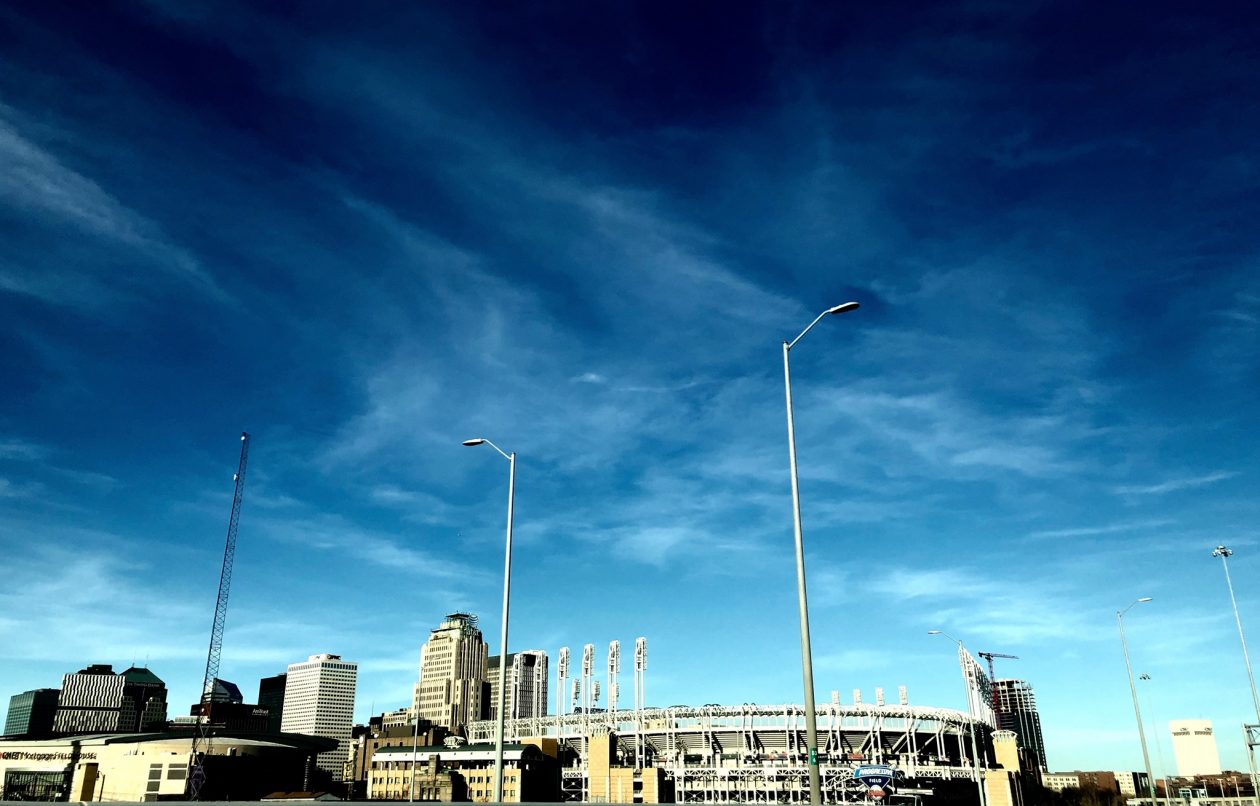

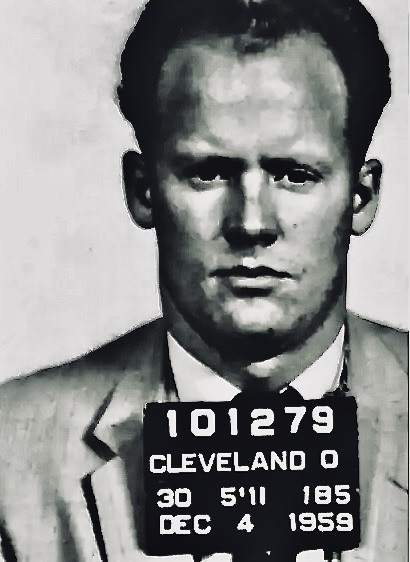

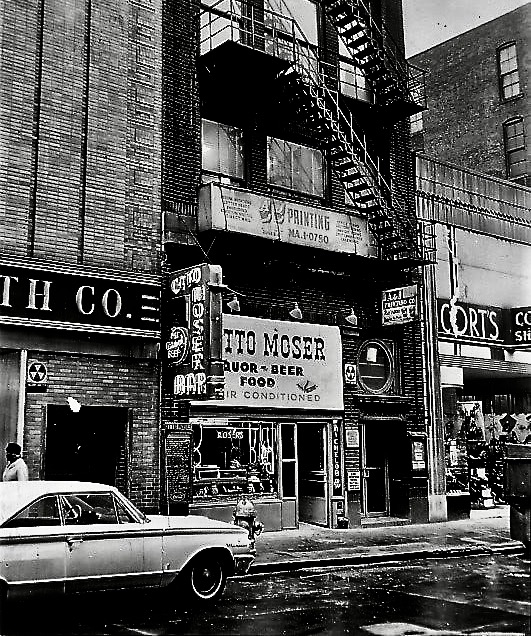




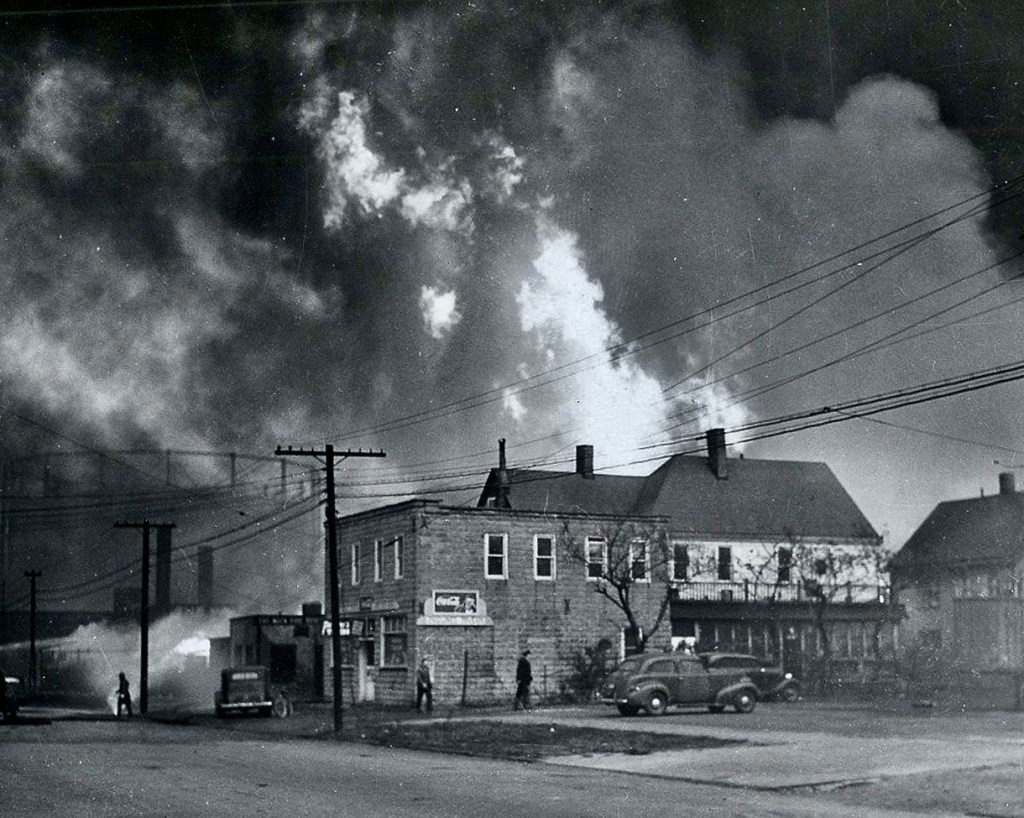

 Made in Cleveland