Full Steam Ahead

By Ed Staskus

   I hadn’t seen Hildy for three or four years. She had become nomadic after graduating from college. When she unexpectedly showed up the first week of Lent I thought we might get together. She had always been a hard girl to get close to, being opinionated and stubborn with a zany streak to boot. But I thought I would try to catch up to what she had been doing. When two weeks went by, and it still hadn’t happened, I stopped in to see her stepmother, where Hildy was staying in her old bedroom. But it still didn’t happen. She sent a text that she had come down with a touch of Covid-19 but would see me in a day-or-two.

   “She says she’s had a deadly strain of Covid-19 a couple of times,” her stepmother said. “Both times it lasted for months. She says she’s hugely sensitive to it, that she keeps getting it for a few days or a week,  and that she can tell when anybody else has it.”

   “That’s unusual,” I said. “How can she tell?”

   “She smells and senses it. At least, that’s what she said.”

   She was named Hildegard after her grandmother. She hated the name and usually refused to answer to it. I called her Hildy as a workaround. She tolerated the diminutive like a teenager tolerates advice.

   Hildy’s senses were on high alert. She had her own house key so she could come and go as she pleased, although she hardly went anywhere. She was careful as could be. She spent most of her time in her room by herself with a twosome of laptops. She didn’t like anybody knocking on the bedroom door. She said she was boning up for her next computer programming job interview. She subscribed to Netflix to fill in the rest of the time. She watched sci-fi movies.

   After a day-or-two went by and I hadn’t seen her I thought it might happen in a week or-two. Maybe she was still under the weather. After a week-or two I thought it might be sometime in the unforeseeable6 future.

  “How long is Hildy staying in town?” I asked her stepmother.

   “I don’t know but I hope she leaves soon. She is creeping me out,” she said.

   “That is creepy, your light was on in your room even though I had turned it off, and I kept hearing strange noises,” Hildy said. “Someone else somehow had to have been in the house. It looked like some objects were moved as well. I feel super spooked out if it wasn’t you. I’ve been keeping the front and back door looked with the deadbolt when I’m home.  I always lock the doors. Even taking Emil out to go potty in the backyard, I lock the door behind me.”

   Emil was Hildy’s dog. It was a Tamaskan. She got him from a breeder eight years earlier when the dog was ten weeks old. His name is associated with ambition and a drive to surpass others. The dog was plenty big enough to live up to his name but was scared of his own shadow. He was like a jittery fawn. He had no daring of any kind.

   “I had an issue with stalking and people breaking and entering my apartment ever since I did that military project after college,” Hildy said. “I assumed it was staff coming in unannounced and made complaints to management and even filed a police report. They did nothing. I caught maintenance coming in once. It is a form of harassment and against the law. Maybe we should get some hidden cameras.”

   “She seems halfway in the weeds,” I said. “How is it she decided to visit you?” I knew there was some bad blood between them. There had even been real blood once.

   “I don’t know, she just showed up. Believe me, I didn’t invite her. She doesn’t have an apartment, or a job right now, so I don’t know what to do with her.”

   “What about Joe?”

   Joe was her ex-husband. He had been a policeman in the Baltics, a roofer in New Jersey when they got married, and was now a long-haul trucker. He worked and lived in his 18-wheeler. He had tried to convince his daughter to share an apartment with him in Texas, so he would have somewhere to stay for a few days every month where he could wash his clothes, sleep in his own bed, and plug into some R & R, but Hildy said no.

   “They can’t be in the same room together for long before they start screaming at each other.”

   Hildy was born in Lithuania in the early 1990s to Joe and his then wife Birute. When they divorced Joe met his new wife-to-be on a flight from Europe to the United States. She was a travel agent and was going home. Joe was on his way to New York City where his estranged wife had landed. He couldn’t get back together with her but got together with his new friend. After they were married they lived in Lakewood, just west of Cleveland, on a quiet tree-lined street in an old-school neighborhood. When she was a teenager, Hildy attended Lakewood High School.

   “I don’t feel safe anymore,” she said. “On top of the non-stop cyber-attacks, I have been living in hell for years from abuse, stalking, harassment, and sabotage. It has been a constant nightmare. It has destroyed my work, my finances, and so many other aspects of my life. I have spent $15,000 on new electronics in three years because of people installing malware and viruses on my devices and remotely controlling my computers and phones. I have been given wrong directions from my GPS directing me straight into oncoming traffic on one-way streets.”

   When she was in high school she played rugby, playing the scrum half and fly half positions. She was fast and quick on the pitch. Her last year on the team they won all their regular season games. They scrimmaged against both Kent State University and Ashland University. They beat them both. They placed second at the Midwest Rugby Tournament and qualified for the Nationals. They were ranked second in the country. 

   Hildy hurt her knee during the Midwest Rugby Tournament. She dragged herself off the pitch. She was still limping after a trainer wrapped her knee but insisted on going back into the game. She could hardly walk much less run, but she was worked up about winning. She had grit, if nothing else.

   “She had willpower, but she was a difficult friend, hard to get along with,” Tabitha her next-door neighbor and rugby teammate said. “She was nosy and jealous.”

   Hildy went to a summer camp on the Georgian Bay in Canada with her cousin Sadie, who lived around the corner and who went to the same high school, every summer for five years. “She couldn’t get along with her,” her stepmother said. “She wouldn’t be friends with Sadie’s friends and finally didn’t even want to be in the same cabin as her.”

   She went to Miami University, majoring in psychology. While there she collaborated on the study “Biodirectional Effects of Positive Affect, Warmth, and Interactions between Mothers With and Without Symptoms of Depression and Their Toddlers” published in the Journal of Child and Family Studies. She found a boyfriend, Sean, with whom she connected and with whom she traveled far and wide to raves and techno festivals. The lights were bright and the exclamation marks emphatic. The music was very loud. She danced up a storm. In the meantime, she went back to school, earning a degree in computer science.

   “People corrupted my computer and prevented me from being able to interview by changing settings or preventing me from downloading a compatible browser,” she said. “They have installed malformed certificates so my browser would not connect to the internet. All sorts of stuff like that for years. Non-stop abuse and attacks. Every single day I’m dealing with these things. I already had to return my new laptop. My phone currently has erratic behavior.”

   After she got done with her studies she worked as a software engineer for a year in New Jersey, five months in Connecticut, and six months in Delaware, before landing in Colorado, where she worked for about a year. By the time she came back to Lakewood she hadn’t been working for six months. She was living on her credit cards and living out of her car. Sean, her one-time boyfriend, had long since disconnected. She still had her dog, but she was a fish running out of fresh water.

   “It has all caused so much depression,” she said. “I have wanted to kill myself several times in the last three years because of all the abuse. Every time I made a police report or filed a report to the FBI Cybercrimes Division nothing came of it. I have lost over $150,000.00 from all of this in wage losses, property damage, job loss, and having to use credit cards to get by.” She was more than $30,000.00 in the hole with her credit cards and more than $60,000.00 in the hole with her student loans. The holes were getting deeper by the month.

   “My browser constantly gives the wrong info. When I am studying or working my code compilation returns incorrect results regularly. The people responsible deserve to rot in jail or die. Not die, but something. Just finished meditating and I feel way less stressed. I guess the silver lining is that I am aware of what is happening to many other people and have experience with these kinds of situations. Perhaps at some point that will give me the power to create change in a corrupt system.”

   “Is she still a vegan?” I asked her stepmother.

   Hildy had gone vegan while at Miami University, losing weight and waging battles about the ethics and viability of eating animal protein. A glow of virtue lit up her face whenever veganism and animal rights came up in dialog around the campus.

   “No, she now cooks pork chops for Emil and herself every morning.”

   Her uncle invited Hildy to dinner at his house, but Hildy turned down the invitation. “I would love to, but I might get an urge to assault Sadie for the things she has done in the metaverse, so I better pass this time. I don’t feel like entertaining shitty actors or scripted conversations. I refuse to be a victim for the rest of my life. I am not a project. Super appreciate you thinking about me, though.”

   One day her stepmother was driving up her street when she saw fire trucks in front of her house. One of the smoke detectors had started beeping and Hildy had called the Lakewood Fire Department, declaring that the house was burning down. When her stepmother dashed up the driveway to find out what was happening, the firemen told her nothing was happening.  

   “Your smoke detectors are on the old side. One of them was signaling that it needed to be replaced. I suggest you replace all of them.”

   “I don’t get why fire fighters say there is no smoke when there is,” Hildy said. “I smelled smoke and felt dizzy and couldn’t think. I checked the oven, the stove, the outlets, but could not find the source so I called 911. What did I do wrong here? I have had the same issues at other places I have lived at. In Connecticut the fire fighters told me there was nothing there, too, when I had symptoms of CO poisoning although no alarm went off. It’s like a psych game. It is gaslighting the individual to not feel confident in their experience of reality. I don’t need smoke detectors. I don’t need people telling me I’m crazy or schizophrenic when that is not the case. I need people to stop gaslighting me.”

   The day came when Hildy had to go, one way or another. She wasn’t paying her share of anything, food or living expenses, and was being bossy and noisy. She was playing techno music loud enough to annoy the neighbors. When she left, she left by herself, leaving Emil behind.

   “I left him with someone I thought would look out for his best interests since I have no way to take care of him with nonstop cyber-attacks and nanorobotics controlling me and throwing programmed errors at me hundreds of times a day,” she said. “I have tried everything I could think of for three years to escape being targeted. I’ve moved states four times, switched jobs four times, tried to lay low and see if it would stop. I tried resisting and suffered a brain injury. I don’t know what else to tell you. I did everything I could think of but it wasn’t good enough. I’m completely sane and aware. I’m not depressed. I simply refuse to be controlled by a corrupt system and insane people willing to do anything for a few bucks. If my life is not my own, it is no one’s.”

   Her stepmother already had a cat and two dogs. She called Hildy straight away and insisted she come back and pick up her dog. “I can’t have another dog in the house, much less an 80-pound dog,” she said. By the time Hildy got back her stepmother had changed the locks and wouldn’t let her inside the house. She brought the dog to the side door. 

   “Go away,” she said to her step-daughter, pointing in all directions.

   Hildy kicked up a fuss in the driveway but left soon enough when she realized nobody was watching or listening or paying attention. It was Easter Saturday. “I want people to listen to me, believe me, and help me solve the issues and attacks I’m experiencing so I can keep my job and be able to afford a home for Emil and me. He deserves better.”

   I hadn’t seen Hildy even once the six weeks she was in town. A week after she left Lakewood, I heard she had popped up in San Diego and was staying in an Airbnb with a kitchen and a big backyard. Emil was happy to be out of the car, 2,500 miles later, even though it had been a non-stop wagon’s ho. Hildy’s father was making the rental for her and Emil. She chipped in by fluffing her own pillows. She had gotten a sizable tax return and was bringing home the pork chops. It was a nice neighborhood, quiet and sunny. There were few weeds despite the abundant sunshine. 

   Ohio has more than its fair share of noxious weeds, given its damp midwestern climate, including giant hogweed and purple loosestrife. California is more like the home of invasive weeds, but since it is spayed, manicured, and polished, unless the weeds are unusually stubborn, they don’t usually stand much of a chance.

   The last word I got about Hildy was from Sadie, who said she saw the gone girl on Facebook attending a techno fest somewhere out west. It was the four-on-the-floor beat. It was the Call of the West. She wasn’t from around those parts, but she was staking her claim and grooving to her own beat, whatever the beat in her head happened to be.

Ed Staskus posts monthly on 147 Stanley Street at http://www.147stanleystreet.com, Made in Cleveland http://www.clevelandohiodaybook.com, Down East http://www.redroadpei.com, and Lithuanian Journal http://www.lithuanianjournal.com. To get the site’s monthly feature in your in-box click on “Follow.”

“Bomb City” by Ed Staskus

“A Rust Belt police procedural when Cleveland was a mean street.” Sam Winchell, Beyond Books

Available on Amazon: https://www.amazon.com/dp/B0F1LM1WF9/ref=sr_1_1?crid=2MYAQAOZIC2U9&dib=eyJ2IjoiMSJ9.hTm7BGbiQbSe5ZapFwYPPfcwOpTe-Vdg6VLE4aGyTyk.Z0R-VNBWWEcvKcNaO9LdCOUnNIOOXgvYkRS_FXiXuHk&dib_tag=se&keywords=bomb+city+ed+status&qid=1742136726&sprefix=bomb+city+ed+staskus%2Caps%2C84&sr=8-1

Cleveland, Ohio 1975. The John Scalish Crime Family and Danny Greene’s Irish Mob are at war. Car bombs are the weapon of choice. Two police detectives are assigned to find the bomb makers. Nothing goes according to plan.

A Crying of Lot 49 Publication
Clown Car

By Ed Staskus

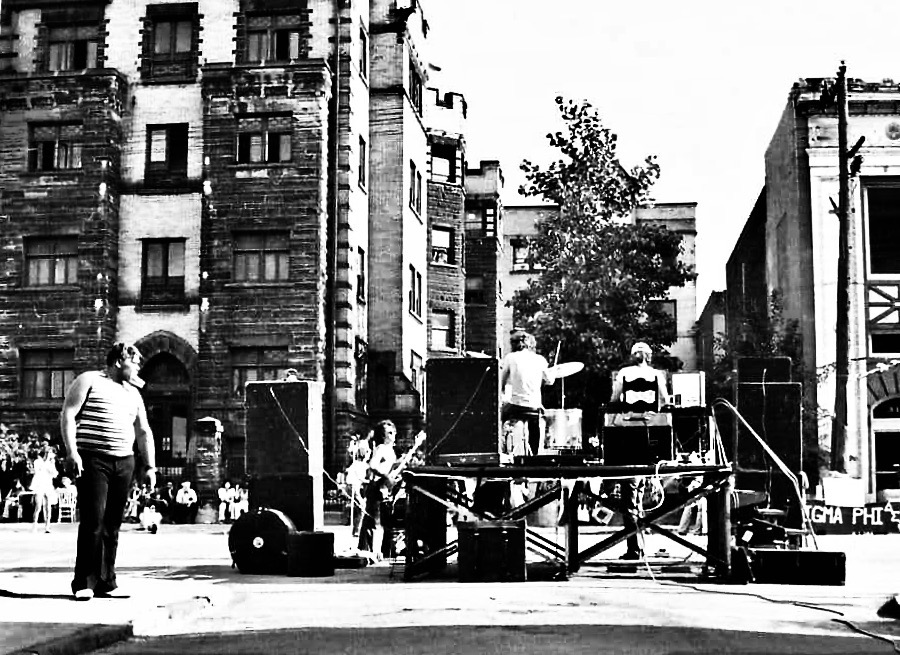
   Ronald the Borgia wanted to be the mayor of some place. Wherever the place was didn’t matter. He wanted it bad. He was the richest man in Oklahoma. He knew that just like he knew he was smarter than everybody else in the state. They were rubes and easily led by the nose. They didn’t eat so much as swallow what you fed them. Even though he was already an old man, he had plenty of energy and so he ran for mayor of Oklahoma City. He told anybody who would listen, “I’m the only candidate who can save us. If I win, wonderful things will happen. If I lose, awful things will happen.” 

   He put everything he had into the campaign, crisscrossing the state, whipping up his audiences, doing jigs to Kid Rock songs, and showcasing pro wrestlers who endorsed him as better than blubber. He was sure he was going to be the next bossman of the little people. When he lost, garnering less than 20% of the vote, he was very angry.  He declared the election had been rigged and stolen from him.

   His hot as a hooker wife tried to console him. Natasha was from the Balkans but spoke passable English.

   “I am sorry for your loss, honeykins,” she said. “Maybe you find comfort in the hard work you make.”

   “Hard work doesn’t count,” Ronald the Borgia said. “Winning is the only thing that counts. Another word out of you and I’ll go looking for wife number four.”

   “I zip my lip.”

   Ronald the Borgia tossed her a handful of one hundred dollar bills.

   “Go doll yourself up,” he said.

   The man who would be mayor came from old Oklahoma stock. His great-great-great-great grandfather Frederick the Borgia had been one of the original Sooners. The original Sooners were men who knew full well that the only thing that counts is winning. Every Borgia descendant after 1889 got up every morning enthusiastically chanting the mantra of victory.

   “One, two, three, four, why are we here for? Five, six, seven, eight, what do we appreciate? Go Borgia World!”

   Before 1889 they were no-account cattle rustlers and occasional bank robbers. What transformed them was the Oklahoma Land Rush. The Federal Congress in Washington had decided to renege on an 1830 treaty with tribes living there and take back the two million acres the natives had been granted. The land was called Indian Territory until it suddenly became the Unassigned Lands. President Benjamin Harrison proclaimed all two million acres of the Unassigned Lands open for settlement. Anybody could claim 160 acres of public land if they could stake it out.

   The Borgia’s had other plans. They weren’t interested in 160 acres. They gathered together all their relations and as many footloose cowboys as they could. They planned to get a head start and stake out as much land as they could. After that they planned on getting into the real estate business with money they didn’t have. They knew they would get the money by hook or by crook.

   The Land Rush began at noon on April 22, 1889. 50,000 men, and a few hardy women, on horses and buggies were let loose by a blue-clad army officer firing his pistol into the air. The Borgia’s didn’t hear the pistol shot. They were far away. They had staked their many claims the day before. They weren’t Boomers at the starting line. They were Sooners.

   For the next ten years Sooner was a fighting word. It meant somebody who had cheated and so deprived land from the Boomers. After the dust settled, however, the University of Oklahoma football team quixotically adopted the nickname Sooner and in the 1920s the state was officially nicknamed the Sooner State. That was neither here nor there to the Borgias.

   They were able to stake out more than three thousand acres adjoining what would become Oklahoma City. The day after the Land Rush there were already 5,000 people living in tents on land that would become the place. By the early 20th century it was a full-fledged modern city of 64,000 people. The Borgias bided their time. When their time came and the city came to them, they made a fortune. They continued to make money hand over fist for the next one hundred years.

   But that was then and Ronald the Borgia was now. After losing his bid to become mayor of Oklahoma City he took a long vacation at a friend’s mansion in southern Florida and sulked. When he was done sulking he moved to Ohio. He abandoned the Sooners for the Buckeyes. He ran for mayor of Mentor, northeast of Cleveland, and lost big again. He ran for mayor of Parma, southwest of Cleveland, and lost big there, too.

   Ronald the Borgia cried foul again, crying the voting was rigged, but bit the bullet and hired a political consultant. Steve Brandman was grizzled and blunt spoken. He washed his voluminous hair every day. He never washed out his mouth. He got right to the point.

   “You’ve got to get God on your side and you’ve got to get yourself a Devil on the other side,” Steve Brandman said.

   “I don’t believe in God.” 

   “That doesn’t matter, just say you do. Lip sync a prayer or two, even if you don’t know the words. Wave a Bible in the air. Tell everybody you’re a big fan of the Ten Commandments.”

   “What are the Ten Commandments?”

   “We’ll get into that later.”

   “What about this Devil thing?”

   “That’s so there’s something really bad you can oppose with your great godliness.”

   “Like what?”

   “Migrants would be a good choice, especially the wetback kind. They’ve been whipping boys on and off for a long time. Whip up some fear and loathing. Whip up some frenzy. Whip up some hatred.”

   “I can do that with my eyes closed.”

   “There you go, be a Christian soldier, go strong and put your foot on the neck of the weak.”

   “I’ve been doing that my whole life. I’m a pro at it. Migrants won’t stand a chance when I get going. Where should I run next?”

   “Lakewood, right here next to Cleveland.”

   “Lakewood? That dumb-ass suburb is about as liberal as it gets.”

   “You’re right about that.”

   “If I’m right about that then you’re wrong about me running there next.”

   “You’re a three time loser but you think you know better than me? See you later.”

   “No, no, I’ll do whatever you say, but why Lakewood?”

   “One big reason. So far you’ve campaigned against three incumbents, all men, and lost three times. The mayor of Lakewood is an incumbent, too, but it’s a woman. Catch my drift?”

   “I’m with you,” Ronald the Borgia said. “There’s no way I’m losing to some broad. Is she ugly?”

   “What does that matter?”

   “It matters to me.”

   “Whatever,” Steve Brandman said. “Lakewood is just the start. If you can win there you’ll be able to win anywhere, and I mean anywhere.”

   “All right, all right.”

   “One last thing.”

   “What’s that?”

   “My fee is payable in advance, and on top of that, I don’t start working until the check has cleared.”

   “You know I’m good for it.”

   “I don’t know anything of the kind.”

   Steve Brandman knew his man. He got his check. After it cleared the Borgia for Mayor campaign office opened in Lakewood. The election for the mayor’s seat was in two months.

   “That’s not enough time,” Ronald the Borgia complained.

   “You let me worry about that, big guy,” Steve Brandman said. “You do the complaining and explaining. Leave the rest to me.” The big guy waved his hands in the air.

   When Steve Brandman looked at Ronald the Borgia’s hands they seemed unusually small for a man his size. He wondered what else was small on the man. It couldn’t be that, could it? He had it on reliable gossip that his man was a many happy returns customer at many Houses of the Rising Sun. He put his idle thoughts aside and got to work.

   It was a rough and tough campaign. The incumbent mayor campaigned on ethics and efficiency. She campaigned on principle and safe streets. She campaigned on all the new schools being built in town and all the upgrades to the water and sewage systems. She promised to continue the good work of her administration.

   Ronald the Borgia ignored all the issues except two, what he called the “waste of space” in the mayor’s office and the threat of migrants. 

   “She’s slow, she’s got a low IQ, and she’s lazy,” he said. “She’s dumb as a rock. She’s a horrible person. Does she drink? Does she take drugs? I wouldn’t be surprised. She has no respect for the American people and takes voters for granted. She’s on the radical side of the radical left. She’s a retard, mentally disabled, we all know that. She lies all the time. I believe she was born that way. She needs a doctor. Thousands of migrants from the most dangerous countries are destroying the character of Lakewood and leaving the community a nervous wreck. She doesn’t care that migrants are eating people’s dogs and cats, skinning them and barbequing them. I’m very angry about that. Vote for godliness, vote for me, and tell her, you’re fired, get the hell out of here.”

   He began appearing on the campaign trail as a Knight Templar, wearing a white cloak emblazoned with a red cross. He wore chainmail and a great helm with a narrow visor on his head. He carried a one-handed sword and a white Templar shield. His assistants dressed like monks in brown robes. They had to run to McDonalds in their sandals whenever their boss wanted a Big Mac. 

   “I love God, sure, but I really love my Big Mac’s,” he said before returning to a rant about migrants. “We have thousands of migrants overflowing into Lakewood from you know where. Many of those people have terrible diseases and they’re coming here. And we don’t do anything about it, we let everybody come here. It’s like a death wish for our town. They’re rough people, in many cases from prisons, from mental institutions, insane asylums. You know, insane asylums, that’s ‘Silence of the Lambs’ stuff. Hannibal Lecter, everybody knows Hannibal Lecter, right? Do you want him living next door to you? My opponent says, ‘Please don’t call them animals. They’re humans.’ I say, ‘No, they’re not humans. They’re animals.’ God doesn’t want us to live like animals. He wants us to live like gods. I’m already a god, so make sure you vote for me.”

   A week before the election the race was neck-to-neck. Ronald the Borgia seemed calm enough, but was sweating bullets. He called Steve Brandman into his office.

   “You said I was a sure thing,” he said wearing out the carpet.

   “Don’t bother putting words into my mouth,” Steve Brandman said. “I’m not the other side.”

   “I don’t care what you said, but do something, for God’s sake.”

   “It’s in the bag. The polls open on Tuesday. Wait for Monday. You’ll see.”

   Monday morning a fleet of Tesla Cybertrucks wound its way into Lakewood, They drove slowly so the body panels of the Cybertrucks wouldn’t fall off. Emil of Croesus was at the head of the fleet. The fleet stopped in front of City Hall. When Emil of Croesus got out of his stretch limo version of a Cybertruck an aide set up a golden card table and a golden folding chair for him in the middle of the street. Another aide put a cushion on the seat of the chair. Emil of Croesus sat down. A third aide massaged his neck. Traffic ground to a halt. Passersby gathered and gawked.

   “Get Your One Thousand Dollars By Voting the Right Way” a portable marquee sign declared blinking on and off. Emil the Croesus had a stack of one thousand dollar bills in front of him. It wasn’t long before the line stretched from the middle of Lakewood to all the corners of town.

   The next day the neck-to-neck-race became a rout. Ronald the Borgia won in a landslide. Lakewood’s many bars and eateries were full of people celebrating, eating and drinking their fill, at least until they tried paying with Emil the Croesus’s one thousand dollar bills, which nobody would accept. President Grover Cleveland’s face used to be the face on the denomination, at least until 1969 when the U. S. Treasury discontinued it. Emil the Croesus’s bill had the face of Bernie Madoff on it. The money was fake as fake could be.

   It was no matter to Doanld the Borgia, He had gotten what he wanted. He was the new mayor of Lakewood and everybody was going to have to do whatever he said. From now on the God’s truth was going to be coming out of his mouth. “If I don’t like somebody or something and need to get it straightened out, I’ll send in my clowns, I mean my law enforcement, and it’ll get done,” he said. He meant forget the saints above and the fiends below. 

   “Winning is the most important thing in life,” Ronald the Borgia said when Steve Brandman asked how he liked the result. “Losing is for suckers. Suckers are losers. I am the way. I am a winner. Winning first, no matter how, no matter what, everything else way back behind.” He smoothed his red tie. He made his little hands into fists. He pasted a left-handed smile on his face and smirked for all the world to see.

Ed Staskus posts monthly on 147 Stanley Street at http://www.147stanleystreet.com, Made in Cleveland http://www.clevelandohiodaybook.com, Down East http://www.redroadpei.com, and Lithuanian Journal http://www.lithuanianjournal.com. To get the site’s monthly feature in your in-box click on “Follow.”

“Made in Cleveland” by Ed Staskus

Coming of age in the Rust Belt in the 1960s and 1970s.

“A collection of first-person street level stories blended with the historical, set in Cleveland, Ohio. The storytelling is plugged in.” Sam Winchell, Beyond Books

Available on Amazon:

A Crying of Lot 49 Production

Saved By the Bell

By Ed Staskus

   Before Maggie Campbell’s husband Steve de Luca stopped blazing, he turned the younger of their two cats, whose name was Mittens, into a deadhead. They started calling him Stones because when the cat and Steve were in the bedroom together smoking weed, the way it worked was, whenever Steve exhaled the cat inhaled.

   Mittens adopted a rallying cry along with his new name. The rallying cry was, “Work is the curse of the smoking class.” Steve finally reminded him he had never worked a day in his life and to drop the catchphrase.

   He would lean up on his haunches and sniff for the smoke. He was a candy-colored longhair. The look Stones gave Maggie, whenever she caught them together, was the “Are you looking at me?” look. He thought he was a hepcat. Afterwards, after Steve gave up drugs, they changed his name back to Mittens and he went back to abusing catnip.

  They called Sebastian, their older cat, Big Blackie, until he got even bigger. He had his own take on life. He did backflips when he was a kitten. He ran into the backyard whenever he could and hunted, at least when he was young. Later, in middle age, he spent most of his time in the basement eating. Eating non-stop didn’t work out too well for him. As he got older, everybody started calling him Fatbastian. He didn’t seem to mind the moniker. He kept eating and getting bigger.

   Steve’s father wasn’t a gangster, but his father’s friends and his uncles and their friends were all gangsters. His father was an attorney for the Italian Mob. He was the lawyer for the hired gun who killed the Mob’s enemy Danny Greene with a car bomb in Lyndhurst. But, at the same time, he had been a good friend of the Irishman for many years. Their house in Little Italy was a gift from Danny Greene and the Celtic Club. He never told the Italians about that. It was a secret.

   Steve’s family had wads of money when he was growing up. Whenever he smashed up a car his dad had a new one for him the next day. Speeding tickets got taken care of. There was no need to slow down. Steve was using at eleven and selling at thirteen. His uncles were addicts and used to run and hide their stashes from the police under his bed. When Steve was older, he ran errands for his father. When his father was on the verge of going to jail once when he wouldn’t give something up to a judge, he told Steve he absolutely needed him to go to Columbus that day.

   “These papers must be in the state court system by 5 o’clock. Make sure you get there.”

   Steve sped down to Columbus, delivered the papers, and proceeded to get tequila trashed, to the degree he was swinging at and spitting at policemen who had been called to get him out of the bar he was making a mess of. He became a Steve-o-mess wobbling in mid-air when they got done with him.

   They finally hauled him outside and slapped cuffs on him. They pushed him into the back of a squad car. They allowed him one phone call. He called his father.

   “I’m in jail,” he said.

   “I have one question for you.”

   “What?”

   “Did you deliver the papers?”

   “Yeah.”

   “OK, sit tight, you’ll be out in one hour.”

   He was out in fifty-five minutes.

   Steve’s brother, Freddie, had a used car lot on Carnegie Ave. on the east side of Cleveland. Freddie was the boss and Steve was the workforce. Little Italy was a short walk south of University Circle, where bluebloods went to Case Western Reserve University and where all the museums were. The ghetto was a short walk north of University Circle. That’s where Steve and his brother got started rescuing dogs. Mean-spirited pet owners dumped animals in that neighborhood, behind abandoned houses and shuttered warehouses. 

   They found dogs on the street, picked them up, and brought them back to the car lot. They took care of them and tried to find them homes. Once his brother and he were looking at somebody’s old car for sale and saw a mistreated dog chained to a tree in the back yard. He was on his last legs, with barely a leg to stand on.

   “What’s with the dog?” asked Steve, keeping his eyes on the old car man whose dog it was.

   “Oh, he’s a bad dog, got to keep him tied up,” said the man.

   Steve looked at the dog. He looked at the man and then at the dog again. He didn’t see any badness in the dog. He saw plenty of misery.

   “I’ll tell you what, mister,” he said. “You keep your car, and we’ll take the dog. To make it an even trade we won’t say anything to anybody about you abusing animals.” 

   “No sir, you can’t have that dog.”

   Freddie put his right hand in his pocket and kept it there. He weas wearing a Chief Wahoo baseball cap. He always carried a handgun. The man looked at the pocket. “Oh, hell, just take it,” he sputtered.

   They untied the dog and took it with them.

   There was a pack of wild dogs living in a wooded field behind their car lot. Freddie and Steve put bowls of food out at the tree line for them. They didn’t like going too far into the woods. One day Steve heard howling, so he went into the gloom. He found a blind dog whose litter of puppies had been mauled and some of them eaten by other dogs.

   “Dogs will eat other dogs if they’re that hungry,” Maggie said. “They will. They’ll eat anything.”

   Steve grabbed the puppies that were still alive and ran. The blind dog howled for three days in the woods. There was nothing anybody could do. When the dog stopped howling everybody knew what had happened.

   Steve’s father died the same year Maggie’s father died. Afterwards, Steve was living with Freddie when he met Maggie, his wife-to-be. It was rocky at first, but they smoothed it out. After they got married, they shared the house with Steve’s older brother for almost a year, until Maggie couldn’t take it anymore.

   “He loves us living here because I grocery shop, cook, and clean. I am a clean freak. My vacuum never gets put away. That’s how much I love to vacuum. I don’t screw around.”

   Freddie and Steve had the same eyes, although Freddie was shorter and thicker than Steve, had curly hair, and was a deviler. Maggie had OCD, putting her at odds with all devilers. “Everybody knows you don’t screw around with someone who has OCD,” she said. “You just don’t do that! Except for Freddie, who thinks it’s funny to mess with me, even though I always get mad. That fool doesn’t seem to care.”

   There was no good place to do her make-up in the Little Italy house. The rooms were weirdly partitioned and there wasn’t any good lighting, so she had to do it downstairs. “I keep my make-up bag there. Your brother stuffs banana peels and old food wrappers into my bag when I’m sleeping. Do you know how dirty and disgusting that is?”

   Freddie would just laugh. He thought he was funny, although he wasn’t. His funny bone was bent the wrong way. But Maggie didn’t cry. It took everything she had to not punch him in the face. Her father was somebody who had always said, “Someone’s pissed you off? Go beat the hell out of them.”

   “You think you want to hit me?” Freddie would say. “Go ahead, try it, girlie, try it.”

   She got so upset that her fists balled up. More than anything else in the world she wanted to punch him in the face.

   “I’m not going to lower myself to who you are,” she said. “I’m not going to do it. I’m still a good person.”

   Freddie wasn’t all bad, though. In the morning he’d say to Maggie, “Pack some extra lunch meat for if we find a dog on the streets today.” She would pack their lunches, for them and anything that needed a square meal. If man’s best friend was in bad shape and had to be rescued, and when he barked saying something like, “You better cut that hunk of baloney into more pieces because I’m hungry enough to eat six of them,” they always had something in their Glad bags to offer the animal.

Ed Staskus posts monthly on 147 Stanley Street at http://www.147stanleystreet.com, Made in Cleveland http://www.clevelandohiodaybook.com, Down East http://www.redroadpei.com, and Lithuanian Journal http://www.lithuanianjournal.com.

“Ebb Tide” by Ed Staskus

“A thriller in the Maritimes, magic realism, a double cross, and a memory.” Sam Winchell, Beyond Books

Available at Amazon: https://www.amazon.com/dp/B0CV9MRG55

Summer, 1989. A small town on Prince Edward Island. Mob money on the move gone missing. Two hired guns from Montreal. A peace officer working the back roads stands in the way.

A Crying of Lot 49 Publication

Rocket From the Tombs

By Ed Staskus

  It was sometime during the Me Decade that I discovered I was poor as a church mouse. I owned lots of dog-eared books, some clothes, and a car I didn’t dare drive. I didn’t own an alarm clock. I didn’t have any money in the bank because I didn’t have a bank account. I was living at the Plaza Apartments on Prospect Ave., where the rent was more than reasonable. I got by doing odd jobs and taking advantage of opportunities, although I was far from being a capitalist.

   The Plaza was in a neighborhood called Upper Prospect. There were about thirty architecturally and historically significant buildings there, built between 1838 and 1929.  The Plaza was one of the buildings. Upper Prospect had long benefitted from Ohio’s first streetcar line that connected it to the downtown business district. Those days were long gone.

   In the 1870s Prospect Ave. advanced past Erie St., which is now E. 9th St., and kept going until it reached E. 55th St. That’s where it stopped. “Lower Prospect, closer into downtown, went commercial long ago, but Upper Prospect stayed residential longer,” says Bill Barrow, historian at the Michael Schwartz Library at Cleveland State University. Lower Prospect is where lots of downtown entertainment is now, including Rocket Arena, where the Cleveland Cavs follow the bouncing ball, and the House of Blues, where music fans have a ball.

   The Winton Hotel was built in 1916 on the far side of E. 9th St. It was nothing if not grand. It was renamed the Carter Hotel in 1931, suffered a major fire in the 1960s, but was renovated and renamed Carter Manor. I never set foot in it. The Ohio Bell Building went up in the 1920s before the Terminal Tower on Public Square was built.  When it was finished it became the tallest structure in the city. I never set foot in it, either. It was the building that Cleveland’s teenaged creators of Superman had the Man of Steel leap over in a single bound. The cartoon strip first appeared in their Glenville High School student newspaper, which was the Daily Planet.

   Before Superman ever got his nickname, the first Man of Steel was Doc Savage. There were dozens of the adventure books written by Lester Dent. When I was a child I read every one I could get my hands on. Doc Savage always saved the day. Nothing ever slowed him down, not kryptonite, not anything. 

   In the 1970s Prospect Ave. wasn’t a place where anybody wanted to raise children. Nobody even wanted to visit the place with their children in tow. The street was littered with trash, dive bars, hookers, and bookstores like the Blue Bijou. There was heroin in the shadows and plasma centers that opened first thing in the morning. The junkies knew all about needles and got paid in cash for their plasma donations.

   The Plaza was around 70 years old when I moved in. There was ivy on the brick walls and shade trees in the courtyard. There were day laborers, retirees, college students, latter day beatniks, scruffy hippies, artists, musicians, and some no-goods living there. “The people who lived in the building during my days there helped shaped my artistic and moral being,” Joanie Deveney said. “We drank and partied, but our endeavors were true, sincere, and full of learning.” Everybody called her Joan of Art.

   Not everybody was an artist or musician. “But anybody could try to be,” Rich Clark said. “We were bartenders and beauticians and bookstore clerks with something to say. There was an abiding respect for self-expression. We encouraged each other to try new things and people dabbled in different forms. Poets painted, painters made music, and musicians wrote fiction.”

   The avant-garage band Pere Ubu called it home. Their synch player Allen Ravenstine owned the building with his partner Dave Bloomquist. “I was a kid from the suburbs,” Allen said. “When we bought the building in the red-light district in 1969, we did everything from paint to carpentry. We tried to restore it unit by unit.”

   The restoration work went on during the day. The parties went on during the night. They went on long into the night. “I remember coming home at four in the morning,” Larry Collins said. “There would be people in the courtyard drinking beer and playing music. We watched the hookers and the customers play hide-and-seek with undercover vice cops. In the morning, I would wake up to see a huge line of locals waiting in line in front of the plasma center.”

   When I lived there, I attended Cleveland State University on and off, stayed fit by walking since my car was unfit, and hung around with my friends. Most of us didn’t have TV’s. We entertained ourselves. I worked for Minuteman whenever I absolutely had to. The jobs I got through them were the lowest-paying worse jobs on the face of the planet, but beggars can’t be choosers.

   I spent a couple of weeks on pest control, crawling into and out of tight spaces searching for rats, roaches, and termites. My job was to kill them with poison. The bugs ran and hid when they saw me coming. I tried to not breathe in the white mist. I spent a couple of days roofing, hoping to not fall off sloping elevated surfaces that were far hotter than the reported temperature of the day. The work was mostly unskilled, which suited me, but I got to hate high places. My land legs were what kept me upright. I didn’t want to fall off a roof and break either one of them

   I passed the day one summer day jack hammering, quitting near the end of my shift. I thought the jack hammer was trying to kill me. “If you don’t go back, don’t bother coming back here,” the Minuteman boss told me. “Take a hike, pal,” I said, walking out. I wasn’t worried about alienating the temporary labor agency. Somebody was always hiring somebody to do the dirty work.

   The Plaza was four stories tall and a basement below, a high and low world. Some of the residents were lazy as bags of baloney while others were hard-working. Some didn’t think farther ahead than their next breath while others thought life was a Lego world for the making. There was plenty in sight to catch one’s eye.

   “I had a basement apartment in the front,” Nancy Prudic said. “The junkies sat on the ledge and partied all night long. But the Plaza was a confluence of creative minds from many fields. It was our own little world. Besides artists, there were architects and urban planners.”

   Pete Laughner was a hard-working musician. He was from Bay Village, an upper middle class suburb west of Cleveland. He wrote songs, sang, and played guitar. He was “the single biggest catalyst in the birth of Cleveland’s alternative rock scene in the mid-1970s,” Richard Unterberger said. He led the bands Friction and Cinderella Backstreet. He co-founded Rocket from the Tombs. “They were a mutant papa to punk rock as well as spawning a number of famous and infamous talents, all packed into one band,” Dave Thomas said. After the Rockets crashed and burned, Pete teamed with Dave to form Pere Ubu.

   Dave Thomas was nicknamed the Crocus Behemoth because he was ornery and overweight. He went against the grain by occasionally performing in a suit. He was a tenor who sometimes sang and others times muttered, whistled, and barked.  “If nobody likes what you do, and nobody is ever going to like what you do, and you’ll never be seen by anyone, you do what you want to do,” he said. He commandeered the street in front of the Plaza for middle of the day open air concerts. “He never let the lack of any musical training get in his way,” said Tony Maimone, Pere Ubu’s bass player.

   Pere Ubu’s debut pay-to-get-in show was at the Viking Saloon in late 1975. Their flyer said, “New Year’s Eve at the Viking. Another Go-damn Night. Another year for me and you, another year with nothing to do.” Pete had a different take on it. “We’re pointing toward the music of the 80s.”

   When he wasn’t making his stand on a riser, Pete was writing about rock and roll for Creem, a new monthly music magazine which was as sincere and irreverent as his guitar playing. The magazine coined the term “punk rock” in 1971. “Creem nailed it in a way that nobody else did,” said Thurston Moore of Sonic Youth.

   Pete played with the Mr. Stress Blues Band in 1972 when he was 20 years old. They played every Friday and Saturday at the Brick Cottage. Mr. Stress called the squat building at Euclid Ave. and Ford Rd. the “Sick Brick.” When he did everybody called for another round. Monique, the one and only bartender, ran around like a madwoman. “The more you drink, the better we sound,” Mr. Stress said and picked up his mouth organ.

   The harmonica man was a TV repairman by day. The lanky Pete was in disrepair both day and night. He wasn’t a part-time anything. He wasn’t like other sidemen. His guitar playing was raw and jagged. While the band was doing one thing, he seemed to be doing another thing. 

   “He only ever had three guitar lessons,” his mother said. Pete was in bands by his mid-teens. “He was my boyfriend when we were 15,” Kathy Hudson said. “He still had his braces. He was with the Fifth Edition. They were playing at the Bay Way one time and he wanted them to bust up their equipment like The Who. The others weren’t down with it.”

   “He was so energetic and driven, but his energy couldn’t be regulated,” said Schmidt Horning, who played in the Akron band Chi Pig. “It could make it hard to play with him. He was so anxious and wouldn’t take a methodical approach.”

   Charlotte Pressler was the woman Pete married. “From 1968 to 1975 a small group of people were evolving styles of music that would, much later, come to be called ‘New Wave’. But the whole system of New Wave interconnections which made it possible for every second person on Manhattan’s Lower East Side to become a star did not exist in Cleveland,” she said. “There were no stars in Cleveland. Nobody cared what they were doing. If they did anything at all, they did it for themselves. They adapted to those conditions in different ways. Some are famous. Some are still struggling. One is dead, my Pete.”

   Not long before everything fell apart Pete stepped into a photo booth in the Cleveland Arcade, one of the earliest indoor shopping arcades in the United States. He was wearing a black leather jacket and looked exhausted. His eyes had the life of broken glass in them. He sent the pictures and a note to a friend. “Having a wonderful time. Hope you never find yourself here.”

   He played his kind of music at Pirate’s Cove in the Flats, along with Devo and the Dead Boys. “We’re trying to go beyond those bands like the James Gang and the Raspberries, drawing on the industrial energy here,” Pete said. He played at the Viking Saloon, not far from the Greyhound station, until it burned down in 1976. Dave Thomas was a bouncer there, keeping law and order more than just an idle threat. He wasn’t the Crocus Behemoth for nothing.

   “I’m drinking myself to death,” Pete wrote to a friend of his in 1976. “No band, no job, running out of friends. It’s easy, you start upon waking with Bloody Mary’s and beer, then progress through the afternoon to martinis, and finally cognac or Pernod. When I decided I wanted to quit I simply bought a lot of speed and took it and then drank only about a case of beer a day, until one day I woke up and knew something was wrong, very wrong. I couldn’t drink. I couldn’t eat. And then the pain started, slowly like a rat eating at my guts until I couldn’t stand it anymore and was admitted to the hospital.”

   The rat was pancreatitis. If you lose a shoe at midnight you’re drunk. Pete lost shoes like other people lost socks in the dryer. He didn’t need any shoes however, where he was going. It was the beginning of the end of him. It didn’t take long. He wouldn’t or couldn’t listen to his doctor’s orders. He went back to his old pal, which was booze.

   “Pete could do whatever he wanted to do,” said Tony Mamione. “He was instrumental in crafting the Pere Ubu sound, but, even at such an early age, had a deep understanding of all kinds of music.” Tony and Pete met when they lived across the hall from each other on the third floor of the Plaza Apartments. “I had just moved in and would play my bass and Pete heard it through the walls and knocked on my door. We started talking and he went back and grabbed his guitar and some beer, and we started jamming right away.”

  Pete was as good if not better on the piano than the guitar, even though the guitar was his tried and true. One day he found a serviceable piano at a bargain price and bought it. He and Tony picked it up to take back to the Plaza. “Here I was driving his green Chevy van down Cedar Ave. and there he was in the back of the van rocking out on the piano,” Tony said. “He was so special, a pure musician.” After they dragged, muscled, and coaxed the piano up to the third floor, they had some beers and the next jam session started.

   “I want to do for Cleveland what Brian Wilson did for California and Lou Reed did for New York,” Pete said in 1974. “I’m the guy between the Fender and the Gibson. I want a crowd that knows a little bit of the difference between the sky and the street. It’s all those kids out there standing at the bar, talking trash, waiting for an anthem.”

   They would have to wait for somebody else. Pete Laughner died in 1977 a month before his 25th birthday. He was one year younger than me when he met his maker. He didn’t die at the Plaza Apartments. Neither of us was there anymore. He died in his sleep at his parent’s home in Bay Village. There’s nowhere to fall when your back is against the wall, except maybe where you got up on your feet in the first place.

Ed Staskus posts monthly on 147 Stanley Street http://www.147stanleystreet.com, Made in Cleveland http://www.clevelandohiodaybook.com, Atlantic Canada http://www.redroadpei.com, and Lithuanian Journal http://www.lithuanianjournal.com

“Ebb Tide” by Ed Staskus

“A thriller in the Maritimes, magic realism, a double cross, and a memory.” Sam Winchell, Beyond Books

Available at Amazon: https://www.amazon.com/dp/B0CV9MRG55

Summer, 1989. A small town on Prince Edward Island. Mob money on the move gone missing. Two hired guns from Montreal. A peace officer working the back roads stands in the way.

A Crying of Lot 49 Publication

Squaring Off at Maxim’s

By Ed Staskus

   The first time I went to Maxim’s Deli was in 1964, the year my parents bought a house in the North Collinwood neighborhood of Cleveland on a street southeast of E. 185th St. The deli had opened in 1949. It was on the corner of Cornwall Rd. and E. 185th St. It was opened by Emanuel “Manny” Berardinelli and his brother Giuseppe “Joey” Berardinelli. The next year, 1950, Joey Maxim, the name Giuseppe went by in the boxing ring, won the light heavyweight championship of the world by beating Freddie Mills for the title.  

   He knocked him out in the 10th round. After the fight three of his adversary’s teeth were discovered stuck in his left glove. Joey Maxim had a left jab to die for. Freddie Mills never fought again after that. Boxing goes back to ancient Egypt. The word pugilism comes from the Greek word “pyx” which means “with clenched fist.” Boxing has since been called the “Sweet Science.”

   Lennox Lewis, one of the best heavyweight boxers ever, said, “In boxing, you create a strategy to beat each new opponent. It’s just like chess.” Boxing may be tactical and calculating, but it always comes down to knocking somebody’s teeth out  when everything is on the line.

   Joey Maxim ran the streets of North Collinwood when training. He got the idea to open a baked goods and pizza shop during one of his runs. The start-up money came from his boxing wins, of which there were plenty. During his career he won 82 fights while losing only 29.  By the time he stopped boxing in 1958 the walls of the delicatessen were chock full of his memorabilia.

   At first I went to Maxim’s Deli with my mother. It was just down the end of our street. She bought bread there. I carried it home. It was better than anything from the supermarket and better than the Eastern European black bread we often ate. The aroma in the delicatessen was pleasing, even though I wasn’t overly interested in the bread. What I was interested in was the pizza. It was made in an old-fashioned stone oven. They made their own secret sauce. They sold their pizza by the pie and by the slice. The crust was slightly crispy and just right chewy. I started stopping into the deli by myself and getting it by the slice whenever I had the means.   

   Pizza to me was like the entire food pyramid in one bite. I only ever got one slice but it was plenty. The slices at Maxim’s Deli were large. When I saw the boxes whole pies came in I wondered why round pizzas were packaged in square boxes. On top of that, before they were put in the boxes they were sliced into triangles. I thought there must be some kind of higher math in play.

   Joey Maxim was a big boy growing up. He started boxing at the age of 12. He won the Cleveland Plain Dealer Golden Gloves Tournament, the Chicago Tribune Tournament of Champions, and the 1940 AAU National Tournament in Boston. He was 17 years old when he won the AAU National Tournament in his weight class. He turned pro in January 1941 when he was 18 years old. He took the name Joey Maxim after his manager said he threw punches faster than a Maxim gun. The Maxim gun is a recoil-operated machine gun. It was the first fully automatic machine gun in the world. Joey Maxim won his first professional fight in no time, pummeling his opponent. Then World War Two happened. He served as a military policeman in the U. S. Army, occasionally fighting in exhibition matches to entertain the troops.

   Live professional boxing was a major spectator sport in Cleveland in the 1950s and 1960s.  Matches at the Cleveland Arena drew upwards of 10, 000 fans. I was no slouch at roughhousing but not fighting with my fists, although I was good at shadow boxing. The shadows always lost. I never took lessons. Most of the gyms, like the Old Angle, were on the near west side, too far to go. Our father didn’t let us watch the fights on TV. He frowned on boxing. He said it was a cruel sport.

   “Two young men beating the sense out of each other for a dollar,” he said. He was an accountant. He needed his mind in good working order to understand dollars and cents. “When you’ve got your dollar but your brain doesn’t work anymore, that is not good.”

   Everybody in the neighborhood knew all about Joey Maxin although nobody ever saw him. He was always somewhere else. After his boxing career was over and done with he worked for a casino in the Bahamas and later appeared in a few small parts in the movies. In 1963 he appeared in “Goldilocks and the Three Bares.” The movie was billed as the “first nudist musical.” He played himself playing a nightclub owner. He was featured on the movie poster. “It’s me, Joey Maxim, the former world’s light heavyweight champion! I’m one of the stars! My first screen appearance!” He tried his hand at stand-up comedy  but didn’t kill on stage and gave it up. 

   He moved to Las Vegas and worked for several casinos like the Frontier and the Ambassador as a greeter. He did it for twenty years before retiring. He was inducted into the International Boxing Hall of Fame in 1994. He had beaten fighters like Jersey Joe Walcott, Floyd Patterson, and Sugar Ray Robinson. He fought Sugar Ray Robinson at sold-out Yankee Stadium in New York City in 1952. The bout was the first to be shown on closed circuit television in movie theaters.

   Sugar Ray Robinson was the best fighter of all time the day before the fight. The next day he was the second best fighter of all time, at least for one day. He was the middleweight champion, but moved up a classification to light heavyweight to fight Joey Maxim. He gained some weight but still gave up almost 20 pounds to his opponent.

   A monsoon soaked New York City for two days before the fight. The day of the championship bout it was very humid and the temperature reached 105 degrees. Some spectators in the stands passed out from the heat. Bright tungsten lights lit up the ring for the TV cameras. Joey Maxim lost 10 pounds during the fight. Sugar Ray Robinson lost 16 pounds. The referee collapsed hallway through from heat exhaustion and had to be replaced. Doc Kearns, Jack Dempsey’s ex-manager, was in Joey Maxim’s corner, but Sugar Ray Robinson was ahead on the judges’ scorecards going into the 13th  round. By the end of the round he was worn out. His legs were like rubber. He unleashed a wild haymaker, came up with nothing but air, and off balance fell flat on his face. He staggered back to his corner. He couldn’t come out for the 14th  round. The contest in New York City was the only one he never finished.

   After the victory Joey Maxim capitalized on his momentum, fighting coast to coast, and in Italy, England, and Germany, as well. He won more than he lost. But when he lost his last six fights in a row he hung it up. He knew he was washed up.

   His brother Manny was the day-to-day man at Maxim’s Deli. He was always behind the counter. He seemed to know everybody’s names. He even knew mine. His son Gene started working there on weekends from when he was 13 years old. After he finished high school he decided to go full time and joined his father in the business. Manny’s daughter Loretta worked at the deli, too. After she got married and had children, she continued to work there part-time. 

   After I started my four years of higher education at St. Joseph’s High School, within walking distance of where we lived, I stopped at Maxim’s Deli for slices of pizza less and less often. It wasn’t out of the way but I had to get home after school, do whatever chores my parents told me to do, eat dinner, do my homework, and get ready for the next day. One day, standing in the hallway after my Monday through Friday religion class, I happened to mention to my teacher that I liked the pizza at Maxim’s Deli. Our teachers were Marianists, members of the Society of Mary. They were sober and serious men. They told us they were caretakers of our souls and we were to never forget it.

   My teacher, like all of the Marianist brothers, was dressed in black from tip to toe. He was a tall man with a square jaw and thick wavy hair. He looked down at me and said, “Pizza is proof that God loves us and wants us to be happy.” 

   One day when I was a sophomore I heard two seniors were going to fight after school in the alley behind Maxim’s Deli. There was a gravel and dirt parking lot there. The Marianists frowned on fights anywhere on school grounds. It was grounds for expulsion, something everybody knew they would never be able to explain to their parents.

   “You did what?” is what everybody knew would be the beginning of the beat-down.

   When I got to the alley behind Maxim’s Deli there were twenty-or-so of us from school and the two adversaries. I almost went home when I got a look at them. They were jocks. I thought they were going to be greasers. The student body at Joseph’s High School was made up of jocks, greasers, true believers, the clean-cut, and honor students. Everybody stuck to their own for the most part, especially the honor students, who knew they were going to rule the world sooner or later. Dennis Eckart got a law degree and served five terms in Congress. John Skardis was on the same career path until he joined the SDS, got arrested for revolutionary terrorism, skipped bail and disappeared, but was finally apprehended and sent to a dungeon somewhere. Nobody ever heard of him after that.

   Jocks knew all about organized violence on the football field, which meant everything at our school, but nothing about fist fights on a gravel and dirt field. Greasers, on the other hand, were best avoided unless you were one of them. They toned down their slicked back hair when they were in school, but outside of school they wore leather jackets and carried sharpened church keys, which were sharpened punch can openers. Their leather jackets weren’t just for show. The leather buffered punches.

   The fighting was hapless, which was one swing and a miss after another. They finally grabbed each other, grappling while going around in circles, and fell down in the dust, where they wrestled furiously for a few minutes. It didn’t amount to anything. Manny Berardinelli came out the back door of the deli with a green-colored bag of garbage and told us to beat it, or else. All of us left, including the two jocks making a mockery of the “Sweet Science.”

   Joey Maxim had a heart attack in 1999 while visiting his mother in Euclid, not far from where he grew up. He suffered a major stroke two years later and died in West Palm Beach. He is buried in the Memorial Gardens in Hollywood, Florida.

   We moved out of North Collinwood after I graduated from high school. Maxim’s Deli moved fifteen miles east to Mentor in 2004. Gene Berardinelli and his wife Kathy took over the business after the relocation. Manny continued to work at the deli, retiring in 2014 at the age of 93. Every so often I thought about taking a drive there and having s slice of pizza but never did. I knew without thinking about it that it wouldn’t be the same. The watermill wasn’t going to be grinding any more wheat for pizza dough with flow water that was long gone.

Ed Staskus posts monthly on 147 Stanley Street at http://www.147stanleystreet.com, Made in Cleveland http://www.clevelandohiodaybook.com, Down East http://www.redroadpei.com, and Lithuanian Journal http://www.lithuanianjournal.com. To get the site’s monthly feature in your in-box click on “Follow.”

“Bomb City” by Ed Staskus

“A police procedural when the Rust Belt was a mean street.” Sam Winchell, Beyond Books

Available on Amazon: https://www.amazon.com/dp/B0F1LM1WF9/ref=sr_1_1?crid=2MYAQAOZIC2U9&dib=eyJ2IjoiMSJ9.hTm7BGbiQbSe5ZapFwYPPfcwOpTe-Vdg6VLE4aGyTyk.Z0R-VNBWWEcvKcNaO9LdCOUnNIOOXgvYkRS_FXiXuHk&dib_tag=se&keywords=bomb+city+ed+status&qid=1742136726&sprefix=bomb+city+ed+staskus%2Caps%2C84&sr=8-1

Cleveland, Ohio 1975. The John Scalish Crime Family and Danny Greene’s Irish Mob are at war. Car bombs are the weapon of choice. Two police detectives are assigned to find the bomb makers. Nothing goes according to plan.

A Crying of Lot 49 Publication

Animal Crackers

By Ed Staskus

   Dave Bloomquist ran the show at the Plaza Apartments, trying to make it work on the near east side, on the fringe of downtown. The apartment building we called the house was on Prospect Ave., a $.25 fare on a rundown Cleveland Transportation System bus about five minutes from Public Square. The ghetto was uptown and all around us. Liquor, deadbeats, hookers, old cars, and  boarded-up windows were the order of the day. The house, however, was its own enclave.

   Dave was from Sandusky. “The town, which is sluggish and uninteresting, is something like an English watering-place out of season,” Charles Dickens wrote after visiting it. A hundred years later it was known for Cedar Point, an amusement park on a peninsula jutting out into Lake Erie. After high school Dave moved to Cleveland to study visual and fine arts at Cleveland State University.

   “Art held a natural attraction for me, and it was something I wanted to pursue,” he said. “My dad was an electrician. II helped him run wires and other simple tasks. I also worked during college, renovations, painting, things like that. After graduation, my business partner and I scraped together a down payment on the 48-unit Victorian-style Plaza. We decided to restore it ourselves.”

   Dave was always in in and around the building. Whenever anything went wrong, it didn’t take long to find him. He was the owner, superintendent, and maintenance man. If he wasn’t nearby, his ex-wife-to- be, Annie, tall and slim, her hair done up in braids, was right there cooking, cleaning, and taking care of their baby boy. Built in 1901 for middle-class residents, something was always making trouble at the Plaza.

   “We learned to sweat pipe, patch the roof, and fix windows,” Dave said. “We had to operate with just rent money. We couldn’t afford to call on anyone for help.”

   Back in the day Upper Prospect was the second most prestigious place to live in Cleveland, next to Millionaire’s Row on Euclid Ave. Prospect Ave. and Euclid Ave. were where to be, the smoking rooms of the city’s economic and social elite. Most of the homes on Prospect Ave. were brick two-story single-family houses in the Italianate style. The street was lined with elm trees.

   By the time I moved onto Prospect Ave., as the 1960s leaked into the 1970s, all the rich folks were long gone, and Dutch elm disease had killed most of the trees. It was killing most of the elms in all but two states east of the Missouri River. Those that hadn’t died were being sprayed with DDT or removed. The entry point for the bug was Northeast Ohio in 1929, on a train bringing in a shipment of elm veneer logs from France. The train stopped south of Cleveland to load up on coal and water. Not long afterwards elm trees along the railroad tracks started to die. The elm bark beetle doesn’t kill the tree, but the fungus it carries is deadly.

   There were rowhouses scattered among the single-family homes, which included the Prospect Ave. Rowhouses that Dave was throwing his eye on. He had more than enough work on his hands, but he was a no slouch go-getter. Preservation and restoration efforts on Upper Prospect were beginning to pick up steam.

   Before moving in I walked to Mecca Keys on Rockwell Ave. off East 9th St. and had a key for my apartment made. The Plaza was home to students, secretaries, both beatniks and hippies, machinists, artists, bikers, clerks, musicians, court reporters, dogsbody men, anarchists, and writers, some shaking and baking, others simply doing their best to keep the wolf away from the door. 

   “We were urban pioneers before the term was coined,” said Scott Krauss, a drummer for the art-rock band Pere Ubu. “Like the Jefferson Airplane and the Grateful Dead had their band houses, we had the Plaza.”

   “There were scores of wonderful community dinners, insipid and treacherous burglars,” Dave said years later when it was all over. “Innocence was lost. There were raucous outrageous parties. Families were formed and raised and there were tragic early deaths of close friends. But music, art, and life were in joyful abundance all the time.”

   There was plenty of old-fashioned seediness, too. “I remember coming home at four in the morning and there would still be people in the courtyard drinking beer and playing music,” said Larry Collins. “We would watch the hookers and their customers play hide-and-seek with the undercover vice cops.”

   One of the first friends I made there was Virginia Sustarsic. I had seen her around Dixon Hall up the street when I lived there before I moved to the Plaza. She was close to John McGraw, a trim bohemian who lived alone on the third floor, read obscure European poets, drank Jack Daniels from the bottle, and drove a 1950s windowless Chevy panel truck. It was a black panel truck.

   Virginia had interned at the Cleveland Press, worked on Cleveland State University’s’s student newspaper, and wrote for the school’s poetry magazine. Since she was settled in at the Plaza, was friendly, and worked for herself, she made friends easily, and I subsequently made friends at the Plaza by hanging around with her.

   She knew all about art. I didn’t know much about anything. When she showed me a reproduction of a Jackson Pollack painting, I thought, what a mess. When she showed me a picture of an American flag by Jasper Johns, I found a ragged old flag and thumbtacked it to the wall at the head of my bed. I thought I was being au courant.

   Virginia made candles, incense, and roach clips for a head shop on the near west side. The owner of the shop, Jamie, was a little older than us. He wore fake glasses to disguise a pear-shaped nose. He wore a red checked bandana and liked to go barefoot. He pulled up in a mid-60s VW T2 bus, Virginia delivered the goods, he would say he had a great idea for going someplace fun, as many people as could fit would pile into the Splittie, and he would drive to a park, a beach, or a grassy knoll somewhere.  

   Jamie always played The Who’s “Magic Bus” at least once every trip, there and back. “Thank you, driver, for getting me here, too much, Magic Bus, now I’ve got my Magic Bus.” The speakers were tinny, but the volume made up for it.

   We went to see “Woodstock” the movie at a drive-in, since none of us had gone to the music festival. Virginia’s roach clips came in handy. The Splittie’s back and middle seats could be pulled out. It was useful at drive-ins, backing the bus in to face the screen, some of us in the seats on the ground, others in the open rear of the bus, and Jamie with his gal on top of the VW, an umbrella at the ready. 

   Nobody wanted to be sitting behind Mike Cassidy, who was skinny enough, but had a massive head of long electrified red hair. Virginia got him a shower cap to keep his mop top under control, but he refused to wear it.

   Virginia was hooked on photography and showed me the ropes, letting me use her camera. When a photography contest was announced at Cleveland State University, she entered a picture she had taken in San Francisco. I entered a picture of Mr. Flood.

   Bob Flood lived on the second floor, like me. None of us knew what he did, exactly, although he wore a hat suggesting he was a locomotive engineer. Virginia thought he was a professor of some kind. Everybody called him Mr. Flood. Nobody knew why. He was a lanky careful man, sported a shaggy looking beard, was divorced, but had visitation rights to his two children, who came and played in his apartment on weekends.

   My picture was a portrait and Virginia’s a full-scale shot of two homeless men in San Francisco’s Golden Gate Park, passing a bottle of booze between them. The trees in the background disappeared into a triangle. After I won the blue ribbon, Virginia went to the Art Department and talked to one of the judges. She told him she had been trying to conjure the Pointillism of Georges Seurat.

   “Well,” he said. “The portrait and your picture were our top picks. But yours was kind of grainy.”

   “That was the whole point,” she groused. 

   Virginia’s best friend at the Plaza was Diane Straub. Diane had a straight job. She was a secretary downtown. She got up every morning, got on the bus, went to work, and came back at night. Monday through Friday she took care of her apartment and her cats. On weekends she got loose. She got dressed up as Bogie’s old lady.

   Bogie was Diane’s live-in boyfriend. He was fit and strong and always wore black, tip to toe. He had a Harley Davidson he kept in the back lot. Nobody ever tried to steal it, because everybody knew that would be a big mistake.

   He was one of the Animals, although he and the other Animals had been forced to go freelance. They used to have a clubhouse, its walls pockmarked with bullet holes, on Euclid Ave. in Willoughby, until the day the Willoughby police raided it. “The police couldn’t get anything on us, so they hot-wired the landlord to force us out,” one of the Animals, Gaby, told the Cleveland Press, which was the afternoon newspaper. “We never did anything worse than use the clubhouse walls for target practice.”

   Gaby knew full well there was more to the story. His biker clubmate Don Griswold had been arrested the day before for being involved in a shooting with members of Cleveland’s Hells Angels that left two dead. “The Angels were going to take care of me if the cops didn’t do it first,” he said. “Misery loves company.”

   The spring before my first full summer at the Plaza, Cleveland’s Breed and the Violators got into it at a motorcycle show at the Polish Women’s Hall southeast of the Flats. The 10‐minute riot with fists, clubs, knives, and chains left 5 men dead, 20 Injured, and 84 arrested. The dead were buried, the injured rushed to hospitals, and the arrested hauled away to the Central Police Station on Payne Ave. The Black Panthers were always demonstrating outside the front doors, but they had to make way that day. Armed guards were posted in the hallways of the station as a precaution. When the injured bikers recovered, they were arrested at the hospital’s exit door.

   Art Zaccone, headman of the Chosen Few, said the fight broke out because of trouble between the two groups going back to a rumble in Philadelphia two years earlier. The biker gangs didn’t ride on magic busses. They rode hogs. They made their own black magic. They had long memories and nursed never forgotten or forgiven grievances.

   After Bogie moved out, Diane took up with Igor, a math wizard. He was tall, had long wiry hair, and played air guitar. Even though he was egg-headed about numbers, he often looked like he was only half there. He was vivid but baffling.

   “We all thought he was tripping a lot,” Virginia said.

   I lived in a back apartment on the second floor, although I avoided the back stairs and porches. They were falling apart in their old age. Virginia lived in a courtyard-facing apartment on the same floor and an older Italian couple, Angeline and Charlie Beale, lived in the front. They always had their apartment door open. Charlie was short and stout, a retired mailman. He read newspapers and magazines all day long. Angie was short and stout, too. She stayed in the kitchen in a black slip cooking and drinking coffee from a Stone Age espresso machine. 

   They had an orange and green parrot. Whenever Angie spied Virginia walking by, she called out, “Oh, honey, come in, let me see if I can get him to talk to you.” She would coo and try to convince the bird to talk. He never did, even when she poked him with a stick. When she did, he whistled and squawked, sounding offended.

   “How long have you had that parrot?” Virginia asked, thinking they were still training him.

   “Oh, we’ve had him for sixteen years, honey.”

   Angie and Charlie went shopping for foodstuffs twice a week. They walked down Prospect Ave. to the Central Market. “They always started out together, but ended up a block or more apart,” Dave said. They both carried handmade cotton shopping bags, one in each hand.

   The Central Market was on E. 4th St., nearly two miles away by foot. The only people who went there were people who couldn’t get to the West Side Market. It was grimy and the roof leaked. “Some panels are out, and when it rains, we got to put plastic tarp down, which looks like hell,” said produce stall owner Tony LoSchiavo.

   “She always ended up walking twenty feet behind him,” Virginia said. “A couple of hours later, same thing, both of them their two bags full, he would be walking twenty feet ahead of her as they came back to the Plaza.”

   He waited at the front door, holding it open for her. She trudged up, he followed her, and the parrot every time said, “Welcome back!” when they stepped into their apartment. Angie returned with vegetables like asparagus and nuts like filberts for the thick billed brightly colored bird.

    Most of the tenants at the Plaza were on good terms with one another. Many of us were single and sought out company up and down the floors and down the hallways, especially in January and February when snow piled up unshovelled. We swung by unannounced and chewed the fat.

   “Friends would just drop in,” Virginia said. ”All the time.”

   One Siberian Sunday afternoon Mr. Flood’s children were visiting and went exploring in the basement. They found a Flexible Flyer. Their father bundled them up and carried the sled outside. When they got tired of pushing each other back and forth in the parking lot, they found a shovel and scooped snow onto the back stairs as far up as the first landing. They shoveled enough snow on the stairs to make a ramp and spent the rest of the day running across the landing, throwing themselves on the sled, racing down the ramp, and zooming across the icy lot.

   Mr. Flood and I watched them from the second-floor landing. “They’re up to snow good,” he said when they hit bottom, bumped upwards, and got some air under their sled. Mr. Flood was the kind of man who talked low, talked slow, and didn’t say too much. He wasn’t, for all that, above cracking a joke.

    “They’re on their own magic carpet ride,” I said.

   “Animal crackers!” the children whooped back at their father, living it up without a care in the world.

Ed Staskus posts monthly on 147 Stanley Street at http://www.147stanleystreet.com, Made in Cleveland http://www.clevelandohiodaybook.com, Down East http://www.redroadpei.com, and Lithuanian Journal http://www.lithuanianjournal.com. To get the site’s monthly feature in your in-box click on “Follow.”

“Bomb City” by Ed Staskus

“A police procedural when the Rust Belt was a mean street.” Sam Winchell, Beyond Books

Available on Amazon: https://www.amazon.com/dp/B0F1LM1WF9/ref=sr_1_1?crid=2MYAQAOZIC2U9&dib=eyJ2IjoiMSJ9.hTm7BGbiQbSe5ZapFwYPPfcwOpTe-Vdg6VLE4aGyTyk.Z0R-VNBWWEcvKcNaO9LdCOUnNIOOXgvYkRS_FXiXuHk&dib_tag=se&keywords=bomb+city+ed+status&qid=1742136726&sprefix=bomb+city+ed+staskus%2Caps%2C84&sr=8-1

Cleveland, Ohio 1975. The John Scalish Crime Family and Danny Greene’s Irish Mob are at war. Car bombs are the weapon of choice. Two police detectives are assigned to find the bomb makers. Nothing goes according to plan.

A Crying of Lot 49 Publication

Elevator to the Lake

   By Ed Staskus

   Stanley Gwozdz had never been higher off the ground than three stories up. His dentist’s office was on the third story of a four story building. He had been grinding his teeth while sleeping. His jaw had started to hurt from the grinding. His father took him to the dentist’s office where they made a moth guard he had to wear at night. He didn’t like it, but his father was a policeman. He did what his father told him to do.

   “The mouth guard will get the job done,” the dentist said. “It will take a while, but he’ll stop grinding his teeth slowly but surely.”

   “Good,” Frank, his father, said.

   “One last thing.”

   “What’s that?” 

   “Is there anything going on in his life that the boy might be worried about, that might be stressing him?”

   “No,” Frank said. He didn’t say anything about ex-wife-to-be Sandra. He couldn’t do anything about her being gone. He could have found her, if it came to it, but he didn’t want to, even though he wanted to. Some women are good at lying and cheating. Sandra was one of those women. Whatever you can get away with. She had been a bad idea gone wrong. He needed to dump the memory of her.

   “That’s good,” the dentist said.

   Frank had taken the day off from police work and housework and taken Stanley on an outing. They were high off the ground inside the Terminal Tower. They were forty two stories high on the Observation Deck. They had taken elevators to get there. Stanley had never been on an elevator. He and his father always walked up the stairs to their dentist’s office.

   “Why do we have to go inside that box?” Stanley asked, looking inside the elevator after the door slid open. He was very suspicious. He stood on the lip of the threshold and peered into the corners of the box.

   “Because it will take us to the top.”

   “Why can’t we walk?”

   “It would be like walking upstairs twenty times as far as the dentist’s.”

   “I could do it.”

   “Maybe next time.”

   They took the elevator to the thirty second floor, exited to the left, and followed signs to the next bank of elevators. They rode up to the forty second floor.

   The Terminal Tower was on Public Square, catty-corner to the Soldier’s and Sailor’s Monument. Work on it started in the early 1920s. Concrete and steel supports for the building reached two hundred feet underground. It was finished in 1927 and opened in 1928. It was dedicated in 1930, lit up with spotlights and a strobe light at the top. Tens of thousands of people on Public Square cheered and tossed their hats in the air. When it opened its fifty two stories made it the second-tallest building in the world. 

   The Observation Deck was enclosed. There were windows on all four sides. They had a birds-eye view of Lake Erie, Municipal Stadium, the Flats and the Cuyahoga River, and the city spread out as far as they could see. It was a clear sunny day. They could see for miles.

   “I didn’t know the lake was so big,” Stanley said.

   “Lake Erie is one of the biggest lakes in the world. It’s part of the Great Lakes. There are five of them.”

   “Can we go see all of them?”

   “Not today, but someday. A friend of mine and I drove around them one summer, long ago. Maybe you and I can do that circle tour someday.”

   “Can we do it tomorrow?”

   “Not tomorrow, but soon, when you’re a little bit older.”

   “I’m older now.”

   “I know, but kindergarten is coming up.” Stanley wasn’t quite five  years old, but he knew how to sit and listen, follow simple rules, and play cooperatively. He could use a crayon and scissors. He knew what circles and squares were and could copy them.

   “I don’t want to go to school.”

   “It’s a long trip around the lakes. Anyway, how do you like living with Aunt Joannie?”

   “I love Aunt Joannie. We have fun. Mommy isn’t always fun.”

   “What do you mean?”

   “She’s mad at me a lot. I don’t know why, she just is. Am I bad boy?”

   “No, Stanley, you’re a good boy. Mommy is wrong to be mad at you.”

   “Why is she so mad all the time?”

   “Maybe she thinks she’s not happy,” Frank said.

   “Is she coming home soon?”

   “I’m sure she is, but hey, enough about that. How about we go to the races.”

   Frank had parked in a lot across Superior Ave. in the Warehouse District. Many of the old buildings there had been torn down one by one since the 1960s. It was a change called urban renewal. There were parking lots everywhere but not many places to go to anymore. Frank crossed the Cuyahoga River on the Shoreway and drove south on W. 25 St. He turned right when he got to Denison Ave. and found the Soap Box Derby track just past the Riverside Cemetery. The track was off John Nagy Blvd. beside the Metroparks Brookside Reservation.

   The first unofficial races were in Dayton, Ohio in 1933. Tens of thousands of spectators turned out to watch hundreds of cars built of orange crates, sheet tin, and baby buggy wheels. None of them were built of soap boxes. The first official winner in 1934 drove a car built of laminated wood taken from a saloon bar. The cars were unpowered and relied only on gravity to race downhill. The rules amounted to nine sentences. Anything went, so long as the car was built by the boy who was going to race it. 

    The All-American Soap Box Derby World Championships were held in Akron. In 1946 Gilbert Klecan from California was nicknamed “The Graphite Kid” because he smeared his face and car with graphite to cut down on wind resistance. He took the World Championship hands down. In 1952 Joey Lunn from Georgia crashed his car crossing the finish line while winning his first heat. Volunteers repaired the car with tape, strips of tin, and the remains of a lunch box. He went on to win the World Championship, his car shedding parts of itself in every heat leading to his final victory.

   Frank and Stanley found a spot to sit on a grassy knoll. They could see the starting line and had a good view of all of the nine hundred foot track. They watched one heat after another in the bracket-style elimination.

   “How fast are they going?” Stanley asked.

   Frank looked across the track at the traffic on John Nagy Blvd. He knew the traffic was doing thirty to forty miles an hour. He looked at two racers speeding soundlessly down the track.

   “I’m guessing twenty five miles an hour at least, probably more.”

   “Is that fast?”

   “That’s plenty fast on an empty gas tank.”

   “When can I start racing?” 

   “I think you have to be at least seven or eight years old, so in a few years. In the meantime we could start building a car.”

   “I want one just like that,” Stanley said, pointing to a glossy green car shaped like a torpedo.

   “Yeah, but how about that one?” Frank said, pointing to a yellow car that looked like a No. 2 pencil.

   “It’s OK, but the green one is way better.”

   “Then we’ll build one just like that,” Frank said, wondering how many weekends it was going to take. He didn’t know some parents spent more than a thousand hours helping their children build a no-engine car.

   “Look, there’s a girl racing one of the cars.”

   When Frank had read the newspaper about the upcoming 1975 heats in Cleveland he had read that the rules had changed and girls were being allowed to race.

   “She’s got a lot to learn,” Frank said to himself watching the girl behind the steering wheel. What he didn’t know was that eleven year old Karen Snead from Pennsylvania was going to win the World Championship that year in a photo finish, driving with a broken left arm set in a cast.

   They watched eight or nine heats before Stanley said, “I’m hungry. Can we get a hot dog?”

   “Sure son, let’s go find a hot dog.”

   They walked past the staging area where two boys were getting ready for their race. One of them looked like he was about ten years old and the other one about thirteen years old. 

   “It looks easy,” the older boy said to the younger boy, “but one small thing can lose a race, like hitting a bump and wandering off-line. You want your helmet and eyes to be just peeping over the cockpit to reduce drag. The wheel is hard to hold just right. If you jerk it you’re in trouble. It can mean the race.”

   The younger boy looked like he knew he didn’t stand a chance.

   Frank drove north on W. 25 St., circled onto the Shoreway, and went past downtown to Edgewater Park. He parked outside the wastewater treatment plant. Father and son walked past the yacht club, past the pier, and to a grassy field beside the beach where there were funnel cake and hot dog carts.

   A weathered plywood sign nailed to 4 X 4 posts said “IN THE SPIRIT OF….CLEVELAND NOW, EDGEWATER BEACH, SAFE SWIMMING” and was signed Carl B. Stokes, Mayor, It was four years out of date. Carl B. Stokes had been replaced by Ralph Perk as Cleveland’s mayor in 1971. There were many people on the beach. Hardly a soul was in the water. Everybody knew the city’s moguls were still cutting costs and dumping industrial waste into Lake Erie.

   They got two foot-longs slathered in relish and mustard and two bottles of Coca-Cola. They sat at a picnic table and had their late lunch. Seagulls drifted down from the sky.  Stanley tore small pieces off his bun and tossed them into the air. The seagulls snatched them up in mid-air. Frank thought about the skunks at Euclid Beach Park.

   “Why do I have to eat vegetables at home?” Stanley asked. “Why can’t I eat hot dogs all the time?”

   “Vegetables are good for you.”

   “Aren’t hot dogs good for me?”

   “Not all the time, no.”

   “Why can’t I have candy for breakfast?”

   “Because milk and cereal are for breakfast.”

   “Why can’t I eat Play-Doh?”

   “It’s got salt, water, and flour in it, so I guess you could, but don’t let me ever catch you eating it.”

   “Captain Kangaroo loves Play-Doh.”

   “Captain Kangaroo needs a new hairpiece,” Frank said.

   Bob Keeshan, the actor who played the children’s entertainer on TV, wore a blonde bowl cut hairpiece with mutton chops on the show.

   “Why is the lake blue?” Stanley asked, looking out onto Lake Erie. The waves had gotten choppy.

   “You ask some hard questions. Maybe it’s because fish like the color blue best.”

   “Why do we eat fish?”

   “Because they are food.”

   “Do they know we are going to eat them?”

   “I don’t think so.”

   “Should we tell them?”

   “No, I don’t think that would be a good idea.”

   “Why not?”

   “Come on, let’s go for a walk,” Frank said.

   They walked down to the beach, walked the length of it and back, and returned  to where Frank had parked their car.  Frank carried his son on his shoulders the last leg of the walk.

   “When we drive around the lakes, dad, I’ll do the driving.”

   Frank put him in the driver’s seat of the car.

   “As soon as your feet can reach the pedals and you can see over the steering wheel.”

   “Oh, all right,” the boy said. “I can’t wait to get bigger and get going.”

   “Don’t be too anxious,” Frank said. Everybody said kids grow up fast. He didn’t want Stanley to grow up too fast. He couldn’t do anything about it, he knew, although he could try to smooth out the bumps along the way. 

   It was early evening by the time they got back to North Collinwood.

   “Why do I have to take a bath?” Stanley complained once they were in the house and he was being led to the tub. “I’m clean enough.”

   “That’s easy,” Frank said. “Father knows best.”

Excerpted from the crime novel “Bomb City.”

Ed Staskus posts monthly on 147 Stanley Street at http://www.147stanleystreet.com, Made in Cleveland http://www.clevelandohiodaybook.com, Down East http://www.redroadpei.com, and Lithuanian Journal http://www.lithuanianjournal.com. To get the site’s monthly feature in your in-box click on “Follow.”

“Bomb City” by Ed Staskus

“A Rust Belt police procedural when Cleveland was a mean street.” Sam Winchell, Beyond Fiction

Available on Amazon: https://www.amazon.com/dp/B0F1LM1WF9/ref=sr_1_1?crid=2MYAQAOZIC2U9&dib=eyJ2IjoiMSJ9.hTm7BGbiQbSe5ZapFwYPPfcwOpTe-Vdg6VLE4aGyTyk.Z0R-VNBWWEcvKcNaO9LdCOUnNIOOXgvYkRS_FXiXuHk&dib_tag=se&keywords=bomb+city+ed+status&qid=1742136726&sprefix=bomb+city+ed+staskus%2Caps%2C84&sr=8-1

Cleveland, Ohio 1975. The John Scalish Crime Family and Danny Greene’s Irish Mob are at war. Car bombs are the weapon of choice. Two police detectives are assigned to find the bomb makers. It gets personal..

A Crying of Lot 49 Publication

Ring of Fire

By Ed Staskus

   Many bands came to Cleveland, Ohio in the 1980s, bands like Queen, Guns N’ Roses, and Journey. I didn’t see or hear any of them. Besides, they just played the same song over and over again. I couldn’t afford arena rock, even if I wanted to squeeze myself into their sold-our shows. What did they do with all their money? Freddie Mercury didn’t spend much of it on his five-and-dime white tank tops.

   I did see and hear Wall of Voodoo when they played the Agora Ballroom, shortly before the band broke up. They were the second-to-last group I saw at the downtown music hall before it burnt down. After the fire the Agora moved thirty blocks uptown into what had been the Metropolitan Theatre, built in 1919. It had been home to the Cleveland Opera until 1929. Twenty two years later, when the prima donnas were long gone and the building was housing the WHK radio station, disc jockey Allen Freed coined the phrase “rock-and-roll” on the air there.

   The Agora was on E. 24th St. across the street from Cleveland State University. It had been there since 1968. It was the brainchild of local entrepreneur Henry LoConti Sr. “Monday Night Out at the Agora” showcased new bands like ZZ Top, Meat Loaf, and Talking Heads. “Live From the Agora” was broadcast on the radio. There were many affiliated stations. Bruce Springsteen’s show at the Agora in 1978 was heard by more than three million listeners. On Sunday nights it was reserved for home-grown bands like the Raspberries and the James Gang. 

   Iggy and the Stooges hit the music hall one night during a thunderstorm. “Iggy came out in a jock strap,” Henry LoConti Sr. said. “He had a razor and cut himself on stage, all kinds of crazy things. A girl and her boyfriend were in the front row. Iggy jumped off the stage on her face. Her boyfriend and his friends started beating on him. Our guys finally got him out of it, dragged him back, and he finished the show like nothing had happened.” The Stooges, however, spent the rest of the night slipping and sliding on Iggy’s blood on the boards.

   Wall of Voodoo was a Los Angeles band fronted by Stan Ridgway, who had been running a film score business before getting into the emerging punk scene in the 1970s. He picked up a bass player and a keyboardist from the Skulls and a drummer from Black Randy and the Metrosquad. They started playing at the Masque, a club underneath the Pussycat Theatre in Hollywood. They mixed electronica with country and western with Ennio Morricone movie music. There were junkyard riffs and percussion effects galore. 

   It didn’t always go over well. “This electronic music quintet makes self-proclaimed nightmare music,” John Swenson wrote in The New Rolling Stone Record Guide. “I pass on this stuff,” he declared in black and white, not writing another word.

   When asked by Dick Clark on American Bandstand to describe their music, Stan Ridgway said, “I’m just as confused as anyone else as to what to call it.” The band released an EP in 1979 featuring a synthesizer driven cover of “Ring of Fire.” It wasn’t what the songwriter June Carter had ever intended. It had a spaghetti western twang to it. It was strange and surreal. Their album “Call of the West” was released in 1982. The catchy single “Mexican Radio” from the album became a big hit. It was about hot desert winds and border blaster radio stations.

   By the end of the 1970s Henry LoConti Sr. had built twelve more Agora music clubs around the country, turning himself into a corporation. He went buttoned down in a no button business. He was awarded Billboard’s Steve Wolfe Award in 1979, presented to the person who had contributed the most to music entertainment the previous year. Billboard’s “Best Club in the Country” award was awarded to him in 1980. 

   For all that, the original Agora in Cleveland was always a rough and tumble place, awards or no awards. The audience was young. The music was loud. The drinks flowed all night long. There were bouncers. They kept their eyes and ears off the stage and more on the disturbances on the floor that erupted time and again.

   The word “bouncer” comes from an 1875 book by Horatio Alger. A young man has a hearty breakfast, claims he has no money to pay for it, whereupon his waiter is ordered to “bounce” him. “A well-directed kick landed him across the sidewalk into the street.” But before there was the word, there were the Romans. In Rome a bouncer was known as an ostiarius. His job was to remove unwanted people from places they were trying to get into. In the Old Testament bouncers protected temples from “illegal entry into sacred places.” In the United States, starting in the mid-19th century, saloons and whorehouses hired them to remove drunk as a skunk, noisome, and violent patrons from the premises.

   The Agora didn’t necessarily call their security staff bouncers, but that is what they were. They checked entrants for underage drinking. They refused entry to those already the worse for wear. Their duty was to maintain some semblance of order. Their No. 1 task was to deal with hot-headed behavior.

   Wall of Voodoo opened their show with “Me and My Dad” followed by “Red Light” followed by “Call of the West.” Everybody’s ears perked up. “Got a green look about ya, and that’s a gringo for starts, sometimes the only thing a western savage understands are whiskey, rifles, and an unarmed man.” It was easy enough to follow the bouncing ball because Stan Ridgway had a clear as a bell voice. He sounded like a revved-up Hank Williams. The band was in fine fettle but didn’t drown him out.

   They finished their first set with “Lost Weekend.” The song was Lou Reed-inflected, about a couple driving home after a losing streak in Las Vegas. “She was in the backseat while he was at the wheel, all the money from the store they’d gambled away. He said the best laid plans often go astray. She lit a cigarette, she didn’t make a sound. I know if we’d had just one more chance, he said. I know, we’d finally hit the big one at last, she said.” It was Wall of Voodoo’s bad dream of the American Dream.

   The club was a haze of never ending cigarette smoke. The ceiling was barely visible. Music lovers elbowed their way to the front of the bar the minute intermission began. I was chronically short of cash and rarely drank at bars. I drifted outside for whatever fresh air there was. Cleveland was a smokestack city and the Agora was just two miles from the smokestacks. Beggars can’t be choosers.

   The front doors were behind a makeshift garage door of corrugated metal. When the sidewalks finally rolled themselves up after a show the corrugated metal door came down. Even though the club was next door to Cleveland State University, it wasn’t in the best neighborhood. When the sun went down it was more along the lines of a bad neighborhood. I stood to the side minding my own business until saying hello to the bouncer by the door, with the idea that it is never a bad idea to get on the good side of bouncers.

   He was younger and taller than me, about twenty pounds heavier, and appeared to be between a WWE wrestler and a bull fighter. He was wearing dark pants and a short-sleeved shirt. He looked like he did bicep curls for a living. He didn’t talk much until I asked him how he had gotten into the bouncer business.

   “My great grandfather was a bouncer before he got into the New York City ganglands,” he said. “His name was Monk Eastman. I’m named after him.”

   “Your great grandfather?” I was dubious. The young usually can’t remember that far back. Their memories go in one direction, which is forward, not backward.

   “Yeah, he was a bouncer from 1894 to 1899, after which he got into the rackets. Back then there were saloons from one end of New York City to the other. He was seventeen years old when he got his first job. The saloon he went to, the manager told him he was too young, and besides, he already had two good men. My great grandfather asked if he could meet them. When they met, he quickly took care of both of  them and got the job on the spot. He worked alone, although he always carried a truncheon.”

   “You mean like a club?”

   “Just like a club. It had notches carved into it for every man he made mincemeat of. Family legend has it, one slow night before he retired from bouncing, he threw his eyes on the bald spot of a man drinking at the bar. He couldn’t take his eyes off the bald spot. He walked up behind the man and clubbed him. ‘I had forty nine nicks in me stick and I wanted to make it an even fifty’ is how he explained it.”

   “You said he got into the rackets after that?”

   “Feet first, free-lancing in the beginning. He charged $15.00 for ‘ear chawed off’ and $19.00 for ‘leg broke.’ It was $100.00 for doing what he called ‘the big job.’ He put together his own gang soon enough. They got into it with another gang. One night he crossed a boundary line by mistake and got jumped. He carried a blackjack and was holding his own until he was shot twice in the stomach. He plugged the holes in his belly with his fingers and found a doctor. Two years later the other gang and my great grandfather’s gang went at it for real in Manhattan under the tracks of the 3rd Avenue Elevated line. It went on all night, fifty or sixty men firing at each other with Colts from behind cast iron arches. The police tried to stop the fighting but they had to retreat. Five men died and dozens were wounded.”

   “It sounds like Iggy Pop,” I said.

   “Iggy Pop has got a screw loose,” he said. “He would have shot himself in the foot.”

   “What happened when the shoot-out was over?”

   “A boxing match happened.”

   “They put their guns down and put up their fists?”

   “My great grandfather and the other man decided to settle matters with a boxing match. The other man was good with his hands but mine had arms long as an ape. In the end they fought for two and half hours to a draw. A month later they were shooting it out again. It was too much for the city fathers. Both of them were finally arrested, convicted of something, and both of them got eleven years in Sing Sing. When my great grandfather got out of prison his gang was gone, up in smoke. He volunteered for the army and was sent to Europe towards the end of World War One. My father told me he never took a prisoner if he could help it. He came home with a medal and told everybody there were plenty of saloons in New York City tougher than what everybody called the Great War.”

   “What did he do after he got home?”

   “Not too much, to be honest. He was found dead behind a dance hall in Brooklyn on New Year’s Eve in 1920. Somebody emptied a revolver into him. There were six bullet holes in him.”

   “That’s too bad,” I said.

   “Yeah, although he probably deserved it,” the bouncer said.

   When I heard the band start their second set I took leave of the bouncer and went back into the Agora. On the cover of the album  “Call of the West” there is a crooked door, slightly ajar, inviting everybody into Wall of Voodoo’s world. A standing room only crowd had squeezed into the Agora. It looked like all of them were still there.

   Wall of Voodoo were pioneers of a kind. Their sound was plenty original. For all that, they were never going to be inducted into the Rock & Roll Hall of Fame.

   When Huey Lewis and the News played the Agora in 1981 they played to a sold-out crowd. “We always heard that the heart of rock and roll was Cleveland, and we’d say ‘Wow, we’re from San Francisco. We had the Grateful Dead! We had Jefferson Airplane! What’s Cleveland got?’’’ The enthusiastic audience inspired Huey Lewis to write “The Heart of Rock & Roll.” He meant Cleveland was the heart of it. Fourteen years later the Rock & Roll Hall of Fame opened in Cleveland, not New York City or someplace in California, or anywhere else. 

   Wall of Voodoo finished their second set with “Mexican Radio” and came back to do an extended version of “Ring of Fire” for their encore. “I fell into a burning ring of fire, I went down, down, down, and the flames went higher, and it burns, burn, burns, the ring of fire.” When they were done the band looked wiped out. They got a big hand and most of the audience shuffled out. Some stayed to reminisce over a last drink.

   I went home to crack open Nathaniel West’s “The Day of the Locust.” I had read it in an English class at Cleveland State University and there was something about the music I heard that night that reminded me of the book. Wall of Voodoo’s songs seemed to be about those with little in the way of hope and getting by on illusions, just like the book. Their songs were not all about hard luck and dark times, but enough of them were for me to get a handle on what thread was being woven. The thread was about one small-time lost in time tragedy after another.

   For all that, I wasn’t about to cue up the arena rockers, or the likes of Madonna or Boy George, now or ever. Better the real deal than deals from the bottom of the deck. Better rough and tumble than a bag of old baloney.

Ed Staskus posts monthly on 147 Stanley Street at http://www.147stanleystreet.com, Made in Cleveland http://www.clevelandohiodaybook.com, Down East http://www.redroadpei.com, and Lithuanian Journal http://www.lithuanianjournal.com. To get the site’s monthly feature in your in-box click on “Follow.”

“Bomb City” by Ed Staskus

“A police procedural when the Rust Belt was a mean street.” Sam Winchell, Beyond Books

Available on Amazon: https://www.amazon.com/dp/B0F1LM1WF9/ref=sr_1_1?crid=2MYAQAOZIC2U9&dib=eyJ2IjoiMSJ9.hTm7BGbiQbSe5ZapFwYPPfcwOpTe-Vdg6VLE4aGyTyk.Z0R-VNBWWEcvKcNaO9LdCOUnNIOOXgvYkRS_FXiXuHk&dib_tag=se&keywords=bomb+city+ed+status&qid=1742136726&sprefix=bomb+city+ed+staskus%2Caps%2C84&sr=8-1

Cleveland, Ohio 1975. The John Scalish Crime Family and Danny Greene’s Irish Mob are at war. Car bombs are the weapon of choice. Two police detectives are assigned to find the bomb makers. Revenge is always personal. It gets personal.

A Crying of Lot 49 Publication

Boss Man

By Ed Staskus

   It was ten minutes before five o’clock on a Friday when Dave Myers asked me to come into his office. I knew his plan was to get rid of me. Efficient Lighting was going downhill fast. There wasn’t much that was efficient about it anymore. I also knew I wanted to stick it out before it all went to hell and the doors closed for good. There was still some blood in the turnip. All I had to do was somehow convince the boss man to let bygones be bygones.

   That was going to be easier said than done. Dave’s bite could be worse than his bark. When I walked into his office and saw him with his wiener dog in his lap, sitting behind his St. Bernard-sized desk, I thought if I played my cards right, I might have a chance. He was high-handed but he could be flighty, too. The dog was the key.

   “You wanted to see me, Dave?”

   He was wearing a green checked shirt and a blue blazer. He gave me a sour look. He didn’t like me calling him Dave. I didn’t like calling him David. Some of the sales guys called him Corner Office. The two Vietnamese women who did the bookkeeping called him Big Daddy. The guys in the warehouse called him Big Cheese. 

   Efficient Lighting was the parent company of several offspring. We sold commercial lighting of all kinds for all kinds of uses, from illumination to disinfection. We sold heating bulbs and metal halide bulbs. We sold high-pressure sodium bulbs for parking lots. We sold plant grow bulbs and bulbs that made salt water coral grow. Our big seller was Light Sources tanning bulbs. We sold them by the boat load, although the boats had been slowly getting smaller since the start of the aughts, after tanning beds got mixed up with cigarettes. It was a slow death, but it was the kiss of death. Fewer and fewer people wanted to risk skin cancer for a drop-dead tan.

   The first time I met Dave Myers was at the Light Sources factory in Connecticut. Our sales guys were there for a tour of the plant, to see how fluorescent UV bulbs were made. I was one of the sales guys. When we were introduced to him, I couldn’t help noticing his office was spacious, something on the order of ten times the size of my cubicle. He was some kind of executive in charge of something. It seemed he was close to Christian Sauska, the head man of the operation. I found out later Dave Myers was married to a woman from the Sauska family.

   Light Sources went back to 1983, back to Hungary, when Christian Sauska and some long-gone buddies got the company off the ground. All the top guys in Connecticut, the site of their American factory, were Hungarians. Dave was enough Hungarian to count as one of the guys. When Light Sources engineered a takeover of Ultraviolet Resources International, the golden goose of Efficient Lighting, they sent Dave to us where we were in Brook Park, Ohio to run the show. He became our Dutch uncle.

   Doug Clarke was the owner of Efficient Lighting. He had built a state of the art 45,000 square foot warehouse and offices in Brook Park at the turn of the millennium, across the street from the Holy Cross Cemetery, after more than fifteen years in the light bulb business, most of them in a repurposed building in Lakewood. When Light Sources took control of Ultraviolet Resources everything stayed the same for a while. Everybody stayed right where they were. I stayed in my cubicle where everything was within arm’s reach. The only change was that Doug was kicked upstairs and Dave took over Doug’s ground floor corner office and day-to-day operations.

   I was a jack of all trades, working general lighting, salt water fish lighting, and tanning bulbs. Everybody was the boss of me at the same time nobody knew what to do with me. I kept my head down and kept moving, trying to stay out of the weeds. I went to all the sales and motivational meetings and tried not to doze off. I had trouble concentrating on the gasbags who did all the talking. 

   The second time I met Dave was at a trade show in Las Vegas. By the end of the day I thought, “This guy must get the same briefing the President of the United States gets every morning.” He seemed to know everything about everything. I never ventured an opinion about anything to him. I didn’t need him turning me over every chance he got.

   I was more-or-less civil to Dave from the day he showed up to the day he took Ultraviolet Resources to greener pastures. The family firm was splitting up and the day they would split up for good was fast approaching. Kathy Hayes, Doug’s wife, had brought her brothers and sisters into the business one after the other. They were all on the verge of jumping ship and signing on to the HMS Bounty. In the end that is what happened.

   Patty Hayes was our sales manager for the moment, but she was too mild-mannered to last and didn’t last. John Hayes, Kevin Hayes, and Maggie Hayes ran the show. They were mean-spirited and fit the bill. They rotated who was Beavis and who were the Buttheads on a daily basis. Maggie did her best to be Beavis as often as possible and took the trophy home more often than not. Kevin took personality lessons from Dave. John handled big accounts and tried to look too busy to care about trophies. What he cared about was his super-sized paycheck. Kevin’s wife was our long-time bean counter. She controlled the books with a left-handed smile.

   Dave and the Beavis and Butthead crew were on the verge of leaving Brook Park for a bigger building in Westlake. He was dreaming up a new business venture with Wisconsin-based Tan-U, a regional distributor in the upper Midwest. He had plans for becoming the top dog of the tanning bulb world.

   “As the indoor tanning industry evolves into a more mature market, consolidation makes a great deal of business sense,” he said. “I can’t think of another company which could result in a better fit and look forward to cementing the new company’s position as a major player in the market.” Dave could be on the level on occasion, but he was a big fan of corporate snake oil.

   He started by asking me if I liked my job.

   “Sure,” I said, stretching the truth.

   “Are you satisfied with how things are going?”

   “Sure,” I lied. 

   “What are your goals?”

   He was getting to be bothersome with his business school questions, but I played along. I made up some goals. Dave liked the sound of his own voice far more than he liked the sound of anybody else’s voice. I kept it short. The less said the better, unless I wanted to be treated like a country cousin.

   Dave nodded, stroking his wiener dog, considering my goals. He rubbed his chin and looked down his nose. I knew it was in one ear and out the other. His middle-aged dog was recovering from hip surgery. One of my middle-aged hips hurt. I was taking yoga classes, looking for relief. I was taking them two and three times a week. Along the way I was learning meditation and patience.

   Dave started explaining how the business world works. He was snarky and patronizing while talking at me. He told me that to understand how business works, you must have a firm understanding of how people think and behave, how people make decisions, act on those decisions, and communicate with others. At its core, he intoned, every enterprise is a collection of people whose work and processes can be reliably repeated to produce a particular result.

   “Do you understand what I’m getting at?” he asked after tossing me his guidance counselor crumbs.

   “Sure,” I said. “How is your dog doing?”

   “Much better,” he said. “Thanks for asking.” He described the limp the dog had had to live with, the operation, his recovery, and the first day the purebred Daschund had stepped out on grass and run a few steps, wagging its tail. He brought the dog to work every day. The dog slept in a custom-made bed in the corner. He ate a special diet catered to him in special doggie bowls. Dave encouraged the dog to follow at his heels whenever he went anywhere in the building in order to build its strength back up.

   “If there’s one thing that man loves without a shred of contempt, it’s that dog,” I thought.

   We talked about pets, animal cruelty and animal rescue, the companionship of dogs, the loyalty of dogs, and whether dogs were better people than people. By the time he was done, since he did most of the talking, it was past six o’clock and he said he had to pack up for a weekend trip. He gave me a bottle of wine from the walnut custom-made wine rack in his office. 

   “Thanks, Dave,” I said, hefting the bottle like a trophy. II was surprised. It was undoubtedly worth more than I made in a day. Dave had seventy or eighty bottles in his office. Maybe I could sell it on eBay. Maybe I would leave it out in the sun and let it turn to vinegar.

   He had forgotten to fire me, thanks to the dog. I slipped away to my cubicle, got my stuff, and left. In the parking lot I saw his four door luxury sedan and his natty ragtop sports car. They were parked on either side of my Saturn. I made sure to not dent, scratch, or otherwise molest one or the other of his rides. The last thing I wanted was a lecture from a clubhouse lawyer.

   When Westlake was ready for Ultraviolet Resources International, Dave, John, Kevin, Maggie, Kevin’s cagey accountant wife, somebody’s dodgy sister-in-law, and some others of the sales force went to the outer-ring suburb. Our building felt half-empty after that because it was half-empty. We were going to struggle for the next three years until all the downsizing that could be done was done and the building had to be sold. I was one of the last to be laid off, but I didn’t mind. There was hardly any work left for me to do by then, anyway. I had gotten tired of taking long lunches with nobody to talk to.

   The next thing I heard through the grapevine was that Dave wasn’t with Ultraviolet Resources reinventing corporate tricks anymore. He was up to his own tricks. He had set up an ISO Italia office near the Chagrin Highlands, selling glossy Italian tanning beds and shoddy Canadian-made Sylvania tanning bulbs. I was sure he could explain away the performance problems of his bulbs.

    The following year I read news that he had gone into the business of backdoor crookery. He had been charged by the Securities and Exchange Commission with insider trading. He had always been bullish on the stock market. I wasn’t sure he would be able to explain his actions away. Federal agents didn’t usually like it when their suspects talked down to them.

   “Baltimore-based consultant Brett Cohen received coded e-mails from a fraternity brother about two biotechnology companies and passed the information to an uncle, David Myers, of Cleveland, Ohio who traded on the tip,” the Securities and Exchange Commission said.

   The fraternity brother got the information from his real brother, who was a patent agent for California-based Sequenom, which made genetic analysis products. The patent agent passed along non-public information about the company’s plans to acquire Exact Sciences. Dave bought 35,000 shares of Exact Sciences on the sly before the acquisition was announced. The news sent Exact Sciences’ stock up 50 percent, setting Dave up to pocket first class profits by selling the stock over the next few weeks. “David Myers garnered more than $600,000 in profits trading on the inside information,” the Securities and Exchange Commission complained.

   The patent agent also passed on tips about an up-coming announcement that investors should no longer rely on Sequenom’s data about its Down syndrome testing. Dave bought Sequenom options just before the announcement, which caused a 75 percent drop in the company’s stock, according to the Securities and Exchange Commission complaint.

   “David Myers later sold that entire position for illegal profits of more than $570,000,” the complaint alleged. He knew how to put his nose to the grindstone when he had to. He knew how to generate cold hard cash out of nothing and spend it on himself, no problem. 

   On top of everything else, the United States Attorney for the Southern District of California filed criminal charges against Brett Cohen and Dave. My Dutch uncle was going to have to spend some of his profits on a mouthpiece. The mouthpiece was no great help. They both eventually pled guilty to conspiracy to commit securities fraud. 

   “Holy smokes,” I thought, shutting off my Apple iPad. I didn’t wish Dave any real harm, but it was nice to know he didn’t know everything after all. I didn’t care how much he knew because I knew he didn’t care what I thought. He had sometimes forgotten my name in mid-sentence. I had forgotten the wiener dog’s name but wished him the best, on and off the leash, although I thought he would be better off if he made a break for it, so long as his new hip was good to go. No good dog should end up being bad to the bone.

Ed Staskus posts monthly on 147 Stanley Street at http://www.147stanleystreet.com, Made in Cleveland http://www.clevelandohiodaybook.com, Down East http://www.redroadpei.com, and Lithuanian Journal http://www.lithuanianjournal.com. To get the site’s monthly feature in your in-box click on “Follow.”

“Bomb City” by Ed Staskus

“A Rust Belt police procedural when Cleveland was a mean street.” Sam Winchell, Beyond Fiction

Available on Amazon: https://www.amazon.com/dp/B0F1LM1WF9/ref=sr_1_1?crid=2MYAQAOZIC2U9&dib=eyJ2IjoiMSJ9.hTm7BGbiQbSe5ZapFwYPPfcwOpTe-Vdg6VLE4aGyTyk.Z0R-VNBWWEcvKcNaO9LdCOUnNIOOXgvYkRS_FXiXuHk&dib_tag=se&keywords=bomb+city+ed+status&qid=1742136726&sprefix=bomb+city+ed+staskus%2Caps%2C84&sr=8-1

Cleveland, Ohio 1975. The John Scalish Crime Family and Danny Greene’s Irish Mob are at war. Car bombs are the weapon of choice. Two police detectives are assigned to find the bomb makers. Nothing goes according to plan.

A Crying of Lot 49 Publication

Bust Up at White City

By Ed Staskus

   When Virginia Sustarsic asked me if I would be willing to feed and walk a dog once a day for a week, I said no problem because it was no problem. I was living on Upper Prospect at the Plaza Apartments. I didn’t have a 9 to 5 and had the time. I didn’t have to worry about the kind of time that makes sure everything doesn’t happen at once.

   I could take the CTS 39B bus, which was an express. The bus route was east on I-90 to Liberty Blvd, through the village of Bratenahl, and then the length of North Collinwood. Virginia’s friend lived on Lakeshore Blvd. on the border of Bratenahl and North Collinwood. The minute I passed through the rich man’s enclave, bordered on the north side by Lake Erie and on the south side by the ghetto, I would be at her friend’s doorstep.

   “She lives across the street from White City Park,” Virginia said. “That’s where she goes to walk the dog.”

   “What kind of a dog is it?” I asked. 

   “It’s a pit bull,” she said. 

   “Why a pit bull?”

   “It can be an unsafe neighborhood, especially for a single girl,” Virginia said. Her friend was an art student at Cleveland State University, the same as Virginia. “Bratenahl is safe as a prison. Where she lives is what goes on before prison.”

   “Is the dog a biter?”

   “Yes.”

   “Is it going to bite me?”

   “No.”

   “Why not?”

   “He’s really a sweet dog,”  Virginia said. “On top of that, my friend will tell you the magic words to keep that from happening.”

   The only magic I believed in was magic realism, but I went along with her assurance that the dog wouldn’t bite me. In the end, she was right. The dog didn’t bite me even once, although he tried to bite Danny Greene twice on the afternoon the Irishman shot and killed Mike Frato at White City Park. I had to be loud and clear with the magic words to keep him off the gangster.

   The shooting happened the day after Thanksgiving, 1971. It had to do with the gang war going on between the Italians and the Irish. The Italians were the John Scalish Crime Family in Little Italy and the Irish were the Celtic Club in North Collinwood.

   Agnes was Virginia’s friend. She lived downstairs in a Polish double on the south side of Lakeshore Blvd. She was going to some kind of meditation retreat in Michigan. I asked her what meditation was.

   “It’s a yoga thing,” she said.

   “What’s yoga?” I asked.

   “It’s exercise for your body and brain.”

   “Oh, I see,” I said, without seeing, although I could see she was healthy enough. The dog’s name was Harvey. He was healthy, too. He was an American Pit Bull Terrier, muscular with a short coat. He was caramel colored with patches of white. He might have weighed fifty pounds. He looked like he could hold his own.

   “Virginia said you would tell me the magic words to keep him from biting.”

   “No biting,” Agnes said. 

   “That’s it?” 

   “No biting,” she repeated. “That’s it.”

   “When will you be back?” I asked.

   “On the Saturday night after Thanksgiving.”

   I took the CTS 39B bus to her house every day that holiday week, taking Harvey to White City Park for a walk, and then feeding him. I made sure he had plenty of water. I cleaned up around his bowls and fluffed up his dog bed, which was a big fuzzy pillow. I tried to keep him from licking my face. His tongue was unusually gritty.

   White City Park, at E. 140th St. and Lakeshore Blvd., had been around a long time, although it started life as Manhattan Beach. The White City Amusement Park was built there around the turn of the century. It had a baseball field and a dance hall. There was a swimming pool, a boardwalk, and an observation tower. The rides included Shoot the Chutes and Bump-the-Bumps. Fraternal organizations and secret societies held meetings there. There was an incubator clinic where premature babies were displayed and cared for. The clinic was touted as the best hope in town for infant survival. Mr. Bonavita the lion trainer and Madame Morelli the leopard trainer kept their creatures away from the clinic.

   A gale blowing in from Lake Erie wrecked the amusement park with wind and rain ten years later and it was closed. National Guard troops trained there during World War One. The White City Yacht Club set up shop on the spot for many years. The U. S. Navy took it over during World War Two. After the war the city converted the land to a public swimming beach. By the 1970s, after years of neglect, nobody swam there anymore. The water was too polluted to set foot in.

   I liked White City Park because hardly anybody ever went there. The Bratenahl folks avoided it like the plague. The North Collinwood folks avoided it like the plague, too. As soon as we crossed the street and got to the park, I took Harvey’s leash off and let him run free. The park was mostly a big empty field with a few trees. I carried a bag of dog biscuits. Whenever I wanted Harvey to come back to me I raised the bag over my head and shook it. He always sprinted right back to me.

   On the day after Thanksgiving I was the only person in the park until another man with three dogs showed up. It was late morning. He was wearing flared polyester pants and a dark jacket. It was breezy and sunny, sunnier than it should have been in late November. I couldn’t make out exactly what kind of dogs they were. I thought one of them might be a Jack Russell.

   He didn’t have any of his dogs on a leash. I called Harvey over to me and put him back on his leash. The man had parked on the other side of the field and was walking on the shoreline. It looked like he was going to the entrance that led to the beach. I stayed on my side of the field.

   Then it happened. When it did it happened fast. I heard a car engine, looked, and saw a car bump over the curb. It was a big two-door sedan. It slowly went past me towards the other end of the field. There were two men in the car. They went past me like I was invisible. The passenger side window was open. The man with the dogs was walking towards the west and the car was going towards the east. The car was going slow. When it got to the far side it slowly circled around to the west.  When the car came abreast of the man with the dogs an arm suddenly stuck itself out the passenger side window. There was a handgun in the hand at the end of the arm. I heard three loud pops, saw the dogs run away in three different directions, and saw the man on the shoreline drop to one knee. When he did his arm was extended. There was a handgun in his hand. I heard two more loud pops.

   The car wobbled and then accelerated, ripping up grass. It sped past me, jumped the curb, and raced away on Lakeshore Blvd. I later found out the driver sped to Mt. Sinai Hospital, where he abandoned it, abandoning the dead man on the passenger side at the same time. An empty holster was under the dead man where he was slumped in the seat. The dead Mike Frato left fourteen children behind him.

   The man on the shoreline stood up. I ran over to him. Harvey was barking up a storm. He tried to bite the man, who stepped back. I pulled Harvey away. “No biting,” I said. I recognized the man from the newspapers. He was Danny Greene, the Irish gangster who was at war with the city’s Italian gangsters.

   Mike Frato was the operator of AAA Rubbish Service and Rubbish Systems. The mobs were big into garbage. He and Danny Greene had been fast friends, They each named one of their own children after the other man. He also owned Swan’s Auto Service. The car repair garage had been bombed and destroyed a month earlier after Mike Frato dropped out of a solid waste arrangement with Danny Greene. He formed his own association. That was when all the trouble started.

   “Are you all right?” I asked.

   “Yeah, yeah, I’m fine. I think I got him. I saw blood for sure.”

   “Were they shooting at you?”

   “You saw what happened, right?”

   “I didn’t really see much.”

   “They shot first. It was self-defense.”

   “That’s what it looked like to me, them shooting first.”

   “All right, the cops will be here soon, but I’m going to split. You tell them what happened. Make sure you tell them the guys in the car shot at me.”

   “Sure,” I said, even though I had no intention of waiting for the police and telling them what I had seen. The last thing I wanted to do was get mixed up in gangland doings. I knew for sure it wouldn’t be in my best interest.

   Danny Greene turned to gather his dogs and leave. Hervey tried to bite the Irishman again. “No biting,” I shouted and pulled him to the side with the leash.

   “Sorry,” I said to the Irishman’s back as he walked away.

   Even though I had said I would inform the police about what I had seen, I wasn’t exactly on their side, no matter that I had been a witness. I wasn’t on the side of the gangsters either. I wasn’t on anybody’s side, other than my friends at the Plaza Apartments.

   I walked Harvey back to Agnes’s house, fed him and got him settled, and took the CTS 39B bus downtown. I got a transfer and took a local up Euclid Ave. to E.30th St. I walked the rest of the way, which wasn’t far.

   Two days later Danny Greene called the Cleveland Police Department, said he was ready to turn himself in, and told them he was in a motel near Painesville. He said he had panicked and gone into hiding after he learned of Mike Frato’s death. He was arrested but never charged. He was released after the police put the pieces together and determined what had happened was self-defense.

   One day the following spring Danny Greene was again walking his dogs at White City Park. A sniper hiding behind a tree started shooting at him with a rifle. Instead of taking cover the Irishman pulled his handgun out and started sprinting at the sniper, shooting as he ran. The sniper ran away. Murder contracts had become a way of life in the Irishman’s life.

   It was the first of December before I saw Virginia again. She had been spending the holiday with her Slovenian mother in the St. Clair – Superior neighborhood. Her mother and aunt lived above a tavern. Her father was dead. Her mother served drinks in the tavern and her aunt served food. A Romanian woman did the cooking. The menu was a grab bag of hamburgers,  strukliji, and goulash. The goulash, a meat stew served with potatoes and parsley all together in the same bowl, was the best thing on the menu.

   “Agnes called and asked me to thank you for watching her dog,” Virginia said. She had a one bedroom apartment like mine, one floor above me. It was like mine but nicer. Mine looked like a monk lived there. Hers looked like a hippie postcard. She was a writer for an alternative weekly and a kind of artisan, making paraphernalia with which to smoke pot. She seemed to always have ready cash, unlike me.

   She lit up. When she passed the pipe to me I took a toke. I couldn’t smoke much of it because it put me to sleep much sooner than later. I passed the pipe back to her. I told her about Danny Greene and White City Park.

   “Holy cow!” she exclaimed. She was older than me and world-wise, but sometimes blurted out things like ‘Holy cow!’ especially when she was smoking. When she was she got less measured and more playful. Her hands joined the conversation.

   “I’ve heard about the mobsters but I’ve never seen one, much less met one,” she said.

   “I only saw him up close for a minute, Danny Greene, but he looked good, like he lifted weights,” I said. “He was almost handsome, too.”

   “I wonder why they’re always shooting each other,” she wondered.

   “You don’t want to be holding the ace of spades,” I said. 

   “It seems like they’re gun crazy but why do they do it?”

   “It’s probably about who’s king of the jungle and who gets the loot.”

  “You mean money?”

   “I think it’s most likely all about cash,” I said. “Sometimes money can cost too much.”

   “I’d rather be a poor girl with just enough money.”

   “Some green is better than poverty, if only because it pays the bills.”

   “What I don’t like is that ‘Time is Money’ thing,” Virginia said. “The more time you spend making it is the less time you have to do what you really want to do. Money is a thief of time.”

   We agreed about it being a thief of time and agreed Danny Greene’s days were numbered, which a few years later turned out to be the case when the wheel of fortune turned and he ran out of time.

Ed Staskus posts monthly on 147 Stanley Street at http://www.147stanleystreet.com, Made in Cleveland http://www.clevelandohiodaybook.com, Down East http://www.redroadpei.com, and Lithuanian Journal http://www.lithuanianjournal.com. To get the site’s monthly feature in your in-box click on “Follow.”

Help support these stories. $25 a year (7 cents a day). Contact edwardstaskus@gmail.com with “Contribution” in the subject line. Payments processed by Stripe.

“Bomb City” by Ed Staskus

“A Rust Belt police procedural when Cleveland was a mean street.” Sam Winchell, Beyond Fiction

Available on Amazon: https://www.amazon.com/dp/B0F1LM1WF9/ref=sr_1_1?crid=2MYAQAOZIC2U9&dib=eyJ2IjoiMSJ9.hTm7BGbiQbSe5ZapFwYPPfcwOpTe-Vdg6VLE4aGyTyk.Z0R-VNBWWEcvKcNaO9LdCOUnNIOOXgvYkRS_FXiXuHk&dib_tag=se&keywords=bomb+city+ed+status&qid=1742136726&sprefix=bomb+city+ed+staskus%2Caps%2C84&sr=8-1

Cleveland, Ohio 1975. The John Scalish Crime Family and Danny Greene’s Irish Mob are at war. Car bombs are the weapon of choice. Two police detectives are assigned to find the bomb makers. Nothing goes according to plan.

A Crying of Lot 49 Publication