Category Archives: Home Movies

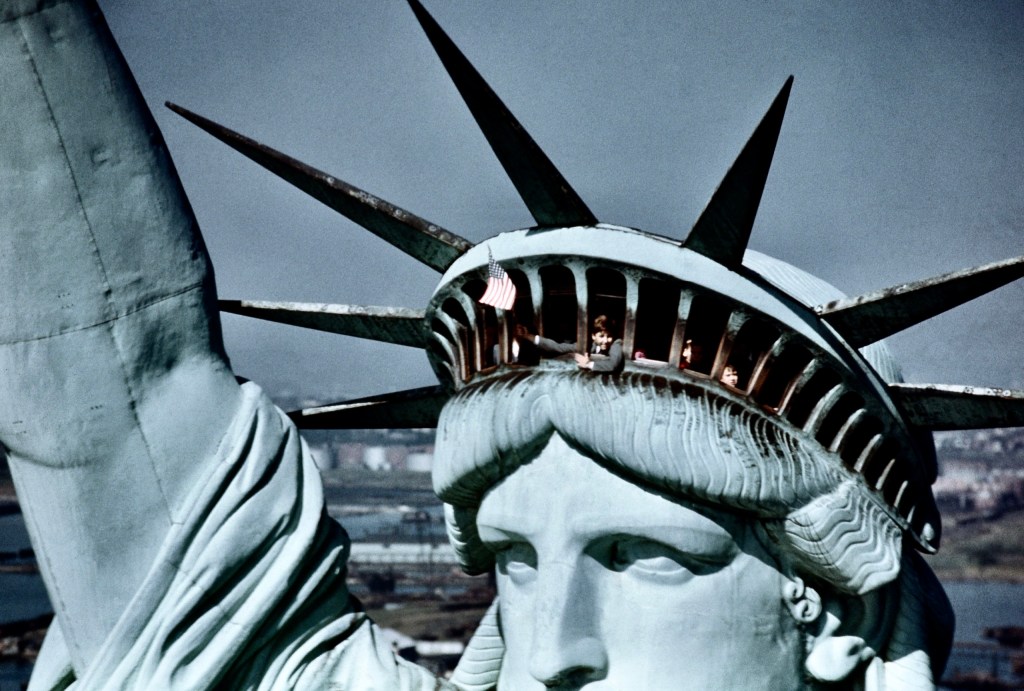
Stand and Deliver

By Ed Staskus

   The law office’s front door was meant to be a ten-thousand-dollar door, but I got lucky, and got in and out for only two hundred fifty dollars. I never went back. One shake down is more than enough. I found out the door was the entrance to a dog and pony show. There weren’t that many apples on my tree that I could afford to give bushels of them away for flimflam in return. 

   I was at the law office to make sure, even though I had lived in the United States for decades, that I was a citizen. My immigrant parents had naturalized in the 1960s, but it was unclear, at least to me, whether their citizenship extended to me. My father, who knew how to read contracts like the back of his hand, said I was a full-fledged citizen, but I wanted to make sure.

   When I first started going to Toronto by myself in my late teens it was by Greyhound. I rode the bus to Buffalo and walked across the Peace Bridge. When I got to the Canadian side, the border police asked me where I was from and for identification. I showed them my driver’s license. They waved me through. When I went home I did the same thing. The American border police waved me through, the same as the Canadians.

   After I got married my wife and I often went to Canada, to Wasaga Beach, to Penetanguishene, to Nova Scotia, and finally to Prince Edward Island, which we liked and made a habit of returning to. We did, at least, until Osama bin Laden’s towelheads went jihad and flew jetliners into NYC’s Twin Towers. We had just gotten back from Prince Edward  Island a few days earlier. I was standing in line in a drug store when I saw it happening on a TV above the cash register. After that, crossing borders slowly but surely became more officious. We found out soon enough we would need passports to get into Canada and back into the USA.

   My wife applied for and got her passport in five weeks. I didn’t apply at first because I wasn’t absolutely certain of my status. I had never been sure, no matter how sure I sounded at the border, asserting I was an American citizen. My parents grew up in Lithuania, fled the Red Army to Germany in 1944, emigrated to Canada after the war, and finally settled in the United States in the late 1950s. They were naturalized in the mid-1960s. I knew my brother and sister were citizens, but was uncertain because of my age when my parents became citizens.

   When we decided the red sand beaches and blue water of Prince Edward Island was the place to go in the summer, I resolved to settle my body politic issue. Push came to shove and I asked one of our Lithuanian American community’s bigwigs if she knew anybody she could recommend to help me out. She told me about a friend of hers who was a lawyer. The lawyer had been in the resettlement business for more than 30 years and was herself an immigrant, she said.

   I made an appointment and went to the lawyer’s office. The lobby was sizable and almost full, full of worried-looking people sitting and waiting their turn. Some of them were Latino’s. The rest of them looked like they were from Asia or the Indian sub-continent. The citizenship business seemed to be booming. When my number was called I was shown into the boss’s office. That was my first surprise. I had not thought I would be talking to the main man, even though she was a woman. 

   The boss was a squat woman with a round face. Her hair was jet black. Her lips were dolled up in red. She glanced at the paperwork and documentation I had brought with me and said, “I will be your helping hand.” She shot me a cherry bomb smile. “Thanks,” I said. I thought she would be working on my behalf going forward. I found out later she was trying to work me over.

   She told me I had a big problem with my citizenship and might be deported at any minute. She said she wanted to get started right away before that happened. She explained the initial consultation fee was going to be $250.00 and the balance to resolve my problem was going to be $9,750.00. 

   “This is going to cost me ten thousand dollars?” I asked, incredulous. It was my second surprise. It was an unwelcome bombshell. Back in the day highwaymen stuck a gun in your back and hissed, “Stand and deliver, your money, or else.” Nowadays they tell you to sit down and stick a fountain pen in your face.

   I was in her office for five minutes before she ushered me out. “Time is money,” her red lips said. It took me fifteen minutes to drive home, where I mulled over the problem of finding ten thousand dollars. It was winter and we weren’t planning on going back to Canada until the next summer, so there was no rush on that account. But what she had said about being deported was worrisome. I had fond memories of my hometown of Sudbury, Ontario, but being uprooted was not what I wanted to happen. We had bought a house which we were renovating, and I had both full-time and part-time jobs. We had a mortgage and friends and family in town. We had a cat who would miss chasing birds in our backyard.

   I went back to the law office the next month. I was introduced to a young associate and escorted to a small room in the back. A table and two chairs were in the room. I sat down in one of the chairs and the associate sat down in the other chair. He handed me a contract for the work they were going to be doing. I handed him the same paperwork and documentation I had shown to the woman in the corner office. He started to peruse the contract. After a few minutes he looked up, cleared his throat, and said, “I don’t exactly know why you’re here. According to what I’m looking at, you already are a citizen.” 

That was my third surprise. “Are you sure?” I asked.

   “I think so, but I better doublecheck with my boss,” he said, quickly backtracking, but the cat was out of the bag.

   “All right,” I said, and as soon as I said it I made ready to be gone.

   “I can’t stay,” I said, lying and standing up. “I’ve got to get to work. Let me know what you find out and in the meantime I will read this contract.” We shook hands, I gave him a watery smile, got into my car, and drove the other way..

   The next day I drove to the Rocky River post office where I knew they processed passport applications. When the line in front of me inched forward and I finally found myself at the counter, I said I wanted to apply for a passport. A middle-aged woman in a drab uniform walked up from the back and motioned me towards a chair and a camera. She handed me an application and told me how much applying for safe conduct was going to cost. It was ninety-seven dollars.

   “All right, but would you look at my birth certificate and this other paper work first. I was born in Canada and I’m not sure I am actually an American citizen.” She spread everything out on the counter and looked it over. It didn’t take her long. Less than five minutes into it she said, “Sure, honey, you’re a citizen, no doubt about it.”

   I filled out the application, got my picture taken, paid the fee, and thanked the post office woman for her help. ”You’re welcome,” she said. I got my passport in the mail about a month and a half later. The passport had my stone-faced picture in it and was good for ten years. I could travel anywhere in the world with it.

   A week later the associate I had talked to called. He wanted to know if I had read the contract and was ready to go ahead with it. “No, I am going to pass on that,” I didn’t say I had thrown the contract in the trash long since.

   “That could mean a lot of problems for you,” he cautioned. “The State Department is cracking down, what with all this terrorism.”

   “I don’t think so,” I said. Nevertheless, he kept up his patter. I hung up.

   Somebody else from the law office called me the following week. I hung up the minute he started into his song and dance. After that the phone calls stopped. We went to Prince Edward Island for two weeks the following June. Except for the long lines at the border, everything went off without a hitch. The Canadian border police said, “Welcome to Canada.” Two weeks later the American border police said, “Welcome to the United States.”

   My wife and I bumped into our Lithuanian American bigwig at a get together a few years later. I mentioned my immigration lawyer travail. My wife tugged on my sleeve, urging me to be polite. I told my adviser how her legal beagle had tried to pull the wool over my eyes. I told her about getting my passport in the end with no run around. I told her ten grand was hard cash and how fortunate it was I hadn’t lost more than the consultation fee, never mind the lawyer’s vexing trickery. It is often the case that the only way to beat a lawyer deadest on your money is to die with nothing.

   “I know her well, she’s a friend, and she would never do anything like that,” the bigwig said, huffing and puffing. She might as well have called me a liar. “She’s nationally known for helping immigrants. She’s helped thousands of people and is one of our city’s leading citizens. Who do you think you are? Don’t say bad things about her.”

   She wasn’t somebody who ever listened to anything I said, so I didn’t argue. What would have been the point? It would have been in one ear and out the other. It was her way of letting you know you didn’t matter all that much. After that, though, I never took anything she said at face value, the same as I never took anything any lawyer ever said at face value.

Ed Staskus posts monthly on 147 Stanley Street  http://www.147stanleystreet.com, Made in Cleveland http://www.clevelandohiodaybook.com, Down East http://www.redroadpei.com, and Lithuanian Journal http://www.lithuanianjournal.com. To get the site’s monthly feature in your in-box click on “Follow.”

“Bomb City” by Ed Staskus

“A police procedural when the Rust Belt was a mean street.” Sam Winchell, Beyond Books

Available on Amazon: https://www.amazon.com/dp/B0F1LM1WF9/ref=sr_1_1?crid=2MYAQAOZIC2U9&dib=eyJ2IjoiMSJ9.hTm7BGbiQbSe5ZapFwYPPfcwOpTe-Vdg6VLE4aGyTyk.Z0R-VNBWWEcvKcNaO9LdCOUnNIOOXgvYkRS_FXiXuHk&dib_tag=se&keywords=bomb+city+ed+status&qid=1742136726&sprefix=bomb+city+ed+staskus%2Caps%2C84&sr=8-1

Cleveland, Ohio 1975. The John Scalish Crime Family and Danny Greene’s Irish Mob are at war. Car bombs are the weapon of choice. Two police detectives are assigned to find the bomb makers. Revenge is always personal. It gets personal.

A Crying of Lot 49 Publication
Breaking the Chains

By Ed Staskus

   My wife wasn’t especially interested in music, except for Russian composers and some movie soundtracks, so when she got me tickets for my birthday to see the Jesus and Mary Chain, I was surprised. I wasn’t sure she knew what she was doing. The band wasn’t Pyotr Tchaikovsky. I thought she might be all right with it since she didn’t know much about them, only that I liked the band, and wouldn’t have an opinion one way or another. To smooth the way I suggested we go to dinner at Maria’s Roman Room beforehand. I didn’t tell her how loud the band was going to be.

   “When is the show?” I asked.

   It was a sunny afternoon in late February1990. We were having coffee and toasted pastries at John’s Diner on the far west side of Lakewood. The hash house was in a former railroad passenger car. There wasn’t much snow but it was two degrees on the other side of our window. The window was Jack Frosted.

   “In two weeks at the Phantasy Theater.”

    “I’ve never been there.”

   “That’s where my brother used to drag me to see his favorite local bands. He always insisted we had to go an hour early to get the best seats, even though all the seats looked the same to me.”

   “Did you hear anybody good there?”

   “Maybe.”

   The  Phantasy Theater was on Detroit Ave. on the far east side of Lakewood, Ohio. When it opened in 1918 it was the Homestead Theater. They screened silent movies. A big organ was the soundtrack. When sound was introduced they sold the organ and screened talkies. Not long after they changed the name to the Last Picture Show they showed their last movie.

   John De Frasia bought the place in 1965. Three years later he opened a restaurant on the premises called Piccadilly Square. He built a pirate ship inside the eatery, inspired by the movie “Mutiny on the Bounty.” He worked with several shipbuilders for two-and-a-half months to get it done.  “We got the blueprints MGM Studios used for the movie ship.” He sliced the ship in half in 1973 when he decided to transform the restaurant into a music club. One half of it became a DJ booth and the other half a sound stage. In time they showcased punk, alternative, and industrial sounds. Devo, Lucky Pierre, and the Exotic Birds were some of the bands who got rolling there.

   “You can’t downplay the significance of the Phantasy to the Cleveland music scene,” Mike Hudson, lead singer of the Cleveland punk band the Pagans, said years later. “It all began with the De Frasia family. John was a nice guy and very open-minded and willing to let bands that others considered weird have a shot.”

   “You were the best,” said Brian Dempsey, the drummer for Lucky Pierre, when John De Frasia passed away in 2011. “Like an old shoe. No ego and just the coolest, most honest and real person I’d ever met in a business full of creeps. You kindness will always live on through the people you touched.”

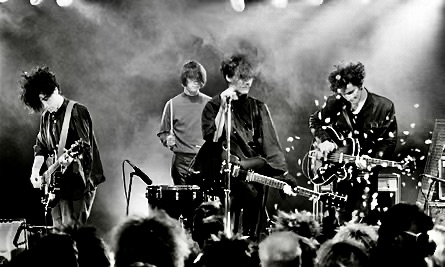
   The Jesus and Mary Chain were from Scotland. Jim and Bill Reid were the band, along with a bassist and a drummer. They were a post-punk rock band known for wistful melodies and guitar screeching feedback. They were one of the bands who pioneered noise rock. They were also known for their riot-inducing live shows. I kept that to myself, making a mental note to sit in the last row,

   “It was the crap coming out of the radio that made us want to be in a band,” Jim Reid said. “Everybody was making electronic pop music.” By 1983, when they formed the band, they had both been on unemployment for five years, writing and recording their songs at home. They called their band Death of Joey at first but changed it to the Jesus and Mary Chain. They got the name one morning from the back of a box of cereal. On the back was an offer to mail in some box tops and get a free Jesus and Mary chain necklace in return. They lost the chain necklace but kept the name.

   I had their first two LP’s, “Psychocandy” from 1985 and “Darklands” from 1987. The first LP was an ear-splitting wall of distortion. Their manager, Alan McGee, said the band’s style was “art as terrorism.” The second LP was less tempest and more mainstream. There were even some acoustic licks. Both LP’s were fine stuff.

   The Reid brothers were influenced by the Stooges, the New York Dolls, and the Velvet Underground, but with a difference. They were like the Stooges meet the Shangri-Las. In the event, they were determined to be new and original. “That’s why we started using noise and feedback,” Bill Reid said. “We wanted to make records that sounded different.” His guitar was deliberately tuned to be out of tune, while the drummer was limited to two drums, not the full kit. He played his two drums standing up like Moe Tucker had done with the Velvet Underground, although he didn’t use mallets like Moe Tucker did. He used drum sticks. The bass guitar was limited to two strings, as well. “That’s the two I use, the thick ones” said Doug Hart, the bassist. “I mean, what’s the point of spending money on another two? Two of them is enough.”

   The show at the Phantasy Theater was on Wednesday, March 15th, the day after my birthday. It was a partly cloudy day, in the high 70s. The weather in winter on the south coast of Lake Erie can be bad, but it is predictably unpredictable.

   Before my wife and I went to the show we went to Maria’s Roman Room. It was next door to the Phantasy Theatre. It was easy to find. We could smell garlic from about a block away and there was a red neon sign in the window in the shape of a fork.

   We had eaten there before with my wife’s family. Her stepfather was Sicilian and her mother was a chef. Maria’s was their favorite Italian restaurant. We ordered a bottle of the house Pinot Grigio and mozzarella fritto to start. The sticks were hand cut, made in house. The sauce and cheese were very good. The wine was more than drinkable. 

   Maria and Tony “Chick” Bastulli opened the restaurant in 1960. Over the course of time they had five children. All of them grew up working at the restaurant. Corporate squabbling is tough, but it is tame compared to working for your parents.

   “I did all the awe inspiring things that go on in the restaurant business, like cleaning toilets, washing dishes, and of course making two hundred pounds of pizza dough every day in a basement without any air conditioning,” said Maria’s son Peter. “You have not lived until you have to portion, roll, and refrigerate that much pizza dough before it raises to the level of your eyeballs when it is humid and ninety five degrees in summer.”

   My wife ordered pizza. “It’s the best thing they make. They mix grape juice in with the tomato sauce, so it’s less acidic and a little sweeter.” It was Maria’s secret recipe. The sauce was San Marzano tomatoes and the toppings were ham and black olives. I ordered a plate of Pesto alla Genovese. The green sauce tasted like pine nuts.

   “Have you ever listened to either of the Mary and Jesus Chain LP’s I have?”

   “No, but I’ve heard bits and pieces passing by. They seem nice enough, a little fuzzy, those guitars of theirs.”

   “Yeah, they’re big into feedback.”

   I kept the volume low on our record player when my wife was at home. I only turned it up when I was alone and our neighbors weren’t at home. The band’s sound was a reverb-heavy wall of sound.

   We lingered over coffee and dessert and missed Nine Inch Nails, who were the opening act. I wasn’t especially interested in them anyway, even though they were from Cleveland.  I knew they were a kind of metal band, dark and intense, but from what I had heard I thought they tried too hard.

   When we got our seats inside the Phantasy Theater we easily got seats in the last row. It wasn’t a big theater and we could see the stage well enough. When the lights went down and the band came on stage they were dressed in black. Neither the stage nor the lighting was dressed up. The stage was more dark than anything else. It was a bare bones look. I was good with that. The music was what mattered, not lasers, smoke, and mirrors.

   The Reid brothers were on guitars and Doug Hart, with his two strings, was on bass. The drummers were a Forat F16 behind the stage, playing pre-recorded drum sounds, and Steve Monti, who banged along with the pre-recorded sounds. Nobody on stage moved around much. The Reid brothers were prone to standing stock still while staring down at their shoes. Except for the singing neither of them said more than two words all show long.

   “Do you remember Calvin Coolidge?” I asked my wife between songs.

   “The president?”

   “The same. He was nicknamed Silent Cal.”

   “Because he didn’t talk much?” 

   “Not much, at all. One time at a state dinner a woman told him she had made a bet with her husband that she could get him to say more than two words.”

   “What did Calvin Coolidge say?”

    “He said, ‘You lose.’”

   Jim Reid did the singing and some of the guitar work. Bill Reid played lead guitar. Their playing was intertwined and crisp. Bill Reid played a Fender Twin Reverb  “It’s the one with the wee footswitch that gives you, what’s it called, vibrato,” he said. “I don’t remember what settings I use, but they’re different live from in the studio. The way we get our feedback is with a fuzz pedal. It’s not just a signal type feedback, it’s a feedback that bends and quavers. It’s a real cheap pedal, a Companion, I think, an old-fashioned one with one of those things that goes like this.” 

   He rocked his hand mimicking a wah-wah pedal.

   Jim Reed played a Vox Phantom. “The one with the built-in fuzz and echo and all those knobs on it.” The Vox Phantom went back to the British Invasion of the1960s. It had a Stratocaster-like sound to it.

   The band was tight as could be, even though they claimed to never rehearse.

   “We never rehearse,” Bill Reid said. “The main reason we don’t is that we’re lazy bastards.” When they went to record ‘Just Like Honey’ they only had a half-written song. ”On the Saturday night Jim and I sat up till three in the morning  trying to finish it, but we were just too tired. So we went to the session on Sunday and recorded it straight off. Doug and Bobby had never heard it before. I  was nodding my head telling Doug where to put his fingers.”

   They kicked off the show at the Phantasy Theater with ‘Rider’ from their 1988 “Barbed Wire Kisses” LP. I hadn’t heard it before. “Going on a motorbike, ride it to the beach, screaming at the sun for being out of reach.”  The guitars were fuzzy, the drums heavy, and the singing hypnotic. It was new to me but it was vintage Jesus and Mary Chain. They followed that with ‘Everything’s Alright When You’re Down’ and ‘The Hardest Walk’ and fourteen more songs. There wasn’t an intermission and no small talk between songs. They finished one song and went on to the next one.

   All of their songs had a dark aesthetic despite the Shangri La vibe of the singing. Their cover of Bo Didley’s song ‘Who Do You Love’ was terrific.” We don’t think about our music being accessible or alternative or any other category,” Bill Reid said. “If you start thinking like that, you’re lost.”

   Their last song was ‘Kill Surf City.’ It had a Beach Boys feel to it while being as unlike the Beach Boys as could possibly be.  “I’m gonna fight surf city, got to get it down, I hate honey and she hates me, but that’s the way it’s supposed to be, I’m gonna kill surf city.” When the song was over Jim Reid, the bassist, and the drummer left the stage. Bill Reid did some more work on his guitar. When he was done he put it down flat on the stage, strings up. He was done but the guitar wasn’t done. It lay on the floor of the stage keeping up a vigorous fuzzy whine for the next two or three minutes until the sound finally died away. When it did the audience, including my wife, applauded long and loud. The Jesus and Mary Chain didn’t come back for an encore, but then again, I don’t think anybody expected them to.

   “What did you think?” I asked my wife when we were walking back to our car.

   “I’m glad I saw them. They’re kind of raw but very cool on stage. I liked the contrast between their sugary melodies and the abrasive guitars. I couldn’t take a steady diet of them but I liked the show.”

   “That’s not just the Roman Room pizza talking, is it?”

   She laughed. “No, I had a good time, and I’m glad you enjoyed your birthday present.” I knew she was being sincere. Birthdays in general were special to her.

   By the weekend the weather changed again. It got cold and colder. I  had to pull my winter coat out of the closet one more time. It was no matter. Spring was only a week away.

Ed Staskus posts monthly on 147 Stanley Street  http://www.147stanleystreet.com, Made in Cleveland http://www.clevelandohiodaybook.com, Down East http://www.redroadpei.com, and Lithuanian Journal http://www.lithuanianjournal.com. To get the site’s monthly feature in your in-box click on “Follow.”

“Bomb City” by Ed Staskus

“A police procedural when the Rust Belt was a mean street.” Sam Winchell, Beyond Books

Available on Amazon: https://www.amazon.com/dp/B0F1LM1WF9/ref=sr_1_1?crid=2MYAQAOZIC2U9&dib=eyJ2IjoiMSJ9.hTm7BGbiQbSe5ZapFwYPPfcwOpTe-Vdg6VLE4aGyTyk.Z0R-VNBWWEcvKcNaO9LdCOUnNIOOXgvYkRS_FXiXuHk&dib_tag=se&keywords=bomb+city+ed+status&qid=1742136726&sprefix=bomb+city+ed+staskus%2Caps%2C84&sr=8-1

Cleveland, Ohio 1975. The John Scalish Crime Family and Danny Greene’s Irish Mob are at war. Car bombs are the weapon of choice. Two police detectives are assigned to find the bomb makers. Revenge is always personal. It gets personal.

A Crying of Lot 49 Publication
Long Shot

By Ed Staskus

   When I pulled into the parking lot of the Back Wall Racquetball Club in Solon and got out of my car I saw I was parked next to the Roselawn Cemetery. I needed some fresh air after the long drive so I went for a walk there. It wasn’t a big graveyard. I circled it and then took a hard-packed path through the middle of it. I almost tripped on the exposed roots of a large pin oak tree. “Watch your step,” I reminded myself.

   All of the headstones looked old. Some were leaning and others were nearly turned over. Two of the headstones next to one another were Abram and Eliza Garfield’s plots. They had been the parents of President James Garfield. Abram died in 1833 when his son was a baby. James Garfield was assassinated in 1881. His mother died in 1888 and was buried beside Abram. James got a large tomb elsewhere.

   It was a sunny summer day in 1980, the kind of day that made you glad to be alive. I went into the Back Wall. It was brand new, ten racquetball courts, three of them with glass back walls, a Nautilus physical training room, and large locker rooms on the second floor. I was there to apply for the job of Club Pro and Activities Director.

   Marty, who was the manager I had talked to on the telephone, came out of his office behind the front desk. We shook hands and introduced ourselves. He was about my age, but dressed much better than me. He was on the small side, trim and fit. He seemed smug, although I didn’t want to jump to conclusions. I found out later he was both smug and overweening.

   I filled out an application. The facts I wrote down were true as far as they went, although the rest of it was more sketchy than not. I played racquetball well enough to play in the Open class, but that was about it. I had no experience to speak of working in a sports club. In any case, Marty only glanced at the application. He asked me if I had time to play a game. I was wearing sneakers, but didn’t have anything else with me. He outfitted me with a pair of shorts and a ratty t-shirt. He handed me a racquet that looked like it had been manufactured in the Middle Ages.

   “Let’s see what you’re made of,” he said.

   He was natty in his Nike sportswear. He scored the first eight points. Those were the last points he scored. I got cracking and won the game 21 – 8.

   “Let’s play another one,” he said. “I’m just getting warmed up.”

   I won the second game by the score of 21 – 1.

   “All right, you seem to play the game well enough,” he said, more grudging than not. He told me I could start on Monday. “Get some better clothes. Make sure you look the part.”

   I bought an Adidas warm-up suit on Saturday and showed up for work on Monday. The Back Wall supplied me with monogrammed polo shirts. I checked myself out in the full-length mirror in the men’s locker room. I looked like I had just stepped out of the fridge. I was in business.

   The business was easier than I thought it was going to be. I started at ten in the morning, gave lessons to housewives most mornings, had a late lunch, gave lessons to children and more housewives in the afternoon, and got in a practice session on my own before the after-work crowd showed up. I didn’t work evenings unless an event, like an in-house competition of some kind, was going on. We hosted Ohio Racquetball Association tournaments now and then. It meant working weekends, but it was more of a good time than work. I strung racquets on the side, half of the remittance going to me, the other half going to the club. I filled in at the front desk whenever the need arose.

   I made friends with one of the daytime front desk receptionists. Rose was in her 30s, tall and gangly. She didn’t have much of a chin, but was  lively with a ready smile. I also made friends with the cleaning lady. Her name was Zala. One day I asked her what the name meant.

   “It’s Slovenian,” she said. “It means small castle.”

   She was built like a small castle, short and squat. One reason the club stayed clean was that everybody feared the ogress she became whenever somebody made a mess and she had to clean it up. She sewed headbands for me made from club towels. She hemmed them so they stayed neat. I always had a half dozen of them in my gym bag. 

   I played some of the club’s members occasionally. One of them was Wayne Godzich, who was a detective with  the Solon Police Department. He had wide set eyes, thin lips, and a great head of hair for a man his age. He rarely talked shop, but one day, sitting around in the lobby after a game, I asked him how it was that he became a policeman.

   “I got out of the army in the mid-60s. tried this and that, and finally filled out an application here,” he said. “I passed the basic physical and psychological tests and, just like that, I was on the force. I went to the academy nights, but I basically learned on the job. My first day on the job, that was in 1968, I was escorted into the office of the lieutenant, who handed me a badge, a gun, a box of bullets, and then told a sergeant to “take him down to the dump on Crocker Road” to see if I could shoot. I was a motorcycle officer, a narcotics officer, and finally made it onto the detective bureau.”

   Another member I played occasionally was Bo Natale. His name was actually Beauregard, but he went by Bo. He came to the club every day in the afternoon since he worked nights. He played racquetball and worked out on the Nautilus machines. He showered and shaved afterwards. He was a harness racing driver. He was a catch driver, which meant he was a hired hand. He didn’t train and drive his own horses. He was hired by trainers and owners to drive their horses. He was driving at the Northfield Park track that summer. The half-mile track was about fifteen minutes south of Solon.

   There were a couple of hundred dates at Northfield Park that year. Bo didn’t drive every date since he was only there for the three summer months, although he drove every date he was there. He lived in his own trailer, which he hauled around the country with a brand new red and white Ford F-150. He was a catch driver who followed the circuits and the weather. He lived in Oklahoma when he wasn’t racing.

   “I don’t get home much,” he said. “The wife likes it that way. We get along better.”

   Bo wasn’t a skinny man, like thoroughbred jockeys. He was closer to two hundred pounds than one hundred pounds. He wasn’t especially tall, either. “You don’t want to be too tall in the racebike,” he said. That was what he called the sulky. Taller drivers sit higher in the sulky, raising the overall center of gravity, impacting stability, particularly when rounding turns.

   He wasn’t a very good racquetball player, but he was strong and tireless. I usually hit passing shots, rather than kill shots, when playing him, or I kept him in the back corners with ceiling shots. He was affable enough. I started offering him advice. He didn’t mind it. He was a quick study and got better over the course of the summer.

    It was early September when he told me he was going to be moving on at the end of the week.

   “I’ve got something for you, in return for your pointers, if you’re interested,” he said.

   “What’s that?” I asked. 

   “A tip,” he said.

   “A tip on what?”

   “A race.”

   “A tip about who’s going to win?” 

   “That’s right.”

   “I don’t know,” I said. “I’m not big on gambling.”

   I never gambled on anything. I didn’t even play the new Ohio Lottery.  I didn’t have money I could afford to lose. I knew full almost everybody lost when betting on the horses. On top of that, tracks skimmed a takeout which made the odds even longer. Gambling businesses prey on psychological weaknesses and the excitement of winning and losing. I had been raised a Catholic and still believed gambling encouraged greed and vice.

   “Take it for what it’s worth,” Bo said. “The horse is Adios Harry in the seventh. Bet him to win.”

   In the event, I went to Northfield Park after work on Friday. I had never been there before. It went back to 1935 when it was built by Al Capone as a dog race track. When dog racing didn’t work out it was converted into a stock car racing track. Twenty years later the last car race was run and in 1957 it became Northfield Park.

   I got there after the first race. I had to hike from the far end of the parking lot to the grandstand. It was “Date Night” at the track. The place was overflowing with guys and gals. I found a seat and looked down at the oval dirt track. It was called “The Home of the Flying Turns.” I watched a couple of races.

   Horse racing is an ancient sport. It goes back to the chariot races of Greece and Rome. In the Middle Ages knights raced horses as part of their military training. In the 17th century racing horses became a formalized sport in England. It spread worldwide from there. The races I watched at Northfield Park were full of life. One of them was a down to the wire crapshoot. Before the seventh race came up I went to place my bet.

   The mutuel windows were in a dedicated betting hall. The windows were small, their openings recessed. A glass barrier separated the bettors from the clerks. When my turn in line came up I pushed $50.00 towards the clerk. It was more money than I earned in a day. He had a cash register kind of machine in front of him. There was a keypad. He punched in my $50.00 to win on Adios Harry. He handed me a printed ticket. I went back to my seat. Adios Harrry was going at ten to one at post time. He seemed like an unlikely contender.

   There were eight horses lined up at the starting gate. Bo wasn’t driving any of the sulkies. Adios Harry, despite the odds, was a fine looking horse. He was black with muscular hindquarters and large nostrils. He didn’t look like he was going to be lacking for air. The race began when a Cadillac Fleetwood, equipped with a pair of retractable wings that served as gates, pulled away from the horses at the starting line. 

   It was a one mile race. At the start Adios Harry slipped back into last place. It didn’t look good for my $50.00. At a quarter mile he was in fourth place. At the half mile mark he moved up to third place. When the sulkies hit  the stretch he was in first place. As the pack came around to the front of the grandstand their hooves were pounding. I found myself on my feet, encouraging my horse until I was out of breath. Adios Harry won going away. I whooped and started clapping. I rushed to the betting hall.

   At the mutuel window the clerk gave me $550.00 in cash.

   “I thought I won $500.00,” I said. 

   “You did,” the clerk said. “You also get your $50.00 bet back.”

   “Thanks, that’s white of you.” When he gave me a funny look I realized he was African American.

   The next Friday, my winnings from the week before tucked away, I was leaving work, walking to my car, when Wayne Godzich drove up. He had his gym bag with him. He gave me a wave.

   “I heard you went to the track,” he said.

   “I thought I would check it out.” I didn’t ask him how he knew. He was a detective, after all.

   “Did you have a good time?”

   “It was an experience.”

   “Win any money?”

   “You know, you win some, you lose some.”

   “You’re not going to make it a habit, are you?”

   “No, I don’t think so. It was more of a one-off than anything else.”

   “That’s good,” he said. “It’s the house that always wins. Gambling is a sure way of getting nothing for something.” He clapped me on the back and went inside the club.

   I never went back to Northfield Park and never saw Bo again. Without his insight, marching up to the mutuel windows would have just been taking a chance. Losing at race tracks happens when you don’t know what you’re doing. What I had won hit the spot, but I didn’t know what I was doing so it wasn’t worth taking another chance.

Ed Staskus posts monthly on 147 Stanley Street  http://www.147stanleystreet.com, Made in Cleveland http://www.clevelandohiodaybook.com, Down East http://www.redroadpei.com, and Lithuanian Journal http://www.lithuanianjournal.com. To get the site’s monthly feature in your in-box click on “Follow.”

“Bomb City” by Ed Staskus

“A police procedural when the Rust Belt was a mean street.” Sam Winchell, Beyond Books

Available on Amazon: https://www.amazon.com/dp/B0F1LM1WF9/ref=sr_1_1?crid=2MYAQAOZIC2U9&dib=eyJ2IjoiMSJ9.hTm7BGbiQbSe5ZapFwYPPfcwOpTe-Vdg6VLE4aGyTyk.Z0R-VNBWWEcvKcNaO9LdCOUnNIOOXgvYkRS_FXiXuHk&dib_tag=se&keywords=bomb+city+ed+status&qid=1742136726&sprefix=bomb+city+ed+staskus%2Caps%2C84&sr=8-1

Cleveland, Ohio 1975. The John Scalish Crime Family and Danny Greene’s Irish Mob are at war. Car bombs are the weapon of choice. Two police detectives are assigned to find the bomb makers. Revenge is always personal. It gets personal.

A Crying of Lot 49 Publication

Career Day

By Ed Staskus

   All through my junior and senior years at St. Joseph High School, which was within walking distance of where we lived, my father pressed me to focus on something that would lead to a career. He was big on the idea. He was himself a career man. During those two years I told him I didn’t know what I wanted to focus on. I didn’t tell him I wasn’t enthralled by guidance counselors. I was reading Charles Baudelaire, a mid-19th century French prose-poet, who had  told his parents, “I don’t feel I have a vocation for anything.”

   I wasn’t especially interested in seeing my picture on a baseball card or a wanted poster.  Photographs are full of lies and labels. I wanted to take my own picture and tuck it away somewhere private.

   I read Charles Baudelaire’s book “The Flowers of Evil” the winter of my senior year at St. Joseph’s. It wasn’t assigned reading, not by far. St. Joseph’s was a traditional college preparatory high school, focusing on core academic subjects like math and science, social studies, and English. Religious instruction was a required feature of every day. Our teachers, the Marianists, brothers of the Society of Mary, made sure it was an everyday thing. There was no arguing the divine with them. There were vocational courses, as well, but my father was determined that I go to college. He didn’t want to see me repairing cars or working a tool and die press.

   My favorite class was English. My favorite thing to do was read books. I always did my homework. I read assigned books like “The Great Gatsby” and “Of Mice and Men” and “To Kill a Mockingbird.” I wrote sincere essays and aced tests. I neglected my other classes, reading books that weren’t assigned. I read “Lord of the Flies” and “Nineteen Eighty-Four” and “The Catcher in the Rye.”

   “The Catcher in the Rye” wasn’t banned at St. Joseph’s, but reading it was strongly discouraged. The official explanation was we should stick to our program of studies. The unofficial explanation was the book was depraved, full of vulgar language, sexual references, and anti-establishment themes. The Marianists were concerned about the book’s morality, or lack of it.

   After graduation I opted to attend Cleveland State University. It was close to hand, a twenty minute bus ride away, and affordable. The school had been established as a state university in 1964, taking over the buildings, faculty, and curriculum of Fenn College, a private engineering and business school of several thousand students that had been founded in 1929.

   I spent my freshman year at Cleveland State University the same way I had spent my junior and senior years at St. Joseph’s, attending English classes without fail and neglecting my other classes. At the conclusion of the school year my father sat me down and read me the riot act. It led to a stinging argument, but in the end, since I was still living in my parent’s house and my father was paying part of my tuition, I agreed to participate in a kind of career day scheduled for the next month in the Flats, the city’s industrial valley.

   Most of my father’s friends were Lithuanians and most of them were professionals. They were doctors, lawyers, and engineers. My father was a certified public accountant. One of his friends was a mechanical engineer. He had a son my age who was majoring in engineering at Cleveland State University. One of his classes had a field trip to the Flats planned. They saved a seat for me.

   The day of the field trip I waited on our front steps for my ride. It was June 22, 1969, early on a Sunday morning. The factories in the Flats never closed, but slowed down somewhat on Sundays, which made it less demanding to accommodate college students wandering around. When my ride came down our street I saw it a mile away, it being a chrome yellow color. it was a 1965 Ford Econoline Club Wagon. It didn’t have a front end to speak of but there were plenty of windows. Half of the  family van was windows. There were two bucket seats up front and three rows of bench seating in the back. My father’s friend was driving and there were six engineering students in the van. They had saved the front passenger bucket for me. It was a lonesome seat, but I wasn’t one of the rank and file, anyway, so I didn’t mind.

   We got on I-90 and drove to the Flats. There was hardly any traffic. When we got downtown we drove into the industrial valley. It was a warm and sunny day. It was more warm and less sunny in the valley. The air smelled like sewage and rotten eggs. The A. W. Stadler Rendering Plant near the Harvard Ave. Bridge added the odor of rotting animal matter to the stench.

   The Flats were located along the Cuyahoga River where it snaked through the north side of the city and drained into Lake Erie. It is bottom land there, the floodplain for the river. The earliest settlers in Cleveland settled in the floodplain, but it was swampy and they soon moved to higher ground. The Ohio & Erie Canal spurred lake shipping in the 1830s and rail lines spurred commercial growth in the 1860s. The Flats became the cradle of heavy industry in Cleveland. Business boomed exponentially. After 1870 the Flats teemed with foundries, iron furnaces, rolling mills, oil refineries, and chemical factories. The river was where they dumped their waste. It was their liquid landfill.

   A century later the Flats was dank, begrimed, and very polluted. Nobody went there other than to work in the warehouses and steel mills. There were dive bars like the Harbor Inn and the Flat Iron that served greasy food and cheap booze to working men. The air was bad and the waterway was worse. No one had dared to swim in the Cuyahoga River for decades. A journalist described braving the water as “no person drowns in it, they decay.” All the fish in the reach from Akron to Cleveland had long ago died. Nothing except Japanese movie monsters could survive in the thick sludge that had once been water

   “The river was a scary thing,” Tim Donovan explained. He was a high school graduate that summer, saving up for college, working as a hatch tender unloading ore carriers. Dead rats floated past the dockside cranes, bloated to the size of dogs. “There was a general rule that if you fell in, God forbid, you would immediately go to the hospital.”

    We toured Republic Steel and Jones & Laughlin Steel. They were colossal enterprises. We could have saved time by just going to one of them since they were so much alike. There was an unbroken roar of loud machinery. The fires, furnaces, and molten metal made the factories hot. Dust and black soot covered everything. The gasses in the air didn’t make for garden variety air pollution. Breathing as we walked from one end to the other end of the factories was like breathing something poisonous.

   The reason the engineering students were on the field trip was to help them bridge the gap between classroom theory and real-world application. Manufacturing steel involved many engineering disciplines. Seeing it happen in real time gave them a chance to see complex machinery involved in large-scale processes. They got to see first-hand how their classes in mechanical design and material science applied to the steel industry. It was eye-opening to them, and me, too. I found out there and then that I wasn’t prepared be an engineer.

   It was mid-day when the field trip wrapped up. We piled back into the Ford Econoline Club Wagon, drove in one direction, and then another direction. The through streets in the Flats generally followed the Cuyahoga River, running parallel to its banks. The side streets connected to surrounding neighborhoods like Ohio City and Tremont. Nonetheless, we got lost. We finally found ourselves on the Campbell Rd. Bridge, 

   There was a Plymouth Barracuda at a dead stop ahead of us on the bridge. We stopped and waited. A police car, its lights flashing, pulled up behind us. We stayed sandwiched where we were between them.

   “What’s going on?” one of the engineering students asked.

   “There seems to be a small fire down there somewhere,” our driver parent said, peering over the dashboard. 

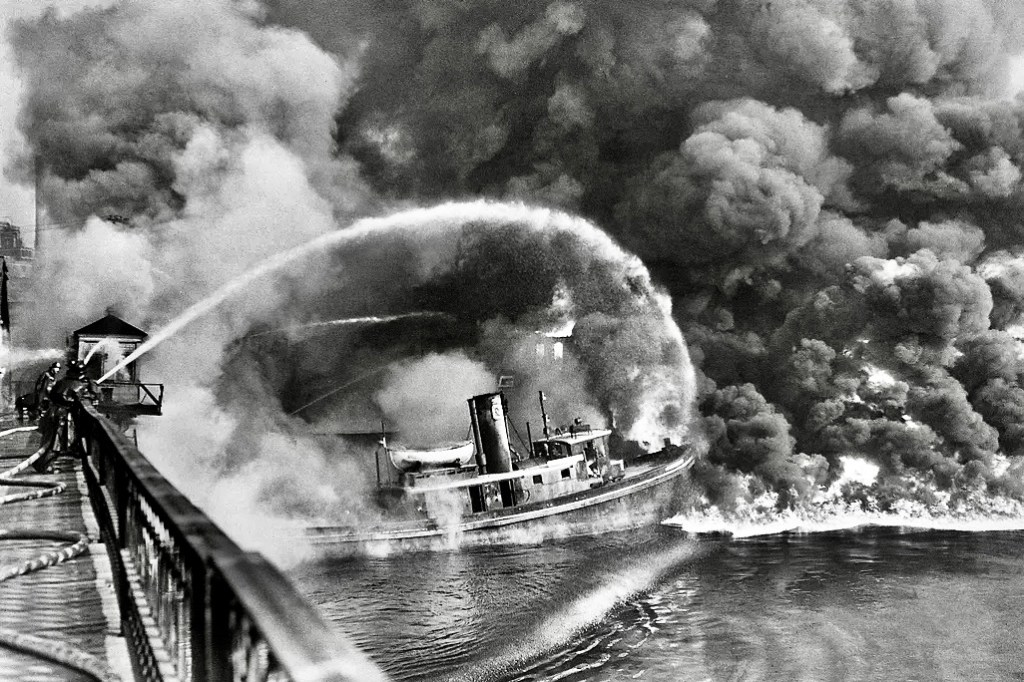
   There was a sudden whoosh. Oily clouds of heavy black smoke rose up. We got out of the family van and went to the railing to get a better look. The smoke became a sky-high wall obscuring everything beyond the opposite bank. A fire department tanker truck crept onto the bridge. A fireboat by the name of Anthony J. Celebrezze made its way under the bridge to the wall of smoke. 

   What was going on was the Cuyahoga River was on fire.  It wasn’t the first time it had caught fire. It had happened a dozen times since 1868. This was the thirteenth time it caught fire. A flare tossed from an overpassing train had ignited the  petroleum-covered water. 

   The worst of the earlier fires happened in 1952 when oil and industrial debris on the river’s surface ignited. The fire destroyed three tugboats, three buildings, and some ship repair shops. It damaged a railroad bridge. It caused over one and a half million dollars’ worth of damage. Nobody in Cleveland was shocked by the river catching fire. It didn’t flow as much as ooze. Everybody was resigned to the city being one of the most polluted cities in the United States. “It’s the cost of doing business,” city fathers and business moguls said.

   The fireboat crept close to the blaze, began drawing water directly from the river, and used its deck guns to try to smother the flames. It was like pouring gasoline on gasoline. The flames leapt higher. Three fire battalions drew water from hydrants and discharged it onto the fire from the river bank. They were far more effective. 

   We watched from the deck of the bridge, standing in a cluster behind a railing. The summer breeze was blowing our way, but from behind us, so we weren’t smothered by the smoke. It was still noxious. It was sharp and acrid, like burnt toast that had been buttered in sulfur compounds. We got back into the Ford Econoline Club Wagon and rolled up the windows. It didn’t help all that much.

   The inferno lasted thirty minutes. Once it was out a policeman waved us forward and we drove away. We drove along the river. As we went the water became orange from the pickling acid used by the steel mills. We got lost again and ended up on the Jennings Rd. Bridge, which connected Abbey Ave. to W. 25th St. Our driving parent knew W. 25th St. well because he shopped for fruits and vegetables at the West Side Market. He knew how to get home from there. Crossing the bridge I looked down. There was a slaughterhouse below us. I could see blood and animal parts streaming out of  outfalls and into the Cuyahoga River.

   “That was amazing,” one of the engineering students said.

   “Who ever heard of water catching fire?” another one said. “Somebody should do something about it.”

   “And put us out of a job?” a third one said.

   Once I got home I threw my clothes down the clothes chute and took a shower to wash away the smell. I put on a clean pair of jeans and a t-shirt. I combed my hair. My father was taking a Sunday late afternoon nap in the backyard. He woke up when I threw myself down in a lawn chair.

   “How was your career day?” he asked.

   “We toured a couple of steel mills and saw the Cuyahoga River catch fire,” I said.

   He seemed unfazed by the news. He had lived through World War Two as a teenager on his own. He had seen his share of bombs and fires. He fled Lithuania in 1944 and spent five years in and out of refugee camps, working black markets until he found steady work with a relief organization near Nuremberg. When he finally made it to North America he ended up in Canada, where he worked digging up nickel and copper in the Sudbury ore basin for eight years. We had been in the United States the past ten years.

   “Have you thought about getting into engineering?”  he asked.

   “I don’t think I have a talent for engineering, although I understand engineers make the world go round, at least our modern world,” I said. “But you’ve got to watch out for them. They start by making sewing machines and end with crazy hellfire.”

Ed Staskus posts monthly on 147 Stanley Street  http://www.147stanleystreet.com, Made in Cleveland http://www.clevelandohiodaybook.com, Down East http://www.redroadpei.com, and Lithuanian Journal http://www.lithuanianjournal.com. To get the site’s monthly feature in your in-box click on “Follow.”

“Cross Walk” by Ed Staskus

“A Cold War thriller that captures the vibe of mid-century NYC.” Sam Winchell, Beyond Books

Available on Amazonhttps://www.amazon.com/dp/B0CRPSFPKP

Late summer, New York City, 1956. The Mob on the make and the streets full of menace. President Eisenhower on his way to Brooklyn for the opening game of the World Series. A killer waits in the wings. Stan Riddman, a private eye working out of Hell’s Kitchen, scares up the shadows looking for a straight answer.

A Crying of Lot 49 Publication

Maybe Later Baby

By Ed Staskus

   “The end is always near,” Greg Smith said, sinking back into the firm as Jell-O bench seat. Flying bugs recently alive littered our windshield. One of them left a big yellow blob behind him the instant he hit the glass. It was a fine summer day. Jimi Hendrix’s song “Stone Free” was playing on the car radio.

   Greg’s driving hand was easy on the steering wheel. His other hand was wiggling in the outside air. He was driving well enough to keep us on the road, but his eyes were like pinwheels. The magic mushroom he had popped into his mouth a half hour earlier was working its magic. I couldn’t tell him to slow down because he was going slower than a horse-drawn buggy. I reached for the seatbelt, anyway. When I did I found out the top drop Chevrolet Impala SS didn’t have seatbelts. 

   I had taken a Greyhound bus from Cleveland down the hillbilly highway and hooked up with my friend Greg in Athens. It wasn’t Greece. It was southern Ohio in the northern Appalachians. I called him Jonesy for fun, even though he didn’t think it was funny. “I don’t like glibness,” he complained like an offended grade school teacher.

   SS stood for Super Sport. There was nothing super about the car anymore, which came off the assembly line in 1961, except for the engine. It was still super when it had to be. The rocker panels were rusting out, the front of the hood was gashed, and the tires were bald as baloney skins. The car was Roman Red on the outside while the interior was scuffed black leather. I reached for the grab bar attached to the padded dashboard.

   “Do you know this car was built by union labor right here in the United States?” Greg asked, apropos of the Japanese and German cars we had been seeing here and there.

   “No, I didn’t know that,” I said.

   “It’s got a V-8 engine. One of my uncles might have built it.”

   “Is that right? By the way, what do you mean the end is always near?”

   “Like they say,” he said, “the future’s uncertain and the end is always near.”

   At the moment the Chevy Impala SS was running on one of the V-8’s and none of Greg’s car-making relatives were in sight. What was in sight was the future. There was a flashing red light behind us. It was the kind of light that always looks makes you feel blue. The Meigs County policeman didn’t have any trouble getting on our tail. He had some trouble pulling us over, however, even though the road was straight and narrow as a preacher. The manual steering took several turns of the steering wheel to go from lock to lock. In the state he was in it took Greg a few minutes and a mile-or-so to master the mechanics of pulling off onto the shoulder.

   The policeman didn’t bother asking for his driver’s license. “Step out of the car, son, and let me smell your breath,” he said.

    Greg didn’t like being called son. He scowled patting himself down for his wallet. He huffed and puffed in the policeman’s direction.

   “You smell all right,” the policeman said. “It don’t seem like you been drinking or smoking stinkweed.” The Chevy had a vacuum powered ash tray that sucked ashes to a container in the trunk. “Why are you going so slow when you got that power horse under the hood?”

   “I know this road doesn’t go anywhere but I’m looking for the end of it,” Greg said. “I don’t want to miss it.” The policeman wasn’t fazed by the nonsense. “It don’t go nowhere but it always brings you back again,” he said. Greg was flummoxed for a minute. The policeman looked the Chevy Impala SS up and down. “This is the car the Beach Boys wrote a song about, son.”

   The song was a big hit in its day. “Nobody can catch her, nothing can touch my 409, giddy up, giddy up, my four speed dual quad 409,” Brian Wilson sang in his big falsetto while the rest of the boys layered the harmonies. The fired-up 409 was fitted with a 4-barrel carburetor and a solid lifter camshaft. The pistons were made from forged aluminum. The heads and engine block were made from cast-iron.

   “Those were the days, boys. Make no mistake, that Impala is a real fine car. Try to put some giddy up into your driving. And keep it on the yellow line.” He got back into his black and white Dodge Coronet patrol car and u-turned, going the way he had come. He drove away in good order.

   I was along for the ride on Greg’s ride that day. I had spent the spring, summer, and fall of the previous year in a nearby town called Carpenter living with Virginia Sustarsic in an abandoned general store. She wasn’t my girlfriend, but we got along, even though she was a dyed in the wool hippie and I wasn’t. She rolled her homegrown delicately and deliberately. We kept two goats, gleaned plenty of food, and brewed our own beer. I drank most of the beer. A stray kitten made us his crash pad. The town wasn’t a town so much as a whistle stop. The railroad had long since abandoned the place, though. There were maybe a dozen residents, including us. There were dust balls in all the corners of the crossroad. At night every star in the universe twinkled in the nighttime sky.

   Carpenter was in Meigs County. It was named after Return Meigs, Jr., who was the fourth governor of Ohio. The county is on the Appalachian Plateau in the southeast corner of the state. The Shade River and Leading Creek drain into the Ohio River. Leading Creek ran right through Carpenter. In the 1970s the county’s population was less than 20,000. As far as I could tell there were no Asians, Native Americans, or African Americans anywhere. There were trailer trash on every other hillside.

   Greg was a friend of John McGraw’s, who was Virginia’s on-again off-again boyfriend back home. They both lived on the bohemian near east side of downtown, near Cleveland State University. John was a part-time writer and drank whiskey straight from the bottle. Greg came from a more polite class and drank from a glass. He and John had planned on sight-seeing Meigs County, but at the last minute John bowed out. Greg went anyway, cruising all the way from one end of the state to the other in his big Chevy SS.

   Virginia dressed like it was still the Summer of Love while John more like the Age of Beatniks had never ended. Greg wasn’t any better off than them, living half on and half off the American Dream, but he dressed like a preppy. He read the classics. He was studying Latin so he could read Ovid and Seneca in the original. Nobody ever suspected he kept magic mushrooms in his wallet.

   Something came over him the minute the policeman was out of sight. He fired up the Chevy SS. He spun gravel getting back on the asphalt. The next minute we were doing eighty in a forty. The Doobie Brothers came on the radio belting out “Rockin’ Down the Highway.” I took a peek in the rearview. There was nobody behind us. I looked through the windshield at what was in front of us. All the danger was in front of us.

   “We should maybe slow down,” I calmly suggested as loud as I could. 

   The Chevy SS was a four on the floor. She wasn’t good on gas and burned some oil. Greg picked up speed. We were doing a hundred in no time. There were no more gears to shift up into. His eyes weren’t pinwheels anymore. They glinted like icepicks. He leaned over the steering wheel. The car wasn’t sloppy, nor was Greg’s handling of it sloppy, but we were headed for trouble. We were blasting down a back road. It was cracked and rough and more gravel than not. Meigs County didn’t have the tax base to keep its roads in any kind of Daytona 500 shape.

    “I’m not asking for a miracle, Lord, just a little bit of luck will do,” I whispered.

   “Every minute counts,” Greg shouted above the wind noise.

   “Keep your eyes on the road,” I shouted back. “You never can tell what’s around the corner.”

   He waved at the outdoors with his left arm. Southeastern Ohio on a sunny day in the summer is beautiful. When we roared around a blind curve there wasn’t anything there, to my relief, until there suddenly was. It was a roadhouse with some cars and pick-ups in the front, which was a small parking lot full of potholes. The sign said Frank’s Roadhouse. There were worn-out antlers nailed to the outside wall above the front windows. We pulled in, skidding in three or four different directions. A long-tailed weasel ran the other way. There were half a dozen bungalows in the back.

   Inside there was a bar, a kitchen, some tables, a dance floor, a riser protected by chicken wire, and a pool table. A man and a woman were having mashed potatoes with pulled pork at one of the tables. A bottle of BBQ sauce stood at the ready between their plates. There was some action going on at the pool table but none on the dance floor. Before I knew it Greg had found unexpected action at the bar, where a cute brunette was sitting, a lowball glass half full of red wine at her elbow and a paperback book in front of her.

   There was an oblong mirror on the wall behind the bar. It was too smudged to see into. There was a hand-written warning on a greasy piece of cardboard below it. It said, “Don’t eat the big white mint!” I didn’t ask what it meant. I didn’t want to know. What’s a simple man to do? I looked around for something to do. I put a dollar on the lip of the pool table marking my turn in line. There were two men playing nine ball. It was the middle of the day on a Thursday. Neither of them was on union soil. Neither of them was being especially efficient. There were seven or eight bottles of Burger Beer on a small round table behind them.

   One of the men looked me up and down. “I’m a pretty big man around these parts,” he said, flashing a Mighty Mouse grin. He had sharp yellow teeth. He was shorter than me, but I knew what he meant. “I thought you’d be bigger,” I said. He didn’t laugh. He had the sense of humor of a circus strongman. The other man laughed his head off. My man broke the rack. He was no Minnesota Fats. When my turn came I ran the rack and took my dollar back. I collected a dollar from the local yokel. He tried his luck two more times and paid me two more dollars. He didn’t know, and I didn’t tell him, that I spent more time than I wanted to admit, even to myself, shooting snooker at Joe Tuma’s Pool Hall back in Cleveland.

   I bought them both beers, they clapped me on the back, the circus strongman harder than he needed to, and I went back to the bar, joining my friend and his new friend. He wasn’t paying any attention to her book. He gave me a wink, suggesting the main drag from the eye to the heart doesn’t go through the intellect, or words to that effect.

   Her name was Annie. She was a third-year student at Ohio University in Athens, 20-some miles to the northwest of where we were. She was majoring in English. She wasn’t enrolled in classes that summer but had stayed in Athens instead of going home to Cincinnati. She spent her spare time exploring. She had found Frank’s Roadhouse by accident, liked the looks of it, and stopped in for the afternoon.

   “What do you like about this dump?” I asked.

   “It looks real,” she said.

   I was willing to grant her that. When the bartender approached I ordered a Vernors Ginger Soda. Between the earlier psychedelics and shots of roadhouse whiskey stirring up my tour guide, I knew one of us had to stay on the wagon. 

   “Who is Frank,” I asked the bartender. 

   “There ain’t no Frank, at least not no more,” he said. 

   “What happened to him?” 

   “Nobody knows,” he said.

    The middle of nowhere is as good a place to disappear as any.

   I reminded Greg we had promised our farmhouse friends where we were staying we would stop at the grocery store in Pomeroy and pick up milk, cheese, and toilet paper. Toilet paper was like gold where they lived. Greg’s eyes had gone soft and fuzzy in the meantime. He needed reminding. I had to remind him twice. He finally slid off the bar stool glowing like a full moon in a clear sky.

   Annie followed us out to the Chevy SS. “I like your car,” she said. Greg asked her if she wanted a ride back to college town. She pointed to a VW Beetle. “Fontasse postem infantem,” she said, jotting her name and phone number down on a  scrap of paper. She pressed it into his open hand. She rose up on her tiptoes and gave him a kiss on the cheek. I never saw a man go head over heels as fast as he did that day.

   Once we were in the car, humming along Route 143 on our way to Pomeroy, I asked him what Annie had said.

   “Maybe later baby,” he said. “That’s what she said.”

   The Milky Way was in his eyes. “Keep your eyes on the road and your hands on the wheel,” I reminded him for the last time. I didn’t have to remind him to keep his hands off the magic mushrooms in his wallet. He was riding high on a different kind of magic. Love may not make the world go round, although it can make the ride around the world worthwhile.

Photograph by Elaine Mayes.

Ed Staskus posts monthly on 147 Stanley Street  http://www.147stanleystreet.com, Made in Cleveland http://www.clevelandohiodaybook.com, Down East http://www.redroadpei.com, and Lithuanian Journal http://www.lithuanianjournal.com. To get the site’s monthly feature in your in-box click on “Follow.”

“Bomb City” by Ed Staskus

“A police procedural when the Rust Belt was a mean street.” Sam Winchell, Beyond Books

Available on Amazon: https://www.amazon.com/dp/B0F1LM1WF9/ref=sr_1_1?crid=2MYAQAOZIC2U9&dib=eyJ2IjoiMSJ9.hTm7BGbiQbSe5ZapFwYPPfcwOpTe-Vdg6VLE4aGyTyk.Z0R-VNBWWEcvKcNaO9LdCOUnNIOOXgvYkRS_FXiXuHk&dib_tag=se&keywords=bomb+city+ed+status&qid=1742136726&sprefix=bomb+city+ed+staskus%2Caps%2C84&sr=8-1

Cleveland, Ohio 1975. The John Scalish Crime Family and Danny Greene’s Irish Mob are at war. Car bombs are the weapon of choice. Two police detectives are assigned to find the bomb makers. Revenge is always personal. It gets personal.

A Crying of Lot 49 Publication
Bomb City USA

By Ed Staskus

   When I went to work as the night clerk at the Versailles Motor Inn on E. 29th St. and Euclid Ave. in the mid-70s, Cleveland, Ohio was the bomb capital of the country. There were 21 bombings in the city in 1976 and 16 more in the surrounding county, carnage every ten days, making it tops in the United States, according to the Bureau of Alcohol, Tobacco, and Firearms. The federal lawmen christened Cleveland “Bomb City USA.”

   “A bombing sends a real message and it commands a lot of attention,” said Rick Porello, a northeast Ohio career police officer. “Danny Greene was said to have paid Art Sneperger, his main explosives guy, extra if the bombing generated news coverage. Art got paid a bonus if the thing got on television or in the newspapers.” If it bleeds it leads was and still is the leitmotif of newsmen everywhere.

   Art Sneperger made his own headlines in 1971 when, working at the behest of Danny Greene, he suddenly found himself engulfed by hellfire while planting explosives under the car of the Irishman’s old friend and new enemy Mike Frato. Fumble fingers don’t pay, although the fact of the matter was that Danny Greene set the bomb off from across the street. He had come to believe Art had ratted him out to the FBI.

   Six years later Danny Greene was himself blown up walking out of a dentist’s office in Lyndhurst. The gangster had paid cash, so the dentist ignored the sonic boom. Money was no good where the Irishman was going. Nobody outside his Celtic Club shed a tear.

   The bomb was in a Chevy Nova parked next to Danny Greene’s Lincoln Continental. It was a Trojan Horse. When it went off, set off by remote control, the Nova, the Continental, and the Irishman were reduced to scrap metal. The gangster usually wore all green clothes, wrote in green ink, and drove a green car. He wasn’t going incognito. It was easy to see it was him getting into the Lincoln. The bomb blew one of his arms one hundred feet across the parking lot. The lucky Celtic Cross he wore around his neck pierced and stuck into the asphalt. The coroner didn’t bother trying to put him back together.

   The used Chevy Nova came from Fairchild Chevrolet in Lakewood. “We heard the owner of the car lot might have been involved,” said Bob Gheen, a teenager at the time. The car had once been his father’s car. “They never transferred the title out of my dad’s name. Rick Porello from the Lyndhurst Police Department showed up at our door on Saturday morning and drove us to identify what was left of the car. We had to answer several questions and that’s pretty much the last we heard of it.”

   I was taking classes at Cleveland State University at the time but because I didn’t have a scholarship or any grants, and nobody would give me a loan to read old literature, I had to pay tuition fees and book costs myself. I was living in Asia Town, in a Polish double on East 34th St, upstairs in a two-bedroom with a roommate, but even though I knew how to live on next to nothing, I needed something to pay the bills and some more to pay for school. I was sick of Manpower and their stingy paychecks. I went looking for a steady job.

   The Versailles Motor Inn was built in the mid-60s, meant to piggyback on the Sahara Motor Inn a few blocks away at E. 32nd St., which was built a few years earlier. The Sahara wasn’t hiring, but the Versailles was, and I thought if it is anything like the Sahara, I was the young man for the job. I later found out I was the only young man to apply for the job.

   All the rooms at the four-story Sahara Motor Inn featured a television, air conditioning, piped-in music, and a dial phone, the first ones in rooms in northeast Ohio. There were three presidential suites and three bridal suites. There was a heated swimming pool, a dance floor, and a patio on the second floor. There was a continental dining room with velvet armchairs and a starlight ceiling. There were four cocktail lounges. The waitresses wore Egyptian outfits and the waiters wore fezzes. There were eight-foot paintings of Cleopatra, King Tut, and Queen Nefertiti in the lobby.

   Other than that the Versailles Motor Inn had 150 rooms, exactly the same as the Sahara Motor Inn, that is where the resemblance ended. My place of employment had a bar, a coffee shop, and a lobby. It featured sunken pit seating in the lobby where nobody ever went. The lighting was bad. The front doors facing Euclid Ave. were kept locked under penalty of death. Unlike the Sahara Motor Inn where the plants in the lobby were real geraniums, rhododendrons, and palm trees, everything at the Versailles Motor Inn was fake. The front desk was cheap veneer and the carpet was cheap, too, going threadbare. There was a drive-up side entrance at one end of the front desk and the door to the bar was at the other end of the desk. There were two elevators that made a racket going up and down.

   The Sahara Motor Inn attracted weddings, conventions, and business meetings. TV crews filming episodes for “Route 66” stayed there sometimes. The Versailles Motor Inn attracted business like peddlers on a tight budget, the sketchy who said hold all their calls, and the John and Jane trade. One weekend a flock of Baptist ministers booked all the rooms on three floors.

   I was glad to get the job since I could walk there from where I lived in Asia Town, it paid reasonably well, and I would have about half of my hours from 11 PM to 7 AM to do homework. I reconciled the day’s receipts before and after my shift. We had a floor safe bolted down in the back office. My responsibilities were mainly checking in guests and taking reservations. I gave directions to late-night callers, answered inquiries about our hotel services, which was easy enough since there were hardly any, and made recommendations to guests about nighttime dining and entertainment options, which was also easy.

   “In the 1970s downtown was dead,” said John Gorman, disc jockey and program director at radio station WMMS. “The Warehouse District and Playhouse Square weren’t happening yet. There was no reason to come.” The nickname of the progressive radio station was ‘The Buzzard.’ Downtown Cleveland’s nickname was ‘The Wasteland.’

   One night, while nothing much was happening on my side of downtown, and I was in the back office boning up for an exam the next week, Shondor Birns, Public Enemy No. 1 in Cleveland for a long time, strolled out of Christy’s Lounge, a strip club on Detroit Ave. on the near west side. It was across the street from St. Malachi Catholic Church. It was Holy Saturday, easing into Easter Sunday. As it happened, there wasn’t going to be any resurrection for the gangster after what was going to happen happened.

   During Prohibition the Birns family had turned to bootlegging, working a still in their basement for Cleveland Mafia boss Joe Lonardo. Mother Birns went up in smoke when the still exploded. After Shondor dropped out of high school, he was subsequently arrested 18 times in 12 years. After his 6th or 7th arrest a Cleveland prosecutor declared, “It is time the court put away this man whose reputation is one of rampant criminality.”

   He hooked up with the Maxie Diamond gang and got into the protection rackets. He muscled into the numbers and policy games. He opened restaurants like the Ten-Eleven and Alhambra. His big mistake was hiring Danny Greene as an enforcer. The relationship soured and Shondor Birns put a contract out on Greene. When the Irishman discovered a bomb attached to his car, he disarmed it himself and showed it to Cleveland Police Lieutenant Ed Kovacic, who offered him police protection. “No, for whatever it’s worth,” Danny Greene said, leaving the Central Station and taking the bomb with him. “I’m going to send this back to the old bastard that sent it to me.”

   When the old bastard left the girlie show, got comfortable behind the wheel of his Lincoln Mark IV, and turned the key in the ignition, a package of C-4 exploded underneath him. His head was blown through the roof of the car. The cigarette he had been meaning to light was still between his lips. His torso landed somewhere outside the passenger door. His legs landed somewhere farther away. 

   Mary Nags owned a print shop on Detroit Rd. It shared a common parking lot with the strip club. She got a call from the police telling her not to come to work on Monday. “They said a man had been blown up and parts of him were scattered around in our back lot.” The forensics men spent a day finding all the bits and pieces of the once infamous Shondor Birns.

   Police detectives focused on the numbers men in the ghetto with whom the gangster had been feuding. That turned out to be a dead end. “It’s dumb to talk about blacks doing Shondor,”one of the numbers men said.  “He wasn’t no bad fella. He was white but it didn’t make no difference. Shon had a black soul. He was black through and through.”

   Everybody knew Danny Greene had ordered it done, but charges were never brought after the actual bomber died. The Irishman had contracted Hells Angel Enis “Eagle” Crnic to do the job. The biker was later blown to bits while placing explosives to the underside of a car belonging to Johnny “Dell” Delzoppo. If the district attorney wanted to pursue the case, he would have to deliver his subpoena to the bottomless pit, where the Eagle was living next door to Art Sneperger.

   The first time I was robbed at the Versailles Motor Inn I wasn’t robbed, because I was surprised and reacted without thinking. A young black man filled out a registration card, handed me a twenty, and when I turned around to get him his key, started rifling the cash drawer. “Hey!” I shouted, lunging forward and smashing the drawer shut on his hand. He ran out yelping and cursing.

   The second time I was robbed I was robbed. The young black man didn’t bother registering. The bandit was wearing a jacket and suggested he had a gun in his jacket pocket by pointing the pocket at me. “Know what I mean?” he said. I had seen plenty of cops and robbers movies. I knew what he meant.

   “It’s not my money,” I said opening the drawer, stepping back, and raising my hands to the ceiling. What’s a simple man to do staring at the wrong end of a gun? He said I could put my hands down. “This ain’t no western movie matinee, but don’t mess around.” He took all of the night’s earnings except the loose change. I called the police, a patrol car pulled up, I made out a report, and they left. The men in blue seemed more indifferent than not.

   “Don’t let it happen again,” my boss said in the morning. He wasn’t indifferent about the missing money.

   “What do you suggest?”

   “Do you want to keep your job?”

   “I guess so,” I said, hedging my bets.

   “All right then,” he said, and that was the end of his words to the wise.

   My last night at the Versailles Motor Inn was the same as most nights, until it wasn’t. I was busy until 2:30, then it was slow as a shuttered orphanage. I sat in the back office reading until I got drowsy. I took a walk through the gloomy lobby to wake myself up and was standing behind the front desk doing nothing when in the next second there was a bright flash and a roaring bang. The doors of the bar flew off their hinges and every single bit of glass the length of the hallway was blown to smithereens.

   Other than the echo from the blast I couldn’t hear anything, slowly backing away from the desk and backing out the side door, sidling along the outside wall until I came to the front of the building. I stood outside until I was breathing again and my hearing started to come back. I decided I wasn’t hurt since nothing hurt. Back inside the dust was settling and it didn’t look like too much was on fire. The phone was still working. I called the police and they arrived in the matter of a minute, the fire department hard on their heels.

  The firemen hauled hoses inside and sprayed water on everything from one end of the bar to the other. The hardwood bar was split in half and the stools mangled. All the tables and chairs were helter-skelter. Many of them were splintered. All of the bottles and glasses and mirrors were shattered. It was a soggy mess when the firemen got done with it.

   There were forty or fifty guests tucked into their beds when the bomb went off. Some of them on the lower floors were woken up by the blast. A policeman stood by the elevator and whenever somebody came down asking what the noise had been told them to go back to bed.

   I went over what happened with a police detective. He asked me a hundred questions but finally told me to go home. It was five in the morning. I walked up E. 30th St. to Payne Ave, past Dave’s Grocery and Stan’s Deli, to my rented rooms on E. 34th St. I didn’t see another soul, although I saw thin ice in the shadows on every street. My roommate was dead asleep. Mr. Moto my Siamese cat followed me to my bed and jumped on top of me when I fell into it. He curled up while I lay awake.

   I quit my job by phone the next day. The only time I went back was to collect my last paycheck. My ex-boss looked at me sideways like I had something to do with the bombing. When I asked, he said the police had found a door forced at the back of the bar and believed that was how the intruder got in, taping two sticks of dynamite to the underside of the bar. He said I was lucky the wood was oak.

   “One stick can blow a 12-inch-thick tree right out of the ground, do you know?” he said.

   “I don’t know and I don’t care,” I said. There were sheets of plywood hammered up everywhere. A month later I heard talk that the bar’s proprietor, who leased the space from the Versailles Motor Inn, had fallen behind paying his protection money and the bombing was a way of settling accounts.

   The Mob was big in Cleveland in the 1970s. When John Scalish died after 30-odd years as the underworld’s power broker, Jack “King of the Hill” Licavoli took over. He lived in an unassuming house in Little Italy, up the hill towards Cleveland Heights. “Jack was the last of the old-school Cleveland mobsters,” said James Willis, his downtown lawyer. “Cleveland had the best burglars, thieves, and safe crackers in the country. I know, I represented a lot of them.”

   Jack White, another of his names, a play on his dark Sicilian complexion, got his start bootlegging in St. Louis. He came to Cleveland in 1938 and worked his way up. “A lot of the guys coming up were just out for themselves, but not Jack. He looked out for the operation and he was so good at his job that I thought it would never end,” James Willis said. “He was very secretive and not at all flamboyant. We would only ever talk in person.”

   “No one thought it would be Licavoli taking over,” Rick Porello said. “He was an old miser. One time he was caught by a store’s security for switching the price tag on a pair of trousers. When they found out who he was they dropped the charges.”

   I soon found work in the Communications Department at Cleveland State University, on the 16th floor of Rhodes Tower, working for their new film studies professor. I was an English major, but movies were close enough. They were becoming the new literature, anyway. My job was picking up whatever art house film my boss was screening from the mail room, roll the 16 mm projector out of storage, screen the movie to his class, and send it on to the next school that wanted it. In return I got free tuition and a closet that passed for an office.

   I watched many French New Wave movies, Japanese samurai movies, and 1940s Warner Brothers crime movies during my work-study year, films that the Cleveland State University library had tucked away in secret places. I projected them on my office wall at the end of the day. I didn’t have a TV at home, but the movies I watched were better than anything on TV, anyway.

   Two years after I left the Versailles Motor Inn, John Nardi, who was secretary-treasurer of Vending Machine Service Employees Local 410 and high up in the Mob’s chain of command, sauntered out of his office a couple of blocks away from where I had worked as a night clerk, stepped into his Oldsmobile 98, and turned the key. The small car parked next to him exploded. It was another Trojan Horse attack. The bomb, to make sure, was packed with nuts and bolts. John Nardi was blown to kingdom come. Bomb City USA was alive and well.

Ed Staskus posts monthly on 147 Stanley Street http://www.147stanleystreet.com, Made in Cleveland http://www.clevelandohiodaybook.com, Down East http://www.redroadpei.com, and Lithuanian Journal http://www.lithuanianjournal.com

“Cross Walk” by Ed Staskus

“A Cold War thriller that captures the vibe of mid-century NYC.” Sam Winchell, Beyond Books

Available on Amazonhttps://www.amazon.com/dp/B0CRPSFPKP

The end of summer, New York City, 1956. Times Square, Coney Island, and the Mob on the make. President Eisenhower on his way to Brooklyn for the opening game of the World Series. A killer waits in the wings. A Hell’s Kitchen private eye scares up the shadows.

A Crying of Lot 49 Publication

Thirty One Words

By Ed Staskus

   After my parents emigrated from Sudbury, Ontario to Cleveland, Ohio in the late 1950s I first attended a public school for a year and after that a parochial school through 8th grade. Iowa Maple Elementary School’s first grade was full of strangers. St. George’s Catholic School was full of the progeny of Eastern Europeans, children like me. After I graduated I went to St. Joseph’s, a Catholic all boys high school. One thing we did, no matter the school, was recite the Pledge of Allegiance first thing in the morning, facing an American flag with our right hands on our hearts.

   “I pledge Allegiance to the flag of the United States of America and to the Republic for which it stands, one nation under God, indivisible, with Liberty and Justice for all.” When we were done we sat down and cracked open our books.

   At first, I wasn’t sure I was duty bound to recite the pledge, There wasn’t any such thing in Canada, although we did sing “God Save the Queen.” Who doesn’t like breaking into song first thing in the morning? I mentioned my doubts to my second grade teacher. Our nuns belonged to the Sisters of St. Francis of the Providence of God. She sent me to the principal. The principal set me straight. “You’re not in Canada anymore, young man,” she said. “As long as you’re here in the United States you’ll recite the pledge like everybody else.”

   The pledge was officially recognized by the United States in 1942. Congress wanted all schoolchildren to recite it every day. The next year, 1943, the Supreme Court ruled that requiring a person to say the pledge is a violation of the First Amendment to the Constitution. The court said students cannot be compelled to recite the pledge or salute the flag. The principal was in violation of the Constitution, although I didn’t bring it up to her. One reason was  that I didn’t know there was such a ruling. The other reason was that the principal was a power unto herself. There was no sense in poking the bear with a stick.

    The nuns of the Sisters of St. Francis of the Providence of God were stern. They knew how to put the fear of God in us. They often reminded their charges we were sinners in the hands of an angry God. It was a parochial school, which meant it was a private school. They made the rules. It was their way or the highway. 

   Supreme Court or no Supreme Court, during the 1950s and 1960s states continued to require recitation of the pledge. To this day forty seven states still mandate the pledge be recited in public schools, with varying exemptions. The fine print allows students to opt out. In my day hardly anybody except atheists read the fine print. Everybody recited the pledge. Nobody wanted to be known as an atheist or a communist.

   In 1954 President Dwight Eisenhower added the words “under God” to the pledge. They hadn’t been in the original. The change was made at the urging of the Knights of Columbus, a Catholic men’s fraternal organization, and approved by a Joint Resolution of Congress. “From this day forward,” the president said, “the millions of our school children will daily proclaim in every city and town, every village and rural school house, the dedication of our nation and our people to the Almighty. To anyone who truly loves America, nothing could be more inspiring than to contemplate this rededication of our youth, on each school morning, to our country’s true meaning.”

   Two years later President Dwight Eisenhower made the phrase “in God We Trust” the official motto of the United States. The phrase began appearing on currency in the early 1960s. The New York Times wasn’t impressed, saying “Let us carry our religion, such as it is, in our hearts and not in our pockets.” Others said the phrase should have been “In Gold We Trust.”

   The Pledge of Allegiance was easy enough to memorize. Even with the addition of “under God” there are only thirty one words. By the time I graduated high school I had recited it more than two thousand times. After the first hundred-or-so recitations the speaking of it became routine. It was just something we had to do first thing in the morning. When I went to Cleveland State University I found out reciting the Pledge of Allegiance was not practiced there, not that it mattered. By then I had stopped believing in “My country right or wrong.”

   I hadn’t thought about the pledge for decades when it unexpectedly cropped up one Christmas Eve over a Scrabble board. My wife and I were at my mother’s house for dinner. My parents grew up in Lithuania and celebrated Christmas on Christmas Eve. The ethnic holiday is called Kucios. The meal is traditionally meatless. It consists of twelve dishes representing both the twelve months of the year and the Twelve Apostles. An empty place at the table is often set for deceased family members to signify their presence and remembrance. My father had died some years earlier. We kept the chair he had always sat in empty during dinner.

   After dinner, and after opening our presents, my sister, Rita, my niece’s boyfriend, Dean, and I sat down in the living room to play Scrabble. My wife was not allowed to play because she was always breaking the rules by laying down foreign words – she spoke some French and German – and making up words. She felt it was her right, no matter what the rules said. She left the living room and by way of unintended consequences got buttonholed by my niece, Silvija, who was spinning her latest conspiracy theories in the kitchen. Once she got started she wasn’t going to be coming up for air any time soon.

    Silvija and Dean had hooked up at Miami University. After graduating they moved to Colorado together and set up housekeeping. We hadn’t seen them for several years. There was an ill at ease vibe in the air between them, but nobody asked what it was about. Silvija could be a time bomb.

   I was good at Scrabble. My sister was better. Dean had only played it a few times, but he was good with words. Halfway into the game I laid out the word ‘pledge.’ One of my tiles bridged a triple word score square on the game board. The move shot me into first place. 

   “Darn,” Dean said. “I had a word for that spot.”

   “Sorry about that,” I said, even though I wasn’t sorry at all. Even though it is true that we learn more from losing than winning, everything is bright and shiny on the Scrabble board when you are winning. Winning is all you need to know in our day and age.

   “Do you know the Pledge of Allegiance was written by a socialist,” Dean said out of the blue.

   “That’s hard to believe,” I said. “Americans hate socialists.” 

   Many Americans don’t see the social doctrine as the way to achieve social equality. They conflate it with communism. They think it means the government would take control of the means of production, throw tycoons in jail, and everybody would end up poor.

   “Look it up,” Dean said. “All those kids who have been reciting the pledge all these years have been mouthing a socialist’s words.”

   When I looked it up I discovered the Pledge of Allegiance was written 1892 by Francis Bellamy, a Baptist minister and Christian Socialist. The ideological movement flourished from the mid-19th century into the early 20th century. It endorsed socialist economics based on the Bible and the teachings of Jesus Christ. Acts 4:32 comments on early believers sharing their assets and possessing everything in common. Matthew 6:24 and Luke 3:11 both advise against serving wealth and encourage sharing resources. Christian Socialists believed capitalism was idolatrous and rooted in greed. Unlike what prevails today among many conservative Christians, who believe avarice is good, they believed it was a sin. They saw social inequality as being caused by greed and capitalism.

   An earlier pledge had been written in 1885 by Captain George Balch, a Union officer in the Civil War, who later wrote a book about teaching love for your country to children in public schools. Francis Bellamy adapted it, rewriting it, tightening it up, and making it more rhetorical. The reason he updated the pledge was because he had gotten a job in the premium department of the magazine Youth’s Companion. He had been forced from his Boston pulpit for his Bible-thumping sermons about the evils of capitalism and needed gainful employment.

   The Youth’s Companion was trying to sell more American flags to schools than they had already sold. The magazine had half a million subscribers. They wanted more subscribers. They had already sold 26,000 flags since 1888 as a premium to solicit subscriptions but sales were flagging. They needed a new marketing approach. They began offering a free picture of George Washington with every flag. They became enthusiastic supporters of the schoolhouse flag movement, which aimed to see a flag flying above every schoolhouse in the country. 

   “The flag over the schoolyard makes the nation a real thing to the very ones who are most in want of that lesson,” Francis Bellamy said. “The daily ceremony of raising it and saluting it is a perpetual education.” Honor and venerate the flag was the order of the day.

   In addition to the sales angle, there was an Americanization angle. The late 19th century was a boom time for immigration into the United States, fueled by famine, political unrest, and religious persecution. Many came for economic opportunity. Francis Bellamy was a true believer in the socialist movement and the nationalization movement. He believed that immigrants fed the country’s economic engine but that they could be harmful to the American way of life. He believed they needed to assimilate as quickly as possible. The pledge would act as  daily reminder. It would foster solidarity and patriotism.

   The pledge was published in Youth’s Companion in September 1892, dovetailing with flag salute ceremonies scheduled for Columbus Day the next month. The salute became known as the Bellamy Salute, stretching the arm out forward, palm downward, in line with the forehead, towards the American flag. It was practiced that way until World War Two, when the Nazi-like salute was replaced with a hand over the heart. 

   In spite of his belief that “Jesus was a socialist” and his jeremiads against capitalism, Francis Bellamy spent most of his working life in advertising, which is a cornerstone of capitalism. He spent nineteen years working in the profession in New York City and ten more years doing the same in Tampa, Florida, where he died in 1931.

   My brother and his family, who were a fidgety, impatient family, had gathered up their presents and left early. My wife was still stuck in the kitchen with Silvija. It had started to snow on the other side of the windows. Rita, Dean, and I were on the last lap of our Scrabble game. Dean was out of the running. Rita and I were neck and neck. I had six tiles left. They included the letters ‘c’ and ‘h’ and ‘y,’ all three of them higher point tiles. If I could run my rack I would win the game.

   It took a few minutes, my sister needling me to hurry up, hoping I wouldn’t run the rack, but I found the spot on the board I was looking for and put down the word ‘anarchy.’ I scored forty-some points, and since I had laid out all my tiles. I got to add on all the points on the tiles Dean and Rita were left holding. I won the game going away.

   “You pulled away with the pledge word and now you finished us off with the anarchy word,” Dean said. “It’s like some kind of yin and yang.”

   “You know what they say about those two peas in a pod,” I said.

   “No, what do they say?” Dean asked.

   “The way I’ve heard it, next to swearing an oath to anarchy, the next worst mistake in this world is pledging allegiance to a state, especially the state we’re in nowadays.”

Ed Staskus posts monthly on 147 Stanley Street http://www.147stanleystreet.com, Made in Cleveland http://www.clevelandohiodaybook.com, Atlantic Canada http://www.redroadpei.com, and Lithuanian Journal http://www.lithuanianjournal.com. To get the site’s monthly feature in your in-box click on “Follow.”

“Bomb City” by Ed Staskus

“A police procedural when the Rust Belt was a mean street.” Sam Winchell, Beyond Books

Available on Amazon: https://www.amazon.com/dp/B0F1LM1WF9/ref=sr_1_1?crid=2MYAQAOZIC2U9&dib=eyJ2IjoiMSJ9.hTm7BGbiQbSe5ZapFwYPPfcwOpTe-Vdg6VLE4aGyTyk.Z0R-VNBWWEcvKcNaO9LdCOUnNIOOXgvYkRS_FXiXuHk&dib_tag=se&keywords=bomb+city+ed+status&qid=1742136726&sprefix=bomb+city+ed+staskus%2Caps%2C84&sr=8-1

Cleveland, Ohio 1975. The John Scalish Crime Family and Danny Greene’s Irish Mob are at war. Car bombs are the weapon of choice. Two police detectives are assigned to find the bomb makers. Revenge is always personal. It gets personal.

A Crying of Lot 49 Publication

Gimme Shelter

By Ed Staskus

   Not only did I not see the Rolling Stones when they rolled into Cleveland, I didn’t even get a t-shirt. In the event, however, I heard every song they played inside Municipal Stadium and I made more money that day than I was accustomed to making. I kept the money in my pocket, not rushing out to buy the band’s latest album. I didn’t have any of their albums, anyway, so I didn’t need another one to add to my collection.

   The band was in town on July 1, 1978, as part of the World Series of Rock. Just before they hit the stage in front of 83,000 fans a question flashed on and off in five-foot letters on the scoreboard. The question was, “Who’s the Greatest Rock and Roll Band in the World?” There was a roar from the crowd. I didn’t see the flashing letters but I heard the roar and saw the hundreds of red balloons that were released. I watched the balloons from where I was float over the rim of the stadium and out over Lake Erie .

   A small parking lot outside the entrance gates was where I was.  What I was doing in the parking lot was selling t-shirts. A neighbor of mine by the name of Hugo had gotten them silk screened at Daffy Dan’s. He and I spent the day peddling them from an eight-foot folding table at the southeast corner of the stadium. He didn’t have a license that I saw, but I did see a policeman wave to Hugo in a friendly way. I took that to mean we could stay.

   It was an overcast day, hot and sticky. It was the kind of day that looked like rain or maybe a thunderstorm rumbling in from Lake Erie. The stadium was on the south shore of the lake. It was the first place rain would show up.

   The show started just before one o’clock with Peter Tosh, who was from Jamaica, followed by Kansas, who were from Kansas. They sang their big hit from the year before, which was “Dust in the Wind.” As it was, they should have changed the lyrics to “Rain in the Wind” because in the middle of the song it started to drizzle. By the time the Rolling Stones hit the boards at five o’clock it was raining more and had gotten windy. It rained on-and-off throughout their 18-song set. 

   “Fans huddled under blankets or plastic wraps,” wrote Jane Scott, rock critic for the Cleveland Plain Dealer. “But the show was the most exuberant and exciting that the group has brought here. Mick Jagger was jauntier and more active than he has ever been. He skipped onstage in a red jacket, brownish vinyl pants and a red cap. He jogged in place and discoed to the first song. He waved his hands at the audience and doffed his cap. He seemed as carefree as a drunken sailor.”

   Hugo wasn’t jaunty or carefree. He had come prepared for bad weather with yellow slickers for both of us and a tarp to cover our table. We did a brisk business after the show selling dry t-shirts. It was the reason I never got one of them. We sold them out.

   The World Series of Rock was a recurring summer concert series staged at Cleveland’s Municipal Stadium from 1974 to 1980. The shows were organized by Belkin Productions, a local promotion company, and WMMS, a local radio station known as the ‘Home of the Buzzard.’ Some of the bands that came and went were Emerson, Lake & Palmer, Foreigner, Pink Floyd, Journey, Lynyrd Skynyrd, and Fleetwood Mac. None of them drew fewer than 60,000 fans. The all-day shows were notorious for drug use, drunkenness, and rowdiness. Every so often somebody fell or jumped off the upper deck. Most of them survived. All of them were more-or-less seriously hurt. 

   The Cleveland Free Clinic ministered to the hurt. They were funded by Belkin Productions. They conditioned their funding on the Free Clinic’s nondisclosure of the number of staff on duty, the nature of the injuries treated, and the number of concertgoers treated. Don’t upset the apple cart was the word of the day.

   The last World Series of Rock was staged in 1980 featuring Bob Seger and the Silver Bullet Band. Municipal Stadium officials had gotten sick and tired of the baseball playing field being torn up after every show and city officials had gotten sick and tired of the robberies and violence that had become part and parcel of the events.

   Hugo was a large man, four or five years older than me. He drove a well-kept 1962 Rambler Classic station wagon. His hair was long and tied back in a ponytail. His eyes were the green of sea glass. He wore a white t-shirt, dungarees, and Red Wing boots the day of the show, He was genial with buyers and gruff with everybody else. Not a single person messed with us, not even the outlaw bikers and shifty boys from the ghetto. 

   He handled the money, stuffing the bills into his pockets. He didn’t let anybody pay with loose change. Whenever he had a minute he rolled the bills up, rubber banded them, and pushed them down into a canvas messenger bag. He wore the bag cross-body, with the strap over one shoulder and the bag resting on his opposite hip. If somebody misjudged Hugo and tried to grab the bag, it wasn’t going to be easy getting it off him. It was going to be a mistake.

   The Rolling Stones started their set with “Let It Rock” followed by “Honky Tonk Women” and “When the Whip Comes Down.” I wasn’t a big fan of the band and so didn’t pay much attention. I enjoyed their last two songs, Chuck Berry’s  “Sweet Little Sixteen” and their own “Jumpin’ Jack Flash.”

   “I was born in a crossfire hurricane, and I howled at my ma in the drivin’ rain, but it’s all right now, in fact, it’s a gas, but it’s all right, I’m Jumpin’ Jack Flash.”

    Jack Flash was a 1950s adventure story character featured in the British comic magazine ‘The Beano’. It was hard to make out what the song was about, although it seemed to be something about enduring hardships and overcoming challenges. It didn’t help that hearing the lyrics was a challenge.

   “It was my first and last concert at Municipal Stadium,” said Chris Austin, a suburban Rocky River native. “It was hard to hear the music with all the screaming and yelling in my ears. It was a good line up but it was a shame you couldn’t hear it unless you were anywhere near the front row. All you heard was screaming.”

   Hugo didn’t know the Rolling Stones from the Beach Boys and didn’t care. He didn’t get a kick out of rock ‘n’ roll. He called the music the Beatles made “bug music.” He didn’t know much about rockabilly, the British Invasion, surf rock or Southern rock, hard rock or psychedelic rock, folk rock, blues rock, or funk rock. As far as I knew the only music he listened to was old Zydeco and rhythm and blues from mid-century, give or take a decade-or-two.  His favorite Zydeco musician was Boozoo Chavis, who played the accordion and was usually accompanied  by a fiddle and a washboard. He sang all his songs in French. Hugo didn’t speak a word of French so he paid attention to the rhythm and the feeling instead.

   I knew the Rolling Stones were one of the most popular rock ‘n’ roll bands in the world, but to me they were a money-making machine living the high life in the Top 10. I knew they portrayed themselves as outlaws but I also knew they were multi-millionaires. I had my doubts about millionaires being able to be outlaws. It seemed to be against the laws of nature. The rich steal with a fountain pen. That doesn’t make them desperadoes, at least not until they run out of money. 

   Tours by the Rolling Stones were a license to print money. Their United States tour in 1978 took them to twenty four venues coast to coast in fifty days. Their gross in Cleveland was more than a million dollars, or about five million dollars in today’s money. Mick Jagger was reported to be “jolly and high-spirited” after the show. It is easy enough to imagine how happy the band was with the loot they hauled back to Great Britain, where they could spend it doing whatever wealthy outlaws do.  

   I liked some rock ‘n’ roll bands like the Doors and the Jimi Hendrix Experience, but Jim Morrison was dead and so was Jimi Hendrix. I liked what I heard from Peter Tosh at the World Series of Rock and went  to see him and his seven-man band at the Front Row Theater in Highland Hts. three years later. It was a hike for my car but worth it. I even bought one of their albums.

   Peter Tosh’s songs were about equality and social justice. He sang about oppression and injustice, blending rocksteady with reggae, always keeping a skank beat going, although his rhythm section, Sky Dunbar and Robbie Shakespeare, called it the “rockers rhythm.”

   “Everyone is crying out for peace, yes, none is crying out for justice, I don’t want no peace, I need equal rights and justice.”

   Many of the songs the Rolling Stones sang were about sex, drugs, and rock ‘n’ roll. They portrayed themselves as the rebellious spirit of the age. They claimed to challenge the status quo, even though they were the status quo. At least, that was what the Bank of England thought of them. They addressed some social and political issues, but didn’t make a bad habit of it. Swagger buttered their bread, not warmheartedness.

   It was incidental what I thought about the Rolling Stones. Most of the fans I heard talking about them while walking past our table of rapidly disappearing t-shirts seemed more than happy with what they had gotten for their $12.50. “He is the God of Cool” one of them said to his friend. I assumed he was talking about Mick Jagger. Somebody else said the show was “electrifying” while another said it was “unforgettable.” Two young women, one of them carrying a tote bag with the band’s iconic red lips and tongue logo on it, were talking excitedly. I couldn’t make out what they were saying, although it didn’t matter. Whatever they were saying was plain as day on their faces.

   The Rock and Roll Hall of Fame is a five minute walk from where Municipal Stadium once stood until it was torn down in 1997. The museum marked the 50th anniversary of the World Series of Rock with an exhibit at their Library and Archives in 2024. There were guitars used by some of the musicians. There were old posters and mangy ticket stubs. There were many photographs.

   “They put together some good stuff,” said Jules Belkin of Belkin Productions. “It was a group of years that are etched in people’s memories.” He was there when it happened in the 1970s, although he didn’t seem to remember much about the shows. He was too busy backstage staging them to see anything. 

   “It was pioneering in terms of massive concerts like that,”  said Andy Leach, Senior Director of Museum and Archival Collections at the Rock Hall. “I don’t think there will ever be anything quite like that again. From what I’ve heard from friends of mine, you could wander right up to the stage.”

   I didn’t see the exhibit. I have never seen an exhibit at the Roll and Roll Hall of Fame because I have never been there, even though I live fifteen minutes away. I don’t see what museums have to do with rock ‘n’ roll since the music genre is a right now right here thing. The proof is in the pudding, not well-bred and displayed on a wall.

   Jerry Garcia, when the Grateful Dead were inducted, sat out the ceremony. He said he found the concept of a rock ‘n’ roll museum “stupid.” The rest of the band attended the induction ceremony. They brought a full-size cardboard cutout of Jerry Garcia with them. The Sex Pistols were even more uncompromising about refusing the honor. “Next to the Sex Pistols, rock and roll and that Hall of Fame is a piss stain,” they said. “Your museum. Urine in wine. We’re not coming. We’re not your monkeys. If you voted for us, hope you noted your reasons. You’re anonymous as judges but you’re still music industry people. We’re not coming. You’re not paying attention. Outside the shit-stream is a real Sex Pistol.”

   Hugo and I were packing up, which amounted to folding up our table and carrying it more than a mile to where we had parked, when a very drunk young man staggered past us bellowing “Monkey Man, play Monkey Man.” He kept bellowing until he was far away and we couldn’t hear him anymore. I hadn’t heard the song during the show.

   “Monkey Man” was a Rolling Stones song from the late 1960s. The lyrics went, “I’m a flea-bit peanut monkey, all my friends are junkies, that’s not really true, I’m a cold Italian pizza, but I’ve been bit, and I’ve been tossed around, by every she-rat in this town.” Whether the lyrics had ever been immortalized by the Rock and Roll Hall of Fame is an open question. The man’s enthusiasm for the song was undeniable.

   We left Municipal Stadium and the World Series of Rock behind. The departing crowd had thinned out. We walked as fast as we could to get to our car before more weather happened, although Hugo stopped at a hot dog cart and sprang for two foot-longs.

   “Ooh, a storm is threatening, my very life today, if I don’t get some shelter, ooh yeah, I’m gonna fade away, gimme shelter.”

   We got to the car, got the table stowed away, and secured the canvas messenger bag fat with cash under the front seat. A clap of thunder and a lightning bolt lit up the darkening sky. We slid into the car and got it running just as it started to rain for real. The car was shelter from the storm. It kept the outdoors where it belonged, which was outdoors.

Ed Staskus posts monthly on 147 Stanley Street at http://www.147stanleystreet.com, Made in Cleveland http://www.clevelandohiodaybook.com, Down East http://www.redroadpei.com, and Lithuanian Journal http://www.lithuanianjournal.com. To get the site’s monthly feature in your in-box click on “Follow.”

“Bomb City” by Ed Staskus

“A police procedural when the Rust Belt was a mean street.” Sam Winchell, Beyond Books

Available on Amazon: https://www.amazon.com/dp/B0F1LM1WF9/ref=sr_1_1?crid=2MYAQAOZIC2U9&dib=eyJ2IjoiMSJ9.hTm7BGbiQbSe5ZapFwYPPfcwOpTe-Vdg6VLE4aGyTyk.Z0R-VNBWWEcvKcNaO9LdCOUnNIOOXgvYkRS_FXiXuHk&dib_tag=se&keywords=bomb+city+ed+status&qid=1742136726&sprefix=bomb+city+ed+staskus%2Caps%2C84&sr=8-1

Cleveland, Ohio 1975. The John Scalish Crime Family and Danny Greene’s Irish Mob are at war. Car bombs are the weapon of choice. Two police detectives are assigned to find the bomb makers. It soon gets personal.

A Crying of Lot 49 Publication

Full Steam Ahead

By Ed Staskus

   I hadn’t seen Hildy for three or four years. She had become nomadic after graduating from college. When she unexpectedly showed up the first week of Lent I thought we might get together. She had always been a hard girl to get close to, being opinionated and stubborn with a zany streak to boot. But I thought I would try to catch up to what she had been doing. When two weeks went by, and it still hadn’t happened, I stopped in to see her stepmother, where Hildy was staying in her old bedroom. But it still didn’t happen. She sent a text that she had come down with a touch of Covid-19 but would see me in a day-or-two.

   “She says she’s had a deadly strain of Covid-19 a couple of times,” her stepmother said. “Both times it lasted for months. She says she’s hugely sensitive to it, that she keeps getting it for a few days or a week,  and that she can tell when anybody else has it.”

   “That’s unusual,” I said. “How can she tell?”

   “She smells and senses it. At least, that’s what she said.”

   She was named Hildegard after her grandmother. She hated the name and usually refused to answer to it. I called her Hildy as a workaround. She tolerated the diminutive like a teenager tolerates advice.

   Hildy’s senses were on high alert. She had her own house key so she could come and go as she pleased, although she hardly went anywhere. She was careful as could be. She spent most of her time in her room by herself with a twosome of laptops. She didn’t like anybody knocking on the bedroom door. She said she was boning up for her next computer programming job interview. She subscribed to Netflix to fill in the rest of the time. She watched sci-fi movies.

   After a day-or-two went by and I hadn’t seen her I thought it might happen in a week or-two. Maybe she was still under the weather. After a week-or two I thought it might be sometime in the unforeseeable6 future.

  “How long is Hildy staying in town?” I asked her stepmother.

   “I don’t know but I hope she leaves soon. She is creeping me out,” she said.

   “That is creepy, your light was on in your room even though I had turned it off, and I kept hearing strange noises,” Hildy said. “Someone else somehow had to have been in the house. It looked like some objects were moved as well. I feel super spooked out if it wasn’t you. I’ve been keeping the front and back door looked with the deadbolt when I’m home.  I always lock the doors. Even taking Emil out to go potty in the backyard, I lock the door behind me.”

   Emil was Hildy’s dog. It was a Tamaskan. She got him from a breeder eight years earlier when the dog was ten weeks old. His name is associated with ambition and a drive to surpass others. The dog was plenty big enough to live up to his name but was scared of his own shadow. He was like a jittery fawn. He had no daring of any kind.

   “I had an issue with stalking and people breaking and entering my apartment ever since I did that military project after college,” Hildy said. “I assumed it was staff coming in unannounced and made complaints to management and even filed a police report. They did nothing. I caught maintenance coming in once. It is a form of harassment and against the law. Maybe we should get some hidden cameras.”

   “She seems halfway in the weeds,” I said. “How is it she decided to visit you?” I knew there was some bad blood between them. There had even been real blood once.

   “I don’t know, she just showed up. Believe me, I didn’t invite her. She doesn’t have an apartment, or a job right now, so I don’t know what to do with her.”

   “What about Joe?”

   Joe was her ex-husband. He had been a policeman in the Baltics, a roofer in New Jersey when they got married, and was now a long-haul trucker. He worked and lived in his 18-wheeler. He had tried to convince his daughter to share an apartment with him in Texas, so he would have somewhere to stay for a few days every month where he could wash his clothes, sleep in his own bed, and plug into some R & R, but Hildy said no.

   “They can’t be in the same room together for long before they start screaming at each other.”

   Hildy was born in Lithuania in the early 1990s to Joe and his then wife Birute. When they divorced Joe met his new wife-to-be on a flight from Europe to the United States. She was a travel agent and was going home. Joe was on his way to New York City where his estranged wife had landed. He couldn’t get back together with her but got together with his new friend. After they were married they lived in Lakewood, just west of Cleveland, on a quiet tree-lined street in an old-school neighborhood. When she was a teenager, Hildy attended Lakewood High School.

   “I don’t feel safe anymore,” she said. “On top of the non-stop cyber-attacks, I have been living in hell for years from abuse, stalking, harassment, and sabotage. It has been a constant nightmare. It has destroyed my work, my finances, and so many other aspects of my life. I have spent $15,000 on new electronics in three years because of people installing malware and viruses on my devices and remotely controlling my computers and phones. I have been given wrong directions from my GPS directing me straight into oncoming traffic on one-way streets.”

   When she was in high school she played rugby, playing the scrum half and fly half positions. She was fast and quick on the pitch. Her last year on the team they won all their regular season games. They scrimmaged against both Kent State University and Ashland University. They beat them both. They placed second at the Midwest Rugby Tournament and qualified for the Nationals. They were ranked second in the country. 

   Hildy hurt her knee during the Midwest Rugby Tournament. She dragged herself off the pitch. She was still limping after a trainer wrapped her knee but insisted on going back into the game. She could hardly walk much less run, but she was worked up about winning. She had grit, if nothing else.

   “She had willpower, but she was a difficult friend, hard to get along with,” Tabitha her next-door neighbor and rugby teammate said. “She was nosy and jealous.”

   Hildy went to a summer camp on the Georgian Bay in Canada with her cousin Sadie, who lived around the corner and who went to the same high school, every summer for five years. “She couldn’t get along with her,” her stepmother said. “She wouldn’t be friends with Sadie’s friends and finally didn’t even want to be in the same cabin as her.”

   She went to Miami University, majoring in psychology. While there she collaborated on the study “Biodirectional Effects of Positive Affect, Warmth, and Interactions between Mothers With and Without Symptoms of Depression and Their Toddlers” published in the Journal of Child and Family Studies. She found a boyfriend, Sean, with whom she connected and with whom she traveled far and wide to raves and techno festivals. The lights were bright and the exclamation marks emphatic. The music was very loud. She danced up a storm. In the meantime, she went back to school, earning a degree in computer science.

   “People corrupted my computer and prevented me from being able to interview by changing settings or preventing me from downloading a compatible browser,” she said. “They have installed malformed certificates so my browser would not connect to the internet. All sorts of stuff like that for years. Non-stop abuse and attacks. Every single day I’m dealing with these things. I already had to return my new laptop. My phone currently has erratic behavior.”

   After she got done with her studies she worked as a software engineer for a year in New Jersey, five months in Connecticut, and six months in Delaware, before landing in Colorado, where she worked for about a year. By the time she came back to Lakewood she hadn’t been working for six months. She was living on her credit cards and living out of her car. Sean, her one-time boyfriend, had long since disconnected. She still had her dog, but she was a fish running out of fresh water.

   “It has all caused so much depression,” she said. “I have wanted to kill myself several times in the last three years because of all the abuse. Every time I made a police report or filed a report to the FBI Cybercrimes Division nothing came of it. I have lost over $150,000.00 from all of this in wage losses, property damage, job loss, and having to use credit cards to get by.” She was more than $30,000.00 in the hole with her credit cards and more than $60,000.00 in the hole with her student loans. The holes were getting deeper by the month.

   “My browser constantly gives the wrong info. When I am studying or working my code compilation returns incorrect results regularly. The people responsible deserve to rot in jail or die. Not die, but something. Just finished meditating and I feel way less stressed. I guess the silver lining is that I am aware of what is happening to many other people and have experience with these kinds of situations. Perhaps at some point that will give me the power to create change in a corrupt system.”

   “Is she still a vegan?” I asked her stepmother.

   Hildy had gone vegan while at Miami University, losing weight and waging battles about the ethics and viability of eating animal protein. A glow of virtue lit up her face whenever veganism and animal rights came up in dialog around the campus.

   “No, she now cooks pork chops for Emil and herself every morning.”

   Her uncle invited Hildy to dinner at his house, but Hildy turned down the invitation. “I would love to, but I might get an urge to assault Sadie for the things she has done in the metaverse, so I better pass this time. I don’t feel like entertaining shitty actors or scripted conversations. I refuse to be a victim for the rest of my life. I am not a project. Super appreciate you thinking about me, though.”

   One day her stepmother was driving up her street when she saw fire trucks in front of her house. One of the smoke detectors had started beeping and Hildy had called the Lakewood Fire Department, declaring that the house was burning down. When her stepmother dashed up the driveway to find out what was happening, the firemen told her nothing was happening.  

   “Your smoke detectors are on the old side. One of them was signaling that it needed to be replaced. I suggest you replace all of them.”

   “I don’t get why fire fighters say there is no smoke when there is,” Hildy said. “I smelled smoke and felt dizzy and couldn’t think. I checked the oven, the stove, the outlets, but could not find the source so I called 911. What did I do wrong here? I have had the same issues at other places I have lived at. In Connecticut the fire fighters told me there was nothing there, too, when I had symptoms of CO poisoning although no alarm went off. It’s like a psych game. It is gaslighting the individual to not feel confident in their experience of reality. I don’t need smoke detectors. I don’t need people telling me I’m crazy or schizophrenic when that is not the case. I need people to stop gaslighting me.”

   The day came when Hildy had to go, one way or another. She wasn’t paying her share of anything, food or living expenses, and was being bossy and noisy. She was playing techno music loud enough to annoy the neighbors. When she left, she left by herself, leaving Emil behind.

   “I left him with someone I thought would look out for his best interests since I have no way to take care of him with nonstop cyber-attacks and nanorobotics controlling me and throwing programmed errors at me hundreds of times a day,” she said. “I have tried everything I could think of for three years to escape being targeted. I’ve moved states four times, switched jobs four times, tried to lay low and see if it would stop. I tried resisting and suffered a brain injury. I don’t know what else to tell you. I did everything I could think of but it wasn’t good enough. I’m completely sane and aware. I’m not depressed. I simply refuse to be controlled by a corrupt system and insane people willing to do anything for a few bucks. If my life is not my own, it is no one’s.”

   Her stepmother already had a cat and two dogs. She called Hildy straight away and insisted she come back and pick up her dog. “I can’t have another dog in the house, much less an 80-pound dog,” she said. By the time Hildy got back her stepmother had changed the locks and wouldn’t let her inside the house. She brought the dog to the side door. 

   “Go away,” she said to her step-daughter, pointing in all directions.

   Hildy kicked up a fuss in the driveway but left soon enough when she realized nobody was watching or listening or paying attention. It was Easter Saturday. “I want people to listen to me, believe me, and help me solve the issues and attacks I’m experiencing so I can keep my job and be able to afford a home for Emil and me. He deserves better.”

   I hadn’t seen Hildy even once the six weeks she was in town. A week after she left Lakewood, I heard she had popped up in San Diego and was staying in an Airbnb with a kitchen and a big backyard. Emil was happy to be out of the car, 2,500 miles later, even though it had been a non-stop wagon’s ho. Hildy’s father was making the rental for her and Emil. She chipped in by fluffing her own pillows. She had gotten a sizable tax return and was bringing home the pork chops. It was a nice neighborhood, quiet and sunny. There were few weeds despite the abundant sunshine. 

   Ohio has more than its fair share of noxious weeds, given its damp midwestern climate, including giant hogweed and purple loosestrife. California is more like the home of invasive weeds, but since it is spayed, manicured, and polished, unless the weeds are unusually stubborn, they don’t usually stand much of a chance.

   The last word I got about Hildy was from Sadie, who said she saw the gone girl on Facebook attending a techno fest somewhere out west. It was the four-on-the-floor beat. It was the Call of the West. She wasn’t from around those parts, but she was staking her claim and grooving to her own beat, whatever the beat in her head happened to be.

Ed Staskus posts monthly on 147 Stanley Street at http://www.147stanleystreet.com, Made in Cleveland http://www.clevelandohiodaybook.com, Down East http://www.redroadpei.com, and Lithuanian Journal http://www.lithuanianjournal.com. To get the site’s monthly feature in your in-box click on “Follow.”

“Bomb City” by Ed Staskus

“A Rust Belt police procedural when Cleveland was a mean street.” Sam Winchell, Beyond Books

Available on Amazon: https://www.amazon.com/dp/B0F1LM1WF9/ref=sr_1_1?crid=2MYAQAOZIC2U9&dib=eyJ2IjoiMSJ9.hTm7BGbiQbSe5ZapFwYPPfcwOpTe-Vdg6VLE4aGyTyk.Z0R-VNBWWEcvKcNaO9LdCOUnNIOOXgvYkRS_FXiXuHk&dib_tag=se&keywords=bomb+city+ed+status&qid=1742136726&sprefix=bomb+city+ed+staskus%2Caps%2C84&sr=8-1

Cleveland, Ohio 1975. The John Scalish Crime Family and Danny Greene’s Irish Mob are at war. Car bombs are the weapon of choice. Two police detectives are assigned to find the bomb makers. Nothing goes according to plan.

A Crying of Lot 49 Publication

Clown Car

By Ed Staskus

   Ronald the Borgia wanted to be the mayor of some place. Wherever the place was didn’t matter. He wanted it bad. He was the richest man in Oklahoma. He knew that just like he knew he was smarter than everybody else in the state. They were rubes and easily led by the nose. They didn’t eat so much as swallow what you fed them. Even though he was already an old man, he had plenty of energy and so he ran for mayor of Oklahoma City. He told anybody who would listen, “I’m the only candidate who can save us. If I win, wonderful things will happen. If I lose, awful things will happen.” 

   He put everything he had into the campaign, crisscrossing the state, whipping up his audiences, doing jigs to Kid Rock songs, and showcasing pro wrestlers who endorsed him as better than blubber. He was sure he was going to be the next bossman of the little people. When he lost, garnering less than 20% of the vote, he was very angry.  He declared the election had been rigged and stolen from him.

   His hot as a hooker wife tried to console him. Natasha was from the Balkans but spoke passable English.

   “I am sorry for your loss, honeykins,” she said. “Maybe you find comfort in the hard work you make.”

   “Hard work doesn’t count,” Ronald the Borgia said. “Winning is the only thing that counts. Another word out of you and I’ll go looking for wife number four.”

   “I zip my lip.”

   Ronald the Borgia tossed her a handful of one hundred dollar bills.

   “Go doll yourself up,” he said.

   The man who would be mayor came from old Oklahoma stock. His great-great-great-great grandfather Frederick the Borgia had been one of the original Sooners. The original Sooners were men who knew full well that the only thing that counts is winning. Every Borgia descendant after 1889 got up every morning enthusiastically chanting the mantra of victory.

   “One, two, three, four, why are we here for? Five, six, seven, eight, what do we appreciate? Go Borgia World!”

   Before 1889 they were no-account cattle rustlers and occasional bank robbers. What transformed them was the Oklahoma Land Rush. The Federal Congress in Washington had decided to renege on an 1830 treaty with tribes living there and take back the two million acres the natives had been granted. The land was called Indian Territory until it suddenly became the Unassigned Lands. President Benjamin Harrison proclaimed all two million acres of the Unassigned Lands open for settlement. Anybody could claim 160 acres of public land if they could stake it out.

   The Borgia’s had other plans. They weren’t interested in 160 acres. They gathered together all their relations and as many footloose cowboys as they could. They planned to get a head start and stake out as much land as they could. After that they planned on getting into the real estate business with money they didn’t have. They knew they would get the money by hook or by crook.

   The Land Rush began at noon on April 22, 1889. 50,000 men, and a few hardy women, on horses and buggies were let loose by a blue-clad army officer firing his pistol into the air. The Borgia’s didn’t hear the pistol shot. They were far away. They had staked their many claims the day before. They weren’t Boomers at the starting line. They were Sooners.

   For the next ten years Sooner was a fighting word. It meant somebody who had cheated and so deprived land from the Boomers. After the dust settled, however, the University of Oklahoma football team quixotically adopted the nickname Sooner and in the 1920s the state was officially nicknamed the Sooner State. That was neither here nor there to the Borgias.

   They were able to stake out more than three thousand acres adjoining what would become Oklahoma City. The day after the Land Rush there were already 5,000 people living in tents on land that would become the place. By the early 20th century it was a full-fledged modern city of 64,000 people. The Borgias bided their time. When their time came and the city came to them, they made a fortune. They continued to make money hand over fist for the next one hundred years.

   But that was then and Ronald the Borgia was now. After losing his bid to become mayor of Oklahoma City he took a long vacation at a friend’s mansion in southern Florida and sulked. When he was done sulking he moved to Ohio. He abandoned the Sooners for the Buckeyes. He ran for mayor of Mentor, northeast of Cleveland, and lost big again. He ran for mayor of Parma, southwest of Cleveland, and lost big there, too.

   Ronald the Borgia cried foul again, crying the voting was rigged, but bit the bullet and hired a political consultant. Steve Brandman was grizzled and blunt spoken. He washed his voluminous hair every day. He never washed out his mouth. He got right to the point.

   “You’ve got to get God on your side and you’ve got to get yourself a Devil on the other side,” Steve Brandman said.

   “I don’t believe in God.” 

   “That doesn’t matter, just say you do. Lip sync a prayer or two, even if you don’t know the words. Wave a Bible in the air. Tell everybody you’re a big fan of the Ten Commandments.”

   “What are the Ten Commandments?”

   “We’ll get into that later.”

   “What about this Devil thing?”

   “That’s so there’s something really bad you can oppose with your great godliness.”

   “Like what?”

   “Migrants would be a good choice, especially the wetback kind. They’ve been whipping boys on and off for a long time. Whip up some fear and loathing. Whip up some frenzy. Whip up some hatred.”

   “I can do that with my eyes closed.”

   “There you go, be a Christian soldier, go strong and put your foot on the neck of the weak.”

   “I’ve been doing that my whole life. I’m a pro at it. Migrants won’t stand a chance when I get going. Where should I run next?”

   “Lakewood, right here next to Cleveland.”

   “Lakewood? That dumb-ass suburb is about as liberal as it gets.”

   “You’re right about that.”

   “If I’m right about that then you’re wrong about me running there next.”

   “You’re a three time loser but you think you know better than me? See you later.”

   “No, no, I’ll do whatever you say, but why Lakewood?”

   “One big reason. So far you’ve campaigned against three incumbents, all men, and lost three times. The mayor of Lakewood is an incumbent, too, but it’s a woman. Catch my drift?”

   “I’m with you,” Ronald the Borgia said. “There’s no way I’m losing to some broad. Is she ugly?”

   “What does that matter?”

   “It matters to me.”

   “Whatever,” Steve Brandman said. “Lakewood is just the start. If you can win there you’ll be able to win anywhere, and I mean anywhere.”

   “All right, all right.”

   “One last thing.”

   “What’s that?”

   “My fee is payable in advance, and on top of that, I don’t start working until the check has cleared.”

   “You know I’m good for it.”

   “I don’t know anything of the kind.”

   Steve Brandman knew his man. He got his check. After it cleared the Borgia for Mayor campaign office opened in Lakewood. The election for the mayor’s seat was in two months.

   “That’s not enough time,” Ronald the Borgia complained.

   “You let me worry about that, big guy,” Steve Brandman said. “You do the complaining and explaining. Leave the rest to me.” The big guy waved his hands in the air.

   When Steve Brandman looked at Ronald the Borgia’s hands they seemed unusually small for a man his size. He wondered what else was small on the man. It couldn’t be that, could it? He had it on reliable gossip that his man was a many happy returns customer at many Houses of the Rising Sun. He put his idle thoughts aside and got to work.

   It was a rough and tough campaign. The incumbent mayor campaigned on ethics and efficiency. She campaigned on principle and safe streets. She campaigned on all the new schools being built in town and all the upgrades to the water and sewage systems. She promised to continue the good work of her administration.

   Ronald the Borgia ignored all the issues except two, what he called the “waste of space” in the mayor’s office and the threat of migrants. 

   “She’s slow, she’s got a low IQ, and she’s lazy,” he said. “She’s dumb as a rock. She’s a horrible person. Does she drink? Does she take drugs? I wouldn’t be surprised. She has no respect for the American people and takes voters for granted. She’s on the radical side of the radical left. She’s a retard, mentally disabled, we all know that. She lies all the time. I believe she was born that way. She needs a doctor. Thousands of migrants from the most dangerous countries are destroying the character of Lakewood and leaving the community a nervous wreck. She doesn’t care that migrants are eating people’s dogs and cats, skinning them and barbequing them. I’m very angry about that. Vote for godliness, vote for me, and tell her, you’re fired, get the hell out of here.”

   He began appearing on the campaign trail as a Knight Templar, wearing a white cloak emblazoned with a red cross. He wore chainmail and a great helm with a narrow visor on his head. He carried a one-handed sword and a white Templar shield. His assistants dressed like monks in brown robes. They had to run to McDonalds in their sandals whenever their boss wanted a Big Mac. 

   “I love God, sure, but I really love my Big Mac’s,” he said before returning to a rant about migrants. “We have thousands of migrants overflowing into Lakewood from you know where. Many of those people have terrible diseases and they’re coming here. And we don’t do anything about it, we let everybody come here. It’s like a death wish for our town. They’re rough people, in many cases from prisons, from mental institutions, insane asylums. You know, insane asylums, that’s ‘Silence of the Lambs’ stuff. Hannibal Lecter, everybody knows Hannibal Lecter, right? Do you want him living next door to you? My opponent says, ‘Please don’t call them animals. They’re humans.’ I say, ‘No, they’re not humans. They’re animals.’ God doesn’t want us to live like animals. He wants us to live like gods. I’m already a god, so make sure you vote for me.”

   A week before the election the race was neck-to-neck. Ronald the Borgia seemed calm enough, but was sweating bullets. He called Steve Brandman into his office.

   “You said I was a sure thing,” he said wearing out the carpet.

   “Don’t bother putting words into my mouth,” Steve Brandman said. “I’m not the other side.”

   “I don’t care what you said, but do something, for God’s sake.”

   “It’s in the bag. The polls open on Tuesday. Wait for Monday. You’ll see.”

   Monday morning a fleet of Tesla Cybertrucks wound its way into Lakewood, They drove slowly so the body panels of the Cybertrucks wouldn’t fall off. Emil of Croesus was at the head of the fleet. The fleet stopped in front of City Hall. When Emil of Croesus got out of his stretch limo version of a Cybertruck an aide set up a golden card table and a golden folding chair for him in the middle of the street. Another aide put a cushion on the seat of the chair. Emil of Croesus sat down. A third aide massaged his neck. Traffic ground to a halt. Passersby gathered and gawked.

   “Get Your One Thousand Dollars By Voting the Right Way” a portable marquee sign declared blinking on and off. Emil the Croesus had a stack of one thousand dollar bills in front of him. It wasn’t long before the line stretched from the middle of Lakewood to all the corners of town.

   The next day the neck-to-neck-race became a rout. Ronald the Borgia won in a landslide. Lakewood’s many bars and eateries were full of people celebrating, eating and drinking their fill, at least until they tried paying with Emil the Croesus’s one thousand dollar bills, which nobody would accept. President Grover Cleveland’s face used to be the face on the denomination, at least until 1969 when the U. S. Treasury discontinued it. Emil the Croesus’s bill had the face of Bernie Madoff on it. The money was fake as fake could be.

   It was no matter to Doanld the Borgia, He had gotten what he wanted. He was the new mayor of Lakewood and everybody was going to have to do whatever he said. From now on the God’s truth was going to be coming out of his mouth. “If I don’t like somebody or something and need to get it straightened out, I’ll send in my clowns, I mean my law enforcement, and it’ll get done,” he said. He meant forget the saints above and the fiends below. 

   “Winning is the most important thing in life,” Ronald the Borgia said when Steve Brandman asked how he liked the result. “Losing is for suckers. Suckers are losers. I am the way. I am a winner. Winning first, no matter how, no matter what, everything else way back behind.” He smoothed his red tie. He made his little hands into fists. He pasted a left-handed smile on his face and smirked for all the world to see.

Ed Staskus posts monthly on 147 Stanley Street at http://www.147stanleystreet.com, Made in Cleveland http://www.clevelandohiodaybook.com, Down East http://www.redroadpei.com, and Lithuanian Journal http://www.lithuanianjournal.com. To get the site’s monthly feature in your in-box click on “Follow.”

“Made in Cleveland” by Ed Staskus

Coming of age in the Rust Belt in the 1960s and 1970s.

“A collection of first-person street level stories blended with the historical, set in Cleveland, Ohio. The storytelling is plugged in.” Sam Winchell, Beyond Books

Available on Amazon:

A Crying of Lot 49 Production