Category Archives: Bomb City

Elevator to the Lake

   By Ed Staskus

   Stanley Gwozdz had never been higher off the ground than three stories up. His dentist’s office was on the third story of a four story building. He had been grinding his teeth while sleeping. His jaw had started to hurt from the grinding. His father took him to the dentist’s office where they made a moth guard he had to wear at night. He didn’t like it, but his father was a policeman. He did what his father told him to do.

   “The mouth guard will get the job done,” the dentist said. “It will take a while, but he’ll stop grinding his teeth slowly but surely.”

   “Good,” Frank, his father, said.

   “One last thing.”

   “What’s that?” 

   “Is there anything going on in his life that the boy might be worried about, that might be stressing him?”

   “No,” Frank said. He didn’t say anything about ex-wife-to-be Sandra. He couldn’t do anything about her being gone. He could have found her, if it came to it, but he didn’t want to, even though he wanted to. Some women are good at lying and cheating. Sandra was one of those women. Whatever you can get away with. She had been a bad idea gone wrong. He needed to dump the memory of her.

   “That’s good,” the dentist said.

   Frank had taken the day off from police work and housework and taken Stanley on an outing. They were high off the ground inside the Terminal Tower. They were forty two stories high on the Observation Deck. They had taken elevators to get there. Stanley had never been on an elevator. He and his father always walked up the stairs to their dentist’s office.

   “Why do we have to go inside that box?” Stanley asked, looking inside the elevator after the door slid open. He was very suspicious. He stood on the lip of the threshold and peered into the corners of the box.

   “Because it will take us to the top.”

   “Why can’t we walk?”

   “It would be like walking upstairs twenty times as far as the dentist’s.”

   “I could do it.”

   “Maybe next time.”

   They took the elevator to the thirty second floor, exited to the left, and followed signs to the next bank of elevators. They rode up to the forty second floor.

   The Terminal Tower was on Public Square, catty-corner to the Soldier’s and Sailor’s Monument. Work on it started in the early 1920s. Concrete and steel supports for the building reached two hundred feet underground. It was finished in 1927 and opened in 1928. It was dedicated in 1930, lit up with spotlights and a strobe light at the top. Tens of thousands of people on Public Square cheered and tossed their hats in the air. When it opened its fifty two stories made it the second-tallest building in the world. 

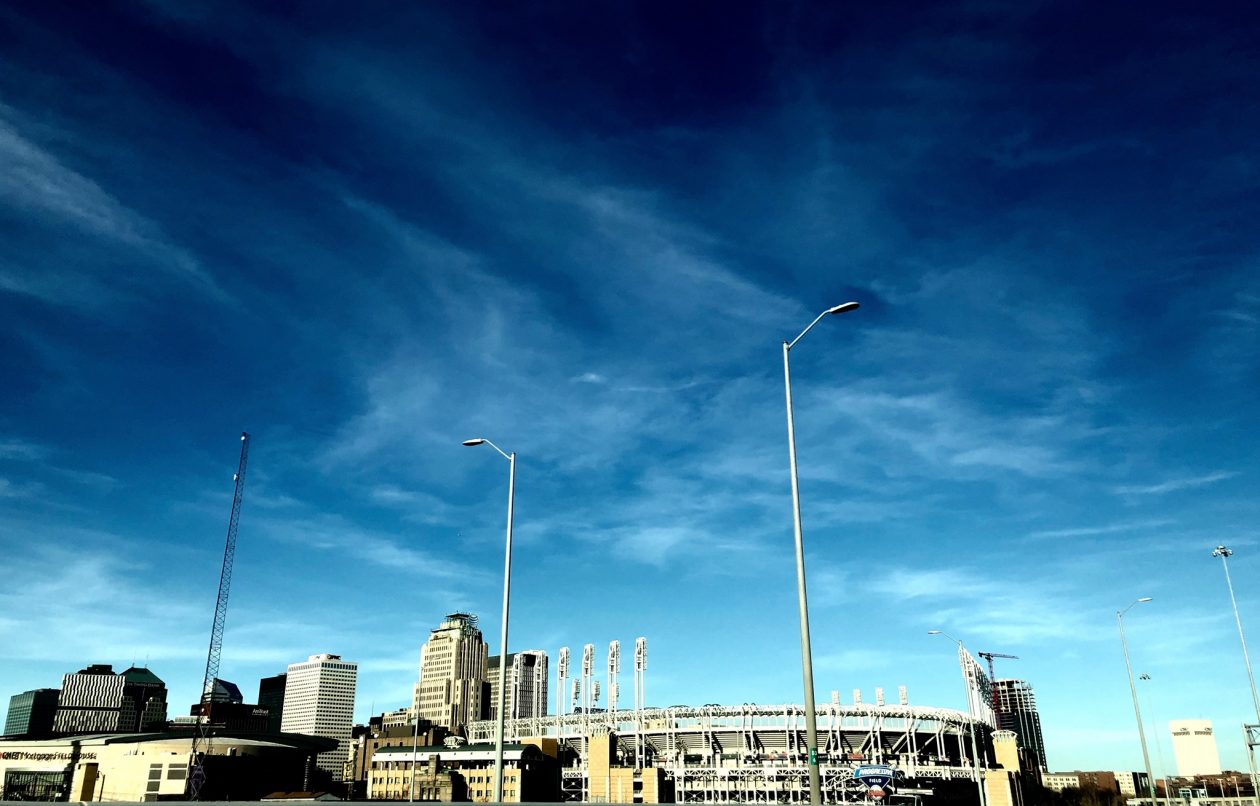
   The Observation Deck was enclosed. There were windows on all four sides. They had a birds-eye view of Lake Erie, Municipal Stadium, the Flats and the Cuyahoga River, and the city spread out as far as they could see. It was a clear sunny day. They could see for miles.

   “I didn’t know the lake was so big,” Stanley said.

   “Lake Erie is one of the biggest lakes in the world. It’s part of the Great Lakes. There are five of them.”

   “Can we go see all of them?”

   “Not today, but someday. A friend of mine and I drove around them one summer, long ago. Maybe you and I can do that circle tour someday.”

   “Can we do it tomorrow?”

   “Not tomorrow, but soon, when you’re a little bit older.”

   “I’m older now.”

   “I know, but kindergarten is coming up.” Stanley wasn’t quite five  years old, but he knew how to sit and listen, follow simple rules, and play cooperatively. He could use a crayon and scissors. He knew what circles and squares were and could copy them.

   “I don’t want to go to school.”

   “It’s a long trip around the lakes. Anyway, how do you like living with Aunt Joannie?”

   “I love Aunt Joannie. We have fun. Mommy isn’t always fun.”

   “What do you mean?”

   “She’s mad at me a lot. I don’t know why, she just is. Am I bad boy?”

   “No, Stanley, you’re a good boy. Mommy is wrong to be mad at you.”

   “Why is she so mad all the time?”

   “Maybe she thinks she’s not happy,” Frank said.

   “Is she coming home soon?”

   “I’m sure she is, but hey, enough about that. How about we go to the races.”

   Frank had parked in a lot across Superior Ave. in the Warehouse District. Many of the old buildings there had been torn down one by one since the 1960s. It was a change called urban renewal. There were parking lots everywhere but not many places to go to anymore. Frank crossed the Cuyahoga River on the Shoreway and drove south on W. 25 St. He turned right when he got to Denison Ave. and found the Soap Box Derby track just past the Riverside Cemetery. The track was off John Nagy Blvd. beside the Metroparks Brookside Reservation.

   The first unofficial races were in Dayton, Ohio in 1933. Tens of thousands of spectators turned out to watch hundreds of cars built of orange crates, sheet tin, and baby buggy wheels. None of them were built of soap boxes. The first official winner in 1934 drove a car built of laminated wood taken from a saloon bar. The cars were unpowered and relied only on gravity to race downhill. The rules amounted to nine sentences. Anything went, so long as the car was built by the boy who was going to race it. 

    The All-American Soap Box Derby World Championships were held in Akron. In 1946 Gilbert Klecan from California was nicknamed “The Graphite Kid” because he smeared his face and car with graphite to cut down on wind resistance. He took the World Championship hands down. In 1952 Joey Lunn from Georgia crashed his car crossing the finish line while winning his first heat. Volunteers repaired the car with tape, strips of tin, and the remains of a lunch box. He went on to win the World Championship, his car shedding parts of itself in every heat leading to his final victory.

   Frank and Stanley found a spot to sit on a grassy knoll. They could see the starting line and had a good view of all of the nine hundred foot track. They watched one heat after another in the bracket-style elimination.

   “How fast are they going?” Stanley asked.

   Frank looked across the track at the traffic on John Nagy Blvd. He knew the traffic was doing thirty to forty miles an hour. He looked at two racers speeding soundlessly down the track.

   “I’m guessing twenty five miles an hour at least, probably more.”

   “Is that fast?”

   “That’s plenty fast on an empty gas tank.”

   “When can I start racing?” 

   “I think you have to be at least seven or eight years old, so in a few years. In the meantime we could start building a car.”

   “I want one just like that,” Stanley said, pointing to a glossy green car shaped like a torpedo.

   “Yeah, but how about that one?” Frank said, pointing to a yellow car that looked like a No. 2 pencil.

   “It’s OK, but the green one is way better.”

   “Then we’ll build one just like that,” Frank said, wondering how many weekends it was going to take. He didn’t know some parents spent more than a thousand hours helping their children build a no-engine car.

   “Look, there’s a girl racing one of the cars.”

   When Frank had read the newspaper about the upcoming 1975 heats in Cleveland he had read that the rules had changed and girls were being allowed to race.

   “She’s got a lot to learn,” Frank said to himself watching the girl behind the steering wheel. What he didn’t know was that eleven year old Karen Snead from Pennsylvania was going to win the World Championship that year in a photo finish, driving with a broken left arm set in a cast.

   They watched eight or nine heats before Stanley said, “I’m hungry. Can we get a hot dog?”

   “Sure son, let’s go find a hot dog.”

   They walked past the staging area where two boys were getting ready for their race. One of them looked like he was about ten years old and the other one about thirteen years old. 

   “It looks easy,” the older boy said to the younger boy, “but one small thing can lose a race, like hitting a bump and wandering off-line. You want your helmet and eyes to be just peeping over the cockpit to reduce drag. The wheel is hard to hold just right. If you jerk it you’re in trouble. It can mean the race.”

   The younger boy looked like he knew he didn’t stand a chance.

   Frank drove north on W. 25 St., circled onto the Shoreway, and went past downtown to Edgewater Park. He parked outside the wastewater treatment plant. Father and son walked past the yacht club, past the pier, and to a grassy field beside the beach where there were funnel cake and hot dog carts.

   A weathered plywood sign nailed to 4 X 4 posts said “IN THE SPIRIT OF….CLEVELAND NOW, EDGEWATER BEACH, SAFE SWIMMING” and was signed Carl B. Stokes, Mayor, It was four years out of date. Carl B. Stokes had been replaced by Ralph Perk as Cleveland’s mayor in 1971. There were many people on the beach. Hardly a soul was in the water. Everybody knew the city’s moguls were still cutting costs and dumping industrial waste into Lake Erie.

   They got two foot-longs slathered in relish and mustard and two bottles of Coca-Cola. They sat at a picnic table and had their late lunch. Seagulls drifted down from the sky.  Stanley tore small pieces off his bun and tossed them into the air. The seagulls snatched them up in mid-air. Frank thought about the skunks at Euclid Beach Park.

   “Why do I have to eat vegetables at home?” Stanley asked. “Why can’t I eat hot dogs all the time?”

   “Vegetables are good for you.”

   “Aren’t hot dogs good for me?”

   “Not all the time, no.”

   “Why can’t I have candy for breakfast?”

   “Because milk and cereal are for breakfast.”

   “Why can’t I eat Play-Doh?”

   “It’s got salt, water, and flour in it, so I guess you could, but don’t let me ever catch you eating it.”

   “Captain Kangaroo loves Play-Doh.”

   “Captain Kangaroo needs a new hairpiece,” Frank said.

   Bob Keeshan, the actor who played the children’s entertainer on TV, wore a blonde bowl cut hairpiece with mutton chops on the show.

   “Why is the lake blue?” Stanley asked, looking out onto Lake Erie. The waves had gotten choppy.

   “You ask some hard questions. Maybe it’s because fish like the color blue best.”

   “Why do we eat fish?”

   “Because they are food.”

   “Do they know we are going to eat them?”

   “I don’t think so.”

   “Should we tell them?”

   “No, I don’t think that would be a good idea.”

   “Why not?”

   “Come on, let’s go for a walk,” Frank said.

   They walked down to the beach, walked the length of it and back, and returned  to where Frank had parked their car.  Frank carried his son on his shoulders the last leg of the walk.

   “When we drive around the lakes, dad, I’ll do the driving.”

   Frank put him in the driver’s seat of the car.

   “As soon as your feet can reach the pedals and you can see over the steering wheel.”

   “Oh, all right,” the boy said. “I can’t wait to get bigger and get going.”

   “Don’t be too anxious,” Frank said. Everybody said kids grow up fast. He didn’t want Stanley to grow up too fast. He couldn’t do anything about it, he knew, although he could try to smooth out the bumps along the way. 

   It was early evening by the time they got back to North Collinwood.

   “Why do I have to take a bath?” Stanley complained once they were in the house and he was being led to the tub. “I’m clean enough.”

   “That’s easy,” Frank said. “Father knows best.”

Excerpted from the crime novel “Bomb City.”

Ed Staskus posts monthly on 147 Stanley Street at http://www.147stanleystreet.com, Made in Cleveland http://www.clevelandohiodaybook.com, Down East http://www.redroadpei.com, and Lithuanian Journal http://www.lithuanianjournal.com. To get the site’s monthly feature in your in-box click on “Follow.”

“Bomb City” by Ed Staskus

“A Rust Belt police procedural when Cleveland was a mean street.” Sam Winchell, Beyond Fiction

Available on Amazon: https://www.amazon.com/dp/B0F1LM1WF9/ref=sr_1_1?crid=2MYAQAOZIC2U9&dib=eyJ2IjoiMSJ9.hTm7BGbiQbSe5ZapFwYPPfcwOpTe-Vdg6VLE4aGyTyk.Z0R-VNBWWEcvKcNaO9LdCOUnNIOOXgvYkRS_FXiXuHk&dib_tag=se&keywords=bomb+city+ed+status&qid=1742136726&sprefix=bomb+city+ed+staskus%2Caps%2C84&sr=8-1

Cleveland, Ohio 1975. The John Scalish Crime Family and Danny Greene’s Irish Mob are at war. Car bombs are the weapon of choice. Two police detectives are assigned to find the bomb makers. It gets personal..

A Crying of Lot 49 Publication

Cat and Mouse

By Ed Staskus

   When Frank Gwozdz and Tyrone Walker sat down in front of Lieutenant Ed Kovacic’s desk, Tyrone had a thick sheaf of files with him. Their ranking officer behind the desk looked at them. Tyrone looked at his ranking officer. Frank looked at the windows. It was windy and raining hard. The Central Station wasn’t what it used to be. Frank watched rain leaking in through the windows. He believed in keeping the out of doors where it belonged, which was out of doors. It wasn’t his problem, though. The city’s solution to  problems was often as bad as the problem. He turned his attention back to the matter at hand.

   “These are files of all the bombings the past five years in northeast Ohio, including the Youngstown bombings, which are almost as everyday as ours,” Tyrone said. Youngstown had long since been dubbed “Crime Town USA” by the Saturday Evening Post. Their gang wars had been going on as long as those in Cleveland. 

   “You can keep those on your lap for now, son,” Lieutenant Kovacic said. “Never mind about northeast Ohio. Forget about Youngstown. Concentrate on Cleveland.” A close second to Tyrone not liking being called nigger was not liking being called son. He did a slow burn but didn’t say anything. Saying something would have been a mistake. He bit his tongue.

   Ed Kovacic wasn’t born a police officer. He was born a Slovenian and baptized at St. Vitus Catholic Church, but everybody knew he was going to die a police officer. When he did the funeral mass was going to be at St. Vitus. Whenever anybody called him a cop, he reminded them with a stern look that he was a police officer. He hardly ever had to say it twice. When he did have to say it twice, his fellow police officers took a step away from whoever had called him a cop one too many times.

   “We don’t mind the Irish and Italian mobs blowing each other up, it keeps our cells spick and span, but they’ve started killing bystanders,” he said. “We can’t stand for that, which is why we are adding men to this investigation.”

   When Ed Kovacic graduated the police academy the first assignment he had was to walk a beat in the 6th District. He worked his way up to the Decoy Squad, the Detective Bureau, and finally the Bomb Squad. He married his high school sweetheart in 1951 before shipping off to the Korean War. When he got back he and his wife got busy in bed making six children. After that his wife stayed busy raising them. They lived in North Collinwood. 

   “We want to get them before they get more civilians. That’s your number one job from now on. When you’ve got the goods on one of them report to me. Make sure the charges are tight as a drum so we don’t wind up wasting our time. If you apprehend somebody red-handed, do what you have to do. Try to get him back here in one piece so we can question him.” He gave his police detectives a sharp look. 

   “Are we clear about that?”

   “Yes, sir,” Tyrone said. He knew his rulebook inside and out. Frank nodded. He had his own rule book spelling out what one piece meant. It meant still breathing.

   “The first thing I want you to do is go over to Lakewood. I talked to the chief there and he’s expecting you. After you see him, I want you to find Richie Drake and find out what he knows, or at least what he’s willing to tell you. He’s one of our on-again off-again informers. He’s a west side man. I understand he spends most of his life at the Tam O’Shanter there in Lakewood.”

   “I know the man and I know the place,” Frank said. He knew every stoolie in town, just like he knew every bar on every side of town that served food and drink to wrongdoers.

   “Which reminds me, the Plain Dealer boy who saw it happen, his father called, said the boy has something to tell us. Here’s the address.” He handed Frank a slip of paper.  “Stop there while you’re on that side of town and find out what he has to say.”

   Lakewood City Hall, its courtroom, and the police department, were on Detroit Ave., closer to Cleveland than the rest of the near west side suburb. Frank parked in the back. He and Tyrone went inside and waited. When they met with the police chief there wasn’t much he could tell them, other than to say his department would do all it could do to help. 

    “We believe in law and order here,” he said. “You point them out, we’ll lock them up.”

   Lakewood’s first jail was in the Halfway House, which was a bar on Detroit Ave., in one of the back rooms that had a locking door. It was soon relocated to a barn where lawbreakers were kept in two steel cages. After that they were kept in the basement of a sprawling house at the corner of Detroit Ave. and Warren Rd.

   After World War One Lakewood’s main streets, like Detroit Ave. and Clifton Blvd., began to be paved. When they were, speeding problems surfaced. The police force grew, adding two motorcycle men, to patrol Clifton Blvd. and Lake Ave., the streets where the better half lived. A Friday Night Burglar plied his trade on those streets, forcing the police to work overtime while those they were protecting were out on the town. The burglar was never caught. The better half bought more valuables to replace those that went missing.

   When Frank and Tyrone walked into the Tam O’Shanter the late afternoon crowd was starting to fill it up. They made their way to the bar. The bartender asked them what they would have.

   “Don’t I know you?” Frank asked.

   Jimmy Stamper was the bartender. “Maybe, but I don’t know you,” he said, wiping his hands with a damp rag.

   “Are you in a band?”

   “I’m a drummer, been in plenty of bands,” Jimmy said.

    “Are you in a band called Standing Room Only.”

   “You have a good memory,” Jimmy said. “That would have been around 1969, maybe 1970. It sounds like you liked our sound.”

   Frank didn’t tell Jimmy he had been tailing a suspect who was at a bar the band was playing at. The man stayed there until closing time which meant Frank stayed there until closing time. Surveillance was the easiest but most time-consuming part of his job. He had never liked rock and roll and after that night he disliked it even more. Standing Room Only played rock and roll covers. The only one Frank liked was their cover of the Venture’s tune “Hawaii Five-O.”

   “We’re looking for Richie,” Frank said, flashing his badge just long enough for Jimmy to get a peek of it. The bartender hitched his thumb over his left shoulder. “Last booth over there by the men’s toilets. He’s got a blonde with him. He should still be sober. At least he’s still doing all the sweet talking.”

   Frank sat down on the other side of Richie Drake after giving the blonde the thumb. “Drift” is what he said to her. She sat at the bar sulking. Tyrone stood to the side, neither near nor far, but close enough so that Richie knew he was between him and the door. Pinball machines and their pinball wizards were making a racket opposite the booth.

   “What can I do for you?” Richie Drake asked.  He didn’t bother asking who they were.

   Somebody slid a dime into the Rock-Ola jukebox. “It’s just your jive talkin’, you’re telling me lies, yeah, jive talkin’” the Bee Gees sang in their trademark falsetto style. Frank thought they sounded like pansies.

   “That business last Sunday down the street,” Frank said.

   “What business?”

   “You can either tell me here or out back while my partner has a Ginger Ale.”

   “Hold your horses,” Richie said. “Everybody knows it was the Italians.”

  Why?”

   “I don’t know, exactly, but it had something to do with the Irishman. The guy who got it was a bog hopper. They can’t get to the main man, but they got to him.”

   “One more time, why?”

   “So far as I know, it was a message more than anything else.”

   “A message from who exactly?”

   “The way I hear it, it was Jack White.”

   Frank let it go at that. It seemed to him that Richie Drake didn’t know a hell of a whole lot. The police detective stood up and walked away. He stopped at the Rock-Ola jukebox and glanced at the playlist. He walked back to the booth. “I need a dime,” he said. Richie gave him a dime. He selected a song by B. J. Thomas. The juke box was playing the tune when he and Tyrone left.

   “Hey, wontcha play another somebody done somebody wrong song, so sad that it makes somebody cry, and make me feel at home.”

   Frank and Tyrone drove to Ethel Ave. They stopped and looked at Lorcan Sullivan’s corner house but didn’t bother getting out of the car. They drove to Tommy Monk’s house, parking across the street. Frank pressed the doorbell. When nobody answered they walked up the driveway to the backyard. The family was grilling out and having burgers and corn at a picnic table. A sweet gum tree kept them shaded. Chain link fencing and Japanese yews kept the yard private. Tommy’s father Einar invited them to sit down, bringing two lawn chairs out from the garage. Einar had changed the Old World family name but kept his given name. For all that, everybody and his wife called him Eddie.

   “How did you know the man in the corner house?” Frank asked Tommy. 

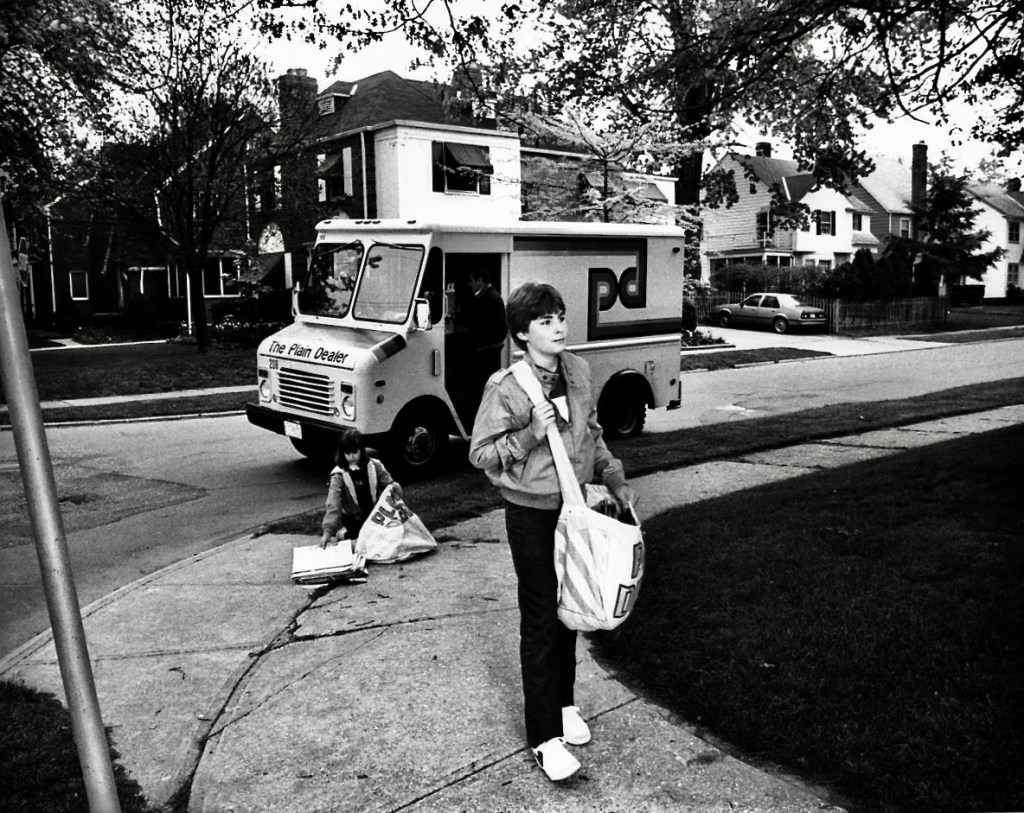
   “I delivered his paper every day,” Tommy said. “I knew him better than most because he tipped me better than most.”

   “Did you see anything before it happened?”

   “No, it was like any other Sunday morning, except it wasn’t raining or snowing.”

   “Did you see anything special after it happened?”

   “No.”

   “What is it you have to tell us?”

   “Mr. Sullivan asked me to keep an eye out for anybody prowling our street who didn’t look right. He always gave me a big bonus at Christmas. He told me what to look for. I never saw anybody until yesterday. The man I saw was just like what Mr. Sullivan said he might be. I memorized his license plate.”

   “What is it?”

   “Wait a minute,” Tommy said. “I need a copy of the newspaper.”

   He ran to the back door. A minute later he burst back through the door and ran to the picnic table. He had the front page of yesterday’s Cleveland Plain Dealer with him. He crossed out the headline and in its place wrote down the license plate number. He handed it to Frank.

   “Are you sure this is the number?”

   “I never make a mistake whenever I memorize anything this way.”

   “Good work, son,” Frank said. “If you see that man again, be careful. Don’t draw any attention to yourself. Tell your father right away.”

   He gave Eddie Monk his number. “Call me if your son spots anything else. I don’t think there’s any danger to him, but you never can tell. Make sure he knows not to talk to strangers.”

   “All my children already know that,” Eddie Monk said.

   “Good,” Frank said.

   The police detectives walked back to their car. Tyrone called in the license plate number. Frank smoked a cigarette while they waited. Tyrone had already formed  the impression Frank wasn’t big on small talk. He seemed to keep most talk to himself. When they got the license plate’s street address, Tyrone wrote it down and handed it to his partner.

   “That’s in South Collinwood,” Frank said. “Let’s go there and pay Earnest Coote a visit.”

Excerpted from the crime novel “Bomb City.”

Ed Staskus posts monthly on 147 Stanley Street http://www.147stanleystreet.com, Made in Cleveland http://www.clevelandohiodaybook.com, Down East http://www.redroadpei.com, and Lithuanian Journal http://www.lithuanianjournal.com

“Bomb City” by Ed Staskus

“A police procedural when the Rust Belt was a mean street.” Sam Winchell, Beyond Books

Available on Amazon: https://www.amazon.com/dp/B0F1LM1WF9/ref=sr_1_1?crid=2MYAQAOZIC2U9&dib=eyJ2IjoiMSJ9.hTm7BGbiQbSe5ZapFwYPPfcwOpTe-Vdg6VLE4aGyTyk.Z0R-VNBWWEcvKcNaO9LdCOUnNIOOXgvYkRS_FXiXuHk&dib_tag=se&keywords=bomb+city+ed+status&qid=1742136726&sprefix=bomb+city+ed+staskus%2Caps%2C84&sr=8-1

Cleveland, Ohio 1975. The John Scalish Crime Family and Danny Greene’s Irish Mob are at war. Car bombs are the weapon of choice. Two police detectives are assigned to find the bomb makers. It gets personal.

A Crying of Lot 49 Publication

Shadow Man

By Ed Staskus

   Uncle Ernie worked for Danny Greene and nobody else. He didn’t have to work at all, if he didn’t want to, but he liked staying busy. He was busy sniffing around looking for who had blown up Lorcan Sullivan. He put on the wig and fake glasses he always wore when sniffing around. He tried to catch the drift in both Lakewood and Cleveland. It didn’t do him any good. Nobody he knew, who would talk to him, knew anything, while nobody in the know would talk to him. They told him to get lost. None of the working stiffs from the Cleveland Press and Cleveland Plain Dealer who he drank with occasionally could fill him in on anything solid.

   He always told anybody who asked that he was a pipefitter. He wasn’t a full-time fitter but did belong to the Pipefitters Union. He occasionally worked for Blanton Pipe Valves and Fittings. It was more for show than not. It was so he could show income to the IRS. His real earnings were always in cash. He was a private contractor. He was a bomb maker. 

   He was sure the Italians had done it, but the boss wanted to know exactly which one of them had done it. When he found out, the Irishman would expect him to take care of business. Uncle Ernie was an expert at what he did. When he took care of business it stayed taken care of. He never made a mistake, especially never the mistake of blowing himself up, like Art Sneperger had done four years ago. 

   Art Sneperger had been standing outside the back door of Swan’s Auto Service on the corner of Mayfield Rd. and Coventry Rd. four years ago. He was holding a bomb he had assembled when it suddenly went off in his hands. There was the flash of a falling star and a sonic boom. Swan’s Auto Service collapsed in a heap. All the cars in the lot waiting to be repaired were laid to waste. Every window in every house adjacent to the building was  broken by the blast. The Bomb Unit found what little was left of Art under a pile of bricks the next day. His ex-wife withdrew what there was of his savings account and moved out of town.

   Mike Frato, with whom Danny Greene was having a dispute, was part-owner of Swan’s Auto Service. He and the Irishman were going to have it out sooner or later. Everybody on the wrong side of the tracks knew one of the two was going to go belly up.  When Danny Greene was questioned about the bombing at Swan’s he said he didn’t know anything about any dispute or any explosion. Both of the police detectives interviewing him knew they were being lied to, but there wasn’t anything they could do about it.

   “You weren’t sending a message?” they asked.

   “What message would that be?” he asked, grinning like a leprechaun.

   What the police detectives and Uncle Ernie didn’t know was that Danny Greene had been around the corner and detonated the bomb by remote control. Art and Danny had grown up together and worked together as longshoremen, but Art had ratted Danny out. He was in the hole to loan sharks and bookmakers. He couldn’t pick a nag to save his life. He was rewarded by officialdom when he turned canary. He knew he was fixing to die, but what could he do? The squeeze was on.

    “I’m coming out of work one day,” said Skip Ponikvar, a longshoreman’s union vice president. “A car pulls right up. It’s Danny Greene. He jumps out of the car. The other guy, a Hells Angel, jumps out of the car. Danny says, ‘He’s going in there to pay his water bill. How you doing?’ I say, ‘I’m good.’ He says, ‘I heard that Snep is making statements about me!’ I say, ‘Oh, Danny, I don’t know nothing about that.’ Then he starts talking about something else for five or ten minutes. All of a sudden he says, ‘You know that Snep said I killed so and so’  I say, ‘Aw, he never said that.’ He says, ‘I got ya! You told me you didn’t know about that statement!’”

   Uncle Ernie drove up to Lorcan Sullivan’s house on Ethel Ave. and parked across the street. Everything was a mess and other than the mess there wasn’t much to see. All the broken windows on the back side of the house had been boarded up with sheets of plywood. What was left of the garage was being torn down. A small tree in the back yard lay on its side and shrubs that had stood in a line at the rear of the driveway didn’t exist anymore. 

   Tommy Monk rode slowly past on his bicycle as Uncle Ernie flicked his cigarette butt out of his open car window. Tommy looked as the butt, what his dad called coffin nails, fly out the open window. Sparks scattered when it hit the asphalt. He looked at the man behind the wheel. What he saw was a big beak and a funny looking hat. The man’s face looked like it was made of putty. He took a good look at the license plate and turned it into a Plain Dealer banner headline. It was what he did whenever he absolutely had to remember something. He rode home. He would tell his father about the man in the car after dinner. 

   Whoever it was he must have made a dent in the armory to cinch the job, Uncle Ernie thought, and knew in a flash who it was who set the bomb. Only Joey Bag of Donuts doubled down on his targets. He started the car, turned around, got on Clifton Blvd., took Rt. 2 through downtown, and merged onto I-90 to Collinwood. Neither Danny Greene nor his girl Denise were at the Celtic Club.  He had been wanting to have some fun with Denise, but she didn’t seem to want to give him the skin off a plum. He parked and waited. When school let out and students filled the street, he noticed all of them walked on the side of the street across the street from the trailer home.

   After the sidewalks had cleared of school kids and a half hour passed, Uncle Ernie got out of his car and went for a walk, stretching his legs. He walked around the block and another block. When he got back there still wasn’t any sign of life at the Celtic Club. He didn’t want to sit in the car. It was a hot humid afternoon. He took a few steps backwards into a dim space between two storefronts, leaning on a shadow and smoking a cigarette. He was quiet and unnoticeable, except for the glow of the tip of his Pall Mall every time he sucked on it.

   Uncle Ernie was bald and wore a black bucket hat all the time. Most people never saw his pate. He didn’t sleep well, tossing and turning, and had bags under his eyes. He wheezed going up and down stairs. He knew the Pall Malls were killing him but couldn’t stop. His fingertips were yellow from nicotine. Whenever he tried to stop smoking he lit up another one to mull over whether to stop. 

   When the Irishman pulled up, parked, and went inside the trailer home, Uncle Ernie waited for five minutes. When nothing happened he crossed the street, walked up to the only door, and knocked. He always tried to never surprise Danny Greene, who didn’t like surprises. The Irishman let him in. Denise was nowhere in sight. They sat down in what passed for a living room. Even though Danny Greene dressed well, and was always neat as a pin, the trailer home was disordered.

   “What have you got for me?” he asked.

   “I think I know who did the job,” Uncle Ernie said.

   “Do you think or do you know?”

   “I’d be surprised if I was wrong.”

   “All right, spill it.”

   “It may not be the God’s truth, but I don’t think it could have been anybody else other than Joey Bag of Donuts.”

   “All right, now that you know, take care of that fucking Dago.”

   “You want it done right away?”

   “What the hell do you think?”

   “Got it,” Uncle Ernie said.

   It didn’t take him long to get home. He lived in Collinwood just like Danny Greene did. He lived on Midland Ave. south of I-90 and the Collinwood Railroad Yard. There were one hundred and twenty miles of track in the yard and two locomotive repair roundhouses. The sound of trains was always in the background. His house was a two-story single home with a garage and a deep backyard. His bomb-making workshop was in the basement.

   Uncle Ernie had been married three times and three times his wives left him. Even though he was responsible enough, always paying his taxes and never running a red light, he had several bad habits that no woman could put up with for long. His non-stop smoking was one of them. His hardly ever talking was another one of them. When it came to women he only talked to the buttons on their blouses. His watching cops and robbers reruns on TV every night was another one. All three marriages were over within two years. One of them ended less than a year in. After the last one left he gave up. That had been twenty years ago. He knew no woman would have him anymore and had stopped trying to find one.

   His house had been shipshape twenty years ago when the last of his Zsa Zsa’s left. He was convinced all three of them had read the real Zsa Zsa Gabor’s book “How to Get Rid of a Man.” Twenty years later his house was a pigsty. He never opened the fridge for fear of what he might find. He had started cleaning his bathroom a couple of years ago but then gave up. He hadn’t made his bed for more than a decade, although he changed the sheets every couple of months. Every ashtray in every room was overflowing with butts. Old newspapers were stacked in corners. He meant to tie them up and put them on the tree lawn someday.

   He put his bucket hat away and made coffee. He lit a cigarette. He took his coffee black and took the mug down to the basement with him. He had a workroom there. It was as unlike the rest of the house as it could be. The cement floor was smooth as a baby’s bottom. He had painted it an industrial gray which had sealed it. The paint kept the dust down, too. The floor supported two heavy workbenches and a fixed saw. One pegboard was on the wall at the back of his main workbench while another bigger peg board covered most of another wall. He had two sets of freestanding shelves. Everything was close to hand, including ash trays and fire extinguishers.

   Dampness was a problem he had solved partly with a dehumidifier. He solved the rest of the problem by installing an exhaust fan high up on a wall. It was next to the egress window he had put in, if ever he had to get out fast. He had more than enough tools to build anything, even a dining room set, although all he ever built were bombs. He had spares in a cabinet of all the tools he used the most. He was like an old maid when it came to his job of work.

   He put his mug where he could reach it easily and stubbed his cigarette out. The bomb he was going to make was a simple one of a few sticks of dynamite and a detonator. That would take care of Joey Bag of Donuts. He bought his explosives in New Hampshire. Everything else he bought in Valley View on the south side of town. He would have to set the bomb off by remote control rather than a timer or tilt fuse. 

   Nobody knew where Joey Bag of Donuts lived, although everybody knew he didn’t own a car. He went to where his targets were by city bus. He carried schedules in his pocket. He never worked outside the city. Uncle Ernie had heard he frequented the cemetery next to Little Italy. He had heard the greasy turnip liked to take naps at the base of Haserot’s Angel. He would hide the bomb in the weeds there and wait nearby. When the greasy turnip showed up and was napping he would set the bomb off and send the little man to the big sleep he deserved.

   Uncle Ernie was a professional. He hated amateurs like the Weather Underground and their wacky friends. They had gone from throwing Molotov cocktails now and then in the late 1960s to a steady campaign of protest bombings that stretched from New York City to San Francisco. The FBI had gotten to calling San Francisco the “Belfast of North America.” From 1971 through 1972 there were more than two thousand terrorist bombings on American soil. Most of them happened at night, targeting buildings, and most of them didn’t cause any serious injuries. What Uncle Ernie hated about the radicals was their sincerity. They had a boatload of fervor, too, which he hated almost as much. He had no use for true believers throwing bombs for the sake of a better world. He believed in the kind of bomb throwing that put cold cash into his wallet. 

   Making bombs was his cash cow. “I’m not a goddamned anarchist,” he said to himself. No one heard him say it. He didn’t have any friends. Both of his next door neighbors and the immediate neighbors across the street avoided him. “I’m a businessman, no bullshit,” he reminded himself.

   When he was done he put the bomb in a lunch pail. The pail was a Black Dome. It had been his father’s when his father had been a coal miner in West Virginia. “The devil put the coal in the ground,” his father always said. He kept a lump of it on the mantle in their living room. “That is gonna be a diamond someday, son, even though I ain’t gonna see that day.” He carried his lunch underground with him every day until the day black lung stopped him in his tracks. He coughed himself to death the rest of the year. When he died he didn’t have a diamond to buy his way into paradise, where they don’t take lumps of coal.

   Uncle Ernie put the lunch pail on the floor under his workbench. He did it carefully. He went upstairs and put his hat back on. Blowing up Joey Bag of Donuts was going to take some time, most of it waiting for the weasel to show up. In the meantime, he would do some dining and drinking at the Flat Iron Café. The place was an Irish watering hole. They had meat loaf and mashed potatoes, corned beef and cabbage, and Pride of Cleveland on tap. It. They had Lake Erie Yellow Perch every Friday. It was Friday, so he was going to have fish with his beer. He would go fishing for donuts on the weekend.

Excerpted from the crime novel “Bomb City.”

Ed Staskus posts monthly on 147 Stanley Street http://www.147stanleystreet.com, Made in Cleveland http://www.clevelandohiodaybook.com, Atlantic Canada http://www.redroadpei.com, and Lithuanian Journal http://www.lithuanianjournal.com

“Bomb City” by Ed Staskus

“A police procedural when the Rust Belt was a mean street.” Sam Winchell, Beyond Books

Available on Amazon: https://www.amazon.com/dp/B0F1LM1WF9/ref=sr_1_1?crid=2MYAQAOZIC2U9&dib=eyJ2IjoiMSJ9.hTm7BGbiQbSe5ZapFwYPPfcwOpTe-Vdg6VLE4aGyTyk.Z0R-VNBWWEcvKcNaO9LdCOUnNIOOXgvYkRS_FXiXuHk&dib_tag=se&keywords=bomb+city+ed+status&qid=1742136726&sprefix=bomb+city+ed+staskus%2Caps%2C84&sr=8-1

Cleveland, Ohio 1975. The John Scalish Crime Family and Danny Greene’s Irish Mob are at war. Car bombs are the weapon of choice. Two police detectives are assigned to find the bomb makers. It gets personal..

A Crying of Lot 49 Publication

Outside the Law

By Ed Staskus

   Everybody called Danny Greene the Irishman. He was almost forty two years old the summer of 1975 and somehow still alive. He had never looked his age, but that had changed, although he still didn’t look his age. He looked older. Water under the bridge hadn’t done him any favors. He grew a mustache to take attention away from his thinning hair. On top of that, at the moment, he felt bad. He didn’t feel bad about Lorcan Sullivan being blown up in Lakewood two days earlier. He was in a rage about that. That was different. His mouth hurt bad. A bum tooth was a different kind of misery. He called his dentist, who knew well enough to get him in no later than right away.

   He lay down with his face on a pillow on the floor of the trailer home in Collinwood that had become the Celtic Club. His live-in girlfriend Denise Schmidt knelt over him and massaged his back. It had been tightening up every night the past two months. He was stiff as a board most mornings. He felt like an old man sometimes. Denise was a senior at Collinwood High School. She was on the young side of more than half his age. She made him feel younger. The bomb blast hadn’t slowed her down. 

   Two months earlier at four in the morning while they were sleeping on the second floor of their two-story storefront home on Waterloo Rd. somebody had thrown two bombs through the ground floor windows. The storefront was where Danny Greene had a phony consulting firm on the ground floor that went by the name of ‘Emerald Enterprises.’ The enterprise was mainly in the business of extortion. The Irishman’s other enterprises were gambling, embezzlement, loansharking, and leg breaking. Murder was taken for granted in his line of work.

   When the sound of glass breaking woke him up, he slipped out of bed and into the kitchen. He had a gun in his hand. When the first bomb that came through the window exploded, he was crouching between the sink and the refrigerator. A cabinet was above him. He was safe in his improvised nook when timbers and bricks started to fall, but when the floor caved in he went down with it. Denise was still in bed. She and the bed went down, too. The bed ended up halfway down from the second floor, tilted and dangling from a beam. She hung on until she couldn’t hang on anymore.

   “I felt the floor give out,” the Irishman said. “The next thing I knew I was in a heap of rubble. A busted icebox was beside me. Denise fell on top of me. I dug the two of us out. I heard dogs barking. I couldn’t hear my cats.”

   “Danny Greene made out like Houdini,” Ed Kovacic, the Central Station police lieutenant investigating organized crime, told Frank Gwozdz and Tyrone Walker. “He was luckier than his cats.” Danny Greene had two street cats who nightly slept inside the building on the first floor. They were both killed. His new 1975 Lincoln Continental was destroyed. A second bomb was connected to a two-gallon can of gasoline. That bomb didn’t go off and the gasoline didn’t ignite. The Irishman had more lives than a clowder of cats.

   The Bomb Unit got to work before dawn after the blast. Across the street a disheveled hippie sat on the curb waving a bottle of Boone’s Farm at anybody who gave him a glance. “You should a heard just what I seen,” he said to anybody who came within earshot. Nobody paid any attention to him. Even he had a hard time paying attention to himself.

   When the rubble was cleared away Danny Greene set up shop in the same place, parking a trailer home there. A TV news crew interviewed him outside his new headquarters. He announced his new address and invited any other would-be bombers to try again. “I’m in between both worlds, the square world and the street world,” he said. “I think I have trust on both sides, but I have no ax to grind. If somebody wants to come after me, we’re over here at the Celtic Club. I’m not hard to find.” He was shirtless, bare-chested, and spilling over with contempt. He pointed to the medal of St. Jude he was wearing around his neck. “This is why nobody is going to get me.” 

   Parents in the neighborhood warned their children not to go near the trailer with the Irish flag flying in front of it. They told them it was best to stay away from that whole block, St. Jude medal or no St. Jude medal.

   Danny Greene’s mother died when he was three days old. His father got drunk and stayed drunk after she was buried. He lost his job with Fuller Brush. When he did he dropped the baby boy off at the Parmadale Orphanage. Six years later, back on his feet, newly married, he took the boy back, but the first grader argued long and loud with his stepmother and ran away again and again. One night he ran away to his grandfather’s house in neighboring Collinwood and never went back.

   His grandfather put him into St. Jerome’s Catholic School where he became an altar boy and all-star basketball player. He joined the Boy Scouts. After graduating from grade school he went to St. Ignatius High School. After that things started to go south. He was thrown out of the Boy Scouts for fighting with other scouts. He was expelled from St. Ignatius for fighting with the Italian pupils and everybody else. He transferred to Collinwood High School but was expelled for “excessive tardiness.” He explained he had to fight his way into the school, fighting the bullies blocking his way, but the principal didn’t believe a word of it and told him, “Leave and don’t ever come back.”

   “He grew up hustling,” said his one-time friend Aggie who ran with Danny Greene when they were kids. “It’s hard to take the hustle and larceny out of somebody who grew up with nothing. Being an orphan and growing up with the nuns, you tend to grow up edgy, tough, and slightly mean.” Hardly anybody stayed friends with the Irishman for too long. The nuns put him in their prayers, to no great effect.

   He enlisted in the Marine Corps. They liked his fighting spirit. He became an expert marksman. Before long he was training other marksmen on Sniper Garand rifles. When he was discharged he was honorably discharged. He went home to Cleveland to be his own man. He was done with running away. He had a brand-new plan. He started working on the waterfront. He was elected president of Cleveland’s Local 1317 International Longshoreman’s Association, the dock workers union, in 1962. The trouble started right away when he began embezzling union funds. He was living large and needed the money. Trouble picked up the pace when he started leaning on his longshoremen for more money.

   “Danny was spending money hand over fist,” said Skip Ponikvar, vice president of the union. “His trips to the Theatrical Grill downtown, trips to Chicago, trips to New York. And he was picking the tabs up. There was only so much a few hundred men could support with dues. He got the idea to have some guys work the grain boats on the side and sign the checks over to the union. The guys started bitching and moaning about it. Well, if you worked on the grain boats, when it came to the hiring hall later on, those guys were given the better job, which is illegal.”

   Longshoremen started shaking down employers for payoffs. One of them threatened to kill the children of a businessman who wouldn’t cooperate. His house had to be put under police protection and his children escorted to school by an armed guard. After one too many complaints, the Cleveland Police Department sent Ed Kovacic and his partner to set Danny Greene straight. It wasn’t a far drive to the union hall. They stopped for coffee and a smoke. Refreshed, they walked into the union hall quietly, looking for the back office. They didn’t mean it to be a pow wow. They hadn’t brought a peace pipe.

   “When we walked in, I felt like I’d fallen in the Atlantic Ocean, because it was all green,” Ed Kovacic said. “Even the walls were green.” The only thing not green was the Irishman, at least from the neck up. “Everything was green except his hair and face. He handed us a pen, which had green ink in it. Everything was pleasant until he asked why we were there.” They told him why they were there. “He got up and started walking around the room. As he did, he got louder and louder. He started talking about how the Italians thought they ran Collinwood, and this was just a bunch of tough Irish and Slovenian kids who were going out there and telling them they didn’t run Collinwood anymore. I handed him our crime report and said, ‘How about this man? Your goons blinded a Chinese American man.’ Boy, that really set him off like a rocket! Finally, he said, ‘Get out. That’s enough. We’re done.’” 

   The policemen were done, too. “When we got in the car, I said, ‘That was like a scene from that waterfront movie. He was acting like Marlon Brando.’ My partner said, ‘Yeah, I was waiting for him to start hollering, ‘Stella! Stella!’” Ed Kovacic didn’t bother telling his partner he was getting his movies mixed up.

   Danny Greene didn’t want or need anybody like Stella. Blanche was more his speed, at least if she had been half her age. He knew how to get what he wanted. He liked blondes who were blonde as sunlight. The nuns at St. Jerome’s had tried to teach him the difference between angels and demons, but he never learned his lesson.

   “He was dynamic,” Skip said. “Dressed to the nines. You never saw him in jeans or street clothes. Suit and tie all the time. He negotiated a hiring hall for the union. It allowed us control. Total control. If you were my friend, I’d send you on a boat that’s going to work ten hours. And if you weren’t my friend, or just an average guy, I’d send you on a boat that’s going to work four hours. He had ‘Don’t fuck with me’ written all over him. You didn’t want to even challenge him. He was always in shape. He didn’t smoke. But when he drank, that was his weakness. He drank to excess, and when he drank to excess, bad things would happen, arguments, fights, all kinds of bad things.”

   Danny Greene was in shape but couldn’t fight everybody in the union. He was outnumbered. Everybody finally wanted him gone. “The men wanted him out,” said John Baker, one of the dock workers. “They didn’t want to work the boats for nothing. When he got into his jam, he asked me for a vote of confidence, and I said, ‘Danny, I can’t do it.’ That was it. We never talked after that.”

   The national union suspended him. He was done running Cleveland’s docks. Somebody drove past his house and pumped five bullets into the clapboard, just to make sure he got the message. When a TV reporter showed up the next morning the Irishman read from a scrap of paper, “Effective immediately, I have resigned as a member and officer of Local 1317. After nearly four years of devoting all my energies to get the dock workers in Cleveland a fair shake, I found that my only compensation is headlines in the newspaper and bullets through my window.” When push came to shove he pled guilty to falsifying union records and was fined $10,000. He never spent a day in jail and never paid a penny of the fine. By that time, he was a part-time FBI informant and the FBI didn’t care whether he paid his fine, or not. They had bigger fish to fry.

   Danny Greene stayed on the floor for ten minutes after Denise was done with his rubdown, rolling over on his back, grasping his knees, and pulling them into his chest. He rocked forward and back. When he stood up he felt like his old self. He went outside and sat down a lawn chair in the dirt front yard in front of his trailer home. Two empty cans of Stroh’s lay at the feet of a plaster leprechaun beside the chair. He used to do next week’s drinking every day of the week but had put a stop to most of it. He had started jogging, gulping vitamins, and steaming vegetables for dinner.

   His dentist’s appointment wasn’t for two more hours. The tooth yanker was in Lyndhurst, twenty some minutes away, so there was plenty of time to think things over between now and then. He had gotten a new Lincoln Continental and enjoyed driving it. What he didn’t enjoy was checking it from front to back and underneath it for anything that might blow its top. Denise wouldn’t go near the car until he was done.

   He was going to make somebody pay for blowing up his building and killing his cats, never mind the car. He was going to make somebody pay for Lorca Sullivan’s death, too. He knew more about revenge than any man alive. He was going to make somebody pay for something, if it was the last thing he did. He was nothing if not a man of his word, no matter how many twists and turns his words might take.

Excerpted from the crime novel “Bomb City.”

Ed Staskus posts monthly on 147 Stanley Street http://www.147stanleystreet.com, Made in Cleveland http://www.clevelandohiodaybook.com, Atlantic Canada http://www.redroadpei.com, and Lithuanian Journal http://www.lithuanianjournal.com

“Bomb City” by Ed Staskus

“A police procedural when the Rust Belt was a mean street.” Sam Winchell, Beyond Books

Available on Amazon: https://www.amazon.com/dp/B0F1LM1WF9/ref=sr_1_1?crid=2MYAQAOZIC2U9&dib=eyJ2IjoiMSJ9.hTm7BGbiQbSe5ZapFwYPPfcwOpTe-Vdg6VLE4aGyTyk.Z0R-VNBWWEcvKcNaO9LdCOUnNIOOXgvYkRS_FXiXuHk&dib_tag=se&keywords=bomb+city+ed+status&qid=1742136726&sprefix=bomb+city+ed+staskus%2Caps%2C84&sr=8-1

Cleveland, Ohio 1975. The John Scalish Crime Family and Danny Greene’s Irish Mob are at war. Car bombs are the weapon of choice. Two police detectives are assigned to find the bomb makers. It gets personal.

A Crying of Lot 49 Publication

Throne of Blood

By Ed Staskus

   Little Italy was a fifteen minute drive from the Central Station. Frank Gwozdz drove slightly under the speed limit and didn’t try to time the lights. It took them twenty minutes. He parked at the intersection of Euclid Ave. and Ford Dr. on the border of the Negro ghetto and Case Western Reserve University. The run-down near east side was its own world. The school was its own world. Little Italy was up Mayfield Rd. It was its own world, too.

   “We’ll leave the car here,” Frank said. “We can walk the rest of the way.”

   “No respect for the law where we’re going?” Tyrone Walker asked.

   “Let’s just say it’s better to leave the car where the school kids believe in cross walks,” Frank said.

   They walked to Corbo’s Dolceria on Mayfield Rd. where it stood on the corner of Murray Hill Rd. After sitting down at one of a handful of small tables at the front window, Frank ordered a caffe normale and Tyrone ordered a coffee with cream and sugar.

   “Do you want to try a cappuccino instead?” Frank asked.

   “Whatever that is, no,” Tyrone said.

   Frank ordered a cassata for himself and another one for Tyrone.

   “Do you want it the Sicilian way or the American way?”

   “What’s the difference?”

   “The Sicilian way is with cannoli filling and maraschino cherries. The American way is with fresh strawberries and custard.”

   “I’ll take mine the American way.”

   “Suit yourself,” Frank said, ordering the Sicilian way for himself. Antoinette Corbo, who owned the bakery with her husband Joe, brought them their coffees and cassata cakes. She gave Tyrone a sidelong glance. 

   “Did you know the macaroni machine was invented in this neighborhood 70-some years ago?” Frank asked Tyrone.

   “No, I didn’t know that. In fact, I don’t know anything about this neighborhood.” 

   “It’s kind of like an Italian hill town, like in the Middle Ages” Frank said. “Cleveland is down there and Cleveland Hts. is up there at the top of Mayfield Rd. Little Italy has been here in the middle of the hill nearly a hundred years. Most of the first immigrants, who were from around Naples, worked at nearby marble works. They were stone masons. Their women went into the garment trades, mostly lacework and embroidery.”

   “Why are we here?” Tyrone asked.

   “We’re here for you to see the neighborhood,” Frank said.

   “Is this the hot bed of dynamite?”

   “This is one side of the bed. The other side of the bed is the Celtic Club down in Collinwood.”

   “I’ve been boning up on the files,” Tyrone said. “It seems like a bitter thing they’re up to, like a blood feud.”

   “Not here, not now,” Frank said. “After we finish our drinks we can take in the sights and then walk up to the cemetery. We can talk there. The walls have ears, especially around here. Where the dead are, they don’t care.”

   “What cemetery?”

   “Lakeview Cemetery. You can’t see it from here, but we’re sitting right next to it. That why all the Italian stone masons came here in the first place.”

   After finishing their cups of coffee Frank and Tyrone walked two blocks down the hill to the Holy Rosary Roman Catholic Church. It was a Baroque-style building. The house of worship stood four-square on the incline of the street.

   “The Guido’s weren’t here but a few years before they started building this church,” Frank said.

   “Don’t call them Guido’s,” Tyrone said.

   “I agreed to not call you a Negro,” Frank said. “That’s all the agreeing I’m going to do for one day.”

   “Whatever you say,” Tyrone said under his breath.

   “Where was I?”

   “Christian charity,” Tyrone said.

   “I didn’t agree to listen to sarcasm, either.” 

   “All right,” Tyrone said under his breath again. Frank was his partner but partner or not, narrow-minded or not, he was still his superior officer. There was no point in making an enemy of him his first day on the job. That could wait for later. 

   He followed Frank up one of the flights of concrete stairs to the double front doors of the church. There were two outsize arched windows above the doors. There were statues of saints at the top of the façade. A domed bell and clock tower anchored the eastern corner of the church. There was a parochial school in the back that was administered by nuns of Maestre Pie Filippini. Boys and girls were forbidden giving them any lip. The nuns were not above giving them a hard crack. Their parents did worse than that whenever they heard complaining and explaining from their children about their misbehavior in school.

   “Since all the Italians back in the day here were stone masons, like you said, how come this church is built of brick?” Tyrone asked.

   “The foundation is stone,” Frank said.

   “I guess that’s good enough,” Tyrone said.

   “Are you a church goer?” Frank asked as they stepped inside.

   “Yes, I am, Baptist, not Roman. How about you?”

   “Not anymore of any kind.”

   They went inside. The church was empty. It was quiet as a moonbeam. The sanctuary was brightly colored, but the nave was musty. It felt like a tomb. The police detectives looked around. When Frank spoke, he spoke low and slow.

   “This is where the Italians get baptized, get married, and get buried,” he said. “We are always here for the funerals, to make sure whoever is in the casket is the man we won’t miss in this life, making sure he’s really dead, and check out what other hoodlums are in the crowd.”   

   “Do you take pictures of them?”

   “No, we show some respect when we’re here. Besides, we know who’s who.”

   “It sounds like routine enough work.”

   “It’s not the kind of work you’re going to be doing anytime soon, not with your face.”

   “My badge is the same color as everybody else’s,” Tyrone said.

   “The men we’re talking about don’t have any respect for badges, no matter what color they are. They have even less respect for black men carrying badges.”   

   Returning to Mayfield Rd. they went back across the street again. Frank slipped back into Corbo’s and came out with a cold bottle of San Pellegrino. He looked down at the church. “They have a weekend here called the Feast of the Assumption every summer. It’s a kind of fundraiser. They hoist the Virgin Mary up on a platform, march her around, and everybody pins dollar bills on her. There are so many people in the crowd nobody can move.”

   They went up the hill. They stopped when they got to the New Mayfield Repertory Cinema. “Opening Soon – Classic and Foreign Films” an a-frame sign on the sidewalk announced. “It’s some bookworm who lost his job teaching English out in the suburbs,” Frank said pointing at the sign. “He got a year’s pay in the downsize and is re-opening this place. He thinks between the arty college crowd down on Euclid Ave. and the grab bag hippies up on Coventry Rd. he can turn a hobby into a business.” 

   It was dawning on Tyrone that Frank was less a bigot and more pig-headed than not. He wasn’t a babe in the woods by any means, but for a big city policeman he was somehow more small town than big city. He was like white men in Alabama who couldn’t help themselves, although Frank didn’t seem to have intolerant opinions so much as he resorted to blinkered shorthand. White men in Alabama had many intolerant opinions, most of them gotten without having to get the facts.

   A glass encased poster for the opening movie said “La Strada.” It was an Italian movie with Anthony Quin and Richard Basehart in it. Anthony Quinn looked musclebound. Richard Basehart was wearing angel wings and walking a tightrope. The love interest was somebody by the name of Giulietta Masina. She wore a bowler hat and had a clown’s dot on the tip of her nose. She didn’t look like any leading lady Tyrone had ever seen. The director was somebody by the name of Federico Fellini. Tyrone had never heard of him. He had never seen any movies like “La Strada” down south.

   “The funny thing about it is, he had to first talk to Blackie about getting the theater,” Frank said.

   “Who’s that?” Tyrone asked. 

   “That’s Jim Licavoli, one of the Mob bosses here, probably going to be the next top guy. They had lunch together and he finally gave the bookworm his blessing to lease the Mayfield, even though Blackie doesn’t have any ownership in it. His word is more law here than ours. It used to be a vaudeville theater that closed six or seven years ago. The way Blackie sees it, strippers are OK but foreign movies might be immoral.”

   “Why do you call him Blackie? His name came up in a file, but it said he’s called Jack White.”

   “He’s almost as dark as you, which is why we call him Blackie. He calls himself Jack White, God knows why. We never call him by that name.”

   “How do you know they had lunch together?”

   “We were nearby and heard the whole thing, although it was more a waste of time than anything else. The Jew had curly hair and was sincere as Shirley Temple. He wouldn’t stop talking about how much he loved movies. We thought he was a faggot. I think Blackie gave him his blessing just to get rid of him.”

   “You go to the movies?” Tyrone asked.

   “Not since I was in the academy,” Frank said. “’The Music Man’ might have been the last movie I saw.”

   “What do you do to relax?”

   “Fight with my wife,” Frank said.

   “She can’t be all that bad.”

   “She comes the closest.”

   “That’s too bad.” 

   “Yeah, it’s too bad.”

   They continued walking up Mayfield Rd. When they got to E. 126 St. they turned left. At a dead-end past half a dozen houses they walked through a line of trees into the cemetery. Frank led the way, zig zagging his way to the James Garfield Monument.

   “It’s a tragedy what happened to him,” Frank said.

   “It’s a tragedy any time somebody gets shot, president or no president,” Tyrone said.

   “No, I mean it’s too bad about how he died. He had the best doctors in the country, but they didn’t believe in disinfecting their hands and instruments back then. They said only Europeans did that. So, he didn’t die of the gunshot wound. He died of infection. It took him almost three months to die. He had only been president four months.”

   They stopped to look at John D. Rockefeller’s grave, but Tyrone didn’t want to stay. “He was the richest man in the world, selling his black gold, but he wouldn’t give the black man a chance. His kids did better later on, but not John D. He was a mean son-of-a-bitch.”

   They crossed the cemetery’s Hillside Rd. before coming to the Haserot Angel.

   “What is that?” Tyrone asked looking at it. It was a life-sized bronze angel sitting on a marble gravestone. She held an extinguished torch upside down. Her wings were outstretched. She seemed to be crying black tears.

   “They call it ‘The Angel of Death Victorious’ because of the torch that is out,” Frank said. “Some people call it the weeping angel because it looks like she’s crying. It was put up about fifty years ago by a local man who made his fortune in canned goods.” The name ‘Haserot’ was chiseled into the base of the gravestone. “The man who sculpted it is buried in this same boneyard. Lots of people say this place is haunted, especially this spot right here.”

   They heard a cough behind the statue of the angel. There was a bad smell in the air. Frank put a finger to his lips and signaled Tyrone to step back. Tyrone slipped his service weapon into his hand with the barrel pointing to the ground. Frank stepped to the side of the monument. The angel stayed where it was, looking deadpan.

   “All right, come out of there, with your hands where we can see them.”

   What staggered out from behind the marble angel was a small swarthy man who reeked of booze. There was a pint bottle of it peeking out from his back pocket. It was emptier than fuller. He slapped dirt off his hands and shrugged loose grass off his shoulders. One of his shoes was untied. His shirt was checked and his eyes were fly belly blue. His zipper sagged at the crotch of his pants. All of him smelled worse the closer he got to them. He smelled like the Middle Ages.

   “That’s close enough,” Frank said. “What are you doing here?”

   “Visiting old friends,” the man said.

   “Let me introduce you to Joey Bag of Donuts, one of the bomb makers for the Italians,” Frank said to Tyrone, pointing to the man. “Does Danny Greene know you’re here? He might show up with a pick and shovel.”

    “It takes an earlier bird than that dumb-ass paddy to get the better of a worm like me,” Joey said, pursing his lips and purring.

Excerpted from the crime novel “Bomb City.”

Ed Staskus posts monthly on 147 Stanley Street http://www.147stanleystreet.com, Made in Cleveland http://www.clevelandohiodaybook.com, Atlantic Canada http://www.redroadpei.com, and Lithuanian Journal http://www.lithuanianjournal.com

“Bomb City” by Ed Staskus

“A police procedural when the Rust Belt was a mean street.” Sam Winchell, Beyond Books

Available on Amazon: https://www.amazon.com/dp/B0F1LM1WF9/ref=sr_1_1?crid=2MYAQAOZIC2U9&dib=eyJ2IjoiMSJ9.hTm7BGbiQbSe5ZapFwYPPfcwOpTe-Vdg6VLE4aGyTyk.Z0R-VNBWWEcvKcNaO9LdCOUnNIOOXgvYkRS_FXiXuHk&dib_tag=se&keywords=bomb+city+ed+status&qid=1742136726&sprefix=bomb+city+ed+staskus%2Caps%2C84&sr=8-1

Cleveland, Ohio 1975. The John Scalish Crime Family and Danny Greene’s Irish Mob are at war. Car bombs are the weapon of choice. Two police detectives are assigned to find the bomb makers. It gets personal.

A Crying of Lot 49 Publication
Cloak and Dagger

By Ed Staskus

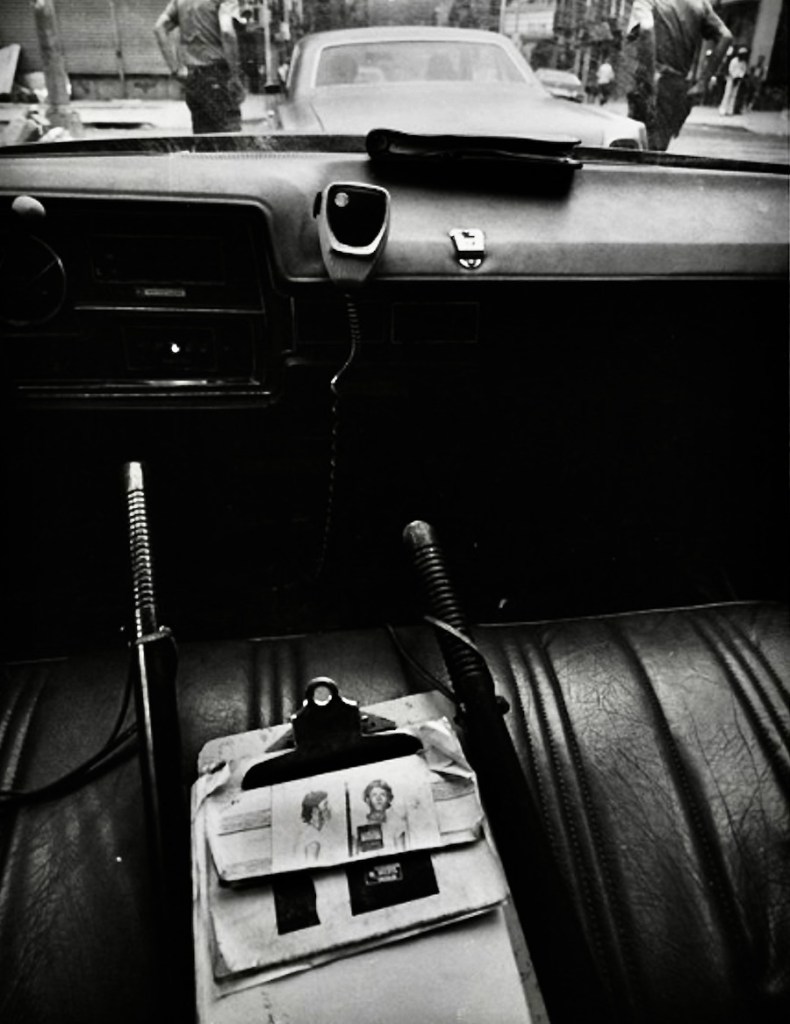
   The Cleveland Police plainclothes detective kept his eyes fixed on nothing. He wasn’t tall or short. He wasn’t thin or chunky, either, except when he wore a bulletproof vest, which made him look chunky. He was able-bodied enough, although he was near-sighted. The closer something was to him the better he saw it. When he had to, he wore brow line glasses to see far away. He kept his hair not-too-neat and didn’t shave too often. He read the Cleveland Plain Dealer newspaper every morning except Sunday when there was too much of it. There was hardly anything about him likely to draw anybody’s attention. When he was in some bar, at the bar with a beer in front of him, a Lucky Strike smoking itself at his elbow, nobody ever gave him a second look. 

   He worked out of the third floor of the Cleveland Police Department’s Central Station at East 21st St. and Payne Ave. The Central Station had been in business for fifty years. It replaced the Champlain Street Headquarters. When it did the Plain Dealer reported, “The minute the new station opens, the ancient Champlain Avenue mausoleum of crime and rats which has been functioning as a police headquarters for perhaps twenty-five years too long will start to crumble before the wrecking engines.” Fifty years later the Central Station was in the same boat, overflowing with crime and rats.

   Frank Gwozdz looked at his bottle of beer in front of him. He took a short pull. It was getting lukewarm. It didn’t matter to him. It was only there so he could hide behind it. He loosened his already loose tie and the top button of his shirt. Mitzi Jerman was working the bar. She asked if he wanted fresh peanuts. “Thanks, but no,” he said. He hadn’t touched the bowl. The bar didn’t serve food, just peanuts, pretzels, and pickled eggs. He hadn’t touched anything, yet, although he might if the two collectors stayed long enough. He was getting hungry. He knew the goon with jug ears doing all the talking had worked the numbers for Shondor Birns. He was sure enough the other one had been up to the same thing. He wondered why they were close by downtown and not the near east side where the Negroes lived. That’s where their bread and butter was this time of night. 

   Jerman’s Café was on East 39th St. and St. Clair Ave., although it wasn’t actually on any street. It wasn’t in a storefront like most corner bars, and it wasn’t on a corner, either. It was on the ground floor of a house. It was set back from St. Clair Ave. with a parking lot on the side. If a drinker didn’t know the bar was there he might end up high and dry. It opened in 1908 when a Slovenian immigrant and his wife opened it. It had lived through World War One, the New Deal, World War Two, and the 1956 Cleveland Indians World Series win, when the celebrating didn’t stop for days. It stayed open as a speakeasy during Prohibition, not missing a beat. Mitzi’s uncle smuggled booze from Canada those years, making the run across Lake Erie in a speedboat by himself. Mitzi’s mom and dad hid the rum and whiskey with neighbors whenever Elliot Ness was on the loose.

   Mitzi came back to where Frank was sitting and parked herself in front of him. “Working tonight, handsome?” she asked, drying freshly washed glasses with a bar towel. Frank wasn’t exactly handsome anymore, just like he wasn’t exactly young anymore.

   “I’m working right now,” the police detective said in a quiet voice.

   Mitzi had been born upstairs in the apartment above the bar. It was where her parents lived all their working lives. She slept in the same room she had been born in. There was a piano and a juke box in the bar. A pool table squatted at the rear, alone and lonely. Mitzi watched Tribe games in living color on a TV set placed high up on a wall. Her pooch Rosco slept at her feet. The bar Frank was sitting at was oak, and the ceiling above him was zinc. Mitzi served Pabst, Stroh’s, and Budweiser on tap.  Everything else came in a bottle. Frank fiddled with his bottle of Anchor Liberty Ale.

   One of the men at the back table snapped his fingers. Mitzi looked at them. They were looking at the neighborhood girl who worked nights with Mitzi. She was a looker. Some men wanted to hang their hats on her. Mitzi sent her to their table. They ordered two more glasses of Pabst and gave her a pat on the behind for her trouble.

   “Are you working those two bums?” Mitzi asked.

   “I only work bums, and it looks like they are the only two of their kind in this place right now.”

   “Is anything going to happen in my place tonight?”

   “Not if I can help it,” he reassured her.

   Shondor Birns had run the numbers racket for years, until he was blown up on Easter Saturday outside of his favorite strip club three and a half months ago. “SHONDOR BIRNS IS BOMB VICTIM” the Cleveland Plain Dealer headline in block letters blared on March 30, 1975. The big news out of Vietnam that day was below the local bomb story. “Communists capture Da Nang” it said. The strip club was Christie’s Lounge, where Shondor Birns spent the evening drinking and ogling the naked girls bumping and grinding. When he was good and drunk, he staggered to his Lincoln Continental parked in a lot across from St. Malachi’s Catholic Church. As soon as he turned the key in the ignition the dynamite wired to the ignition came to life. He was blown in half, his upper body catapulted through the roof of the car. Some of him landed in the parking lot. Some of him was sling shotted into the webbing of the surrounding chain link fence. The rest of him disappeared. Celebrants at the Easter Vigil rushed out of the church when the explosion made the stained-glass windows shake and rattle.

   The racketeer had been arrested more than fifty times since 1925 but was hardly ever convicted. He had killed several men, but no charges ever stuck. He ran a theft ring. He ran the vice resorts. He became Cleveland’s “Public Enemy No. 1.” When he got into the protection racket many small businessmen discovered they needed protection. “He was a muscleman whose specialty was controlling numbers gambling on the east side, keeping the peace among rival operators and getting a cut from each of them,” was how the Cleveland Press, the city’s afternoon newspaper, put it. “He was a feared man because of his violent reaction to any adversary.”

   What little was left of Shondor Birns was buried in Hillcrest Cemetery on April Fool’s Day. He was officially gone. They had taken his picture down from the top row of the big board at the Central Station. Somebody else had taken his place, although the mystery man’s picture wasn’t on the board, yet. The policy games weren’t going to stop with Shondor Birns gone. His fast fists hadn’t been fast enough to save him. The next boss was already taking care of business. Frank wanted to know who that was.

   When the two men at the back table got up and left, Frank got up and left, too. They got into a green Plymouth Duster. He wasn’t going to have any trouble following it. He got into his unmarked Ford Crown Victoria. The dark blue car wasn’t much to look at, since it looked like every other unmarked police car in the country, but no other car was going to outrun it if it came to a chase. The Duster drove to East 55th St,, turned on Euclid Ave, and at Mayfield Rd. turned again going up the hill to Little Italy. They parked behind Guarino’s Restaurant and went in the back door. Frank parked five spaces away, near the entrance to the lot.

   He turned the car off. He was hungry but didn’t go inside right away. He thought about going home. Nobody had assigned him this shadow job. He had taken it upon himself. He could go home anytime he wanted to but he didn’t want to go home. He wanted to see his kid but didn’t want to see his wife. She had been getting unhappier by the day since the day she stopped nursing their boy. That was three years ago. She was miserable at home and had taken to drinking. Frank threw away every bottle he found hidden away somewhere, but he never found the last bottle. He could smell it on her breath every day when he got home.

   She was eleven years younger than Frank. He knew it was a mistake but at the time he hadn’t been able to control himself. She had gotten to be sneaky and patronizing. She complained about him being a policeman. She complained about his unpredictable hours. She complained about his pay and how he dressed. When he tried to explain the dress code behind being an plainclothes man, she was condescending about it, calling him “you poor dear man.” They didn’t kiss anymore, much less talk much. She complained about the housework, even though she did less and less of it. She had started to neglect their child, leaving the boy with a teenaged babysitter those afternoons she went to the Hippodrome.

   “What’s at the Hippodrome?” he asked.

   “Movies,” she said.

   The Hippodrome had the second largest stage in the world when it was built in 1907. It was in an eleven-story office building with theater marquees and entrances on both Prospect Ave. and Euclid Ave. in the heart of downtown. It hosted plays, operas, and vaudeville, at least until the movies took over. After that it was all celluloid. It became the country’s biggest theater showing exclusively big screen fare. A new air conditioning system pumped in cold water from Lake Erie, keeping everybody cool on sweltering summer nights.

   Frank tailed her there one day. She went to the Hippodrome but didn’t go to the movies. She went downstairs to the lower-level pool hall. She walked to the back and through a door marked “Private.”

   “What’s behind that door?” he asked one of the pool players.

   “The boss is behind that door,” the pool player said.

   “Would that be Danny Vegh?”

   “Naw, this is Danny’s joint, but Vince runs the place. Why all the questions?”

   “No reason, just curious.”

   “If you want to see Vince, you don’t want to right now. He’s got a woman in there and it’s going to be some time before they finish up their business.”

   “Thanks pal,” Frank said. “How about a game of nine ball?”

   An hour later and twenty dollars the worse for wear, Frank gave up. His wife was still in Vince’s office. The door was still shut tight. He walked out and up the stairs to Euclid Ave. He crossed the street, leaned against a light pole, and lit a Lucky Strike. His wife walked into broad daylight a half hour later. A car pulled up to the curb and she got into the front seat. Frank followed the car to their home in North Collinwood. The car pulled into the driveway. His wife got out and went in the front door. The car drove away.

   “Son of a bitch,” Frank muttered to himself. It was looking to him like she was a wife and mother gone over to monkey business. She had promised him at the altar far more than he was getting. He wasn’t getting any of her love, for sure. He could kill her for what she was doing, except for the kid. He might kill her anyway. There was more than enough room in the backyard for an unmarked grave. He could plant poison ivy to mark the spot.

   Frank’s stomach grumbled. He was hungry as a flatfoot at the end of a long day. He hadn’t popped even a single peanut into his mouth at Jerman’s Café. He could eat at the trattoria and keep an eye on the two collectors at the same time. He got out of the Crown Victoria, locked it, and walking through the vineyard patio went into Guarino’s. The restaurant had been around since before the 1920s. A Sicilian family ran it then and the same Sicilian family ran it now. It had been redecorated in a Victorian style in 1963, but the décor didn’t affect the food. Mama Guarino led him to a two-top table. He ordered veal saltimbocca. The waitress brought him half a carafe of chianti. He took his time eating, making sure his wife would be asleep when he got home.

   He had always thought there was nothing more romantic than Italian food. He wasn’t feeling romantic tonight, but at least the food was delicious. He took a bite of veal and gulped down a forkful of angel hair. No man could love a cheater and not pay the price for it. Things fall apart when they’re held together by lies. His thoughts grew dark. He filled his wine glass with red relief and drank it slowly thoughtfully.

Excerpted from “Bomb City.”

Ed Staskus posts monthly on 147 Stanley Street http://www.147stanleystreet.com, Made in Cleveland http://www.clevelandohiodaybook.com, Atlantic Canada http://www.redroadpei.com, and Lithuanian Journal http://www.lithuanianjournal.com

“Bomb City” by Ed Staskus

“A police procedural when the Rust Belt was a mean street.” Sam Winchell, Beyond Books

Available on Amazon: https://www.amazon.com/dp/B0F1LM1WF9/ref=sr_1_1?crid=2MYAQAOZIC2U9&dib=eyJ2IjoiMSJ9.hTm7BGbiQbSe5ZapFwYPPfcwOpTe-Vdg6VLE4aGyTyk.Z0R-VNBWWEcvKcNaO9LdCOUnNIOOXgvYkRS_FXiXuHk&dib_tag=se&keywords=bomb+city+ed+status&qid=1742136726&sprefix=bomb+city+ed+staskus%2Caps%2C84&sr=8-1

Cleveland, Ohio 1975. The John Scalish Crime Family and Danny Greene’s Irish Mob are at war. Car bombs are the weapon of choice. Two police detectives are assigned to find the bomb makers. It gets personal.

A Crying of Lot 49 Publication