Tag Archives: Barron Cannon

Stumbling On Barron Cannon

By Ed Staskus

   It was an early May morning when Frank and Betty Glass went visiting Barron Cannon, who they hadn’t seen much since they first ran into him picketing a vegan restaurant near where they lived in Lakewood, Ohio. They had dropped by his yurt, which was on a bluff overlooking the Rocky River Metropark Reservation, several times in October and November, but once winter got cold and snowy had not paid him a social call, not that Betty minded, or even gave it a thought.

   The first time they ever saw Barron had been the past September, when they were attracted by the flashing lights of two Ford Police Interceptors at the vegan eatery, and were greeted by the sight of a slender pony-tailed man in his early 30s bearing a picket sign on a stick. Faces peered through the plate glass windows. Passersby stopped to see what was going on. There was a single word scrawled on the placard.

   HYPOCRITES! It was in capital letters. It was written in blood red crayon. Barron was waving it around in circles.

   The policemen who had been called to the scene by one of the outraged waitresses were telling him he had to call it a day. They told him protesting without a permit wasn’t permitted. Although he maintained he had more than enough reason, and cited his first amendment rights, and made a speech about animal rights, he finally agreed to go home and strode off, his picket sign bouncing up and down on his shoulder.

   The bemused policemen walked away shaking their heads. “He’s like the cranky old guy who’s always on his front porch and yells at the neighborhood kids,” one of them said before they got into their separate Ford Police Interceptors.

   Barron was going the same way as Frank and Betty, up West Clifton Blvd., and after falling into step with him, they were astonished to learn he was himself a vegan. “Eating is an act of nourishing my body and soul,” he said. “I choose to do no harm to myself.”

   He did not eat animals, drink their milk, or wear their hides. He eschewed all animal products. He didn’t eat anything deep-fried and never snacked on refined sugar. He eschewed Worcestershire sauce because it contained anchovies. He considered eating honey exploitive and avoided it.

   “I don’t abide people who eat animals,” he said, “and since that’s just about everybody, and since that is not changing anytime soon, that’s that, and there I am, a lonely voice in the wilderness. At least I don’t have to live with them.” 

   At least as long as they weren’t his parents. Although he lived alone, he lived with his parents. He lived in their backyard.

   “My parents are among the worst,” he said. “They are always bringing chicken, pork, and ground beef home from the grocery. I see them in their kitchen every day, sticking forks into decomposing flesh and animal secretions. They chew on Slim Jim’s while they watch the news, which is full of lies and misery, on TV.”

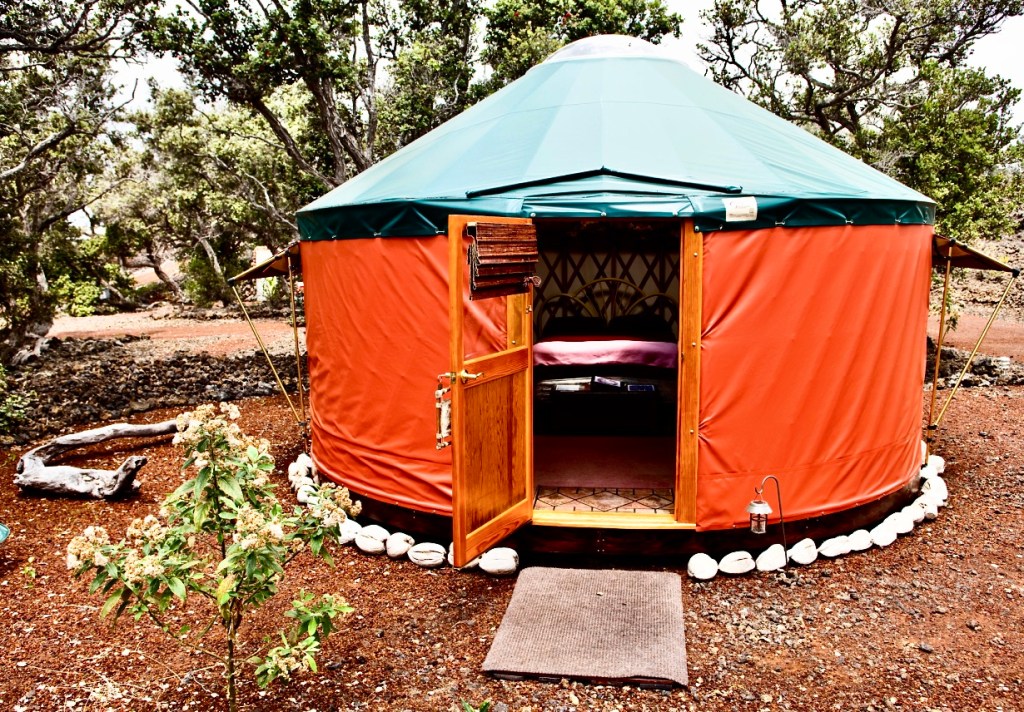
   Barron lived in a yurt outside the kitchen window of his parent’s house overlooking the Rocky River Metropark Reservation, about a mile-and-a-half south of Lake Erie. He had built the orange Mongolian-style dwelling himself. He didn’t have a job, a car, a refrigerator, a TV, a wife, or any pets.

   “Don’t even get me started on pet slavery,” he said.

  Betty gave him a sharp glance. She and Frank had two house cats, who were Mr. Moto and Sky King, who slept with them on their bed most nights. The cats were rescues. She didn’t think of them as slaves and was sure they didn’t think of themselves as slaves, either.

   “Have we met before?” Frank asked as they stopped at the corner of their side street off Riverside Dr. while Barron was going to continue his ramble back to his lodgings.

   “I don’t think so,” said Barron. “I would know. I have an excellent memory.”

   A college graduate with a master’s degree in philosophy and a hundred thousand dollars in unpaid federal student debt, Barron was unqualified for nearly any job, even if he had been remotely interested in seeking employment. He didn’t vote, although he enjoyed political antics whenever he heard about them. “Whenever I hear about a grift, or I hear about a politician, but I repeat myself,” he said. He disdained pro sports, calling the athletes “millionaires throwing, catching, and kicking some kind of damn fool ball.”  He didn’t read best sellers or know anything about current trends. He dressed like the 21st century had never happened.

   He didn’t take any drugs, over or under the counter. “By FDA requirement,” he explained, “each and every pharmaceutical is tested on animals.” He was a vegan purist, pursuing his ideals to their logical conclusion. Betty thought of his pursuit as a dead end, but didn’t say so.

   Barron didn’t have a bank account or any credit cards. He had few friends, other than several bicycle-riding neo-hippies and a handful of retirees in the neighborhood for whom he did odd jobs on a cash basis. He only worked for them if they could prove they didn’t have cars and agreed never to talk about their problems, especially their health problems.

   “Insurance, HMO’s, meds, doctors, it’s all a racket,” he said.

   The few times Frank and Betty had visited Barron they always walked, because if he knew they had driven to see him, he would refuse to see them. Burning fossil fuels was anathema to him. “That is some queer duck who lives at the top of Hogsback Lane,” Betty said. Hogsback Ln. was an entry road down to the river valley.

   “Can’t we just drive and park a block away?” she asked, reminding Frank of the three-mile round-trip hike from their house.

   Barron lived on an allowance his parents begrudged him. He shopped at a once-a-week farmer’s market. He had recently gotten his yurt connected to his parent’s power supply. Unbeknownst to them, he had gone on-line at the Lakewood Library, read about the work he had in mind, and dug a trench from the back of their house to his yurt, into which he buried a transmission wire.

   “They got a solar roof last year and got off the butane and coal, which I will tell you is a blessing,” he said. “It gets dark and cold in this yurt in the middle of winter. I used to heat it with firewood from the park. I had to collect it at night, otherwise the park rangers gave me grief. I don’t think they like me.”

   He now heated his yurt with a 5,000 BTU infrared quartz heater and LED’s were strung in a kind of loopy chandelier. He put his vegan candles, made of plant-based wax, away. He cooked on a Cuisinart 2-burner cast iron hot plate. He had previously refused to employ either electricity or natural gas, on the premise that both are petroleum products, in which are mixed innumerable marine organisms.

   “That’s one of the things I can’t stand about those leaf-eaters at the restaurant, cooking their so-called vegan cuisine with gas made from the bodies of dead fish,” he said. “They’re too busy ringing up the cash register to know or care.”

   Vegetarians drew his ire, too, although he tolerated them. “I can put up with vegetarians if I have to,” he said, which Frank reluctantly admitted to being when Barron quizzed them. Barron gave Frank a mirthless grin. “At least they’re only half lying to themselves.”

   Betty, who described herself as an omnivore, on the side of free range and organic, directed a bright smile at Barron, keeping her eating habits to herself while gnashing her teeth at the same time. Frank knew his wife was a wise woman who knew when to bite her tongue.

   As they approached Hogsback Ln. they saw a sea of green treetops in the valley below, always a welcome sight after a long winter. Barron’s yurt was on the backside of a sprawling backyard on the edge of the valley, where the long downhill of the road intersects with Stinchcomb Hill, named after the founder of the park system. It is a bucolic spot in the middle of the big city.

   Frank was reluctant to mention that William Stinchcomb had been a pork roast and beef tenderloin man in his day, as well as president of the Cleveland Automobile Club, so he didn’t mention it.

   “Vegans are as bad as my parents, the whole lot of them,” Barron said.

   “Show me a vegan who isn’t an elitist, or someone who spouts veganism who is not a do-gooder, or making boatloads of money from it, explaining how it’s all one big happy equation, yoga and veganism and new-age capitalism, and flying to their immersions in the Bahamas, and everywhere else around the planet on their holiday retreats, never mind the carbon footprint, and I’ll show you the sanctimonious side of who’s burning up the planet.”

   Since Barron didn’t have a doorbell, they were glad to find him out of doors, although Betty was less happy about it than Frank. Barron was laying out rows of seeds and tubers outside his yurt. They joined him, sitting down on canvas field chairs. He had opened the flap over the roof hole of the yurt. Betty poked her head inside the yurt, remarking how pleasant and breezy it was inside his house.

   “Inside your tent, I mean,” she said.

   “It’s a yurt,” he said.

   It was round, orange, and fronted by a half-circle of large white stones, like what children do at summer camps in front of their tents.

   “Whatever,” Betty said under her breath.

   Frank was nonplussed to see a new Apple laptop on a small reading table.

   “I keep up, especially now that I have power,” Barron said. “It’s not like I’m a caveman.”

   Frank noticed a yoga mat rolled up.

   “Where do you practice yoga?” he asked.

   “Here in the backyard, every day, and sometimes at the studio on Lake Rd. in Rocky River. The owner and I trade cleaning the studio for classes.”

   “That’s probably where I’ve seen you before,” Frank said.

   “Maybe,” Barron said, not bothering trying to remember.

   “I thought you were down on yoga.”

   “I’m down on the phony’s who practice it, not the practice itself,” Barron said.

   He led them to his new garden. He had dug up most of his mother’s backyard, dislodging her wild roses and rhododendrons and was planting rows of root crops, including beets, onions, and potatoes. He was especially proud of his celery.

   “I cover my celery with paper, boards, and loose soil. They will have a nutty flavor when I dig them up at the end of the year. I don’t eat anything from factory farms. In fact, I am getting away from eating anything from any farms anymore, at all. Farms, whether big or small, are not good ideas. They make you a chattel to the supermarket. Freedom is the way to go, although it’s challenging trying to free fools from the chains they worship.”

   Neither Frank nor Betty knew what to say. As they got ready to leave, Barron scooped handfuls of birdseed from a large barrel into a brown paper bag and handed the bag to Frank. He was still unsure about Betty. She seemed to always be giving him the stink eye.

   “You should take every chance to feed the birds and other animals you see outside your house,” he said. “Give them good food, organic food, not processed. It will make such a difference in their lives.”

   On the driveway of his parent’s ranch-style house at the top of Hogsback Ln., looking across the valley towards the Hilliard Bridge, Barron tapped the brim of his Chief Wahoo baseball cap in farewell.

   “Be a real vegan,” he said. “That’s the best thing any of us can do.”

   Frank and Betty walked the long way around before circling back to home, first crossing the Hilliard Bridge to Rocky River, from where they would make for Lakewood. The nine hundred foot long concrete bridge wasn’t the first one at that spot. The earliest one was known as the “Swinging Bridge.” It was a rope bridge with wooden planks that was used by school children and pedestrians back then to cross the river. It hung thirty feet above the water and swayed in strong winds. Sometimes a child fell into the river and had to be saved.

   Betty was unusually quiet. She was usually a talkative woman. Frank gave her an inquisitive glance. As they passed the Erie Island Coffee Co. on Detroit Rd., where there was outdoor seating, she suggested they stop for refreshments, since Barron hadn’t offered them any.

   “Man, oh man, I know chocolate brownies have eggs in them,” Betty said, “and cappuccino has milk in it, and I know Barron would have a cow, but right now I think I need to sit down and enjoy myself for a few minutes, not thinking about that guy.”

   They agreed that the vegans they knew were ethical and compassionate, their lives complementing their health, humanitarian, and environmental concerns. They could not agree on whether Barron Cannon was a determined idealist, a mad ideologue, or simply lived in an alternate universe. Or maybe he was just his own incarnation of the cranky old guy on the porch.

   They sat at a table outside the entrance door. They had espresso and cappuccino, scones with gobs of butter, and chocolate brownies. They watched the sun slip in and out of the springtime clouds and walked the rest of the way home in the late afternoon in a sated buzzy state-of-mind.

Ed Staskus posts monthly on 147 Stanley Street http://www.147stanleystreet.com, Made in Cleveland http://www.clevelandohiodaybook.com, Atlantic Canada http://www.redroadpei.com, and Lithuanian Journal http://www.lithuanianjournal.com

“Bomb City” by Ed Staskus

“A Rust Belt police procedural when Cleveland was a mean street.” Sam Winchell, Beyond Fiction

Available on Amazon: https://www.amazon.com/dp/B0F1LM1WF9/ref=sr_1_1?crid=2MYAQAOZIC2U9&dib=eyJ2IjoiMSJ9.hTm7BGbiQbSe5ZapFwYPPfcwOpTe-Vdg6VLE4aGyTyk.Z0R-VNBWWEcvKcNaO9LdCOUnNIOOXgvYkRS_FXiXuHk&dib_tag=se&keywords=bomb+city+ed+status&qid=1742136726&sprefix=bomb+city+ed+staskus%2Caps%2C84&sr=8-1

Cleveland, Ohio 1975. The John Scalish Crime Family and Danny Greene’s Irish Mob are at war. Car bombs are the weapon of choice. Two police detectives are assigned to find the bomb makers. Nothing goes according to plan.

A Crying of Lot 49 Publication

Sunny Side Up

By Ed Staskus

   The temperature was in the 90’s, like it had been for weeks, and the humidity was swampy, which it had been for weeks, too, when Frank and Betty Glass went for a walk on the multi-purpose track in the Rocky River Reservation, about a mile south of the mouth of the river and Lake Erie. Downtown Cleveland squats on the east bank of the Cuyahoga River ten miles to the east.

   The Cleveland Metroparks, more than a hundred years in the making, are a series of nature reservations within the urban landscape, more than 21,000 acres, which encircle the city and its suburbs. There are hundreds of miles of walking paths and horse trails, picnic areas and fishing spots, and eight golf courses. Steelhead trout abound in the river.

   Their home was on a side street on the east side of the valley park. If there were ever another Great Flood, the river would have to rise more than one hundred and fifty feet up the cliff to threaten them. Turkey vultures nested in the cliff face and soared all summer like gliders in wide circles on the currents rising up from the lowland. The Glass house, a dark gray Polish double, was ten minutes by foot from the park. It was always cooler mid-summer in the shade of the forest and along the riverbank.

   They walked down the Detroit Rd. entrance into the park, past the marina, the soccer fields, and as far as Tyler Field, before turning around. As they neared Hogsback Lane, the top of which was high above the near bank of the Rocky River, Frank suggested they walk up to see his friend Barron Cannon, whom they hadn’t seen recently. Betty wasn’t exactly Barron’s friend and had no great interest in seeing him.

   It was a month ago that they had gotten back from two weeks on Prince Edward Island off the coast of Canada. At the same time Barron had spent an extended weekend protesting on the American coast, in New York City, protesting the Donald Trump administration’s zero-tolerance immigration policy that was invested in the separation of migrant children from their parents at the southern border. Breaking up families was their big idea of the day. They had big ideas every day.

   “I thought Barron enjoys what he calls the antics of the clown car in the capital,” Betty said.

   “He does, but when he comes back down to earth he finds out the clown car is burning oil and he doesn’t like the consequences.”

   “Smoke and mirrors.”

   “That’s what he always says.”

   “You know I don’t want to go see him,” Betty said. She thought he was a smart man, but at the same time pontifical and smart-mouthed. She wanted to tell him her high school days were long over and she knew her ABC’s well enough.

   “I know,” Frank said, turning up Hogsback Lane.

   Barron Cannon was a trim young man in his 30s who lived in an orange Mongolian yurt he built in the backyard of his parent’s ranch-style house at the top of Hogsback Lane. He had a master’s degree in Comparative Philosophy and was a committed yogi, as well as a radical vegan. He owed a king’s ransom in student loans and was chronically unemployed. He never opened the urgent letters sent to him by the Dept. of Education, throwing them away in the trash instead.

   He practiced yoga for two hours a day and meditated for another half-hour. Sometimes he chanted or played his harmonium. He was thankful they had no nearby neighbors who might complain and the house was slightly off the edge of park land, so the park rangers couldn’t bother him. His parents had long since thrown up their hands. They prayed he would find a girlfriend and move away, but weren’t holding their breath. They suspected no woman of sound mind would have him.

   “He needs to be committed,” Betty had said to Frank on several occasions, usually right after they had visited him and were out of earshot.

   “Why couldn’t he stay in New York and occupy Wall Street instead of his mom’s backyard?” she added.

   Barron didn’t have a car or a television. He read books. He had never voted. ”Suppose I was an idiot, and suppose I was a congressman, but I repeat myself,” he said, laughing at his own joke.

   “I’ll vote when anarchists are on the ballot,” he told Frank.

   Frank wanted to remind him that anarchists who vote would be like atheists who pray, but he thought, what would be the point?

   They found Barron in his backyard, lying face-up in the sun on a Sesame Street blanket, on the south side of his yurt. He was naked except for a fig leaf covering his private parts. It was a literal fig leaf.

   Vera looked away when Barron propped himself up on his elbows and the fig leaf rolled away. She wasn’t a prude, but she was judgmental. She didn’t want to judge Barron’s private parts.

   “Sorry,” he said, pulling on a pair of cargo shorts. “I was getting my daily dose of sunshine here on the acropolis.” He was tan, from tip to toe. Frank could see he hadn’t been using an SPF lotion of any kind anywhere on himself.

   “You should be careful,” he suggested. “Too much sun isn’t good for you.”

   “That’s where you’re right, but even more wrong,” Barron replied. “Too much sun may be bad, depending on your skin and heredity, but avoiding the sun altogether is not good for anybody. Remember, we evolved in the sun, living outdoors for our two million years on this planet.”

   He flipped on a pair of Ray-Ban sunglasses and leaned towards Frank.

   “Then, not very long ago, we started messing with Mother Nature and started avoiding the sun. When you avoid the sun, you may not get rickets, because you can always take a pill, but all the pills in the world can’t replace the real thing.”

   He pointed up to the sky. ”When you avoid the sun, like it’s life and death on your skin, you increase the risk of dying from internal cancers,” he said solemnly.

   Frank must have looked skeptical, because Barron tilted his dark glasses down his nose Lolita-style and exhaled.

   “Look it up,” he said.

   It turned out, when Frank looked it up, Barron was right.

   “I really hate it when he’s right about anything,” Vera said.

   The Journal of Epidemiology, nearly forty years ago, reported that colon cancer rates are nearly three times higher in New York than in New Mexico. Since then many other studies have found solar UVB induced vitamin D is also associated with reduced risks of breast and rectal cancers.

   “When the government and our medical monopoly started telling us to avoid the sun, they forgot to remind us we would need to get our vitamin D somewhere else,” Barron said.

   Tired of Barron’s pronouncements, Vera wandered off and was commiserating with Barron’s mother about the flower garden her son had torn out, except for a small plot she had saved at the last minute after coming home from the grocery and discovering what he was about. He had thrown her flowers into a compost pit and replaced them with rows of root vegetables.

   “Vitamin D is a hormone,”  Barron said “and it’s produced naturally when skin is exposed to UVB in sunlight.”

   Frank noticed a yoga mat rolled up and leaning against the rough bark of a sweet gum tree. The bark was like an alligator’s hide.

   “You’re still doing yoga outside?”

   “I am.”

   “In the buff?”

   “You bet. It was good enough for the Greeks, it’s good enough for me.”

   Barron told Frank vitamin D sufficiency is linked to a reduction in 105 diseases, including heart disease and diabetes. Some researchers believe, he added, vitamin D deficiency contributes to nearly 400,000 premature deaths and adds a one hundred billion dollar burden to the health care system. By many estimates vitamin D deficiency is a worldwide epidemic, with some studies indicating greater than 50 percent of the global population at risk. Three out of four Americans are considered vitamin D deficient, according to government data.

   “Do you know why?” Barron asked him.

   “No,” Frank said.

   “It’s because of overzealous sun avoidance, which has led to a 50 percent increase in that figure in the past 20 years,” he said, slapping a fist into his palm for emphasis.

   “I take a vitamin D supplement every morning,” Frank said. “I don’t have to go out in the sun. Besides, it’s been unbearably hot and there are lots of bugs this year, since we had such a mild winter.”

   “You think our modern time is complete and we know everything,” he said. “You assume science understands all the benefits of sunlight and that the only good it does is make vitamin D.”

   “That’s right,” Frank said.

   “That isn’t true,” Barron said. “Let me give you an example.”

   He told Frank about a recent study at the University of Wisconsin and published in Proceedings of the National Academy of the SciencesThey discovered that something in ultraviolet light retarded progression in an animal model of multiple sclerosis, which is a painful neurological disease for which there is no cure. While vitamin D supplements suppressed progression in the animal model, ultraviolet light worked even better. The report concluded that UV light was having an effect independent of vitamin D production.

   “If it happens to be true in humans, it means that sunlight, or UV light, contains something good in addition to vitamin D,” he said. “We just don’t know what it is. Hey, our ancestors evolved naked, full frontal.” Barron waved his fig leaf like a battle flag.

   “The sun is directly overhead. We have a long evolutionary bond with it. Humans make thousands of units of vitamin D, and who knows what else, within minutes of exposure to sunlight. It is unlikely such a system evolved by chance. When we sever the relationship between ourselves and sunlight, we proceed at our own risk.” Barron gave Frank a sharp look and settled down on his elbows

   At a loss for words, Frank was grateful when his wife reappeared.

   “I’m getting a little toasty in all this sunlight,” she said.

   They agreed that they should be going. They bid Barron goodbye, Vera waved to Barron’s mother and they made their way down Riverside Dr. to home.

   After dinner that night, as Vera watched “Lawrence of Arabia” on Turner Classic Movies in the living room with a bowl of popcorn, sitting on the front porch in the orange-yellow light of a quiet sunset Frank skimmed a review of a paper in the British Medical Journal.

   “Some people are taking the safe sun message too far,” wrote Professor Simon Pearce. “Vitamin D levels are precarious in parts of the population. They stay at home on computer games. It’s good to have 20 to 30 minutes of exposure to the sun two to three times a week.”

   When he put his iPad down, Frank thought, I might give it a try in our backyard, without slathering on any sunscreen as I normally do, but I am definitely wearing a pair of shorts. Inside the living room, on the flat screen, Lawrence and his Arab allies were atop camels and charging across a sun-blasted desert outfitted from head-to-toe in long robes.

   Where did Barron get a fig leaf, anyway? Frank wondered.

Ed Staskus posts monthly on 147 Stanley Street at http://www.147stanleystreet.com, Made in Cleveland http://www.clevelandohiodaybook.com, Down East http://www.redroadpei.com, and Lithuanian Journa http://www.lithuanianjournal.com. To get the site’s monthly feature in your in-box click on “Follow.”

“Cross Walk” by Ed Staskus

A Cold War Thriller

“Captures the vibe of mid-century NYC.” Sam Winchell, Beyond Fiction

Available on Amazon: https://www.amazon.com/dp/B0CRPSFPKP

Late summer and early autumn, New York City, 1956. Stickball in the streets and the Mob on the make. President Eisenhower on his way to Ebbets Field for the opening game of the World Series. A killer waits in the wings. A Hell’s Kitchen private eye scares up the shadows.

A Crying of Lot 49 Publication