
By Ed Staskus
When Francie Chmielewski’s husband Steve doubled over while putting his shoes on, she didn’t bother asking him if he was all right. “I have to sit down,” Steve had said in the backyard. It was a Sunday evening in late May. He was feeling a great deal of pressure on the left side of his chest. “I don’t think it’s my heart, but maybe we should go to Fairview Hospital.” One look at him fumbling and dropping his shoes on the steps of their kitchen told her everything she needed to know. He was not all right. He was having a heart attack.
“Steve is a very fit man,” Francie said. He wasn’t a man so out of shape he might have a heart attack watching that day’s bad news on TV. “He doesn’t smoke, eats right, and rides his bike to work every day, even in the winter.” His bike ride to work takes an hour one way, from Rocky River to the near east side of Cleveland, and then another hour back home. Two days earlier, on a Friday, he complained to a co-worker about being out of breath during his ride. His co-worker urged him to call his doctor. Steve’s doctor said, “OK, come in on Tuesday.”
“What happened on Sunday was the widow maker,” Francie said. ”His main artery shut down.”
Heart problems were one of the most uncommon causes of death in the United States until 1900. Heart disease had always been uncommon. Fifty years later it was the most common cause of death in the country. It became the go-to way to die. Everybody was smoking their heads off. Doctors routinely appeared in print and on the tube promoting their favorite fag. Everybody was eating as many animals as they could get their hands on. The protein was good. The saturated fat was sketchy. The off-the-chart serum cholesterol levels were terrible.
It is still the most common cause of death in the United States, despite almost everybody having given up smoking and many former junk fooders eating a more balanced diet. “After I had a heart attack, it was a very simple choice,” said one-time football player and coach Mike Ditka. “What the doctor told me I did and I did it religiously. I ate nothing but lean turkey breast or chicken breast or a piece of fish that was very lean. I mean, I stayed away from everything.” The misguided popularity of maintaining an unhealthy weight has kept it in the top spot, as has the notion that exercising at least 30 minutes a day five days a week is fake advice.
There is never a good time to have a heart attack. The worst time to have one might be during a game of charades. Steve wasn’t playing games. What was happening to him was sudden and massive. He was down and the clock was ticking. Around half of all heart attack deaths occur within one hour, especially if the victim isn’t able to get immediate help and get to a hospital fast. It is called the Golden Hour. The longer a person goes without treatment, the faster the clock ticks.
“One day my father went hunting,” the French movie director Alain Resnais recalled. “He had a good day. He killed a lot of game. He was with his best friends. He said, ‘Ah, I’m still a good hunter.’ Then he said, ‘I don’t feel well.’ In 30 seconds, it was all over.”
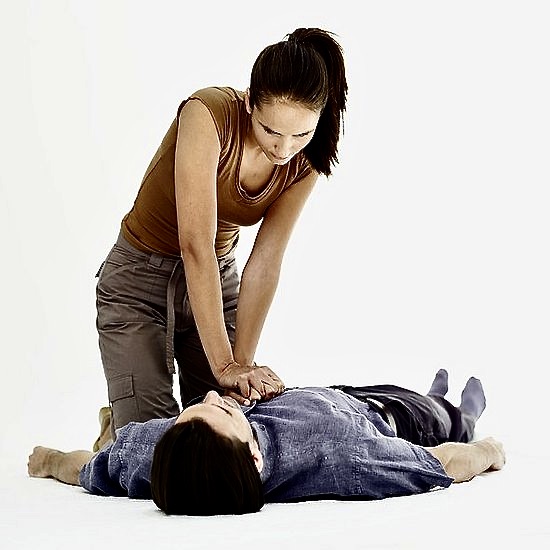
Steve started to shake and his eyes rolled up and back. One of the issues with heart problems is that the first symptoms can be fatal. “This isn’t looking good,” Francie thought. She got serious as a heart attack and sprang into action. She had been ready for the moment for a long time. She stretched Steve out and began performing CPR on him, at the same time hurriedly calling 911 on her cell phone. She wasn’t the kind of wife who mailed in her request for help, checking the spelling before sealing the envelope.
“He had cardiac arrest,” she said. “His heart stopped. When I saw he wasn’t breathing my adrenaline kicked in. I just reacted.” When the Rocky River EMS team got there they checked his heart’s rhythm, gave him oxygen, and administered a blood thinner. They sped him to the hospital where he spent the next two weeks in the Intensive Care Unit flat on his back hooked up to a ventilator. “I never saw anybody like him,” an ICU nurse told Francie. “Most people in his circumstances die.”
“Steve isn’t most people,” Francie told the nurse.
“The quicker we can get a person having a heart attack into the cardiac catheterization lab the better,” explained Erica Spatz, a cardiologist at Yale Medicine. “Time matters in treating heart attacks.” The heart pumps oxygen-rich blood to the rest of the body through a network of arteries. However, the arteries around the heart can get clogged up, usually by a blood clot. When that happens, blood flow is slowed or blocked. The obstruction is seriously dangerous.
Nearly a million people in the United States suffer a heart attack every year. It happens about every forty seconds. The cost of care for coronary heart disease is more than $100 billion dollars annually. One of the least expensive and front of the line interventions is CPR. Francie was ready to bust it. “I teach CPR at the Rocky River Recreation Center,” she said. “But I never had to actually do it on a real person. I never thought the first time would be on my own husband.”
CPR, officially known as Cardiopulmonary Resuscitation, is an emergency lifesaving procedure performed when the heart stops beating. It can double or triple the odds of survival after cardiac arrest. It is a critical step in what is called the Chain of Survival. Keeping blood flow active multiplies the chances of a successful resuscitation once medical staff arrives. Professional CPR is about chest compressions and mouth-to-mouth breathing at a ratio of 30 compressions to 2 breaths. The basic recommendation to bystanders who happen upon a heart attack victim is hands-only CPR until help arrives.
After two weeks in ICU Steve was transferred to a Step Down Unit at the Cleveland Clinic in Avon, where he stayed for a week-and-a-half. His last five days in the hospital were spent in rehab. One of his daughters was visiting him when a doctor walked in reviewing a chart. “This guy us really sick,” the doctor said to himself. Steve and his daughter dropped what they were doing and stared at him.
“Oh, sorry, not you, somebody else,” the doctor said, stopping dead in his tracks, quickly flipping to Steve’s chart. “You are actually doing very well.”
“The doctor told me he was doing well because he had never smoked, was more than fit enough for his age, and had gotten to the hospital soon enough to make a difference,” Francie said. “Only 12% of people with his kind of heart attack survive. If he had been a smoker he would have had a zero chance.”
When Steve got home he wasn’t allowed some of the small pleasures of life, like ice cream and beer. He had to take a handful of prescription drugs every day. He was wired to a heart monitor. He wasn’t allowed to go back to work. He had to take several months off. “His doctor said he could go back in September.” He was allowed to work from home. “They said he could start working two hours a day starting in August. They told him not to overdo it.”
He was hazy about what happened during his near-fatal weekend. “He can’t remember anything about it, from Friday through Sunday,” Francie said. Many of the memories surrounding heart attacks are lost to cardiac arrest survivors. They don’t always come back because the brain didn’t have enough time to store them. It’s like thinking about a fire hydrant factory. The brain can’t park anywhere near the place. It doesn’t always want to remember near death experiences, no matter that the ordeal tends to put things into perspective.
In some ways life itself is a near death experience. Like the song says, the end is always near. Francie wasn’t patting herself on the back for saving her husband’s life. “I wasn’t sure if he had life insurance or not, so I had to do it,” she explained. Buddha long ago said in plain English that the act of saving a life was a greater good than spending the whole of one’s life making religious offerings to the gods.
Steve spent the rest of the summer resting, walking up and down stairs, and making further strides with short walks outdoors. He progressed to varied aerobic activities designed to improve circulation, lower blood pressure, and strengthen his heart. Francie watched him like a mother hen. “He is the kind of man who pushes it,” she said. “I told him not to push it.”
World Heart Day is celebrated every year on September 29th. This year Francie and Steve hope to enjoy the holiday together. Keep a healthy heart so we won’t be apart has become their new married couple motto.
Ed Staskus posts monthly on 147 Stanley Street http://www.147stanleystreet.com, Made in Cleveland http://www.clevelandohiodaybook.com, Atlantic Canada http://www.redroadpei.com, and Lithuanian Journal http://www.lithuanianjournal.com.
A New Thriller by Ed Staskus
“Cross Walk“
“A once upon a crime whodunit.” Barron Cannon, Adventure Books
“Captures the vibe of mid-century NYC.” Sam Winchell, Beyond Fiction
Available on Amazon: https://www.amazon.com/dp/B0CRPSFPKP
Late summer and early autumn. New York City. A Hell’s Kitchen private eye. The 1956 World Series. President Eisenhower at the opening game. A killer in the dugout.
 Made in Cleveland